Yoko Ono is 93 years old, but for many, her image is stuck in a timewarp. Her proximity to the Beatles in their late 60’s heyday has overshadowed her work as a thinker and creator for decades and for some fans, it’s even negated it. Indeed, her relationship with John Lennon made her one of the most polarizing figures in pop culture to this day.
But her role as an artist, honed for over six years prior to even meeting the musician, was striking, eclectic and undeniably impactful on the New York art scene. Ironically, it’s what attracted John in the first place– her dark, wild mane, boho style and makeup-free beauty was captivating, but it was her unbridled mind that made her special.
Yoko Ono: Music of the Mind at the Broad Museum, the artist’s first solo museum exhibition in Southern California, seeks to redefine her legacy for the casual observer and serious fans alike.
Devoting multiple rooms to Ono’s career and life, from her early conceptual ideas in Japanese academia circles to her experiential pieces in Manhattan galleries and experimental spaces, this chronological, multi-room walk-through explores a lot, and the Beatles are the least of it. Her activist works with her husband are, of course, featured. But before we get there, it’s all about the depth of ideas and the audacious ways that she executed them in the name of artistic expression.
What would Ono’s significance as an artist and activist be today if she had not found her soul mate in the prolific music icon? Moveover, what would her legacy be if she had not been continually blamed for “breaking up the Beatles?”
From her early intention-driven concepts to lauded video and sound explorations and later-era interactive works, the show serves to bring retrospective –and feminist– dimension to a misunderstood figure who’s had a lot to say about life, before and after, with and without her husband.
The oversimplified view of Ono as a group-wrecking opportunist is obviously seeped in misogyny and maybe racism as well. It diminishes her accomplishments and her ideas. This show provides a compelling, much-needed counter-narrative.
The best parts of the exhibit, in collaboration with Tate Modern, London, invite visitors to participate in holistic and mindful ways, from “Wish Trees” on the Broad’s outdoor East West Bank Plaza to playing chess on all-white gaming tables (“Play It By Trust”) which eliminates colored pieces to make it impossible for players keep track of “which side they’re on,” a conceptual statement against war that’s both practical and powerful.
There’s also “Painting to Hammer a Nail in,” which empowers others to channel their emotions into her art, and “Put Your Shadows Together Until They Become One,” which asks visitors to trace their shadows on a whiteboard and observe how they meld to make one piece (the message is obvious).
Themes of unity are a big part of the exhibit overall. “Helmets (Piece of Sky)” features WW2 headgear hanging from the ceiling. They’re filled with jigsaw pieces that form an image of the sky. “Take a piece of sky. Know that we are all part of each other,” it directs. I grabbed a few –printed with the words “Los Angeles 2026”– as a souvenir.
The color blue is clearly symbolic for Ono, representing humanity and uplifting energy. Blue markers are provided inside an all-white room where guests can draw or write words with whatever statements they want to make near the end of the exhibition.
While some of the pieces are a bit on the nose and obvious, presented all together, the collection is provocative and immersive, accomplishing the goal of bringing the viewer in and inspiring thought. A lot of it offers hope for a world that needs it now more than ever, especially the images of peace.
At the VIP preview bash last week, there was also a nod to Ono’s music, which is arguably her most controversial output of all. A stage was set up at the entryway to the exhibit, where Yuka Honda (co-founder of Cibo Matto) served as musical director. Honda played electric piano and sung new ethereal-feeling arrangements of Ono tracks with guest vocals by New York-bred, Los Angeles-based duo Lucius and Emi Helfrich (Ono’s grandchild via her once long-lost daughter Kyoko Ono Cox, whom she reunited with in the 90’s). They were accompanied by Maggie Parkins on cello and Max Jaffe on drums.
Ono’s music might be respected today, especially by punks and experimentalists, but her contribution to Lennon’s music is still hotly debated. The couple’s appearance on the Dick Cavett show, when a jam with Chuck Berry turned into a freaky shrieky free-for-all thanks to Yoko, remains a most memorable sit-in– and not in a good way.
As a Stones fan, I think that her raucous screeches as seen in The Rolling Stones’ Rock & Roll Circus during the iconic Dirty Mac set actually worked, especially on the layered instrumental jam called “Whole Lotta Yoko” which featured violinist Ivry Gitlis along with Lennon, Eric Clapton, Keith Richards, and Mitch Mitchell of The Jimi Hendrix Experience. Regardless, she’s released 14 solo studio albums and eight collaborative albums with Lennon (including their Grammy Award-winning album, Double Fantasy, in 1980), which is nothing to slouch at.
More live music is planned in conjunction with the Broad exhibit, including a celebration of her music, called “Yoko Only” (featuring Yo La Tengo, Nels Cline, Yuka Honda, Sleater-Kinney, Rufus Wainwright, and more) in August. Whether you fancy Ono’s music or not, one thing is for sure, it’s never boring and always boundary-pushing. And it’s just one component of her boldly contemplative and frequently beautiful schemes and scenes, which, like everything she does, are all about opening minds. Bring yours to enjoy this retrospective as fully intended.
For those of us who remember the ‘80s, the idea of a love child between heartland rock, like Bruce Springsteen and John Mellencamp, and hair metal, ala Cinderella and Poison, sounds like a cheesy horror/disaster movie. Some things just don’t go together.
Yet, 40 years later, the offspring of those two completely disparate styles is here. And it turns out to not only be a horror movie, but Toronto’s Jessica Sevier brings it together as appealingly as chocolate and peanut butter or Marvin Gaye and Tami Terrell.
Talking about how she married what should have been a Frankenstein’s Monster of music into an award-winning singer/songwriter, the utterly engaging Sevier explains. “I grew up on a lot of hair metal and a lot of Springsteen, a lot of John Mellencamp. So, it’s kind of an amalgamation of all of those random things. So, a combination of Springsteen music and listening to Poison around the dinner table, like ‘Every Rose Has Its Thorn,’” she says.
Going further into the way those elements seamlessly come together in her songs, she says, “I listened to [Springsteen] for hours and hours and hours every day, studying the way he wrote music and lyrics. Then I think the musicality and sound really came from Cinderella. The Heartbreak Station record really inspired me to make music. I heard it, and I was like, ‘That’s what I want to do,’ the bluesy country rock thing. It really stuck with me after I heard that record, and I have never forgotten it. I was 14 or 15, like 10 years ago, when I first heard it, and I think about it every day. “
Cred. Marteen Sevier
Sevier, who was born in the 2000s, credits her parents with giving her the necessary ingredients for her very unique musical cocktail.
“When I was in high school, I’d really gotten into hair metal, and I’ve always been a lover of vintage things. So, when I saw that my dad had this old record player, I was like, ‘Oh, I want one of those.’ So, we took his old Sears dual cassette and record player out of storage, and the speakers are about as tall as me,” she says laughing. “Then my dad gave me his mixtape collection and his record collection, and all of it was hair metal basically. So, that’s all I had. When I was in high school, I was really into analog media. I avoided digital media at that point because I wanted to live like it was the ‘80s. All I did was listen to cassettes and records, and the only ones I had were hair metal, Springsteen, and Mellencamp. So that was the soundtrack to my life, and I just fell in love with it. I still love it. It’s still my favorite. I still have that record player in my room. It’s the best.”
I found Sevier, who won Songwriter of the Year, as well as Breakthrough Artist of the Year, at the CMA Ontario Awards last week, through her moving and poignant song, “Springsteen,” in which she sings, “If there was one thing that got me through fifteen, it was Springsteen.”
Springsteen is my favorite artist ever, so I identified immediately and reached out to Sevier to set up an interview. However, the mark of a truly great song is universality, a feeling anyone can relate to. Again, Sevier just won Songwriter of the Year, with good reason. Even the most MAGA-identifying Springsteen hater can identify with the feeling of a song or artist that saved your life. For Sevier, it happened to be Springsteen. If, in your case, it was Prince, The Stones, Eminem, Dua Lipa, Olivia Rodrigo, Erykah Badu or the Mormon Tabernacle Choir, the sentiment still holds true.
Since it was Springsteen, specifically “The River,” that Sevier says got her through “one of the toughest eras of my life,” when she finally got to experience one of the legendary E Street Band shows in her hometown of Toronto, it was a truly profound moment for her.
“In October of 2024, I believe I went to see him here in Toronto. I sat in the nosebleeds because it was sold out instantly, of course. [But] I finally got my hands on a ticket in the nosebleeds; my mom and I went together, and I sat there and cried the whole time. It was so beautiful and wonderful,” she says. “I was probably the youngest person there, and I just sang every word, and it was just so healing because Springsteen saved my life. His words really pulled me through this darkness, and to get to see it in real life was like soul healing. In a way, it was very full circle, like, ‘Oh my God, he’s actually a real person. This is really cool.’ It was such a great show, every note was dead on. No notes, there was nothing anyone could poke a hole in in that show. It was just straight talent and beautiful music. It was life-changing for sure. I think that was probably the best concert that I’ve ever been to.”
Cred. Marteen Sevier
As mentioned, so much of what makes Sevier such a compelling new voice is that dual nature. Yes, she can cry happy tears at a Springsteen show but also hang with Mötley Crüe.
“I met Vince Neil, which was really cool, here in Ontario. A buddy of mine was opening for Motley Crue and Motley Crue invited me into their trailer. I got to meet and hang out with all of them. I was like, ‘Oh my God, why am I here?’ But it was so cool. And it’s really interesting now that I’m in the music scene that I get to meet these people because of what I’m doing. It’s like a full circle moment from me in my bedroom at 15 listening to hair metal to now being part of it,” she says.
Fans have obviously heard the Springsteen side of her influences. They’ll get to hear the hair metal side this summer on songs such as “Wild Wild Woman,” she promises.
“It’s very much an empowerment song, like, ‘How dare you do this to me? How dare you push the wild wild woman this far? I’m gonna come back 10 times harder.’ Whenever something bad happens in my life, I listen to that. I listen to my own song to hype me up a little bit,” she says. “When life doesn’t feel like it’s going my way, I put on ‘Wild Wild Woman’ and I go, ‘That’s fucking right. You are a wild, wild woman. You are a badass, you can do this.’ It’s actually gotten me through a lot of really hard times in my life. This record was super healing.”
Listen to Springsteen by Jessica Sevier, out on all platforms.
This past Saturday I decided to check out the Gorgon City show at Framework’s newest venue, “Reframe Studios Outdoors.” Walking into the location that sits in a tucked-away Atwater Village immediately raised the bar for outdoor venues in Los Angeles, and here’s why. Lines move quickly through security and efficiently, which then funnels you directly to the back of the venue. Very intuitively placed, you have everything you need right there — restrooms, a medical tent, and several food trucks that fill the air with tasteful smells.
Later that evening, I was able to enjoy some everything fries from their “Wing Me Up” food truck that were fairly priced for the massive portion size I received. I chowed down on salty chicken tenders and fries smothered in buffalo sauce and ranch, exactly what I needed to fuel myself for the rest of the night.
Immediately after this initial entrance area, you see ample bar space along with several activations that included major name brands such as Redbull, Don Julio, and Eargasm. At no point did I see long wait lines for any of the amenities despite it being a sold-out show.
Cred. Press Provided
Moving into the production and setup, everything is custom-built for each artist, all the way down to the tree placement. The music was crisp from every corner, with Framework opting to use d&b audiotechnik, a German-engineered sound system. The stage was creatively built with state-of-the-art light and laser systems. Massive stanchions were also placed throughout the whole venue that projected different visuals, making the experience feel truly immersive.
As you continue through, you see VIP placed to the left with a platform for viewing and bottle service tables behind the DJ booth and to the right. Entering VIP, you have a private bar, private bathrooms, and never once through the night did it become overcrowded or difficult to see the stage. There are plenty of places to sit and relax while still being able to jump back into the action. For an even more elevated experience, the VIP table service had a private entrance with another set of private restrooms and access to both VIP and GA areas.
Now we can talk about the crowd, one of the biggest factors for me when attending a show. Not only was it a well-curated mix, it was genuinely filled with people who wanted to dance the night away while still being respectful to their fellow concert goers. With 9,000 people in attendance and a sold-out show, you never know what to expect.
Cred. Press Provided
Gorgon City, the duo from London, performed such a captivating set that it kept the crowd going for their full two-hour time slot. Securing their largest attended show in the States, the pair did not disappoint. Their set ebbed and flowed while playing everything from melodic house to their hit “Voodoo.” Gorgon City kept up the momentum all the way until midnight, when the show closed to a completely full house.
I saw less phones and more people smiling, dancing and having a good time than I have in recent years. If you’re looking for a truly unique and upscale EDM concert experience, Framework has delivered, and I’m excited to see what the rest of their outdoor summer series has to bring.
After playing a run of pop-up acoustic shows across the US, Phoebe Bridgers announced her first New York City show since 2022, taking place at Madison Square Garden this Thursday, June 4th. Tickets are distributed differently: potential concertgoers must register in advance for a chance to be randomly selected for tickets, and the sign-up period closes TONIGHT at 11:59 EST, June 1st. Tickets are priced between $1 and $20, with all proceeds going to the Community Justice Exchange’s National Bail Fund Network, a charity that Bridgers selected herself.
All fans who have registered will be notified of the results of the random selection via email and text message by June 2nd at 1:00 PM EDT, and, keeping consistent with Bridgers’ recent pop-ups, no recording devices of any kind will be permitted.
Greta Van Fleet rocked the Bowery Ballroom in NYC this past Wednesday (5/27). The room was filled with love, light, and power as the band took the stage. Josh Kiszka walked out, roses in hand, ready to share this experience with a passionate fan base. After more than a year-long hiatus and not playing live since September 2024, the crowd was certainly eager and excited for this show. Compared to their performance at Madison Square Garden, this 600-capacity room led to a much more intimate experience. The band also carried through on their old school vibe by only charging $20 per ticket and requiring an in-person visit to the box office the day before the show to ensure the tickets went to fans.
Cred. Lewis Evans
As they opened the set with ‘Highway Tune,’ their debut single that launched them to stardom, the crowd was vivacious and detonated, singing along to the whole song so loudly that they almost out-sang Josh himself. Vibrant riffs and robust grooves filled the room as they went through their set. The band took the approach of going through their catalog in chronological order. They continued by playing their hits ‘Safari Song,’ ‘When The Curtain Falls’ (my personal fav from them), ‘Heat Above,’ and ending the set with two new songs. One being their new single ‘Play Your Games,’ which is out today (5/29). These new songs held true to their signature sound with an ultra-feel-good vibe. The band’s musicianship and talent are self-evident. Josh showed off his powerhouse vocal style, Jake Kiszka shredded through cutting riffs and solos, Sam Kiszka handled the low end with groovy bass lines and hopped on a Hammond B-3 organ when needed, and Danny Wagner held strong, steady grooves throughout the show. Being a musician myself, it’s always enjoyable seeing real people playing real instruments.
Greta took the stage in style wearing all black, clean and eloquent silhouettes with sparkling sequins that matched the nighttime NYC skyline. The fans came out serving looks as well. The classic 70’s rock style and aesthetic were certainly prominent, with many people flaunting bell-bottoms, florals, flowing blouses, and sequins, of course. Others showed their support and fandom by rocking GVF band tees. The demographic of the crowd was super mixed as well. It’s always cool to see how powerful music is and how it can bring so many people from all different walks of life together. No one can deny the effect music has on us.
Cred. Lewis Evans
My only critique from the night, and it’s not about the show itself, but about something I saw when looking out into the crowd. Along with the sea of people, I saw a sea of cellphones. Some were videoing the entire set while others were checking notifications. Now I don’t want to be hypocritical because I have certainly taken videos of shows and understand wanting to document the highlights of the night, but it’s always important to live in the moment and be present with what you are currently experiencing.
After the final song, the audience was still engaged and infatuated with the band. Each member took a minute to come up front and greet their fans, showing their appreciation for the crowd. Josh grabbed his final bunch of roses, hopped on someone’s shoulders, and went through the audience, handing them out to eager fans who didn’t want the show to end. This was an extremely successful show and left the audience excited to see how this new era for Greta Van Fleet will unfold.
If traveling 90 percent of the year sounds fun instead of stressful, you might get along with Shinedown frontman Brent Smith. I had the opportunity to sit down with Brent at the legendary One on One Recording, in LA, to discuss everything from his very detailed supplement regimen to how his upcoming 18-song studio album, EI8HT, came to be in a year and a half, to his famous “Doo Doo Time” pre-show ritual (and yes, I did try the ritual).
One thing is for certain: when you’ve been on the road as much as the guys from Shinedown, you create systems and routines that help maintain any type of sanity. The “no rules” approach that birthed EIGHT helped shape the approach of both releasing and sequencing the album. EI8HT feels like an album you personally can create and relate to. With familiar driving guitars and powerhouse vocals, EI8HT tells a story of personal mental health struggles that an AI would never be able to replicate.
I hate to say that a “100 percent human approach” is going to become less and less of a normality, but for Shinedown, not using AI is imperative to their work. From writing songs because it was “cheaper than therapy,” Shinedown has made an album that is truly human.
Hit Parader: I want to talk to you about your discipline, your fitness, and your mental health. You are on tour 90 percent of the time. We were just talking about how you live in hotels mostly. When did that start, and how have you been able to maintain some sort of discipline while you are in constant rotation?
Brent Smith: I will be honest with you, it just came down to the fact that everybody in music, it seems like it is a cliché, but we all have a past. I had some substance abuse challenges in my life, and I have been clean for roughly a decade. But before that, I had periods where I would get clean, I would relapse, and then I finally got serious about it.
Cred. Ebru Yildiz
It was never about obsessing over a scale. They always told me, remember, whatever you feed your body, if it is alive and flourishing, then you are feeding your body life. If it is dead, you are feeding your body death. That was an interesting way of looking at it.
The hard thing on the road is trying to limit the things you eat that come out of a bag, which is almost virtually impossible at times. But we are very lucky in how we tour now because we can bring catering with us. When you have that, you do not really have an excuse.
I just started to feel better. I looked better. I could fit into clothes I could not fit into before. I think there is a confidence that comes with being in shape. And for me, there are a lot of people who depend on me, so I need to be as healthy as I can be.
Not only that, but for the audience too. We have got one boss in the band, and it just happens to be everyone in the audience. They paid their hard-earned money to watch you go out there and throw down, so you have got to be in shape to do that.
HP: Why is it important for artists, especially men and specifically men in rock, to speak openly about mental health, especially on the road?
Brent: Because your mental health is just as important as your physical health. The mind is a really powerful part of you.
I am 48, so men of my generation and men in general were often told not to be emotional. Do not complain. Do not talk about your feelings. If you do, you are weak. I think for a long time, there was this idea that being vulnerable somehow made you less of a man.
But honestly, I think it is a lot more manly to talk about your feelings, because you are trying to work through them. If you do not talk about them, they fester. They boil up. It becomes a pressure cooker, and a lot of times that breeds anger and negativity.
Sometimes you just need to talk about it to feel better and let it go. Even crying, if you get emotional to that point, you are releasing something. You are trying to work through whatever those subject matters are.
Being on the road, people sometimes say, well, you are around a lot of people. But it is also the idea that I have been everywhere, but I have seen nothing. It is still a job. There is still a lot of pressure in the daily grind of being on the road.
I love it because it is all I know, but I am also in a band that has been talking about mental health for the better part of two decades. Even before it was being openly talked about, it was in the music.
Our audience is broad, eight to 80, every walk of life, every color of the rainbow, every background, every ethnicity, male, female, whatever your sexual orientation is. It does not matter. You are an individual. Anyone from anywhere is welcome in our world.
And rock and roll, to me, is not necessarily a genre of music; it is a way of life. It is super inclusive and very open and welcoming. It may seem aggressive from the outside, but there is a reason for that aggressiveness. It builds confidence. It pumps you up. It makes you feel stronger.
A lot of times, when you listen to the angst in that music, you are hearing men and women pouring their hearts out. I often tell people I started writing songs because it was cheaper than therapy. And we listen to songs because it is cheaper than therapy, too.
HP: Are there any songs on this next album that you feel especially connected to in terms of mental health or personal subject matter?
Cred. Ebru Yildiz
Brent: Every single one of them is personal in some way, but there is definitely one particular song on the album called “Impostor.”
That song came from experiences I have had over the years, my addictions, my issues with mental health, depression, anxiety, all of those things. But it also came from something I have heard from a lot of young people, especially teenagers, male and female, who come up to me and say, I just want to let you know, you saved my life. I am here because of you.
And it is like, no, you are not here because of me. I may have helped you, or the band may have helped you see things from a different perspective, but that is all you. At the end of the day, the world is way cooler with you in it.
A lot of young people are trying to figure out what their purpose is. And now with social media, everything is under a microscope. Sometimes you look in the mirror, and you do not even recognize the person staring back at you.
The first line of that song is basically I feel like I am an impostor. And it is not really about asking for help from outside, it is about trying to recognize yourself again and not giving up on yourself. In the pre-chorus, it says do not give up on me, and really, you are talking to yourself.
So, from a mental health standpoint, “Impostor” is probably the heaviest song on the record.
HP: How does this record differentiate from your last collection of songs?
Brent: Probably the biggest thing is that the last two records were conceptual. Attention Attention was our story record; all of those songs intertwined into one larger story. Planet Zero was not supposed to be a concept record when we started, but it ended up becoming maybe the most conceptual piece of our entire catalog.
This time around, EI8HT took a year and a half to make, and it is more of a traditional record in the sense that it is a collection of songs. None of the songs necessarily relates to each other, but they belong together as one body of work. They are all individually their own thing.
That was probably the biggest difference.
It was also one of the easier albums to sequence, because we did something a little differently this time. For the longest time, it was always make the record, turn it in, here is your single, here is your great track, the record comes out, and then here are your next singles. I was like yeah, “We are not going to do that.”
Part of that was because we did not have time to wait around; we needed to get our crew back to work. We are one of the rare bands that keep nine people on retainer throughout the year. That is expensive. So, we had to start playing shows, and I also wanted to design the “Dance Kid Dance stage from the ground up.
So we released songs in phases. We had 365, Dance Kid Dance, Killing Fields, Searchlight, and then Safe and Sound to help announce the record.
I think a lot of people assumed we were just doing singles. But then they saw 18 songs on the album and realized, “Oh, this is essentially a double record.” And in my opinion, there is no filler on the album. We do not put album tracks on our stuff just to fill space. If a song does not resonate with you, if you are not waking up the next day singing it, it gets discarded.
You cannot make a record like this in three months. That is one reason it took the time it took. But the other goal is that with this record, we want to play on all seven continents. So, we wanted to make sure there was a lot of substance there.
HP: Nobody really puts out 18-track albums anymore. Why did you want to go that big?
Cred. Ryan Camp
Brent: We are definitely an album band. I think everybody thought last year, “Here we go, they are just doing singles.” But no, there was always a bigger body of work.
And honestly, there are no rules. At some point, people started acting like music has to be done one certain way. It does not. The industry is not what it was 10 years ago, and it is not going to be the same 10 years from now either.
The one thing that does hold true is the interaction when human beings actually create something. That is another huge aspect of this record. There is a stamp inside the album packaging that says 100 percent human. It also says no AI was used in the making of the record.
That is important because software on its own does not have a heartbeat. There is no blood flow. There is no consciousness. When real human beings get into a room and create something together, there is electricity there. There is energy.
That is why I think a lot of AI music kind of faded as quickly as it appeared. People can tell when something is not real. It may hit certain frequencies or seem novel for a minute, but if it is not human-made, there is a disconnect.
And with this record, Eric [Bass], our bass player who also engineered, mixed, and produced the last three records, including this one, really pushed for every song to be played through. We were not just going to copy and paste sections together. He wanted us to actually learn the songs as we wrote them, lock in as a band, and perform them.
We would still punch in certain parts if needed, but the core of each song had to come from a real playthrough. He did not grid everything perfectly either. Some of it is tighter than others, but you need the push and the pull; that is what gives it attitude.
HP: It sounds like you guys really have the vision for the project. Do you feel like that is something artists need more of now?
Brent: Yeah, absolutely. Our story is a little Shakespearean in that way. There is a lot of loyalty in our camp because we are kind of an anomaly.
We have been on Atlantic Records for 24 years. I was signed to Atlantic with a different band, got dropped, re-signed nine months later, and then spent three years building what would become Shinedown. So, I know both sides of it.
We have had the same manager for over 20 years. Same label for over two decades. Same booking agent pretty much the whole time. Same business management team. That continuity really matters.
Over time, you learn what you like, what you do not like, and how to navigate an industry that is frankly one of the most cutthroat and difficult to navigate out there.
At the same time, younger artists today often do not necessarily need a label if they know how to build a brand on social platforms. If they know how to market themselves, the labels come to them.
Really, the artists need to remember nobody is going to have their plan for them. You have to have it. It takes time. You have to be able to make mistakes, throw things out, see what sticks, and stay authentic.
You have got to hustle it. Bottom line.
Cred. Sanjay Parikh
HP: After thousands of shows, is there still a moment on stage that gives you chills?
Brent:Absolutely. I have played in front of five people, and I have played in front of 500,000 people. And I am still completely terrified when I walk on stage.
People ask me if I get nervous, and I am like, I am almost inconsolable internally until I get to the first chorus. Once I get to that first chorus, I settle in. But if the day ever comes when I am not nervous, that is the day I will know it is time to stop.
That nervousness lets me know I am alive. It tells me I still care.
HP: Do you have any preshow rituals?
Brent: Yeah, we have a pretty silly one. We have this thing called doo doo time. It is not what it sounds like.
Basically, one hour before showtime, if you are invited, you come into the room with whatever you are drinking, a shot, a beer, water, Coke, whatever it is. If you do not make it in on time, you are out.
Barry leads it. He will say something like, let us have a good show, wherever we are, how many people are out there, it should be a good night. Then everyone puts their glass in the middle. He counts down three, two, one, and everyone screams as loud as they can in one breath, doo doo doo. You are supposed to go until you are basically lightheaded.
Then everybody cheers, gives each other a weird look, and you have to finish your drink within five minutes. If you are not in the band, you have to leave after that.
After that, we all get into our own routines. I wrap my ankles before every show because I run around a lot, and I do not want to roll one. I learned that the hard way years ago, and now it is just part of the process.
I only do about a five to six-minute vocal warm-up. I am not the guy doing scales for a long time because I need to save it for when I go out there.
Cred. Press Provided
The guys go into a separate room and warm up on their instruments, usually running through parts of the first few songs just to get loose.
Then we all huddle together. It is usually me, Zach, Eric, Barry, and sometimes security and crew. I will say something like, “We will not fall because we have each other. We will not fall because we are each other. We will not fall because we will rise above.”
Then everyone puts their hands in, and someone yells out something random, and that becomes the chant. Then we head backstage and do what we call the dance, where everyone in the band and crew does their own handshake and gets locked in together.
That connection between the band and the crew is really important. When everyone is in sync, the whole show just feels different.
HP: As we close, is there anything else you would like to add?
Brent: The biggest thing I would say is just thank you, especially internationally, to all the fans who have been patient for years.
If you have been there from day one, thank you for still believing in us and understanding that we are never going to phone it in. More than anything, thank you for allowing us the platform that we have, because you put us there. And thank you for allowing us to be ourselves.
Alana Springsteen is one of those artists. You know the ones, the type of artist who completely sneaks up on you. You hear a song or two, think, “Oh, this is cool.” You like it enough to go just a little deeper and find that as you keep mining the material it just keeps getting better. The more you listen to, the more you recognize the honesty of the lyrics and vocals, the consistent quality, the depth of the songwriting and the power of the emotion in every song.
Before you know it, Springsteen, no, no relation, has gone from cool to a must-see live. Springsteen’s tour de force new album, I Hope This Helps, out tomorrow (May 29) is an absolutely stunning collection. Throughout the masterful record, Springsteen weaves deeply personal and intimate stories into tales everyone can relate to all well.
In the opening lines of the stark and powerful “Feels Good,” Springsteen sings, “Last night I was two more shots away from trying to talk myself into Heaven’s Gate/Some regret tastes better at the bar.” She repeatedly does that through the record, capturing the highs and lows of being human. Springsteen understands the best work is intensely personal and, at the same time, universal.
Hit Parader spoke to her at length about the writing of the record, heroes like Sheryl Crow and Patsy Cline and much more.
Hit Parader: What makes a perfect Nashville day?
Alana Springsteen: First of all, the weather, no humidity, the sun being out, 70 degrees, no crazy pollen giving you allergies, seeing a bunch of friends, connecting with people. It’s just been a really, really great day overall.
HP: This is one of those albums that just screams therapy in the best way possible. So, was this an awakening for you?
Springsteen: Massively. The last two years have been the most transformative of my life. I feel like I had to pull myself apart and put myself back together to write this album. And these songs have been my roadmap through all of it. They’ve helped me understand myself and have healed me, have shown me the sides of me that I’m insecure about, and allowed me to make peace with it. And I’m walking out on the other side, just a much better version of myself.
HP: I was looking at the title; I Hope This Helps. Do you mean this for other people or for yourself?
Springsteen: I love that. It’s actually both, which is why I love the title. It’s kind of simple, but it really touches on all the parts of it. I hope it helps me make peace with my inner child and get to know myself better and just be a better version of myself for me, and for the people around me. But I also hope it helps. The people out there that hear it. There were so many times writing this record that I truly didn’t know if I could continue. I was in the middle of therapy, on one of the biggest tours of my life with Keith Urban, trying to be in the studio, write this record, just doing it all at once. It almost broke me many, many times. And the thought that kept me going and got me back in the studio was that maybe the next song that I would write would help someone out there feel less alone in what they were going through and give them the courage they needed to choose themselves and to ask life for more and to do the hard work, knowing that it’s going to be worth it on the other side.
HP: I saw Joni Mitchell at the Gorge a few years ago. And Joni Mitchell singing “Both Sides Now” at 80 is one of the most beautiful things in the world. But Joni Mitchell wrote that song when she was 23. What the hell? Can anybody understand writing a song like that when you’re in your 20s?
Springsteen: I didn’t realize she wrote that song when she was so young. That’s another one for me that I heard again for the first time in a while, a few months ago, and I was just sobbing in my car. It’s so emotionally deep. But I think there’s something about being young that allows you to get out of your own way. You don’t know what you don’t know, so you don’t overthink it. And you’re just feeling it. And I think that’s kind of what I’ve tried to focus on with this record; just getting out of my own way, not trying to write a perfect song, but just write something honest.
HP: Nick Cave said something so interesting to me. He said that as a writer, you always write what it is you’re longing for. And to me, this album screams that. Do you feel like you were writing for the questions that you needed answered?
Springsteen: Yes, 100 percent. I think my debut record asked a lot of questions, and I was just starting to really get to know myself. And I wrote songs like “Chameleon” about the way that I’ve always been a people pleaser, just constantly shape shifting. But I didn’t understand why until I wrote this record. So, in a lot of ways, Twenty Something asked the questions, and this album helped me find more of the answers. And obviously, we never fully finished the journey of this. We’re constantly asking questions, but I think I started to get to the root of a lot of these patterns in my life. And I had to go back a long way to that inner child, to sometimes four or five, six, seven years old, to rewire these truths that I believed.
HP: What were the questions and answers that surprised you the most when you were writing this? I was interested in a song like “No Man,” which was very interesting to me. I will not ask if that was autobiographical or not, but I was thinking about it. And sometimes it’s probably easier to write autobiographically when it is in third person.
Springsteen: That’s true. I do feel that. I’ve written a couple songs autobiographically from third person. And that’s a really interesting theory. I’ve never really dissected that much. That song specifically isn’t exactly to the tee my story. It’s one of the few songs that I’ve written where all the details aren’t about me. I pulled from several different people in my life and different stories and created this character that I very much identify with. I was able to get lost in this person in the song in a way of just not feeling like you fit, wanting to escape, wanting something more for yourself, wanting to get out, and not wanting to be tied down. So badly wanting love and wanting connection, but never wanting to be limited by it. And I think for a while, love always felt conditional for me for most of my life. And I’m just now getting to the place where I’m realizing that love should never ask you to be something else. It should never ask you to be small. It should just empower who you are and make you want to be better and just chase your dreams down and know that you’ve always got a place to come back to and a soft place to land. But that song, I’ve always loved country music because of the storytelling. So, I wanted to write a song that was just an incredibly beautiful story about a girl choosing herself and refusing to stay small.
HP: Who are the country storytellers that are some of your favorites?
Springsteen: I think Emmylou Harris is at the top of that for me. There are some of her songs that are just hauntingly honest. I think about her song, “Red Dirt Girl.” It’s one of my favorite country songs. And it’s just this beautiful snapshot of what it’s like to be from a small town and maybe never get out, and some of the things you face and the people that you meet along the way. And you’re like, “I see myself, I see my family members in that song a little bit.” And I love when songwriters can just put you in a place like that and make you relate maybe to something you’ve never experienced, but it’s so emotional that you can’t help but feel yourself in it. So, she’s up there for me. Maybe you wouldn’t consider her country, but Sheryl Crow is one of my favorite artists. And to me, she’s country. I listen to those songs now. I listen to her self-titled record, and I’m like, “That could be on country radio right now. It’s all about storytelling.” She’s an incredible musician. She produced it all herself. She’s just this outlaw in so many ways. She paved her own path, and she has inspired me so much and continues to do so. Another songwriter that always inspires me is Hayley Williams. Again, she’s not considered country, but to me, she’s done such a great job always of not being afraid to write about these nuanced subjects and her own truth and stand behind it and say things that a lot of people are afraid to say sometimes. To me, that is the definition of an outlaw. So those are all people that I’m inspired by.
HP: You look at a song like “Selfish,” which I love. Is that a song that you could have written at any other time in your life?
Springsteen: I don’t think I would have had the courage to write that. And it sounds crazy, but I think growing up, as a woman, as an eldest daughter of four kids in the South, you’re just raised with these expectations and these requirements and pressures that are put on you. To act in a certain way, present oneself a certain way, to always be kind and serve other people, be gentle, not rock the boat too much, just be quiet, defer to other people, on and on. But I think a lot of my life, when I started to learn to set boundaries and to choose myself, it ruffled a lot of feathers early on because that’s just not what people expected from me. It’s not what they were used to getting from me. So, I was called selfish a lot. And I wrote this song as a reminder to myself that it’s not selfish to put yourself first. And you can’t take care of other people or show up for other people in your life until you know how to show up for yourself, until you meet your own needs. There are so many women in my family, strong women — my mom, my grandmother, people that I’ve looked up to my whole life, that I’ve watched sacrifice so much at the expense of themselves. So, this song was a reminder to me and hopefully a reminder to all the women out there and people in general, it’s not selfish to choose yourself. And sometimes you just need the reminder because it felt so against my nature to write that song. But it’s something that I needed to hear in the moment for sure.
HP: Who are those artists that you really admire for the way they were able to break out of whatever shackles they had and set their own course?
Springsteen: You think about throwing it back to Patsy Cline. When she was releasing music, she was creating a type of music that just wasn’t, quote unquote, country at the time. She redefined country in the way she used her voice, the way it was more of a soulful R&B flow, to the way she sang, and the way she had strings and orchestras in her production. It was much more of a pop approach, but it was the first time people had heard anything like that. And she redefined the genre and really opened up a whole new pathway. That was just from staying true to herself, leaning into how her voice sounded best, and the music that she loved. I think that is a massive example for me of a woman going, “No, this is the music I want to make. I don’t care if people don’t get it or if they do get it. I’m just going to. pave my own path and trust that the art I love is going to cut through.” I think about Miley Cyrus, too. I’ve always loved her music and the way that she is constantly able to redefine herself. She’s had so many different eras, and this latest record that she just put out felt like pure art to me. Coming off the previous record, Endless Summer Vacation, which was full of hits, this latest record just felt like it was pure art, like she was making it for her. And sonically, she made some choices that were just so off the wall and unexpected. I love artists that are fearless that way. And a lot of times they’re ahead of their time. That’s the kind of artist I want to be. I want to constantly push the boundaries and live in that space. I like to color outside the lines. I’ve never been a black and white person. I’m more of a gray area person.
Alana Springsteen’s new album I Hope This Helps is out tomorrow 5/29.
The local Santa Monica watering hole that served Jim Morrison is back open for the next wave of music lovers. When I first moved to LA in 2014, Circle Bar wasn’t just A stop of the night, it was THE ONLY stop of the night. Finding a place I could drag my Universal Music Group colleagues to was a feat in itself, but we could always agree on Circle Bar as the place to meet. If you know nightlife, you know how a perfectly un-curated curated bar stands apart. And apart from the obvious, the giant circular bar creates a sense of community, whether you like it or not. Strangers become dance partners and dance partners become regulars.
Since 1949, Circle Bar was a music haven. What started as a neighborhood watering hole on Main Street evolved into one of Santa Monica’s most important nostalgic bars. As rumored, the dance floor has a gravitational pull that seems to be a magnet for artists and musicians who understand that the best nights happen in small rooms with the right people. Jim Morrison knew it. Truman Capote knew Anthony Kiedis knew it. The crowd always knew it.
Now, under new ownership from Mark and Addie Van Gessel, the Westside hospitality duo behind Venice’s Hinano Cafe and Santa Monica’s Tavern on Main, Circle Bar reopened its doors on May 22nd, 2026, with a music program built to honor that legacy. The original floor plan, unchanged since 1949, stays intact, but the sound? Completely reimagined. “We made the DJ a centerpiece,” said Mark Van Gessel. “They were sitting over here, to the side, you really didn’t even see them. They weren’t spotlighted. So, we wanted to make sure that the DJ was the center and focus, and we made the booth just for that. The result is The Halo, an elevated DJ booth positioned at the heart of the room, making it clear music is at the center.
A fully upgraded QSC speaker system fills the room so you can hear the music better than ever, while a newly digitally controlled Chauvet lighting rig wraps around the venue’s iconic disco ball. A rotating roster of local and regional DJs will be leading the programming, along with future guest appearances.
This is a dance floor that demands to be used. A sound system that rewards it and a room with seventy-plus years of stories soaked into its walls. The feeling is back. The locals are ready. The dancing will continue. Main Street has Circle Bar back.
Circle Bar is located on Main Street in Santa Monica. Open nightly.
Skylar Grey has shared a Grammy stage with Eminem and Dr. Dre, written numerous hit songs for the likes of Celine Dion, Eminem, and more, and collaborated with big names like Illenium, Macklemore, Kaskade, and Deadmau5.
Yet, with her superb new album, the intimate and raw Wasted Potential, she says with no hesitation at all, “I’m absolutely enjoying music more than I ever have. Music to me has always been about getting my emotions out, and it’s therapeutic for me to write a song.”
For Grey, she has reached that magical point in her career where she is answering to herself and just making the music she needs to make.
“There’s been a period of time in my career where I didn’t do that because I felt forced to do sessions I didn’t want to do and write songs I didn’t want to write just to try to make money and stuff, but I shut all that down, and now all I’m doing is writing from the heart,” she says. “I sit at the piano, and I make music and write lyrics, and that’s how I get through stuff. And I think that is the best way to connect with people. It ends up always being the best music when it’s just honest.”
Cred. Shervin Lainez
Part of her aging process is feeling much freer to not only be more honest, but also to follow her instincts more and not overthink things.
“I think as I’ve gotten older, I’ve been able to give less fucks about what other people think. And that helps me stay truer to myself. And I’m also taking everything less seriously than I used to. I’m not exactly sure I’ll get the quote right, but Post Malone said something about how he just makes a bunch of music and then puts out whatever vibe he’s into and whatever he’s feeling in the moment. And he doesn’t think too hard about it. And that made me realize that for a lot of my career, I was always just overthinking everything way too much,” she says.
Growing older also inspired one of the album’s most memorable tracks, the homage to the ‘90s, “Nirvana.”
“I think for me personally it was turning 40 and feeling old and wanting to go back to my childhood,” she says. “The whole song is about how I didn’t appreciate my childhood and so many things that I hated back then that now I miss.”
The ‘90s are a recurring theme on the record, according to Grey.
“Most of my musical influences came from the 90s because they were my formative years. And it’s when I was the most excited about discovering music,” she says. “And so, ‘Come,’ for example, is an ode to The Spice Girls to become one song. And then there’s just a lot of little elements of what I do that I think are inspired by the ‘90s. The song called ‘Bullshit’ on the album opens up with a strumming acoustic guitar that reminds me of Oasis.”
The album was co-produced by Danny Majic, whom Grey said she first worked with on “Last Man Standing” from the soundtrack to Venom.
“We have such great chemistry, and we have such a great workflow. It’s like, ‘Don’t fix it if it isn’t broken.’ Why do I have to go out and search for more producers? I have one that is amazing right here, and we work so well together. So, I hold those relationships really near and dear to my heart,” she says.
Cred. Shervin Lainez
As someone who has experienced the highs and lows of collaborating, Grey has an especially deep appreciation for those people she clicks with, like Majic and Marshall Mathers (Eminem).
“That’s why I’ve written so many songs with Marshall, because we do have such good chemistry.”
Many artists will talk about self-fulfilling prophecies, about making their dreams a reality. Whether or not you believe in the ability to manifest, Grey’s friendship with Em is a literal dream come true for her.
“‘Stan’ was another [song] that was very impactful for me. It was the first time I’d heard a beautiful, angelic vocal mixed with hip-hop, and I thought, ‘Man, I love that combo.’ It was so unique at the time, and I think that was a huge inspiration for why I wanted to get into collaborating with rappers,” she says. “Because I can relate to these vocals that were more airy and unique. As a kid, I was in musical theater, but I never had the power as a vocalist to be up on stage without a microphone. And so, the artists that really inspired me early on were the artists I could relate to vocally. Sarah McLachlan, Dido, they’re the artists that showed me a path in music that I could take.”
Though if Grey were to pick one song from her childhood that changed her life and shaped her musical vision, it would be a true ‘90s classic. “There are so many songs that I’m obsessed with and love. One of the most impactful songs from my childhood was Massive Attack’s ‘Teardrop.’ I first heard it when I was walking up the hill to my best friend’s house. She had the windows and doors open, and it was sunset. And that song was just blasting in the house, out the windows. It was magical. I don’t know how else to describe it. The feeling that song gave me in that moment. It was completely life-changing,” she says. “That airy, dreamy vocal and the beat and the darkness, but also the uplifting feeling it has to it. That was just a super powerful moment for me in music discovery. Then I was obsessed with Fiona Apple’s Tidal, the whole album.”
Cred. Shervin Lainez
As someone who experienced huge stardom in her early career and chose to then follow an unconventional path of releasing music whenever she wanted, the brilliant Apple still inspires Grey tremendously. “Somebody like Fiona Apple just inspires me to always stay true to yourself. It’s easy to get swept up in the Hollywood of it all. And she’s just one of those artists that’s always stuck to her guns and made the music she wants to make. That, to me, is very inspiring.”
That said, Grey doesn’t plan to follow her path of releasing albums as often as Halley’s Comet.
“Instead of just putting out music as it came to me, I would try to curate the perfect album. And by doing so, I would limit myself to releasing an album every five years or something. As I’m getting older, I’m like, ‘Wait, I want to put out a lot more music before I die.’ So, I’m taking it less seriously. I’m having more fun, and I’m just making music that I love in this moment,” she says. “It doesn’t have to define me and my whole career and my whole sound in this moment. It can just be what I’m feeling right now, put it out there in the world, and then move on to the next project. That’s a new approach I’ve been taking. And it’s a lot more relaxing, a lot more fun. And I plan on putting out albums way more frequently because of that mindset change.“
I remember interviewing the late, great Tom Petty years ago at a BMI event where he was being honored for his songwriting. I asked him what it meant to be honored for his songwriting, and he said, “It means everything.” Then he joked, “It’s my job and what the guys keep me around for, to write the songs. Without them, the Heartbreakers would trade me in for Bruce,” referring, of course, to Springsteen.
Songwriting isn’t the most glamorous side of making music. But talk to a hundred singer/songwriters, and I promise you, at least 90 percent will talk about how much the songwriting means to them. As an artist, being recognized for your songs is one of the greatest honors there is, which is why artists like Elton John, Rosalia, Radiohead’s Thom Yorke, Lola Young, Harry Styles, a special guest to present Yorke with his honor, and more showed up in person Thursday, May 21, 2026, in London for the 71st Ivor Awards, dedicated to songwriting.
Hit Parader spoke with Ivor CEO Roberto Neri about the awards, the mysterious art of songwriting, and more.
Hit Parader: Do you feel like you have a little insight into the mystery of songwriting?
LONDON, ENGLAND – MAY 21: Cred. Vianney Le Caer/Dave Benett/Getty Images for The Ivors
Roberto Neri: I think the creation of songs is something that is totally underappreciated by everyone. And it’s something that needs to be better recognized. And the Ivors Academy managed to do that in the most efficient way possible by putting on the Ivor Novello Awards and actually elevating and celebrating the incredible songwriters that we’re able to represent. We’ve been doing it for over 70 years. But to your point, yeah, the creation itself that’s within the blessed human that can conceive the incredible art that comes from them, whether that’s the lyric, the musical elements, or the production; for some, they have to think about it, others it just flows through them.
HP: How did you first get interested in the art of songwriting?
Neri: I started writing myself from a very early age. It’s always been there for me to get me through the darkest times of my life. And then I went to have this amazing career in music representing songwriters by way of being a music publisher, working at different organizations, downtown Believe, and others, and represented some of the greatest songwriters. And it was a blessing to represent them. Now I’ve been at the Ivors Academy just over two years, where we represent over 14,000 songwriters and composers. We can protect their interests by lobbying and having strong advocacy, and then we can empower them to make sure they’re equipped for the music industry, which is very challenging, as we know. And then lastly, the celebration side is the awards, where we celebrate songwriters and put them on the platform, and then later in the year, we do something separate for composers. I’m very fortunate to represent them. There are so many different partners you can have as a songwriter and composer, but we are fortunate to be that real force for good to ensure their interests are being looked after to make sure they can actually push themselves forward and equally be awarded appropriately. We’re fortunate to do that well.
HP: Talk about the importance of honoring those who create the songs.
Neri: You have some artist-songwriters, Bruce Springsteen, Prince, Joni Mitchell, where their own song creation and their interpretation of their own music is something exceptional. There are, of course, artists who manage to pull off that authenticity of feeling in every lyric. And we’ve got some incredible greats like Adele and others who do write music but have had big assistance with co-writes. They managed to pull off those works as their own, even though they didn’t completely create it. Yeah, songwriting is the most important ingredient that doesn’t always get the appreciation, like I was saying earlier, but people see the artist, they hear what’s coming out from the artist, the voice, but maybe need to think more about where that was conceived and its true meaning and how it lives on in many different guises outside of that one particular snapshot.
LONDON, ENGLAND – MAY 21: (L to R) Lauren Laverne, David Furnish, Sir Elton John, Roberto Neri and Sam Fender. Cred. Vianney Le Caer/Dave Benett Agency
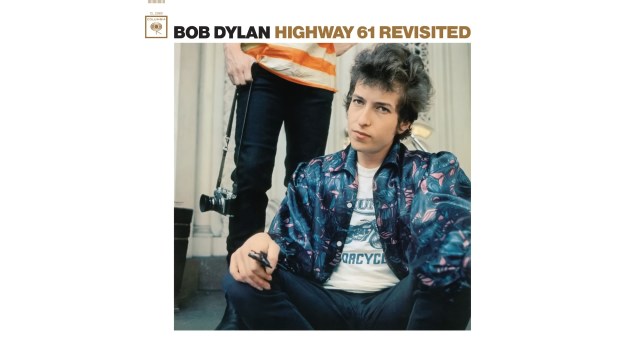
HP: I was just looking at an article the other day that mentioned the number of people who think that Adele wrote “To Make You Feel My Love.” Adele is amazing, but that should be credited to Bob Dylan, who is the only person to win the Nobel Prize for literature. So, talk about the importance of educating people on the art form that comes behind it.
Neri: Completely, and for 71 years, the Ivor Novellos have been doing just that. The thing we need to do now is to make sure the whole world really understands that these exist. Bruce Springsteen picking up the fellowship two years ago, being seen as a songwriter, being proud to be a songwriter. We’ve got other names like that coming in the room this year doing exactly the same. They’re known to the public as artists, but they really are these geniuses and they’re so proud to be recognized for their songwriting and the craft of it. So that’s why we’re very fortunate to be at the Ivors Academy delivering these awards and showing that respect.
HP: Do you hear from the artists how much it means to them when they get recognized for their songwriting?
Neri: Absolutely. And one example of one songwriter/artist we are recognizing is Rosalía, whose Lux album has blown up globally. She really considered carefully how she would approach the album. She spent a year writing the lyrics in 13 different languages. She then worked on the music and in the third year, bringing it all together by way of production and just making it a body of work, which is cohesive. There was a lot of thought and consideration, and she’s so proud that we are recognizing her as International Songwriter of the Year this year, where everyone else is just seeing her as this magnificent artist. She’s going to be turning up next week, picking up International Songwriter of the Year, and extremely proud. This is the Oscar equivalent in music. And there isn’t an actor out there who doesn’t want an Oscar.
LONDON, ENGLAND – MAY 21: Roberto Neri and Sir Elton John. Cred. Jed Cullen/Dave Benett Agency
HP: How do you deal with AI?
Neri: I think there is a genuine threat for some of the sound bed music you have out there. I don’t think John Williams has got anything to worry about, but there are some real concerns around how music’s used within the score. For your songwriters, though, for your Joni Mitchell’s, for your Bonnie Raitt’s, this is something that just can’t be replaced. The soul within the lyrics and the music and the way it’s conveyed is just something I can’t see being replaced by AI. And I think already, most of the public is starting to recognize, “I need to lean in further into human creativity now and try to avoid what’s being pushed towards them.” No one asked for this creation of AI. No one asked for a replacement of artists and songwriters. So, it’s being pushed on the public, but I think the public is already starting to push back, and I think people are going to go and see more concerts. I think they’re going to buy more physical products again. I think people are starting to rediscover what they were taking for granted as they started to get everything in their pockets. They’re starting to reverse that trend; the next generation, between 13 and 20, is already starting to disregard what those in their early 20s have taken as the normal way of consumption. I think this threat of replacing your average songwriter is something we shouldn’t be too overly concerned about. That said, of course, we are doing everything we can to fight back on the policy level and to ensure we’re safeguarding their rights at all times.