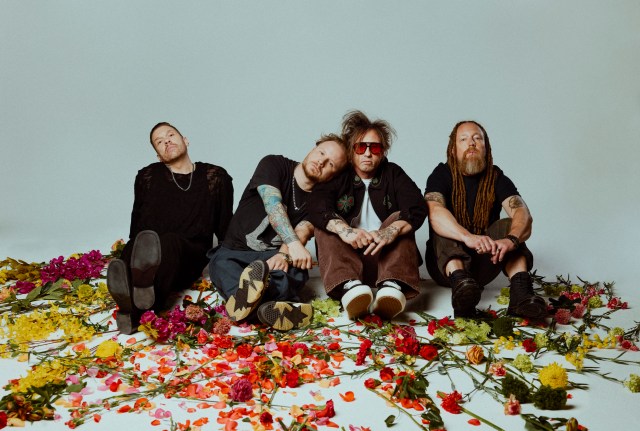
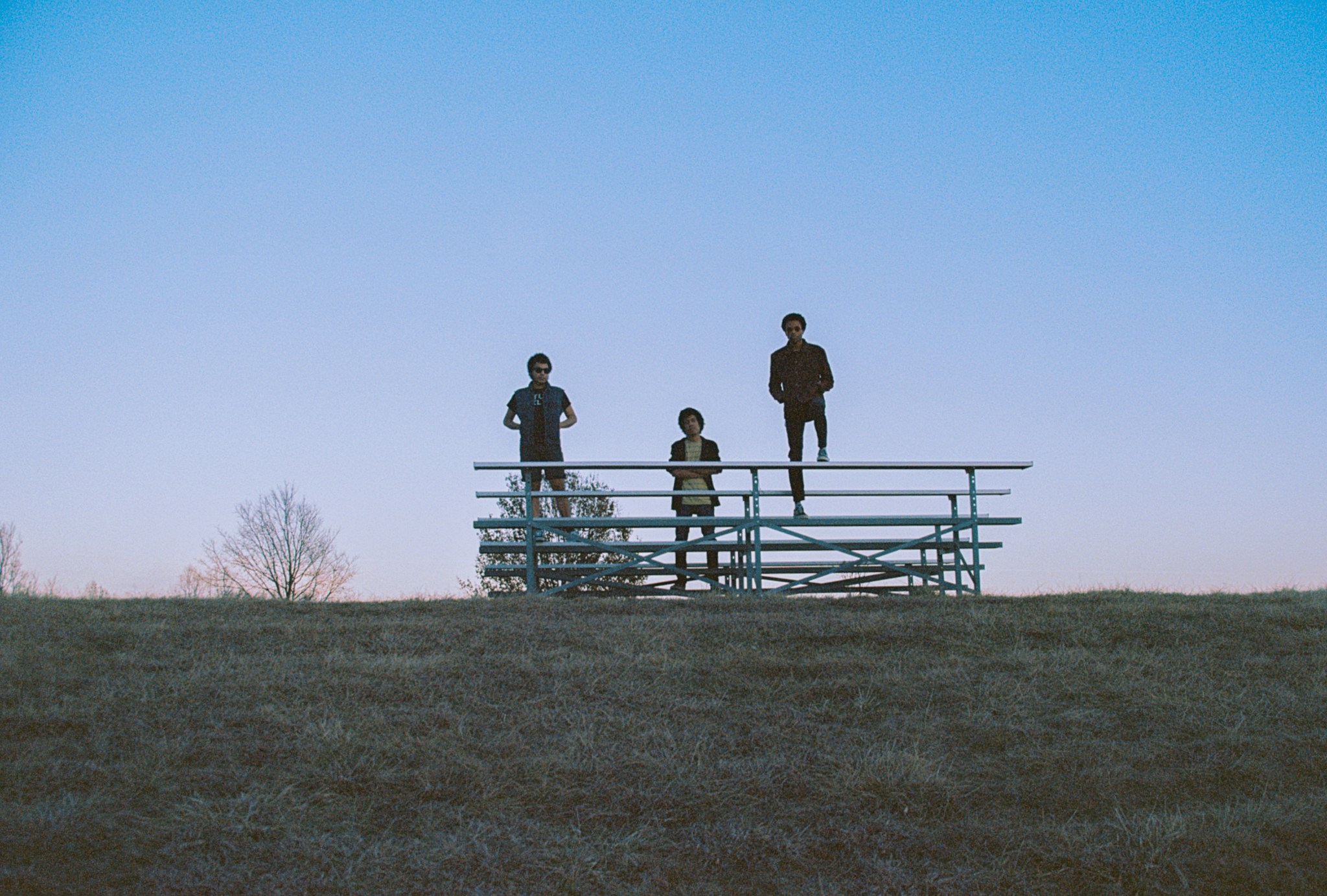
The rock trio Radkey has always occupied a space in the rock sphere that falls between reverence for those who came before and pushing the genre they grew up on further and further. The Missouri-raised brothers built their signature sound on a solid foundation of heavy riffs, hard-hitting melodies and solos, and a flexible ‘anything goes’ philosophy that takes even the most unexpected idea seeds into something that will rock, and rock HARD. With their new project Bedroom Sand, that opportunistic mindset was put on full display by Dee, Isaiah, and Solomon Radke, as a golden opportunity was dangled in front of them in an unconventional manner: a window of time to record their new record, as fast as possible, in a studio they’re not supposed to be in. That spontaneity is a defining characteristic of the band, showing that they will do whatever it takes to create, produce, and record, and to share the art they believe in so deeply with the world. It’s evidently working, as the group has earned co-signs from some of the biggest names in rock, such as Foo Fighters, Jack White, and Living Colour, to name just a few.
In this conversation with Hit Parader, the three brothers open up about the incredible circumstances behind their new record, how their upbringing led them to the music they love today, and the concrete mindset that helps them keep moving forward. Because for Dee, Isaiah, and Solomon, it’s never truly been about sticking to a script, following a formula, or staying inside the lines: it’s about chasing what feels honest, loud, unmistakably their own.
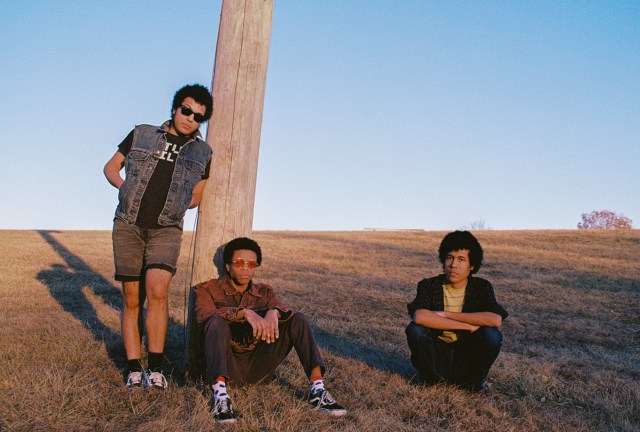
Hit Parader: With y’all growing up in the Kansas City area all together, what was it like making music as brothers under the same household, and how did that upbringing affect the way that you approached making music together?
Isaiah Radke: Man, it was really a really easy thing, because we were homeschooled, and we all listened to the same music. We all had our own preferences. We all liked the same music, but some of us were into other genres as well, and it really helped. We always liked each other’s ideas, which was cool, because they were all coming from different things that we enjoyed. And we were just home all the time watching movies. We love Led Zeppelin, and they wrote about Lord of the Rings, so we thought, well, we could write about Megamind, or superheroes, or write about Tom and Jerry, and if it’s vague enough, then it just sounds scary or serious, because our song “Evil Doer” is based on this story of Megamind, how the villain kills the superhero, then his life has no meaning. You take that story and make it serious.
HP: But if you don’t say a lot of specifics, it completely takes on a new meaning.
Dee Radke: Yeah, people interpret it.
HP: That’s super cool. Out of curiosity, what were the main artists that you listened to growing up, and how did those different influences affect the way that you approached making music together?
IR: For me, I loved Van Halen, Metallica, and I was absolutely into Iron Maiden and Elvis Costello as well; those are big ones.
DR: Yeah. For me, Weezer was a big influence, and Nirvana, especially with how they do their guitar solos. I really take influence from that, and I like to have the guitar solo call back to a chorus melody or something like that in some way. There’s still some shredding, but at some point it ties into that.
Solomon Radke: Yeah, and my favorite was Weezer, listening to them probably more than anything, and [The] Offspring, and Local H is a big one for us too.
HP: Out of curiosity, I read that a lot of your father’s punk and metal records were a big part of your upbringing. If you had to choose three records that your father introduced you to that had a major influence on the music you create today, what would they be?
IR: I think Weezer’s Maladroit is one for sure. For me, Ride the Lightning (Metallica) and This Year’s Model, by Elvis Costello.
DR: Nevermind (Nirvana), and The Color and the Shape by Foo Fighters.
SR: Yeah, I’d say Blue Album (Weezer), Maladroit, and Dookie (Green Day).
HP: Yeah, can’t go wrong with that. To pivot a little bit toward the recording process of your new record, Bedroom Sand, how did you guys end up recording the record at Syracuse [University] in upstate New York as a band from Missouri?
IR: It’s wild, because sometimes you’re looking for a New York show and you don’t get one, so you do upstate, you do Syracuse, you do Rochester. We were in Syracuse, and we met this professor of Sound Recording and Technology, and they had a state-of-the-art recording studio on campus. It was like, we need to make a record, we have all these songs, maybe we should do it there. We’ll come in while the students are away and blast through the album, while also experimenting with arrangements, which was wild for us because we usually come in with everything locked in. This time we were loose with it. It was a challenge, but it was cool.
HP: So you’re producing and recording all at the same time in a time crunch.
IR: Right, and in a crazy environment as well. The studio was cool, though.
HP: How did you first connect with that professor?
IR: He does gigs and sound engineering, too. He wasn’t working that night, but we met at a show, and he was into what we were doing. Usually, you meet people and don’t follow up, but this time it was like, we’re behind on albums, we need to do one fast [laughs].
HP: How did the day-to-day look for that recording, and how long were you in the studio?
SR: It was about a week.
IR: Yeah, and it was a pretty inspiring environment too, because we’d never been to that campus.
HP: What did the day-to-day look like, and did the pressure of not really being supposed to be there influence the creation/production of the record?
IR: The time crunch was definitely an influence. We didn’t feel too much pressure about being there, because we had the professor. We didn’t look too crazy [laughs]. Yeah, it made it fun. Some people had never seen us before and heard rock music going on in there, since they usually use it for archiving and some jazz, so it was completely different.
HP: That’s so cool. How much production versus tracking did you do?
IR: A lot was dedicated to tracking. Post-production came later. We were doing experimental stuff and had to commit and be happy with it in the moment. We were adding the last synthesizer to “Falling Out of Grace” in the last 20 minutes while things were getting packed. Yeah, we were cutting it close [laughs].
HP: Wow. You said the record is about doing “whatever it takes” to make the music happen. How did the Syracuse session embody that?
IR: It was just unorthodox. We usually work in the same studio in Kansas City, but this time we did something pretty different.
SR: We had to just go for it and hope it turned out fine.
IR: I was listening the other day and couldn’t believe we got it to sound like that in the time we had.
HP: For the record, being called Bedroom Sand, how did you land on that title, and what does it mean to you guys?
IR: It’s an interesting concept; we’re going to make it into a music video. It’s like an hourglass with magical sand, with stars and moons in it. You take a Q-tip, dip it in the sand, put it in your ear, and it makes everything psychedelic. We might do the Bedroom Sandman [laughs]. It’s a way to make a psychedelic video without getting parental advisory issues. It’s a made-up thing.
HP: How does this project feel different from previous releases, whether it’s the sound, the songwriting, or the mindset going in?
IR: We were trying to go backwards in some ways. With Victory, we had gone crazy on arrangements before, so this time we wanted to simplify, go back to hard rock melodic stuff with some punk influence.
SR: But we also tried new things, like our longest guitar solo.
IR: I clocked it, it’s a minute and seven seconds.
HP: That’s super cool. People say your live show is where Radkey ‘clicks’. What do you want people to feel after seeing you live?
IR: I want people to remember why rock exists and why people love to go to rock shows. Being free, being silly, doing whatever you want, being loud, going nuts, but there’s a reason why for everything going on on stage. It’s tight but free. I want people to think, “I want to be a rock musician.”
HP: And if a new listener only had the ability to listen to one song off Bedroom Sand, what would you recommend?
IR: I think “Victory” is a really good one, and we actually lead the record with that, because it is really fun to hit people with that song; it’s got the falsettos in there, it’s got the solo, it’s got the screaming, it’s got everything.
HP: Just to wrap up, what are you most excited about for the rest of the year?
IR: For me, it’s getting on the road.
DR: Yeah, getting on the road, playing a bunch of shows in front of big crowds.
SR: Yep, and I’m excited to see the response to the album from the fans.
Bedroom Sand by Radkey is out now.
See Radkey + More in Issue 7 of Hit Parader Magazine
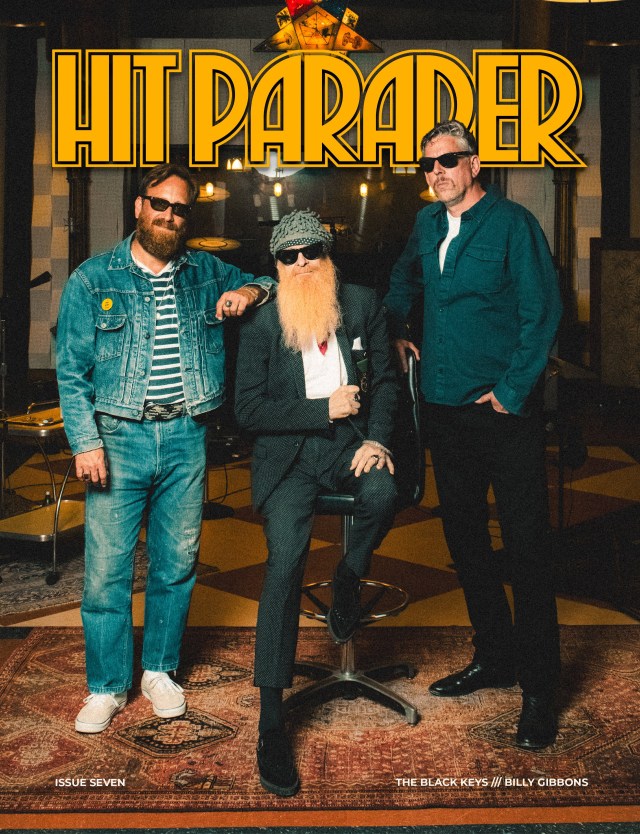
Hit Parader #7: The Black Keys x Billy Gibbons
July 2026 — $12.99