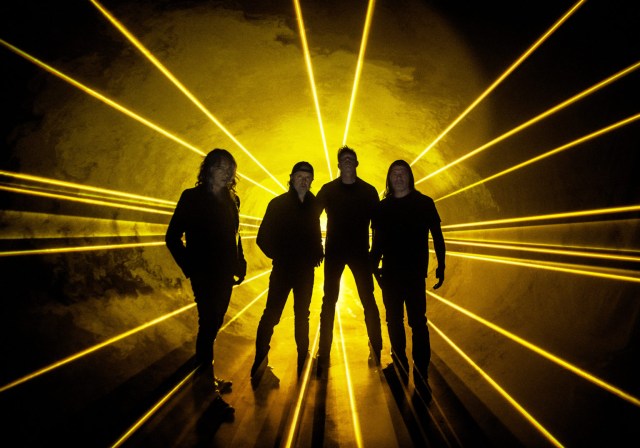
Sweet Pill: From Philly Basements to Union Transfer

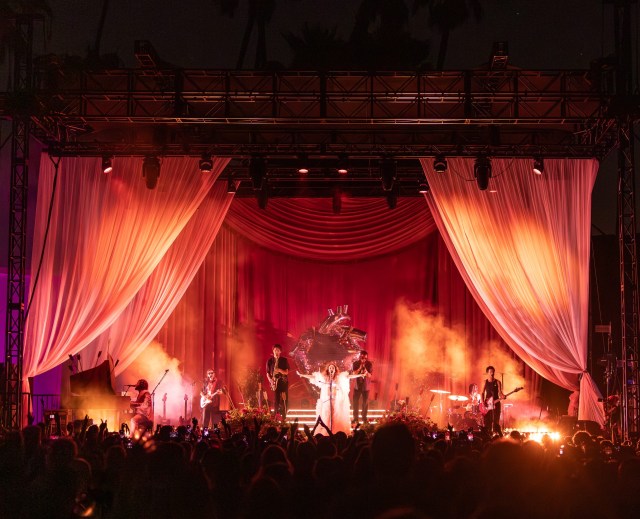
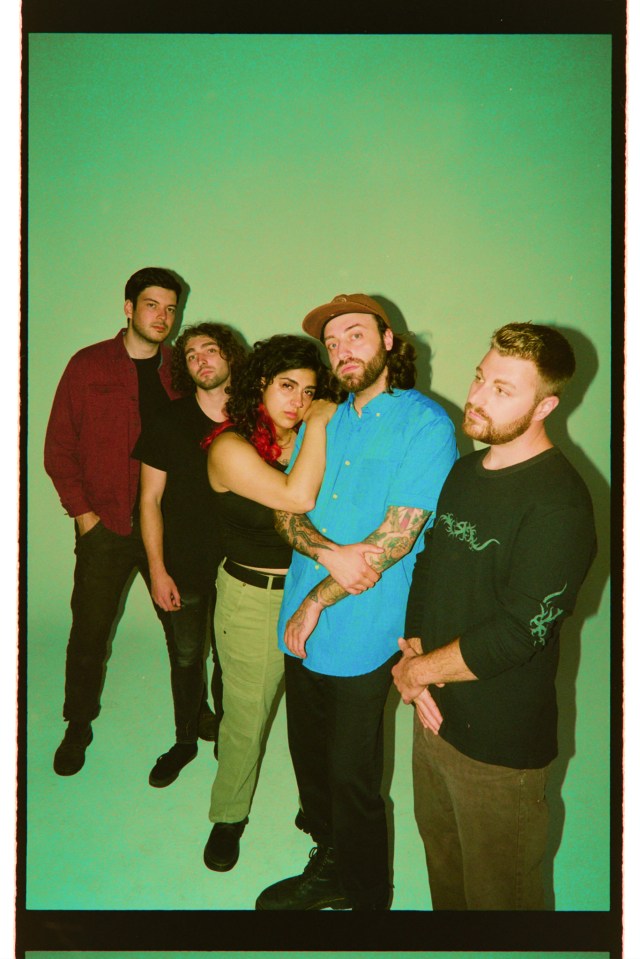
Sweet Pill is one of those bands whose songs and shows still carry the intensity and passion of the basement shows they came up in, even as their world, fanbase, and venues grow larger. Formed in Philadelphia’s strong DIY orbit, the emo/math-rock five-piece built their careers the traditional way: cutting their teeth in smaller rooms, relying on word of mouth, and crafting songs and messages that carry weight and travel much farther than the spaces where they were written and played. On their sophomore LP, Still There’s A Glow, band members Zayna Youssef (vocals), Jayce Williams (guitar), Sean McCall (guitar/vocals), Ryan Cullen (bass/vocals), and Chris Kearney (drums/vocals) channeled that raw collaborative energy into a bigger frame while keeping the scene in which they grew up in sight. Hit Parader sat down with all five band members to talk about the tour, the new record, and how, despite life’s struggles, there’s still a glow. 


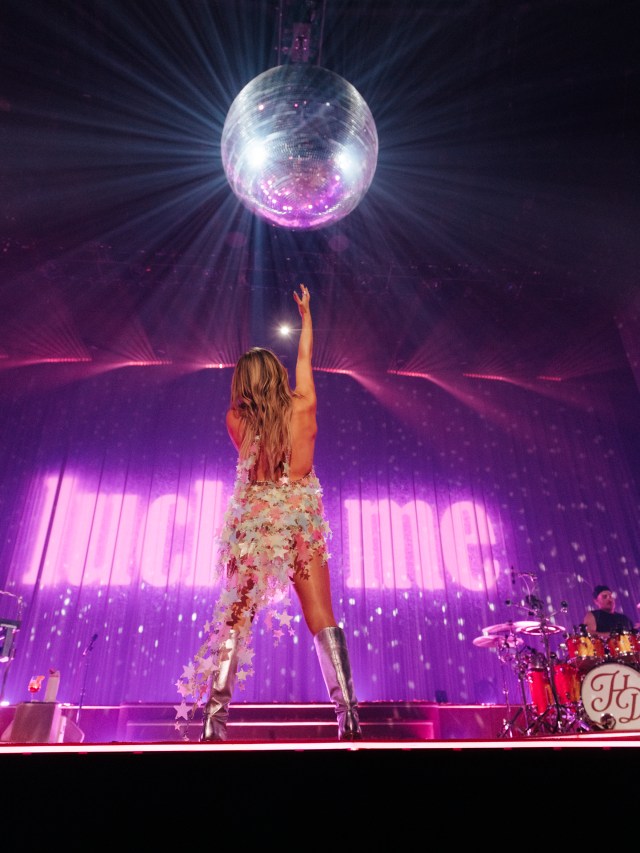
Hit Parader: With [Sweet Pill] being such a huge part of the Philly/Rowan DIY scene for so long, you’ve played some pretty quintessential rooms to the scene like Ukie Club, Underground Arts, and The [First Unitarian] Church. I’d love for you to tell me a little bit more about your first headline set at Union Transfer and what that meant to you guys personally after coming through the scene.

Ryan Cullen: For Union Transfer, for me, it was such a special experience. That was the first venue where I was going to real shows and seeing bands play. I think the first band that I actually saw at Union Transfer was La Dispute, actually, and then they were the first big band to take us out on tour. So that was a really cool full-circle moment, to be able to go and play in the room where I had seen La Dispute play, and then also having the experience of touring with them was incredibly special. That was really cool, to be able to be on stage. That’s one of my favorite venues to see a band, and it’s now one of my favorite venues to play.

Cred. Mitchell Wojcik

HP: And then with 4333 [Collective] being such a big aspect of the scene in Philly, how important has it been for the band to stay connected with that grassroots aspect of the community? What would one thing be that you would want to preserve from the scene in Sweet Pill as y’all continue to grow?

Jayce Williams: I think that we come from the world of DIY, and we’re still in it in our own ways. I book shows with 4333, and we all have other different tie-ins. We play in other bands. We’re involved in other parts of the scene. I think that because we have the perspective of being a world-touring band now, and we play all these rooms like Union Transfer, and we’re at the next level above DIY, it’s really important to not forget where you come from in that sense.

We don’t take this shit for granted. There are a million bands trying to do the same thing, and we’re so grateful that we even have the opportunity to take that next step. This is our passion, and we actually get to do it. It’s become our job. Sometimes it feels like a job, but most of the time I’m holding onto that feeling from the DIY world. I want to tie it into Zayna’s message about the last song on the record – how you’re letting go of your childhood – but this is something that I don’t want to let go of. This is what got me here, just setting up a show in a basement. That’s literally how we started. 


HP: On another note, your sophomore record, Still There’s A Glow, came out on March 13th! One thing I really love about the record is the emotional honesty and transparency while also tackling difficult themes. When writing these songs, how did you approach the heavier emotions in a way that was still healthy toward yourself?

Zayna Youssef: I think, at least for me, a lot of emo music is self-deprecating [laughs]. That’s an outlet for sure, a way to get those words out of you. But for me, a lot of my favorite music always has hopefulness to it. I think that’s something I’d rather promote, I think we all would rather promote. There are a lot of people who look up to Sweet Pill, and specifically, a lot of people who look up to me, just being a woman, or being an Arab woman, and being in emo. I think having hopefulness is important to keep the flame going.

It’s ironic, I say that because many of the album’s themes center around fire and burning, flames, smoke, extinguishing things like that ‘Still, there’s a glow’, there’s a notion that no matter how heavy it is, there’s a light at the end of the tunnel. I think, in general, it’s hard for me not to be honest when I write. Some people can write differently; for me, this outlet is the most honest I can be.

Cred. Mitchell Wojcik

HP: With the theming of fire being pretty cohesive throughout the record, was that something that was initially planned when you wrote the first half of the record, or did it find its way in as you kept writing more of [the record]?

ZY: From my perspective, the way that I think Sweet Pill successfully writes music is that we start with the music first. We hear what we’re working with, and I can hear the emotion through the sounds that the guys are playing. Personally, I have been starting an angry journey, discovering this emotion of anger in its full force. I wrote somewhere in my notes app, “Next album is gonna have themes of fire, anger.” It’s deep in my notes app, but I did write that down.

And then we started writing, and “No Control” was the first song written, and it didn’t really have anything to do with fire [laughs], but musically it has this drive, this burn to it, and that’s kind of where it kicked off. It was a little premeditated, but also, I thought, “Am I putting myself in a box? I need to think outside of it a bit.”

JW: I have one thing to add to that. In our writing process for this record, we took a trip up to the Poconos to rent a cabin to write some music, and we wrote this song that’s actually going to be the third single coming out, called “Slow Burn.” It’s way different than our other two singles. It’s pretty fast-paced, and I remember when we were writing it, we called it a ripper. Then someone said, “A burner.”

ZY: ‘Slow Burn’ was the first word I wrote in that song. 

JW: You probably said that immediately, yeah. 

ZY: When we were demoing it, I heard the “I’m in a slow burn,” that’s the first part I wrote, and then the rest of the song followed. That’s also the third song we had written for the album. It went in sequential order: “No Control,” “Glow,” “Slow Burn.” That one, that was the first word. So it was very early on where this fire theme was developing, and then the rest of the song and album, I tried to fill in the gaps. 


HP: And then, this was also the first release that was written fully by the band at the same time. How did that writing process affect the end outcome compared to Where the Heart Is or the Starchild EP?

Cred. Mitchell Wojcik

JW: We wrote Starchild as a group, but that’s not a full record, so we don’t really count it. Where the Heart Is, some of the songs were written [individually], but they all came together as a group. But Still There’s a Glow is from the start, all of us wearing our chef hats, and we all put in input.

ZY: Starchild was an EP, and we kind of had Starchild written, and then the rest was, “Oh, we, what do we do with it? Is that a single?” So we pieced it together that way. Still There’s a Glow was, we’re looking at a blank page, and we’re like, “Okay, we need to create an album.” And that was the first time we ever did that, because Where the Heart Is was just jams that we had had under our belts, and introducing it to each member. Members had switched and changed until we finally established Sweet Pill, then we made Where the Heart Is. And so this is very different, and I think that it puts a lot of pressure on us. 

Chris Kearney: Yeah, we actually had a lot of music written, and really wanted to narrow it down and fine-tune it to be the 13 songs. We probably had close to 30-ish ideas, and we just really wanted to come together and trim the fat and just make it as good as it could possibly be.

Sean McCall: As for our process for that, though, we went up and rented a cabin to come up with ideas from scratch two different times. And the rest of it is, it’s generally all five of us in a room with our instruments, waiting until somebody hears something that someone else is doing and being, “Oh, that’s really cool. Let’s build on that.” And then Zayna, your writing for the lyrics is a different process than that. But as far as for the music, it’s all five of us trying to structure it, and then Zayna thinking, “Oh, if I was going to write over this, we should cut this part in half. We should change this part to be twice as long.” Or, you know, Zayna has got all kinds of cool musical input on the actual structure of the song that way, too, which is super helpful for us.

JW: The way I describe it is, you know, when a painter paints a painting, it’s one person on one canvas, but writing a song collaboratively, the way we do, is five people painting on one canvas, and so you bump elbows, you have your own agenda, and you have your own style. And I think we work really well under that kind of pressure. And we do bump elbows, and we can argue the hell out of a part that we want to keep. But I think, from the beginning of this interview, we mentioned how Ryan mentioned how, you know, we are an emo band, but we all have these different influences, and we really sit outside of that box, too, and that’s really prevalent, because we all have input in the songwriting. Zayna doesn’t play an actual instrument. Her voice is an instrument, but she is just as involved in the songwriting as anyone else. And you know, it used to be just guitar boys, Sean and I would come up with an idea, and then we’d present it, and it would just be one riff, and then our song would come around it. But Ryan, one of our favorite songs on the album, the last song, “Letting Go,” started because Ryan plays something on the bass, and Chris has just as much input on melody, even though he’s playing an instrument that is not melodic, but he plays it melodically. I don’t know how to describe it. 

Cred. Mitchell Wojcik

SM: I like what you’re saying, Jace. Before I was even in Sweet Pill, watching all of these individuals, Ryan, Zayna, Chris, Jayce, separately or together, do their own things. They are all capable of doing something else completely, and doing awesome at it, but Sweet Pill works because there’s five of us who are kind of able to do that and, like you’re saying, Jayce, usually when you have that with other bands, I’ve seen it or heard it as, this part of the record sounds different because that person wrote this, and then another person wrote this half of the record, and it sounds like two different things. And I think we accomplish not doing that together, because it’s so collaborative, it doesn’t feel like two different records, but it definitely feels like you’re pulling a lot of influences into one place and kind of getting Sweet Pill, you know.

JW: I mean, and there’s no shade on this, but look at Modern Baseball. You have Jake songs, and you have Bren songs, right? 

SM: And that works for them.

JW: Absolutely. They’re both, you know, great in their own ways. We just have Sweet Pill songs.

SM: Yeah, it’s a little different.

HP: That’s awesome. And Zayna, you were quoted as saying that ‘the process of the record came from a lot of trial and error, until the album shaped itself’. What aspect, song, lyric, anything of the album, are you most proud of that spawned from that specific cycle of trial and error that otherwise would not have been in the record?

ZY: Well, I will say the first time we went to the Poconos, we birthed “No Control” and “Slow Burn.” And then the second time we birthed “Glow.” And then we kind of birthed the rest of it in our practice space, and I birthed my end of it in the studio.

SM: I was just gonna say “Smoke Screen” was one that we forget about, that was kind of going in between yes and no. It almost didn’t even make the record. And now here we are.

Cred. Mitchell Wojcik

ZY: Yeah, that’s a good example. That’s gonna be our fourth single, and that’s, the song is called “Smoke Screen.” And basically, the guys had one of the jams, and I was trying to write to it, and I was having a really, I was very blocked, writer’s block, whatever. I couldn’t figure out what to say. And, I mean, I knew what to say, but I didn’t know the best way to say it. But it kind of sat dormant for a while, and then, months later, in the studio, I just tried again after writing different songs, and it helped me figure out how to write this one that was sitting for a while. But yeah, there’s a lot of lyrics. A lot of lyrics came last minute, and a lot of lyrics came in the moment. A lot of lyrics were thought out for months.

JW: I want to just add to that a little bit, too, like what Chris said earlier, we had 30 songs written, and what I was mentioning before, how when we’re writing together with that metaphor, we do bump elbows. And I think it took Zayna saying to us, “Hey, I have this writer’s block on this stuff we’re working on,” which I think some of us were kind of, “What? This stuff rocks.” And then I’m so happy she said that, because then we wrote 12 more songs, which almost all of them made it on the record. And I think without that emphasis to kind of start from scratch again, we wouldn’t be where we’re at right now.

HP: With you guys scrapping almost an entire record, how did that feel in the moment, starting from scratch and just backburner a lot of material?

ZY: I think everybody has a different answer for that, because I felt good, but I think it was probably a little defeating for everyone. I mean, even after we restarted, I had to restart a million times myself, just lyrically. 

RC: I’ll say that it was really hard to move past some of the songs that we were working on, I thought that they were really cool. But the way that Sweet Pill writes music is, we will take a part of a song, and then we’ll get to the end of that part, and we’re like, “Okay, so what should come next?” And we start pulling from our catalog of different riffs and jams that we’ve made. And I wouldn’t be surprised if there are aspects of those songs that we scrapped that will make their way to new Sweet Pill songs in the future, after they maybe find a better home. So it’s still material that we have to play with. It’s good to have in our pocket for now.

JW: Yeah, going off of that, it is, in the moment, it was hard to start from scratch, but now in hindsight, I’m really grateful for it, because we do have that arsenal of stuff to pull from when we want to write again. And we had practice yesterday, and we have four ideas that we’re jamming on. [While] we’re rolling out our second album, we’re already working on the next thing, and there’s no stress involved. It’s just fun, and that’s how it should be. Writing this record was stressful for all of us individually, but we pushed it out, and I’m really proud of it.


Cred. Mitchell Wojcik

HP: Just to start to wrap up, this might be a little cliché, but if the audience could have one takeaway or central message after listening to the new record, what would you most want it to be?

CK: That shit rocks [laughs]. Sorry, you can give a real answer.

ZY: That’s a real answer [laughs]. I was gonna say, ‘still, there’s a glow’ [laughs]. I guess, if you want a real answer after that is that life keeps going, and you have a choice more than you think you do.

HP: And then just a fun one to wrap up. What are you most looking forward to in 2026 from all y’all?

ZY: I’m excited to tour. We did a lot of touring, obviously, these last few years, but this last year, we were doing a lot of outside of America, which was awesome, but I’m very excited to play Sweet Pill shows to our home turf, just to feel that familiarity again. So I think that’s what I’m excited for.

RC: I’m excited to play rock music with my friends around the world.

SM: I’m excited for this damn record to come out [laughs].

JW: GTA 6, fingers crossed.

CK: I’m excited to exist with my friends and play some cool shows and have a good time. 

ZY: I’m also excited to see some change happen, hopefully in this bleak, dark world.

SM: Fingers crossed. 

ZY: Still, there’s a glow, baby.


Buy tickets to Sweet Pill’s upcoming tour here.

Catch a 4333 Collective show here.


Read the article in print in Issue 4 of Hit Parader Magazine.

Hit Parader #4: Brent Faiyaz

March 2026 — $12.99

In this issue of Hit Parader, Brent Faiyaz steps into the cover spotlight for a rare, unfiltered conversation about artistry, independence, and the cost of doing things your own way. At a time when most artists race against algorithms and deadlines, Brent moves on instinct —scrapping albums, disappearing to finish ideas on his own terms,…

Sons Of The East: From Stage to Studio

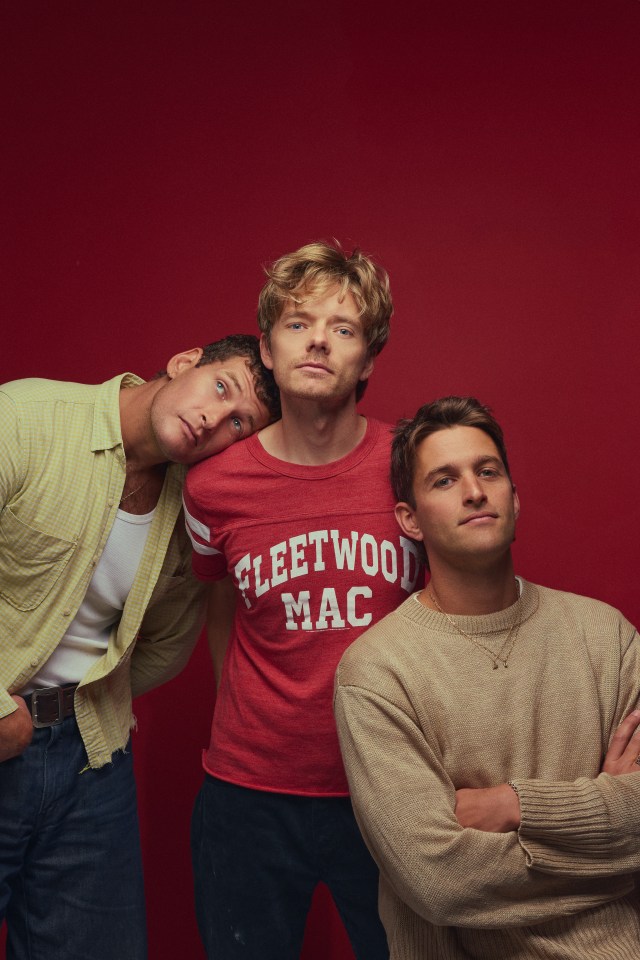
Fresh off the touring cycle that saw the Australian indie-folk trio Sons Of The East play over 100 shows around the world, they found themselves writing more and more music on the road: between shows, behind the stage curtains, and mainly away from home, a fact that shows through clearly on their fantastic independently released album SONS. Even as they build on their folk roots with their newest full-length release, the group of Jack Rollins (Vocals, guitar), Nic Johnston (Vocals, keys), and Dan Wallage (Guitar, banjo) explore new sounds and styles they haven’t before on SONS, widening their sonic palette without losing what makes their sound theirs. Hit Parader sat down with Rollins to discuss more: how relentless touring, ever-changing influences, and independent autonomy shaped SONS, and how, at the end of the day, it will always come down to playing music they love with their friends for as many people as they can reach. 


Hit Parader: So, just with the new record and the making of SONS, much of the songwriting happened while touring. How did being constantly on the move shape the emotional tone of the music?

Jack Rollins: Good question. I guess I don’t know, it does get a little lonely on tour, if I can be completely transparent. So I guess there is a bit of yearning and longing in some of the themes in the music, but also I think we just kind of felt crazy pressure, knowing that we did 110 shows last year, and then as each show came to a finish, we were like, “Fuck, we’re getting closer to coming home and then having to finish this album.” We already had a few songs ready, but basically, we had to come home and literally only had like two or three months to finish the album. We were kind of just, like, anything that was coming up we were putting down, and we’re happy with anything, or whatever, really. But yeah, there is a sense, you can kind of sense this travel, definitely some kind of yearning and longing for connection in a lot of the songs.

Cred. Pat O’Hara

HP: And then what are a couple of places that you or others drew inspiration from that your fans wouldn’t expect? Maybe a book, a non-folk artist, or a movie, or something?

JR: Good question! Yeah, I don’t know, we get it everywhere. I don’t really listen to folk music. A lot of us don’t really listen to folk music. I listen to a lot of really crazy, different stuff compared to folk. I listen to a lot of hip hop and Afro beats, stuff that’s so far removed from folk music. I still love folk music, but a lot of times, if I’m driving in the car, I wouldn’t put that on, unless it’s a nice sunset drive or something like that. We listen to a lot of War on Drugs, J.J. Cale; you can definitely hear little bits of that seeping into the new record. We’re just trying to make the pool of inspiration a bit bigger and wider in terms of its range, so it keeps things interesting for us.

HP: I love that. My personal favorite off the new record is “10 Days,” which is a really pretty ballad/ interlude. Tell me a little bit about the imagery and the storyline behind the lyrics, and the lyric in specific, “They say bad luck comes in threes”.

JR: Nick had probably a 95 percent hand in writing that song. Speaking of longing, that one came whilst we were on the road last year. He’s got a partner that he’s been with for a long time, and she’s wonderful. I think in those lyrics, you can hear Nick really kind of almost calling out to her as we’re on the road, and you know, it’s right there in the title, “10 Days.” It’s all about him coming home soon and how that’s going to feel, because it is always a bit awkward coming home to your loved ones, because you haven’t seen them for, we’d been four months last year. So yeah, coming home is kind of a weird thing, you’re like, “Is it the same? Is it going to be different?” So yeah, I agree, it’s a beautiful song that Nick championed there.

HP: What song off the record took the longest to finish, and what song seemed to flow out the fastest?

JR: The song took the longest… There are a couple that took us a while. I’m trying to think. “It’s Alright” took a while; we mucked around with that for months. But then, on the opposite end, “Sweet Thing” and “Time Will Tell” were done in a day each, which is really cool. “Pour the Wine” took like a few weeks. I’m trying to think. I can’t really remember now, I think we kind of repressed it because it was so fucking stressful.

HP: I understand. Sometimes I’ve noticed an interesting thing between some people I’ve talked to. If they work on a song for months on end, it always ends up being like, “Hey, I just like the original song,” and you kind of revert back to the first demo.

JR: Yeah, definitely. There’s this guy, an Australian comedian who’s also a musician, Tim Minchin, who talks about how it’s like a painting. You never really know; you’ve got to know when to stop adding paint to the art because you can overcook it. Sometimes it’s just like, when do you get to the point where it’s done? Having deadlines is always good because you can just go, “Alright, it’s time to stop, because we need to deliver this thing.”

Cred. Pat O’Hara

HP: If a fan only had the ability to check out one song off the record, what would you show them? What’s the “opus” in your opinion?

JR: Oh…

HP: I know that’s like a favorite child situation, but, 

JR: Yeah, a little bit. I don’t know. I think because the record has heaps of different genres on it, it’s hard to pick. Can do a top three? 

HP: Please!

JR: My favorite three are probably “Recognize,” “It’s Alright,” and “Sweet Thing.” When we were going through the album, those are the three that I’d listen to the most when we’d just finished with them, and be like, “Hey, this is cool,” you know what I mean? So I think probably those three, for me, I would pass on to a fan. But as I said, those three,  “Recognize” is like a War on Drugs-type thing, “It’s Alright” is like JJ Cale, and then “Sweet Thing” is like a full ’50s, ’60s-type beat.

HP: I was reading online earlier today, someone on the War on Drugs Reddit page said, “’ Recognize’ reminds me of [The] War on Drugs and this song rips.”

JR: That’s sick. 

HP: “Now I’m checking out these guys as well.”

JR: Fuck yeah, that’s great.

HP: So, just with this record, it adds to a long tradition of self-releasing records, accomplished entirely without major label backing. What has been the most meaningful reward and unexpected challenge of steering your music independently, and in what ways has the autonomy shaped your vision?

JR: Man, you ask great questions. Well, I think because we’ve always been independent, we’ve always had to learn on the go. We’ve been our own marketing team, our own publicity, our own design studio; we literally do everything ourselves. Especially Dan and Nick, those guys are so hands-on. Dan does so much with social media, designing merch, and making marketing schedules. We’ve really had to knuckle down and learn. We started this thing just to be musicians and not have real jobs, but now the admin’s crazy. We’re literally running a business and having to learn all that has been really important and amazing as well.

I think being independent for us is all about control and owning our own stuff. Our manager always said to us from the start, “Just own the product,” and we’ve enjoyed being able to do that. Sometimes it’s taken us a long time to release stuff, so not having overlords breathing down our necks has been nice for us to do things at our own speed. It took us ten years to release our first album, so maybe it took too long, but we’re happy where we are, enjoying playing and writing music, so life’s good.

Cred. Glynn Parkinson

HP: And you could argue it’s a lot more authentic without as many hands in the pot, so to speak.

JR: Exactly, exactly. You don’t want to have too many cooks in the kitchen.

HP: Just tell me a little bit more about the rest of the year and anything else you want to add for the fans.

JR: Yeah, so we just did an Aussie tour. I just did a month in Europe, and we’re halfway through a month here in North America. Then we’ll probably come home and chill out for a bit, just do some surfing and get some sun in, it’s an Aussie summer when we get back. Then we got Christmas and stuff. Then we’re just going to do some writing and hang out, and we’ve got a few things back over in the States in May, and a few gigs around Australia early next year. Working towards that and just getting to some new music, I think. Now, not having any crazy deadlines will be nice to get in the studio with no pressure and see what we can cook up. We’re having fun touring and looking forward to getting back in the studio and having fun making music again.

HP: And that’s what it’s all about.

JR: Exactly.


Listen to SONS by Sons Of The East wherever you stream your music.


Read the article in print in Issue 4 of Hit Parader Magazine.

Hit Parader #4: Brent Faiyaz

March 2026 — $12.99

In this issue of Hit Parader, Brent Faiyaz steps into the cover spotlight for a rare, unfiltered conversation about artistry, independence, and the cost of doing things your own way. At a time when most artists race against algorithms and deadlines, Brent moves on instinct —scrapping albums, disappearing to finish ideas on his own terms,…

New Constellations: Never Too Late To Believe Again

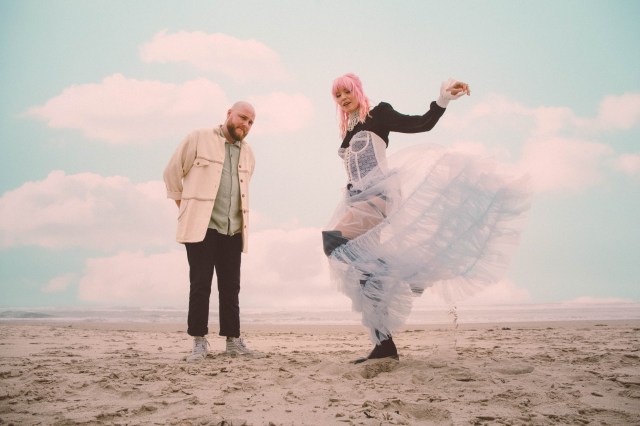
It turned out to be the right time for Harlee Case and Josh Smith of New Constellations to believe again, a mindset that has pushed the Portland-based synthwave duo further than they once thought possible. Their debut full-length project, It Comes In Waves, which releases May 15th via Nettwerk Music Group, represents the culmination of years and years of experimentation and, in turn, evolution of Smith’s production combined with Case’s deeply personal yet cathartic lyricism. This moment can’t be overstated in their already successful careers: It Comes In Waves feels like the opening paragraph of a novel you already know you’ll love, a fitting comparison for a band that, while on their debut full-length release, is just getting started, and they aren’t anywhere close to slowing down.

Throughout the conversation with Case and Smith, themes of creative freedom and lyrical expression emerge as essential to the making of this record, but none shine brighter than the theme that it’s never too late to do what you love and that hope is always around the corner, waiting for you to believe again. New Constellations is the definition of that, this interview shows it, and shows that New Constellations believes in you, too. 


Hit Parader: Just to jump in, your debut record It Comes In Waves comes out May 15th. That’s super exciting, congrats!

Both: Thank you!

HP: With this project being your first full-length release, what creative choices were you able to explore more in depth compared to the singles and other releases in the past?

Josh Smith: Yeah, I think for me, what was big was, I produced all of our music, and for this album we worked in a studio with a close friend of ours. His name was Cam Spies, and it gave me an opportunity to be just a musician in the studio and not running the session necessarily. So I think we got to explore some more musical ideas, just in terms of having someone there to help facilitate some of the ideas. So for me, I’d be like, “Oh, I’m hearing this keyboard part.” But if it was just me and Harlee in our studio, like we normally do, I’d be like, “Ah, it’s so much work to get the keyboard out, plug it in,” that I’d be like, “I’m not even going to bother.” So this was really neat to just be like, “Oh, I’m hearing this keyboard part,” and then by the time I’m finished with that sentence, the keyboard was already plugged in and set up. And he’s like, “All right, go for it.” So I feel like we got to, I personally got to explore some cool musical ideas that were just a lot easier to explore because we had a third person there facilitating a lot of the sessions.

HP: There’s less of a barrier to entry, in a sense.

JS: Yeah. When you’re the one plugging in the cord and pressing play and pressing record and then playing it, it takes a lot out of you. So it was really cool to be able to just be like, “Yeah, let’s do that.” And the same thing with Harlee and I working together too is that he got to do that for both of us. And so we got to toss ideas off of each other and enter a flow state without having to worry about the more technical aspect of the session, and we got to just focus on being creative.

Harlee Case: I feel like because this collection of songs is written over five years, we’ve written hundreds and hundreds of songs and explored so many different genres and ways that we were feeling with no “this is going to be on an album” at all. So when it came down to actually making the album, we had so much to choose from and maybe chose stuff that we wouldn’t have written if we were sitting down and writing an album right now. So I think the time that we had to explore a lot of different genres was really helpful as well.

JS: Absolutely. 

HP: That’s awesome. And with bringing producers like Cameron [Spies], Tyler [Blake] and and Mighty Mike to, in your words, “sprinkle some sugar on the record,” were there any specific moments or songs where they added something to the track that you didn’t imagine previously, but now can’t really envision the song without after?

HC: I bet you we have the same answer, Josh.

JS: I mean, I know one of mine personally is the song “Believe Again” that Tyler worked on. He added these drums. And the first time we heard it, I remember the moment we listened to it for the first time, we were both like, “Whoa.” I wasn’t even sure if I liked it at first. But now every time I listen to it or replay it live, I do the little drum fill he did [air drums], and I can’t imagine that song without it. And I listen to the old demo now and was like, “What was I thinking?” Obviously, those drums he put in, they’re so good, but it’s not something I would have necessarily gone with. What’s cool about that is it unlocks that in our brains now. And so now it’s like, “Oh, I wouldn’t have chosen drums like that, but now that I see someone put those drums on our songs, I’m like, ‘Oh, now I get to do that now.’” Now I know how and where, so it sort of unlocks that opportunity for me too.

HC: And then Mike on “I Disappear” just took out sections so it just has these moments of silence that are so sick. When we’re playing it live, it’s a big theatrical moment now of these pauses, and I just love that part.

JS: It’s like we have that chopped up “wake up,” and so there are parts after the chorus where everything drops out and she’s like, “Wake up.” And it’s just cool that we’re like, “Dang, that two seconds of silence makes the whole song.” And it adds – it’s so weird that a moment of silence can add so much energy live too, but that’s become one of our favorite songs to play live because we can pause and really rock it for a second.

HC: Yeah, it was just wild. I never thought about it like that, that it’s this absence of energy that brings so much energy to the live set, which is so weird.

HP: Super cool. And you mentioned “Believe Again,” and it’s such a wonderful track, and the lyrical content is so pertinent, not just to musicians but a lot of creatives in today’s ecosystem. I’d love to know how your relationship with the song shifted as your life changed since first writing it, and how you want the message to be perceived by people going through some of the same things you were.

HC: That’s actually one of the last songs that were written on the album, and that song was specifically me writing it to myself about 10 years ago, having the bravery to try again. And I think that every time I personally listen to it, I get so much energy to keep trying again and to reinvent myself in new ways and to believe in myself more and just continuously want to push the message to people that you can take breaks. You can completely put down your craft if it’s not the right time for you, but it’s also completely okay to pick up and try again and that it’s never too late. That quote, “never too late to be what you could have been,” I love that so much. And Josh and I put out our first singles of our entire career, our whole lives, at 30 and 33 years old. There would have been a point in time where I thought I was too old to make it as a musician anymore because I should have been something by a younger age or whatever. And I love to get to be an example of that, that it’s not true at all. It’s all up to us when we want to do things, and it’s just never too late.

JS: I think a song like “Believe Again,” what’s cool too about growth and evolution is that it’s never done. So this song is talking about a growth and an achievement that has happened, but that doesn’t mean that we’re done growing and achieving too. So I think a song like “Believe Again” can speak to the ongoing driving and achieving and changing and growing, and not just, “Oh, I got there and I’m done.” It’s like, “Oh, I got there, and that proved to me how much further I’m capable of going.”

HP: Love that. And you also mentioned some of your first singles, and “Hot Blooded” is actually on the track list for the record. When you think of the track today, what parts of its personality or lyricism still resonate with who New Constellations is today after five years of dropping music?

HC: I have a pretty bad habit of nearly all of my songs, all of my things that I write, coming from this hopeful, yearning space. And I recently found footage of me when I was five years old, and I was writing songs like that. So I think that there’s something embedded in me deeply that will always have this desire and push and pull that’s within me. And so I don’t think this song will ever go out of style with just the way that I naturally feel about life. 

HP: And with the topics discussed on “Dandelion” and “I Disappear,” how do you approach vulnerability in lyricism in a way that’s healthy to you and cathartic?

HC: Yeah, I tend to freestyle, and I think that that in itself is a type of therapy because I am allowing everything to come forward. And sometimes there’s stuff in there that I don’t feel should be out in the world or that I want to be repeated a bunch of times, but the majority of the time I feel like it does. I feel like just being really honest with myself about how I’m feeling and allowing myself to just put it all out there is really healthy. And I think too that I really try to reflect on every song, that I’m like, “Am I putting too much blame in someone else’s court?” Because I always like to bring it back to, “I have a part in this. I have a part in the relationships that I’m in.” And so a lot of the editing process for me a lot of times will be, “How can I own my part of whatever I’m saying if it’s including someone else?”

JS: I think what’s great about a lot of this stuff is as personal as it can be, there’s a lot of it that’s universal too. And what we’ve discussed in the past is Harlee writes these super personal songs about super personal moments in her life, and then sometimes those moments pass and you’re like, “Well, I’m not going through that anymore. I’m not that person anymore.” But what is cool about it is that somebody is going through that at all times. And so when you write a song about a situation, even if that’s not a situation you’re struggling with anymore, you having written that song – or her having written that song – helped her process and go through that time. And now people can hear that song, and it can help them process that and go through that time as well. So I think we’re able to continue to sing these emotional, specific songs even once we’re past those moments because we know that it’s helping someone else, potentially, that is going through that at the time.

HP: Music is always a very personal medium of art, and it can always be interpreted in different ways;  I love that viewpoint on it. So just to wrap up, if after listening to the new record the listener had to come away with one takeaway or feeling from either the lyrics or the musicianship, what would you most hope that to be?

JS: Harlee and I talk about wanting to inspire people and inspire hope a lot, but we don’t necessarily want to tell people where to spend that hope. So my hope for our record would be that if someone listened to it, they would feel an inspiration or hope to then get to use however they feel like they need to use it in those moments. But I would just want someone to feel better or something afterwards, energized in some way. But I don’t want to tell them how they should be feeling. I just want them to be feeling something.

HC: Yeah. And I mean, being an artist is so special because I get to feel so understood in writing these songs and then get to hear how people felt understood. And so I hope that the lyrics and the music can help them to understand themselves more and be like, “Oh my gosh, that is straight out of my own brain. I couldn’t put the words to it, and that’s exactly how I feel.” And sometimes music has helped me so much in those ways to even move through challenging feelings. Sometimes putting a name to it is the first thing to being able to release it. And so yeah, I hope that people can understand themselves more and relate to themselves and us more and have faith for the future and hope for the future for themselves. The last song we wrote on the album, “Edge of the World”; I really hope that a lot of people really love that song because I feel like there’s something really powerful about seeing the world as your playground and being able to receive the goodness of: we’re having a really hard time, but there’s also a lot of beautiful things to come.


New Constellations’ debut album It Comes In Waves is out now.