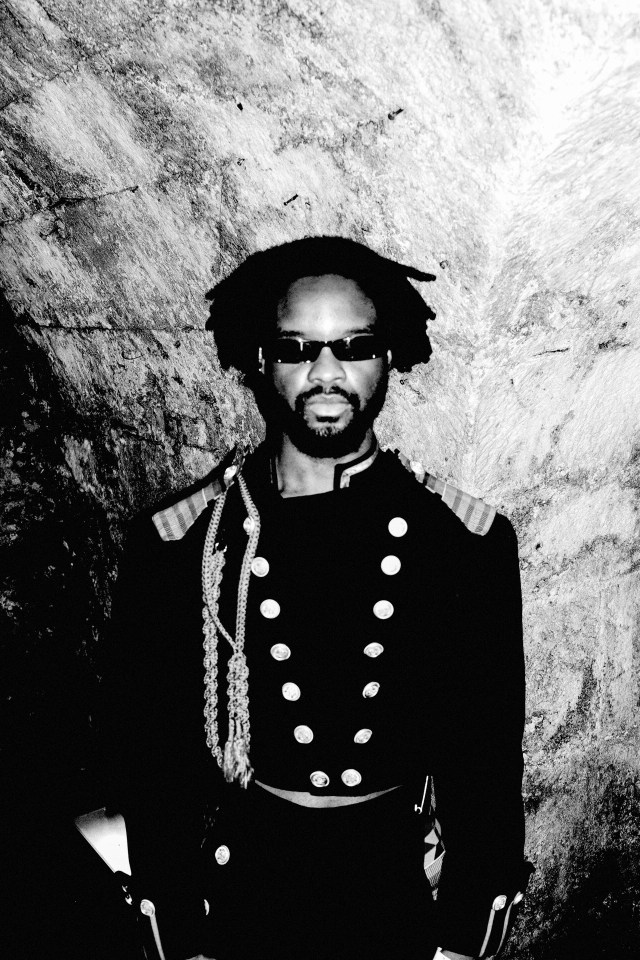
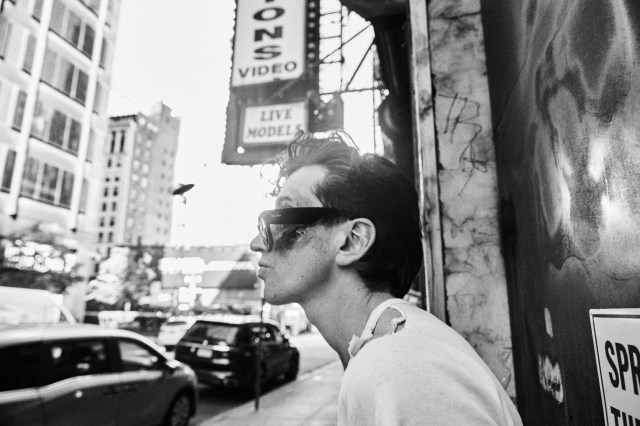
Surviving to Create Something I Love: Des Rocs on To Hell and Back 

Though the bustling streets, grimy clubs, and the never-ending skyline of New York are a place where music thrives most fruitfully, there’s a specific mentality that powerful modern rock band Des Rocs’ Danny Rocco still holds with him, even after all the years of success in the city: ‘Do or die.’

“There’s a certain survivalist mentality from my earliest years that continues to this day, and that’s just so integral to the DNA of the music. I put so much thought and care into every word and every note because you never know when it’ll be your last,” says Rocco, a line that resonates with most creatives at their core. Art is incredibly important and deeply personal, and when you’ve put this much heart into your craft as Rocco has, you are always going to give it your all. This directly ties to the themes in his most recent records of self-perseverance and ‘getting knocked down and getting back up.’ The questions of “Can I really do this thing? Can I really make music that I believe in, that I would fight and die for, and that I would tour all over the world for?” are posed by Rocco throughout the record but are easily answered once you just listen to the music: of course. 

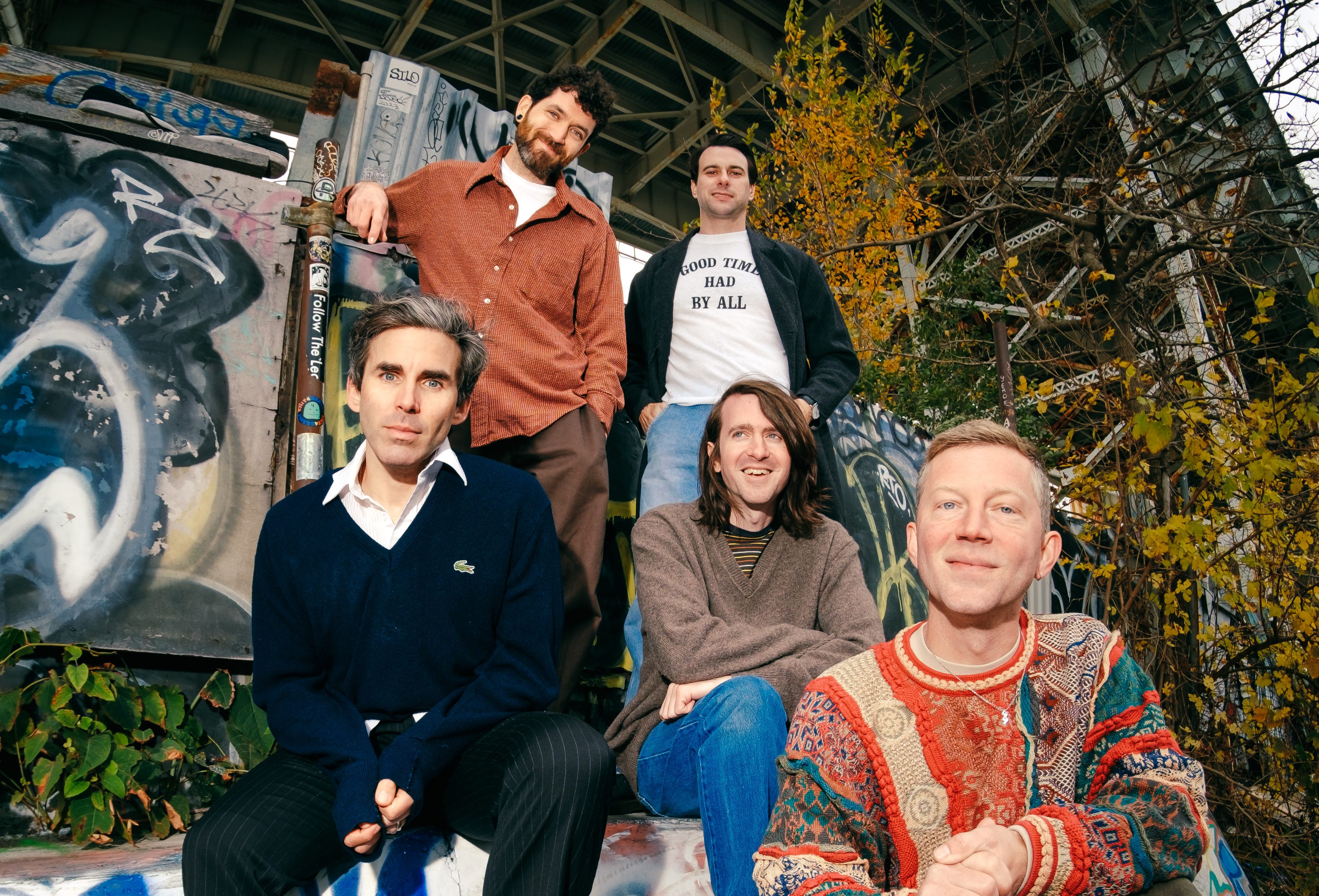
Photo Cred. Sam McGIll

Des Rocs has always pushed the boundaries of rock ’n’ roll while paying homage to the greats who came before, which has helped him get noticed, share the stage with, and earn co-signs from some of the greats: The Rolling Stones, The Struts, and Muse, to name just a few. Channeling classic rock grit through a modern lens has always been Rocco’s forte, and it has never been more apparent than on their new record, To Hell and Back, releasing June 12th. An extension of everything Des Rocs, yet pushing the boundaries further, the record slaps you in the face with its powerful riffs but also asks you questions that might be tough to hear. Described as a ‘new chapter’ for Des Rocs, Rocco says that To Hell and Back differs from previous releases because, emotionally, it “deals a lot with physical pain and existential dread, and then also delves into the duality of the onstage performer versus the vulnerable human being offstage.” It also differs in sound because “we recorded it live as a band, and that was a big distinguishing factor.” 

Recording the whole band live in the studio felt like the only choice for Rocco, as he said, “We really wanted to capture the raw energy of the band that we have live, and it’s super electric, but it’s hard to pin down in the studio,” and what better way to capture the energy of a live band than to perform the record live. To “go off the grid (click),” to “not rely on technology,” to “not rely on copying and pasting,” to be able to “do the album as full takes front to back” allowed Rocco to do something that is difficult to put into words: “to capture that kind of intangible magic that defines so many of my favorite records.” Once you listen to it, you know exactly what he means; music is meant to be human, and music that feels human draws you in in an unexplainable fashion. 

Another thing on a long list of factors that really sets Des Rocs apart from the rest is Rocco’s vulnerability in his lyricism, which only adds to why his music connects with so many people. Self-described as “hard rock with a heart,” he states, “I love big, powerful, masculine riffs, and then I love to be extraordinarily personal and have a much more modern approach with the lyrics.” He adds, “To really connect with people, you have to reveal yourself, and for me, making music is a real form of letting go and letting things out that I can’t express in any other non-musical way.” Deep, personal emotions combined with screaming guitars are what Rocco’s songwriting thrives on, though that level of self-revelation could feel alarming to others not in Rocco’s shoes. The line for what is right to share is an ever-shifting thing, changing song by song, to what feels right at that time. “When you start writing, and you pick up the pen or the guitar, wherever it takes you lyrically is where it’s meant to go. Sometimes that can be a very surface-level statement, or sometimes it can get very deep and get under the hood… I don’t really draw lines. I’ll dive into some pretty dark, deep, and personal subjects, but at the same time, I’m not going to reveal my home address [laughs],” he states. Even though that line is always changing, To Hell and Back is a perfect representation of lyricism that’s personal enough to feel cathartic, yet accessible enough to connect with the millions of Des Rocs fans. 

Photo Cred. Sam McGill

With Rocco wanting this record to feel like a band playing live in your headphones, it’s only natural to infer that Des Rocs puts on a hell of a live show and has always been a point of pride for the band. The end goal has always been “to create something that is real and something that is extremely entertaining. If you’re going to come out, spend money, and buy a ticket, maybe get a babysitter or take off from work the next day, you’d better get your money’s worth and get a show,” which is the mentality every performer should have. The live show, in and of itself, is a separate art form from simply playing music. As Rocco states, “It also has to be dynamic. It can’t be one note. I’m not going to just hit you over the head with bangers for 90 minutes. It needs to play like a good film where there are highs and lows. You will be entertained, you’ll cry, you’ll hit all these different emotional notes that make for a well-balanced modern rock and roll performance.” 

This hyper-intentional live show curation isn’t something Rocco perfected overnight, and he has even admitted it’s still being worked on. He states that “I go through many different variations of the shows before I get to one that I like, and even when I get to one I like, I’m still tweaking on the road. I still leave in little blank spaces for a choose-your-own-adventure kind of thing, where it’s like, okay, we could go here, we could go there at some point,” which shows even further how incredibly dedicated to the craft he is and that, ultimately, he will always put on a show he’s proud to put the Des Rocs name on. 

Photo Cred. Sam McGill

All of this artistry, all of this success, and all of this vision have been quite the journey for Des Rocs. With To Hell and Back as the third studio album and music released since 2018, Rocco has come a long way in those eight years. In reference to that growth and what might surprise 2018 Des Rocs with To Hell and Back, he said he’d be surprised by “how fantastical some of the records have gotten, how larger than life some of them are, because I’ve always wanted to make humongous rock music that’s really ambitious in its scope and its artistic sentiment. I think I’d be very pleased and satisfied with how expanded I’ve gotten.” A true testament to all the years grinding away as an artist in New York, with a sense of contentment with how his art has progressed, one couldn’t ask for more. All of this hard work shows what Rocco’s ethos and mindset embody: a fighter, a dreamer, and a survivor, which he also says the record is for. But if he had to pick one group for the record to be heard by, it would be the survivors. He says, “So much of what I do is just about surviving and creating something that I love and believe in.” Isn’t that something that we can all latch on to.


See Des Rocs + More in Issue 7 of Hit Parader Magazine.
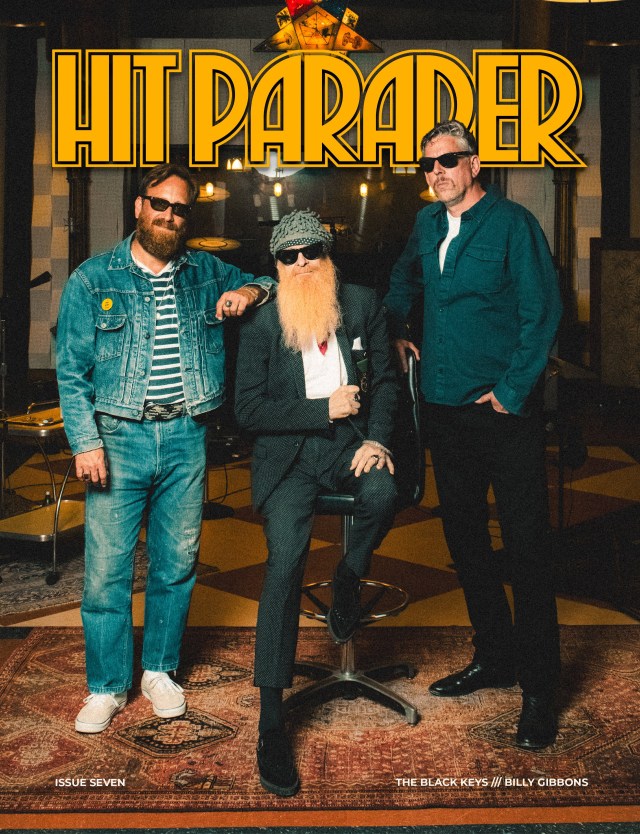
There Are Good Times To Come If You Fight For It: With Genesis Owusu

If “music is inherently political,” as he phrases it, then Genesis Owusu’s (real name Kofi Owusu-Ansah) previous concept album about a roach fleeing God was politics drenched in obvious metaphor; on his new project, REDSTAR WU & THE WORLDWIDE SCOURGE, he rips the mask of metaphor off so there is no misinterpretation, no dilution, and no room to hide. The Ghanaian-born, Canberra, Australia-raised genre contortionist is stepping out of metaphor as simply Kofi, releasing his most pointed, unfiltered, unflinching work to date. His third full-length, released May 15th, arrives after a meteoric rise to fame that has established him as one of the leading visionaries in modern alternative music, with a blend of rap, punk, and pop that feels impossible to label and even harder to blend as seamlessly as he does. 

Across this work, it is evident that he’s less interested in building alternate realities, as in past full-length projects like STRUGGLER and Smiling with No Teeth, and more interested in forcing the listener to sit in the one we are in today; bigotry, income inequality, and cycles of violence are all part of it. The stakes feel higher now: there is nowhere for Kofi to hide lyrically, and you can’t hide because you live it. At a moment when many artists are pigeonholed into choosing either to live in comfort or to confront these issues, Genesis Owusu is hellbent on the latter; we had the amazing opportunity to sit down with Kofi to talk REDSTAR WU & THE WORLDWIDE SCOURGE, the climate that shaped it, and what he hopes translates to the listener. 


Hit Parader: Just to start off, you said in a previous interview that your work is defined by being kind of on the cusp of different identities and cultures. How does that in-between space kind of shape the way that you approach themes, not only on this record but also on previous records?

Genesis Owusu: I think, for the most part, it influences the sonics. I grew up in a fusion of cultures that also created the platform for a fusion of sounds. My family immigrated from Ghana to Canberra, Australia, so I was going outside at school in the playground, and it was AC/DC, pub rock, and then I was going inside, and there was Jollof rice cooking on the stove and Ghanaian highlife playing. Because of the fusion of cultures, there was already an innate fusion of sound, but also a fusion of perspective, seeing how the same situations played out in different parts of the world, how they were similar, how they were different, things like that. It’s all one big fusion, and it comes out in the music.

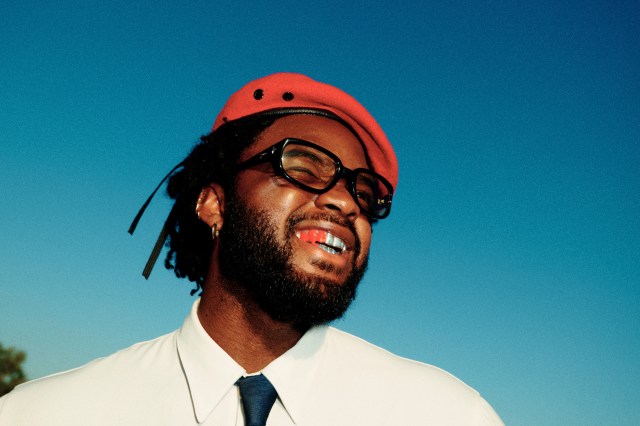
Cred. Jamieson Kerr

HP: I read before that you grew up in a community that was not predominantly Black and/or Ghanaian. How did that experience of growing up Ghanaian in Canberra play into that side of your music as well? 

GO: It kind of drew the line from the start. I was a Black man in a predominantly white place. There was no confusion as to the fact that I was an outsider, and a lot of the time it wasn’t in any kind of malicious way. Sometimes it was, but a lot of the time it was just, ‘Whoa, you’re different, you’re the first Black person we’ve ever seen.’ And I had just come from a country full of Black people. I was like, damn, there are a lot of white people, this is crazy. But I think the fact that the distinction was so apparent made it easier for me to be like, okay, I’m already the outsider, so let me just do things differently. Let me not even try to contort myself in any way to try and become something that I’m not. It was like the ground was already laid for me to just do my own thing, because everyone can already tell that I’m different, so let me just be different and lean into it.

HP: You said, in contrast to STRUGGLER and Smiling with No Teeth, REDSTAR WU [& THE WORLDWIDE SCOURGE] is very much ‘you discussing the here and now’ versus the world-building that you did in other projects. How did stepping away from metaphor change the emotional weight of making the record for you personally, and the way you approached different themes?

GO: I think it made it so there was nowhere to hide. For both me and for the listener, the world is chaotic and confusing enough, so I can’t be trying to obscure anything any further. I just need to cut through. I need to say what I want to say, and you need to hear it, whether it’s uncomfortable or whatever. Which is very different, because usually I can talk about things, whether they’re uncomfortable or foreign, and dress them up a bit, make them a bit pretty or fantastical. Whereas this time it was kind of like, I just need you to hear this as directly as possible. I don’t need any fantastical interpretations of what I could mean. It’s like, no, this is what I’m saying, and that’s what it is. Whether that comes with backlash or people not liking it, that’s just what it is. I’m going to put it out there, and what happens happens.

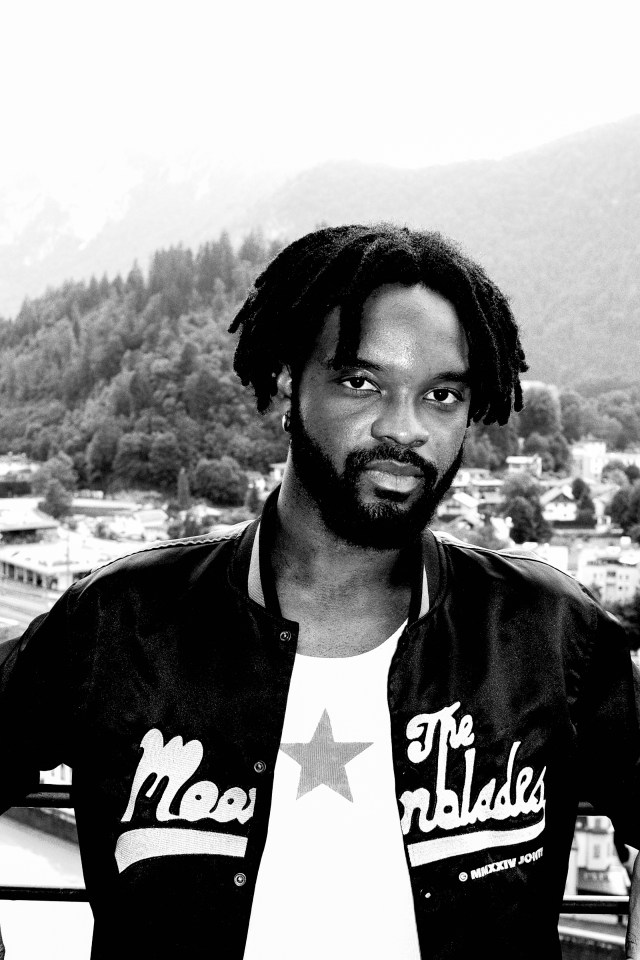
Cred. Jamieson Kerr

HP: With enough noise in this world as it is, there’s a sense that being as direct as possible is really needed. I hate to think that there is backlash to direct messaging in such a hostile time, but is that something you’re aware of?

GO: Yeah, there’s definitely been loss of opportunity, both from people taking opportunities away or me refusing opportunities based on my own morals and deciding to work with certain brands or people. There have been people that are pissed off. There have been death threats. There’s also stuff that I’m sure I haven’t realized, like maybe being secretly crossed off people’s lists. But there has also been a lot of relief from people to hear things being said directly. It’s great to resonate with people, whether they’re like-minded or not, just the fact that the music has sparked a thought or a conversation that maybe they’re not having regularly. The DMs have gone crazy, positively and negatively, but that’s what I came to do. I came to say what I need to say and spark conversation, and it’s happening.

HP: Art is inherently political, no matter how you want to dress it up. 

GO: I definitely feel like if you don’t agree with the messaging, it’ll be a hard listen. But at the same time, it would actually be great if there were people who didn’t agree with the messaging and were still open enough to listen. Maybe it sparks something, or even if they don’t agree, as long as it sparks some sort of thought or conversation, I’m happy with that.

HP: I love that. Every era you’ve had with album cycles, you’ve changed your look each time, and this time you said it’s more ‘just Kofi’ rather than a character like the past two records. How did that decision, along with the bluntness of the record, change the way you approached the visual aspect of the rollout, like the documentary, the photos, the styling?

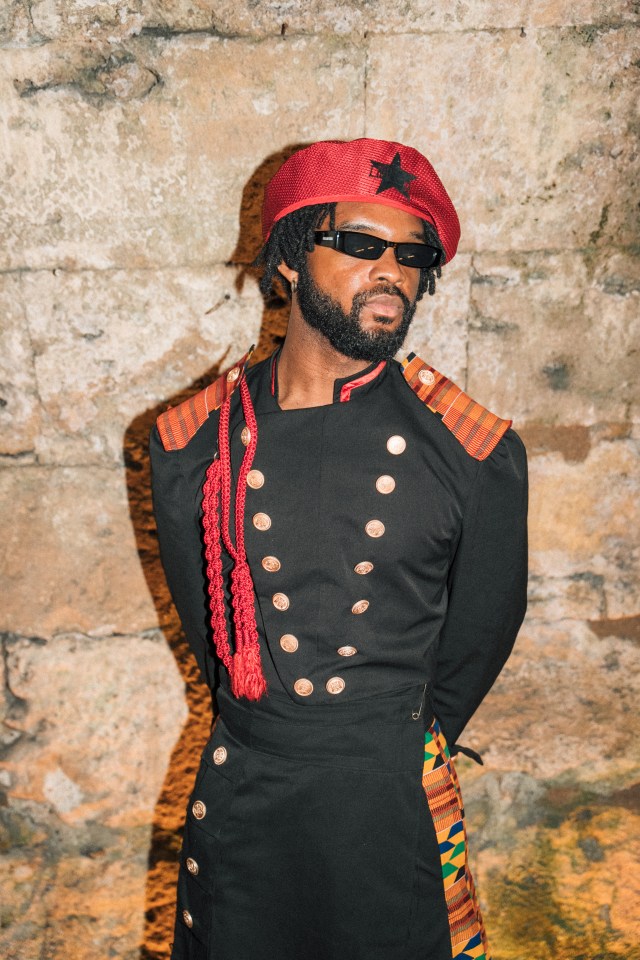
GO: I brought it back to me as a person, and I think going back to Ghana was a really pivotal point in all of that, not only from an artistic standpoint but from a personal standpoint. That was my first time going back to Ghana as an adult, so being able to see my country through a fully formed perspective was really important. It allowed me to see the fullness of my heritage, my family, my lineage, especially if I was going to make an album as myself, not as a character, but as Kofi and what that means. It became the center point of all the visuals. Music videos were shot there, the album cover was shot there. It made it more real and more personal.

Cred. Jamieson Kerr

HP: That’s amazing. And correct me if I’m wrong, but a lot of the film crew and personnel you worked with were locals?

GO: Yeah, the director and creative director we flew from Australia, and then everyone else was from Ghana.

HP: That’s awesome. Tell me more about that experience, and the motive behind that intentional decision. 

GO: Definitely. Especially with the ‘Stampede’ music video, it was very much like ‘I’m not going to go to Ghana and impose my will on Ghana’. I’m not going to go there and say I want it to be like this or that. It was more like observing what’s already there. You see bike riders in the video because there’s a huge bike-riding subculture in Ghana, and horse riders on the beach because there’s a huge horse-riding subculture. It was me going back as an adult, serving as the conduit to show my listeners in the West, America, Australia, and the UK, what Ghana is. It was important to have locals around us to show us what Ghana is like, so I could then show the rest of the world.

HP: A form of documentation versus directing, in a sense.

GO: Yeah, exactly.

HP: With REDSTAR WU [& THE WORLDWIDE SCOURGE] being a third album, and the first two already stacking awards and critical praise, how did that history shape the pressure or freedom going into this record?

GO: I remember making my second album and feeling a lot of external pressure because of the success of the first. I was thinking, ‘What do I do? Do I try to make hits? Do I try to do this or that?’ And then that second album ended up being about a roach running away from God, and it turned out really well. So when people accepted it and it got critically acclaimed, it showed me that I’ve cultivated a listenership that will go on the journey with me. So, going into the third album, I was comfortable doing what I wanted. Staying true to who I am has always worked for me, so I didn’t feel pressure. I just spoke my truth. I went to Wales to record it with my friend in his church, and it was just the two of us for about two months, throwing sounds at the wall, seeing what stuck, just jamming and playing. This is what came out of it.

HP: That’s insane. I read that your routine was just wake up, breakfast, talk politics, and make music all day for about 60 days straight.

GO: That was pretty much it, yeah [laughs]. 

Cred. Jamieson Kerr

HP: It’s crazy. How did the ability to fall into that routine, and keep outside variables constant, affect your creativity?

GO: The fact that there was nothing else to do helped. I was in a small town called Barry. Beautiful place, beautiful people, real small-town living, but not very exciting. Everything was happening in the church. If you went outside, there wasn’t much going on, so the routine and lack of distraction made for a really vibrant creative experience.

HP: Fair enough. I read about a conversation you had with your manager, asking if you were willing to ‘die on this hill’ in terms of your stylistic approach. How has that ethos steered you creatively while building something as direct and politically charged as REDSTAR WU?

GO: That ethos is what made the album what it is. Music is really important to me, and the reason I make it is important. It’s how I communicate; it’s my therapy and catharsis. Trying to dilute that for money or fame would be a betrayal of self. I always tell younger artists to define their version of success early, because people will try to impose their version onto you. You might reach what others think is success and still feel empty. My definition of success is expressing myself authentically through my art and living comfortably off it. If I have to distort that to make more money or appeal to more people, I’ll feel terrible because I’ve betrayed myself. I know what I’m here to do: to speak my truth and push boundaries. That’s why I’ll stand on that.

HP: If all the external noise disappeared tomorrow, accolades, touring, everything, what would you be most proud of?

GO: Just the art itself; everything else has always been a bonus. The fact that I’ve been able to create political, abstract, authentic art and put it into the world is something I’ll always be proud of. I would have been proud of it even if no one listened. Yeah, I think, regardless of all the external noise, that’s something that I’ll always be proud of.

HP: Out of curiosity, when you and other people have said your music is a piece that is inherently political, what do you personally hear in that word? Is it a label that you either consciously embrace or feel as if it’s just a natural part of your music and your story leading up to it?

GO: I mean, life is inherently political. Going back to the start of our conversation, growing up as a Black man in a pretty white area taught me almost immediately that my life, in particular, is inherently political. I think my music, from the start, has always been political, but because I dressed it up in more fantastical ways, you could listen to the sound or enjoy the stories without necessarily engaging with that layer if you didn’t want to. Now it’s front and center, and that is by design. As a person, I’m inherently political, so my art is always going to be inherently political, because life is inherently political. That’s just what it is.

Cred. Jamieson Kerr

HP: That’s fair. In the same way that Kendrick Lamar’s Good Kid, M.A.A.D City is a more digestible medium, but it’s inherently a political album, and then To Pimp a Butterfly is a lot more direct and to the point, where you can’t really dance around what it is about. 

GO: Yeah, exactly. That’s exactly it.

HP: Just to wrap up, how do you want this record to function for your listeners? More as education, catharsis, a call to action, a place to feel less alone, or something else entirely?

GO: I want it to be a battery in people’s backs. I want people to hear it where, if you’re aware of what’s going on, you’re aware; if you’re not, you become aware. You get a top-down view of the situation we’re in, but without feeling demoralized or apathetic. I want you to hear this music, understand what’s going on, and feel energized to do something, to go outside, create community, and create change. I want this to be the soundtrack for someone’s rebellion. That’s how I want this album to function.

HP: Like a call to actually do things without being pessimistic about the future.

GO: Exactly.

HP: Life is always going to be cyclical. If you don’t have anything to compare bad times or good times against, you don’t really know what you’re looking for. It gives me hope that there are good times to come if you have something to compare it against.

GO: Yeah, and there are good times to come if you fight for it, if you do something about it.

HP: Exactly. Out of curiosity, what kind of messages or reactions or DMs to the record have hit you the hardest so far?

GO: I think the ones where people see the album as the articulation they couldn’t do themselves. I get a lot of messages saying, “I have felt exactly this way but have never been able to put it into words,” and it’s nice to be the mouthpiece for those people. That’s been really meaningful.

Listen to REDSTAR WU & THE WORLDWIDE SCOURGE, out now. 

See Genesis Owusu + More in Issue 7 of Hit Parader Magazine