Skylar Grey Finds Her Full ‘Potential’

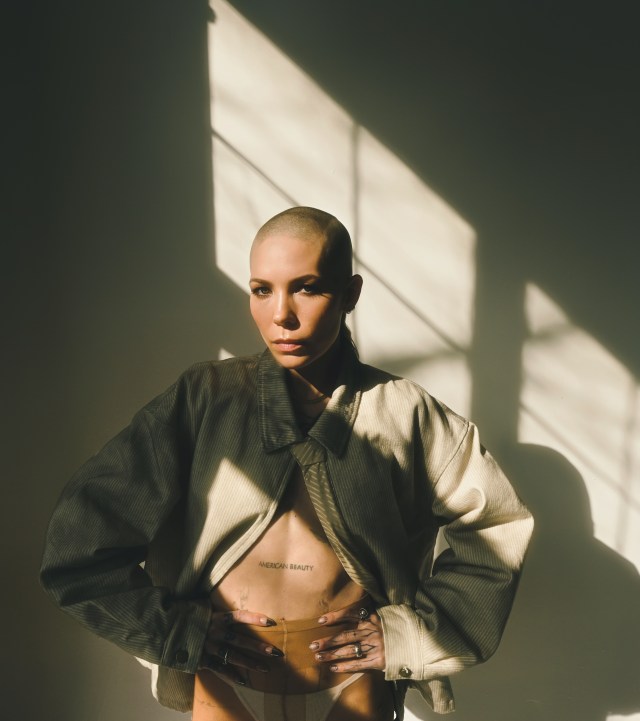
Skylar Grey has shared a Grammy stage with Eminem and Dr. Dre, written numerous hit songs for the likes of Celine Dion, Eminem, and more, and collaborated with big names like Illenium, Macklemore, Kaskade, and Deadmau5. 

Yet, with her superb new album, the intimate and raw Wasted Potential, she says with no hesitation at all, “I’m absolutely enjoying music more than I ever have. Music to me has always been about getting my emotions out, and it’s therapeutic for me to write a song.”

For Grey, she has reached that magical point in her career where she is answering to herself and just making the music she needs to make.

“There’s been a period of time in my career where I didn’t do that because I felt forced to do sessions I didn’t want to do and write songs I didn’t want to write just to try to make money and stuff, but I shut all that down, and now all I’m doing is writing from the heart,” she says. “I sit at the piano, and I make music and write lyrics, and that’s how I get through stuff. And I think that is the best way to connect with people. It ends up always being the best music when it’s just honest.” 

Cred. Shervin Lainez

Part of her aging process is feeling much freer to not only be more honest, but also to follow her instincts more and not overthink things.

“I think as I’ve gotten older, I’ve been able to give less fucks about what other people think. And that helps me stay truer to myself. And I’m also taking everything less seriously than I used to. I’m not exactly sure I’ll get the quote right, but Post Malone said something about how he just makes a bunch of music and then puts out whatever vibe he’s into and whatever he’s feeling in the moment. And he doesn’t think too hard about it. And that made me realize that for a lot of my career, I was always just overthinking everything way too much,” she says.

Growing older also inspired one of the album’s most memorable tracks, the homage to the ‘90s, “Nirvana.”

“I think for me personally it was turning 40 and feeling old and wanting to go back to my childhood,” she says. “The whole song is about how I didn’t appreciate my childhood and so many things that I hated back then that now I miss.”

The ‘90s are a recurring theme on the record, according to Grey. 

“Most of my musical influences came from the 90s because they were my formative years. And it’s when I was the most excited about discovering music,” she says. “And so, ‘Come,’ for example, is an ode to The Spice Girls to become one song. And then there’s just a lot of little elements of what I do that I think are inspired by the ‘90s. The song called ‘Bullshit’ on the album opens up with a strumming acoustic guitar that reminds me of Oasis.”

The album was co-produced by Danny Majic, whom Grey said she first worked with on “Last Man Standing” from the soundtrack to Venom.  

“We have such great chemistry, and we have such a great workflow. It’s like, ‘Don’t fix it if it isn’t broken.’ Why do I have to go out and search for more producers? I have one that is amazing right here, and we work so well together. So, I hold those relationships really near and dear to my heart,” she says.

Cred. Shervin Lainez

As someone who has experienced the highs and lows of collaborating, Grey has an especially deep appreciation for those people she clicks with, like Majic and Marshall Mathers (Eminem).

“That’s why I’ve written so many songs with Marshall, because we do have such good chemistry.”

Many artists will talk about self-fulfilling prophecies, about making their dreams a reality. Whether or not you believe in the ability to manifest, Grey’s friendship with Em is a literal dream come true for her. 

“‘Stan’ was another [song] that was very impactful for me. It was the first time I’d heard a beautiful, angelic vocal mixed with hip-hop, and I thought, ‘Man, I love that combo.’ It was so unique at the time, and I think that was a huge inspiration for why I wanted to get into collaborating with rappers,” she says. “Because I can relate to these vocals that were more airy and unique. As a kid, I was in musical theater, but I never had the power as a vocalist to be up on stage without a microphone. And so, the artists that really inspired me early on were the artists I could relate to vocally. Sarah McLachlan, Dido, they’re the artists that showed me a path in music that I could take.”

Though if Grey were to pick one song from her childhood that changed her life and shaped her musical vision, it would be a true ‘90s classic. “There are so many songs that I’m obsessed with and love. One of the most impactful songs from my childhood was Massive Attack’s ‘Teardrop.’ I first heard it when I was walking up the hill to my best friend’s house. She had the windows and doors open, and it was sunset. And that song was just blasting in the house, out the windows. It was magical. I don’t know how else to describe it. The feeling that song gave me in that moment. It was completely life-changing,” she says. “That airy, dreamy vocal and the beat and the darkness, but also the uplifting feeling it has to it. That was just a super powerful moment for me in music discovery. Then I was obsessed with Fiona Apple’s Tidal, the whole album.”

Cred. Shervin Lainez

As someone who experienced huge stardom in her early career and chose to then follow an unconventional path of releasing music whenever she wanted, the brilliant Apple still inspires Grey tremendously.  “Somebody like Fiona Apple just inspires me to always stay true to yourself. It’s easy to get swept up in the Hollywood of it all. And she’s just one of those artists that’s always stuck to her guns and made the music she wants to make. That, to me, is very inspiring.”

That said, Grey doesn’t plan to follow her path of releasing albums as often as Halley’s Comet. 

“Instead of just putting out music as it came to me, I would try to curate the perfect album. And by doing so, I would limit myself to releasing an album every five years or something. As I’m getting older, I’m like, ‘Wait, I want to put out a lot more music before I die.’ So, I’m taking it less seriously. I’m having more fun, and I’m just making music that I love in this moment,” she says. “It doesn’t have to define me and my whole career and my whole sound in this moment. It can just be what I’m feeling right now, put it out there in the world, and then move on to the next project. That’s a new approach I’ve been taking. And it’s a lot more relaxing, a lot more fun. And I plan on putting out albums way more frequently because of that mindset change.“

Ivor Awards CEO Roberto Neri on Celebrating The Art of Songwriting

I remember interviewing the late, great Tom Petty years ago at a BMI event where he was being honored for his songwriting. I asked him what it meant to be honored for his songwriting, and he said, “It means everything.” Then he joked, “It’s my job and what the guys keep me around for, to write the songs. Without them, the Heartbreakers would trade me in for Bruce,” referring, of course, to Springsteen.

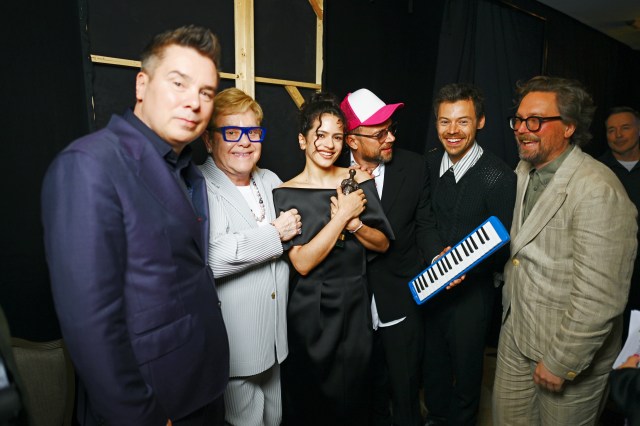
Songwriting isn’t the most glamorous side of making music. But talk to a hundred singer/songwriters, and I promise you, at least 90 percent will talk about how much the songwriting means to them. As an artist, being recognized for your songs is one of the greatest honors there is, which is why artists like Elton John, Rosalia, Radiohead’s Thom Yorke, Lola Young, Harry Styles, a special guest to present Yorke with his honor,  and more showed up in person Thursday, May 21, 2026, in London for the 71st Ivor Awards, dedicated to songwriting.

Hit Parader spoke with Ivor CEO Roberto Neri about the awards, the mysterious art of songwriting, and more.    


Hit Parader: Do you feel like you have a little insight into the mystery of songwriting?

LONDON, ENGLAND – MAY 21: Cred. Vianney Le Caer/Dave Benett/Getty Images for The Ivors

Roberto Neri: I think the creation of songs is something that is totally underappreciated by everyone. And it’s something that needs to be better recognized. And the Ivors Academy managed to do that in the most efficient way possible by putting on the Ivor Novello Awards and actually elevating and celebrating the incredible songwriters that we’re able to represent. We’ve been doing it for over 70 years. But to your point, yeah, the creation itself that’s within the blessed human that can conceive the incredible art that comes from them, whether that’s the lyric, the musical elements, or the production; for some, they have to think about it, others it just flows through them.

HP: How did you first get interested in the art of songwriting?

Neri: I started writing myself from a very early age. It’s always been there for me to get me through the darkest times of my life. And then I went to have this amazing career in music representing songwriters by way of being a music publisher, working at different organizations, downtown Believe, and others, and represented some of the greatest songwriters. And it was a blessing to represent them. Now I’ve been at the Ivors Academy just over two years, where we represent over 14,000 songwriters and composers. We can protect their interests by lobbying and having strong advocacy, and then we can empower them to make sure they’re equipped for the music industry, which is very challenging, as we know. And then lastly, the celebration side is the awards, where we celebrate songwriters and put them on the platform, and then later in the year, we do something separate for composers. I’m very fortunate to represent them. There are so many different partners you can have as a songwriter and composer, but we are fortunate to be that real force for good to ensure their interests are being looked after to make sure they can actually push themselves forward and equally be awarded appropriately. We’re fortunate to do that well.

HP: Talk about the importance of honoring those who create the songs.

Neri: You have some artist-songwriters, Bruce Springsteen, Prince, Joni Mitchell, where their own song creation and their interpretation of their own music is something exceptional. There are, of course, artists who manage to pull off that authenticity of feeling in every lyric. And we’ve got some incredible greats like Adele and others who do write music but have had big assistance with co-writes. They managed to pull off those works as their own, even though they didn’t completely create it. Yeah, songwriting is the most important ingredient that doesn’t always get the appreciation, like I was saying earlier, but people see the artist, they hear what’s coming out from the artist, the voice, but maybe need to think more about where that was conceived and its true meaning and how it lives on in many different guises outside of that one particular snapshot. 

LONDON, ENGLAND – MAY 21: (L to R) Lauren Laverne, David Furnish, Sir Elton John, Roberto Neri and Sam Fender.
Cred. Vianney Le Caer/Dave Benett Agency

HP: I was just looking at an article the other day that mentioned the number of people who think that Adele wrote “To Make You Feel My Love.” Adele is amazing, but that should be credited to Bob Dylan, who is the only person to win the Nobel Prize for literature. So, talk about the importance of educating people on the art form that comes behind it. 

Neri: Completely, and for 71 years, the Ivor Novellos have been doing just that. The thing we need to do now is to make sure the whole world really understands that these exist. Bruce Springsteen picking up the fellowship two years ago, being seen as a songwriter, being proud to be a songwriter. We’ve got other names like that coming in the room this year doing exactly the same. They’re known to the public as artists, but they really are these geniuses and they’re so proud to be recognized for their songwriting and the craft of it. So that’s why we’re very fortunate to be at the Ivors Academy delivering these awards and showing that respect.

HP: Do you hear from the artists how much it means to them when they get recognized for their songwriting?

Neri: Absolutely. And one example of one songwriter/artist we are recognizing is Rosalía, whose Lux album has blown up globally. She really considered carefully how she would approach the album. She spent a year writing the lyrics in 13 different languages. She then worked on the music and in the third year, bringing it all together by way of production and just making it a body of work, which is cohesive. There was a lot of thought and consideration, and she’s so proud that we are recognizing her as International Songwriter of the Year this year, where everyone else is just seeing her as this magnificent artist. She’s going to be turning up next week, picking up International Songwriter of the Year, and extremely proud. This is the Oscar equivalent in music. And there isn’t an actor out there who doesn’t want an Oscar. 

LONDON, ENGLAND – MAY 21: Roberto Neri and Sir Elton John.
Cred. Jed Cullen/Dave Benett Agency

HP: How do you deal with AI?

Neri: I think there is a genuine threat for some of the sound bed music you have out there. I don’t think John Williams has got anything to worry about, but there are some real concerns around how music’s used within the score. For your songwriters, though, for your Joni Mitchell’s, for your Bonnie Raitt’s, this is something that just can’t be replaced. The soul within the lyrics and the music and the way it’s conveyed is just something I can’t see being replaced by AI. And I think already, most of the public is starting to recognize, “I need to lean in further into human creativity now and try to avoid what’s being pushed towards them.” No one asked for this creation of AI. No one asked for a replacement of artists and songwriters. So, it’s being pushed on the public, but I think the public is already starting to push back, and I think people are going to go and see more concerts. I think they’re going to buy more physical products again. I think people are starting to rediscover what they were taking for granted as they started to get everything in their pockets. They’re starting to reverse that trend; the next generation, between 13 and 20, is already starting to disregard what those in their early 20s have taken as the normal way of consumption. I think this threat of replacing your average songwriter is something we shouldn’t be too overly concerned about. That said, of course, we are doing everything we can to fight back on the policy level and to ensure we’re safeguarding their rights at all times. 

Sons Of The East: From Stage to Studio

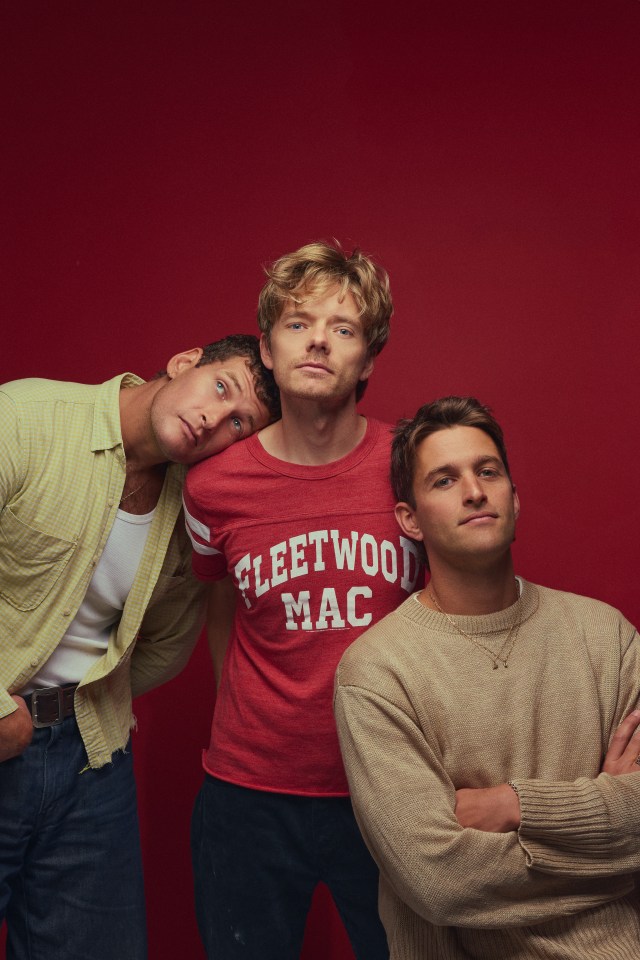
Fresh off the touring cycle that saw the Australian indie-folk trio Sons Of The East play over 100 shows around the world, they found themselves writing more and more music on the road: between shows, behind the stage curtains, and mainly away from home, a fact that shows through clearly on their fantastic independently released album SONS. Even as they build on their folk roots with their newest full-length release, the group of Jack Rollins (Vocals, guitar), Nic Johnston (Vocals, keys), and Dan Wallage (Guitar, banjo) explore new sounds and styles they haven’t before on SONS, widening their sonic palette without losing what makes their sound theirs. Hit Parader sat down with Rollins to discuss more: how relentless touring, ever-changing influences, and independent autonomy shaped SONS, and how, at the end of the day, it will always come down to playing music they love with their friends for as many people as they can reach. 


Hit Parader: So, just with the new record and the making of SONS, much of the songwriting happened while touring. How did being constantly on the move shape the emotional tone of the music?

Jack Rollins: Good question. I guess I don’t know, it does get a little lonely on tour, if I can be completely transparent. So I guess there is a bit of yearning and longing in some of the themes in the music, but also I think we just kind of felt crazy pressure, knowing that we did 110 shows last year, and then as each show came to a finish, we were like, “Fuck, we’re getting closer to coming home and then having to finish this album.” We already had a few songs ready, but basically, we had to come home and literally only had like two or three months to finish the album. We were kind of just, like, anything that was coming up we were putting down, and we’re happy with anything, or whatever, really. But yeah, there is a sense, you can kind of sense this travel, definitely some kind of yearning and longing for connection in a lot of the songs.

Cred. Pat O’Hara

HP: And then what are a couple of places that you or others drew inspiration from that your fans wouldn’t expect? Maybe a book, a non-folk artist, or a movie, or something?

JR: Good question! Yeah, I don’t know, we get it everywhere. I don’t really listen to folk music. A lot of us don’t really listen to folk music. I listen to a lot of really crazy, different stuff compared to folk. I listen to a lot of hip hop and Afro beats, stuff that’s so far removed from folk music. I still love folk music, but a lot of times, if I’m driving in the car, I wouldn’t put that on, unless it’s a nice sunset drive or something like that. We listen to a lot of War on Drugs, J.J. Cale; you can definitely hear little bits of that seeping into the new record. We’re just trying to make the pool of inspiration a bit bigger and wider in terms of its range, so it keeps things interesting for us.

HP: I love that. My personal favorite off the new record is “10 Days,” which is a really pretty ballad/ interlude. Tell me a little bit about the imagery and the storyline behind the lyrics, and the lyric in specific, “They say bad luck comes in threes”.

JR: Nick had probably a 95 percent hand in writing that song. Speaking of longing, that one came whilst we were on the road last year. He’s got a partner that he’s been with for a long time, and she’s wonderful. I think in those lyrics, you can hear Nick really kind of almost calling out to her as we’re on the road, and you know, it’s right there in the title, “10 Days.” It’s all about him coming home soon and how that’s going to feel, because it is always a bit awkward coming home to your loved ones, because you haven’t seen them for, we’d been four months last year. So yeah, coming home is kind of a weird thing, you’re like, “Is it the same? Is it going to be different?” So yeah, I agree, it’s a beautiful song that Nick championed there.

HP: What song off the record took the longest to finish, and what song seemed to flow out the fastest?

JR: The song took the longest… There are a couple that took us a while. I’m trying to think. “It’s Alright” took a while; we mucked around with that for months. But then, on the opposite end, “Sweet Thing” and “Time Will Tell” were done in a day each, which is really cool. “Pour the Wine” took like a few weeks. I’m trying to think. I can’t really remember now, I think we kind of repressed it because it was so fucking stressful.

HP: I understand. Sometimes I’ve noticed an interesting thing between some people I’ve talked to. If they work on a song for months on end, it always ends up being like, “Hey, I just like the original song,” and you kind of revert back to the first demo.

JR: Yeah, definitely. There’s this guy, an Australian comedian who’s also a musician, Tim Minchin, who talks about how it’s like a painting. You never really know; you’ve got to know when to stop adding paint to the art because you can overcook it. Sometimes it’s just like, when do you get to the point where it’s done? Having deadlines is always good because you can just go, “Alright, it’s time to stop, because we need to deliver this thing.”

Cred. Pat O’Hara

HP: If a fan only had the ability to check out one song off the record, what would you show them? What’s the “opus” in your opinion?

JR: Oh…

HP: I know that’s like a favorite child situation, but, 

JR: Yeah, a little bit. I don’t know. I think because the record has heaps of different genres on it, it’s hard to pick. Can do a top three? 

HP: Please!

JR: My favorite three are probably “Recognize,” “It’s Alright,” and “Sweet Thing.” When we were going through the album, those are the three that I’d listen to the most when we’d just finished with them, and be like, “Hey, this is cool,” you know what I mean? So I think probably those three, for me, I would pass on to a fan. But as I said, those three,  “Recognize” is like a War on Drugs-type thing, “It’s Alright” is like JJ Cale, and then “Sweet Thing” is like a full ’50s, ’60s-type beat.

HP: I was reading online earlier today, someone on the War on Drugs Reddit page said, “’ Recognize’ reminds me of [The] War on Drugs and this song rips.”

JR: That’s sick. 

HP: “Now I’m checking out these guys as well.”

JR: Fuck yeah, that’s great.

HP: So, just with this record, it adds to a long tradition of self-releasing records, accomplished entirely without major label backing. What has been the most meaningful reward and unexpected challenge of steering your music independently, and in what ways has the autonomy shaped your vision?

JR: Man, you ask great questions. Well, I think because we’ve always been independent, we’ve always had to learn on the go. We’ve been our own marketing team, our own publicity, our own design studio; we literally do everything ourselves. Especially Dan and Nick, those guys are so hands-on. Dan does so much with social media, designing merch, and making marketing schedules. We’ve really had to knuckle down and learn. We started this thing just to be musicians and not have real jobs, but now the admin’s crazy. We’re literally running a business and having to learn all that has been really important and amazing as well.

I think being independent for us is all about control and owning our own stuff. Our manager always said to us from the start, “Just own the product,” and we’ve enjoyed being able to do that. Sometimes it’s taken us a long time to release stuff, so not having overlords breathing down our necks has been nice for us to do things at our own speed. It took us ten years to release our first album, so maybe it took too long, but we’re happy where we are, enjoying playing and writing music, so life’s good.

Cred. Glynn Parkinson

HP: And you could argue it’s a lot more authentic without as many hands in the pot, so to speak.

JR: Exactly, exactly. You don’t want to have too many cooks in the kitchen.

HP: Just tell me a little bit more about the rest of the year and anything else you want to add for the fans.

JR: Yeah, so we just did an Aussie tour. I just did a month in Europe, and we’re halfway through a month here in North America. Then we’ll probably come home and chill out for a bit, just do some surfing and get some sun in, it’s an Aussie summer when we get back. Then we got Christmas and stuff. Then we’re just going to do some writing and hang out, and we’ve got a few things back over in the States in May, and a few gigs around Australia early next year. Working towards that and just getting to some new music, I think. Now, not having any crazy deadlines will be nice to get in the studio with no pressure and see what we can cook up. We’re having fun touring and looking forward to getting back in the studio and having fun making music again.

HP: And that’s what it’s all about.

JR: Exactly.


Listen to SONS by Sons Of The East wherever you stream your music.


Read the article in print in Issue 4 of Hit Parader Magazine.

Hit Parader #4: Brent Faiyaz

March 2026 — $12.99

In this issue of Hit Parader, Brent Faiyaz steps into the cover spotlight for a rare, unfiltered conversation about artistry, independence, and the cost of doing things your own way. At a time when most artists race against algorithms and deadlines, Brent moves on instinct —scrapping albums, disappearing to finish ideas on his own terms,…