Alana Springsteen Helps With Stunning New Album

Alana Springsteen is one of those artists. You know the ones, the type of artist who completely sneaks up on you. You hear a song or two, think, “Oh, this is cool.” You like it enough to go just a little deeper and find that as you keep mining the material it just keeps getting better. The more you listen to, the more you recognize the honesty of the lyrics and vocals, the consistent quality, the depth of the songwriting and the power of the emotion in every song.

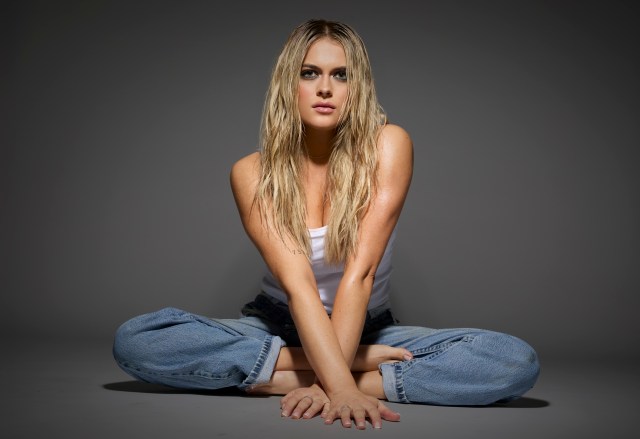
Before you know it, Springsteen, no, no relation, has gone from cool to a must-see live. Springsteen’s tour de force new album, I Hope This Helps, out tomorrow (May 29) is an absolutely stunning collection. Throughout the masterful record, Springsteen weaves deeply personal and intimate stories into tales everyone can relate to all well.

In the opening lines of the stark and powerful “Feels Good,” Springsteen sings, “Last night I was two more shots away from trying to talk myself into Heaven’s Gate/Some regret tastes better at the bar.” She repeatedly does that through the record, capturing the highs and lows of being human. Springsteen understands the best work is intensely personal and, at the same time, universal.

Hit Parader spoke to her at length about the writing of the record, heroes like Sheryl Crow and Patsy Cline and much more. 


Hit Parader: What makes a perfect Nashville day? 

Alana Springsteen: First of all, the weather, no humidity, the sun being out, 70 degrees, no crazy pollen giving you allergies, seeing a bunch of friends, connecting with people. It’s just been a really, really great day overall. 

HP: This is one of those albums that just screams therapy in the best way possible. So, was this an awakening for you?

Springsteen: Massively. The last two years have been the most transformative of my life. I feel like I had to pull myself apart and put myself back together to write this album. And these songs have been my roadmap through all of it. They’ve helped me understand myself and have healed me, have shown me the sides of me that I’m insecure about, and allowed me to make peace with it. And I’m walking out on the other side, just a much better version of myself. 

HP: I was looking at the title; I Hope This Helps. Do you mean this for other people or for yourself? 

Springsteen: I love that. It’s actually both, which is why I love the title. It’s kind of simple, but it really touches on all the parts of it. I hope it helps me make peace with my inner child and get to know myself better and just be a better version of myself for me, and for the people around me. But I also hope it helps. The people out there that hear it.  There were so many times writing this record that I truly didn’t know if I could continue. I was in the middle of therapy, on one of the biggest tours of my life with Keith Urban, trying to be in the studio, write this record, just doing it all at once. It almost broke me many, many times. And the thought that kept me going and got me back in the studio was that maybe the next song that I would write would help someone out there feel less alone in what they were going through and give them the courage they needed to choose themselves and to ask life for more and to do the hard work, knowing that it’s going to be worth it on the other side. 

HP: I saw Joni Mitchell at the Gorge a few years ago. And Joni Mitchell singing “Both Sides Now” at 80 is one of the most beautiful things in the world. But Joni Mitchell wrote that song when she was 23. What the hell? Can anybody understand writing a song like that when you’re in your 20s?

Springsteen: I didn’t realize she wrote that song when she was so young. That’s another one for me that I heard again for the first time in a while, a few months ago, and I was just sobbing in my car. It’s so emotionally deep. But I think there’s something about being young that allows you to get out of your own way. You don’t know what you don’t know, so you don’t overthink it. And you’re just feeling it. And I think that’s kind of what I’ve tried to focus on with this record; just getting out of my own way, not trying to write a perfect song, but just write something honest. 

HP: Nick Cave said something so interesting to me. He said that as a writer, you always write what it is you’re longing for. And to me, this album screams that.  Do you feel like you were writing for the questions that you needed answered?

Springsteen: Yes, 100 percent. I think my debut record asked a lot of questions, and I was just starting to really get to know myself. And I wrote songs like “Chameleon” about the way that I’ve always been a people pleaser, just constantly shape shifting. But I didn’t understand why until I wrote this record. So, in a lot of ways, Twenty Something asked the questions, and this album helped me find more of the answers. And obviously, we never fully finished the journey of this. We’re constantly asking questions, but I think I started to get to the root of a lot of these patterns in my life. And I had to go back a long way to that inner child, to sometimes four or five, six, seven years old, to rewire these truths that I believed.

HP: What were the questions and answers that surprised you the most when you were writing this? I was interested in a song like “No Man,” which was very interesting to me. I will not ask if that was autobiographical or not, but I was thinking about it. And sometimes it’s probably easier to write autobiographically when it is in third person.

Springsteen: That’s true. I do feel that. I’ve written a couple songs autobiographically from third person. And that’s a really interesting theory. I’ve never really dissected that much. That song specifically isn’t exactly to the tee my story. It’s one of the few songs that I’ve written where all the details aren’t about me. I pulled from several different people in my life and different stories and created this character that I very much identify with. I was able to get lost in this person in the song in a way of just not feeling like you fit, wanting to escape, wanting something more for yourself, wanting to get out, and not wanting to be tied down. So badly wanting love and wanting connection, but never wanting to be limited by it. And I think for a while, love always felt conditional for me for most of my life. And I’m just now getting to the place where I’m realizing that love should never ask you to be something else. It should never ask you to be small. It should just empower who you are and make you want to be better and just chase your dreams down and know that you’ve always got a place to come back to and a soft place to land. But that song, I’ve always loved country music because of the storytelling. So, I wanted to write a song that was just an incredibly beautiful story about a girl choosing herself and refusing to stay small.

HP: Who are the country storytellers that are some of your favorites?

Springsteen: I think Emmylou Harris is at the top of that for me. There are some of her songs that are just hauntingly honest. I think about her song, “Red Dirt Girl.” It’s one of my favorite country songs. And it’s just this beautiful snapshot of what it’s like to be from a small town and maybe never get out, and some of the things you face and the people that you meet along the way. And you’re like, “I see myself, I see my family members in that song a little bit.” And I love when songwriters can just put you in a place like that and make you relate maybe to something you’ve never experienced, but it’s so emotional that you can’t help but feel yourself in it. So, she’s up there for me. Maybe you wouldn’t consider her country, but Sheryl Crow is one of my favorite artists. And to me, she’s country. I listen to those songs now. I listen to her self-titled record, and I’m like, “That could be on country radio right now. It’s all about storytelling.” She’s an incredible musician. She produced it all herself. She’s just this outlaw in so many ways. She paved her own path, and she has inspired me so much and continues to do so. Another songwriter that always inspires me is Hayley Williams. Again, she’s not considered country, but to me, she’s done such a great job always of not being afraid to write about these nuanced subjects and her own truth and stand behind it and say things that a lot of people are afraid to say sometimes. To me, that is the definition of an outlaw. So those are all people that I’m inspired by.

HP: You look at a song like “Selfish,” which I love. Is that a song that you could have written at any other time in your life?

Springsteen: I don’t think I would have had the courage to write that. And it sounds crazy, but I think growing up, as a woman, as an eldest daughter of four kids in the South, you’re just raised with these expectations and these requirements and pressures that are put on you. To act in a certain way, present oneself a certain way, to always be kind and serve other people, be gentle, not rock the boat too much, just be quiet, defer to other people, on and on. But I think a lot of my life, when I started to learn to set boundaries and to choose myself, it ruffled a lot of feathers early on because that’s just not what people expected from me. It’s not what they were used to getting from me. So, I was called selfish a lot. And I wrote this song as a reminder to myself that it’s not selfish to put yourself first. And you can’t take care of other people or show up for other people in your life until you know how to show up for yourself, until you meet your own needs. There are so many women in my family, strong women — my mom, my grandmother, people that I’ve looked up to my whole life, that I’ve watched sacrifice so much at the expense of themselves. So, this song was a reminder to me and hopefully a reminder to all the women out there and people in general, it’s not selfish to choose yourself. And sometimes you just need the reminder because it felt so against my nature to write that song. But it’s something that I needed to hear in the moment for sure. 

HP: Who are those artists that you really admire for the way they were able to break out of whatever shackles they had and set their own course? 

Springsteen: You think about throwing it back to Patsy Cline. When she was releasing music, she was creating a type of music that just wasn’t, quote unquote, country at the time. She redefined country in the way she used her voice, the way it was more of a soulful R&B flow, to the way she sang, and the way she had strings and orchestras in her production. It was much more of a pop approach, but it was the first time people had heard anything like that. And she redefined the genre and really opened up a whole new pathway. That was just from staying true to herself, leaning into how her voice sounded best, and the music that she loved. I think that is a massive example for me of a woman going, “No, this is the music I want to make. I don’t care if people don’t get it or if they do get it. I’m just going to. pave my own path and trust that the art I love is going to cut through.” I think about Miley Cyrus, too. I’ve always loved her music and the way that she is constantly able to redefine herself. She’s had so many different eras, and this latest record that she just put out felt like pure art to me. Coming off the previous record, Endless Summer Vacation, which was full of hits, this latest record just felt like it was pure art, like she was making it for her. And sonically, she made some choices that were just so off the wall and unexpected. I love artists that are fearless that way. And a lot of times they’re ahead of their time. That’s the kind of artist I want to be. I want to constantly push the boundaries and live in that space. I like to color outside the lines. I’ve never been a black and white person. I’m more of a gray area person. 


Alana Springsteen’s new album I Hope This Helps is out tomorrow 5/29.

New Constellations: Never Too Late To Believe Again

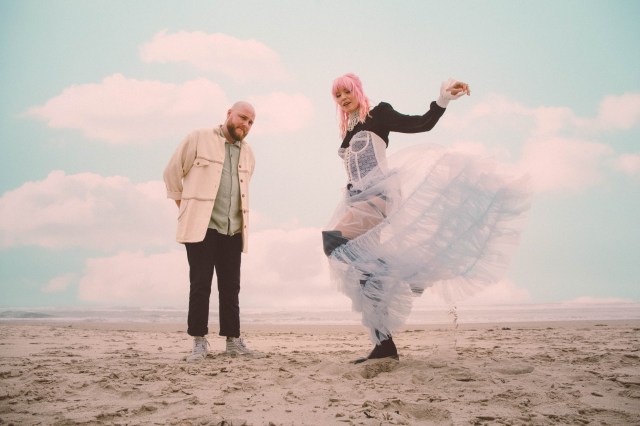
It turned out to be the right time for Harlee Case and Josh Smith of New Constellations to believe again, a mindset that has pushed the Portland-based synthwave duo further than they once thought possible. Their debut full-length project, It Comes In Waves, which releases May 15th via Nettwerk Music Group, represents the culmination of years and years of experimentation and, in turn, evolution of Smith’s production combined with Case’s deeply personal yet cathartic lyricism. This moment can’t be overstated in their already successful careers: It Comes In Waves feels like the opening paragraph of a novel you already know you’ll love, a fitting comparison for a band that, while on their debut full-length release, is just getting started, and they aren’t anywhere close to slowing down.

Throughout the conversation with Case and Smith, themes of creative freedom and lyrical expression emerge as essential to the making of this record, but none shine brighter than the theme that it’s never too late to do what you love and that hope is always around the corner, waiting for you to believe again. New Constellations is the definition of that, this interview shows it, and shows that New Constellations believes in you, too. 


Hit Parader: Just to jump in, your debut record It Comes In Waves comes out May 15th. That’s super exciting, congrats!

Both: Thank you!

HP: With this project being your first full-length release, what creative choices were you able to explore more in depth compared to the singles and other releases in the past?

Josh Smith: Yeah, I think for me, what was big was, I produced all of our music, and for this album we worked in a studio with a close friend of ours. His name was Cam Spies, and it gave me an opportunity to be just a musician in the studio and not running the session necessarily. So I think we got to explore some more musical ideas, just in terms of having someone there to help facilitate some of the ideas. So for me, I’d be like, “Oh, I’m hearing this keyboard part.” But if it was just me and Harlee in our studio, like we normally do, I’d be like, “Ah, it’s so much work to get the keyboard out, plug it in,” that I’d be like, “I’m not even going to bother.” So this was really neat to just be like, “Oh, I’m hearing this keyboard part,” and then by the time I’m finished with that sentence, the keyboard was already plugged in and set up. And he’s like, “All right, go for it.” So I feel like we got to, I personally got to explore some cool musical ideas that were just a lot easier to explore because we had a third person there facilitating a lot of the sessions.

HP: There’s less of a barrier to entry, in a sense.

JS: Yeah. When you’re the one plugging in the cord and pressing play and pressing record and then playing it, it takes a lot out of you. So it was really cool to be able to just be like, “Yeah, let’s do that.” And the same thing with Harlee and I working together too is that he got to do that for both of us. And so we got to toss ideas off of each other and enter a flow state without having to worry about the more technical aspect of the session, and we got to just focus on being creative.

Harlee Case: I feel like because this collection of songs is written over five years, we’ve written hundreds and hundreds of songs and explored so many different genres and ways that we were feeling with no “this is going to be on an album” at all. So when it came down to actually making the album, we had so much to choose from and maybe chose stuff that we wouldn’t have written if we were sitting down and writing an album right now. So I think the time that we had to explore a lot of different genres was really helpful as well.

JS: Absolutely. 

HP: That’s awesome. And with bringing producers like Cameron [Spies], Tyler [Blake] and and Mighty Mike to, in your words, “sprinkle some sugar on the record,” were there any specific moments or songs where they added something to the track that you didn’t imagine previously, but now can’t really envision the song without after?

HC: I bet you we have the same answer, Josh.

JS: I mean, I know one of mine personally is the song “Believe Again” that Tyler worked on. He added these drums. And the first time we heard it, I remember the moment we listened to it for the first time, we were both like, “Whoa.” I wasn’t even sure if I liked it at first. But now every time I listen to it or replay it live, I do the little drum fill he did [air drums], and I can’t imagine that song without it. And I listen to the old demo now and was like, “What was I thinking?” Obviously, those drums he put in, they’re so good, but it’s not something I would have necessarily gone with. What’s cool about that is it unlocks that in our brains now. And so now it’s like, “Oh, I wouldn’t have chosen drums like that, but now that I see someone put those drums on our songs, I’m like, ‘Oh, now I get to do that now.’” Now I know how and where, so it sort of unlocks that opportunity for me too.

HC: And then Mike on “I Disappear” just took out sections so it just has these moments of silence that are so sick. When we’re playing it live, it’s a big theatrical moment now of these pauses, and I just love that part.

JS: It’s like we have that chopped up “wake up,” and so there are parts after the chorus where everything drops out and she’s like, “Wake up.” And it’s just cool that we’re like, “Dang, that two seconds of silence makes the whole song.” And it adds – it’s so weird that a moment of silence can add so much energy live too, but that’s become one of our favorite songs to play live because we can pause and really rock it for a second.

HC: Yeah, it was just wild. I never thought about it like that, that it’s this absence of energy that brings so much energy to the live set, which is so weird.

HP: Super cool. And you mentioned “Believe Again,” and it’s such a wonderful track, and the lyrical content is so pertinent, not just to musicians but a lot of creatives in today’s ecosystem. I’d love to know how your relationship with the song shifted as your life changed since first writing it, and how you want the message to be perceived by people going through some of the same things you were.

HC: That’s actually one of the last songs that were written on the album, and that song was specifically me writing it to myself about 10 years ago, having the bravery to try again. And I think that every time I personally listen to it, I get so much energy to keep trying again and to reinvent myself in new ways and to believe in myself more and just continuously want to push the message to people that you can take breaks. You can completely put down your craft if it’s not the right time for you, but it’s also completely okay to pick up and try again and that it’s never too late. That quote, “never too late to be what you could have been,” I love that so much. And Josh and I put out our first singles of our entire career, our whole lives, at 30 and 33 years old. There would have been a point in time where I thought I was too old to make it as a musician anymore because I should have been something by a younger age or whatever. And I love to get to be an example of that, that it’s not true at all. It’s all up to us when we want to do things, and it’s just never too late.

JS: I think a song like “Believe Again,” what’s cool too about growth and evolution is that it’s never done. So this song is talking about a growth and an achievement that has happened, but that doesn’t mean that we’re done growing and achieving too. So I think a song like “Believe Again” can speak to the ongoing driving and achieving and changing and growing, and not just, “Oh, I got there and I’m done.” It’s like, “Oh, I got there, and that proved to me how much further I’m capable of going.”

HP: Love that. And you also mentioned some of your first singles, and “Hot Blooded” is actually on the track list for the record. When you think of the track today, what parts of its personality or lyricism still resonate with who New Constellations is today after five years of dropping music?

HC: I have a pretty bad habit of nearly all of my songs, all of my things that I write, coming from this hopeful, yearning space. And I recently found footage of me when I was five years old, and I was writing songs like that. So I think that there’s something embedded in me deeply that will always have this desire and push and pull that’s within me. And so I don’t think this song will ever go out of style with just the way that I naturally feel about life. 

HP: And with the topics discussed on “Dandelion” and “I Disappear,” how do you approach vulnerability in lyricism in a way that’s healthy to you and cathartic?

HC: Yeah, I tend to freestyle, and I think that that in itself is a type of therapy because I am allowing everything to come forward. And sometimes there’s stuff in there that I don’t feel should be out in the world or that I want to be repeated a bunch of times, but the majority of the time I feel like it does. I feel like just being really honest with myself about how I’m feeling and allowing myself to just put it all out there is really healthy. And I think too that I really try to reflect on every song, that I’m like, “Am I putting too much blame in someone else’s court?” Because I always like to bring it back to, “I have a part in this. I have a part in the relationships that I’m in.” And so a lot of the editing process for me a lot of times will be, “How can I own my part of whatever I’m saying if it’s including someone else?”

JS: I think what’s great about a lot of this stuff is as personal as it can be, there’s a lot of it that’s universal too. And what we’ve discussed in the past is Harlee writes these super personal songs about super personal moments in her life, and then sometimes those moments pass and you’re like, “Well, I’m not going through that anymore. I’m not that person anymore.” But what is cool about it is that somebody is going through that at all times. And so when you write a song about a situation, even if that’s not a situation you’re struggling with anymore, you having written that song – or her having written that song – helped her process and go through that time. And now people can hear that song, and it can help them process that and go through that time as well. So I think we’re able to continue to sing these emotional, specific songs even once we’re past those moments because we know that it’s helping someone else, potentially, that is going through that at the time.

HP: Music is always a very personal medium of art, and it can always be interpreted in different ways;  I love that viewpoint on it. So just to wrap up, if after listening to the new record the listener had to come away with one takeaway or feeling from either the lyrics or the musicianship, what would you most hope that to be?

JS: Harlee and I talk about wanting to inspire people and inspire hope a lot, but we don’t necessarily want to tell people where to spend that hope. So my hope for our record would be that if someone listened to it, they would feel an inspiration or hope to then get to use however they feel like they need to use it in those moments. But I would just want someone to feel better or something afterwards, energized in some way. But I don’t want to tell them how they should be feeling. I just want them to be feeling something.

HC: Yeah. And I mean, being an artist is so special because I get to feel so understood in writing these songs and then get to hear how people felt understood. And so I hope that the lyrics and the music can help them to understand themselves more and be like, “Oh my gosh, that is straight out of my own brain. I couldn’t put the words to it, and that’s exactly how I feel.” And sometimes music has helped me so much in those ways to even move through challenging feelings. Sometimes putting a name to it is the first thing to being able to release it. And so yeah, I hope that people can understand themselves more and relate to themselves and us more and have faith for the future and hope for the future for themselves. The last song we wrote on the album, “Edge of the World”; I really hope that a lot of people really love that song because I feel like there’s something really powerful about seeing the world as your playground and being able to receive the goodness of: we’re having a really hard time, but there’s also a lot of beautiful things to come.


New Constellations’ debut album It Comes In Waves is out now.