Rachel Bolan: From Skid Row to Garden State

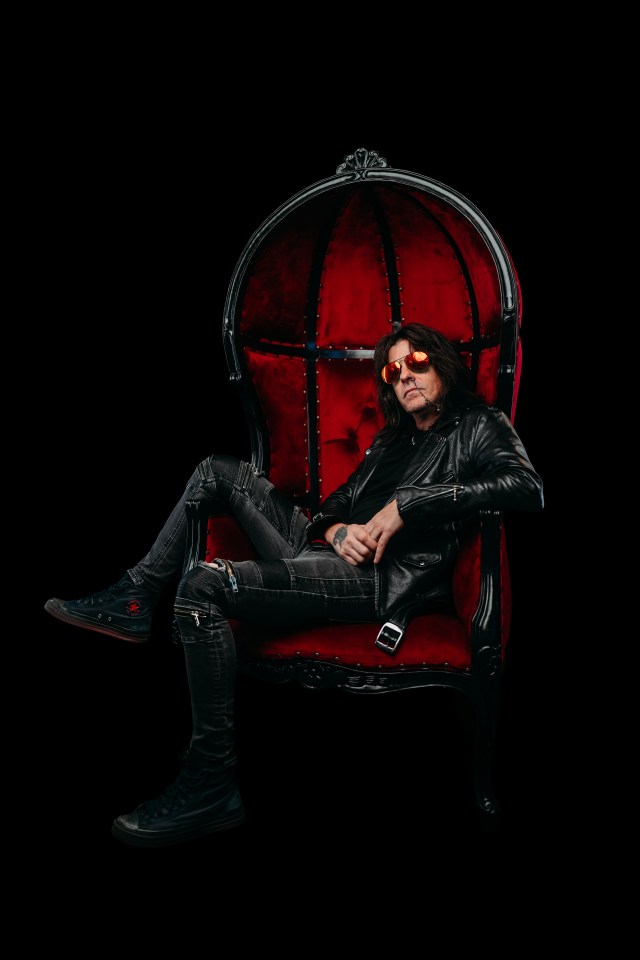
Four fantastic decades into laying down the low end for Skid Row, hard rock legend Rachel Bolan decided it was time to make a record that only had his name on it. Gargoyle of the Garden State, out June 12th, isn’t a pivot away from his day job; rather, it’s a raw, punchy punk dispatch from a longtime New Jerseian coming home after years away, compelled to tell his stories about his life, his way. Cut mainly with Bolan playing the majority of the instruments, alongside longtime friend and producer Nick Raskulinecz (Foo Fighters, Deftones, Rush), the debut solo record draws on all things in Bolan’s life: punk, hard rock, and years of hard-won experience. With three singles out, and more tracks to come, Gargoyle of the Garden State is the farthest thing from a side solo project, and more like a part of Bolan’s songwriting and creative brain that is only now seeing the light of day after 40 years. Rachel sat down with Hit Parader to discuss more. 


Hit Parader: Just to start off, congrats on your debut solo record Gargoyle of the Garden State coming out on June 12th, that’s super exciting.

Rachel Bolan: Thanks!

HP: And this is your first solo record after decades with Skid Row. What do you think made now feel like the time to step out and release something under your own name?

RB: Man, I really don’t know. The time kind of found me. I had some songs written that I knew just weren’t right for Skid Row. And I was talking to my friend Nick [Raskulinecz], who produced the record, and he’s like, you should do a solo record. Let’s do it here. And I was like, that’d be great, but let me see if the label’s even interested. So they were, and then it all just kind of snowballed from there. I started writing more and more and more, and I’d send them to Nick. What do you think of this? What do you think of that? And then here we are now with the album coming out on June 12, and it was a really, really fun process. But why I waited 40 years, probably because of my day job with Skid Row [laughs]. It takes up a lot of my time. Skid Row is my life.

HP: That’s completely fair, and with it being produced with Nick [Raskulinecz], who’s worked on a crazy laundry list of records with Foo Fighters, Stone Sour, Deftones, but also worked on the latest Skid Row record as well. How did that existing relationship kind of approach the way you approached the record, and how was it different than The Gang’s All Here?

RB: Well, Nick is one of my closest friends, so working together was so fun. And it was really easy. And the second part of your question, the big difference was the decisions were made really instantly. It was just because most of the time, after the drums were done, after Rob [Affuso] finished drums, I just started playing all the guitars and the bass, and I just sat there across from Nick most of the time. It was just the two of us, unless one of my friends came in to do a solo or a vocal line or something. But when I do stuff with Skid Row, it was really odd at first, because I’d play something and I didn’t have my dudes to say, what do you think of that? I had to make the decision with Nick, or Nick is just like, just leave it as is. It’s you. So that was the biggest change for me, not having all my bros around to help make decisions with each other, whether it’s a drum line or a guitar part or bass part or vocal part. So just doing everything on my own. It came together really, really quickly.

HP: It made the entire project completely you, rather than having someone in the band to bounce ideas off of, so to speak.

RB: Correct. Yeah, yeah. Nick was the only guy I bounced ideas off of, and I trusted his opinion fully.

HP: That is super cool. And you said that you played a lot of the instruments yourself. What was your favorite and least favorite part of that whole process, and how did playing most of the instruments kind of shape the writing and recording process?

RB: I did it because it was raw. I would say a fairly good bass player. So that part wasn’t an issue. It was playing guitar. And I say issue, that’s probably the wrong term. But I can play guitar. Did I hit every note in all the bar chords? Probably not, but it’s my style. So the whole process was kind of my favorite part, not to cop out on an answer. And then once everything started coming together, there’s a song called “Bridges,” and I played sitar on it, a picking part. I played some acoustic on it. I played electric guitar and bass. And when we started putting the layers on, I was like, wow, this is pretty cool. And then I heard Nick on the phone. He’s like, yeah, Rachel’s over here killing it on guitar. And I was like, am I? That’s cool that my friend says that, and the producer that I really respect says that. So it was all kind of my favorite part, just building the songs from the ground up. And with it being my vision and my vision only, I was really on top of it to make sure that it all sounded the way I hear in my head.

HP: And then with that rawness that you talked about, you could definitely argue that a form of rawness is kind of quintessential to punk music as a whole. And if you want more polished, more quantized sort of stuff, punk isn’t really the realm to find that. And that’s really cool.

RB: I would agree with that 100%. I grew up listening to punk, and the reckless abandon of punk is what drew me to it, the energy, the angst, the honesty, and the subject matter. And a lot of punk songs, some is political. Some is just views of how they feel. And it wasn’t catering to anyone. It was just, this is what I’m saying, and this is what I want to say. And so I think that’s what drew me to punk rock, because they weren’t trying to write songs that would be on the radio by any means. At least that’s what I think. So yeah, and I drew on lots of my influences, punk and new wave and the whole Brit pop era and KISS and stuff. So everything kind of shows up in little bits, all my influences.

HP: That’s fair. And then it might be a bit redundant, and I apologize, but I’d love to just know a little bit more about the title of the record and what it means to you and how you kind of came to it initially.

RB: Well, I recently moved back to New Jersey, which is known as the Garden State, and I had been gone for almost 25 years. So to come back after that long and just feel at home again. But I wasn’t expecting to feel at home. I was expecting, well, I don’t know really what I was expecting. I knew the food was going to be really good, and I’d reconnect with some of my other friends. But it’s kind of a two-parter, because I wanted to call the album “Gargoyle” because, to me, gargoyles, I love gargoyles and the aesthetics of them, but a lot of people don’t know that each gargoyle has a different meaning and a different purpose for people that believe in mythical things. And so I always thought that was really cool. But they’re basically just there. To most people, it’s like they don’t really serve a purpose until they serve a purpose. So that’s how I kind of felt. And I wanted to call the album “Gargoyle,” and then move back here, and I was like, no, I’m back in the Garden State. Let’s call it “Gargoyle of the Garden State.” And it just sounded cool to me, and it made a lot of sense to me.

HP: And there’s a lot of fantastic features on the record. How did those partnerships kind of come to shape, and did you write any of the songs originally with collaboration in mind?

RB: No, I didn’t write anything with anyone in mind. It’s after I had demoed it and we got to the point of going in the studio and recording these songs. And I was like, man, who would sound really cool on this song? And these are all friends of mine. So I called Corey [Taylor], and I was like, hey, you want to sing this song? Think Sham 69. Just do it with some angst and stuff. So I sent him the song, and he’s like, let’s do it. And he flew out to Vegas. We recorded his vocals, and he’s so good in the studio. And same with Steve Conte, and same with everyone that’s on the record. I sent them the song or asked them if they wanted to be part of it, and they said yes. And I was lucky enough for everyone to say yes. And then I either did them in person, like Damon Johnson, for instance. He played five solos on the record. He came to the studio because he lives outside of Nashville, and that’s where we recorded. And he just sat there on a couch and played the most amazing pieces of music I’ve ever heard. And Scotty and Snake played on a song. They each played on a song, and they recorded remotely and then sent it. We dropped it in. And Steve Conte, the same thing, and Nuno Bettencourt, same thing. But I didn’t write songs around them. Once we got to the recording, I was like, who would sound really cool on this? And that’s how we did it. 

HP: It must be a really cool feeling for you to write a song, have it fully demoed out, and then you hear someone else on the song, and then they agree with that thought that you had, where they also hear themselves and think it would be a good addition to the record. 

RB: It was a great feeling. It’s a monumental moment in my career for me, because I’ve been doing this a long time, and to do my first solo this deep into my career is monumental. And to have friends along with me to do it, I can’t even describe the way it makes me feel from a friendship standpoint alone. It’s like, this is why I’m friends with these guys. They have my back, and they want to be involved, and they understand how important it is to me. So that’s one aspect. And then the fact that they’re also damn talented to be a part of it and make the songs better, it’s just an incredible feeling.

HP: And Scotty, Snake, and Rob also worked on parts of the record as well. I’m curious, you mentioned, were all of them remote recording as well?

RB: No, Rob played drums on the whole record. He drove to Nashville, and he crushed it. He did 11 songs in like two and a half days. It’s a lot. And I knew he would, but he had them all. I sent them to him. And I know Rob and his work ethic, and he doesn’t want anything sounding less than 100%. And he’s such a great drummer. And he came in and just crushed it. And then Scotty is out in LA, so he did it remotely. And Snake is out in New York, on Long Island, so he did it remotely, just because it’s a lot easier than flying down for a couple hours.

HP: That’s fair. I’m kind of curious, how did working with Rob on your own material versus Skid Row project kind of change the workflow or studio dynamic, if in any way?

RB: It was the same, because we play together all the time. We know each other’s next moves, and it just wasn’t really any different. And the fact that he and I have similar tastes in music, we grew up listening to the same kind of stuff, a lot of the punk stuff and a lot of pop stuff. And so it was just really natural, and we play together so much. He’s been in Skid Row for 15 years, I believe. So we are so locked in like a rhythm section that he was my only choice to play drums. If he hadn’t played it, I’d have been like, oh man. Because we just understand each other really well. We know each other’s next move. So it was pretty incredible watching him. 

HP: That’s so awesome! You said in a previous interview that “this isn’t a project, it’s a part of your soul”. I’m kind of curious, in your opinion, what parts of your life and/or soul show up most clearly on this record?

RB: Man, from teenage years right till now. There’s stuff. It might not be a whole song about it. It could just be a line. That’s the way I write, though. I write lyrics and then try to make sense of them after they’re all together. But I’m thinking of times just hanging out as a stupid teenager somewhere and getting into trouble or whatever. And that was a long time ago, but I think all facets of my life are somewhere on this record.

HP: That’s fair. And then, just to wrap up for the last question, as you get ready to drop Gargoyle of the Garden State, what do you think you’re most excited for people to hear or experience about the record or anything forthcoming?

RB: Well, when it comes out, I’ve been seeing a lot of comments just from the first single, and it makes me feel really good, because people say I can’t wait to hear the whole album. So I’m really looking forward to seeing what they think, see if it lives up to their expectations, which I hope it does. I put everything into this record, lots of time and lots of energy, and that’s how I do things. So I’m really hoping that it resonates with people.


Gargoyle of the Garden State by BOLAN is out on June 12th via earMUSIC


Read the article in print in Issue 5 of Hit Parader Magazine.

Hit Parader #5: Sleep Token

May 2026 — $12.99

The cover story of Hit Parader Issue #5 enters the temple of Sleep Token at the exact moment their mystery has become too massive to hide. One year after Even In Arcadia turned the masked British phenomenon into a global rock event, the album’s instrumental edition strips away Vessel’s voice and invites fans to hear the cathedral underneath —…

Sweet Pill: From Philly Basements to Union Transfer

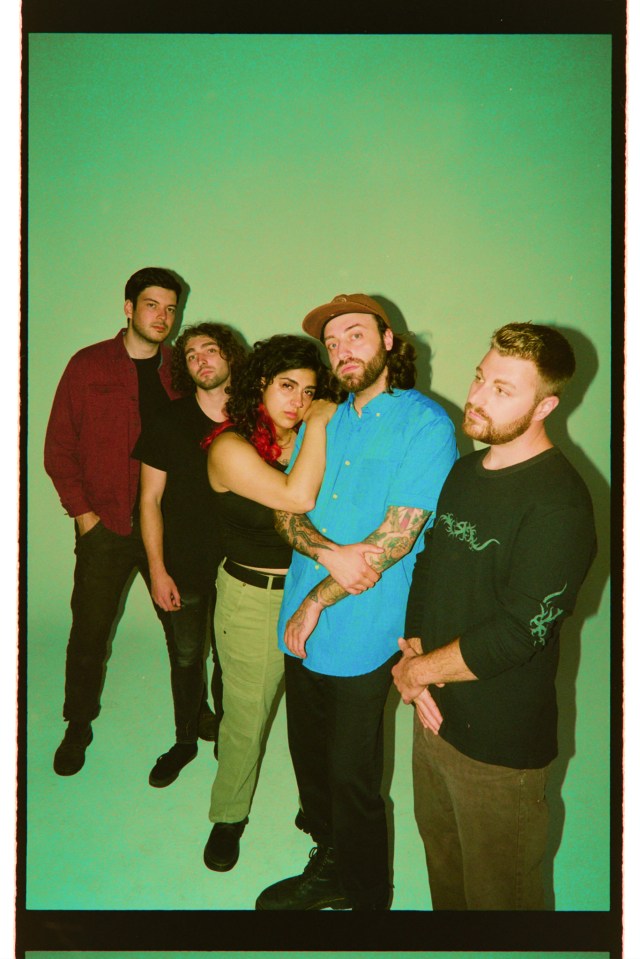
Sweet Pill is one of those bands whose songs and shows still carry the intensity and passion of the basement shows they came up in, even as their world, fanbase, and venues grow larger. Formed in Philadelphia’s strong DIY orbit, the emo/math-rock five-piece built their careers the traditional way: cutting their teeth in smaller rooms, relying on word of mouth, and crafting songs and messages that carry weight and travel much farther than the spaces where they were written and played. On their sophomore LP, Still There’s A Glow, band members Zayna Youssef (vocals), Jayce Williams (guitar), Sean McCall (guitar/vocals), Ryan Cullen (bass/vocals), and Chris Kearney (drums/vocals) channeled that raw collaborative energy into a bigger frame while keeping the scene in which they grew up in sight. Hit Parader sat down with all five band members to talk about the tour, the new record, and how, despite life’s struggles, there’s still a glow. 


Hit Parader: With [Sweet Pill] being such a huge part of the Philly/Rowan DIY scene for so long, you’ve played some pretty quintessential rooms to the scene like Ukie Club, Underground Arts, and The [First Unitarian] Church. I’d love for you to tell me a little bit more about your first headline set at Union Transfer and what that meant to you guys personally after coming through the scene.

Ryan Cullen: For Union Transfer, for me, it was such a special experience. That was the first venue where I was going to real shows and seeing bands play. I think the first band that I actually saw at Union Transfer was La Dispute, actually, and then they were the first big band to take us out on tour. So that was a really cool full-circle moment, to be able to go and play in the room where I had seen La Dispute play, and then also having the experience of touring with them was incredibly special. That was really cool, to be able to be on stage. That’s one of my favorite venues to see a band, and it’s now one of my favorite venues to play.

Cred. Mitchell Wojcik

HP: And then with 4333 [Collective] being such a big aspect of the scene in Philly, how important has it been for the band to stay connected with that grassroots aspect of the community? What would one thing be that you would want to preserve from the scene in Sweet Pill as y’all continue to grow?

Jayce Williams: I think that we come from the world of DIY, and we’re still in it in our own ways. I book shows with 4333, and we all have other different tie-ins. We play in other bands. We’re involved in other parts of the scene. I think that because we have the perspective of being a world-touring band now, and we play all these rooms like Union Transfer, and we’re at the next level above DIY, it’s really important to not forget where you come from in that sense.

We don’t take this shit for granted. There are a million bands trying to do the same thing, and we’re so grateful that we even have the opportunity to take that next step. This is our passion, and we actually get to do it. It’s become our job. Sometimes it feels like a job, but most of the time I’m holding onto that feeling from the DIY world. I want to tie it into Zayna’s message about the last song on the record – how you’re letting go of your childhood – but this is something that I don’t want to let go of. This is what got me here, just setting up a show in a basement. That’s literally how we started. 


HP: On another note, your sophomore record, Still There’s A Glow, came out on March 13th! One thing I really love about the record is the emotional honesty and transparency while also tackling difficult themes. When writing these songs, how did you approach the heavier emotions in a way that was still healthy toward yourself?

Zayna Youssef: I think, at least for me, a lot of emo music is self-deprecating [laughs]. That’s an outlet for sure, a way to get those words out of you. But for me, a lot of my favorite music always has hopefulness to it. I think that’s something I’d rather promote, I think we all would rather promote. There are a lot of people who look up to Sweet Pill, and specifically, a lot of people who look up to me, just being a woman, or being an Arab woman, and being in emo. I think having hopefulness is important to keep the flame going.

It’s ironic, I say that because many of the album’s themes center around fire and burning, flames, smoke, extinguishing things like that ‘Still, there’s a glow’, there’s a notion that no matter how heavy it is, there’s a light at the end of the tunnel. I think, in general, it’s hard for me not to be honest when I write. Some people can write differently; for me, this outlet is the most honest I can be.

Cred. Mitchell Wojcik

HP: With the theming of fire being pretty cohesive throughout the record, was that something that was initially planned when you wrote the first half of the record, or did it find its way in as you kept writing more of [the record]?

ZY: From my perspective, the way that I think Sweet Pill successfully writes music is that we start with the music first. We hear what we’re working with, and I can hear the emotion through the sounds that the guys are playing. Personally, I have been starting an angry journey, discovering this emotion of anger in its full force. I wrote somewhere in my notes app, “Next album is gonna have themes of fire, anger.” It’s deep in my notes app, but I did write that down.

And then we started writing, and “No Control” was the first song written, and it didn’t really have anything to do with fire [laughs], but musically it has this drive, this burn to it, and that’s kind of where it kicked off. It was a little premeditated, but also, I thought, “Am I putting myself in a box? I need to think outside of it a bit.”

JW: I have one thing to add to that. In our writing process for this record, we took a trip up to the Poconos to rent a cabin to write some music, and we wrote this song that’s actually going to be the third single coming out, called “Slow Burn.” It’s way different than our other two singles. It’s pretty fast-paced, and I remember when we were writing it, we called it a ripper. Then someone said, “A burner.”

ZY: ‘Slow Burn’ was the first word I wrote in that song. 

JW: You probably said that immediately, yeah. 

ZY: When we were demoing it, I heard the “I’m in a slow burn,” that’s the first part I wrote, and then the rest of the song followed. That’s also the third song we had written for the album. It went in sequential order: “No Control,” “Glow,” “Slow Burn.” That one, that was the first word. So it was very early on where this fire theme was developing, and then the rest of the song and album, I tried to fill in the gaps. 


HP: And then, this was also the first release that was written fully by the band at the same time. How did that writing process affect the end outcome compared to Where the Heart Is or the Starchild EP?

Cred. Mitchell Wojcik

JW: We wrote Starchild as a group, but that’s not a full record, so we don’t really count it. Where the Heart Is, some of the songs were written [individually], but they all came together as a group. But Still There’s a Glow is from the start, all of us wearing our chef hats, and we all put in input.

ZY: Starchild was an EP, and we kind of had Starchild written, and then the rest was, “Oh, we, what do we do with it? Is that a single?” So we pieced it together that way. Still There’s a Glow was, we’re looking at a blank page, and we’re like, “Okay, we need to create an album.” And that was the first time we ever did that, because Where the Heart Is was just jams that we had had under our belts, and introducing it to each member. Members had switched and changed until we finally established Sweet Pill, then we made Where the Heart Is. And so this is very different, and I think that it puts a lot of pressure on us. 

Chris Kearney: Yeah, we actually had a lot of music written, and really wanted to narrow it down and fine-tune it to be the 13 songs. We probably had close to 30-ish ideas, and we just really wanted to come together and trim the fat and just make it as good as it could possibly be.

Sean McCall: As for our process for that, though, we went up and rented a cabin to come up with ideas from scratch two different times. And the rest of it is, it’s generally all five of us in a room with our instruments, waiting until somebody hears something that someone else is doing and being, “Oh, that’s really cool. Let’s build on that.” And then Zayna, your writing for the lyrics is a different process than that. But as far as for the music, it’s all five of us trying to structure it, and then Zayna thinking, “Oh, if I was going to write over this, we should cut this part in half. We should change this part to be twice as long.” Or, you know, Zayna has got all kinds of cool musical input on the actual structure of the song that way, too, which is super helpful for us.

JW: The way I describe it is, you know, when a painter paints a painting, it’s one person on one canvas, but writing a song collaboratively, the way we do, is five people painting on one canvas, and so you bump elbows, you have your own agenda, and you have your own style. And I think we work really well under that kind of pressure. And we do bump elbows, and we can argue the hell out of a part that we want to keep. But I think, from the beginning of this interview, we mentioned how Ryan mentioned how, you know, we are an emo band, but we all have these different influences, and we really sit outside of that box, too, and that’s really prevalent, because we all have input in the songwriting. Zayna doesn’t play an actual instrument. Her voice is an instrument, but she is just as involved in the songwriting as anyone else. And you know, it used to be just guitar boys, Sean and I would come up with an idea, and then we’d present it, and it would just be one riff, and then our song would come around it. But Ryan, one of our favorite songs on the album, the last song, “Letting Go,” started because Ryan plays something on the bass, and Chris has just as much input on melody, even though he’s playing an instrument that is not melodic, but he plays it melodically. I don’t know how to describe it. 

Cred. Mitchell Wojcik

SM: I like what you’re saying, Jace. Before I was even in Sweet Pill, watching all of these individuals, Ryan, Zayna, Chris, Jayce, separately or together, do their own things. They are all capable of doing something else completely, and doing awesome at it, but Sweet Pill works because there’s five of us who are kind of able to do that and, like you’re saying, Jayce, usually when you have that with other bands, I’ve seen it or heard it as, this part of the record sounds different because that person wrote this, and then another person wrote this half of the record, and it sounds like two different things. And I think we accomplish not doing that together, because it’s so collaborative, it doesn’t feel like two different records, but it definitely feels like you’re pulling a lot of influences into one place and kind of getting Sweet Pill, you know.

JW: I mean, and there’s no shade on this, but look at Modern Baseball. You have Jake songs, and you have Bren songs, right? 

SM: And that works for them.

JW: Absolutely. They’re both, you know, great in their own ways. We just have Sweet Pill songs.

SM: Yeah, it’s a little different.

HP: That’s awesome. And Zayna, you were quoted as saying that ‘the process of the record came from a lot of trial and error, until the album shaped itself’. What aspect, song, lyric, anything of the album, are you most proud of that spawned from that specific cycle of trial and error that otherwise would not have been in the record?

ZY: Well, I will say the first time we went to the Poconos, we birthed “No Control” and “Slow Burn.” And then the second time we birthed “Glow.” And then we kind of birthed the rest of it in our practice space, and I birthed my end of it in the studio.

SM: I was just gonna say “Smoke Screen” was one that we forget about, that was kind of going in between yes and no. It almost didn’t even make the record. And now here we are.

Cred. Mitchell Wojcik

ZY: Yeah, that’s a good example. That’s gonna be our fourth single, and that’s, the song is called “Smoke Screen.” And basically, the guys had one of the jams, and I was trying to write to it, and I was having a really, I was very blocked, writer’s block, whatever. I couldn’t figure out what to say. And, I mean, I knew what to say, but I didn’t know the best way to say it. But it kind of sat dormant for a while, and then, months later, in the studio, I just tried again after writing different songs, and it helped me figure out how to write this one that was sitting for a while. But yeah, there’s a lot of lyrics. A lot of lyrics came last minute, and a lot of lyrics came in the moment. A lot of lyrics were thought out for months.

JW: I want to just add to that a little bit, too, like what Chris said earlier, we had 30 songs written, and what I was mentioning before, how when we’re writing together with that metaphor, we do bump elbows. And I think it took Zayna saying to us, “Hey, I have this writer’s block on this stuff we’re working on,” which I think some of us were kind of, “What? This stuff rocks.” And then I’m so happy she said that, because then we wrote 12 more songs, which almost all of them made it on the record. And I think without that emphasis to kind of start from scratch again, we wouldn’t be where we’re at right now.

HP: With you guys scrapping almost an entire record, how did that feel in the moment, starting from scratch and just backburner a lot of material?

ZY: I think everybody has a different answer for that, because I felt good, but I think it was probably a little defeating for everyone. I mean, even after we restarted, I had to restart a million times myself, just lyrically. 

RC: I’ll say that it was really hard to move past some of the songs that we were working on, I thought that they were really cool. But the way that Sweet Pill writes music is, we will take a part of a song, and then we’ll get to the end of that part, and we’re like, “Okay, so what should come next?” And we start pulling from our catalog of different riffs and jams that we’ve made. And I wouldn’t be surprised if there are aspects of those songs that we scrapped that will make their way to new Sweet Pill songs in the future, after they maybe find a better home. So it’s still material that we have to play with. It’s good to have in our pocket for now.

JW: Yeah, going off of that, it is, in the moment, it was hard to start from scratch, but now in hindsight, I’m really grateful for it, because we do have that arsenal of stuff to pull from when we want to write again. And we had practice yesterday, and we have four ideas that we’re jamming on. [While] we’re rolling out our second album, we’re already working on the next thing, and there’s no stress involved. It’s just fun, and that’s how it should be. Writing this record was stressful for all of us individually, but we pushed it out, and I’m really proud of it.


Cred. Mitchell Wojcik

HP: Just to start to wrap up, this might be a little cliché, but if the audience could have one takeaway or central message after listening to the new record, what would you most want it to be?

CK: That shit rocks [laughs]. Sorry, you can give a real answer.

ZY: That’s a real answer [laughs]. I was gonna say, ‘still, there’s a glow’ [laughs]. I guess, if you want a real answer after that is that life keeps going, and you have a choice more than you think you do.

HP: And then just a fun one to wrap up. What are you most looking forward to in 2026 from all y’all?

ZY: I’m excited to tour. We did a lot of touring, obviously, these last few years, but this last year, we were doing a lot of outside of America, which was awesome, but I’m very excited to play Sweet Pill shows to our home turf, just to feel that familiarity again. So I think that’s what I’m excited for.

RC: I’m excited to play rock music with my friends around the world.

SM: I’m excited for this damn record to come out [laughs].

JW: GTA 6, fingers crossed.

CK: I’m excited to exist with my friends and play some cool shows and have a good time. 

ZY: I’m also excited to see some change happen, hopefully in this bleak, dark world.

SM: Fingers crossed. 

ZY: Still, there’s a glow, baby.


Buy tickets to Sweet Pill’s upcoming tour here.

Catch a 4333 Collective show here.


Read the article in print in Issue 4 of Hit Parader Magazine.

Hit Parader #4: Brent Faiyaz

March 2026 — $12.99

In this issue of Hit Parader, Brent Faiyaz steps into the cover spotlight for a rare, unfiltered conversation about artistry, independence, and the cost of doing things your own way. At a time when most artists race against algorithms and deadlines, Brent moves on instinct —scrapping albums, disappearing to finish ideas on his own terms,…