‘Be The People’ Aims To Drive Community Through Music 

Whether you are a dreamer who believes music can change the world or you’ve given in to cynicism and scoff at the notion, there is absolutely no denying few things in things in this world have the power to unite the way music does. 

You see it at clubs, arenas, and stadiums every day around the world. People across generations, religions, races, and yes, even political parties, banding together to sing along to “Hey Jude” with Paul McCartney or whatever your favorite song is. Hell, look at the 2007 Led Zeppelin reunion show. People from 50 different countries applied for tickets to the show. I guarantee you not all those countries got along. And the fans dreaming of tickets didn’t care who else was there; they just cared about seeing Led “Fucking” Zeppelin.

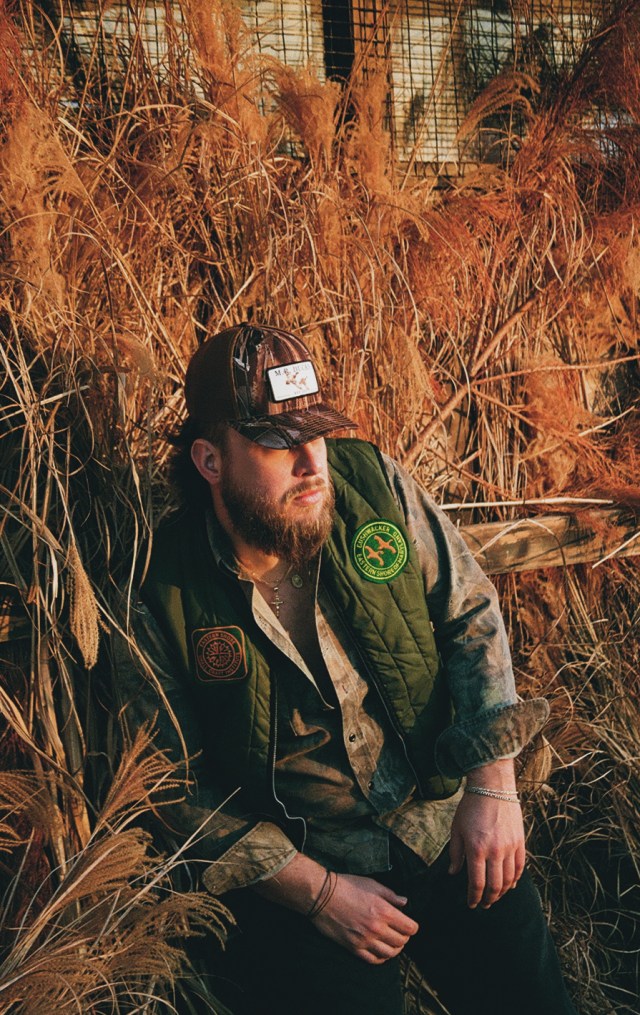
It’s that ability of music to transcend all barriers that the organizers of “Gotta Be Us (Be The People),” a call to action and a new single, produced by five-time Grammy nominee Poo Bear, are counting on. Uniting up and coming artists Momo Boyd, Trevor Jackson, Smino, Sadie Rose Van, Luke Borchelt, and the VCU Black Awakening Choir in the worlds of country, rap, R&B, pop and soul, the infectious plea for unity is intended to stir up action and remind people that no matter how dire the times seem on a global and national level, the heart of America is beating strongly in the communities that remain the soul of the country.

The rollout began with the track going to streaming services last Friday (June 12, 2026).

It’s all part of a hugely ambitious plan to inspire Americans to give back on a local level. 

If the artists involved, other than Poo Bear, are new names, those involved in the leadership council – such as Goodwill, Jon Batiste, the NBA, Habitat For Humanity, Special Olympics, Martin Luther King III, and more – highlight the drive of the campaign to inspire people to get involved on a local level. 

‘Gotta Be Us (Be The People)’ is a song about how each of us has a role to play in our country today,” said Poo Bear. “If we want a future that’s even better than our past, it’s up to all of us to show up and help solve problems together.”

Hit Parader spoke with rising country star Luke Borchelt, who represents the artist’s side of the song, and Scott Strode, Founder and Executive Director of The Phoenix, about the philanthropic portion of the campaign. 

Cred. Press Provided

Hit Parader: How did you get involved in the song?

Luke Borchelt: This all came about in the last month. I come from a non-profit background, so I was eager to do something that gets people together and is trying to celebrate the community.

HP: What kind of nonprofit background? 

Borchelt: I started in the humanitarian aid space. My last career before full-time music was nonprofit impact work in disaster relief for an organization called Mercy Chefs, based in Virginia. So, I was so excited to get back into that space. I worked on the volunteer and distribution side.  I would assist the chefs. 

HP: Did you all record together, or was it done individually? 

Borchelt: I was in New York with Poo Bear and the rest of the creative team. We’re all going to get together for these shows coming up. That’s what I’m most excited about, I’m about to hang with everyone today.  Most of the time nowadays in music, honestly, you wouldn’t even expect to get in a room at all. It would be more like send it in. But I thought it was cool that Be The People wanted us to come in to record the song with Poo Bear, have it be a collaborative in-person effort. I’ve gotten to know the team a lot at Be The People. I’ve been hanging with and communicating with them since this whole process started. We were just in Birmingham two days ago shooting my part of the music video. So, I feel really close with the team, and I’m excited to get close with the singers as well. 

HP: How gratifying has it been being involved in this project?

Borchelt: It’s really cleansing to work on something that is not just my art, it’s all of us, and it’s someone else’s vision. I love to be a part of this. It’s the highest level of music I’ve been involved in. Poo Bear is someone that I would not be in the room with normally. So, to be at working at the highest level and around such storied professionals — even Trevor, Sadie Momo and Shmino — that part feels cool too because it’s a higher level of talent and professionalism. A lot is in the country space, but to be around people in R&B, hip hop and pop, the talent is another level.

HP: The world feels more divided than it’s been in so long. And music feels so unifying, for lack of a better term. 

Borchelt: I think music and community are the things we all have in common. And I’m excited for the open call portion of this project because it’s going to let people in their own communities interpret the song in their own way. I think making a point to bring that out to the community is going to be cool. And I find that that will help the music continue to heal and bring us together. 

HP: What does this project mean to you?

Scott Strode: For me, the Be the People initiative lands at just a really important time for our country. The song really embodies this idea that…I love the line in there that says, “The dream isn’t dead. It’s just waiting on us”. We, the people, can be the people that our country needs right now.

HP: Talk about the narrative of what community means to you and why a song like this is important now.

Strode: Because individually, things are not nearly as desolate as they seem. In my everyday work, I don’t actually see the hatred and division and all the stuff that we see in our algorithms and 24-hour news. What I see in my work with people coming out of addiction and struggling with mental health and social isolation is I see people coming together every day and lifting each other up. I’m in our gym now in Boston, and we have folks that come from reentry programs out of the criminal legal system. We have folks that are coming out of halfway houses and treatment programs or out of homelessness. They’re actively on the street. And we also have firefighters and first responders, and the police cadets do their physical fitness here, so we’re seeing people come together and lift each other up. That might just be in a workout, we’re pushing through a hard workout together, and we’re fist-bumping at the end of that. But it doesn’t matter if you’re in the fire department or you have an ankle monitor on because you’re coming out of the criminal legal system. We’re lifting each other up in that workout. And the volunteer who’s leading the class is sharing a gift and passion they have for whatever activity it is. What I see is really the spirit of this song every day, where we come together. When you go from the me to the we, that’s the magic. And by doing so, you too are lifted. When you help somebody else out in a time of need, it also lifts you. I actually don’t think we’re as divided as people might think. It’s sometimes the loudest voices on the fringe end up being the only thing we hear. That’s what America is: we’re there for each other when we need each other.

HP: How does music help deliver this message?

Strode: I think this approach of doing it through music is so powerful because music’s been driving culture in our country since our country was founded. And it’s been present and a leader in the biggest transition moments of our nation. So, to have music come together now in this time and lift up this issue and idea that we are one and we can lift each other up, and we can spread hope and opportunity and empowerment to each other is going to drive culture again in this moment. I think now is the time for all of us to find the place where we can be the people. For some, that might mean volunteering for the Phoenix and helping those coming out of addiction or helping those struggling with mental health stuff. For others, it might be using your gift as an artist to tell this story and help this story reach more people. 


‘Gotta Be Us (Be The People)’ is out now.

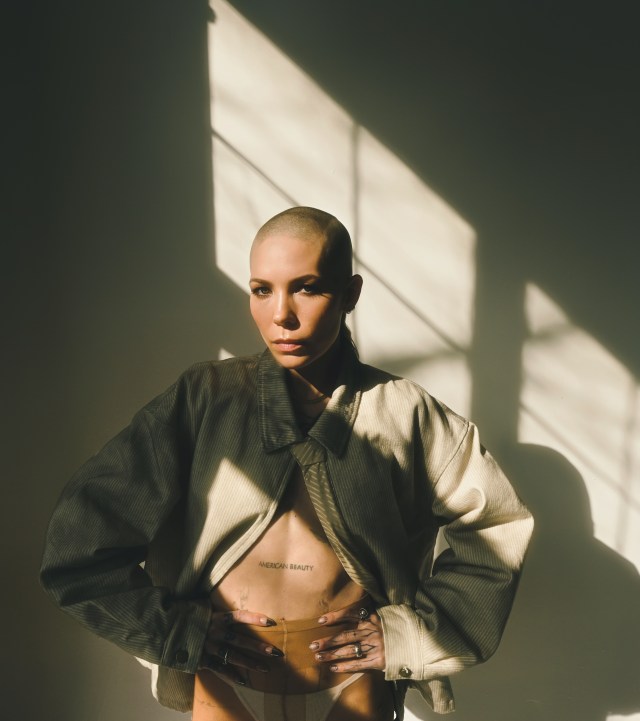
Skylar Grey Finds Her Full ‘Potential’

Skylar Grey has shared a Grammy stage with Eminem and Dr. Dre, written numerous hit songs for the likes of Celine Dion, Eminem, and more, and collaborated with big names like Illenium, Macklemore, Kaskade, and Deadmau5. 

Yet, with her superb new album, the intimate and raw Wasted Potential, she says with no hesitation at all, “I’m absolutely enjoying music more than I ever have. Music to me has always been about getting my emotions out, and it’s therapeutic for me to write a song.”

For Grey, she has reached that magical point in her career where she is answering to herself and just making the music she needs to make.

“There’s been a period of time in my career where I didn’t do that because I felt forced to do sessions I didn’t want to do and write songs I didn’t want to write just to try to make money and stuff, but I shut all that down, and now all I’m doing is writing from the heart,” she says. “I sit at the piano, and I make music and write lyrics, and that’s how I get through stuff. And I think that is the best way to connect with people. It ends up always being the best music when it’s just honest.” 

Cred. Shervin Lainez

Part of her aging process is feeling much freer to not only be more honest, but also to follow her instincts more and not overthink things.

“I think as I’ve gotten older, I’ve been able to give less fucks about what other people think. And that helps me stay truer to myself. And I’m also taking everything less seriously than I used to. I’m not exactly sure I’ll get the quote right, but Post Malone said something about how he just makes a bunch of music and then puts out whatever vibe he’s into and whatever he’s feeling in the moment. And he doesn’t think too hard about it. And that made me realize that for a lot of my career, I was always just overthinking everything way too much,” she says.

Growing older also inspired one of the album’s most memorable tracks, the homage to the ‘90s, “Nirvana.”

“I think for me personally it was turning 40 and feeling old and wanting to go back to my childhood,” she says. “The whole song is about how I didn’t appreciate my childhood and so many things that I hated back then that now I miss.”

The ‘90s are a recurring theme on the record, according to Grey. 

“Most of my musical influences came from the 90s because they were my formative years. And it’s when I was the most excited about discovering music,” she says. “And so, ‘Come,’ for example, is an ode to The Spice Girls to become one song. And then there’s just a lot of little elements of what I do that I think are inspired by the ‘90s. The song called ‘Bullshit’ on the album opens up with a strumming acoustic guitar that reminds me of Oasis.”

The album was co-produced by Danny Majic, whom Grey said she first worked with on “Last Man Standing” from the soundtrack to Venom.  

“We have such great chemistry, and we have such a great workflow. It’s like, ‘Don’t fix it if it isn’t broken.’ Why do I have to go out and search for more producers? I have one that is amazing right here, and we work so well together. So, I hold those relationships really near and dear to my heart,” she says.

Cred. Shervin Lainez

As someone who has experienced the highs and lows of collaborating, Grey has an especially deep appreciation for those people she clicks with, like Majic and Marshall Mathers (Eminem).

“That’s why I’ve written so many songs with Marshall, because we do have such good chemistry.”

Many artists will talk about self-fulfilling prophecies, about making their dreams a reality. Whether or not you believe in the ability to manifest, Grey’s friendship with Em is a literal dream come true for her. 

“‘Stan’ was another [song] that was very impactful for me. It was the first time I’d heard a beautiful, angelic vocal mixed with hip-hop, and I thought, ‘Man, I love that combo.’ It was so unique at the time, and I think that was a huge inspiration for why I wanted to get into collaborating with rappers,” she says. “Because I can relate to these vocals that were more airy and unique. As a kid, I was in musical theater, but I never had the power as a vocalist to be up on stage without a microphone. And so, the artists that really inspired me early on were the artists I could relate to vocally. Sarah McLachlan, Dido, they’re the artists that showed me a path in music that I could take.”

Though if Grey were to pick one song from her childhood that changed her life and shaped her musical vision, it would be a true ‘90s classic. “There are so many songs that I’m obsessed with and love. One of the most impactful songs from my childhood was Massive Attack’s ‘Teardrop.’ I first heard it when I was walking up the hill to my best friend’s house. She had the windows and doors open, and it was sunset. And that song was just blasting in the house, out the windows. It was magical. I don’t know how else to describe it. The feeling that song gave me in that moment. It was completely life-changing,” she says. “That airy, dreamy vocal and the beat and the darkness, but also the uplifting feeling it has to it. That was just a super powerful moment for me in music discovery. Then I was obsessed with Fiona Apple’s Tidal, the whole album.”

Cred. Shervin Lainez

As someone who experienced huge stardom in her early career and chose to then follow an unconventional path of releasing music whenever she wanted, the brilliant Apple still inspires Grey tremendously.  “Somebody like Fiona Apple just inspires me to always stay true to yourself. It’s easy to get swept up in the Hollywood of it all. And she’s just one of those artists that’s always stuck to her guns and made the music she wants to make. That, to me, is very inspiring.”

That said, Grey doesn’t plan to follow her path of releasing albums as often as Halley’s Comet. 

“Instead of just putting out music as it came to me, I would try to curate the perfect album. And by doing so, I would limit myself to releasing an album every five years or something. As I’m getting older, I’m like, ‘Wait, I want to put out a lot more music before I die.’ So, I’m taking it less seriously. I’m having more fun, and I’m just making music that I love in this moment,” she says. “It doesn’t have to define me and my whole career and my whole sound in this moment. It can just be what I’m feeling right now, put it out there in the world, and then move on to the next project. That’s a new approach I’ve been taking. And it’s a lot more relaxing, a lot more fun. And I plan on putting out albums way more frequently because of that mindset change.“