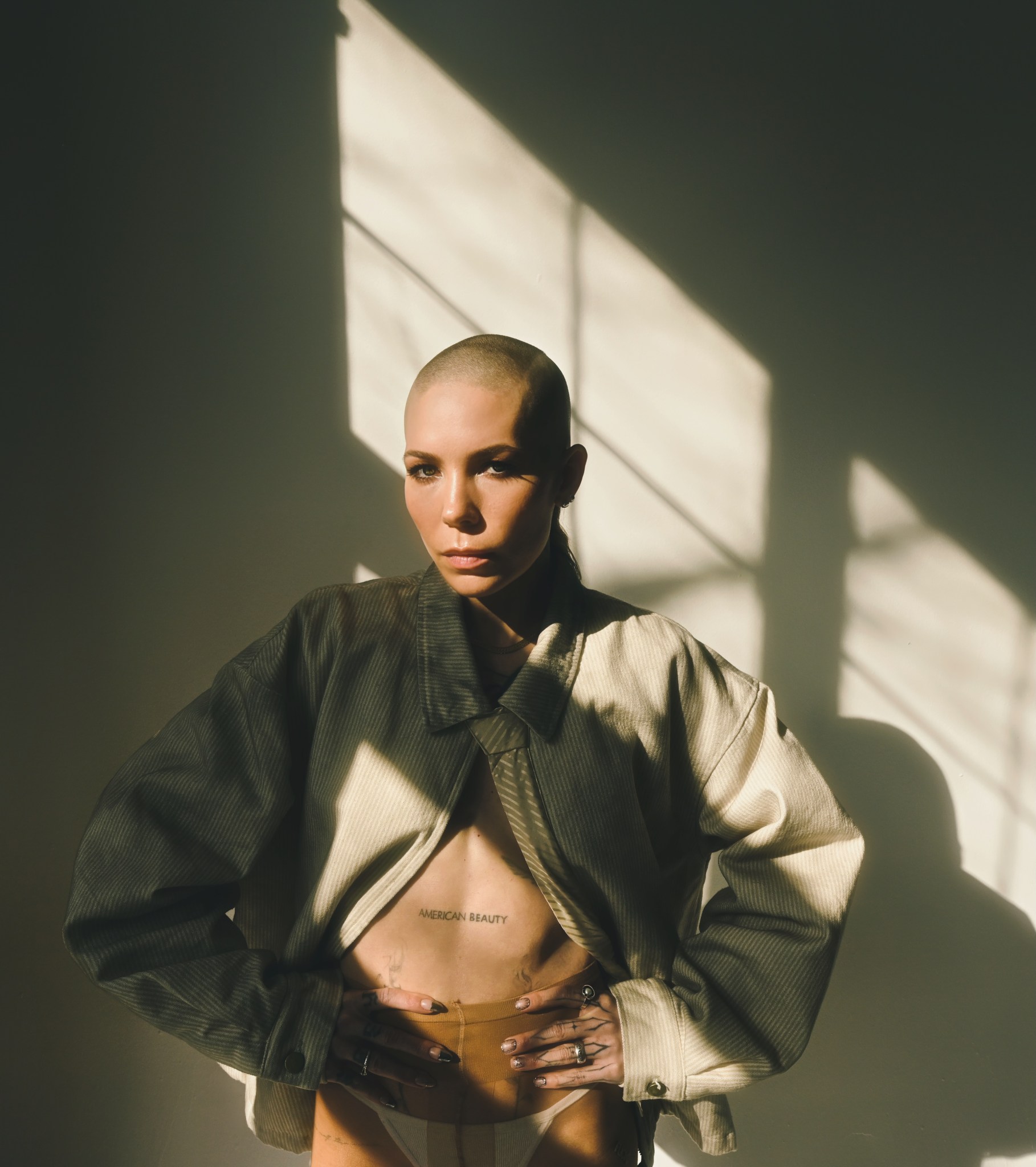
Skylar Grey has shared a Grammy stage with Eminem and Dr. Dre, written numerous hit songs for the likes of Celine Dion, Eminem, and more, and collaborated with big names like Illenium, Macklemore, Kaskade, and Deadmau5.
Yet, with her superb new album, the intimate and raw Wasted Potential, she says with no hesitation at all, “I’m absolutely enjoying music more than I ever have. Music to me has always been about getting my emotions out, and it’s therapeutic for me to write a song.”
For Grey, she has reached that magical point in her career where she is answering to herself and just making the music she needs to make.
“There’s been a period of time in my career where I didn’t do that because I felt forced to do sessions I didn’t want to do and write songs I didn’t want to write just to try to make money and stuff, but I shut all that down, and now all I’m doing is writing from the heart,” she says. “I sit at the piano, and I make music and write lyrics, and that’s how I get through stuff. And I think that is the best way to connect with people. It ends up always being the best music when it’s just honest.”

Part of her aging process is feeling much freer to not only be more honest, but also to follow her instincts more and not overthink things.
“I think as I’ve gotten older, I’ve been able to give less fucks about what other people think. And that helps me stay truer to myself. And I’m also taking everything less seriously than I used to. I’m not exactly sure I’ll get the quote right, but Post Malone said something about how he just makes a bunch of music and then puts out whatever vibe he’s into and whatever he’s feeling in the moment. And he doesn’t think too hard about it. And that made me realize that for a lot of my career, I was always just overthinking everything way too much,” she says.
Growing older also inspired one of the album’s most memorable tracks, the homage to the ‘90s, “Nirvana.”
“I think for me personally it was turning 40 and feeling old and wanting to go back to my childhood,” she says. “The whole song is about how I didn’t appreciate my childhood and so many things that I hated back then that now I miss.”
The ‘90s are a recurring theme on the record, according to Grey.
“Most of my musical influences came from the 90s because they were my formative years. And it’s when I was the most excited about discovering music,” she says. “And so, ‘Come,’ for example, is an ode to The Spice Girls to become one song. And then there’s just a lot of little elements of what I do that I think are inspired by the ‘90s. The song called ‘Bullshit’ on the album opens up with a strumming acoustic guitar that reminds me of Oasis.”
The album was co-produced by Danny Majic, whom Grey said she first worked with on “Last Man Standing” from the soundtrack to Venom.
“We have such great chemistry, and we have such a great workflow. It’s like, ‘Don’t fix it if it isn’t broken.’ Why do I have to go out and search for more producers? I have one that is amazing right here, and we work so well together. So, I hold those relationships really near and dear to my heart,” she says.

As someone who has experienced the highs and lows of collaborating, Grey has an especially deep appreciation for those people she clicks with, like Majic and Marshall Mathers (Eminem).
“That’s why I’ve written so many songs with Marshall, because we do have such good chemistry.”
Many artists will talk about self-fulfilling prophecies, about making their dreams a reality. Whether or not you believe in the ability to manifest, Grey’s friendship with Em is a literal dream come true for her.
“‘Stan’ was another [song] that was very impactful for me. It was the first time I’d heard a beautiful, angelic vocal mixed with hip-hop, and I thought, ‘Man, I love that combo.’ It was so unique at the time, and I think that was a huge inspiration for why I wanted to get into collaborating with rappers,” she says. “Because I can relate to these vocals that were more airy and unique. As a kid, I was in musical theater, but I never had the power as a vocalist to be up on stage without a microphone. And so, the artists that really inspired me early on were the artists I could relate to vocally. Sarah McLachlan, Dido, they’re the artists that showed me a path in music that I could take.”
Though if Grey were to pick one song from her childhood that changed her life and shaped her musical vision, it would be a true ‘90s classic. “There are so many songs that I’m obsessed with and love. One of the most impactful songs from my childhood was Massive Attack’s ‘Teardrop.’ I first heard it when I was walking up the hill to my best friend’s house. She had the windows and doors open, and it was sunset. And that song was just blasting in the house, out the windows. It was magical. I don’t know how else to describe it. The feeling that song gave me in that moment. It was completely life-changing,” she says. “That airy, dreamy vocal and the beat and the darkness, but also the uplifting feeling it has to it. That was just a super powerful moment for me in music discovery. Then I was obsessed with Fiona Apple’s Tidal, the whole album.”

As someone who experienced huge stardom in her early career and chose to then follow an unconventional path of releasing music whenever she wanted, the brilliant Apple still inspires Grey tremendously. “Somebody like Fiona Apple just inspires me to always stay true to yourself. It’s easy to get swept up in the Hollywood of it all. And she’s just one of those artists that’s always stuck to her guns and made the music she wants to make. That, to me, is very inspiring.”
That said, Grey doesn’t plan to follow her path of releasing albums as often as Halley’s Comet.
“Instead of just putting out music as it came to me, I would try to curate the perfect album. And by doing so, I would limit myself to releasing an album every five years or something. As I’m getting older, I’m like, ‘Wait, I want to put out a lot more music before I die.’ So, I’m taking it less seriously. I’m having more fun, and I’m just making music that I love in this moment,” she says. “It doesn’t have to define me and my whole career and my whole sound in this moment. It can just be what I’m feeling right now, put it out there in the world, and then move on to the next project. That’s a new approach I’ve been taking. And it’s a lot more relaxing, a lot more fun. And I plan on putting out albums way more frequently because of that mindset change.“