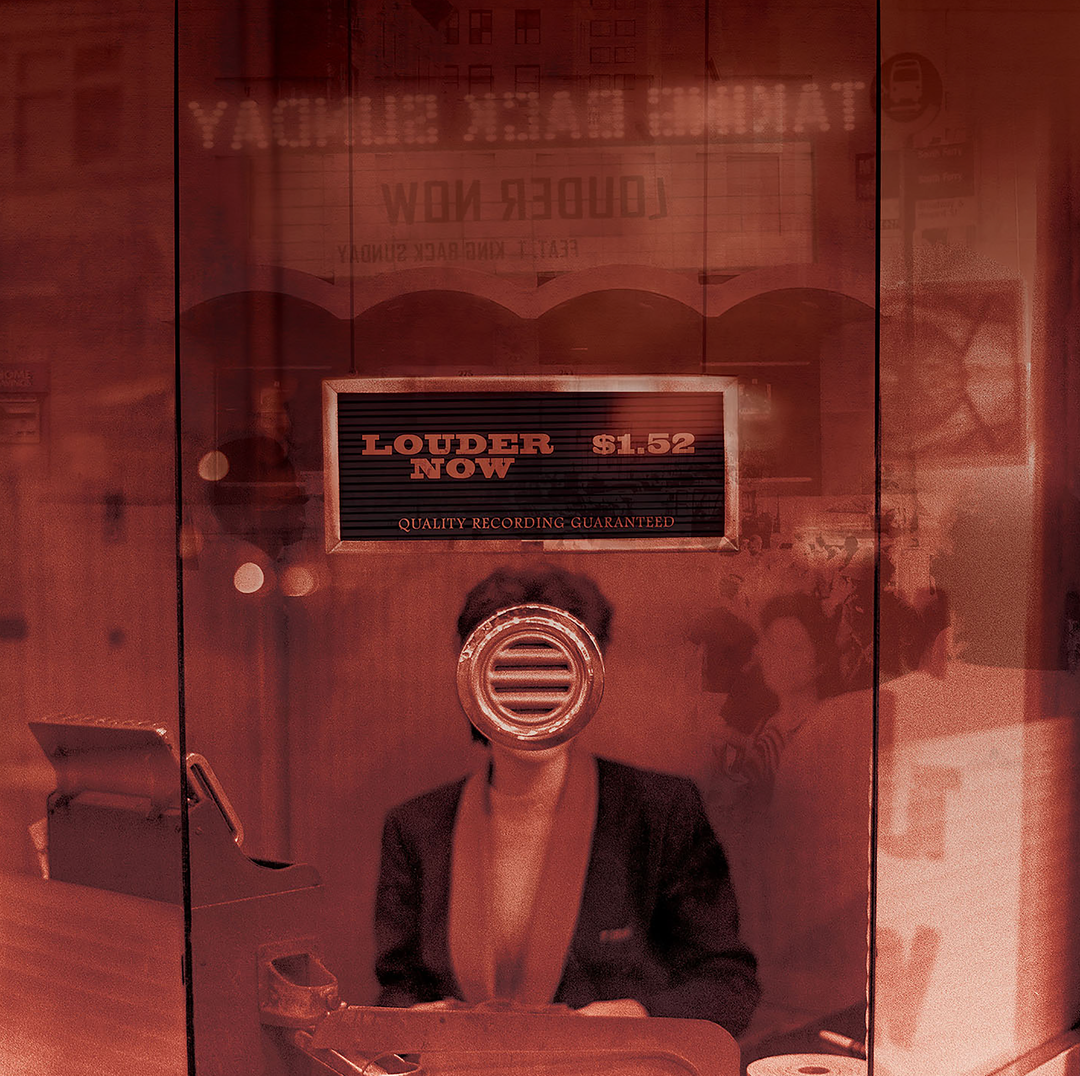
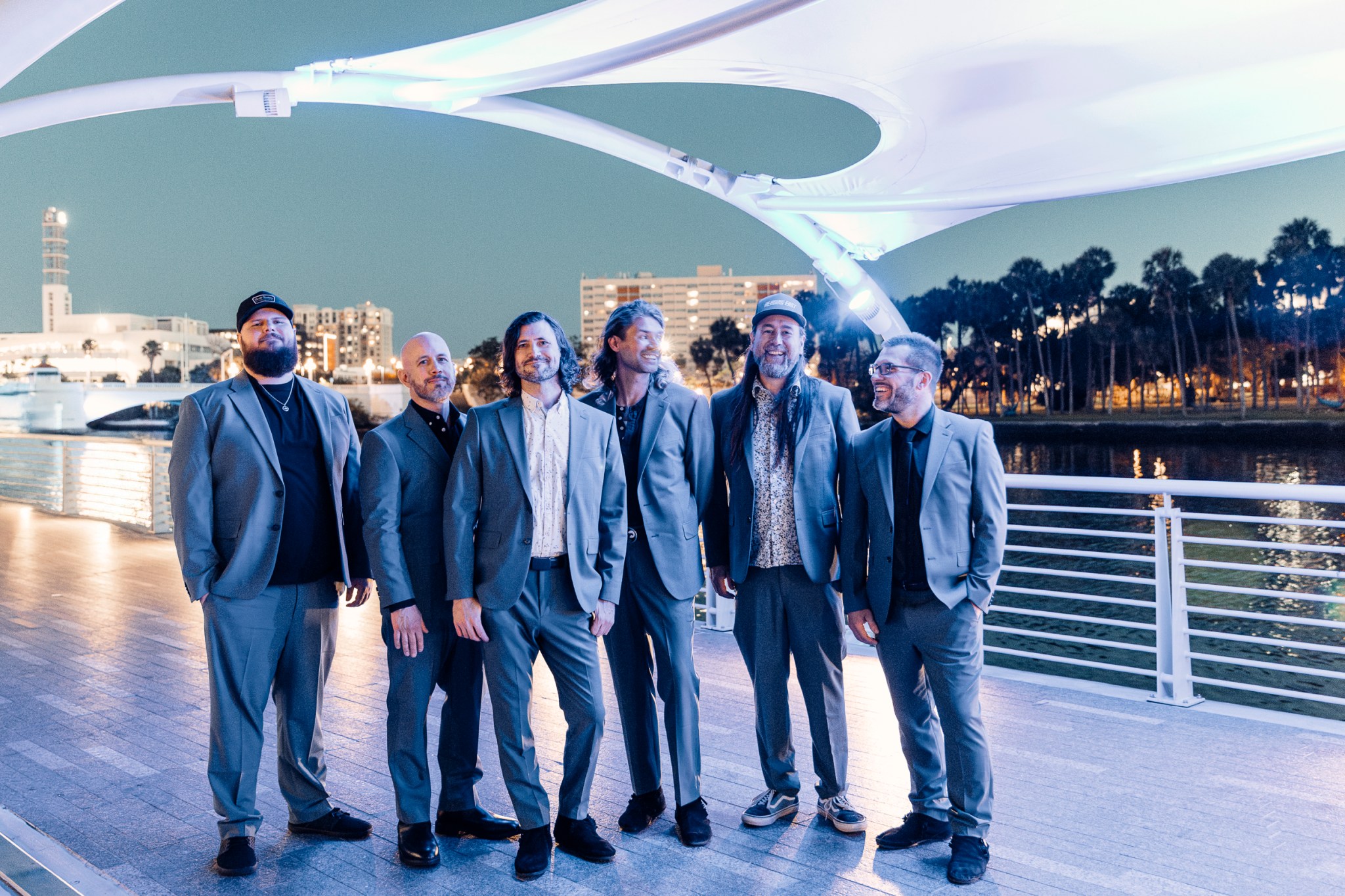
As their career has gone on, the pop-punk band Taking Back Sunday has changed with time, as any band does. However, recently, there has been a time to revisit the past, including the addition of early guitarist Fred Mascherino to their most recent tour lineup and the celebration of the 20th anniversary of their breakout record, Louder Now. If you ask Adam Lazzara, looking at Louder Now 20 years later feels like talking to a past self. Taking the time to enjoy the things they have forgotten about the project has brought a new appreciation for every band member. As they find their spark for the present in the essence of the past, the group decided to release a 20th-anniversary edition of the record that was so formative for them, featuring bonus material that has yet to see the light of day. Adam sat down with Hit Parader to reflect on the album, the band’s evolution, and how their audience demographic has shifted over time.
HP: How is your year going so far?
Adam Lazzara: So far so good. It’s been great. When you are planning things and looking at the year on paper. It doesn’t feel real. We’ve been very busy, and I’m grateful for that.
HP: Last notable song you listened to?
AL: “Daisies” By Justin Bieber
HP: Are you a big Bieber fan or just happen to be playing that one song?
AL: I wasn’t until the new record that I hopped on the Bieber train. I’m a huge fan of Dijon. I stumbled across the Big Mike video about three or four years ago. I stumbled across that, and it rocked my world. I just couldn’t get enough. Even now, when I’m not sure what I want to listen to, I just go there. Or Tom Petty.
HP: When looking back on the process that made Louder Now, what aspects do you think have lasted through now? And what aspects did you try to move on from?
AL: The biggest thing about Louder Now was that we were able to work with Eric Valentine. Even still to this day, he’s one of the best rock and roll producers there is. We made one more project with him. The self-titled record. So, being able to work with someone like that and getting to see through his lens for a little bit. I wish I had paid more attention, and I was already hyperfocused on paying attention. His approach to engineering and some of the sounds he would gravitate towards. A lot of that stuck with us. I am very grateful for it because a lot of people don’t get that opportunity. That’s another reason why we’re some of the luckiest people you’ll ever meet. During that time, we had put an extreme amount of pressure on ourselves because it was our first major record deal. It felt like the stakes were really high. For me personally, that translated to creating two or three different ideas that could work. Later down the road, that spiraled out of control to where I was getting paralysis from too many options. I’ve been working on trying to trust my gut more. Which, ironically, is something Eric helped reinforce in us. Moving forward from there, we had, however, many songs, and I would pour over them and pour over them. To the point, it would start to hold things up because I wanted to impress the guys. So I tried to ease up on that a little bit.
HP: I saw on a podcast with the band members that you were discussing how, before technology, you would have to discuss for an hour if something was even worth trying. So it’s interesting with the process being much faster; you try to trust your gut and not try as much.
AL: With the technology that’s been a big thing too. That’s the thing that made me realize that I had to hone stuff in. Not go through this: “Let me go through these 57 other presets before I pick this one that I already like.” That made me realize I should stop doing this, and with my writing too. Oftentimes, you just end up getting stuck. There’s this one idea in essence that you have already finished. But you just keep working it to death and all that. It’s like working with dough. If you knead it too much, it gets hard and isn’t going to do what you want in the oven.
HP: With this record and having two decades to grow with it, what’s one song of the project that you feel has taken on a new meaning with age?
AL: I was just talking about this with Fred the other day. We were talking about the songs, and it feels like I’m having a conversation with a different person. I’m not that person anymore. I’m partly that person, but I’ve grown a lot since then, thankfully. We’ve been revisiting things and playing deeper cuts that we don’t normally play live. As I’ve been going through them, they speak to me in a different way. They’ve also taken on this new meaning. One song in particular that I could think of is the last song off of the record. “I’ll Let You Live.: the way that song speaks to the person I am now is entirely different from what I was intending. Even what I was writing about at the time. I like to think that’s the coolest thing about any kind of art. Be it a painting or a song. It’s that you could come into your life at a certain time. Then you would forget about it for a while. When you come across it again, it almost means more, or it strikes you differently. I’m really proud of the fact that, for me, Louder now speaks to the person I was then. But somehow it also speaks strongly to the person I am now in different ways.
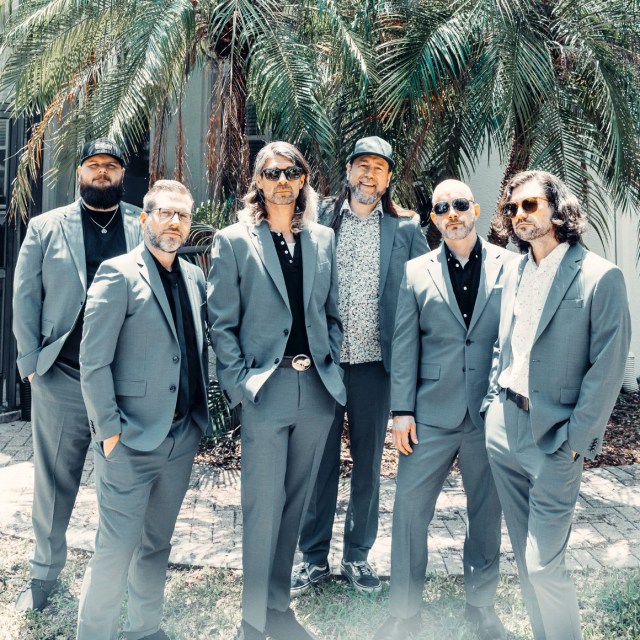
HP: With the new tour coming up, you guys are going to be interacting with some fans who never had the opportunity to see these songs played live. How do you balance playing for the older fans versus people who may be interacting with your music for the first time?
AL: The fact that there are people who are discovering things from further back in our catalog is incredible. I never imagined that world. One of my favorite things about going to a show is that it is the one thing that would make time stop for me. It’s like nothing else outside of that existed. That’s what’s cooler about younger generations finding us. There is something in the songs that is speaking to them. Even though we’re in completely different chapters of our lives. To be able to speak and connect in that way with someone who’s in a different spot in life than you. It’s really incredible because that’s what fellowship is. That’s the thing that I’ve been chasing. What is so cool about a live show is that I can look out at the crowd, and the age range is from 12 to 50. When you’re 12, you have a different set of problems than when you’re 18, 25, or 30. Somehow, through the course of being there, experiencing, and participating, you shake all of that off. You feel a little bit lighter afterward.
HP: That person from the younger generation probably heard the music from an older sibling or in their parents’ car. Not only is there a connection to your music, but also a connection to how they discovered it.
AL: At a certain point, it’s almost like an anchor point. How cool is that? We get to be part of their story in a little way. That’s really awesome. As far as managing the set, when we go in, we always try to keep in mind that there is this specific group of songs that people will be disappointed if we don’t play. So we get those on there first. From there, we work around and plug stuff in around that.
HP: I know artists aren’t supposed to say this, but is there any song that you’re tired of playing?
AL: No, there are songs that I’m tired of rehearsing 1000%. When you go into a rehearsal space, I think it’s natural for anybody to want to be working on whatever’s newest. So we can work to make it as cool as it can be. I just want to fiddle around and try to get lost in the stuff because everyone in the band is great at playing. Oftentimes I have these moments where it hits me like, “Oh, my god, I can’t believe I’m in a band with these people.” The reason why I say there are some songs that I get tired of rehearsing is that there are ones we’ve played so many times. When it comes up in rehearsal, it feels like it’s taking time away from other work we could be doing on something more recent. Everybody is most excited about what they’re doing currently. But when we play, something else happens. It’s all to the effect of this idea of getting lost I’ve been talking about. It almost takes on a life of its own. This idea that there’s this band playing and the crowd reacting. That feels like it goes away and becomes this big ball of energy. I’m not really sure of the best way to describe it. It’s like real-world Harry Potter stuff. You lose time and forget. It’s like nothing else exists except for that moment, and it’s really hard to live in moments. Even more so now.
HP: Looking back to the Louder Now era. What’s one moment that didn’t feel like that big of a deal at the time but now you look back and really cherish?
AL: Just because everything was happening at that time. There weren’t a lot of moments when we were all sitting around together and just taking everything in at the same time. Personally, there are so many things that are so special to me. There used to be a Virgin Megastore in Union Square. I remember I went with a friend, and at 11:59 on the day it came out, we were there to buy one. The guys at the counter even joked, “Don’t you have a copy of this?” and I responded, “Yes, but I never bought a copy of it from the Virgin store in Union Square.” There are really special moments. Like us playing at a big festival, and it was a big deal. We had a good place on the bill, and then you have this crazy day of press and talking to other folks. This excitement for the show and the festival itself. Once everything’s done, there you are, all sitting together. Just the five of you on the bus. You’re not really saying much, but everybody has this feeling of, “Man, can you believe that just happened? I can’t believe we did that.” That’s amazing. Sitting with the moment and doing it together. When the world is moving fast. That’s something that doesn’t always just happen on its own.
HP: At that age, you’re not as reflective as you would be now. You’re not even thinking about how big a moment is in terms of a memory. You just put your right foot in front of the left and keep moving forward.
AL: That’s very true. It was our first time doing a lot of that stuff. The imposter syndrome and all that stuff. I feel like at that time we were all learning how to manage those kinds of feelings. They would show themselves in a different way. I didn’t even think four or five months in advance. Back then, I was just like, “I can’t believe I’m here. This is great. Let’s go.”
HP: That sometimes works out for the best because you live in the now compared to this rigid five-year plan.
AL: It’s hard to. As the years go by, I still struggle to figure out a balance between being present. While also looking ahead at the same time.
HP: Having Fred join on the first live run in quite some time, what were the talks like when you relayed that he was going to join back up?
AL: It’s amazing. Fred and I started talking again. It was through Josh Eppard, who plays drums for Coheed and Cambria. We were out with Coheed and Josh, and I was talking. Then he’s like, “Man, it’s a shame that you and Fred don’t talk anymore. You guys need to start talking again.” So he connected us again, and that was in 2018. For a couple of years thereafter, we were talking every couple of months and catching up. I was just happy that he was back in my life again. We experienced so much together, and we worked so closely with one another. It felt really familiar. It also felt like I had been missing a perspective like his in my life. John knew he was going to have this next surgery. So we were trying to figure it out. We had already committed to a bunch of shows. It was actually his (John’s) idea. He was like, “Well, Adam, why don’t you call Fred? See, he would want to step in.” So I called Fred, and he was immediately on board. After that, it was just a matter of figuring out if it would even work. Even then, I was the guy who had spent the most time with, and he was getting to know everybody else on more of an acquaintance level. Right when we got in the rehearsal room and everybody started playing, I couldn’t believe my ears. I was like, “This sounds better than I think we’ve sounded ever.” We had John on guitar and Fred on guitar. With Louder Now specifically, there are things I forgot were even in those songs that are being played now. All that said, I couldn’t be more excited to move forward. The hardest thing about it is that I’m getting impatient. My whole thing is, “Let’s work on new stuff.” I have to slow myself down and remember one thing at a time. Let’s get this sounding as good as it can and focus all the energy there. Then, when we go out on the road, let’s focus all the energy there. Afterward, we’ll see where we are at. But that waiting—ooh, that’s hard.
HP: Any last message to the fans or readers?
AL: I would just like to say thank you. I hope that we get to see you while we’re out on the road. When there is a long period of time when we don’t play or have anything scheduled. I just started to go a bit crazy. For the longest time, I was not sure why I was feeling that way. It’s what we were talking about earlier. This idea of getting lost and really being in that moment. That’s the thing I’m chasing and that we’re chasing as a band. I hope that if anybody is looking for that, they can experience a piece of that with us. Personally, being in a situation like that has been great. I hope we can share some of that.