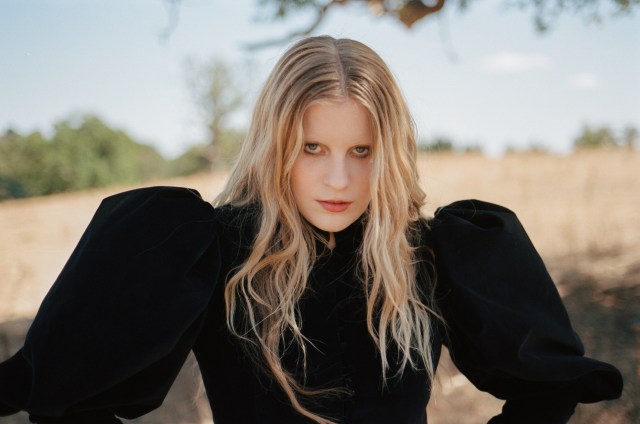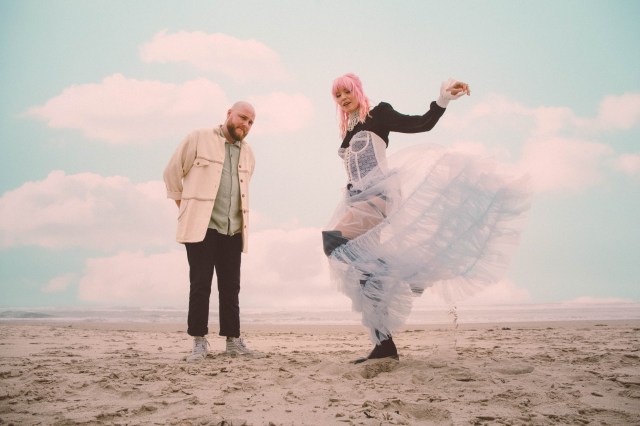
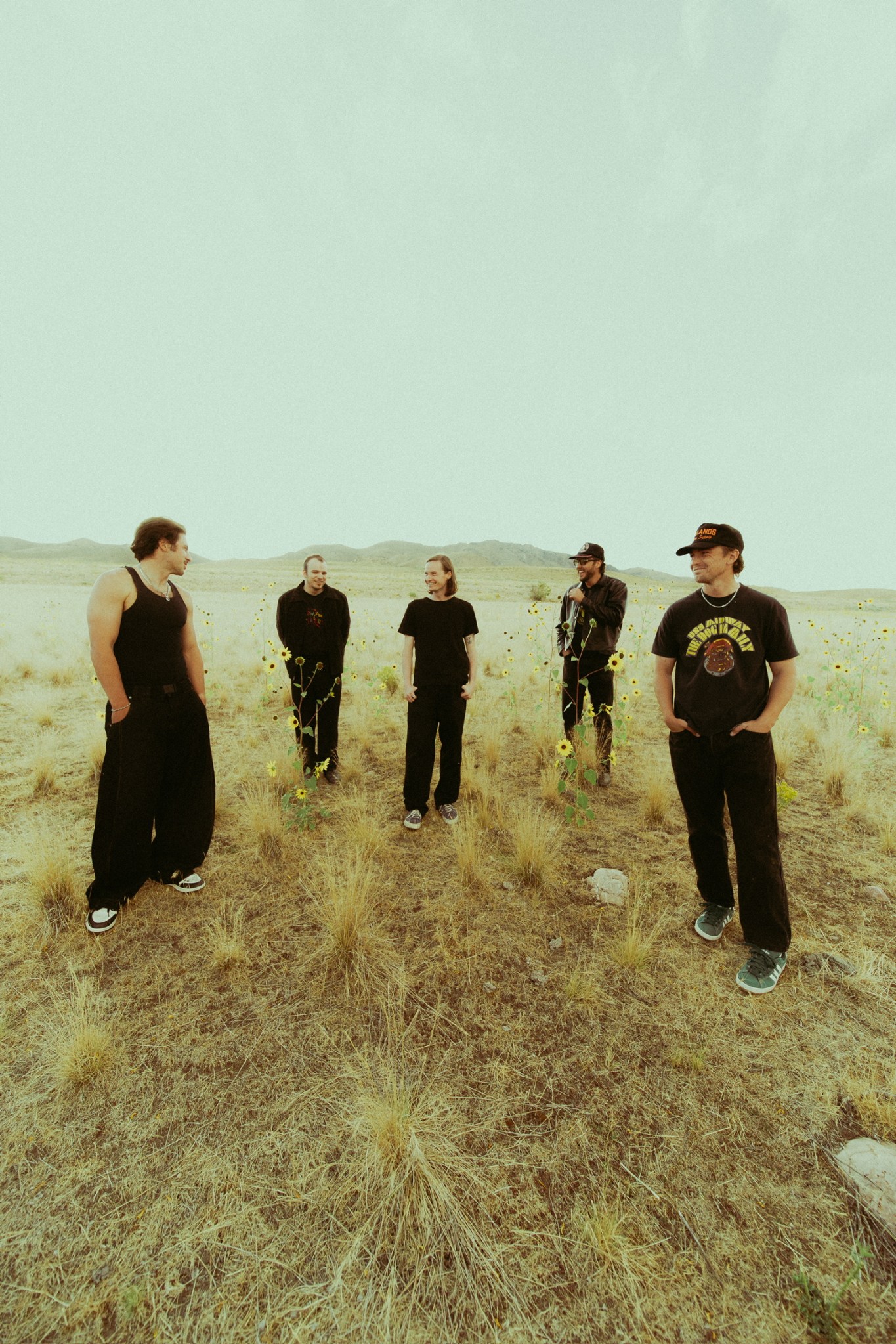
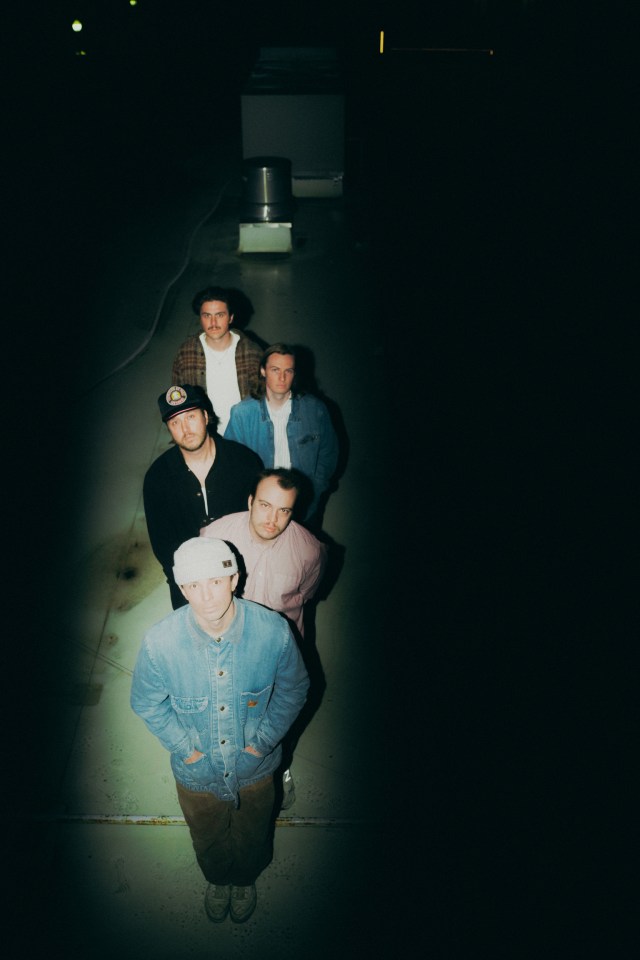
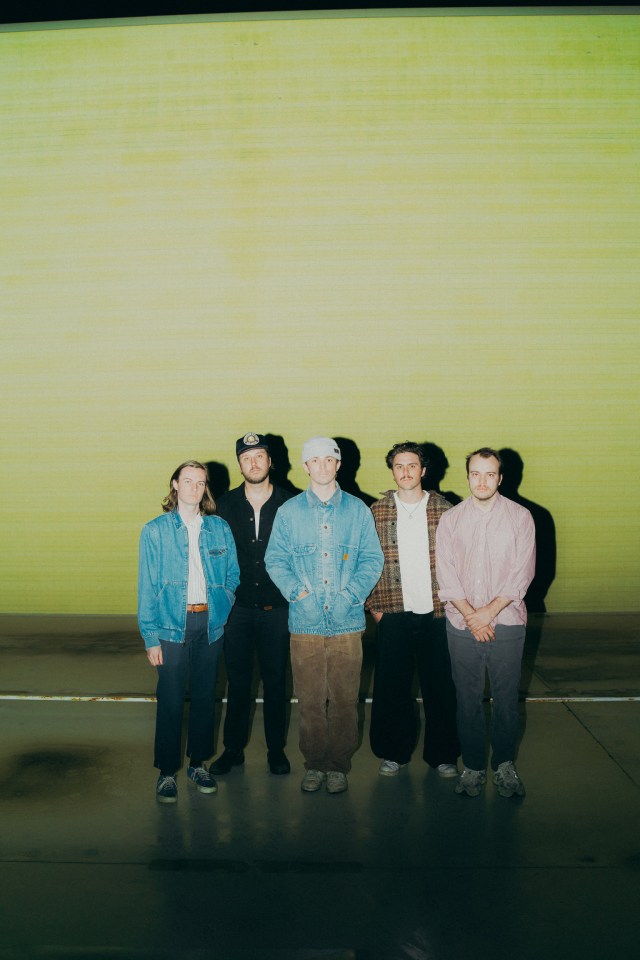
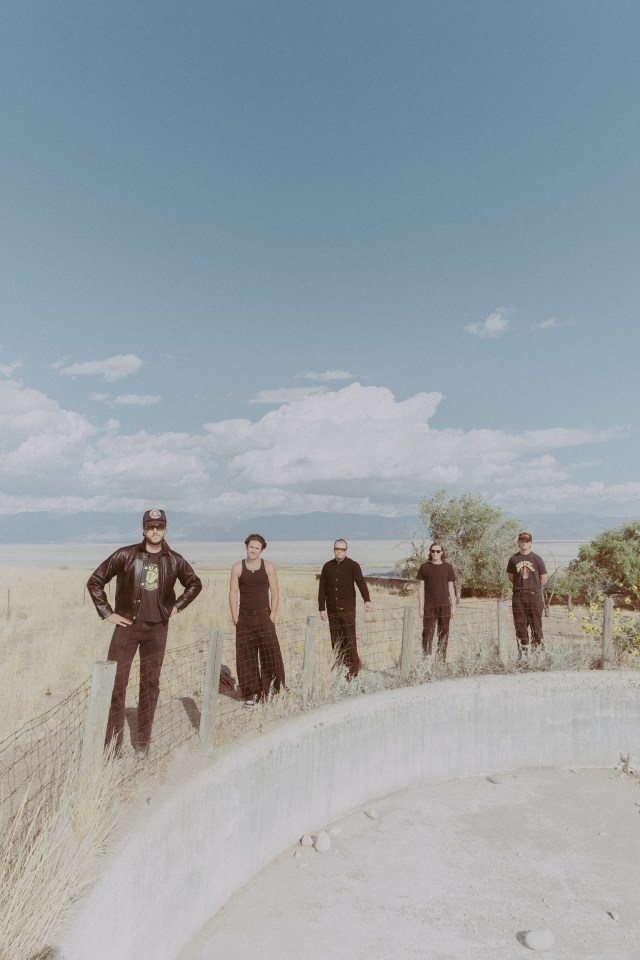
The Utah-based indie rock mainstays Krooked Kings are at a point in their careers when various pressures from the ever-judging internet say the band should be ‘content creators’, but members Oli Martin (Lead Vocals/Guitar), Matt Monosson (Bass), Paul Colgan (Guitar), David Macey (Keys), and Quinn Casper (Drums) would much rather just be a band again. On their new record, In Another Life, produced by Yves Rothman (Kali Uchis, Yves Tumor, FKA Twigs), the five-piece lean into the new mindset, pouring months on months into tracks that would make up the album while simultaneously stepping back from the industry’s focus on making that next viral social media post. The result of all this is the loudest, most intentional, and hungriest version of Krooked Kings yet; one that wants to stand the test of time and do what a band should do: put the music first. Hit Parader got the opportunity to sit down with all five to talk about the amazing new record and the effort behind it.
Hit Parader: You said on an Instagram post that the new chapter with this record is one where the ‘music comes first’. How has that mentality shifted the way that this record was created versus other records in the past?
Matt Monosson: This record took way longer, I would say [laughs].
David Macey: Yeah, this record is a million times longer than any other.
MM: Previous times, it would be one day per song, pretty much, and the album would be done in two weeks, and then we’d mix and master it. But this one, yeah, as Quinn said, it was almost too much time, to be honest [laughs].
DM: I think in terms of the music coming first, maybe the phrasing of that could be interpreted in a few ways, but for me, I think we were kind of trying to make a statement about our content, and that we were trying to be more mindful with that and artistic with that, in terms of social media stuff, and really put the music at the forefront of the content and represent it in a way that feels artful to us. I feel like that’s what I imagined we were intending when we say, “Oh, we’re putting the music first.” Obviously, we’ve always taken care with our music, and we are proud of what we’ve done. But yeah, I think it’s more that we want to represent ourselves in a way where it’s like, ‘hey, this is an artistic endeavor’, and we want to portray it that way.
Oli Martin: Yeah, yeah. I think it’s easy to sell your soul to the algorithm. I think for this new chapter, we wanted the pressure to feel a little more old school, where it’s not so much pressure on… I don’t know, if our social media is performing incredibly, I think that’s awesome, obviously, and that’d be great. If it’s not, I think we’re all in a happier space as a band knowing that we really cared about the music, and at the end of the day, if we don’t have a TikTok or Instagram that’s going viral and everyone’s excited about us for a few seconds, we’re still going to be happy with what we’re creating, and we’re not creating music for those moments. We’re creating for us, and what we really enjoy listening to, and hopefully what people want to hear. But yeah, I think it’s just hard, because with being a musician nowadays, you’re now a content creator and in all these other roles. I don’t know if we’re trying to say, “Oh, don’t do that,” but I think for us, we’re tired of doing that and tired of trying to perform as that, and really want to just perform more as artists and less as social media content creators.
HP: And then with Yves [Rothman] producing the record in LA, I’d love to know more about how working with him sharpened the vision of what you already had coming into the studio, without taking away from the core identity of you guys as a band.
DM: I think the core identity of us is that we’re a committee of people. We all have similar tastes, but we’re not exactly the same. So I think having a producer that has his own taste and vision that can be a little bit of a leader or a tiebreaker for us was a helpful thing to have. Because when it’s a decision by a committee of five people, that can get pretty tough, but when there’s someone that you can almost look to as the authority figure, it’s like, oh, okay, this is a cool direction. I feel like he was super helpful with the writing and the production and everything.
MM: He also really wanted to capture the essence of us live. Kind of going back to what I said, we were so plug and play before, but we always did great live, where he heard us play live and was like, there’s something there. And like Dave said, he was able to lead us in the right direction. I feel like I’m proud of this record. I feel like it really sounds like us live, when previous stuff has been a little bit more computer-ish.
Paul Colgan: I was gonna throw out there, I feel like Yves kind of pushed us to have an idea sonically of what the whole thing was gonna sound like before it was even pen to paper. I think he threw some names out there initially, like Cage the Elephant, Arctic Monkeys, those big rock bands of the early 2000s where it feels like you’re in a live room with that band. And I think that was nice to have that general idea of what it’s going to sound like before we had even recorded a single note.
HP: And then with the tracks on the record, there’s definitely a wide sonic range with “Damage Control” and “In Another Life” and “Fix This.” How did you approach choosing what tracks made the record, as well as the pacing of the record and making it flow the way it did?
PG: Yeah. I mean, I don’t know. I feel like it was really broad. We were all in the studio, and we had probably 20 songs that we were choosing from. And I think everyone has a little bit of a sense of what’s going to be a strong [song]… I think we had eight songs that we felt really strongly about, and then kind of had to whittle it down to a few others to fill in the blanks. I feel like every album needs a little bit of a slow moment to close it out and needs a big crescendo moment. And, yeah, I feel like it was just picking the right songs that painted that entire picture of a holistic-sounding album.
Quinn Casper: Yeah, I feel like, if I remember correctly, we were having some beers in the Airbnb after we had just finished recording everything, and our manager was like, “All right, we need the sequence. We need the track list.” And it is kind of a hodgepodge. There’s some different-sounding stuff, for sure, but I feel like we just listened to songs back to back and then just kind of trusted the gut and were like, that feels like a natural cool snare hit into a big song after a smaller intimate moment or whatever, and it all just came together and felt like a natural progression.
DM: Yeah, it’s funny that you say that there is a wide sonic range, because thinking about it, that is true. But I think in my mind it’s funny to think about that. It all feels very in the same world to me, but you are right.
PC: In that world, I always like it when there’s some range to it too. It also didn’t really occur to me how many different-sounding songs there are because they all just live in the same world for me, like Dave was saying. But I think there’s a fine line between having an album that lives in the same world and having all of your songs sound the same, and I think we kind of walked the line on this one, and I’m happy with how it turned out. A lot of variety.
HP: And then, on the new record, what felt different, if any way, about the way that you approached the lyricism compared to past projects, from themes to the way you wrote or anything?
OM: I think we took a lot of time. Yves was a little bit of a stickler, I think, on lyrics. And, man, at the end of the day, it was definitely up to us as to what we were writing, but I think in previous records, not that we didn’t think about lyrics really deeply, but I think this album, Yves just really challenged us with everything. It’s also about saying what you want to convey, but then there’s the singability, stuff we never really thought about before. He’d be like, “Okay, that kind of sounds weird to sing,” and it was frustrating at times because I’d think, man, I cracked it. And then he’d go, “Yeah, it’s the right word, but it just doesn’t sing right.” There were random lyrics where we definitely fought back on, but I think a lot of time was spent on lyrics, whereas in the previous albums, they were written so fast. We used to put vocals down last, and it would kind of all happen in a week. So at the end of the day, you only had that week, and there wasn’t much time to edit the lyrics. With this one, though, there was a lot of editing.
PG: Yeah, a lot of revision.
DM: It’s kind of crazy, honestly, how little editing we’ve done in the past, and then to jump to this, where it’s months and months.
QC: Yeah, I feel like Yves, and I mean this in an endearing way, was such a bastard sometimes [laughs], because every day, no matter what, if the lyrics were done, even if Ollie just did scratch vocals, he’d be like, “All right, that’s cool, but let’s see if we can beat it.” Even if it ended up being the final lyric, he was always like, can we beat it, is there something better? Which is a really good trait to have in a producer, he’s constantly trying to have everything be as good as it could. But it just ended up being more work and really racking our brains and pushing ourselves, which ended up being good.
HP: Awesome. For everyone individually, what individual song or part that you played on the song are you most excited for, proud of, that is on the record?
MM: I can go first, yeah. I think “Sleep Tonight” I’m really stoked on. I feel like I was just fiddling around, and the band really resonated with it, and the song came together really quick. It’s a really cool line. Quinn said it also… I think every other part does a good job, and so I’m pretty stoked on that one. It was not too much of me twiddling my hair, it kind of just happened.
DM: “Ugly Love,” that one is awesome. It’s cool to have a song that was more keys-based first. Maybe that’s probably why I like it, but I think the key part is cool. I’m hyped about it. I’m just like, this is my moment [laughs].

PC: That one was cool too, because in the original mix, it was not super prevalent, and then we kind of flipped it on its head, and it’s the main thing now.
QC: Yeah, that’s cool.
OM: You finally got a moment, Dave [laughs].
DM: Finally. It’s only been six years [laughs].
QC: For me, probably “Rancher’s Daughter,” because I don’t do anything so I can just hang out and catch my breath during the show [laughs]. Have a beer too. No, I’d say I feel like “Parking Lot” is just fun, just straightforward groove, rock song, loud open hi-hats. There’s this one drum fill that I don’t even remember doing. I don’t know if I did do it, honestly.
OM: Yeah, I don’t know. I mean, I think the vocals are a little different for this record. We have some doubles on some, but with Jackson on our old records, we had a lot of layered vocals and stuff. So I think the vocals sound pretty different. I’m excited to see what people think. I think it was definitely a little scary to switch it up so much, so I think I’m just happy we did and see how it goes.
PC: Honestly, I think “Ugly Love” is my favorite song on the album, and for that reason, that final little slide guitar at the end has got to be up there for me.
HP: And then, just for the last question, if the listener, after checking out the record, had to have one takeaway/message, what would you hope that to be after they listen to it?
DM: They would feel a strong urge to start an email chain that says, “Send this album to 10 other people, or you’ll die in the next month.” [laughs]
OM: I think that that’s pretty good [laughs].
PC: I like that.
DM: I don’t know. I can’t think of some grand takeaway. Maybe you guys have something more poetic than that.
OM: “I want to give Krooked Kings a million dollars.” [laughs]
In Another Life by Krooked Kings is out now.
Read the Article in print in Issue 5 of Hit Parader Magazine.
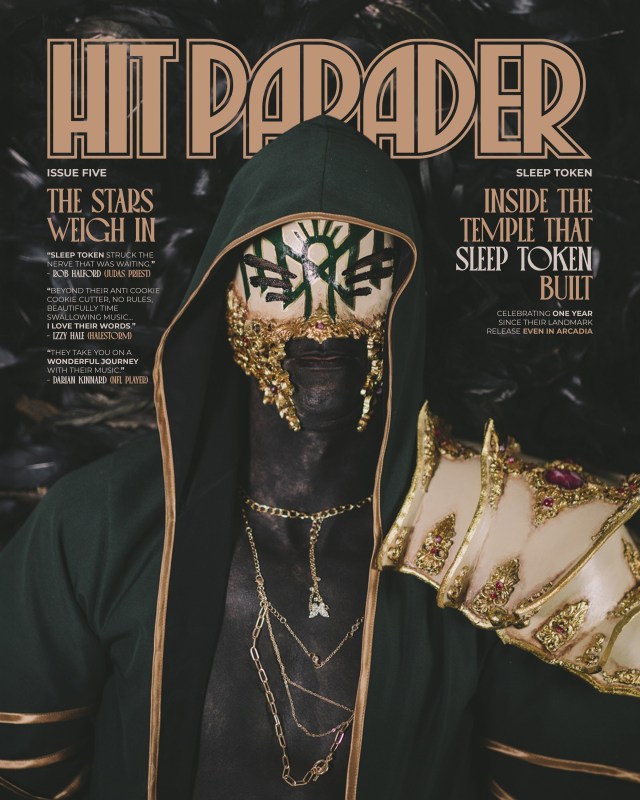
Hit Parader #5: Sleep Token
May 2026 — $12.99