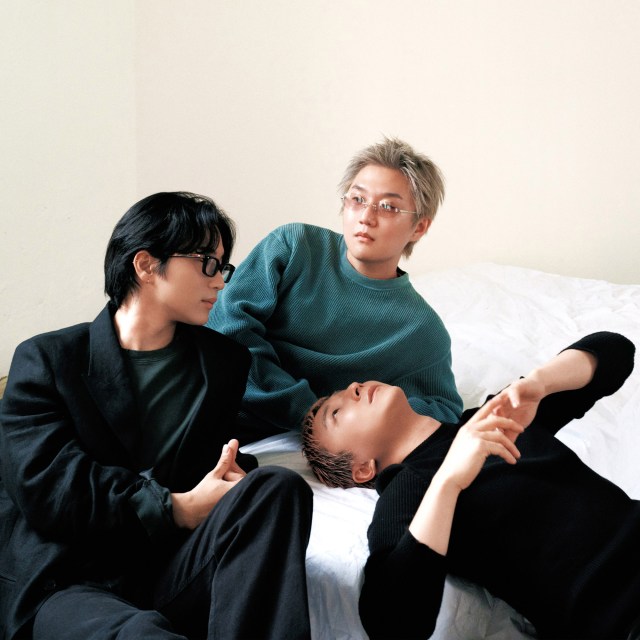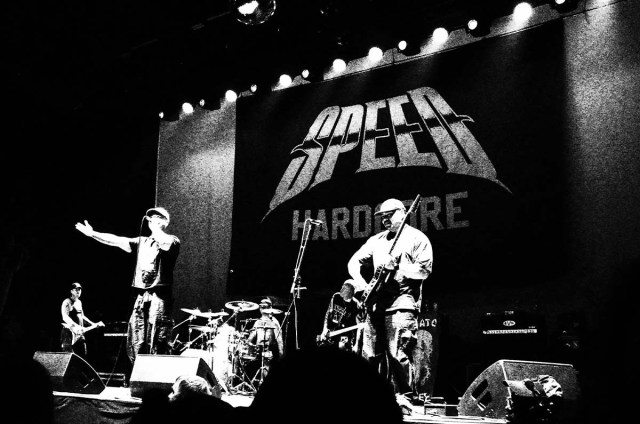
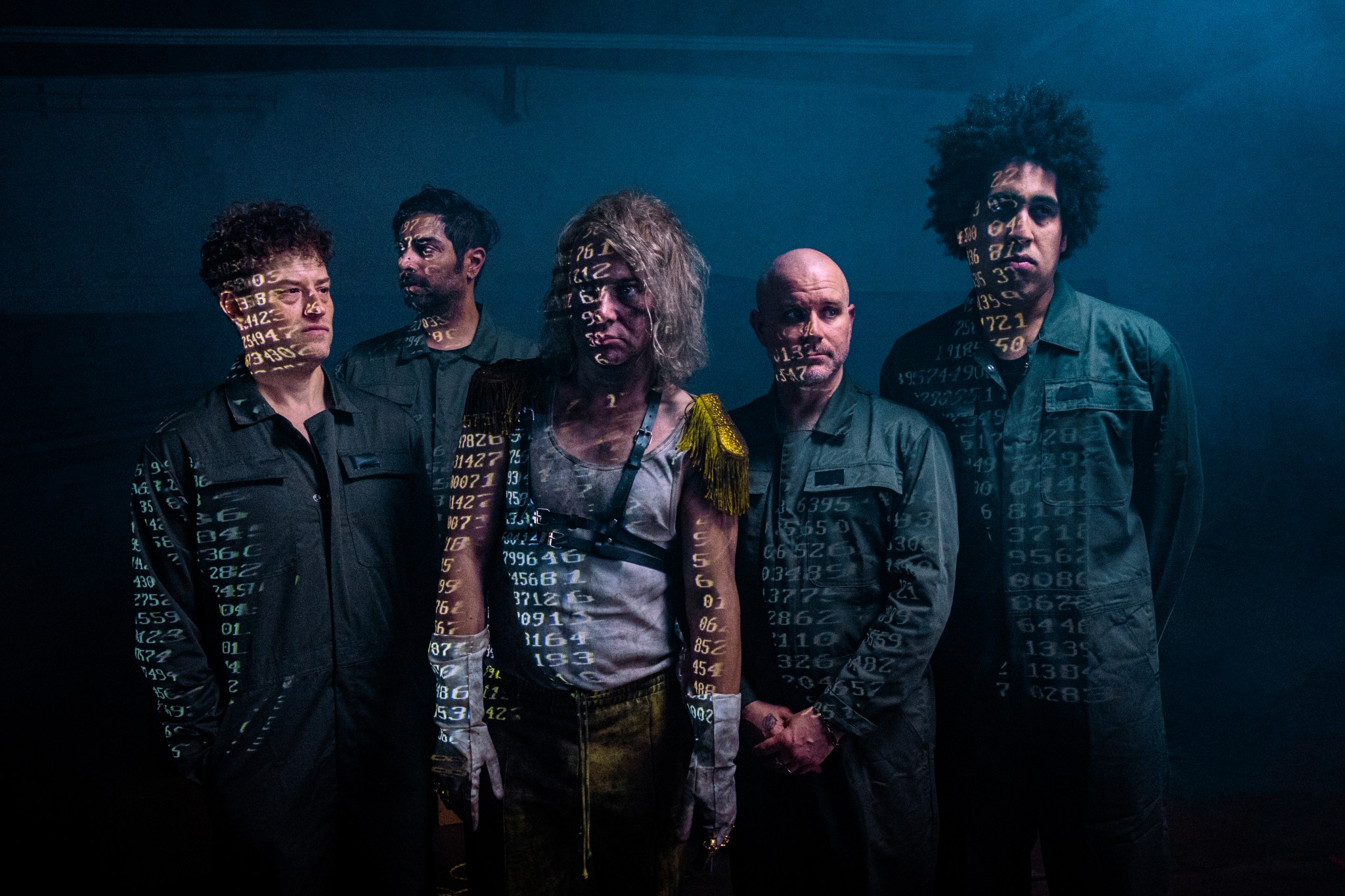
For fans of the Seattle post-hardcore scene, hearing Johnny Whitney’s feral vocals live again was something people had nearly written off entirely, seeming as if the genre-bending Blood Brothers and their cult-following would take an incredible set of circumstances to see the light of day again. So it was a shock, a fantastic surprise, when the quintet, after being dormant for a decade, announced a sixteen-show reunion tour. After the tour concluded, one thing was apparent: Whitney and Blood Brothers guitarist Cody Votolato couldn’t let that momentum die, let that creativity fizzle out, and let that love for the gritty live shows they cut their teeth on in their teenage years go to waste.
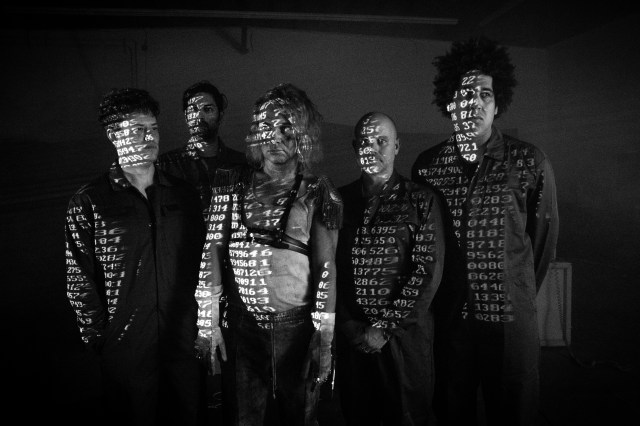
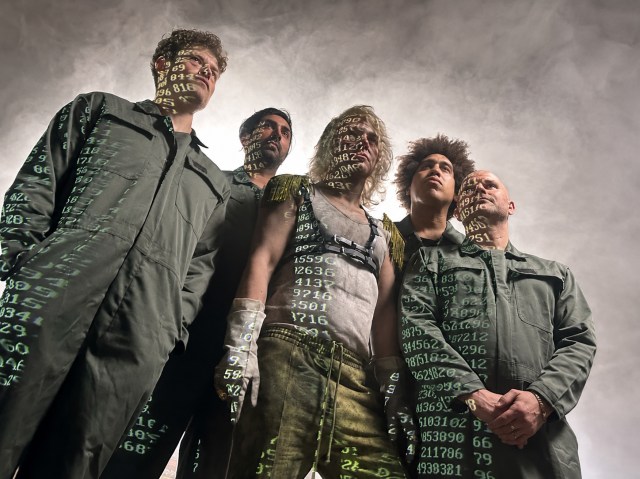
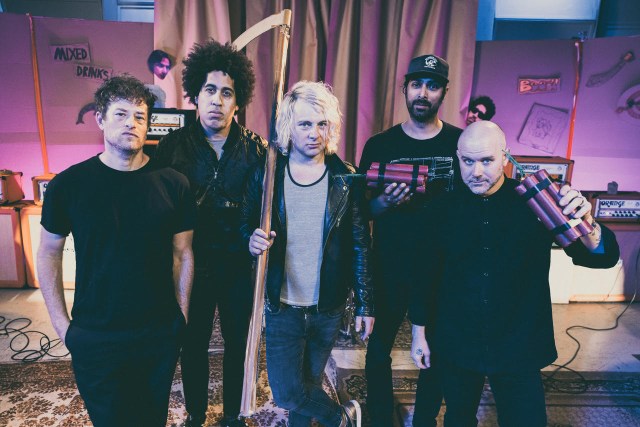
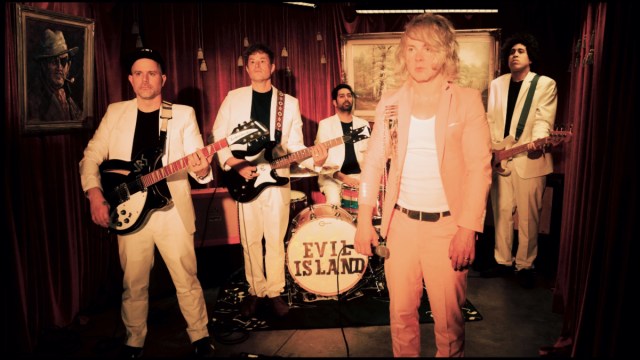
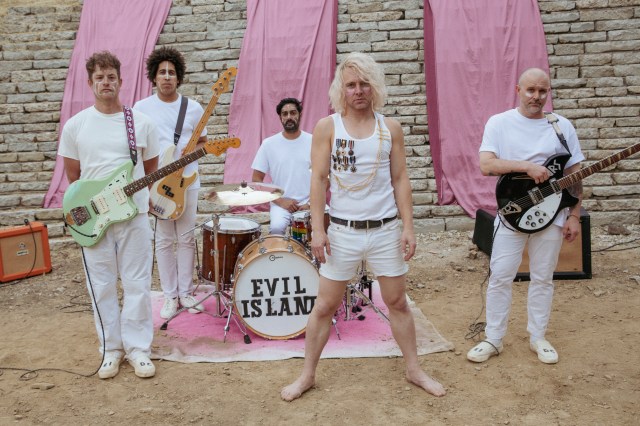
The result of that itch to create more was Evil Island, a brand-new band born from shared roots and driven by one common factor: to continue making the self-described “weird” music they love. With Blood Brothers drummer Mark Gajadhar, bassist Autry René Fulbright II of OFF! and … And You Will Know Us by the Trail of Dead, and guitarist Todd Weinstock of Glassjaw, the supergroup came together fast, and producer Ross Robinson was the final drop of gas on the log to make the blaze burn brighter than it ever had before. For Evil Island, the past isn’t something to replicate; it’s the spark that started the fire, and now the act and their brand new debut LP Terraform the Afterlife have taken their own urgent, jagged path of their own.
Hit Parader got the chance to sit down with both Whitney and Votolato to talk the freeing nature of returning to the genre they hold so close after all these years, the rewarding yet exhaustive recording process that went into it, the two-way trust exuded by both the band and Ross Robinson to create what Whitney coined…
“the most distilled-down version of what we’ve always been supposed to be doing.”
Hit Parader: So after the Blood Brothers reunion in 2024, how did the talks of making more music form, and what made this project feel like the correct vessel?
Johnny Whitney: Well, essentially, after the tour, we started getting offers for more shows with Blood Brothers, and in short order, Jordan and Morgan let us know they weren’t interested in going forward with anything else. So it wasn’t really this or that, it was, should we do something, or should we just stop doing this music that’s sort of in this vein. For me, I just felt really, really inspired to do more music after the tour ended, and I felt like I was going to go insane if I didn’t do something. Cody had been working on some songs separately for a while that he’d sort of been looking for a home for, and after about a couple months of trying to figure out what the next step was, I reached out to him and talked about the idea of doing something else, and it kind of went from there. We just went back and forth with the demos he had made. It happened really quickly, just getting the basics of the songs together. That’s pretty much how it went.
Cody Votolato: Yeah, I just remember the tour was really great, connecting and playing all together again, and one thing to note is that we all learned to play music together, so it was really cool to do that. So when it was coming to an end, and Johnny called me and was like, “I’ve got to do something,” I was like, “Oh well, great, I have songs and an idea for something.” And we kind of just started trading stuff back and forth, and then we were just kind of hoping Mark would get on board and want to do it with us, because we couldn’t imagine playing with anyone else at that point. It came to fruition really quickly, and then, I had a surprise birthday party, my wife threw it, she invited Johnny and Ross Robinson, and I think I had a handful of the demos done by that point, and just mentioned to Ross that we had a new band, and he was just like, “I have a record label, let’s make a record.”
We played him like two seconds of a demo on the iPhone, and he loved it, and that was in June. By October, we had signed to Blowed Out Records, and we were in the studio with them, and Autry had joined, and Mark came down, and that was when we were a band. The first time we played together was in the recording studio as a band, which is an interesting, kind of nonconventional way to start a project, but that’s the way we had to do it, because at the time Mark was living up in the islands near Seattle, and Johnny’s in the Bay, and Autry and I are in Seattle, and we did the record in LA, so everyone just flew out and got right into the studio.
HP: That’s crazy. Well, you answered how Ross came into the picture, but I’m curious how Autry did, and if there was a defining point where it switched from a brief recording project to a much longer time commitment.
JW: We never knew when that recording was going to end, it was like, how much longer? Past Christmas, we blew through Halloween, Thanksgiving, Christmas, New Year’s, Valentine’s Day, it was like, damn.
HP: Pushing five months of recording?
CV: It was long, yeah. So basically, I knew Autry kind of peripherally here in LA; we met many years ago, his band played with Blood Brothers in Atlanta in the early 2000s, and he and I would run into each other in LA every once in a while, and we’d hang out. He reminded me recently in another interview that the last time we’d hung out before he joined the band was the day Rick Froberg died; we bumped into each other at a party and hung out that night, it was super fun. I think we traded numbers, and then he called me out of the blue, looking for a tour manager for an artist he manages, and he knew I’d done some tour managing in the past, but I wasn’t doing it anymore.
He was kind of like, “Oh well, what’s been going on?” and I was like, “Oh well, Johnny and Mark and I have this new project we’re working on,” and he was like, “Who’s playing the bass?” and I was like, “I don’t know, maybe you.” [laughs] We texted back and forth for a few weeks and got together, I sent him some of the demos, and said, “Let’s just get together and jam.” We got together, and it was obviously great, and then it was like, okay, you’re in the band.
And then, like I said, we as a band had all sort of thought the record was going to be recorded in full in two weeks in October; we were like, we’re gonna go in and crush it. To me, that felt like a long time at this point, because making records isn’t what we’ve done as our day jobs for quite some time, so the days of going into the studio for months at a time are sort of a foreign concept; it’s more like you’re getting it in in the evenings or the weekends. One of the things that became very clear early on was, “oh, this is how Ross does it”. We dug deep, we spent the first ten days just doing pre-production and reworking the songs and writing new parts, figuring out new songs to write, because I think we went in with nine songs and ended up with eleven; we were like, we need a couple more.
After that, it just kind of took more time too, because I would work in the day and then go to the studio every night. After work I’d wrap up, drive to the studio an hour, stay in the studio till like eleven or twelve, and then drive home and rinse and repeat. So, just by the nature of us not being able to physically be there all the time, it took longer, but Ross went every single day, and he was editing and comping and tweaking and doing everything; he was there literally every day for probably the whole five months.
JW: He put way more into this than we did.
CV: It just ended up turning into something too, I think for him it was too important to just phone it in and finish it, he really took his time, and we redid things if we needed to, and it was unbelievably amazing, the best recording experience ever.
HP: That’s got to be somewhat grueling to a point though, for it to take that amount of time. Depends on the way you look at it, though.
CV: It can be exhaustive; candidly the part that became exhaustive for me was by the time we got into mixing, because we weren’t like, ideally, a mix happens: you come in, you listen to the mix, you give your notes, and you finish it. I was in Korea for part of the mixing, I was in Greece for part of the mixing, we were doing it all remotely, so it just takes longer, you get it, you listen to it, absorb it, send your notes, then they’ve got to do the work on the notes and send it back, it just takes longer, and that definitely made it take longer for sure. But that was probably where it got kind of taxing at a certain point for me; I was just like, man, how many more mixes can I listen to? But at the same time it’s the best thing ever, to have the luxury of somebody like Ross on the other end of that, taking your note and turning it into life, and honestly I don’t think we really had that many notes. It was pretty fucking fire from the start.
JW: So the least amount of conflict I’ve ever experienced in a recording. Ross also has the benefit of your record producer also paying the bill for the recording and being a part-owner of the record label and wanting to spend as much time as humanly possible, because he’s emotionally invested in the project; all that together equals any idea we’re interested in running down.
HP: Going into the studio, what was the goal sound-wise, were you trying to break away from anything, make something completely new, capture something from before?
CV: I think we were pretty open-minded going in. Conceiving the songs, when I was writing the skeletons for the tracks, I really wanted to make something that was no-frills, I wanted it to be simple, to the point, and punk, and also have this sense of hardcore and the sort of weird shit we’ve always done, but truly to me the songs are just crafted like pop songs, they’re simple, traditional songwriting,
HP: Just with some tritones thrown in every once in a while.
CV: [Laughs] yeah, I’ll never get away from the nonsense I’ll throw on top on guitar of something, and Johnny’s always going to sound like Johnny, and then obviously Mark and I playing together, we crafted our instruments as children together, so our style is just, we’re really in sync with each other, but I think for the most part we just wanted to explore and see where it went. I knew going in with Ross, because I’ve made lots of records with him over the years, what the process was going to be like and what to expect: that it was going to be raw, and that he wasn’t going to let us record to a click; it was just going to be the magic and the mistakes.
So for me, I was just like, whatever, I’m gonna let Ross produce this thing, we’ve crafted these songs, and we have these ideas, and we’re gonna be able to deliver them, but I want to let the producer be the producer and let him guide how it sounds, how it feels, all that shit. We really allowed him to be a member of the band and trusted him. So that was my expectation going into it, that Ross was going to do what Ross does.
JW: For me, I wanted to, I feel like when we did the Blood Brothers reunion, I spent a lot of time trying to relearn how to sing that way, and I figured out the best way, the best version of that kind of vocal performance, via practicing, getting ready for the tour, and during the tour. From a vocal perspective, one of my main goals was to make the absolute best version of the kind of singing I’d done in Blood Brothers, because every Blood Brothers record we ever did, a lot of the time I was hearing the vocals back for the very first time while we were recording, because we had such terrible PAs that we practiced with, and I never really heard myself at all.
And that was also part of the reason I wanted to do another band, or another project, Blood Brothers or this or whatever. At the time, my headspace was, it took me like twenty-six years, but I finally figured out how to sing in a way that I don’t cringe a little bit when I hear certain parts of it, and every Blood Brothers record we ever did, there were like fifteen to twenty moments where I was like, ‘I don’t ever want to hear this again, I hate how this sounds.’ And so I really wanted to just, I felt like I had all the tools, I just needed to build a house, you know what I mean, and that’s one of the things I wanted to do with the record.
HP: That’s amazing, I’d say it for sure happened, the vocals sound great.
JW: Yeah, I’m really proud of it, and Ross, I’ll just keep singing his praises, the dude spent so much time, we would do every song, we’d do like fifteen to twenty-five vocal takes of it.
HP: That’s brutal.
JW: Well, not all at once though, he kept all the vocals. When we tracked all the drums, he recorded the whole band, singing, guitars, whatever, and we did it over and over and over again, and some of those vocal takes were really good, and it really felt like the energy of us all playing together carried through, and also it was really exhausting, so there were moments where I was kind of at the end of my rope, and you could kind of hear it in my voice, and it kind of sounded good. So every time he came to put the vocals to a song, he’d have at his disposal vocal takes from October, vocal takes from November, a couple from December where I’d come up and say, “Hey, I feel like I didn’t get this thing right,” and he would comp together a version of the song that, he’s a visionary just for comping my vocals. He knows my voice so well, and he takes every single take and examines it and looks for these little bits of magic that he then elevates and puts into the final comp, and what it ends up with is something I would have never come up with organically. It’s him and me together, when you hear the vocals, so much of him is in that. He’s a fucking genius, I love him so much as a person and as a producer. Everyone should record with him, he should have no free time until he dies, he’s a phenomenal genius.
HP: I’ve never thought of comping itself as an instrument in its own right, but that’s such a cool way to think about it. I’m curious, you both started touring right out of high school and have had music be a huge part of your life since your teenage years. How did that early exposure to the industry shape the way you think about putting music out and touring this far into your career?
JW: I mean, I never thought I would, right, the really shocking thing for me, becoming a man of age, is that being a creative person and getting older, it’s so much, I’m proud of everything I did in my twenties, but all of it, from my perspective, is like sixty-five percent pure intention being smothered to death by thirty-five percent of anxiety, fear, frustration, and jealousy. And when I think of the work me and Cody have done with this record, and how easy it was, and how much I felt it every time we completed a song, I felt like I was going to burst into tears, it was just such an emotional outpouring, I’d never felt like that before, because there were too many things other than the creative purity of making something that got in the way.
HP: That’s got to be incredibly gratifying though, right?
JW: Yeah, I thought it would be, I thought my life would be over after thirty, honestly, my whole life, and the best years of my life have been since I turned forty, honestly, it’s been fucking phenomenal.
HP: Incredible, I love that.
JW: I encourage everyone to not die before they get old, it’s great.
HP: Just for the last question, I’m curious, what role do you want both the record and this project as a whole to play in your lives going forward, and on the flip side, what do you hope it means to your fans, and what role it plays in their lives for people who’ve been following you for a while?
JW: Well, my relationship with music is always intensely personal, and there are records I’ve loved my entire life that I can’t imagine living without, because they remind me of things about myself, or things I’ve done in my life, or specific emotions that I can only feel when I hear those songs. So I’d hope something like that. In relation to other things we’ve done, I desperately hope, with every cell in my body, that this is the beginning of a new chapter that will last as long as my body can take it. I feel so excited to have people hear this record, to perform this record in front of people, and it’s kind of the only thing I want to do with the rest of my life personally.
And I hope, in relation to the other things we’ve done, especially Blood Brothers, that it’ll be something that scratches the itch that people might have, while providing something that’s more expansive, and in my opinion, a more thoughtfully and creatively crafted version of that style of music, with a lot more songwriting acumen woven throughout. To me, if you take the spirit of what me and Cody have tried to do with all the projects we’ve worked on, whether it’s Jaguar Love or Blood Brothers throughout our lives, this is like the pure powder-cocaine version of it. it’s the most, with the least amount of impurity, the most distilled-down version of what we’ve always been supposed to be doing, and I think it will come across to most people, because, again, I’m not trying to toot my own horn, but it’s just the best thing I’ve ever done. Above all, I just want people to hear it, I want people who’ve never heard Blood Brothers to hear it, I want people who’ve grown up their entire lives listening to Blood Brothers to hear it, I want Melania Trump to hear it [laughs], I want everyone to hear it; that’s how I feel about it.
CV: I’ll just put a little extra onto what you said about what music meant to you growing up, I just think, and this is something I learned from Ross actually, from doing records with him over the years, that playing music is probably one of the most important things on the planet. I think it creates a safe place for people, a safe place for someone who lives in the middle of nowhere and is kind of weird, and finds this sound that speaks to them, and it makes them feel like they’re not alone. To me, this kind of music can be that for people, because it’s not generic-sounding, it’s not trendy, it’s got its own frequency that resonates with people, and I think that’s what happened with Blood Brothers too, it’s music that resonates with a certain person and can create a safe place for them.
When we did the Blood Brothers reunion tour, there were a lot of young kids coming to those shows, and I think we were all pretty surprised that the things we were doing still connected with people of a certain age, and it wasn’t just forty-year-old PBR-drinking dudes, which, God bless them too [laughs], I’m in my forties, so they’re my friends too. But it was cool for us to see, oh wow, the music we make can speak to people who are out there finding themselves and figuring out who they are. And for this to potentially do that for somebody in Des Moines, Iowa, or Boise, Idaho, or some little crew of kids in the middle of nowhere, that to me would be the most gratifying thing to know. Even though I’ll probably never know that, but I think that’s what music can do, and that’s why I love that we got to make it with Ross, and we got to make it together, and it will be forever.
Listen to Terraform the Afterlife, out August 14.
Read the full interview+ much more in Issue 8 of Hit Parader Magazine.
Hit Parader #8: The Pretty Reckless
August 2026 — $12.99