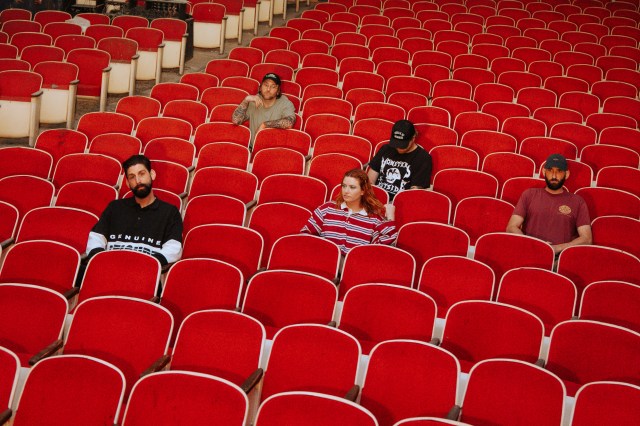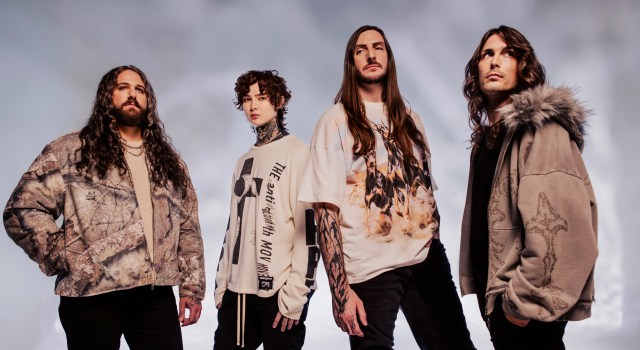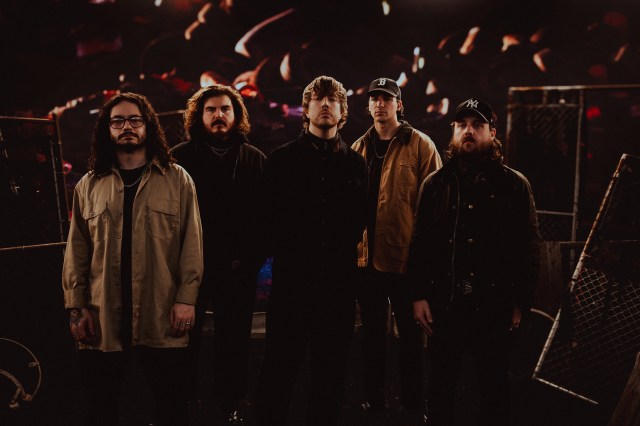
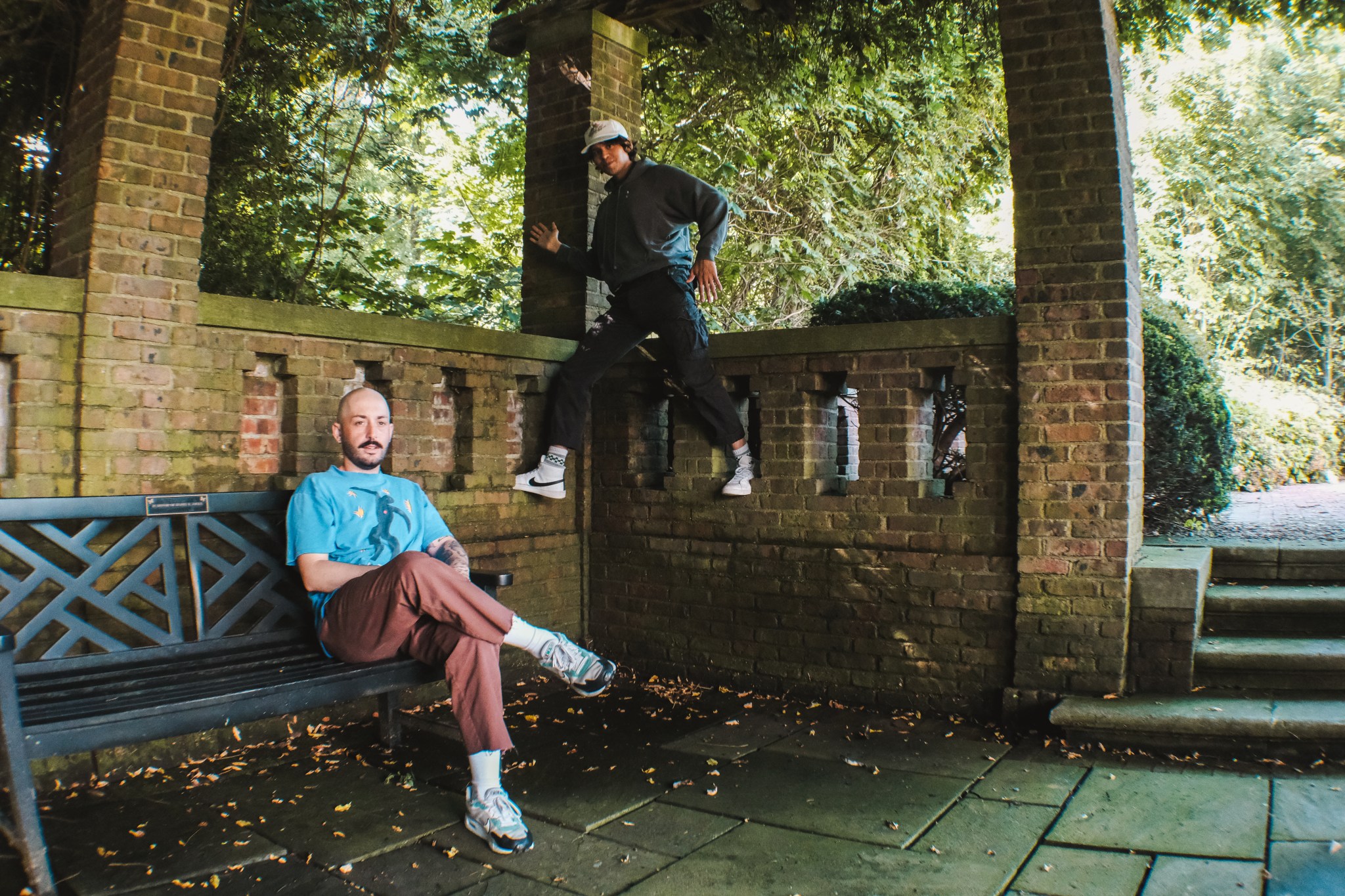
Oso Oso has always been a form of time capsule for frontman Jade Lilitri, who started the indie-rock/emo project in 2014 in Long Island, New York. Every project represented a different point in his life, every song a small snippet of what he was feeling at the time, leading to a devoted fanbase after signing the band’s debut project, Real Stories of True People Who Kind of Looked Like Monsters… to Counter Intuitive Records. The label is known as one of the front-running labels for the fourth and fifth waves of emo music, with Oso Oso, Mom Jeans, Origami Angel, and Prince Daddy & The Hyena rising from the ecosystem.
With these time capsules of projects, Lilitri’s lyricism is brutally, almost painfully honest at times, yet never cynical or self-critical, giving listeners an emotional outlet without some of the hyper-self-criticism found in other similar artists. Lilitri drew from that emotional core, alongside Oso Oso guitarist Eddy Rodriguez and a star-studded list of collaborators, and over a month in a studio in upstate New York, the band’s sixth full-length album was born, their heaviest record musically to date, an exchange of information. With the new LP in focus, Hit Parader caught up with Jade ahead of their Nashville show to talk about the record, playing the songs on the road before they are released, and their view on the project’s evolution over the years.
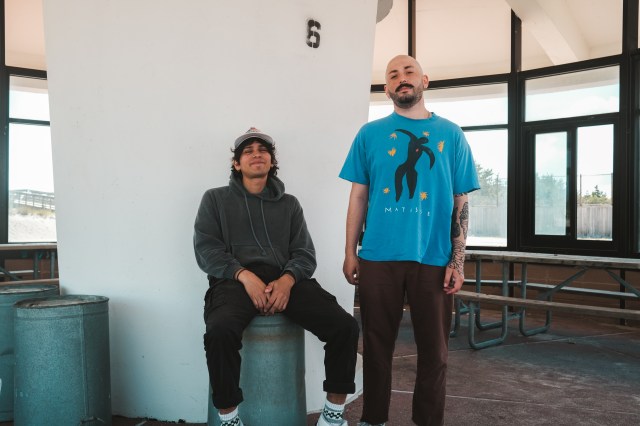
Hit Parader: Congrats on an exchange of information coming out on November 6th! What has been the most fun part about the recording and process of putting this out, in your opinion?
Jade Lilitri: This one specifically, we did it with our friend Dan, who’s up in Albany, and literally the most fun thing about this one was just knowing that we got to go up there for two weeks, and the label was involved, so you don’t have to stress so much. You know it’s paid for, everything like that. And you have all this time, and it’s just getting away from regular life and just going up to just make it really, truly a gift. Something that, as I get older, I don’t take for granted, especially now that it costs so much money to make a record.
HP: Yeah, and Oso Oso joined a new label too, which is exciting.
JL: Yeah, yeah. The band Hop Along, which is one of my favorite bands, the drummer from that band, Mark [Quinlan], basically just started this record label and wanted to know what we were up to. We basically somehow convinced them to let us do the new record. I try not to overthink this stuff when it comes to making album stuff.
HP: In what sense do you mean?
JL: Just, I think if it’s something that’s sensitive, your ideas or your art or whatever, the longer you kind of sit on it and think about it, it’s only gonna bring obstacles, I’ve found. When it comes to ideas, I don’t sit on them and then go, this might be the best way to put it, right? Have you ever had a night where you had a couple of drinks in you, and then you had maybe a creative idea, and you wrote it down? You go, “This is fucking awesome.” And then you wake up the next morning, you go, “That wasn’t awesome at all.” It’s kind of like that, where I know the more time passes, the more I’m not gonna feel better about something that I did creatively because I’m gonna grow. And that’s a snapshot of past me, so I’m gonna want to kind of separate myself from that. So when it comes to creative stuff and creating and making, I kind of want to just throw it at the wall, and then I know I’ll have eternity to look at it and pick it apart and go, “This is what was wrong with it. That’s wrong with it.” And then next time I throw something at the wall, it’ll be different because I know what I want to do differently from last time.
HP: I read a quote where you said previous releases influenced the writing of now. It seemed like the goal for you was kind of to not stay away from it, but kind of just leave it as its own separate entity.
JL: Yes, I think it almost touches on where I’m not just making an album, right? I had to think of it across all six albums by this band. Because if you don’t think of it like that, you can do something that’s either the exact same thing that we did or something that’s way different that no one who enjoys the band wants to listen to. And the reality of that is it kind of sours some people on the band. So if you’re in the studio, right, and you’re up on a part of a song, and you’re faced with three decisions, if you’re figuring out a chorus or something, I think it helps to contextualize, “All right, this is the sixth album. What would we have done on this? Is there something obvious that we would have done on the last five albums? Let’s not do that. Let’s go a little bit somewhere different.”
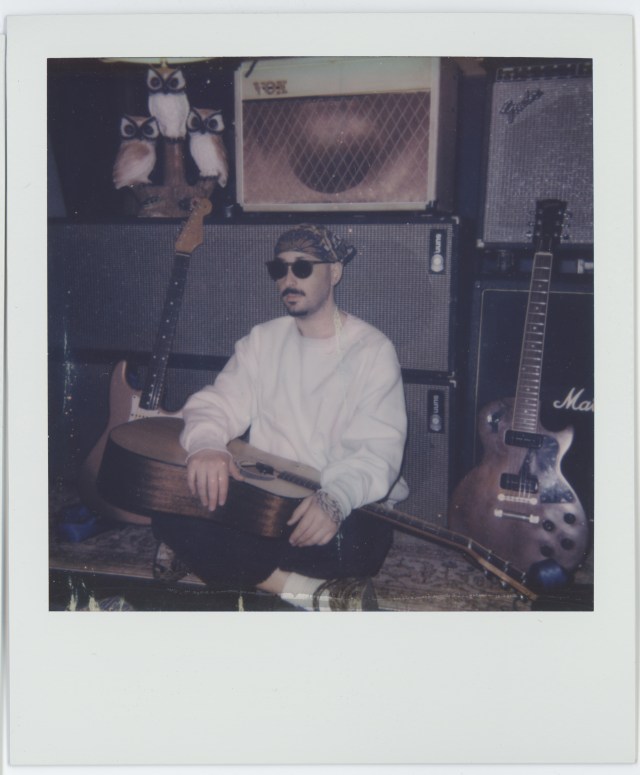
HP: But with writing six LPs, do you think that experience has made you more confident in your writing and decision-making, or just more confident to question or stray from what you know in that sense?
JL: More confident to question or to stray from? Because I think there’s maybe not so much confidence in the straying part, if that makes sense. I do feel that each time I’ve gotten into a studio, I feel more confident in getting the thing that’s in my head into reality. Because a lot of times I feel like one of the hardest parts is having an idea and in your head knowing what you want it to sound like, and knowing it’s not gonna sound like that. But I know how to get closer to that now when I’m in a studio.
HP: Just translating that idea through that filter into something tangible.
JL: Yeah, yeah. Because I feel like a lot of that stuff, what I think I’m learning is a lot of that stuff is in super, very tiny choices. It’s almost like he was singing the Strokes song before [gestures to band soundchecking currently], and it just sounds so different because it’s a different style. And The Strokes are an example of a band that’s making very, very intentional choices in their recording process. It shows through on the drums and their early records and stuff. So many bands, we go into the studio, we’re all, “We want that Strokes drum sound.” And that was them back at a certain time making super intentional choices.
HP: But [the band] didn’t think of it as a Strokes drum sound.
JL: Right, right. It was just, “We want it to sound like this,” and they got it to sound like that.
HP: So just the intentionality of it all, I love that. When you started this project, what did you want it to give to you, and how has your view on that changed as you’ve made more records?
JL: When I started this project, I think I wanted to do music seriously. I wanted to do it as a career. I wanted to be able to tour. I think, in essence, it’s definitely given me everything I’ve wanted. I think it’s harder to conceptualize that sometimes, because doing music is such a roller coaster. You’re never the same amount of popular one week from the next, whether it’s more popular or less popular. It’s always fluctuating.
HP: And you’re more hyperaware of that than any of your fans.
JL: Absolutely. Yeah, I think sometimes you even get caught up where you’re overly hyperaware of that, where you think, “Oh, God, this just seems impossible to be successful.” And then you find out about a band that’s pretty successful that you’ve never even heard of before, and you realize, “Oh, yeah, it really is a whole weird thing.” The older I get, the easier it is to be appreciative of all these things that we’ve gotten to do and the places that we get to go. It’s weird. I don’t know how to explain it, but I can look at a show, ticket sales at a show, and be, “Oh, man, we played a place that we were playing for the fourth and fifth time, and we’ve sold more tickets at a different time than this time,” or whatever. But then when I’m there in the moment, at the show, and there’s anybody in the room, it’s really easy for me to remember to be, “Oh, yeah, we’ve played this place, and there was nobody here, and there’s nobody here now.”
HP: It’s also just damaging to your own psyche to boil down success to the number of people in a room, I guess.
JL: Oh, for sure, definitely. But there are so many people involved in the band, or whatever, with every band, where that’s their job. I think also, getting older, I’m starting to really realize that, kind of the same way as when people are considering having children or something, there’s a biological aspect to it as well.
HP: Tell me more, I’m curious.
JL: Well, just if you’re someone who wants to have kids, you and your partner, once you get to a certain age, you realize, “Oh, we only have a certain amount of time to do this.” I would love to do this forever. But I’m also aware that if I’m 45 years old, it’s really not the most comfortable thing to get in a van and share a hotel room with four other guys or five other dudes and play a club or something like that. If you’re able to do it and have a level of success where it’s more feasible, more comfortable to do it, you’re like, “Okay, I can do this longer.” So that’s always another thing that you’re juggling too, where I just realize that there might not always be people in the room. I might not always be able to do it, so you just kind of have to make the best of what it is.
HP: That also goes back to just something that fans of yours, even from way back when, if we’re talking people who found you from Basking in the Glow and stuff like that, that’s not something that they’re thinking about at all.
JL: Sometimes I’ll read the message boards and stuff like that, and I remember seeing somebody talking about one of the shows on this tour, and they’re talking about how they really wanted to go because they wanted to grab the album early. But they’re, “Oh, I can’t do Wednesday night.” And I can totally empathize with that, and I totally sympathize with it. But in the back of your head, you’re kind of, “Oh, man, if you don’t do this Wednesday night, there might not be another Wednesday night. We need…” But it is what it is. You also can’t expect someone to go to see a band every single time that band comes through or something like that.
HP: That leads me to wanting to ask, with touring the LP before it’s even come out, with a couple of singles out, what’s the most interesting part of playing music for people that you know love the music but haven’t built a relationship with those new songs?
JL: So I will preface by saying: totally unintentional. Just kind of worked out that way. We thought the album would be out in time. You just have to book a certain time ahead of time, and then certain things came up with the album, and it just kind of worked out the way it worked out. At first it was kind of scary… we’ve been pushing our goodwill for a minute because we haven’t toured on new music. So it became, “All right, so now we’re asking people to come out and hear songs that they haven’t even heard yet.” But it’s ended up being pretty cool. I’m stoked whenever people grab the record, and the fact that they get to listen to it first is exciting. We have vinyl, we have CDs of it. So that’s pretty fun, and getting to see people talk about it online who’ve grabbed it at school. That’s really cool.
HP: I love that. It’s kind of going back to more of a traditional sense where people toured to sell the records instead of pushing streaming to then go on tour. Even if unintentional, I kind of love that.
JL: It feels kind of cool. I feel like if you’re a fan of the band and you go, you’re either “Oh, I’m super into this. This is cool. They’re doing their thing.” Or you’re, “This fucking sucks. Why would they do this?” And I’m not gonna lie, there’s a little bit of an element that’s kind of fun like that for us, where at least we’re one of those bands that’s doing what we want to do, even if it wasn’t intentional. I think I would literally rather play songs that we want that are new, that people haven’t heard before, and have it be kind of a 50-50 risk than do a 10-year album tour type thing.
HP: It’s exciting for you guys.
JL: Right, exactly. Yeah. I think it’s fresh, and we’re having a good time, so hopefully that translates.
HP: And if y’all aren’t having a good time with it, it kind of cuts down the longevity of it all as well.
JL: Yeah, absolutely.
HP: To start to wrap up, I’m curious, with emo music, and I don’t know if that’s a label that you assign yourself with but…
JL: I’m cool with any type of association. If you draw a picture of a horse and someone says, “That looks like a donkey,” it’s just, “All right, it looks like a donkey to you. That’s fine. I get where you’re getting that from.” So I didn’t make a band and be, “I want to make an emo band,” but made music, and all these other emo bands were the bands that hit us up to play with us, and we’ve always been in that scene. So I think it’s pretty strongly associated with our band.
HP: Fair, I just wanted to check. I feel like that scene as a whole has a tendency to build a connection between the listeners and a specific period of bands, just based on the way that people had formative years surrounding certain releases. How do you view growing as an artist on your sixth album, with some fans maybe being attached to previous releases?
JL: I don’t know. There are a lot of bands that I know in the last couple of years have had their older stuff get picked up by audiences, and the newer stuff kind of gets neglected. And I don’t know if it’s the worst thing in the world. I can’t really speak to it because I don’t think it’s really happened with us in terms of… It’s just kind of always been pretty steady for us, and then we made sore thumb, and I don’t think people really liked that album. At the end of the day, right, if anybody’s appreciating it, it’s pretty sick, right? I wouldn’t complain if our first album started blowing up and people got really into it, and more people came to the shows because of that. I think I would be stoked on it. We probably wouldn’t appease that, if that makes sense. We would definitely play a song or two from it, but I wouldn’t be like, “We’re going back to playing all the first-album stuff,” because I just wouldn’t want to do that.
HP: Goes back to keeping it interesting for you as well.
JL: Right, yeah. So I would never reject that or anything like that. I would totally welcome it. And anything we’ve ever made, if people want to latch onto that and appreciate that, I would never be bummed about that. But at the same time, we’re gonna do what we want to do. If people were bummed about that, I’d be bummed about it. I think ideally, this whole band thing is a conversation, in a sense, between the fans and the band, right? And in any relationship or whatever, there’s middle ground to be found, right? So that would be my only hope for it, is that if that ever did happen to us, people wouldn’t be all pissed off that we’re doing what we want to do at the show.
HP: For the last question, what was one recent moment that reminded you why you do this?
JL: Probably this person gave me a letter. I want to say maybe it was Toronto, on this run. They gave me a letter, and after the show, people came up to the stage, and we talked to people or signed something real quick, and they just gave me the letter, and they said, “Thank you.” I said, “Oh, well, thank you so much.” Then I got back to the hotel, and I opened up the letter and stuff, and there was a picture in it. And if you could see here, this is a picture. On the back half, there is a letter. They were listening to [the yunahon mixtape] at the building that yunahon was at, and they took this picture. And the back of the letter is just super sweet, and it basically said, “Your music has followed me around the whole world, and it’s growing up with me,” and stuff like that. But that moment and that letter are just super sweet, and they put it so nicely, and it really reminded you of what music was to me growing up, and bands that are special to me, and records that are special to me. And it was a very A-to-point-B way of me getting to see my music be that for somebody. It’s tough to even conceptualize that that’s a real thing, and that’s the coolest.
HP: You make music for so long, and it’s still so difficult to understand the scale at which it affects other people.
JL: Absolutely. Especially because that record is going to be 10 this year or next year. And I remember those songs going from nothing to being songs and stuff like that. And so to think, “Oh, the recordings of those are actually important to people,” it’s truly the coolest shit ever.
Listen to an exchange of information, out now.