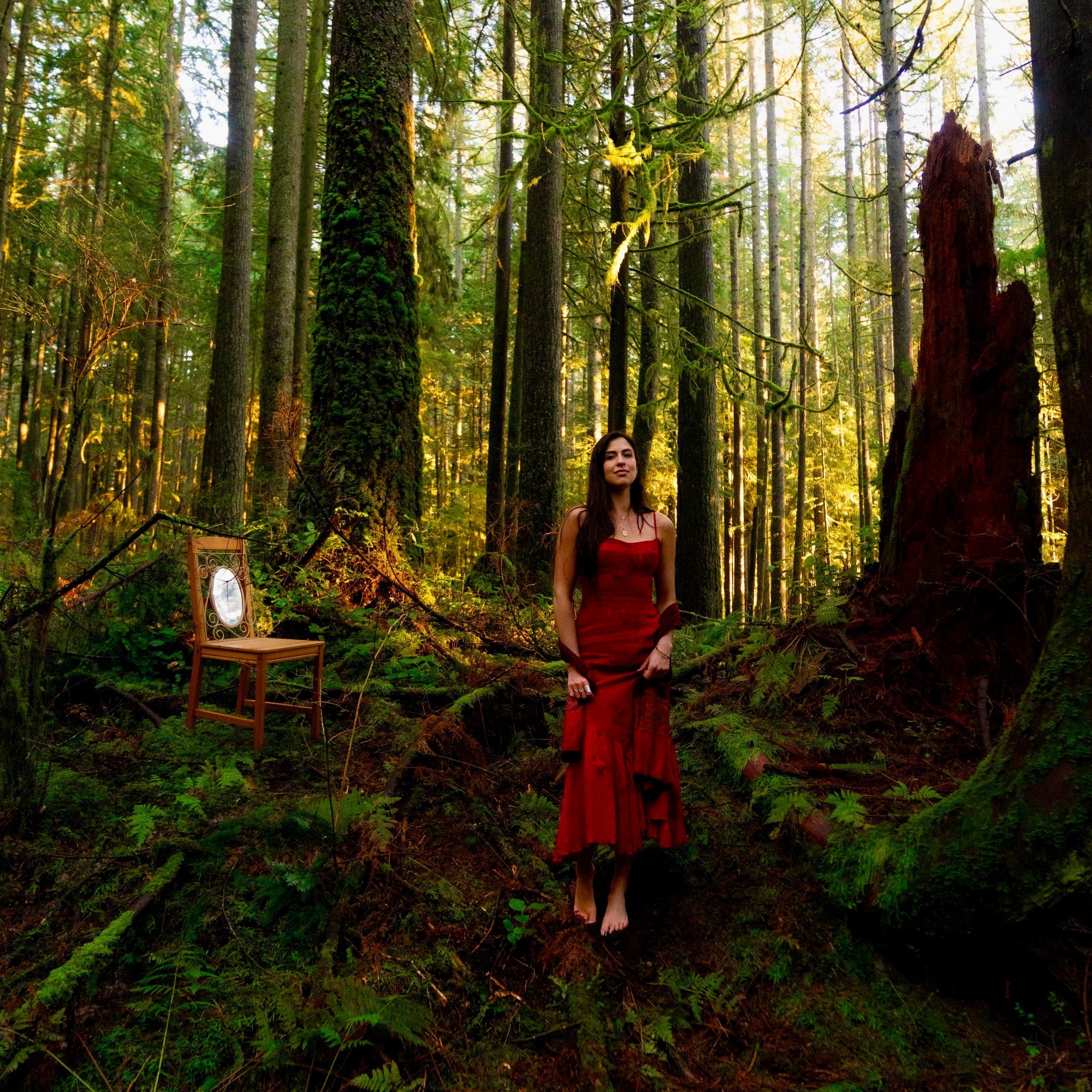
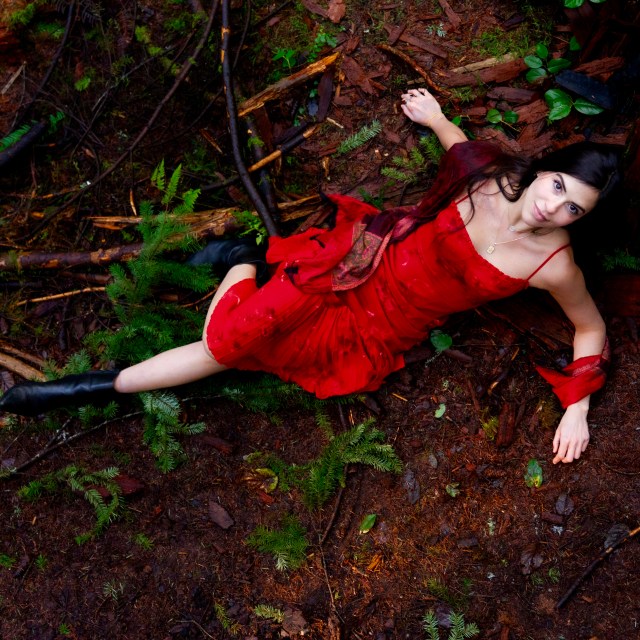
Singer/songwriter/producer Sage Bava, who grew up on an animal rescue sanctuary in Upstate New York, left home at 16 and traveled the world, only to find that all along she belonged on that animal rescue.
“I was back on our family nature reserve, and it was just after the tumultuous moving around of the pandemic. During that time, I moved to Costa Rica, to Spain. I was kind of all over the place, and I had moved away from the farm at 16 and hadn’t really been back. So, to be back in that space after all those years, after the global pandemic, after so much that happened in my own personal life, I found this gratitude for where I came from, how connected to this land I am,” Bava says. “There’s a sycamore tree on the land, and right around when this song was written, I found this deep connection to this tree. It gives me chills even right now thinking about it. This tree will come into my dreams and give me a hug when I need it. And right around reconnecting to the land and reconnecting to where I came from, the gratitude was really immense, just to be alive and to have this connection.”
As someone who has talked to hundreds, if not thousands, of songwriters about how environment affects writing, it is not surprising at all that she feels that land profoundly in her new song, “Radiant Soul of Mine.”
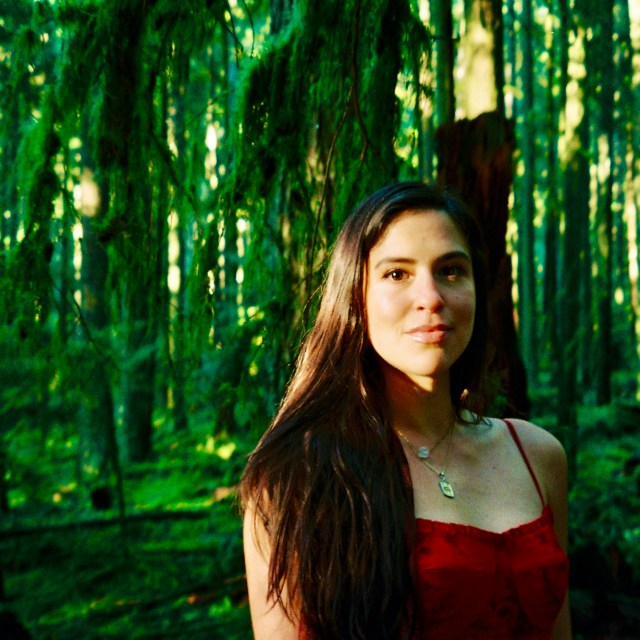
“There’s so much good intention in that land. My parents started it to preserve the forests and as a space for animals to go at the end of their lives or for animals to find rehabilitation. So, there’s so much goodness there, and I think there’s a lot of goodness and simplicity in this song,” she explains.
When she listens back to the track, one of a few on her upcoming album, In Whose Eyes, featuring iconic jazz bassist Christian McBride, she hears a direct correlation between her home and the song.
“I’m just happy and grateful that the song kept its original form. It was really written very quickly and then recorded live. We only did one or two takes, and I think we recorded it just a couple of weeks or months after it was written,” she recalls. “So, it feels like how it was when it was first written. I think maybe the surprising thing is just the preservation of the simplicity of where it came from. And it didn’t really stray very far from our piano on the farm to getting to record it with Christian McBride in New York a couple of weeks later; it’s pretty much the same thing.”
Just as returning to her childhood home brought her back to her roots, the jazz sounds on this record are also a welcome return for Bava to her early years and musical origins. Growing up in a home with a dad who played jazz piano at one point, Bava was always around music. Was she a prodigy? Well, that is a big word. But then, how many people can say they played with the great Les Paul at 10 years old? Probably not many, but Bava can.
“I’ve been doing music and musical theater and acting since I was quite young. So, I’ve done a lot of different genres in my life. But during that time, I rediscovered my love of jazz and my love of live music. The spirit of jazz, I think, is really at the core of its liveness. So, when I was experimenting with that, I came back to wanting a lot of it to be live, and I wanted to create a body of work. So, some of it is more of a pop electronic R&B route mixed in with that jazz part. And some of it is straight up ‘jazz,’” she says.
Old soul is one of those buzz phrases thrown around so often, like “authentic” and “genius,” that it loses all credibility. But when you talk to Bava, who is in her 20s, and reference things like the Great American Songbook, what other term are you going to use?
“I think there are so many great songs that have the core message that every human relates to. I could name a lot of songs, but I go back to the Great American Songbook era,” she says. “Songs like ‘Smile,’ by Charlie Chaplin, were written during the Great Depression. It’s such a simple song, but it’s so timeless, and it’s forever alive because of that timelessness and humanity just installed in it.”
The fact that she not only names “Smile,” but knows it was written by the “Little Tramp” himself, well, nothing else you can call that but an “authentic old soul.”
Not surprisingly, Bava was comfortable working with veterans. Where most younger artists seek out the producer of the moment to help them get on Spotify playlists, Bava sought out and worked with four-time Grammy winner Larry Klein (Joni Mitchell, Tracy Chapman, Herbie Hancock). She found working with a veteran like Klein exhilarating.
“I was creating this project for many years, and I finally had so many songs that I had so many different Pro Tools sessions and different versions of, and it was just a lot. So, I finally convinced Larry to help me finish the project and take all of these different songs and make them into the album that it is. We just did some overdubs together, and he helped with the mixing process,” she says. “It was fascinating to watch him work and watch him listen, and I’m so grateful to have gotten to work closely with him during the completion of this, just to witness how he works. It was really inspiring to me.”
That is not to say the multi-faceted Bava is simply a traveler out of time by a century. She is a hybrid, the perfect composite of the past and present, the kind of artist who composes on acoustic guitar and piano, but is also at home singing lead on electronic music tracks. You can see her range in the female voices she admires.
“I’m really fascinated and have always loved voices that sound like they have their whole soul in them. Voices that I grew up on, like Billie Holiday, Judy Garland, and Ella Fitzgerald, are so unique to themselves and have a spectrum of feeling in them, whether that’s vulnerability, strength, tenderness, or love. And more modern artists like Fiona Apple, Lianne La Havas, and Anastasia, Gabrielle Cavasa,” she says.
For Bava, the through line for this century-long run of great voices is the sense of self. “I think they continue this tradition of self-acceptance and self-empowerment through recognizing and loving all parts of self and not trying to sever parts of self, but really embracing the nature of self,” she says.
To her, self ties back into her belief in the importance of continuing our bond with nature. “I’m going to go back to my mantra: we are nature. The more we sever ourselves, the more we harm. I think it’s really hard to be in this world and not sever ourselves. It’s really hard to operate from our full self.”
Like so many great artists before her, Bava finally found her full self and the music she was born to make in the last place she expected – home.