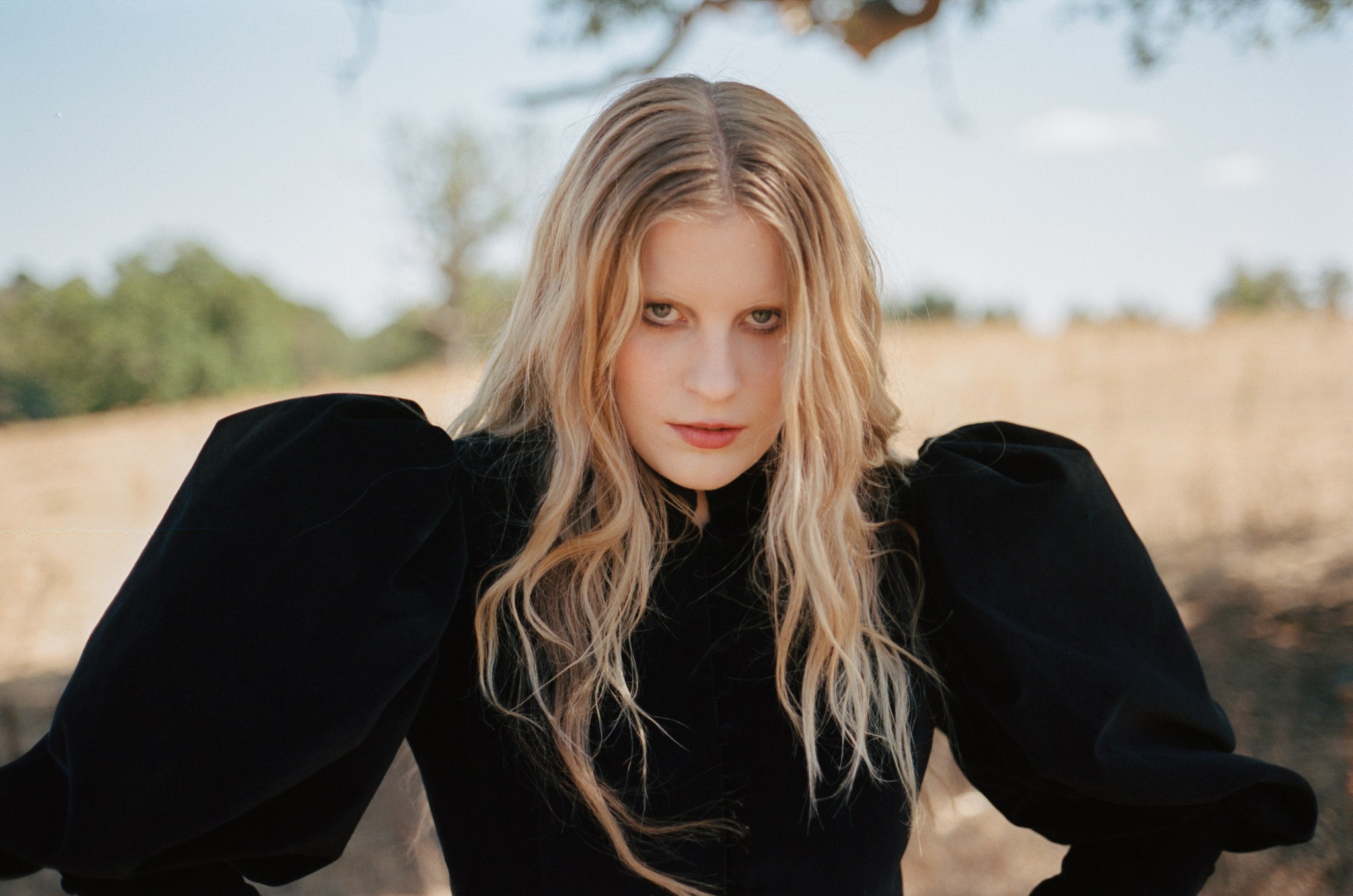
There are some artists whose music feels inseparable from the conversations happening around it. Paris Paloma is one of them.
Her music has found an audience, particularly among women, by putting language to experiences that can otherwise be difficult to articulate: anger, love, power, vulnerability, and the ways women are taught to navigate it all. It was one of the reasons I was particularly excited to sit down with her ahead of the release of her sophomore album, The Fatal Flaw.
The record explores love from a perspective that extends far beyond romance: as something philosophical, artistic and even political, particularly when viewed through the structures of patriarchy. And our conversation followed much the same path.
Paris was thoughtful and considered throughout, often taking a moment with a question before answering it. Rather than speaking in absolutes, there was a sense that she was genuinely interested in examining the ideas alongside me: whether women are taught to romanticize suffering in love, why female anger still makes people uncomfortable, and the ways women can learn to make themselves smaller in order to be loved.
We also spoke about the more personal side of creating The Fatal Flaw: how she has changed since making her first album, the emotions at the center of this record, writing from lived experience, and what happens when something deeply personal becomes something thousands of people see themselves in.
Towards the end of our conversation, I asked Paris one question that seemed unintentionally encapsulated everything we had discussed: what is one thing she wishes women would stop apologizing for?
Her answer felt like a fitting place to leave a conversation, with an album so interested in what happens when women refuse to make themselves smaller.
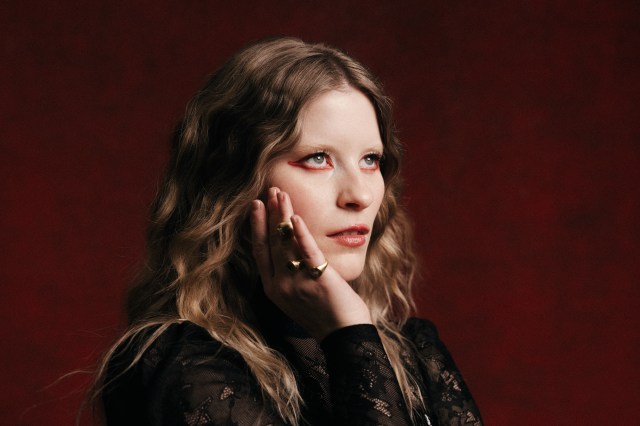
Liv Nevill: You are such an inspiration, especially when it comes to female empowerment. I post a lot about that stuff online and your songs I always use in the backgrounds of everything I post. So, I’m super excited for this album. My first question to ease us in is how would you describe the version of yourself that’s made and created this album?
Paris Paloma: I think it’s the most open, permitting myself to feel like the biggest feelings or trying to push myself there. Do you know what I mean? And also, I try and be the most honest. There are songs that I went back to. I’ve been working on this album for like two years. And then there are some of the songs that came in at the start of it. I went back and I was like, “I want to be so clear about my word choice because I feel like I have this amazingly media literate captive audience who connects so strongly and so sensitively with the songs. I want to be talking about really expansive feelings in a really honest way. So, whether it’s about love and romance or about heartache and dysfunctional love, they’re very big feelings and some of them are very, very messy.” So, you have to be careful with the way things are worded and be sensitive, but also it feels very much like I’ve just cracked something open and really exploring the insides of something.
Nevill: I think that’s incredible. In terms of this compared to your first album, what would you say feels different between the two?
Paloma: What I’ve been saying about the two of them is that if Cacophony was like an exploration of everything inside my mind and documenting those few years of my life, which when I look back on it, those songs kind of told a story. But I wrote this album to be an album, so all the songs have relationships with each other and there are themes that are started and then called back to later on. If Cacophony was like inside my mind, The Fatal Flaw is like hands reaching out. It’s like the threads between me and other people, so it’s suddenly an expansion out of the body whilst also opening up the heart and the body and very visceral feelings that are associated with that. I was really fascinated with the idea of expansion because so much of the album was really inspired by the writing of Bell Hooks and she cites the idea of love as expansion and the extension of the self a lot in her book, all about Love, and I wanted everything to feel like an expansion for that reason.
Nevill: Emotionally what would you say sits at the center of The Fatal Flaw? Would you say it’s that feeling of expansion or would you describe it in another way?
Paloma: It’s love and art and it’s where the two intersect, because those are the things that if you boiled down my life, that’s what would be left at the bottom.
Nevill: Definitely, and in terms of love I feel like what I’ve read about this album is that you’ve described love almost politically in a sense.
Paloma: Yeah, the album is like an anthology of love so some of it really engages with love as the force of social change and some of it engages in a really private way. Some of it’s in a very dysfunctional way, some of it’s learning what real love looks like and stopping associating it with it, so that’s definitely a massive part of it and the role in the relationship of love when you are a woman, where you’re loving men and the dichotomy of disentangling yourself from patriarchy and doing that work alongside pursuing love.
Nevill: Yeah, 100 percent. I’m really interested in what you’re saying about love being tied to social change and power. When did you first have this realization that love could be tied to that?
Paloma: I think when I was reading the writings of Bell Hooks, because we don’t talk about love nearly enough for a society where so many of the problems are caused by lovelessness. We misdiagnose and what Bell Hooks does really well is she writes so unwaveringly about patriarchy in her criticism of it but she writes with so much love for what’s needed in order to reconcile between genders and actually have a productive loving culture moving forward. That’s something I was really interested in. So much of the front half of the album is about the dysfunctional love that I’ve participated in or been on the receiving end of; toxic relationships, abusive relationships and then it dives into this theme of masculinity and what it is to be a woman having loved men. That kind of transforms you, shaping the way you love and the way you love yourself and then the love that you go on to accept. That’s a massive and a necessary part of being politically engaged, knowing the work that needs to be done in order to make yourself a loving and tolerant person.
Nevill: Do you think that women are sometimes taught to romanticize this kind of suffering in love?
Paloma: Yeah, I think so. I think I definitely did. And I think that’s where part of this album came from and part of the trajectory of this album. “Stem The Flow” is a song about the realization that you’ve been misdiagnosing something as love because the love that you have known has been incredibly toxic and abusive, and the desperate need to break that cycle, otherwise you will continue seeing that as love in the future and continue. So, a really brutal cutoff has to happen where you actually acknowledge that wasn’t love and you weren’t in love in that relationship.
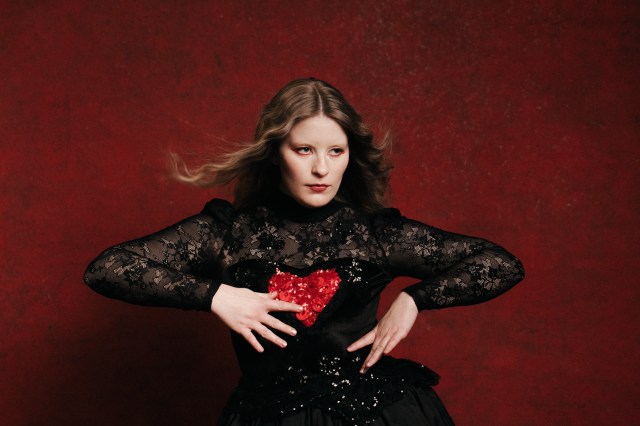
Nevill: With this album, do you have an underlying hope that perhaps some women will listen to it and realize that was a toxic situation?
Paloma: Yeah, absolutely. I think there are certain songs on the album that are very much about the realization of not needing to stand for being treated that way. There’s a song on the album called “Get Her The Fucking Flowers,” which is a funny title but it’s a very sad song. That’s a song about neglect in a relationship and it’s very much “Labour”’s sad little sister, and about how much women must be architects of their own happiness and architects of the thoughtful acts that are done for them in relationships so much when they’re really not hard. But I think that’s where there is such a massive lack of love and I think people end up in relationships because they think that they’re not going to find it. I think the message of this album is that it is there and there are people everywhere desperately trying to learn and grow and be more loving and be better partners. I think that’s all embroiled in this album but obviously patriarchy is a massive part of that and the work that has to be done as individuals to not allow that into a relationship. I also think we’re taught as women that a relationship sometimes is a be-all and end-all and so we don’t actually focus on giving ourselves that kind of love. There are parts of the album that engage entirely with self-love; songs like “Good Girl” or “Pre-Raphaelite,” where it’s a lot about your perception of yourself versus other people and the barriers that you must overcome in order to then value yourself as an individual that has something to love and not necessarily from someone else.
Nevill: Was that a thing you explored in the album? This feeling of abandoning parts of yourself?
Paloma: Yeah, definitely. There’s the last song, “I Cry in Front of Paintings” is the most romantic song I’ve ever written, and it comes from a place of so much love and such fullness but I chose the words so specifically with that song that it’s about my changing feelings and rejection of the idea of fate and the idea of just falling in love and the word choice is so specifically choosing what is good and safe and empowering for you. a love that like extends you and expands like your life.
Nevill: Was there one song that scared you the most to release?
Paloma: “Stem the Flow” scared me the most, definitely. It was so vulnerable and it was such an unleashing of feelings. “Silhouette on the Hill” is also one where those are totally unresolved feelings that I just wrote and tied up in a song and I’m putting out. I think because of songs like “Labour,” some people might have the misconception that I’m a voice of authority on topics like that. But I still very much have baggage and unresolved problems, and those songs are examples of me just expressing those feelings and not detailing where they should be taken.
Nevill: I just have one final question. What is one thing you really hope women would stop apologizing for or should stop apologizing for?
Paloma: We should stop apologizing for a lot of things. I think stop apologizing for not fitting a pedophilic beauty standard. And just stop apologizing for having the body of a human woman. I think we’ve strayed so far from that. And “Good Girl” was written at this time for a reason. Because I think we’re in a really worrying era. It’s harrowing. It makes me absolutely enraged and I think we have to stop apologizing or pulverizing our bodies into this little girl beauty standards.