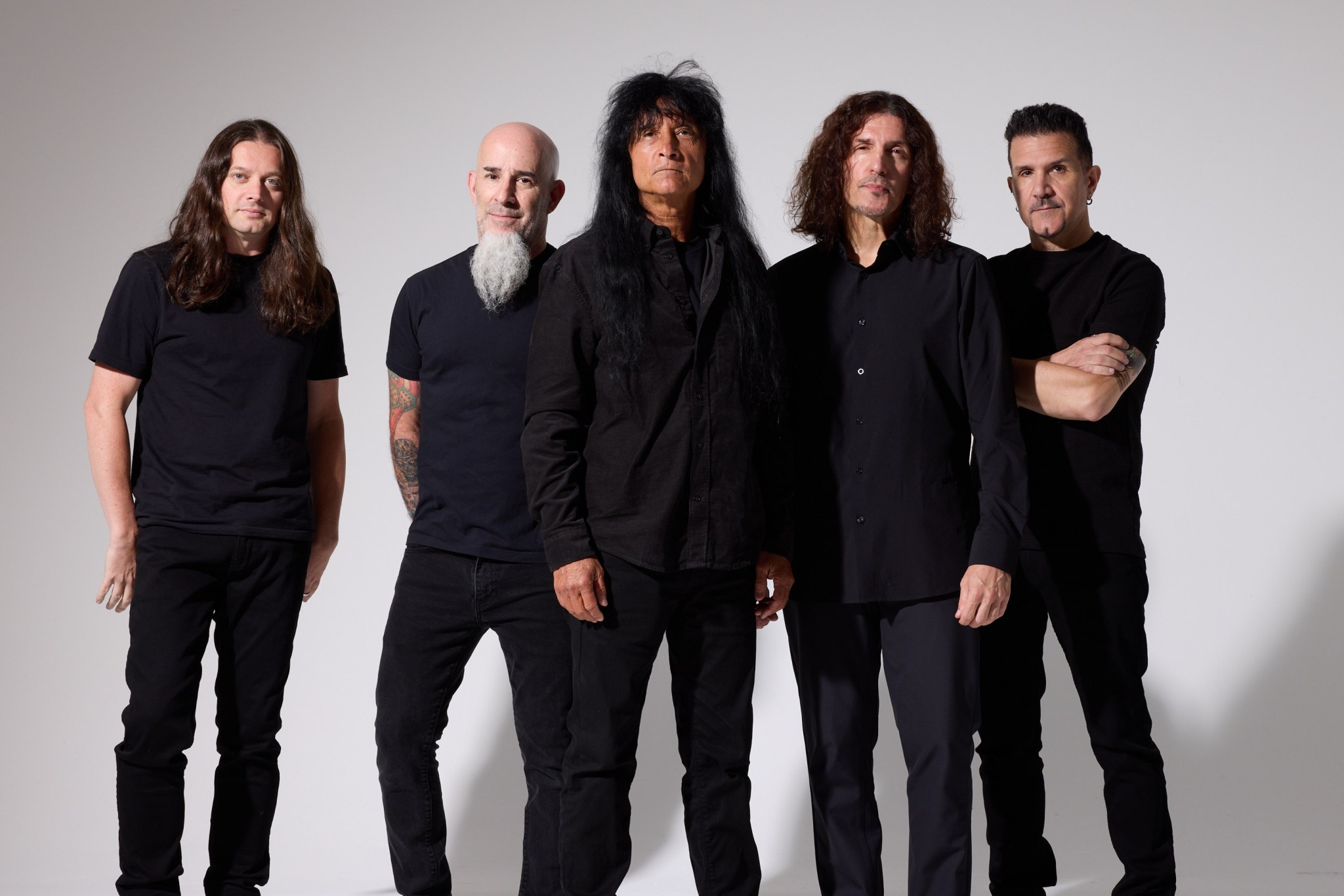
With all of the insanity the world has thrown at us in 2026, the COVID lockdown might seem as much of a throwback memory as Napster, MySpace and the pet rock. However, as unbelievable as it might seem, the lockdown was just a couple of years ago, or recently enough, that it is absolutely impacting our current art, like music. Anthrax’s Charlie Benante and Scott Ian say the band’s superb new album, Cursum Perficio, was a direct result of writing during that time.
“A lot of those songs were written towards the middle of the pandemic and the end of the pandemic when I had time and I wasn’t freaking out as much as I was in the beginning of the pandemic when I was glued to the news and it was literally causing me a nervous breakdown. And then my wife said to me, ‘You need to shut this off. You need to stop watching this.’ And I did. I started to concentrate on being creative again and trying to channel some of the positive and not of the negative. But a lot of that negative did come through in the music. And there are some angry songs on the record musically because I was so angry at what was happening,” Benante says. “But then there’s some beautiful things that happened too. And it’s like the good and the bad. I think that’s what music should be. You should be lit on fire, really push yourself and really be angry about things and let it come out creatively. And that’s exactly what this album is. It’s basically the culmination of all those things that we were all feeling. And I just tried to channel it in a creative way.”
Likewise, Ian explains that, if you listen closely, the threads between the lyrics on this album are more readily apparent because he was able to sit and write the songs in proximity to each other as opposed to previous records.
“This one, I would say, I had so many lyrics written already when I started actually working, putting them to the music because I had a lot of time during COVID to sit and think and write. So, I had a lot of ideas that were just waiting for musical arrangements, So, yeah, I think there was already just a lot of connective tissue because I wrote a bulk of it in the same period of time where on other records, it wasn’t done that way,” he says. “This time around, a lot of the lyrics were written in in the same bunches. And so, I see where there was a connection, whether or not anybody ever feels that.”
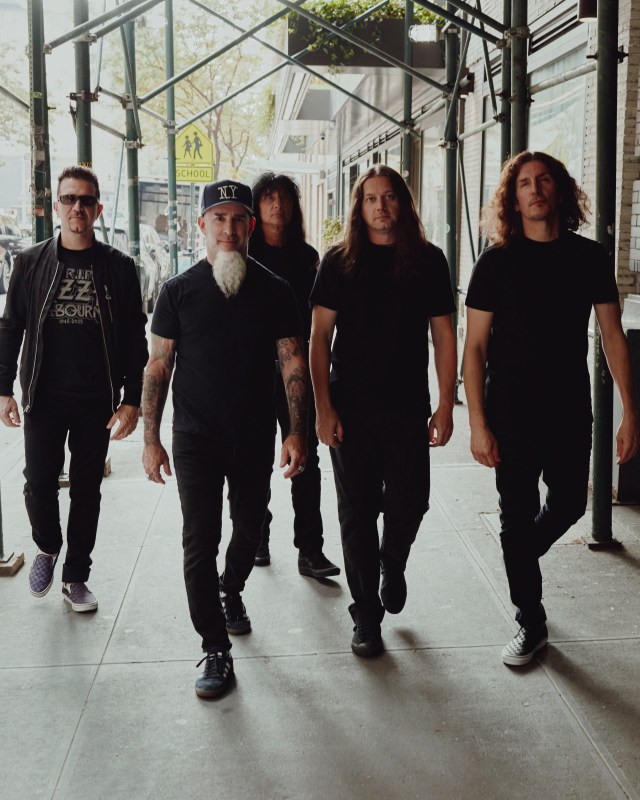
As so many bands who’ve been making music for a long time do, Anthrax still make albums to be complete works. It is what they grew up on Ian says.
“Sequencing is something most people don’t talk about in the context of an album. But that’s always been really important to us. And we agonized over it. On this record, we mastered it and I listened through probably half a dozen times. It just wasn’t sitting right with me. There was something wrong. And it turned out that I had to flip-flop the last two songs,” he says. “Originally, ‘Watch It Go’ was last with ‘My Victory’ second to last. And it just wasn’t working. And it’s not just because the song ‘My Victory’ has that title and it felt like that needed to be the last song. It just wasn’t working. Then I flipped those two songs, put ‘My Victory’ last and I texted Charlie and I said just listen to it with these flipped and tell me what you think because this is how it works for me. It’s not working the other way, and he was totally fine with it. Then suddenly it’s like in The Big Lebowski; it was the thing that just tied the whole room together, flipping those two songs made it work for me.”
When Ian says they agonized over the sequence, he recalls those records that took him on a complete journey as a listener.
“There are obvious ones that were actually rock operas, whether it’s Tommy, Quadrophenia or The Wall, records like that were obviously done on purpose. Obvious ones like that to just less obvious things, whether it’s Physical Graffiti or KISS Destroyer Aerosmith Rocks. Those are records that I think about from when I was a kid in the 70s and listening to them over and over and over again AC/DC Power Age but any of the first five Black Sabbath records. All those other records, even though maybe there was not a through line in those albums, maybe there’s not an overall theme. But in my mind, those albums become inseparable from their sequence. They would all be different records to me if they weren’t in that same order,” he says.
In an ideal world, fans would listen to the record as a whole, not piece meal on streaming sites. And they are seeing that to an extent. “I think we’re going to sell more vinyl on this record than we have on a record since the 80s. So, there is still a big audience out there for physical product,” Ian says. “However, people get their music, however people choose to listen to their music, I have no power or say over that. My emotions and feelings are still the same about a record coming out. It’s really exciting.”
Of course, one area where the album is meant to be taken individually and not as a collected work is on stage, where Anthrax cannot wait to invigorate their decades of experience with new music.
Before the album’s release, the band toured Europe and got to test a little preview of new songs with “It’s For the Kids.”
Among other tracks on the new album there are a number Benante is excited to watch audiences engage with.
“‘Watch It Go,’ that one. The song ‘Everybody’s Got a Plan.’ There are parts in that song, parts in ‘Edge of Perfection’ that are extremely audience participation,” he says. “People love to do the ‘Whoas,’ especially in Europe. That’s their thing, sing-alongs. It takes me back to the days of Iron Maiden again. The fans would just sing the songs. I don’t know why, certain songs just bring it out of them. ‘Why that song?’ I don’t get it. But I don’t fight it. Let it happen. If it’s an organic way of doing things, if you love this part, sing it. Fuck it. Go for it.”
For Ian, he can’t wait to see how audiences make the album their own.
“I want the audience to take ownership when they hear the songs, and they hear the album and what it means to them and how it makes them feel and all of that. I want people to take ownership of it and feel like it’s theirs and they are a part of it, and they connect so deeply with it that it makes them feel that way.”
When they do, Ian is confident that the new songs will all be welcomed into the set like classic tracks, because he says the band are first and foremost fans like their audience.
“I do feel like I have a really good sense of what’s going to work live right out of the box. We knew ‘It’s For the Kids’ was the right first song to come out with. We knew it was going to go over big because in a lot of ways we are our audience. We love the same music that our fans love. Most of us would probably agree on most of the bands that we like. We know what we want to hear from Anthrax,” he says. “It’s never happened where we’ve said we can’t wait to play something live and then it’s been crickets, it’s never happened in the history of this band. So, I think we have a good idea, and I’d like to think on this record we’ll get a chance to at least try every song on some leg of a tour because I feel like every song deserves it. I don’t hear anything on this album that’s an album track. I feel like every song should be tried at some point just to see.”
As much as the band is psyched to take the training wheels off the new songs and really bust them out live, they did not get to fully do so on recent dates. But for good reason. They were supporting longtime friends Iron Maiden and didn’t have time for their full set. To Benante it is worth it. “We did a lot of shows with Maiden when we were in Europe a couple of weeks ago, so we’re used to them. We’ve known them for so long, and they’re just a great, great band,” he says.
Since they have known each other for years, what is the bonding experience of choice on tour?
“It’s usually at the bar at the hotel where everybody kind of congregates and you just hang there. Back in the day, it used to be a ping pong table where Steve Harris used to fucking kick ass in ping pong. But these days, it’s probably a night off and you’re just kicking back and you just hang at the bar with those guys,” Benante says.
Did he ever beat Steve in ping pong?
“No, he’s a soccer player too. Steve has got so much energy, and he loves that type of stuff,” he says laughing.
Games aside, they have the absolute highest respect for Maiden. “Iron Maiden, they’re the architects. We all followed their lead, the way they did it. That’s the way we wanted to do it. They catered to the fans. They never sold out to making radio songs or to back in the day MTV or anything. They just did it their way. They always had that philosophy that a record sold is a ticket sold. And that’s how we treated it, too.”
Most importantly, they learned from Maiden and others that what matters most is the songs. “That’s why massive fans still come out and see Metallica, Pantera, Megadeth. People could sing these songs,” Benante says.
For him, he thinks back to the bands he would see and be in the crowd screaming those songs as loud as any fan. “If I would go see KISS I would definitely be singing ‘Rock and Roll all Night.’ I’d definitely be singing ‘Detroit Rock City,’ these are the songs that I’d be like, ‘Oh my God, I love this song,’” he says.
Benante still sees shows as a fan and one a couple of years particularly resonated with him. “Genesis did a tour. It was like their last tour. And Phil Collins couldn’t play the drums. He just sat and sang all night. For me, it was very emotional. It was a sign of, ‘This is it. This is the end here.’ And I started crying during two songs. It just hit me. I couldn’t do anything but just feel this emotion come over me. My wife was with me, and she recognized it. And I didn’t have to sing anything. I just had to feel it,” he says recalling the songs. “One was ‘Carpet Crawlers.’ And the other one was ‘In My Wardrobe.’ Just the way Phil looked up there, his son was playing behind him, and he was still air drumming. And it just was so sad to me. It just hit me. And that’s the way I’ve been, people have been asking me about the title of this record, is this the end? I’m not saying it’s the end, but I’m closer to the end than I am to the beginning. And if this was our last record and we ended at the 12th record, then I’m OK with that because the Beatles had 12 records.”