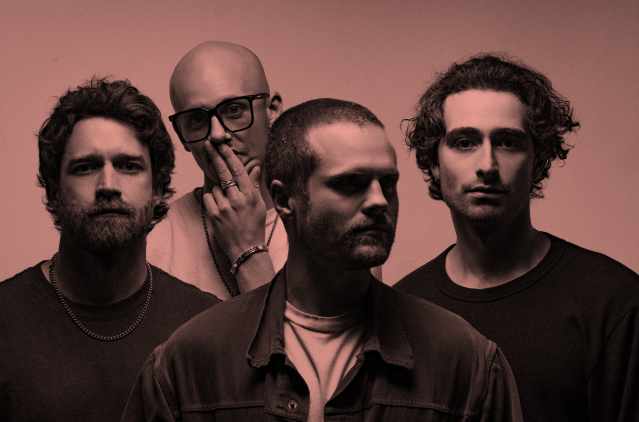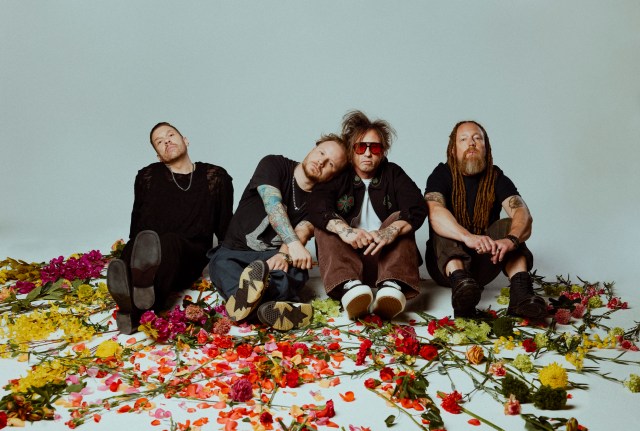
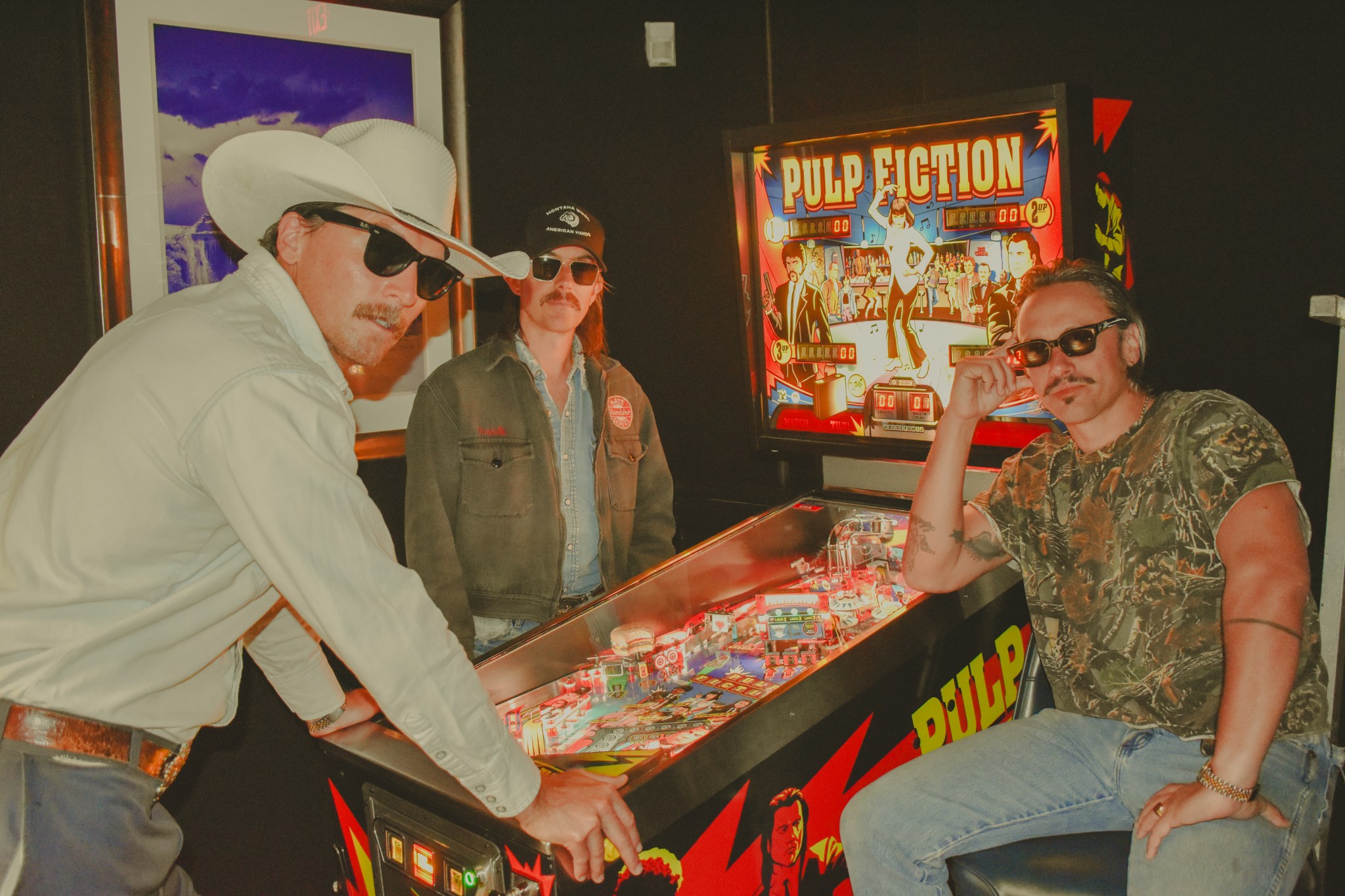
Country music legend Dean Dillon once said, “Whatever [you] write, make sure it’s something that you like, because if you get lucky, you’ll be playing that song for the next 30, 40 years of your life,” and for the Texas-born country trio, Midland, that’s the advice they took to heart. Coming from the West Texas dance hall scene and cutting their teeth on hundreds of shows per year on the road, the group consisting of Mark Wystrach, Jess Carson, and Cameron Duddy is no stranger to the road, yet never forgets what made them: the last member of the band, the fans. This love for the music and appreciation of the scene and their roots was a throughline for their most recent record Stages, and isn’t something they plan on losing sight of. Hit Parader sat down with the band in Nashville on an off day between shows to chat about their new record going back to their roots, their live show approach, and more.
Hit Parader: After playing countless shows outside the country, I’m curious how you’ve seen country and traditional country translate to international audiences.
Mark Wystrach: Well, I think that the thing about country music is that it’s truly uniquely American. I know there have been exceptions to the rule, and there have been artists who have come from Australia. There’s that new kid having a moment. I can’t remember his name. But I just think that country music is something that is just really purely American, and at its core, it’s also an amalgamation, and it has grown through so many different influences that came from all around the world, so it makes it really unique. It kind of only really exists here, and it’s such a rare thing. And then, at its core, it’s about the storytelling, and as Merle Haggard used to say, it’s really about explaining and putting to song the experience of life. The good times, the bad times, the heartache, the romance, all that stuff. So I just think that translates beautifully. I think it’s the storytelling that people love.
We have a documentary about us going out and playing in Mexico. That’s been a really cool, unexpected gift, just how our music has translated across the border to our friends down in Mexico. Probably because we did an alternate version of “Drinkin’ Problem” back in the day with our buddy Jay de la Cueva, and David Garza helped translate it and produce it. And [“Drinkin’ Problem (Brindemos)”] is the Spanish version of “Drinkin’ Problem.” So I think that probably years ago really opened the door. But again, something about our style of music. I don’t know. It’s just earnest, it’s got the blues mixed in, and the Mexican audience, it just really translates beautifully over there. So we’ve really been enjoying going down to Mexico and playing, and looking forward to probably going down there quite a bit more in the upcoming years.
HP: Any specific experiences or moments from that trip that really stuck out to you?
MW: Well, when we were in Chihuahua, we went to Pancho Villa’s bar, where it was his local bar, his local hangout. And we went in there with our friend Manuel Mancilla, who used to be on the road with us as a photographer. And then Cameron tapped him on the shoulder to come up with a music video for our song “Vaquero.” And so he got his old buddy Ty Mitchell, who’s an old actor and cowboy, and he shot this really beautiful video down at his family’s ranch in Chihuahua. So Manuel was our guide down in Chihuahua and took us to a bunch of amazing restaurants. Chihuahua is a gem. If y’all have never been down to Chihuahua, the city in Mexico, it really is the Texas of Mexico. Incredible food, really friendly people. And I think the highlight for me was walking into this bar. We had a bunch of time to kill. We ate lunch, and Manuel was like, “You guys are gonna love this place.” So we went to this place called Antigua de Paz. It’s been in continual business since 1903 or something like that. And there was this trio of guys who probably look like us in the future, in 25 years, and they were just doing traditional mariachi stuff, and they were fantastic. So we just kept sending them money, and they played for us for about an hour, and we were just sitting back drinking beers and taking in this amazing place where Pancho Villa once sat. And those are the kinds of experiences that we probably seek out quite a bit on the road, and something that will leave a bit of an indelible mark in your imagination. And you’ll tell your grandkids about it someday. “Listen, old son of a bitch, I was drinking beers down in Chihuahua, Mexico, before you were even a thought in your parents’ minds.”
HP: What is something from the music culture that you grew up in the Texas scene that people outside of the state often misunderstand or overlook? And what part do you think you wish more listeners appreciated about it?
Jess Carson: Well, we started the band in Texas. We all grew up in different parts in the West, and all met up in Texas to form Midland. I would say, as far as Texas goes, it’s the quality and the abundance of live music. It’s just everywhere. You could walk by a bar, and there are some people in there doing covers or whatever, and it’ll blow you away, how much talent there is. These people just hiding out in the woodworks, and you can make a career in Texas. You think about that overlay image of the state of Texas over Europe. It’s so massive that there are a lot of artists where it’s their bread and butter. They make a living playing just about all over the state. And it’s not just the major cities. All these little towns have dance halls, and they have live music, and people come out, and they support live music there. And we had so many influences, people who were older and younger than us, when we were forming the band out there.
HP: Seems a lot more community-based as well.
JC: I would say, yeah.
MW: And it’s authentic. You’ve got John T. Flores, you’ve got Gruene Hall you’ve got Luckenbach, Texas, you got the Continental Club, you got the Saxon Pub, the Broken Spoke, Billy Bob’s. The list goes on and on of these really iconic dance halls where all the greats have played there, and it’s not something that was created as some sort of a greater scheme of creating the culture. They’re their own microclimates of country culture in their way, and I think Texas really appreciates that and protects it. And I think that’s why the country music scene in Texas and the music scene in general is so good. There’s tons of other stuff that’s coming out of Texas that’s unbelievable. Leon Bridges for example. The tradition goes way back, just outside of country music, too. Incredible alt music and great singer-songwriters and all that stuff.
HP: Every band has started off playing smaller rooms, playing to friends and family, and then I was curious if you remember an early gig where you saw the room flip, if there was a specific early gig where you were like, “This is happening.”
JC: Well, we never did the cover thing. When we got booked, we were confused in Texas when we first started because people would book us and they’d go, “We need you to play for three hours.” We’d go, “Great, we actually have three hours worth of material.” We’d go in there and we’d play originals for three hours. We didn’t realize that that wasn’t what they were hiring us to do [laughs]. They want people to come in and play covers and stuff, and we’re like, “Oh, this is our gig. We’re gonna just do all originals.”
Cameron Duddy: Yeah, we’re headlining [laughs].
MW: Yeah, we’re headlining the dining room of the Broken Spoke at 4 o’clock on Tuesday [laughs].
CD: But it went from we would be playing to people that were casually listening to us to I think right after “Drinkin’ Problem” came out, we still probably had a handful of smaller local gigs that we played, and people were starting to pay more attention. And then we played with Dwight Yoakam right around that time, and he took us out on a series of gigs, and people paid attention to the opener, which was kind of unusual on those early gigs with him or with Willie [Nelson]. I think the biggest triumph for me, at least, was when we went out on a handful of dates with this guy, Aaron Lewis, and his demographic is very much different from what I think ours is today. Heavily male-skewed, a lot of tough dudes in the audience, and we would show up and play our set. And there was this one guy over the course of a three-day weekend that stood in the very front. And he’d stare at us with his arms crossed in the very front, making full eye contact with us. And we’re like, “Okay, this guy’s scary, and he’s not impressed.” And by the third show, he was in the same spot, and we got him nodding his head. And we’re like, “Okay, we did it. I think we broke through.” He might have even clapped once for us. So yeah, you had to fight your way to win other people’s audiences in the beginning.
HP: As you’ve been touring Stages, what have the crowds taught you about the record and how you want it to be perceived, how you want to put it on the live stage?
MW: We’ve been playing every song except for “Drunk Enough.” We just need more rehearsal time for that. That one’s probably one of the more dynamic arrangements that we’ve done, but we’ve been playing the full album, and people are singing along with every single song, which has been great. And yeah, it feels like people are really enjoying this album. So I think six albums in, to make something that you enjoy playing every night, which is fantastic, and it’s got such a great variety to it. You got songs like “Glass Half Empty” or “Walk a Mile,” but then you have songs like “One Day You Won’t” and “Vaquero” and “Marlboro Man” that are a little bit more down-tempo and maybe a little bit more melancholic and stuff like that. But yeah, just seeing that the audience is singing along and digging it, and we’re seeing that on all the streaming and stuff as well. It seems like people are really consuming the entire album, and I think that’s the goal as an artist. We’ve always been an actual album band. We put a lot of thought into compiling a group of songs that tell a story. They’re not meant to live alone as a single. I think maybe that’s what I’m the most proud of: to go back at this stage of our careers, to go back and listen to On the Rocks, to go listen to Let It Roll, The Last Resort. Those are all snapshots of where we were as artists, as songwriters. Each one has such a unique personality.
It’s like the rings on a tree when you cut it open. Especially stylewise. I mean we were taking some real swings back in the day. So yeah, it’s good to be able to laugh at yourself. Can you see the tear rolling down or no? Okay [laughs].
HP: I mean, Stages has been described as almost a return to the neo-trad roots, while still incorporating the years that you’ve had building up to this since the record. What does moving forward while reflecting back look like in real terms for you guys?
JC: Well, yeah, it is, I think, a nod back to our beginnings. It’s a nod back to The Sonic Ranch, very first recordings we ever did in El Paso in 2014. We had fiddle back then. I think the types of songs and the way that we approached it, there’s similarities between Stages and The Sonic Ranch. I think the production has maybe come down a little bit. I think maybe it’s a little less slick than some of the other albums. So that’s another way that it maybe feels like something like an early iteration of what we were doing. I think it’s very Texas-feeling. Trent Willmon, he just makes a Texas-sounding record, and it’s very organic. The way that you do it in the studio, you’re playing it live in the studio, and it’s a fun process.
MW: Yeah, that was a unique approach to go in and make sure that all of the guitar strings, the drum covers, everything was certified organic. So I think it’s the first certified organic album [laughs]. We got the certification on it.
HP: What’s been the most fun part of this album cycle for y’all?
MW: I think probably just putting it out and seeing the reaction. You never know. I loved our last album, Barely Blue, but it barely blew anyone away, I guess [laughs]. I think people look back on that someday and they’ll be like, “Wow, that was a really great album.” But it’s funny how the timing and stuff go. But yeah, I think it’s just been great to see how it’s been received. And every time you go into the studio and record these songs, we’re getting ready to go in the studio tomorrow, and there’s such excitement and anticipation, and you really care about these songs. So when you put them out there, you can’t help but want them to get some mileage, and for people to go out and drive them around and enjoy them. So I think it’s been really amazing to see, and then just go on tour and see the reaction, and see the crowds every night, and how big it’s been. And yeah, it feels a little bit like a Midland 2.0. We’re in a really great place, and it’s fun to be there.
HP: Yeah, it’s amazing. You’ve drawn parts of your career from the people who have come before you as influences, and then people eventually in the future will or are currently looking to you guys for influence and guidance. If the next generation of country or traditional country would take one lesson from your approach to recording, touring, anything, what would you most hope that to be?
CD: I guess the real question is, what are you the most proud of, really? Because that would logically, I think, be the wisdom or the thing that you learned or the hardest challenge. And to me, I think the simple truth is that you have to be able to take it out on the road if you want to earn a living playing music. So, in terms of our legacy, I’m very proud not only of the albums that we’ve cut and the quality of those records, but I think probably more than anything, the stamina that we’ve put up to take this stuff on the road every year for the last over a decade. Every generation looks at the new generation as softer than they are. I think that’s just how it’s always been. But I sure hope that the next gen of country stars and country musicians and the like have enough guts to last the gauntlet of making a living out on the road, because that’s where you really get to see your fans, and that’s where you make the most impact, I think, at the end of the day, is being able to share that experience with people live. So let’s hope that the next class of champions gets their heads on straight and can last the gauntlet of playing in a live band on tour.
HP: People don’t realize how demanding it is to do a 200-show year or something like that. Running on as little sleep as that is, and playing that many shows. It’s taxing.
CD: Yeah. Oh, you’ve got families to think about, too. Trying to create and maintain a family, trying to create and maintain meaningful relationships at home with friends. You’re basically perennially missing out on birthdays, weddings, special events, baseball games, all those things. If you’re making a deal with anybody, it’s that you’re going to sacrifice moments like that that most people get in order to live an extraordinary life of playing musician, and you’re a troubadour. And that’s why it doesn’t matter what genre you play in, what you look like, how you identify, what your politics are. If you’re a musician and I’m seeing you in a room or on the road, you’ve got immediate respect from me because it takes its toll, man. It takes a lot of guts.
HP: I heard a quote the other day that I thought was interesting that I wanted to bring up in this, where they were talking about how some fans get mad or not if they don’t hear certain songs at certain live shows. And the quote that an artist said was, “Maybe that’s the price of making a record that changed our lives, is that we have to play it for the rest of ours,” which I thought was interesting. I’m curious to know how your relationship to your hits has changed over the years.
JC: I think we are fortunate in that we had a hand in writing them, so they represent us, and we truly love those songs. It’s not a chore to play “Drinkin’ Problem” or “Burn Out” or some of these hits that people show up and they expect you to play them every single night. We love those songs. They came from our influences, and they came out of real moments of inspiration. Both those songs came pretty fast in the writing room. They were really just – you pull them down from heaven, and it’s a magical thing, and they’re part of us, and they’re still fun to play to this day.
HP: It’s got to be a gratifying feeling to be able to play them for that long and still have that connection to the songs, I guess.
MW: Well, be careful what you’re putting out and what you’re writing, and the reasons why you’re putting it out. Our buddy Dean Dillon, in the early days when we were coming out to Nashville as songwriters, we were sitting around, and we were throwing around ideas, and everybody’s like, “Well, what do we want to write?” Dean was like, “Well, whatever we write, make sure it’s something that you like, because if you get lucky, you’ll be playing that song for the next 30, 40 years of your life.” So I think you see artists that are chasing record labels’ goals and maybe trying to get something that they think is going to be a flash in the pan, something that’s going to be commercial, something that’ll be successful. And I think that’s where you get yourself in trouble as an artist, because if that ends up working out, sure, you make the money. But then what are you going to do? Spend the rest of your life playing some piece of shit that means nothing to you? And you have to just fake it every night? So I think that’s probably our only process or filter: to make sure that we really like the song collectively, and it means something to us.
HP: For the last question, what was a moment, a memorable moment in the past year or so, that reminded you why you still do this?
CD: We played a show at the Orange County Fair, and it might not sound very sexy if you don’t know it, but this is actually a pretty amazing venue. It’s an outdoor amphitheater, and it is close to where we met each other all those years ago in Los Angeles. And it’s sizable, 5,000 people, maybe a little bit more than that. And it has a tendency to be a hometown show for us. We get to see a lot of our friends that we grew up with and our family, and I don’t know. It felt unusually nostalgic playing that show because the nerves weren’t there, for whatever reason. At least not for me that night. And I just remember having a lot of fun onstage, but also just having a lot of joyous fun afterwards, and not the typical jump-the-rental-minivan, rambunctious skullduggery that we usually get up to. But this was more kumbaya and healthy organic stuff. It felt like, if we don’t get to do this again, I’ll feel good about what we’ve accomplished here as friends in Midland.
MW: We were fortunate enough to come out and do CMA Fest, and we were doing a bunch of press for this album, and we hadn’t quite put it out yet. But we went and played the Riverfront Stage, and we had never played that before. I just remember before we were going onstage, I remember that somebody was telling us that they were all getting alerts that the show was completely at capacity, and they were telling people not to come, and that was pretty cool. And I had heard that we were the only act that happened to. The audience was all right there, and they were just going nuts. And we don’t spend a ton of time in Nashville, and it does mean a lot to get to come back, come to Nashville, and to see that kind of reaction from the fans around the world. And I don’t know, we all live pretty far out of the scene of this. It was reaffirming that people still know who we are. So that was a good kickoff to the album cycle.
JC: There’s a lot. Yeah, in the summer, we did a two-week run in Europe. It was during the heat dome.
MW: Yeah, we brought that heat wave [laughs].
JC: Yeah, we played in Paris on the hottest day on record in the history of Paris. We’ve built that audience in Europe, so it’s been really rewarding to see how it’s grown and then break into new countries. Getting to go there, and then other ones that we’ve invested in, Norway and obviously the UK, and seeing how the audiences have grown and how they respond to the music, and it just gets bigger and bigger. And so that’s been a really cool thing for us.