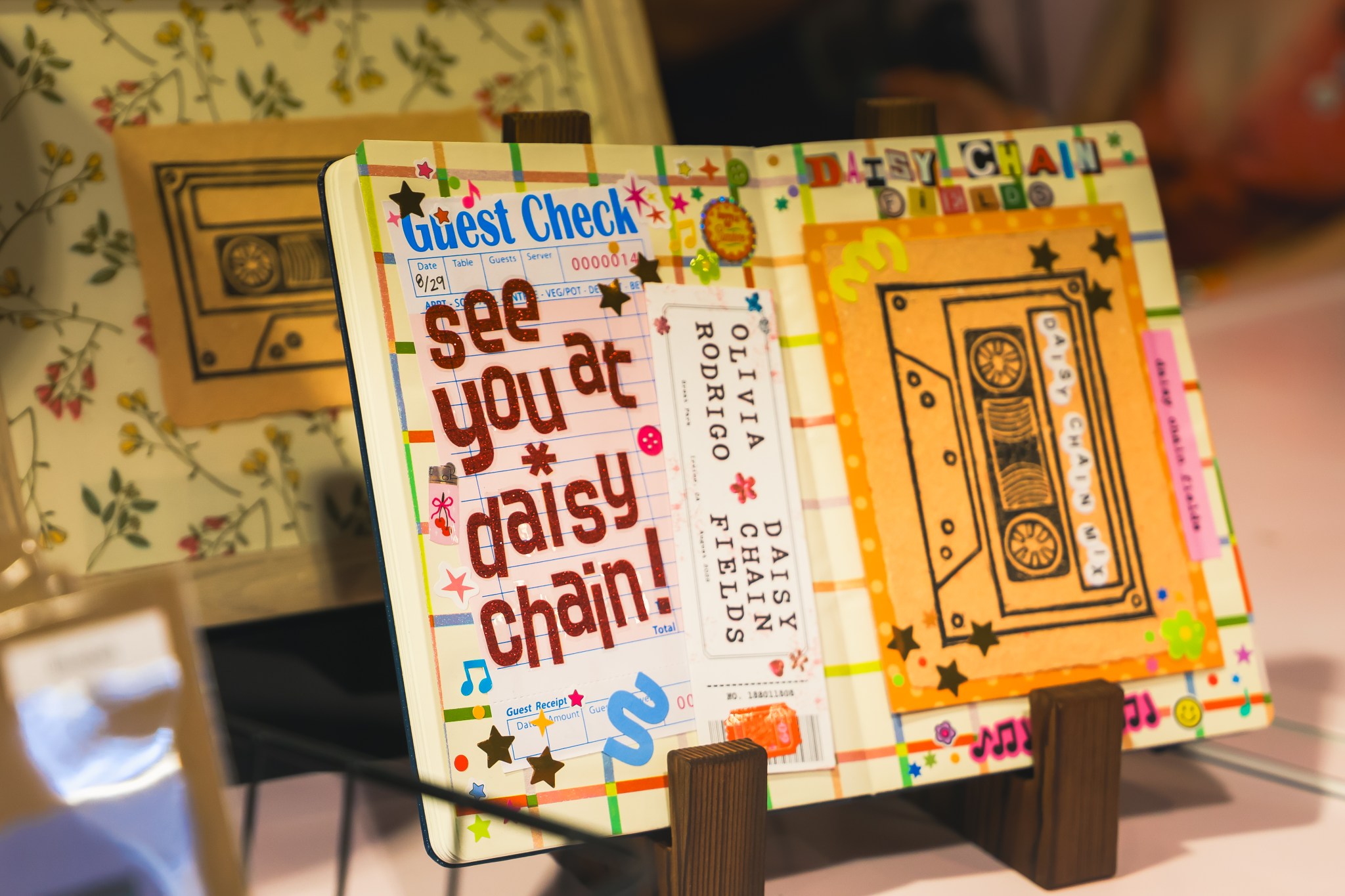
“This is the best day of my fucking life!” Olivia Rodrigo shouted from the stage at the inaugural Daisy Chain Fields.
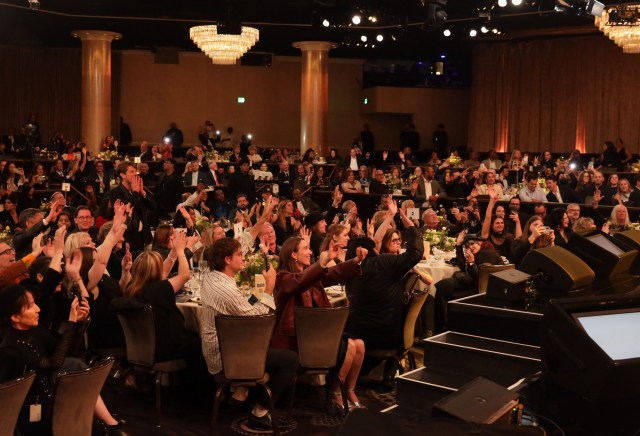
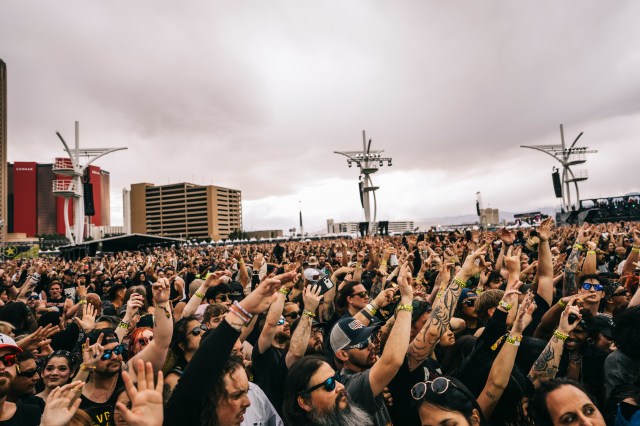
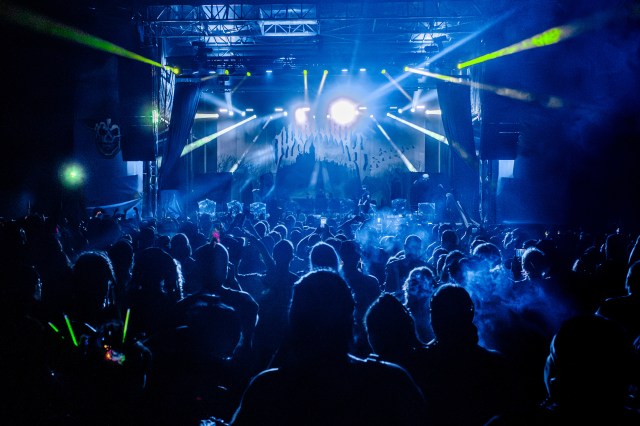
Ours too, Olivia, seemed to be the collective response from 45,000 people, most of them women and girls, who had spent the day singing, sweating and witnessing something that felt much bigger than a music festival.
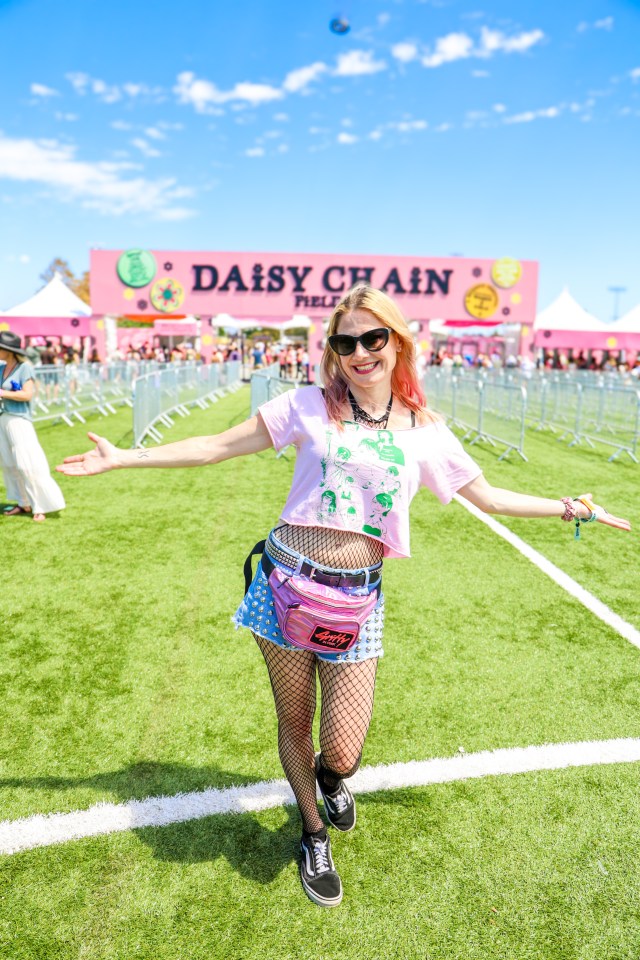
Held August 29 at Great Park in Irvine, California, Daisy Chain Fields brought together 14 acts across two stages. Newer artists like Chappell Roan and Mitski shared the bill with Bikini Kill, Garbage, The Breeders and Santigold. Doechii delivered one of the day’s standout sets, pairing sharp, high-energy choreography with the kind of commanding performance that made it impossible to look away. During Rodrigo’s headlining set, Alanis Morissette, Sarah McLachlan and Stevie Nicks appeared as surprise guests. It was a living timeline: the artists who broke the rules, the artists now commanding the culture, and the girls imagining themselves as whatever comes next.
The lineup alone would have made Daisy Chain Fields historic. What made it consequential was what that lineup was assembled to do. Every artist waived their fees, with 100 percent of the festival’s net proceeds benefiting ten organizations advocating for women and girls in the United States and around the world. Before the gates opened, the festival had raised $10 million. At the start of Rodrigo’s set, Melinda French Gates was welcomed onstage by Olivia and announced that she would match funds, bringing the total raised to $20 million.
That moment changed the meaning of the day. This was not empowerment as a slogan printed on merchandise. It was power converted into resources, and multiplied.
The funds will be divided equally among ten organizations, including Baby2Baby, Black Mamas Matter Alliance, the Center for Reproductive Rights, the National Domestic Workers Alliance, the National Women’s Law Center and Planned Parenthood. Their work spans maternal health, reproductive freedom, economic justice and support for survivors.
Olivia Rodrigo can now call her heroes and peers, ask them to perform for free and draw 45,000 fans. She did not treat that influence as the finish line. She turned it into tangible support for other women.
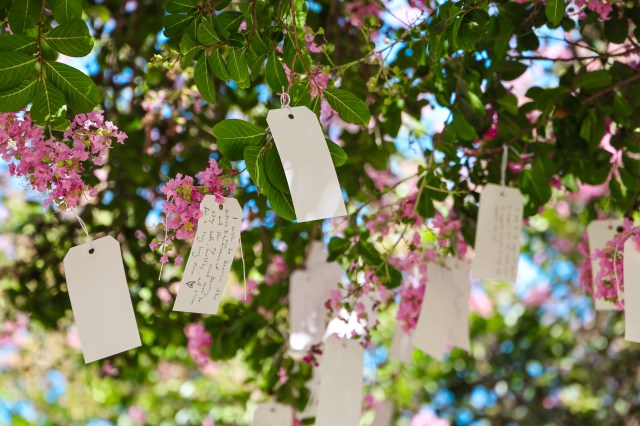
A Revolution With a Family Tree
Daisy Chain Fields was inspired by Sarah McLachlan’s Lilith Fair, the groundbreaking festival that ran from 1997 to 1999 and proved that multiple women could share a bill and draw massive audiences. In the 1990s, radio programmers resisted playing two women back-to-back, while promoters treated female artists as though they were competing for a single available slot.
Lilith Fair disrupted that thinking. Bikini Kill and riot grrrl culture attacked it from another direction, centering women’s anger and authorship. Garbage, The Breeders, Alanis Morissette and Stevie Nicks expanded the possibilities for women in rock on their own terms. Daisy Chain Fields gathered those histories without presenting them as artifacts.
The younger crowd did not receive the legacy artists as a history lesson. They embraced them as something alive. Watching girls who may not have been born when Kathleen Hanna first declared, “We’re Bikini Kill and we want revolution, girl style, nowww” responding to the band decades later was a reminder that urgent music does not age out. It finds the generation that needs it.
That current ran both ways. The veteran artists recognized what Rodrigo had built. Stevie Nicks joined her for the final song of the night, “Landslide.” As they traded verses and merged harmonies, two artists separated by more than half a century sang to mothers, daughters and girls attending their first concert. It did not feel like one generation replacing another. It felt like recognition between them.
Nicks told the crowd that Rodrigo reminded her of herself at that age. She said she was awestruck that Rodrigo had brought so many people together and done it “with this grace.”
That is the real power of a chain. No link has to disappear for the next one to matter.
Girls Watching Women Take Up Space
The audience may have been as important as the lineup. While we don’t have the official gender breakdown, from the field it appeared to be at least 90 percent female. There were mothers and daughters everywhere, and for many of the youngest fans, this was their first concert or festival.
A girl’s first experience of live music helps shape her understanding of who gets to command a stage, play an instrument, run the show and take up space without apology.
Rodrigo made that message explicit during her performance. She stopped to recognize the musicians behind her: “Give it up for the incredible girls in my band.” The line was simple, but the image was not. One of the biggest artists in the world stood at the center of a massive production surrounded by women whose skill powered it. And the band’s gender was clearly an intentional choice.
She also performed “serena joy,” a new protest song released for the occasion. Its repeated assurances that “everything is just fine” land as propaganda, the kind of language used to make the unacceptable feel normal. At a festival raising millions for reproductive rights, maternal health and gender justice, the song’s warning was impossible to separate from the world outside the gates.
Daisy Chain Fields moved beyond representation. Seeing women onstage is important. Seeing them confront what is happening to women is something else.
The beneficiary organizations connected the celebration onstage to abortion access, gender-based violence, domestic labor and maternal mortality. The music drew people in, but those causes gave the gathering its purpose.
The day showed what becomes possible when people gather around a shared belief that women and girls deserve safety, freedom, opportunity and a voice in their own futures.
When someone in the crowd needed medical attention, arms immediately went up to guide medics toward them, and stayed raised until help arrived. Compared with a $20 million announcement, it was a small moment carrying the same idea: collective power begins with noticing one another.
From a Bead Fountain to a Philanthropic Engine
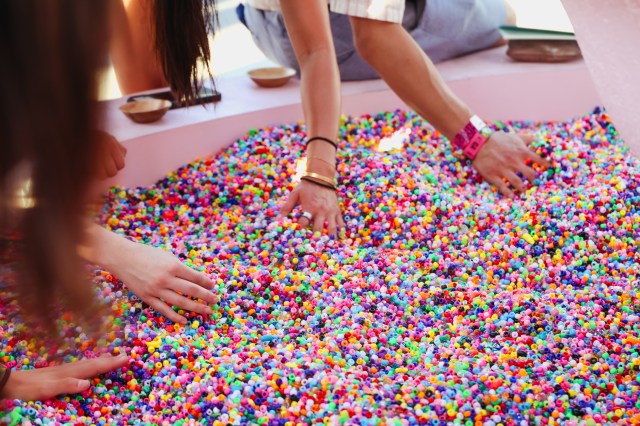
The fest featured several sponsor activations, including creative installations by Lego’s and Depop, while the biggest brand activation definitely reflected the festival’s ethos. Etsy’s Creative Village featured an actual fountain of beads, plenty of customized activations, and a whole space featuring top women artisan business owners presenting their crafts. It was playful and perfectly calibrated to a crowd that wanted to participate, not just consume; it was a joyous experience.
I also had the pleasure of meeting Salt & Straw co-founder Kim Malek, who had attended Lilith Fair and noted how this crowd appeared more mixed in age, and overall younger. For her, bringing the brand (and her children) into the festival connected Olivia, the causes and a new generation.
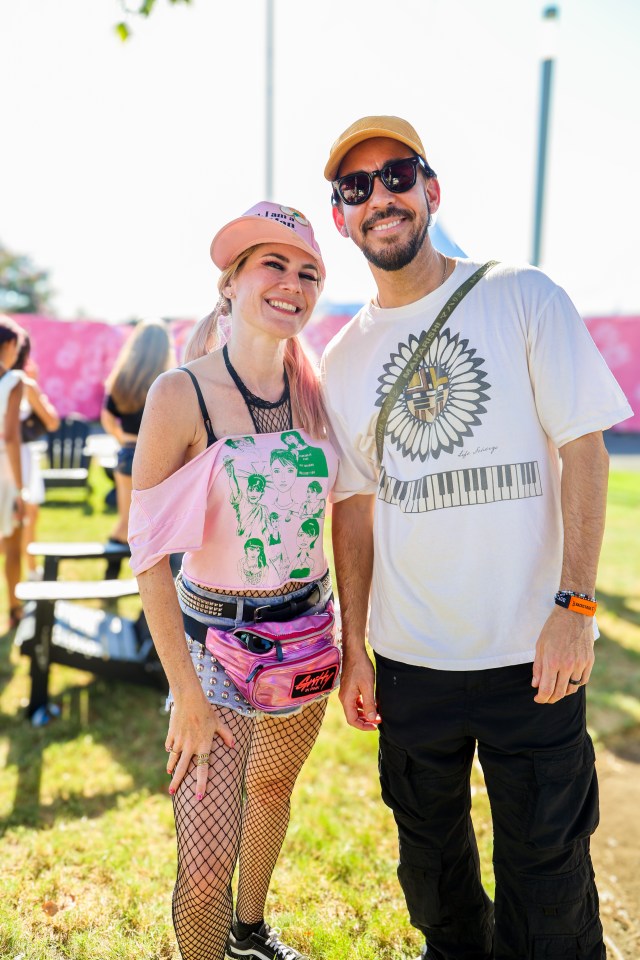
Throughout the day, I kept running into women changing the music business from within. I saw Lisa Worden of iHeartRadio and ALT 98.7, and we discussed She Is The Voice, her radio show platform championing women artists. I also hung with colleagues from the Women’s International Music Network, Amplify Her Voice and Live Nation Women.
When I ran into Shirley Manson, I told her she was a legend and shared a little about Gritty In Pink. I also crossed paths with Linkin Park’s Mike Shinoda. With his own band’s return featuring a female vocalist, I imagine they would be an intriguing addition to a future Daisy Chain bill.
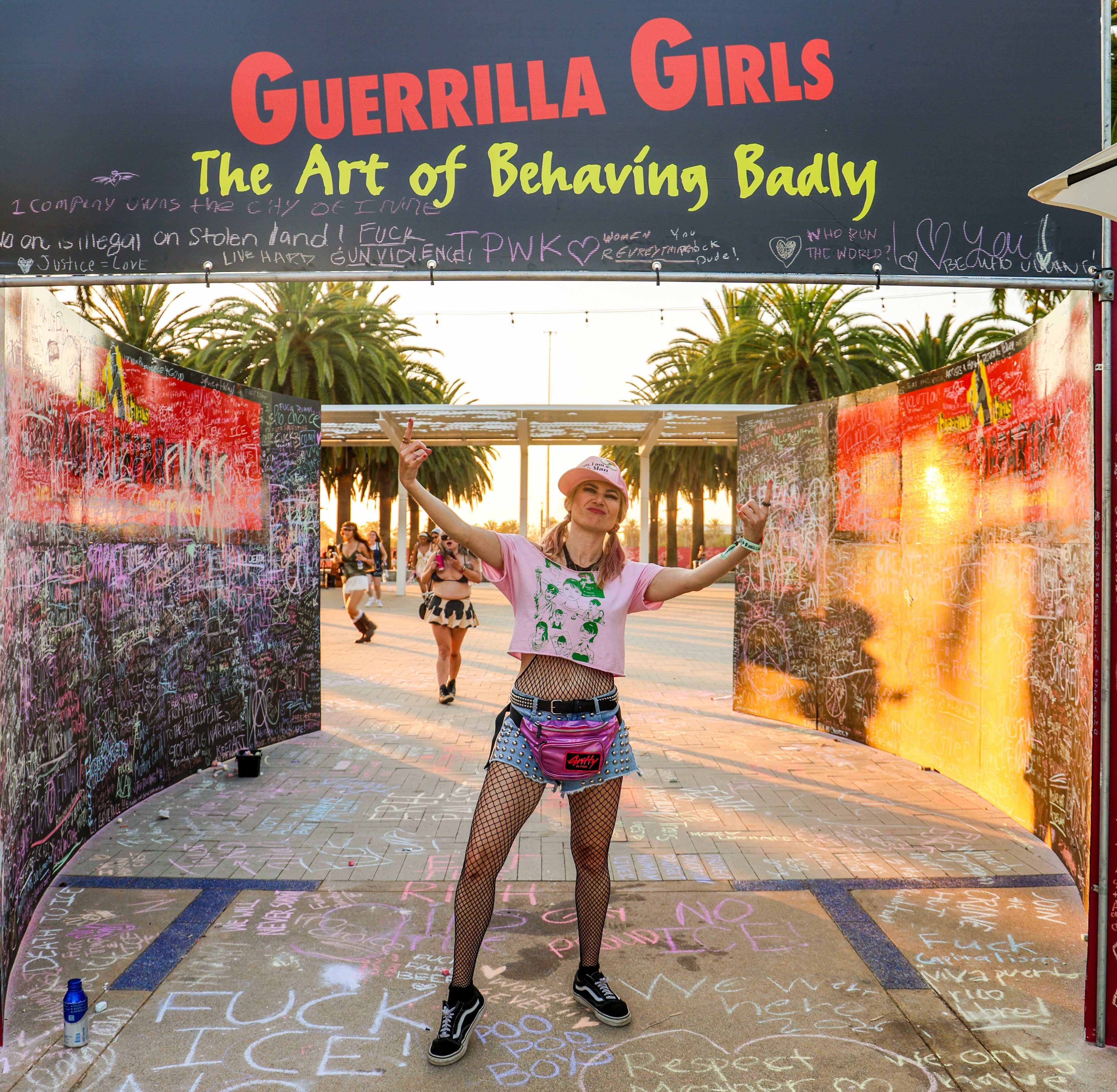
As the founder of Gritty In Pink and the Shiragirl Stage on Vans Warped Tour, I have spent more than two decades building stages and opportunities around this same problem: women have never lacked talent. They have lacked equal access, investment and support. That made it especially moving to see generations of artists, executives, advocates, founders and fans occupying the same field.
A women-led festival supporting women’s causes was not tucked into a side room or marketed as a niche initiative. It drew 45,000 people, major partners and some of the world’s most important artists. Women’s power was not the theme around the festival. It was the engine running it.
What Should Grow Next
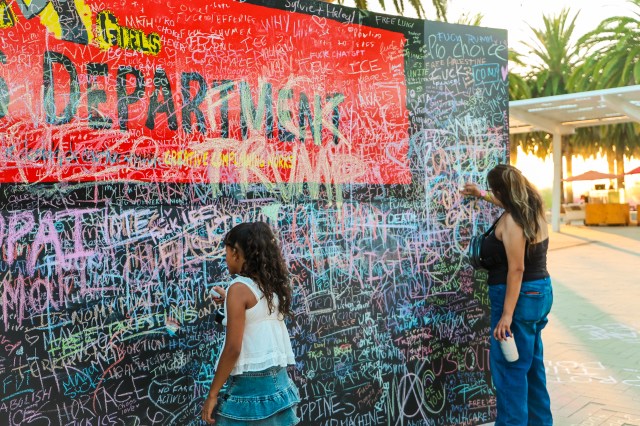
An inaugural event of this size will also expose what can be improved upon for next time. The Southern California heat was relentless, and the grounds needed significantly more shade. The nonprofit area, despite representing the festival’s core mission, was not easy enough to find or access. If education and action are truly central to the experience, those organizations could occupy some of the most visible real estate onsite. Demand for merch also seemed underestimated. Merchandise sold out early despite sales benefiting the cause, and lines were long.
The most serious issue came after the music stopped. It took more than two hours to exit the parking lot, with traffic barely moving. Transportation and exit planning will need to evolve if Daisy Chain Fields returns, as Rodrigo excitingly told the crowd it would.
Avoiding overlapping sets allowed the audience to see nearly every artist. A future edition could preserve that thoughtfulness, while adding a platform for more emerging talent. If Daisy Chain Fields is extending a lineage, its next voices need a visible place to begin.
The Field After “Landslide”
Earlier in Rodrigo’s set, Sarah McLachlan joined her for “Building a Mystery” and then “Angel,” dedicating it to Dolly Parton; our beloved recently departed music matriarch, whose philanthropy made her a fitting presence in spirit. A message behind them read, “We will always love you, Dolly.” McLachlan, whose Lilith Fair helped make this festival imaginable, honored a woman who transformed music and giving alongside the young artist carrying that work forward.
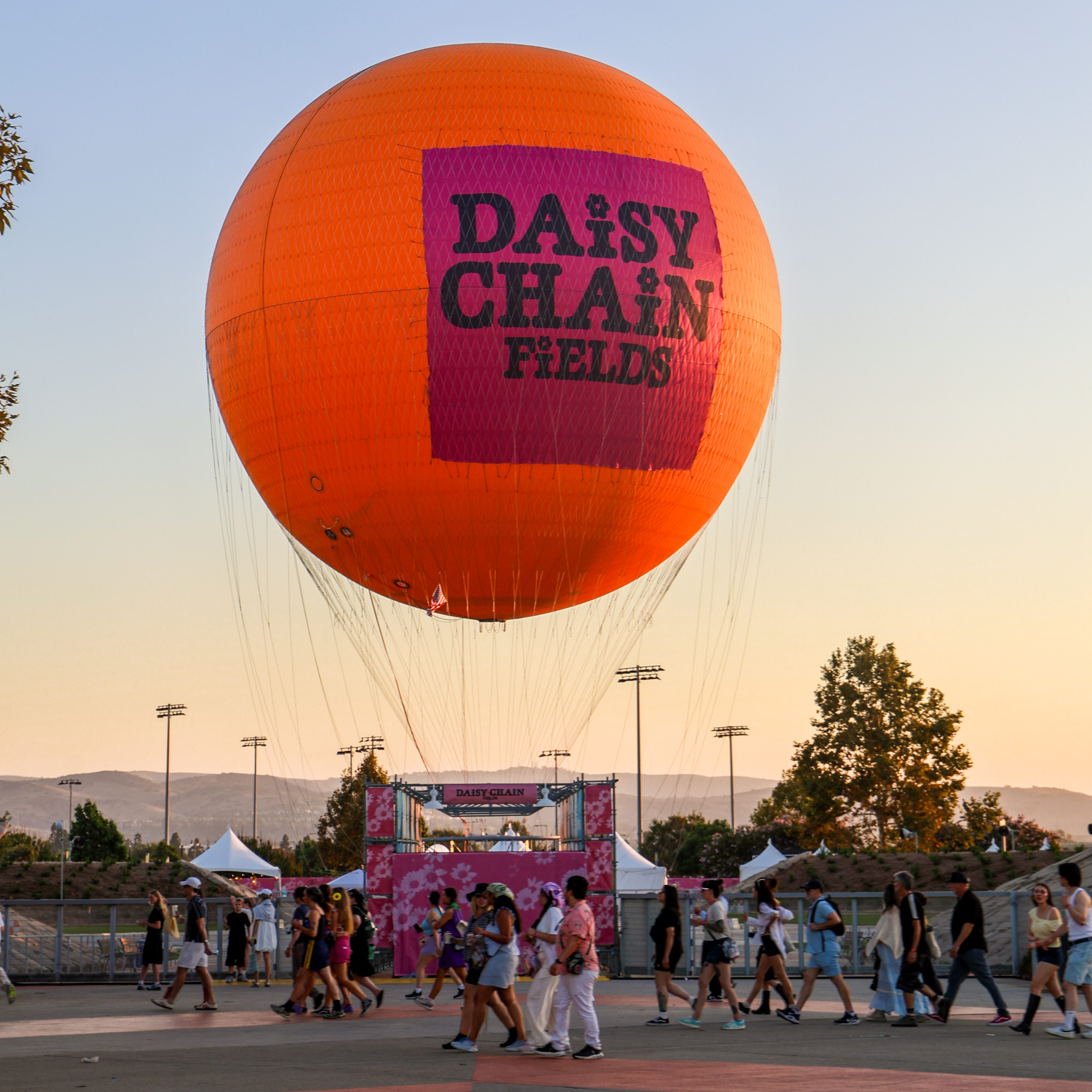
Then came Nicks (or “Stevie Stevie” as Olivia called her), “Landslide” and 45,000 voices singing together beneath the night sky.
It would be easy to describe Daisy Chain Fields as a celebration of how far women have come. That is true, but incomplete. Progress can be stalled, stripped away or rewritten as though it never happened. Rodrigo’s “serena joy” made that threat explicit. The nonprofit leaders made the stakes real.
What Daisy Chain Fields offered was not reassurance that everything is just fine. It offered evidence that women can build something different.
A 23-year-old artist looked backward with respect, outward with purpose and forward with ambition. The women who came before her showed up. The women building beside her played for free. A philanthropist doubled the result. Thousands of girls watched it happen.
That may be the day’s most important legacy. Once women have power, they can choose to make power more available to everyone coming next.
The final song may have been “Landslide,” but the story was momentum.