Balu Brigada Is Back With ‘BedHead’

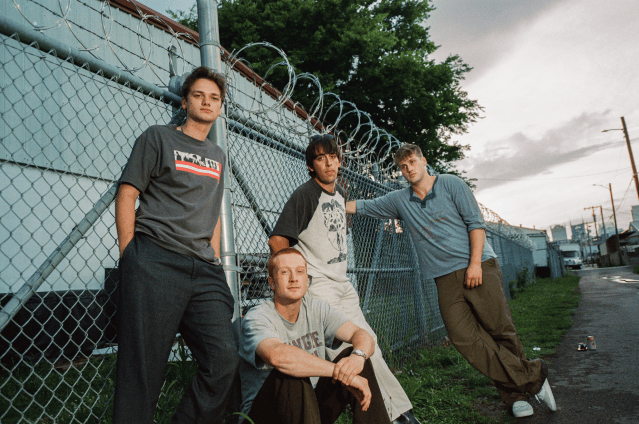
The Auckland, New Zealand alternative rock duo Balu Brigada are back with their first new music since their breakout 2025 LP Portal, a washed-out, dreamy midtempo indie track titled “BedHead”. The track feels like a perfect middle ground between nostalgia-rooted 2010s summer-adjacent indie rock and modern alternative, keeping the genre fresh with interesting arrangements, chord progressions, and creative production, with the punchy drums, ethereal synths, and fuzzed-out guitars complementing each other in a fantastic way. “BedHead” shows that Portal wasn’t anywhere close to the end; it was just the starting line.

Consisting of brothers Henry and Pierre Beasley, the group is often described as “groove-pop” and is the duo’s first release since their acclaimed debut LP, which amassed over 300 million streams in a year. Their rise has been nothing short of meteoric and unprecedented, with support slots for Twenty One Pilots on their world arena tour and a #1 on the Alternative Airplay charts with their hit “So Cold”. If you haven’t already been listening to Balu Brigada, the second-best time to start is now; it is rare to see a group’s art have such an impact across different audiences as theirs does, and “BedHead” is evidence that their confidence in their distinct sound isn’t fading. 

Top 5 Balu Brigada Songs You Need To Listen To

‘BedHead’
‘Backseat’
‘Moon Man’
‘2good’
‘So Cold’

Listen to BedHead here.


See Balu Brigada on tour here.

SEPTEMBER
25 – Columbia, MD – All Things Go †
27 – San Diego, CA – CRSSD Fest †

OCTOBER
1 – Seattle, WA – Climate Pledge Arena *
2 – Portland, OR – Moda Center *
3 – Austin, TX – Austin City Limits Music Festival †
10 – Austin, TX – Austin City Limits Music Festival †

NOVEMBER
21 – Mexico City, MX – Corona Capital CDMX †

† Festival Appearance

* supporting sombr

Wave To Earth’s New LP Has No ‘Bad Pieces’

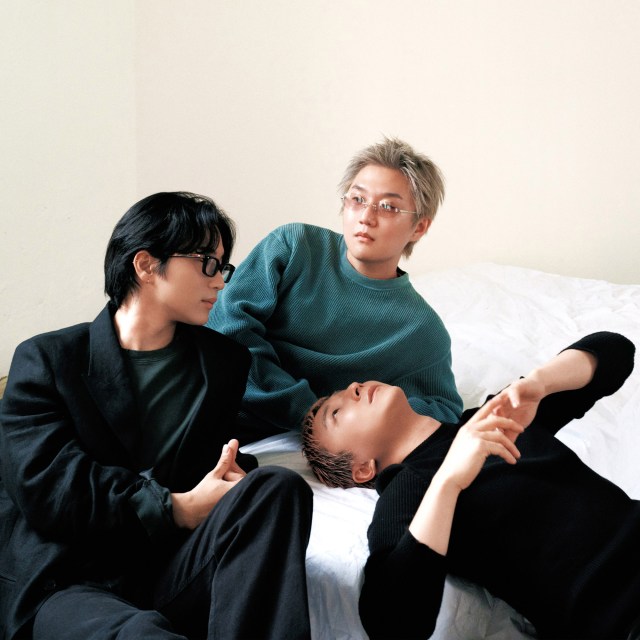
Tranquility is more than just a feeling but a combination of environment, mood, and circumstances. There are not many projects that lend themselves more to helping along this feeling than wave to earth’s new LP, bad pieces. The Seoul trio of Daniel Kim, John Cha, and Dong Q is back after a 2-year gap since their last entry in their discography. With an innovative take on a previous sound and a willingness to break what would be perceived as their old formula. The band has spent the time diligently heading towards a sound that feels both mature and inspired. The sat down with us to give us a glimpse into the writing process, talk creative risks they took on the album, and the intent behind the title. 


HP: How is your year going so far? 

Daniel Kim: We’ve been working hard trying to make a good album. I’ve also been working on my other band, The Poles. We’ve also been prepping for the tour. 

HP:  What’s the last notable song you guys listened to? 

DK: I recently watched the new Spider-Man movie, and in the end, Steve Lacy’s “Oh Yeah?” is on the soundtrack. I’ve been listening to that one a lot. 

John Cha: I bought some vinyls from the old Stevie Wonder records. It was the aquarium album. I’m not sure about the tile. It had “Higher Ground” and “Ribbon In The Sky.” (Original Musiquarium)

Dong Q: Amie Blu 

HP: Getting into the album title Bad pieces. What is the story behind the title and what inspired it? 

DK: While we were in the process of making the album, one of our team members showed us a photo of Yoko Ono and John Lennon’s bed peace protest bed-ins. We thought it would be fun to play around with those words. 

HP: What were the themes that you wanted to display through invoking that imagery?

DK: This album contains songs about growth, about being confused, and about trying to find peace. But apart from that, through the process of creating these songs, a lot of them came out spontaneously, Like, Pieces. We wanted to convey the message of how these are somewhat bad pieces or ugly pieces, but when we put them together, they become one beautiful piece. 

HP: Speaking on that spontaneity, when talking about performing in a jazz venue, you were able to improvise more than in other venues. Is that something you plan on bringing to this tour? 

JC: It will be more of a curated show because, for bigger venues, we somewhat can improvise, but we set a more detailed show. So it has a large amount of structure to it. For the jazz venues, we have experience with small gig shows. We had jazzy songs and the space for that in the music. For the big venues, it is more structured and curated. 

DQ: We actually don’t really think about improvising or internationally trying to improvise. It’s more about what we feel on that day while we are playing and the vibes of the room. WE try to focus on our performance, and then that brings out the improvising. It’s not an intentional thing. 

HP: When talking about this new album, it feels like you guys have matured into your sound in a lot of ways. What were the objectives and themes that felt like a focal point going into the writing process? 

DK: This album was made in a pretty straightforward, simple process compared to our previous records. Some of these final versions were actually the exact same as the demos. We’ve used the demos as the final version, and there was a lot of mixing. Tossing around demos and masters throughout this entire process. We tried to figure out a way to make a cohesive album throughout with that workflow. Overall, I think as artists, we as individual artists have grown and matured. I think that’s displayed on the album. 

Cred. Ted Min @tedminted

HP: With the tones on this project, you guys still maintain the key feeling of wave to earth. There is this feeling of “warmth” that’s consistent throughout all of your work. How do you guys focus on keeping those key elements while experimenting with new sounds? 

DK: Personally, that’s my preference, the warmth and vibe of wave to earth. This album we used a lot of songs from my other two members. I think in that process we could have had a completely different color and vibe to the album compared to our previous records. I try really hard to keep the original essence of our previous wave to earth records on this one as well. That’s just who we are. 

 JC: Still, the whole process is all from our hands. Even though we got quite sought out, we still don’t have any external producers. We’re still all producing. He’s doing the producing (points to Daniel). The entire project is coming out from our studio. From the mixing, recording, and mastering, all of that. That really felt quite essential to us to maintain that character of wave to earth. I think that’s why it contains the same soul. 

HP: One thing that really stuck out to me—maybe it’s just the tracks that caught my attention—but there seemed to be funk and blues elements. Was that something that you naturally went towards, or was it something that was an intentional incorporation?

DK: For this album, in terms of what you asked, there was a lot of intention behind those things, incorporating blues and funk elements. We focused a lot on the essence of those genres. We tried to incorporate the essential elements of those genres into our songs. While trying, we also had to manage getting the wave to earth sound into it as well. That was the entire workflow. 

HP: It was very impressive because even the tones of the guitars and the basses—you could tell the inspiration was there. But it felt true to you guys in a way that was very hard to do. It felt very well thought out. 

JC: We also talked about it. We also heard the references to the genres. British and African American neo-soul are two different extreme ends, but they somewhat got mashed up. We were used to that sonic sound, but it felt like it had a wave to earth feeling to it. 

HP:  When it comes to writing, there is also The Poles and John, your solo stuff as well (Potatoi). How do you guys parcel through what is a wave to earth song versus the other bands in your creative radius? 

DK: In regard to John. We listened together to a lot of his demos that he had. Some of those go to Potatoi, and some go to wave to earth. When I listen to the songs, I intuitively know which song should be on a wave to earth album. The same goes for The Poles. It’s more of my intuition and my feeling when I listen to the song. 

HP:  With the naming of this album, you guys have broken away from the decimal system from previous albums. You’ve also talked about how that was there to create the feeling of a work in progress. Is the lack of a decimal a sign of this project being closer to “finished” than others?

JC:  We are kind of implying that theme as bad pieces is already incomplete. 

HP: (That went totally over my head till this moment in the interview.) 

DK:  We don’t really want to stop using the decimal system. It is not about giving up the decimals. We will be utilizing the decimal naming scheme somewhere else. 

HP:  You guys obviously sing and write most of the music in English. I can imagine there are some words that don’t directly translate as well. Is there a Korean word or phrase that you would love to use in a song, but the translation isn’t fitting or succinct enough? 

DK:  When I write, I try to write in English. I don’t think there’s a lot of frustration in terms of not finding the right English phrase for a Korean phrase I have in my mind. More of the frustration is maybe because I haven’t grown up in an English-speaking country, so it’s not my natural language. 

HP: What is the song off of the album that took the most out of you guys creatively? 

DK: All of the songs on this album were probably the hardest for me to write. More than any other song in my life. But for me, “skylark” was the one that was the longest and the most out of us. It was a new type of song for all of us, a new type of music for all of us, and it took a long time to create. We had many blocks in the process while we were creating this song. Eventually, what really resolved the writer’s block was going back to our very roots. When we started music, we listened to a lot of Motown, and I think those elements helped us finish the song. 

HP:  That’s fascinating because that’s my favorite song off the project. There is a very clear amount of thought and intention that bleeds through the track. 

JC: We had almost gathered up all our songs at that time. I had a little synth loop with the drum. It was right after listening to Olivia Dean’s “Man I Need.” It had shuffle groups. We still didn’t have any shuffle discography. So we talked about, “What if we do a shuffle thing with a taste of early 80s or 90s Michael Jackson?” We were going back and forth. At the production arrangement stage, it was quite blocked. He somewhat saw somebody playing a fretless bass. He was like, “Hey, John, you should get your fretless bass in that.” It is very unobvious to play a fretless bass in a funk group. 

DK: That was crazy. 

JC:  It was crazy and very odd, but very nice and amazing at the same time. 

HP:  Yeah, I saw fretless bass in the credits for the song, and that stuck out to me. What do you think drew you to the fretless compared to a normal bass? 

JC: Oh, the tonals. It’s very hard to match up, and I never tried to play one. Buying that fretless bass was also a rare experience. We went to some guitar shop, and there was a specific bass that was kind of broken. It wasn’t selling for such a long time, and we just felt that if we’re not buying it, nobody is going to. We got it somehow. We were pretty much considering how to use it in the album, and we were pretty much not doing it. He just made a spark and used it in no other way. So it was so special to play that only in that one song. 

HP: What’s one band or artist you think should be more well known? 

DK: He is relatively well known, but Nick Hakim. I think he deserves to be more mainstream. I’ve been listening to him since I was young. 

DQRyan Beatty, I hope he gets more attention than he has now. 

JC: Potatoi.

HP:  Any last message to the fans or listeners? 

DK: This is our first full-length album in a very long time, and it might not be as good as your expectations, or it might be exceeding your expectations. But whether it’s good or bad, I just really hope that this album sticks with people for a long time and that I see you guys on the tour. 


Listen to bad pieces here.

Music, Fashion, Film: An Honest and Concise Look into Art and the Artist

Charli xcx released Music, Fashion, Film on July 24th, after a two year break from her massive cultural phenomenon, Brat. Most artists would continue to chase and milk such a big success by replicating the same sound, lyrical themes, and vibe, but Charli decided to take her time and go in a different direction for her follow-up studio album. Between Brat and Music, Fashion, Film was the 2026 soundtrack album for Wuthering Heights. This soundtrack both served as a creative reset for Charli xcx and a palette cleanser for her fans before going into a new direction. Music, Fashion, Film is the culmination of Charli’s career up to this point and her relationship with art and fame. The record paints a stunning picture of her love of art, the creation process, and the toll that being an artist and public figure has brought to her.

The release of Music, Fashion, Film followed a steady stream of lead singles. Four out of the eleven tracks were released prior to the album’s release, including “Rock Music,” “SS26,” “Wink Wink,” and “Camera.” Each single had an accompanying music video to continue pushing the aesthetics of the music forward in the culture. The music, music videos, and album cover are filled with widely known and respected figures spanning across the various mediums of entertainment and art that are present. Music, Fashion, Film’s album cover features her biggest inspirations and major figures from each industry: John Cale, Marc Jacobs, and Martin Scorsese.

Music, Fashion, Film continues the collaborative effort between Charli xcx and her co-writers and producers, A. G. Kook and Finn Keane. This team has worked together previously on multiple releases, most notably Brat, and now for Music, Fashion, Film. The records are vastly different from each other, but the collaborative DNA and strength of the team shine through in both albums. Charli and her team put everything into the presentation and package of her music and the world around it.

Music, Fashion, Film deals with Charli’s relationship with art, her fame, and her insecurities of reaching this status with the work that she does. Including these figures on her cover is a way of acknowledging her inspirations and also showing what she aspires to do with her own work. Many songs in this record deal with her insecurity and the toll that her position has taken on her both as an artist and as a public figure. It’s a very personal and honest record for Charli and perfectly shows her current mindset. Brat was a curated characterization of her, but Music, Fashion, Film feels like true insight into who Charli xcx is as a person and as an artist.

Music, Fashion, Film blends Charli’s typical electronic style that she has become well known for with a new indie-rock approach. While I appreciated the cultural impact that Brat had, the music was not aligned with my usual taste. Music, Fashion, Film is a fun new direction for Charli that brings in the sounds, vibe, and instrumentation of a genre that I love while making it her own artistic statement. This album heavily features distorted electric guitars, bass, drums, and familiar instrumentation to indie-rock music that isn’t typically as prevalent in her normal genre. The instrumentation and melodies on this album are very inspired and clearly something that Charli and her team put a lot of effort into curating.

The length of the album is perfect, clocking in at 30 minutes and 5 seconds. It lasts long enough to leave an impact and get Charli’s message across without overstaying its welcome or losing its novelty. Initially, my only personal grievance with this album was feeling like many of the songs themselves were too short. A few of the tracks have a shorter length around a minute or two and felt like they ended right as they started, but now I realize it keeps the momentum going strong. The songs are presented with many wonderful ideas that don’t drag on and keep the listener engaged while continuing to push forward. Perhaps Music, Fashion, Film could have had fewer tracks and let the remaining ones breathe for longer amounts of time, but I cannot argue at all with the final presentation that Charli xcx ended up with. Music, Fashion, Film is fast-paced and very energetic with a consistent and strong pulse. The tracklisting is perfect and one of the stronger elements of the album; it really keeps the momentum going strong throughout. Overall, Music, Fashion, Film is a very concise, honest, personal, and time capsule of Charli xcx in this current stage of her life. Capturing how she feels about her relationship with art, the creative process, and her own status in a deeply confessional way. You can listen to the record here and find her on tour here.


Listen to Music, Fashion, Film, out now.

Only Suki Waterhouse Can Turn a Cemetery Into a Sensuous Serenade

I always used to be afraid of cemeteries. I blame modern society—and maybe the Gothic Revival—for turning a place of reverence into one where we imagine ghostly apparitions lurk around every corner. While that may be the case for some of us, fear obviously wasn’t a factor for Suki Waterhouse on the second stop of her Loveland Tour. In support of her third studio album, the indie pop artist gathered a crowd at the Hollywood Forever Cemetery, breathing life back into a place that’s anything but. 

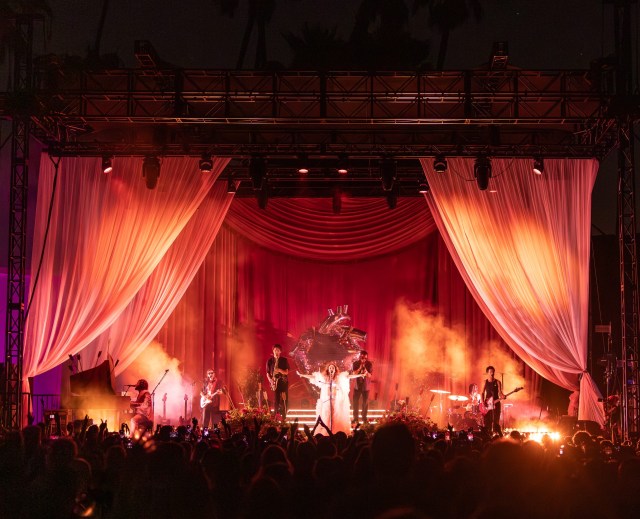
If you were there early, you might have caught opening act and fellow bedroom-pop purveyor Charlotte Lawrence, and if you were there extra early, you might’ve stretched your picnic blanket out just a few feet from the front. Strung in billowy curtains, aflush with red glow with a shiny, anatomically correct heart at its center, the stage was set: sexy, slightly love-sick, fearless and fiery.

One thing about Suki Waterhouse: she knows how to make an entrance. She floated on stage in a see-through robe that grazed the stage floor—baring mid-drift in a custom silk set that read “Let’s Play.” She looked killer, and the arrows stuck all around the set were really the nail in the coffin for a concert in the middle of a cemetery. “It’s such an amazing place to go for a concert,” she later said. “You’re all making my dream come true.”

Cred. Debi Del Grande for Hollywood Forever

She brought the energy from the start. The indie singer and Daisy Jones & The Six star (she played keyboardist Karen Sirko) wasted no time diving into some of her biggest hits like “OMG” and “Tiny Raisin,” to which the crowd echoed back: “That’s my man, hot damn/ We gonna break up, make up/ Do it all over again, fuck yeah.” 

Suki can really sing, too—not to mention she’s also an ace on the keys. “She sounds just like she does in her songs,” my friend, Nicole, turned to me and said, and I shook my head in agreement. Backed by an incredible team of musicians, that was all that was really needed: no set changes, no special effects—save for a very smoky fog machine—and only one outfit change on Waterhouse’s part, further proof that sheer talent is the true driver.

That became especially clear when Waterhouse eased into one of her top-streaming ballads, “Good Looking,” in which she was surrounded by, fittingly enough, a very good-looking band. Keys, electric, even sax were eye candy—along with Ms. Waterhouse herself, whose curtain-banged boho shag blew effortlessly in the wind machine. “Play casino halls on one of my eyeballs/ Roll the dice on my thighs/ You stopped for breath, and I sped up/Just to impress you,” she sang breathily. 

There was definitely an overarching sensual theme to the evening, especially as she transitioned into the songs from her latest album, Loveland. But it really worked. It didn’t feel forced as she thrashed and rolled across the stage in barely-there costuming and belted lyrics about lust and longing. Yet pop-driven melodies like “Back in Love” broke the trance and brought the spotlight back onto her audience of, I might add, very well-mannered fans—waving their arms in perfect synchronicity: no pushing, moshing or beer-spilling in sight. 

Cred. Debi Del Grande for Hollywood Forever

In the fog of what could be described as L.A.’s marine layer—or joints that all simultaneously lit up as the concert came to a close, Waterhouse did what any performer does at least a few times in their career: came to an abrupt “pause,” claiming it was the end of the concert, while awaiting the chant of “encore!” A few minutes later, she headed out on stage with big news. Her very own neighbor, friend and fellow “Weirdo” Beck would be joining her for the last serenade. Hand in hand, the two softly traded the lines, “Baby, till then, I’m lettin’ you know/ I’m missin’ my favorite weirdo,” an unexpected, yet perfect wrap-up to a phenomenal show. 

As the sea of fans turned to leave, Suki bid one last goodbye and an ever-so-thoughtful “Get home safe!” which, as we all might have actually needed as we walked the bone-chilling journey through the cemetery back to our cars. Or not. After all, we were surrounded by late Hollywood legends—Judy Garland, for one, as Waterhouse had reminded us. Either way, we left with a renewed appreciation for the land of the living: a place where we warm-bodied folk can sing, dance, down bottles of cheap Chardonnay and remember that we only get one shot at it, so live it with love.


Catch Suki Waterhouse live here.

The Strokes’ ‘Reality Awaits’ Is the Ultimate Display of Self-Expression

The discourse around The Strokes’ new album is almost as entertaining as Reality Awaits is. The Strokes’ new album came out last Friday and has driven up quite a stir among fans and critics. Many point out the obvious use of autotune, Julian’s public persona, and even the diss thrown towards Anthony Fantano. These criticisms may be fair and are really up to the listener’s own preference, as all consumption of art is, but I believe that Reality Awaits is the ultimate display of self-expression and what happens when a band puts the art and self-expression above everything else.

Reality Awaits is the seventh studio album from The Strokes and follows the beloved 2020 album The New Abnormal. This release also follows Julian’s side project 2024 album Like All Before You from The Voidz. The lead-up to Reality Awaits involved two lead singles and a delayed release. “Going Shopping” was the first single to release and immediately caught a large amount of attention for its prevalent use of autotune and catchy hooks. “Going Shopping” was paired with a very surprising yet fitting appearance of Walton Goggins in the official music video that was released. This video also showcases Casablancas dancing, which is a rare sight to see. Following “Going Shopping” was the final single released called “Falling out of Love”. This single also heavily featured autotune, which furthered the discourse leading up to the release. After “Falling out of Love” was released on May 13th, the release date for Reality Awaits was delayed from June 26th to July 24th.

Reality Awaits is a darker release from The Strokes, featuring many personal themes including relationships with art and critics along with societal and political disillusionment. The Strokes hit hard on this record and pushed their own art above any criticism and backlash. Casablancas unapologetically moves forward with his use of autotune to fully serve his self expression and art to fulfill his vision. Reality Awaits was recorded in Costa Rica and produced by Rick Rubin, and this combination is perfect for the art and goal of self-expression. Rubin knows how to push and pull an artist to their fullest extent. He often pushes artists to explore and experiment in a way that other producers can’t. The album is full of incredible vocal performances that are deeply compelling. Especially on “Dine N’Dash,” but in all honesty, the entire album has an outstanding emotional depth that Julian puts on full display in every track. Casablancas is very intentional about how his vocals come across, either lazy, up high, colored by autotune, or simply just hitting hard. Everything he does is clearly well thought out and applied to whatever instances he sees fit.

The consistency of Reality Awaits is one of the strongest attributes. Every track will speak to certain preferences while others may not. Every list I’ve seen has completely different rankings of the tracklist. I can’t even rank the songs myself; every song works for me perfectly and is such a great, consistent ride throughout. The band is clearly pouring everything into this record. Care and effort are evident at every drum hit, bass line, guitar riff. Reality Awaits oozes with fun and attention that every moment is filled with ear candy and intricate details. The transitions between each track are especially cool and show the attention to detail that The Strokes took in crafting this album. The band’s performance on this album uplifts and complements the writing immensely. Reality Awaits features a wide dynamic range of emotion that never gets boring or stale. They put everything they have forward and serve the songs to the best of their ability while staying true to their artistic vision. Julian is a master of melody and knows exactly how to create the catchiest hook you’ve ever heard while unapologetically doing what he wants. Some don’t resonate with the use of autotune, but I don’t think that matters. Reality Awaits is a distilled album made purely out of self-expression, but most importantly, it just rocks.


Listen to the album here –  Catch The Strokes on tour here

A Name That Didn’t Make Sense, Until It Did: A Night with Rainbow Kitten Surprise

The name itself started as a joke.

When Ella and Bozzy needed a name for their first open mic night, their friend Noah blurted out the first thing that came to mind: Rainbow Kitten Surprise. It was random, weird, and didn’t make much sense, which somehow made it perfect. That carefree, don’t take yourself too seriously spirit has stayed with the band ever since and has become part of their identity; you can feel it the second you step into one of their concerts. 

Everywhere I looked, there were rainbow outfits, glitter, colorful hair, and people dressed however they wanted. No one seemed worried about being judged. It reminded me of the feeling and freedom you have as a little kid, when you wore whatever made you happy without worrying about what anyone else thought.  It felt like home.

Rainbow Kitten Surprise has always been that for me. Whenever life feels overwhelming or uncertain, and like everything is changing, their music has been one of the few things that stay constant. Through friendship problems, stressful exams, and the ups and downs of growing up, their songs have always created a sense of calm when I needed it most.

So walking into The Greek Theatre didn’t feel like arriving at just another concert venue. It felt like visiting a home I had known for years but never actually been to. And everyone around me felt like family I hadn’t met yet.

The opener was the Australian indie rock band Spacey Jane. I honestly didn’t know much about them before the show, but they completely surprised me.

Cred. Elizabeth Marsh

Before they came onstage, people were scrolling on their phones, finding their seats, and taking pictures before the lights dimmed. Then the lead singer and rhythm guitarist, Caleb Harper, hit the first guitar chord, and it felt like everything changed.

It was as if that single strum wiped away every distraction.

Phones disappeared. Conversations ended. People stood up almost instinctively.

I’ve been to concerts where the audience sways a little to the music, but this was completely different. Everyone was fully dancing with their whole bodies. Complete strangers laughed together, sang together, and moved without worrying how they looked. Spacey Jane matched that same energy by running around the stage, doing numerous hair flips, jumping, and constantly interacting with the crowd.  

My favorite performance was “Whateverrr,” from their 2025 album If That Makes Sense. The song reflects on growing up, nostalgia, and realizing that the moments we miss can never truly be recreated. Hearing it live reminded me that music is one of the only things capable of transporting us back in time. A melody can bring back memories that have been sitting quietly in the back of our minds for years.

Then the lights dimmed!

Rainbow-colored lights filled the stage as Rainbow Kitten Surprise walked out, and the entire crowd erupted. With the rainbow lights shining over the audience and everyone’s colorful outfits, it almost felt like stepping into a dream. The cheering was so loud that it didn’t even sound like people welcoming a band—it sounded like a family finally seeing each other again.

From that moment on, everyone let loose.

Cred. Elizabeth Marsh

I think that’s what makes Rainbow Kitten Surprise so special. Their music reminds people that they don’t have to fit into someone else’s idea of normal. We spend so much of our lives trying to fit in, especially in middle school and high school, that we forget how much more interesting life is when people are simply themselves.

When I first started listening to Rainbow Kitten Surprise, I was in middle school, and like a lot of people, I worried about fitting in. Looking around at the concert, I realized how much I’ve changed. Now I’m in high school, and I’ve learned that being yourself is a lot more rewarding than trying to be someone everyone else expects. I think this band helped me realize that. They’ve never been afraid to be different and embrace the weird, the imperfect, and the unconventional. And with millions of monthly listeners, they’ve shown that people connect with authenticity. They didn’t try to become what everyone expected; instead, they stayed exactly who they were. Sometimes all people need is one person willing to be themselves first.

Three songs have always stood out to me: “Painkillers,” “Cocaine Jesus,” and “It’s Called: Freefall.”

Instead of just hearing them through my headphones, I got to experience them with thousands of other people who connected to them for their own reasons.

Painkillers” is about struggling with mental health while still choosing to keep going. Hearing thousands of people sing every word together made the message feel even more powerful. It was a reminder that everyone is carrying something, even if you can’t see it.

Cocaine Jesus” explores addiction, unhealthy relationships, and searching for comfort in the wrong places. Live, it felt less like a performance and more like an honest confession. The vulnerability echoed throughout the crowd. 

Cred. Elizabeth Marsh

Then came the final song of the night, my favorite.

Freefall.”

For years, this song has been my comfort. I’ve listened to “Freefall” during some of the hardest moments in my life. Whether I was overwhelmed by school, dealing with friendship problems, or stressed about the future, it has always reminded me that I don’t have to control everything. Sometimes the best thing you can do is let go and trust that things will work out.

As soon as the first notes played, everyone started screaming the lyrics. People threw their hands in the air, hugged their friends, laughed, cried, and sang as loud as they could. For those few minutes, nobody seemed worried about tomorrow. Everyone was completely in the moment.

Walking out of The Greek Theatre, I realized the concert wasn’t just about hearing my favorite songs live. It was about the feeling the band created. For one night, thousands of people forgot about fitting in, forgot about their worries, and celebrated what made them different.

When I first found Rainbow Kitten Surprise, I was a middle schooler trying to figure out where I belonged. Years later, standing in a crowd of thousands singing every word, I realized I wasn’t searching for that anymore. Somewhere between the songs, the people, and the rainbow lights, I found what I’d been looking for all along: the confidence to be exactly who I am. 

It’s funny that a band with a name as random as Rainbow Kitten Surprise became a place where so many people feel understood. What started as a joke became a reminder that you don’t have to make sense to everyone to matter. The music ended that night, but the feeling of belonging never really did.


Catch Rainbow Kitten Surprise on tour here.

Alt-J’s Joe Newman on his Solo Debut: Portrait of the Artist as A Young Father 

With Alt-J, frontman Joe Newman enjoyed commercial and critical success, including hit singles such as “Breezeblocks,” “Something Good” and “Left Hand Free,” as well as major festival appearances such as Glastonbury, Lollapalooza and Coachella three times. Yet, for his just-released solo debut, The Canyon, you will not see the name Joe Newman prominently displayed anywhere. Instead, it is credited to JJerome87. 

As Newman explained when we connected recently, the pseudonym allows the music to remain at the forefront.

“Ultimately, I think my dream has always been I want people to be familiar with the songs, not necessarily familiar with me. I like that I have my anonymity to a degree. That’s a little hard to do when you go solo, but I certainly have hidden slightly by using this moniker,” he says. 

Like so many artists before him, Newman likens going from the safe confines of a band, where you are with like-minded friends striving for similar goals, to being on your own as a solo act, to being akin to starting over. And in his case, it is especially true because the immediate success of Alt-J never gave him proper time to adjust to popularity.

“We went straight from university and then all of a sudden, we got management, we got a booking agent, we got played on the radio and then within eight months we were touring. Then, very quickly, we won a Mercury Award and an Ivor Novello; things then just blew up,” he says. “That was my experience of giving it a go in a band. You don’t realize how lucky you are because your success is all you know. So, I think now, doing this as a solo career and experiencing the consecutive release of albums, you find a place in the world of music. And if you’re lucky, you can write a record that guarantees the next record. That’s where we were. We found a place. Then, when I’m working on this solo album, in a way, I feel like a new artist again. So, it’s very easy for me to look back on the band and think, ‘Wow, that was really cool and lucky. We worked really hard, but that’s crazy rare for something like that to happen.’”

Cred. Zachary West

Though the instant fame was a difficult adjustment, Newman is grateful for it because that connection has given him the confidence to grow with his listeners on each subsequent album.

“I definitely feel validated to be more like myself with every album I write because people respect it or the fans respect it. They enjoy it, it means a lot to them. They process it through their own filters, and it means something different to them. And it’s a really important part of their life. And that connection is really important. In a sense, I have an audience where I can talk more like myself through prose and songs,” he says.

By that principle, The Canyon would be the most Joe Newman record made to this point. Or at least it is a natural extension, to him, of the bond he has built with fans of Alt-J. 

“There are so many things that connect to examples of my personality that I’ll see again through writing new music. And I think if people like what they hear, you lean into pleasing that audience, and you do so with the understanding that you like it too. It’s like a rapport with you and your audience, essentially, writing,” he says. “So, what you write in the future is a more detailed understanding of what they’ve liked leading up to that point because you’ve had more source material to draw from. You have more of an acute set of understandings towards how you write, who you’re writing for, what you like to write and what they like to hear.”

The concept he floats of new songs being a continuation of the already established dynamic between the artist and audience is similar to one that exists in literature, which suggests all writers are constantly rewriting the same theme, just trying to perfect it. While it is not quite that simple, Newman does see elements of that in his work.

“There is an element of all the songs are just siblings. Some look like each other, and some don’t; some are better looking, and some aren’t. Others are just different levels of different characteristics within, but they all share the same DNA. I don’t know which one’s an advancement of the canon but perhaps ‘Mr. Alligator’ is,” he says. “It’s got an interesting guitar riff; it’s cinematic; it’s where my voice likes to be; it’s where the rhythm of my voice is most safe in terms of feeling good. I’m utilizing field recordings. We’ve got the jump ropers in that song. We’ve got them enjoying the recording day while we get them to do the jump roping, we’ve got them enjoying that day on film and on mic, and we’ve peppered that around the album. We’ve given it so much life, and we’ve injected it with so much atmosphere and energy, I think it encapsulates everything that I wanted to achieve for this album, and I think it’s a build-up of things that have slowly been happening from the first Alt-J album to the most recent.”

Cred. Zachary Gray

At one point, the conversation turns to film when Newman mentions being a big fan of Martin Scorsese and the era of film he represents (his favorite Scorsese films: The King of Comedy and Goodfellas). Once the subject of movies emerges in the interview, it is easy to see his cinematic influences, especially in the album’s brilliant closer, “Pennine.”

Newman does see film and visuals, in general, as a big influence on his work. “I think, in the UK, you’re prescribed the American cinematic vision at an early age. And it means that you end up watching a lot of American cinema, and you fall for it, and it becomes a large part of your diet. It had a huge impact on someone like me who grew up being interested in fine art. Then I went to universities, art college to study art,” he says. “I always thought in pictures, so I’d have these fantastical visions of things that I like to put into the music. And I think that built this cinematic. atmosphere because when I wanted to reinforce the message, I would use field recordings as well, which would blur the lines between this play on the radio experience and a song. I like to marry those worlds, and then I think you incorporate other, less traditional accompaniments into the music using brass and strings. So, you’re building this mood, and you’re thinking it like you’re scoring a film.”

If The Canyon were a film, to him, it would be a documentary of a key time in his life.

“I think the through line is probably behind the scenes. It’ll be, for me, the feelings that I had at the time; my daughter being born and raising my child, spending time away from the band to do this. It will feel like a time capsule of a period as a young father.”

Krooked Kings Log Off

The Utah-based indie rock mainstays Krooked Kings are at a point in their careers when various pressures from the ever-judging internet say the band should be ‘content creators’, but members Oli Martin (Lead Vocals/Guitar), Matt Monosson (Bass), Paul Colgan (Guitar), David Macey (Keys), and Quinn Casper (Drums) would much rather just be a band again. On their new record, In Another Life, produced by Yves Rothman (Kali Uchis, Yves Tumor, FKA Twigs), the five-piece lean into the new mindset, pouring months on months into tracks that would make up the album while simultaneously stepping back from the industry’s focus on making that next viral social media post. The result of all this is the loudest, most intentional, and hungriest version of Krooked Kings yet; one that wants to stand the test of time and do what a band should do: put the music first. Hit Parader got the opportunity to sit down with all five to talk about the amazing new record and the effort behind it. 


Hit Parader: You said on an Instagram post that the new chapter with this record is one where the ‘music comes first’. How has that mentality shifted the way that this record was created versus other records in the past?

Cred. Travis Frey

Matt Monosson: This record took way longer, I would say [laughs].

David Macey: Yeah, this record is a million times longer than any other.

MM: Previous times, it would be one day per song, pretty much, and the album would be done in two weeks, and then we’d mix and master it. But this one, yeah, as Quinn said, it was almost too much time, to be honest [laughs]. 

DM: I think in terms of the music coming first, maybe the phrasing of that could be interpreted in a few ways, but for me, I think we were kind of trying to make a statement about our content, and that we were trying to be more mindful with that and artistic with that, in terms of social media stuff, and really put the music at the forefront of the content and represent it in a way that feels artful to us. I feel like that’s what I imagined we were intending when we say, “Oh, we’re putting the music first.” Obviously, we’ve always taken care with our music, and we are proud of what we’ve done. But yeah, I think it’s more that we want to represent ourselves in a way where it’s like, ‘hey, this is an artistic endeavor’, and we want to portray it that way.

Oli Martin: Yeah, yeah. I think it’s easy to sell your soul to the algorithm. I think for this new chapter, we wanted the pressure to feel a little more old school, where it’s not so much pressure on… I don’t know, if our social media is performing incredibly, I think that’s awesome, obviously, and that’d be great. If it’s not, I think we’re all in a happier space as a band knowing that we really cared about the music, and at the end of the day, if we don’t have a TikTok or Instagram that’s going viral and everyone’s excited about us for a few seconds, we’re still going to be happy with what we’re creating, and we’re not creating music for those moments. We’re creating for us, and what we really enjoy listening to, and hopefully what people want to hear. But yeah, I think it’s just hard, because with being a musician nowadays, you’re now a content creator and in all these other roles. I don’t know if we’re trying to say, “Oh, don’t do that,” but I think for us, we’re tired of doing that and tired of trying to perform as that, and really want to just perform more as artists and less as social media content creators.

HP: And then with Yves [Rothman] producing the record in LA, I’d love to know more about how working with him sharpened the vision of what you already had coming into the studio, without taking away from the core identity of you guys as a band. 

DM: I think the core identity of us is that we’re a committee of people. We all have similar tastes, but we’re not exactly the same. So I think having a producer that has his own taste and vision that can be a little bit of a leader or a tiebreaker for us was a helpful thing to have. Because when it’s a decision by a committee of five people, that can get pretty tough, but when there’s someone that you can almost look to as the authority figure, it’s like, oh, okay, this is a cool direction. I feel like he was super helpful with the writing and the production and everything. 

Cred. Travis Frey

MM: He also really wanted to capture the essence of us live. Kind of going back to what I said, we were so plug and play before, but we always did great live, where he heard us play live and was like, there’s something there. And like Dave said, he was able to lead us in the right direction. I feel like I’m proud of this record. I feel like it really sounds like us live, when previous stuff has been a little bit more computer-ish. 

Paul Colgan: I was gonna throw out there, I feel like Yves kind of pushed us to have an idea sonically of what the whole thing was gonna sound like before it was even pen to paper. I think he threw some names out there initially, like Cage the Elephant, Arctic Monkeys, those big rock bands of the early 2000s where it feels like you’re in a live room with that band. And I think that was nice to have that general idea of what it’s going to sound like before we had even recorded a single note. 

HP: And then with the tracks on the record, there’s definitely a wide sonic range with “Damage Control” and “In Another Life” and “Fix This.” How did you approach choosing what tracks made the record, as well as the pacing of the record and making it flow the way it did?

PG: Yeah. I mean, I don’t know. I feel like it was really broad. We were all in the studio, and we had probably 20 songs that we were choosing from. And I think everyone has a little bit of a sense of what’s going to be a strong [song]… I think we had eight songs that we felt really strongly about, and then kind of had to whittle it down to a few others to fill in the blanks. I feel like every album needs a little bit of a slow moment to close it out and needs a big crescendo moment. And, yeah, I feel like it was just picking the right songs that painted that entire picture of a holistic-sounding album.

Quinn Casper: Yeah, I feel like, if I remember correctly, we were having some beers in the Airbnb after we had just finished recording everything, and our manager was like, “All right, we need the sequence. We need the track list.” And it is kind of a hodgepodge. There’s some different-sounding stuff, for sure, but I feel like we just listened to songs back to back and then just kind of trusted the gut and were like, that feels like a natural cool snare hit into a big song after a smaller intimate moment or whatever, and it all just came together and felt like a natural progression.

DM: Yeah, it’s funny that you say that there is a wide sonic range, because thinking about it, that is true. But I think in my mind it’s funny to think about that. It all feels very in the same world to me, but you are right. 

PC: In that world, I always like it when there’s some range to it too. It also didn’t really occur to me how many different-sounding songs there are because they all just live in the same world for me, like Dave was saying. But I think there’s a fine line between having an album that lives in the same world and having all of your songs sound the same, and I think we kind of walked the line on this one, and I’m happy with how it turned out. A lot of variety.

Cred. Travis Frey

HP: And then, on the new record, what felt different, if any way, about the way that you approached the lyricism compared to past projects, from themes to the way you wrote or anything?

OM: I think we took a lot of time. Yves was a little bit of a stickler, I think, on lyrics. And, man, at the end of the day, it was definitely up to us as to what we were writing, but I think in previous records, not that we didn’t think about lyrics really deeply, but I think this album, Yves just really challenged us with everything. It’s also about saying what you want to convey, but then there’s the singability, stuff we never really thought about before. He’d be like, “Okay, that kind of sounds weird to sing,” and it was frustrating at times because I’d think, man, I cracked it. And then he’d go, “Yeah, it’s the right word, but it just doesn’t sing right.” There were random lyrics where we definitely fought back on, but I think a lot of time was spent on lyrics, whereas in the previous albums, they were written so fast. We used to put vocals down last, and it would kind of all happen in a week. So at the end of the day, you only had that week, and there wasn’t much time to edit the lyrics. With this one, though, there was a lot of editing.

PG: Yeah, a lot of revision.

DM: It’s kind of crazy, honestly, how little editing we’ve done in the past, and then to jump to this, where it’s months and months.

QC: Yeah, I feel like Yves, and I mean this in an endearing way, was such a bastard sometimes [laughs], because every day, no matter what, if the lyrics were done, even if Ollie just did scratch vocals, he’d be like, “All right, that’s cool, but let’s see if we can beat it.” Even if it ended up being the final lyric, he was always like, can we beat it, is there something better? Which is a really good trait to have in a producer, he’s constantly trying to have everything be as good as it could. But it just ended up being more work and really racking our brains and pushing ourselves, which ended up being good. 

HP: Awesome. For everyone individually, what individual song or part that you played on the song are you most excited for, proud of, that is on the record? 

MM: I can go first, yeah. I think “Sleep Tonight” I’m really stoked on. I feel like I was just fiddling around, and the band really resonated with it, and the song came together really quick. It’s a really cool line. Quinn said it also… I think every other part does a good job, and so I’m pretty stoked on that one. It was not too much of me twiddling my hair, it kind of just happened. 

DM: “Ugly Love,” that one is awesome. It’s cool to have a song that was more keys-based first. Maybe that’s probably why I like it, but I think the key part is cool. I’m hyped about it. I’m just like, this is my moment [laughs].

Cred. Travis Frey

PC: That one was cool too, because in the original mix, it was not super prevalent, and then we kind of flipped it on its head, and it’s the main thing now.

QC: Yeah, that’s cool. 

OM: You finally got a moment, Dave [laughs].

DM: Finally. It’s only been six years [laughs].

QC: For me, probably “Rancher’s Daughter,” because I don’t do anything so I can just hang out and catch my breath during the show [laughs]. Have a beer too. No, I’d say I feel like “Parking Lot” is just fun, just straightforward groove, rock song, loud open hi-hats. There’s this one drum fill that I don’t even remember doing. I don’t know if I did do it, honestly. 

OM: Yeah, I don’t know. I mean, I think the vocals are a little different for this record. We have some doubles on some, but with Jackson on our old records, we had a lot of layered vocals and stuff. So I think the vocals sound pretty different. I’m excited to see what people think. I think it was definitely a little scary to switch it up so much, so I think I’m just happy we did and see how it goes.

PC: Honestly, I think “Ugly Love” is my favorite song on the album, and for that reason, that final little slide guitar at the end has got to be up there for me.

HP: And then, just for the last question, if the listener, after checking out the record, had to have one takeaway/message, what would you hope that to be after they listen to it?

DM: They would feel a strong urge to start an email chain that says, “Send this album to 10 other people, or you’ll die in the next month.” [laughs]

OM: I think that that’s pretty good [laughs].

PC: I like that.

DM: I don’t know. I can’t think of some grand takeaway. Maybe you guys have something more poetic than that.

OM: “I want to give Krooked Kings a million dollars.” [laughs]


In Another Life by Krooked Kings is out now.


Read the Article in print in Issue 5 of Hit Parader Magazine.

Hit Parader #5: Sleep Token

May 2026 — $12.99

The cover story of Hit Parader Issue #5 enters the temple of Sleep Token at the exact moment their mystery has become too massive to hide. One year after Even In Arcadia turned the masked British phenomenon into a global rock event, the album’s instrumental edition strips away Vessel’s voice and invites fans to hear the cathedral underneath —…

Vacations: Bringing the Scene With Them

Over the span of a few short years, Vacations frontman Campbell Burns has watched his band transform from small shows in Newcastle, Australia, to packed rooms around the world. Yet Burns still discusses Vacations as if the band were a small project that just ‘happened to take off’. While the beautiful indie rock tracks are easy on the ear, there is much more lyrical intentionality hidden if you listen to the fantastic lyricism crafted by Burns. With a new chapter on the horizon, including new music, many shows, and their very own festival, MATES Fest, it becomes clear that Burns is less interested in chasing the abstract concept of success and more focused on making sure that Vacations’ artistic vision lives on, and that Vacations has always and will always be a band that you can discover and claim as your own. Hit Parader sat down with Burns to discuss more.


Hit Parader: So just to start off, while in Vacations, you’ve lived in Newcastle [Australia], Los Angeles, and then you recently, last year, moved to New York City. I’d love to know how each of those individual cities and the creative worlds around them kind of reshape the way you write, think about the band, and approach the day-to-day process as an artist.

Campbell Burns: So when I was in Newcastle, I kind of felt like I was in my own creative bubble. I was a part of a really strong, unified community of musicians, artists, and creatives. And I was young at the time. I would have been 18 when I was coming into it. So 18 is the legal drinking age, going-out age in Australia. So I started going to shows, meeting more musicians, and meeting a lot of like-minded people. And so with that in mind, and starting Vacations and then all these other bands coming together, that was really special and formative, especially in my earlier years, because I was really influenced by what people were doing around me, because it was real and it was tangible. Sure, I was influenced by things overseas or on the internet, but in terms of my own music career, I never really thought about much outside of Newcastle, which is kind of funny to say, because we’re now an international band, but when I was releasing those first couple of EPs, I did not consider anyone, even as far as Sydney, which is only two hours away, that people would be listening to it. And then it started going somewhat viral on the internet through YouTube, people like David Dean Burkhart, a huge 2016 bedroom pop kind of guy, getting that music out there. So shout out to him and everybody. 

Cred. Isaac Nuñez

But then, I guess, moving to LA was a different step. Moving to LA was honestly kind of a blur. I say that I lived there for a year and a half, but that was really a stepping stone into the US. The most amount of time I spent consecutively in LA was only two months. I was barely there. It was more of a home base because I knew that I had reached my ceiling or my limit in Australia with what I could do, especially in terms of Vacations, and opportunities as a songwriter and producer on the side if I’m in my off-season. So LA felt like the next logical step. And it was eye-opening. It was very overwhelming as well, because I was dealing with culture shock. And then as I settled, I kind of had reverse culture shock going back to Australia. It was this double life. It was a bit strange at first. I’ve gotten a lot more used to it as I’ve settled into somewhere like New York, simply because I enjoy New York as a city to live in. I like LA, don’t get me wrong. I feel like LA is very much a city where you go to work. I just love living in New York so much, and it kind of reminds me of being in Newcastle, in the way that there’s community, and it’s accessible, and it’s easy to meet people. Everyone’s very forward-thinking and hard-working. I really appreciate that, not that you can’t find that in LA, but I think you have to be a lot more intentional about it, and I at least found it a bit more difficult. But then again, also to my own point, I was only there for maybe two months at a time, so.

HP: With both Newcastle and New York specifically playing a pretty big role in your life, if you had to choose an artist, some experience, or some form of media from both of those places, that has impacted your or the band in any way, what would that be?

CB: At least with Newcastle, I was part of a collective when I was 18 through my early 20s called No-Fi, as a play on Hi-Fi, Lo-Fi, and that was myself and a bunch of other musicians and artists, and we would put on DIY shows, art gallery exhibitions, big parties, and really try to celebrate the local community. And that was, again, really formative in my early years as a musician. And I was like, This is what I’m a part of, nothing else matters. I am here, and whatever else is happening, it’s whatever, because I just want to be a part of this. This is my world. So that was incredibly influential.

New York’s just different. I think for New York, it’s the idea of potential, the idea that anything could happen, and there’s always something happening here every day. It’s a very attractive quality in a city, especially with where I’m at in my career right now, because if I go back to Newcastle, it’s different, and I’m further along now. It’s kind of that big fish in a small pond. People have moved on from their bands, they’ve settled down, or they’ve moved into other lives. And as that naturally happens, especially with a career path like music, it’s tricky. Although we’ve played a lot of really good shows in New York, I feel like I’m always exposed to new music in New York. There’s always shows, bands always come here, people, friends from all over are always passing through. I just love that aspect of it. I feel like just by simply existing in New York, you are inspired, which sounds cliché as fuck, but I really do get it.

Cred. Isaac Nuñez

HP: No, but that’s fair. 

CB: Yeah, now, after being here for a year, it’s only a walk outside and then anything could happen, whereas in most places, I probably couldn’t say the same.

HP: With you growing up with No-Fi, and doing a lot of DIY and community-focused things back in Newcastle, what would be one aspect of that DIY community-forward ethos that you would want to keep ingrained in your career as Vacations keeps growing?

CB: Putting a spotlight on artists that are up and coming, that are developing their craft, and always trying to build a community. I never want to be a successful indie or alternative, or whatever genre tag the record label wants me to say, but you know what I mean. I never want to be at a point in my career where it’s just like, ‘Oh, we’re not thinking about the opener, or we don’t care about those around us.’ There is always some aspect of those DIY roots that carry on into everything that we do now, because I care a lot. I think there’s a lot of really fucking cool musicians out there. All my friends are sick. I love them all, lots of talented people. I just want to bolster everybody. Because I’m in a point in my career where things are good, things are stable, and there are people around me that are making their first single, or maybe they’re an album in, and I’m like, ‘This is sick. Let’s work together,’ or ‘Come open this show.’ Or people will come to me and be like, ‘Oh, how did you get a manager?’ And then we can sort of trade stories. I think that the exchange of information is really important and valuable.

HP: And with that aspect of trying to bolster other artists that were once in the same position that you were in, you’re hosting the third iteration of the MATES Festival in June, which is super exciting, and the first one that’s in New York, if that’s correct.

CB: Yeah, first one in New York.

HP: With the past two iterations of the festival featuring a mix of Aussie and US artists on the bill, I’d love for you to tell me a bit more about the ‘bridge between scenes’ concept of the festival, and how the vision has evolved since you brought it to New York.

Cred. Isaac Nuñez

CB: There are so many good artists in Australia that I think more Americans need to be aware of, because in my time since being here, a lot of Americans will associate Australian music with maybe Tame Impala or maybe AC/DC. But I’ve also heard before that people thought that they were British. So it’s just trying to put a spotlight on artists that I really admire, I really love, and bring them to the US in front of an audience that we have down pat, just to make it more accessible, but also mixing that in with American bands that I really love. And long-term goal, I would love to eventually bring American artists to Australia and have them mix in with other Australian artists, and have this almost traveling festival. Maybe we do it again in LA, and then maybe in Sydney, and then it’s this back and forth. I think that’d be really beautiful, because I know a lot of people who I’ve met here like Australian music. So I just want to put them onto more bands that I’m connected with, or that my friends back home are listening to and telling me about, whilst mixing that in with what’s happening here in the US.

HP: Yeah, I looked at the lineup, and it’s a lot of stuff that I’ve already been a fan of. I’ve been a huge fan of Horse Jumper of Love for a decent amount of time, so it’s really cool to see them play on such an awesome bill. Grent [Perez] is also awesome. It’s really cool.

CB: And they did a song with my friend Samira, who’s in Winter. So I’m like, this is just a natural pairing. If you know, you know kind of thing. 

HP: And then you dropped a couple singles off of your upcoming record No Place Like Home (From the Motel), which is a rerecording of your 2024 record, No Place Like Home. And from what I saw online, you actually did track it in a motel. 

CB: Yeah, I mean, I gotta be real, it’s a set that we built, or that one of my good friends built, in Newcastle. But it was framed in a way where you can’t tell, like it looks like it’s actually shot on location. Which is cool, but that’s just that whole movie magic thing.

HP: I’d love to know where the idea to retract the record in a live setting originally stemmed from. 

CB: We did a live session in Newcastle a few years ago at Sawtooth, which is a studio that I worked out of for a number of years. We had a really positive reception to it. We just kind of did a set list of Greatest Hits. And I think it was around when Forever in Bloom came out. I think it was because of the pandemic, because a lot of people were doing that. We were like, ‘This is a way that we can stay active and play a show, but on our own terms’, and be active while the world is on fire. So we wanted to carry that idea, but make it more thematic and push the artistic boundary of it all. So being able to close the chapter on No Place Like Home and say, ‘Thank you for all your support. Here’s a live version of the album’, but it’s not just a live album, it’s filmed as well, it’s in a set piece. I think it’s a really beautiful thing to do. It’s something that we want to try and do for each record or each release moving forward, because it’s just really fun. I also get a kick out of it because I’m like, ‘Cool, we’re playing the album from start to finish’, but also fans that might not have ever seen us live can also experience that album with us.

HP: Definitely. And then I was listening to the record, and a lot of the songs take a different shape than originally on the record, which I think is really cool. 

CB: You know what, that’s cool, because you get so used to playing it live that I kind of forget what the album sounds like. You start adopting these small changes melodically, or the way I sing it is probably a little bit different, because singing in a studio versus live is always different for me, small things like that. So that’s actually cool to hear. I appreciate that a lot.

HP: When you’re playing songs live versus hearing them in the studio, what songs have changed the most once you’ve brought them to the live stage?

CB: At least out of No Place Like Home, I think it’s pretty faithful to the record, probably “Close Quarters” only because I sing that very differently, because so much of my vocal technique is stacking vocals. So in a song like “Close Quarters,” where it’s incredibly dynamic, I have to pick a lane and be like, ‘Okay, am I singing like this, or am I going to sing like that?’ And I remember playing “Close Quarters” live for the first couple of times. I did the more soft-spoken, almost talking kind of delivery, but it never really landed. And then I was like, I’m just gonna try shouting, I’m just gonna try projecting my voice. And that paid off a lot. There are other songs; it’s funny doing a song like “Telephones,” because for years, I was like, ‘Nah, there’s no way we can pull it off.’ None of us can play keys [laughs] You know, it’s like, how’s that gonna work?

Cred. Isaac Nuñez

And then, I don’t know, the first US tour, we were like, Let’s just do it. This song is going off, let’s add it to the set list. I’m sure it’ll be a fun time. And it exceeded all expectations. But a lot of the guitar parts that I will play for that are usually improvised on the spot. I’ll just pick some jazzy chord progressions that can harmonize with the original chord progression and layer them. So that’s always fun. But I think we’re not like some other bands where it’s a completely different rendition live. We try to keep it, I think, for our own sakes, very consistent, so we can give a consistent show, rather than each night being something totally different. We’re not a jam band.

HP: I understand that. And you said in a past interview that one of the most important parts of your writing and your songs is that the emotional weight of the track connects with fans, too, in a sense, and I’d love to know if that enters your mind when you’re actually approaching songwriting, or how much that plays into your lyricism. 

CB: It’s pretty funny, when I’m songwriting, I’m not really thinking about a whole lot. I’m just in the process of simply doing and trying to figure out what I’m trying to convey. I think as I’ve grown and matured as a songwriter, now I will actually ask myself questions and go, ‘Okay, what is this trying to say emotionally?’ Whereas when I first started out, I was like, ‘Oh, cool. I wrote a song. I have a sick riff or a good chorus, and I would just be stoked about that, but not necessarily, ‘What does this song actually mean?’ Whereas now I ask myself those questions, especially now coming up to our fourth record, because we’ve almost finished recording it. One of the things with that was there are some songs where I’m like, ‘Hold on, I’ve already said this before, or I’ve already used these exact same lyrics.’ What am I actually trying to say differently this time?

HP: That’s fair. And then, just to go back a little bit to the live record, for fans that have already listened to and like and love No Place Like Home, how do you want this project to feel different or convey a different kind of message or emotion, in a sense? 

CB: I’m not sure, that’s up to the listener. For me, I get the satisfaction of playing these songs with my best friends and having a visual component to it. That’s really satisfying, and it feels fulfilling for me as an artist, but I would be curious if, as a listener, some people feel differently about the songs live, whether they like it more, or maybe they don’t like it as much live, or some parts they connect with more. I don’t know. That’s an interesting question to think about.

HP: And then, just to start to wrap up, tell me a little bit more about what your 2026 is shaping up to look like. Anything you want to plug?

CB: Gotta plug MATES. Big festival, really excited. New album. Lot of singles in the lead up—actually, no, there’s two or three singles in the lead-up to it. Also, a little bit of touring across the world. I can’t say where. I’m sure the locations are pretty easy to figure out, but it will be a lot more this year, whereas last year I had moved to New York and was settling into that, and everyone was kind of doing things in their own life, whilst also working away on this record. So we had kind of a break last year, which I think was really needed, and this year we’ll just be slowly ramping up everything on all fronts. So I’m really excited by the prospect of it.


MATES Fest is on June 20th, at Knockdown Center in New York City. You can buy tickets here.


Read the article in print in Issue 5 of Hit Parader Magazine.

Hit Parader #5: Sleep Token

May 2026 — $12.99

The cover story of Hit Parader Issue #5 enters the temple of Sleep Token at the exact moment their mystery has become too massive to hide. One year after Even In Arcadia turned the masked British phenomenon into a global rock event, the album’s instrumental edition strips away Vessel’s voice and invites fans to hear the cathedral underneath —…