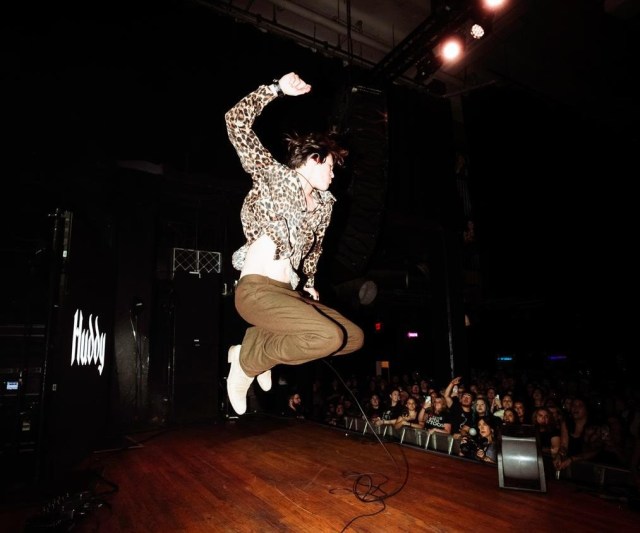
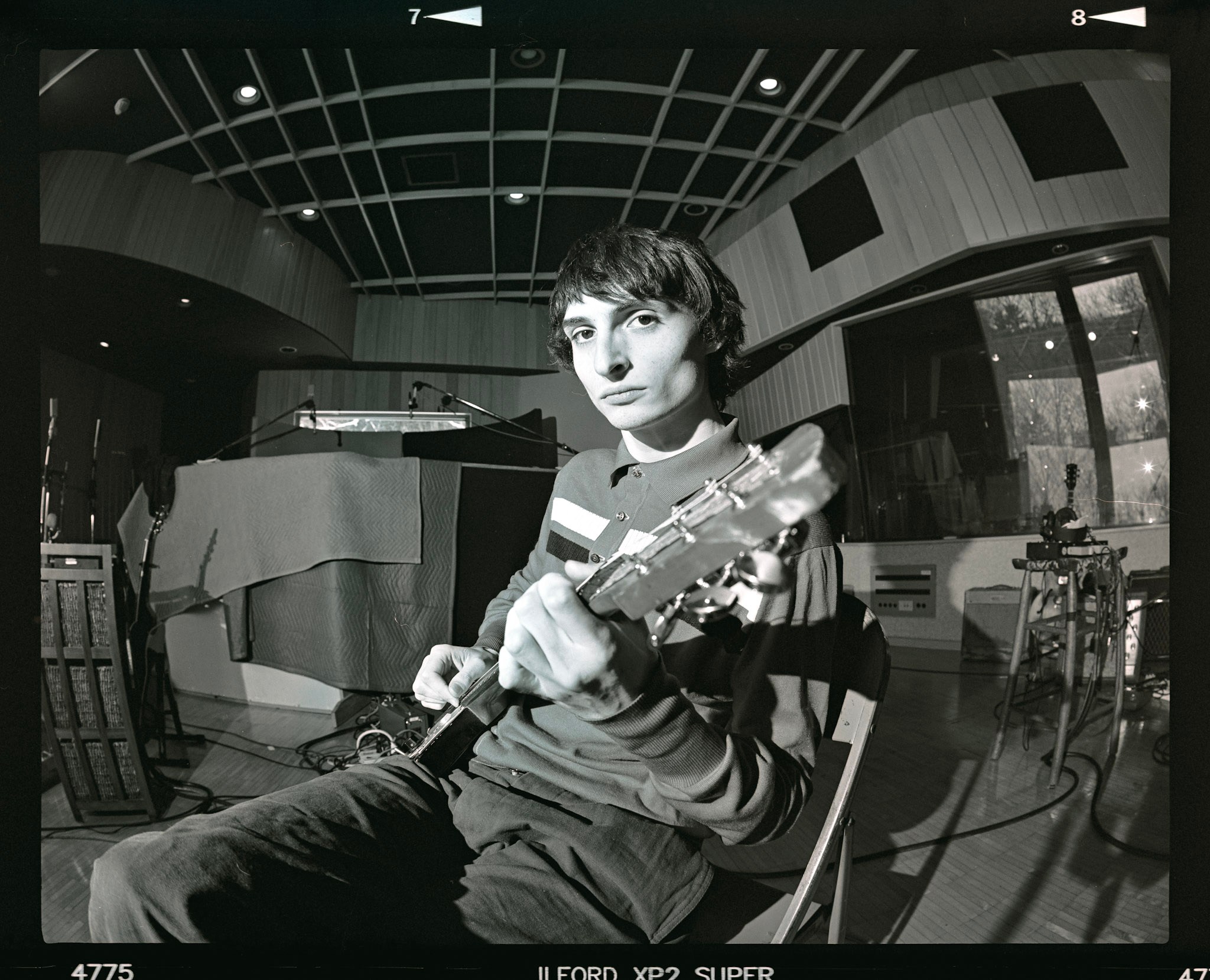
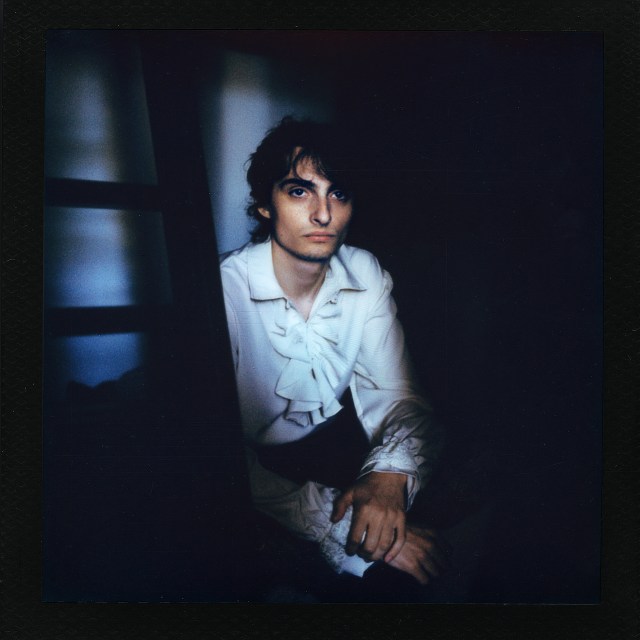
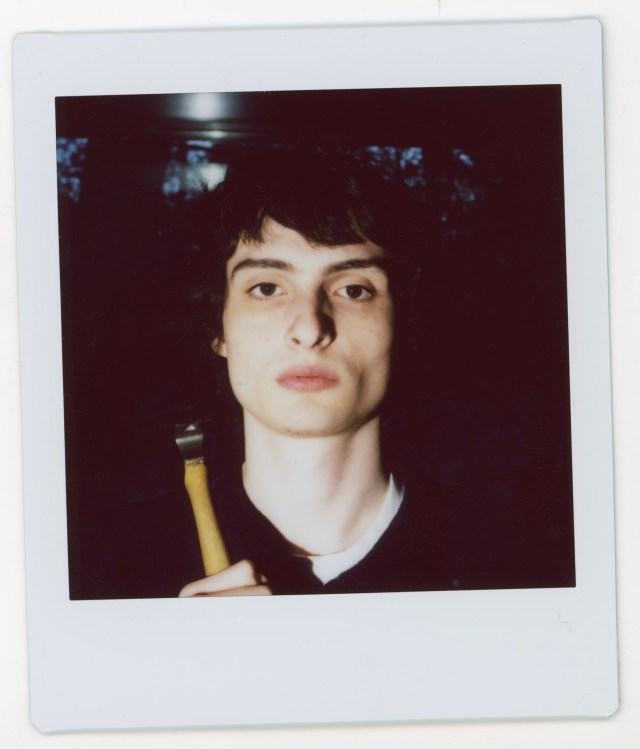
Sometimes it’s not about the start you get but what you do with it. It’s no secret that Finn Wolfhard was mainly known for his role in Stranger Things. He has also been playing shows for just as long. Starting with the band Calpurnia. While the band had their first official song drop in 2017, they had met 3 years prior. Since then, Finn has hit the ground running, working on his music whenever he has the chance. His first solo record, Happy Birthday, dropped last year as an impressive opening shot. This time he came back with something that proved he was here to stay, Fire From the Hip. This project showed a clear drive and evolution. Maturation isn’t something that just happens, especially for someone in the limelight. He could have taken a back seat and come back with more of the same. Instead, he chose to move forward to see where that would lead him. Finn sat down with us to discuss the album, his maturation, and his go-to gear for the record.
Hit Parader: How is your year going so far?
Finn Wolfhard: I’ve been good. Yeah, just doing a bunch of these, and yeah, getting ready for the tour, for the record. And it’s been great.
HP: I also saw you’re playing back in 2017. You hosted Strange 80s, and you were actually the band (Calpurnia) that performed right before I went up.
FW: No way! Of course I remember that! That was a great night, dude. That was when I was like 14 and cringe as hell, but it was fun!
HP: Thinking about from then till now, nine years is a lot of time to evolve as a performer and a musician. What things do you think have changed or stayed the same for you playing live?
FW: The things that have stayed the same at a core level are that I love collaborating with people, and I love making music with my friends. Live shows still are about energy, having fun, and making it as enjoyable as possible in this communal experience. As far as the things that have changed, I’m a lot more mature, generally, but also when it comes to perspective on making records. Maybe I’m just a little bit more knowledgeable and grown. Going from being like a teenager to a young 20-something, mid-20s almost now, but yeah, this idea of continuing to grow.
HP: Yeah, I also saw while you were on stage. You were playing an American Strat. Are you still playing that guitar at all?
FW: Maybe I have… I think I’d played a Mustang or a Black Strat for that show. Oh no! I switched because maybe it went out of tune or something. I do have a white strat, still. I played it on the East Coast tour last year. It’s sort of a weird guitar because it was a reissue but always had trouble staying in tune, so I’ve sort of retired it live, and now I play guitars that are even harder to stay in tune, but they look cool though!
HP: So, musically, from when you were playing music with Calpurnia to writing for your solo project, how has your writing process changed?
FW: I think it’s super different now. Back then, I was happy to be able to write something and figure it out. I had written songs before that, but I only started to realize that it was something that I could really do when I was a teenager. To me it was always that there’s a difference between knowing what a song needs and what you want to do. If I was 14 or 15 and I was making a record, I just was like, “Oh, it’d be cool to put a hot lead or a crazy solo.” “I want to add this kind of instrument.” Just because I wanted to, and sometimes that allows for great stuff to come out. For me, I think it’s all about what a song really calls for. It should always be in service of the song and not overplaying or underplaying. You know, and just seeing exactly what it needs. And back then I was maybe a little less concerned with that. I was more worried about the “I’m going to try everything and put everything on this song,” just knowing what the limits may be on at least production and recording.
HP: So you’re a little more focused on necessity over just spontaneity, a little bit?
FW: Yeah, and that’s one of my favorite parts about recording with people. someone coming up with something, like, “Put it down. That’s great.” But there’s such a thing as too many ideas, or too much going on, you know?
HP: I read in some of your previous interviews that you’re big into classic rock, like the Beatles, and you referenced them a lot, and was there any inspiration from that in this new record?
FW: For sure. Obviously the Beatles are a great start for most people who play rock music. There would be nothing without them. So, The Beatles stuff always comes through while thinking about melody or bass lines. My favorite bass lines are ones that you can sing as their own song and have their own melody. Ramsey played bass on this record, and he’s really a talented bassist. He’s really good at writing those kinds of bass lines. Yeah, they were influential, obviously, in the same way that they’re a part of the DNA of so much stuff. We also had a lot of influence from the Rolling Stones as well on this record. There are some country elements and a lot of alternative and rock from the late 80s/early 90s, like the Laws and Wilco. A lot of these rock bands were inspired by folk and country.
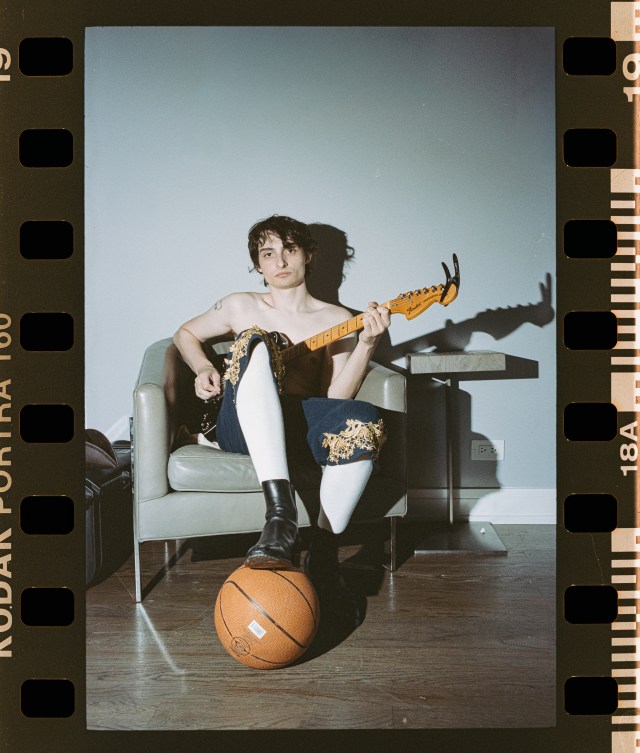
HP: I was listening to some of the songs from Fire From the Hip, and it’s freaking ripping, dude. I love how all of it sounds. It’s not necessarily a wall of sound, but it’s kind of like a big buffet of fun shit happening all at once.
FW: It’s definitely a very compressed record. It feels like there’s a lot going on but also has a through line.
HP: I feel like that’s a lot of records. It’s kind of like controlled chaos, but this one sonically is just great.
FW: Thank you! Thanks so much!
HP: So with Happy Birthday, you’ve described it as being very personal. It had songs about relationships and self-identity and living with anxiety. Is there anything that stayed the same with Fire From the Hip for you, or were you trying to write a new book with this one?
FW: Yeah, I mean, it sort of tackles some of the same themes. For me, each album is a little snapshot of what I’m feeling at that moment, or who I was at that time. I’m still exploring those themes, but I would also say that I’m 5% more sure of myself since I wrote the last record. It came out only a year ago, but I wrote a lot of those songs like three years before that. It was like “a lot could happen between 19 and 24” kind of thing.
HP: Totally.
FW: I mean, not a crazy amount (between albums), but enough of a jump to have a different perspective.
HP: Was there any going back to older songs that didn’t make the first album to use on this one?
FW: Yeah, for sure. There’s a lot, actually. Some were brand new, or at least in the last year and a bit over a year. One is the song “Follow,” which my friend Clay wrote the original song for in 2019. We’ve been trying to use it forever, and finally, it just felt right. It was like, “Okay, we should do that song,” and we never got to do it. Then the opportunity just presented itself, and we’re like, “Okay, now’s the time.”
HP: That’s got to be a sick feeling, dude.
FW: It was really cool, yeah.
HP: From one musician to another, what’s one piece of musical gear that you absolutely cannot live without?
FW: Well, tuner pedal. That’s the number one, obviously. As far as gear that I have a personal connection with, I feel honestly like I don’t really like using newer solid-state amps. Unless they’re really boutique and they have something really specific on them. For me, I just love a really fucking loud amp. I love playing loud. For this record I recorded on a lot of Marshall stacks and big Ampegs and stuff like that, and these old rock and roll cabs. I also have a little Fender Champ in the corner of this room right now, and that’s great; it’s really small, but I just love playing big amps.
HP: Don’t harp on the Fender Champ, that thing can get loud as hell!
FW: No dude, they can! That is probably the number one essential thing. I just want to have an amp that can be cranked, I guess, which is most amps, but specifically a tube amp…
HP: Kind of like the Back to the Future scene where he cranks the giant amp and gets blasted away?
FW: (laughs) Yes! Totally, dude!
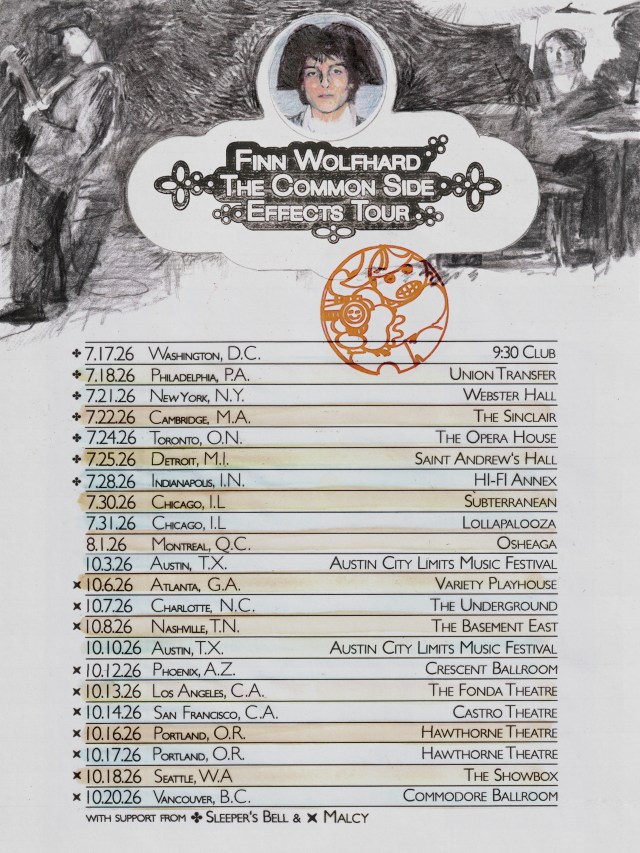
HP: Are you looking forward to any shows or festivals the most on the upcoming tour?
FW: Oh, yeah, yeah, It’s kind of a cop-out answer, but I’m kind of excited for the whole thing. I haven’t really played any of these stages, so it’s all new.
HP: I saw you’re playing the Fonda again, so that’s going to be fulfilling.
FW: Yeah, on the October tour I’m playing some venues that I’ve played before, which I’m lucky about, and The Fonda is such a fucking cool place, so (I’m) really lucky to be playing there. This upcoming first leg, I play Lollapalooza; that one should be really cool.
HP: What is something, musically, this year that really resonated with you? It could be a piece of music, it could be lyrics or an artist, or hell, a soundtrack to a movie or video game.
FW: That’s a great question. You know, I’ve been listening to a lot of Tom Petty. I never really listened to him growing up, but for whatever reason, now is the time that I’ve been actually getting into him. One of the most famous people ever. I’ve just been really enjoying going through his records. They’re so much more influential than I ever even thought, so yeah, listening to a lot of him. Oh, you know what I’ve been doing recently that actually has been giving me a lot of peace when I have downtime? I’ll play Mecha Chameleon? Have you played this game?
HP: Yes, I have, dude!
FW: It is so fun, like, I lose hours of my day playing that. It’s very relaxing. With the kind of life that I have, where I’m constantly doing something, it’s really nice to just be able to chill and play something that’s not crazy high stakes.
HP: Oh yeah, for sure, and you get to have a little bit of artistic freedom in there, just painting.
FW: Exactly. You can paint the damn Mona Lisa on the wall.
HP: Yeah. I’ve seen some pretty goofy shit in there.
FW: Dumb-ass shit!
HP: Finally, what is probably the best piece of advice that someone’s given you that’s really helped with you writing or performing music?
FW: My friend Clay, who I did that song “Follow” with, who’s in a band called Twin Peaks in Hazel City, is a really good friend of mine. He texted me a quote from a book called Letters to a Young Poet, which I actually wasn’t familiar with. It’s a quintessential reading for anyone in the liberal arts, but there’s a great quote in it that’s talking about this idea of someone really wanting the answer to a question that they’re asking themselves and interrogating that question and getting really worried about it. The response to that is you’re not supposed to know the answer, and once you do, you’ll know, but you don’t know it right now. And if you’re having those questions, then just really love those questions and be able to sit with them. You don’t have to have an immediate answer for something that you know you don’t have the answer, or answers, to.
HP: Wow, man. I love that.
FW: Yeah, it’s a good one.
HP: Well, dude, I really, really appreciate you for taking the time out of the day to do this with me!
FW: Yeah, of course, man! Thanks for doing this.
Catch the second leg of the Common Side Effects Tour here.