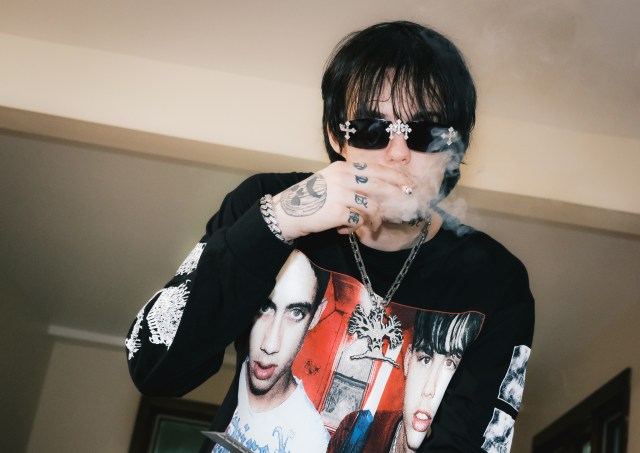
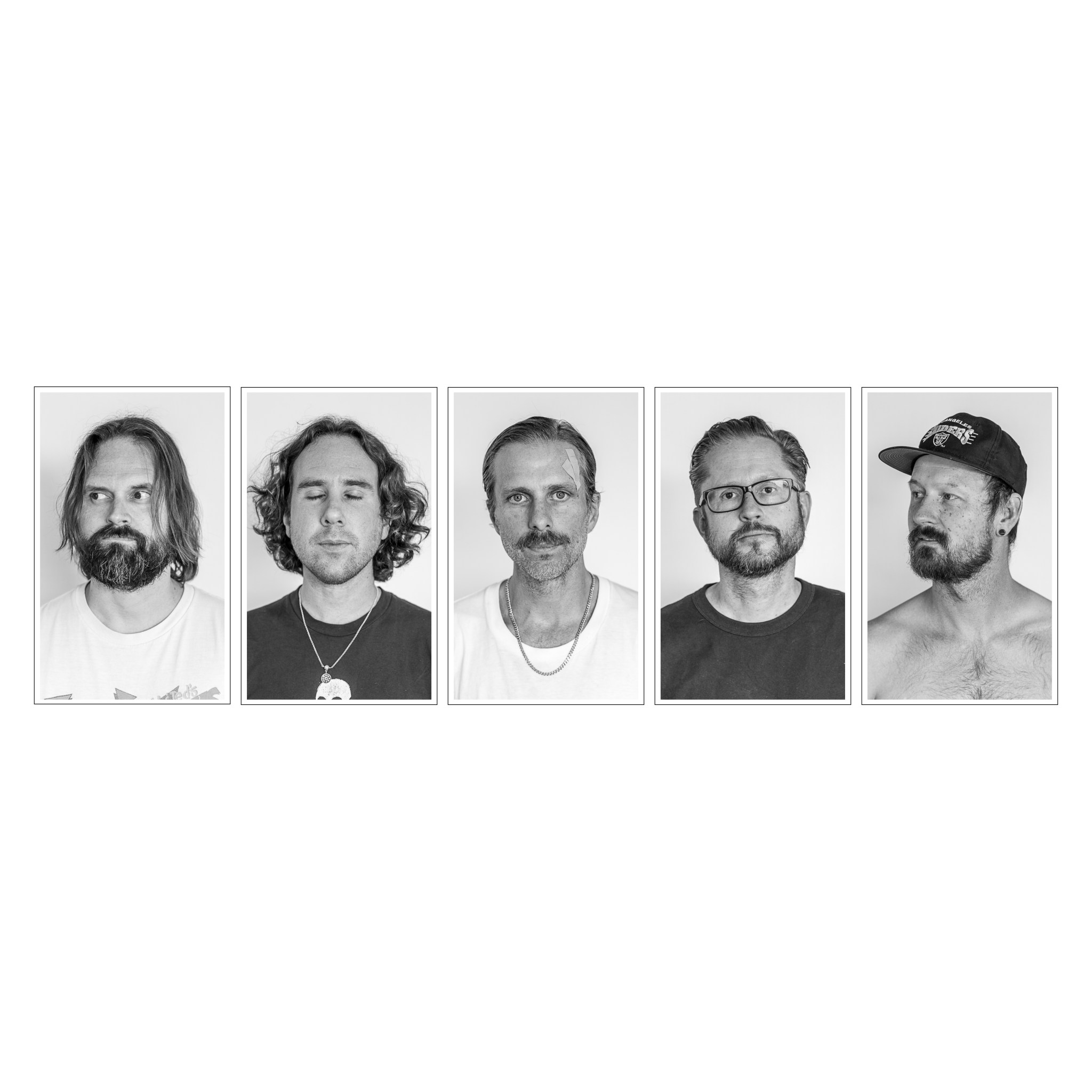
Through nearly two decades across multiple acts, there was one itch that frontman Aaron Bruno couldn’t quite scratch: going back to his hardcore roots. Starting his musical career in his teenage years in Los Angeles, Bruno dabbled in all subsects of heavy music before then shifting focus to other genres and getting his big break with a name every household will know: AWOLNATION. The success over the years was evident, but the desire to return to the sweaty hardcore clubs chock-full of people’s undivided attention and unrelenting energy always loomed. So when wind of Tinfed guitarists’ and seasoned studio producer Eric Stenman’s hardcore demos got to Bruno in 2024, The Barbarians of California emerged from the smoke.
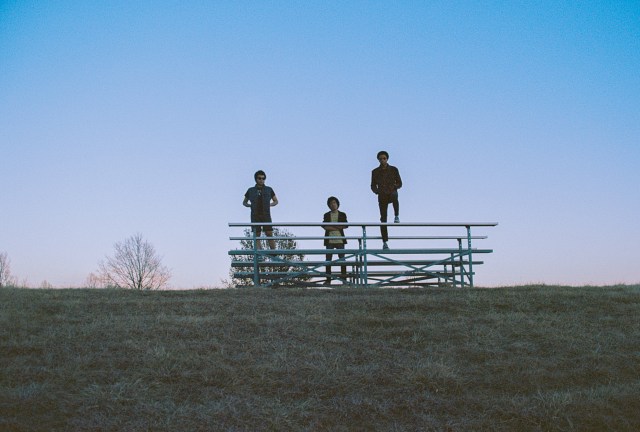
With their debut LP, And Now I’m Just Gnashing My Teeth, being an instant statement in the hardcore community, as well as Bruno still finding his footing in the genre he hasn’t touched in decades, making the sophomore record a confident continuation of what had worked before made the most sense. With the lineup additionally consisting of lead guitarist Zach Irons, bassist David Amezcua, and drummer Linden Reed, they step into their new record MEGATONS with more fury, angst, and tongue-in-cheek humor than the last, showing that Barbarians isn’t a one-off; they’re in your face, they’re unapologetically loud, and they are here to stay.
Hit Parader caught up with Bruno to dig into the project, the new record, the upcoming tour, and the joy of going back to your hardcore roots. I don’t say this lightly; if you need some new heavy music in your life, MEGATONS is one of the best places to start.
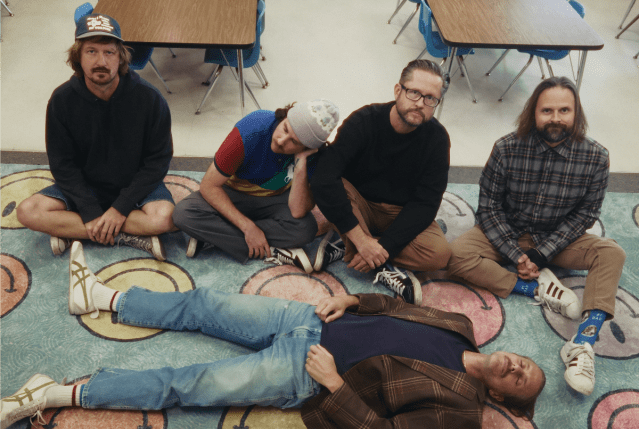
Hit Parader: What’s the most fun thing about being in the Barbarians of California for you?
Aaron Bruno: No one’s asked me that. That’s a great question. There’s so much about it that is fun that it’s insane. I can’t say I’ve had this much fun since I was 16. Musically, I think a lot of it has to do with the pressure being lifted off my shoulders and the weight being lifted off from AWOLNATION into this, because this is still a passion project that has just become serious, but the passion remains. I’m not doing it to feed my career, or start a career, or chase the dragon of success. I’m doing it because I truly love heavy music, and I feel like we’re very good at that, for people with ears to hear this heavy music. So it’s just so rewarding, and to answer your question in a long-winded way.
HP: It seems very rewarding.
AB: Since I was 16, I’ve been chasing the reaction that I’m getting now. From 16, I’m in a punk band, then a hardcore band, then a more rock band, and I don’t want to bore the readers here with my whole documentary story. But then a lot of failures, you mentioned Under the Influence of Giants before we started, Hometown Hero, and then, of course, AWOLNATION, and I hadn’t had any success until AWOLNATION. When that all took off, that was a surprise, and really a miracle, because it wasn’t supposed to, and it did. With that, with the audiences growing, the crowds becoming more intense, I brought a little bit of the hardcore spirit with me, because that’s where I came from.
But then you’re looking at some people in the front row who have never been to a concert in their life. I’ll be eyeing someone who is really drunk in the back, or a mother and a daughter, or a father and a daughter or son and family event, because they all became a bit of, not necessarily the band name is a household name, but certainly I have a couple songs that became household. Can I even say that? Household songs?
HP: I would say so, for sure.
AB: So doing stage dives and bringing that energy, sometimes it worked, but oftentimes I’m like, this is a little too aggressive for the people who are coming to the show. So cut all the way to now, it’s this camaraderie, it’s this understanding where I’m getting the reaction physically from the audience that I’ve been looking for my whole life. And probably the most insanely fun thing about this is that the gentlemen in the band are very, very good musicians, so I could sing a part, I could try to sing every part on the record, or I could just skip out and not, and it’s still entertaining enough because what they’re doing is so impressive.
So to answer your question, I would say the crowd reaction and the shows have been the funnest part of this, and I just feel like I’m playing with house money, because there’s nothing to lose at all. It’s all upside.
HP: That’s awesome. Hardcore shows tend to be very communal, so apart from the specific form of hardcore crowd interaction, what has been your favorite part of the live show compared to other projects?
AB: With this, it’s just a different kind of energy, and it’s not quite as heavy emotionally, I guess. And I think it’s well deserved as far as how intense the fifteen years of AWOLNATION has been, because it’s a lot of pressure, and I love it, and I’ll continue to do that as well. But with Barbarians, it’s kind of just a fun throwdown with a bunch of buddies, and what I’m saying is that at these shows, I can just walk right in, and it’s not a big deal. It’s kind of an understanding that we rarely have barriers.
We did that Deftones show, of course those were in arenas, so that was different because it was such a big event because of them, not because of us, and so we experienced barriers and separation there. But we just played the Roxy, no barrier. We played the Troubadour, no barrier. And this headlining run we’re about to do in fall, I doubt there will be any barriers. I don’t even need a dressing room with this project. I could just be hanging out and then just go play the show.
HP: That’s amazing.
AB: It really is, and I’ll address the hardcore scene too. It’s rooted in hardcore, but we obviously dabble in metal, so I guess it would be metalcore, but labels are insane, and everybody wants to label every different band something. I’m buddies with Brian Garris from Knocked Loose, and we love them, I think they’re the greatest out right now. We hit it off on this cruise we did. AWOL and Barbarians and Knocked Loose played this cruise, and I said, what would you call us? And he said, “Well, I guess it’s metalcore adjacent,” and he adds these comparisons.
But all that to be said, at our shows so far, and I’m still just getting to know the audience, you’ll have kids who are doing classic hardcore dances that have clearly been to a lot of hardcore shows, and people who just like heavy music, whether it be Sepultura, Slayer, and everything in between. So I feel very blessed that so far we’re not pigeonholed as one genre specifically.
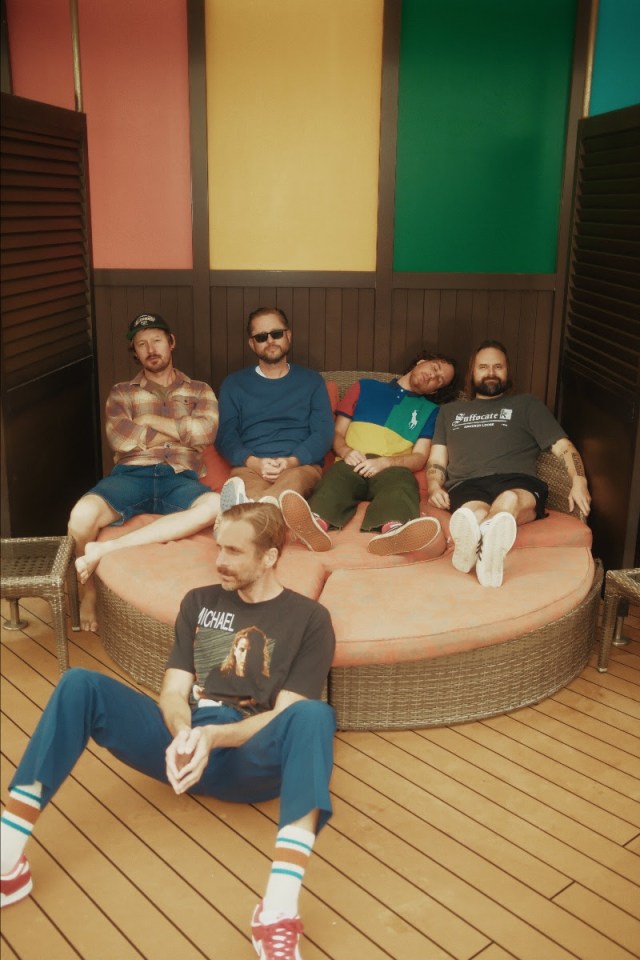
HP: That’s fair. You were talking about pressure specifically from the AWOL days, and having lived through that pressure following the breakout Megalithic Symphony LP, what experiences from then, going into the second record of AWOL, informed either choices, precautions, or just anything when you were approaching a sophomore album for The Barbarians of California?
AB: They’re so completely different, and even with AWOL, that second record, it was the first time I had followed up success, breakout, freakish success, so there was definitely a different kind of pressure. But I enjoyed that pressure because I knew I had the audience’s attention. So I think a lot of people were thinking, okay, well, what’s he going to do now? And I knew I had that sophomore follow-up, fun seat at the table where I could make a song like “Run” that ended up being, I think, arguably my second most known song, and I just knew I had that moment, so I took my time with it, and that was great. But that being said, I’d made so many albums from the age of 18 all the way into my 30s that it wasn’t really a sophomore album; it was like the seventh album I’d made in my career, just under the name AWOLNATION. So it’s a little different. But with Barbarians [of California], this kind of just feels like an extension of the first record.
Hopefully, hopefully there’s improvements and people find it to be a little better. But you know how this goes: when you discover a band, and you fall in love with their first record, it’s almost impossible to like their second one more. So hopefully it’s just that there’s something for everyone who likes the first record on this one, and until we get tired of doing it, and it isn’t fun, and we don’t seem like we’re on top of our game, it’s all one thing to me.
So to answer your question, there are no rules in this band. I can’t even believe we made a full first album, let alone doing a second one now. So it’s just kind of like this great gift that keeps giving.
HP: That’s all you could ask for. In what ways is the sophomore record an extension? Is it sonically a continuation, lyrically a continuation, or were there other spots where you tried to break habit from the first record, or is it literally just going straight from where you left off?
AB: I think we’re just picking up where we left off, and they always say you have your whole life to make your first record, and then six months for the second one, whatever, however that goes. And I’m contradicting my earlier AWOL journey story there, but in this case it still feels like Eric and I have had our whole lives to make all of these songs, because it’s sort of like, oh, what if we did that there? I’ve always wanted to do that, because with heavy music like this, a lot of it is dependent on the ability of the musician.
When we were all in high school bands, with hardcore, you could always tell when there were some bands that didn’t necessarily have the talent, but they had the passion and they had great ideas and great parts, but maybe not necessarily the technical ability to pull off the most extreme version of that. I was in a band where we were limited, I was limited as a singer, as a vocalist, as a thinker lyrically as well. But now I’m around so many great musicians, and I’ve become a producer, and Eric is a great engineer, so if we think of the idea, we can execute it, and that’s just a weapon that I never had before when making heavy music.
HP: So there are no bottlenecks anymore, so to speak; you guys are just ready to go.
AB: Yeah, it’s kind of like AWOLNATION kept boxing, I love boxing, grew up watching Mike Tyson, and heavyweight boxing was a big deal to me. So AWOL feels like classic boxing, and now Barbarians is MMA.
HP: I love that analogy. And you said that hardcore has always been a part of your life, it was where you started back in high school, and that you said in a previous interview that hardcore taught you not just the ethos, but how to start and operate a band, book shows, put flyers out, and overall just an introduction to DIY culture as a whole. With this more modern iteration of hardcore, what aspects of that culture and that ethos do you want to preserve through Barbarians of California?
AB: Well, it’s just so easy to reach people now, and I slugged it out with trying to get people to pay attention to my different bands growing up, whether, like you mentioned, it was flyering different high schools or going to other shows and handing out stuff and learning how to communicate with people, learning how to talk to the cute girl to try to get her to come to the show, or these guys that were wearing striped shirts, or whatever, and everybody else around. That was so difficult, but adventurous and fun, that now, you get to hide behind a phone. So you could kind of do whatever you want, you just have to have a good imagination, and it’s an exciting time in music, in my opinion.
A lot of people complain about social media and the old guard of tastemakers being gone and whatnot, and I realize there are influencers all over the place, but now you can release music, have it completely fail, and then only for someone to do a clever story with that song, only for it to have a second, third, and fourth life and blow up later. So the old guard of needing to be in Rolling Stone, or whichever hip magazine, or even website or blog, doesn’t matter anymore. You just put out music, and I’d like to think that if it’s good enough, enough people will talk about it, or it’ll catch attention. Of course some great songs slip through the cracks, and that’s definitely common as well. But I’d like to think that the karma of good songwriting is on the side of sincerity, and it’ll find its way. It may not be in your lifetime, but it could find its way, and that’s the hope I like to lean into, and optimism.
Back to the DIY question you actually asked, though, we’ve taken that approach. There were a few ways to go about this, or sit around and wait for the cool label or whatever, but you can kind of carve your own path. I do have the luxury of the success of AWOLNATION, but I will say I thought it’d be easier. When we first released “Dopamine Prophecy,” the first song, and then the first record, I thought, however many millions of people knew about AWOLNATION, or at least my songs, I just assumed at least half of them would join the dark side of the Barbarians of California, but it was not the case at all. In fact, it’s almost in reverse. A lot of people are discovering Barbarians, and then eventually going, holy shit, I had no idea it was that guy. And while that has been surprising to me, it’s a more rewarding way to build it brick by brick.
HP: I was reading some of the YouTube comments today, and a few were along the lines of, “Wow, I didn’t even know this guy was in AWOLNATION, this music is great,” which has got to be somewhat of a freeing feeling, to have a separate life outside of it.
AB: Totally. Well, we’ll play these shows, like we just did that tour with Converge and Poison the Well, and I’d walk on stage, and I know that no one knows what I do, or let’s say ninety-five to ninety-nine percent of the audience has never seen me on stage before, or if they have, they don’t realize it’s me again. And it’s been so effing fun. It’s almost like a quarterback that had a really nice run, had a couple of Pro Bowl seasons, and then got traded to a new team, has a new uniform, and has a fresh beginning, that kind of thing. That’s a ridiculous analogy, but I think you get the point. So it’s just been so fun walking on stage and throwing down, because I feel like with AWOL, and you can see some of the stuff on YouTube from some of these major festivals we’ve done, I could tell that we were getting a little too ridiculous in the heavy zone, and losing the audience just a bit. But where I came from, it was hard to hide that or suppress that desire to scratch the itch of heaviness, or screaming, or laying into a heavy riff, or whatever.
So this feels almost more comfortable to me, and maybe that’s part of the appeal of AWOL, that there’s a tension and an awkwardness because it’s so vulnerable. Barbarians doesn’t feel vulnerable at all. It feels like I’m in a bar fight with a bunch of friends, hypothetically and lightheartedly, of course [laughs].
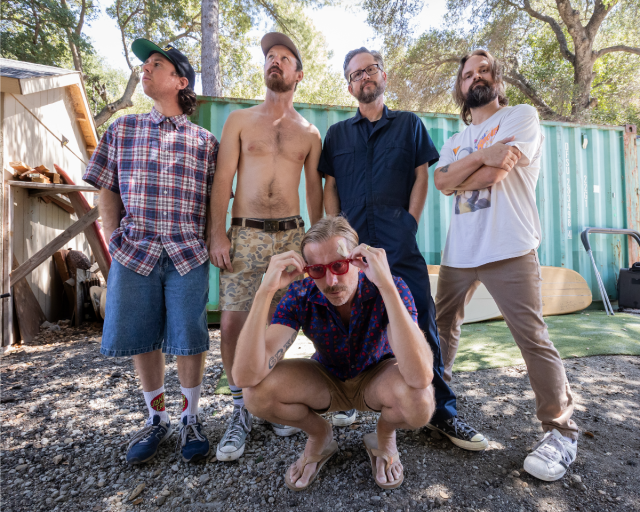
HP: Fair enough [laughs]. When people describe Barbarians as a hardcore band, and you were discussing how pigeonholing is a very real thing with genres as a whole, you use a lot of electronic touches, the modern fashion sample, the outro to “Really Really Rad,” and then “Shark Out of Water” is just an acoustic track on the record. In your opinion, what thread ties all these tracks together, whether it just be the sound production or just how the music is very inherently Barbarians of California?
AB: I don’t really know yet. Maybe I failed at that, hopefully not.
HP: I would say that they all sound cohesive.
AB: Thank goodness, that’s great. Well, I don’t know, I loved the heavy records that push the limits, I guess I like all music that kind of spreads its wings a bit to cover other grounds. I personally can’t just listen to fifteen songs of full X-rated brutality, musically. Sometimes I want to take a breath, and hopefully this record provides that with some of the segues. Like you mentioned, “Shark Out of Water,” I love Metallica, I love the Black Album. A lot of people try to be purist and say the Black Album isn’t good, and I think it’s great. I also love Refused’s “The Shape of Punk to Come,” and I don’t mean to imply that I’m comparing Megatons to any of these great albums, but we have no, there are no rules with this thing. So as far out as we can go, I’m happy to do so. Sometimes I’m looking at a song, like at the end of “Really Really Rad,” you mentioned the disco part that comes in, and I just didn’t know where else to go. I didn’t really want to end the song there, so I thought, you know what, I have this thing in my head that we could do that’s kind of silly and fun, let’s just try it. And then I thought it was cool. If someone hates that, you could always just turn it and go to the next heavy part [laughs].
HP: [Laughs] Fair. You spent a lot of time being the sole mind behind projects, working with Eric and the rest of the band on these two projects. How has it felt to occupy a slightly different role, co-writing, co-producing inside of a project that you’re still fronting on stage?
AB: Well, there’s certainly a lot less pressure, so I think it frees me up to have even more ideas, whether it’s for a guitar riff or just a vocal cadence, and there’s a lot of help all around me. I’ve said this before, and I’m running the risk of sounding too confident, it’s really easy for us right now, and I bet there is going to come a point where it’s not, and it becomes more of a challenge, maybe if we get bigger or it becomes more of a business. Right now it’s not, we’re just trying not to lose a bunch of money, and so far we’re even, and it’s just a fun experience, but it’s pretty quick and easy.
If Eric has something that sparks an idea, I listen to it, and I know what I like and what I don’t pretty well at this point in my life. He may say something like, that ain’t happening, man, I’m off that, and then we move on to the next idea. But we have a little drawer full of ideas, whether it’s Zach, who’s a psychotically talented guitar player, and Eric’s more of a robotic engineer mind that has these vicious riffs that are a little more calculated, and even our drummer Lyndon has some nice riffs that, even though he’s a drummer, have sparked something.
So with AWOL it’s all on me, and with this it’s a team effort, and the help is greatly appreciated at this point in my life.
HP: Out of curiosity, you’ve discussed in past interviews about how you want the theme of positivity to be a through message of these projects. I understand that there’s a layer of silliness and sometimes satire throughout the lyricism, but if the listener had to draw one theme, or takeaway from the lyricism off of this record, what would you hope that to be?
AB: You’re catching me at the infancy stage of this thing, so I’m learning what this is as time goes on, in a lot of ways, and I don’t know. I’m just happy people like it. And heavy music is so intense already, and I’d like to think that we’re very heavy, so it feels most natural to sing or scream with a tinge of sarcasm.
Remember, most humor and sarcasm has a bit of truth in it, and again, at this point in my life, I’ve studied so many artists and so many writers, I think it was finally time for me to allow a little bit more playfulness and humor into these lyrics. It doesn’t always work with AWOL, I have to walk a fine line, it doesn’t feel right all the time. But with this stuff, it just feels, I can’t explain it, it feels so, if my voice is in a place, let’s say on a scale of one to ten, if it’s pinging on a ten as far as intensity and aggressiveness, it sometimes just feels overbearing for it also to be a very dark, intense, serious lyric.
Some people pull that off really well with their voice, I find that it just feels too, and I love sports, by the way, and I played a lot of sports, but it feels like jock vibes to me when I hit too dark of a lyric, screaming that hard. Again, some people pull it off really well, it just doesn’t work for my voice, something feels kind of cringe when I hear it back. So I’ve found a way, when I write these lyrics and sing these parts, I’m hoping that the rest of the guys laugh at least once, not like it’s slapstick, but I want it to be so insane and so ridiculous, kind of going all the way back to what I loved about hip-hop in the ’80s, and I was lucky enough to discover it before it became mainstream pop music.
A lot of these guys would just be bragging, and that was the thing they did. LL Cool J’s “I’m Bad” was a big song to me, Public Enemy, a big part of that was to have this bravado and make these ridiculous claims. So I’ve approached it with a bit of that sarcasm, and it’s kind of like, I’m just kidding, but if you love it, I’m serious. You know what I mean?
HP: I love that quote. “I’m just kidding, but if you love it, I’m serious.” That’s fun. If you had to, but if you had to choose a song that felt like a representation of the record, what would you say they were? Or alternatively, what’s the thing you’re most looking forward to for the rest of the year?
AB: Looking forward to the tour, looking forward to these festivals that we’re playing, and as we grow I’m seeing our name climb a little higher on the big flyer. Ever since I was a little kid, that was a thing, in the beginning your name is really small at the bottom, and then as things go and the word spreads, if you’re lucky, it becomes a little higher and higher and higher. So it’s nice to see that growth.
HP: You’re playing Louder [than Life], right?
AB: Yeah, so I’m seeing band names that were big influences and heroes of ours growing up, so that’s incredibly cool. But as far as the record goes, the first song, “Back to the Valley,” is probably my favorite song on the record, if I had to pick one, and the reason is, I’ve been chasing the finale riff of that song my whole life, and I feel like I finally did it. If the world were to erupt tomorrow, I could rest easy knowing that I delivered the one riff I’d been chasing my whole life. Now that I’ve done it, it’s time to rethink and chase another one down, but for the time being, I’m still riding this high, that I feel like one piece, yeah, and then I come in with the most insanely ridiculous line I could think of, and I was trying to channel a Muhammad Ali level of confidence, slash professional wrestling attitude, after the riff. So I don’t know if people take it as just too conceited or understand that it’s just for fun.
Presave MEGATONS by The Barbarians of California, out August 21, 2026 here.