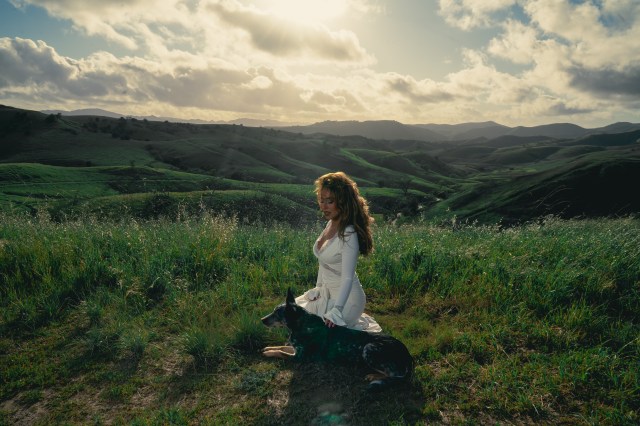
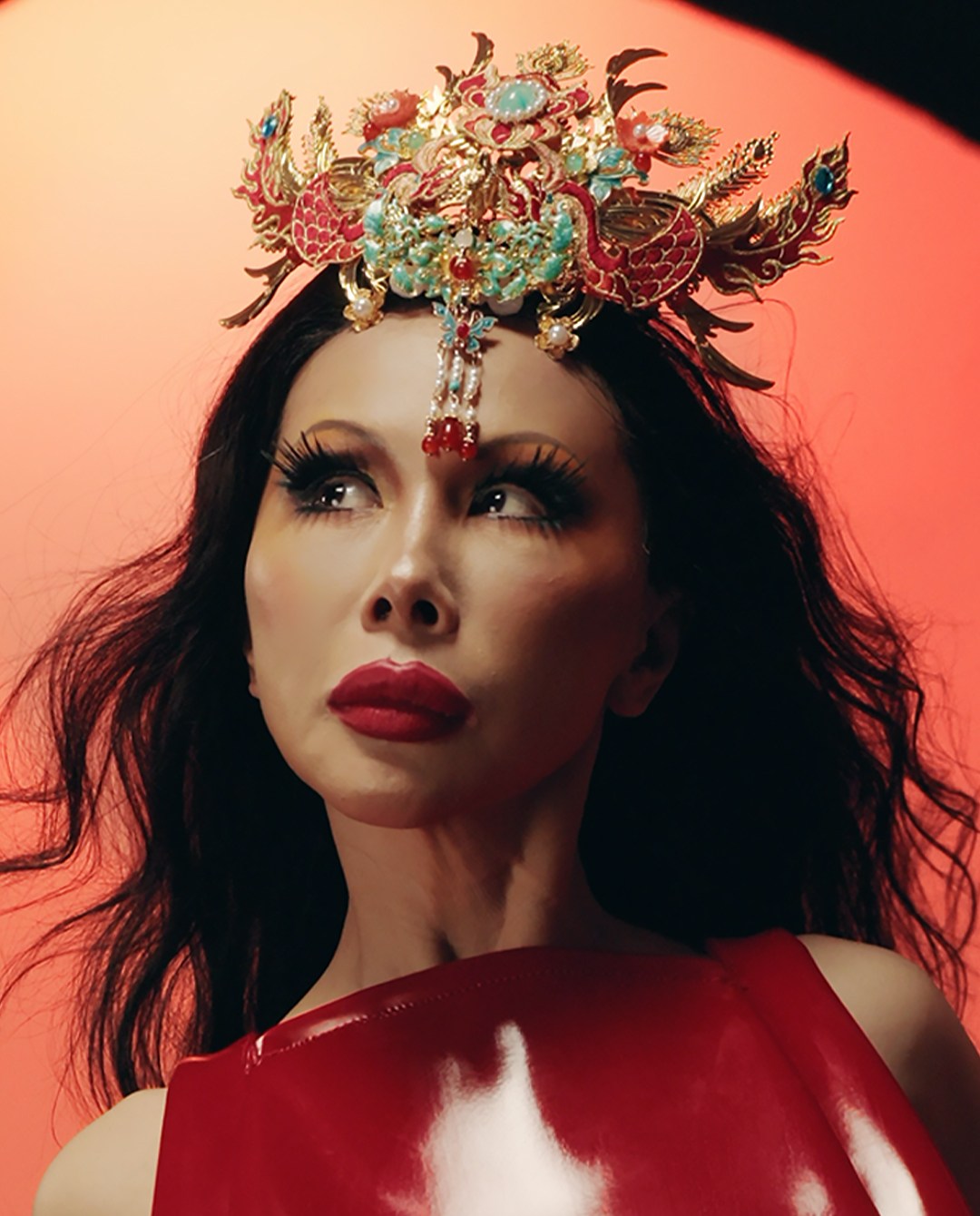
What is a Lolla Girl? According to Etty Lau Farrell, a Lolla Girl is a “State of mind,” one that involves fun, confidence, freedom and escape.
Farrell would know better than anyone how to define a “Lolla Girl.” For more than 20 years, she has been in the background at Lolla’s around the world, supporting her husband, Lolla founder Perry Farrrell, helping things run smoothly, engaging with the greatest artists in music as the hostess with the most.
Not this year though. After decades in the background, she is stepping proudly and joyfully into the spotlight, with two new dance music collaborations under her name — “Butterfly,” with DJ Rap and “Step Into The Light,” with VNSSA – and her own “Lolla Girl” activation. Yep, this Lolla belongs to Etty. And maybe the only person as proud as Etty is her husband, who, she says, has been there the whole time for her to fall back on if she needs it.
Hit Parader spoke to Etty about making her long-overdue star. turn
Hit Parader: I interviewed DJ Rap 20 years ago for the cover of LA Times.
Etty Farrell: That’s great. She remixed my song, “My Boy Lollipop.” And it was fucking good. With her jungle beats, she is second to none.
HP: How did you connect with her?
Farrell: As you know, we are working on songs, especially on my own. We were looking for producers, DJs to collaborate with. And Rap was someone that was recommended to us. At the time, I think she had a few songs already recorded. I think she’s trying to move a bit away from the EDM jungle world into more songwriting band world. So, she sent over a few songs, but the song “Butterfly” really resonated with me. When we recorded it, and it was as simple as she recorded the melody and the vocals. Then I recorded the vocals and the melody, sent it back to her. And then we realized it was suited for an EDM jungle track. And it is beautiful, I have to say.
HP: Then you worked with VNSSA. How much fun has it been working with these different artists and getting their different perspectives?
Farrell: I enjoy it very much. It’s something that I’ve been doing for the past few years with different producers. And I’ve come to learn that every single one of them do have different styles. Some of them are a bit more specific and some of them allow you to just do whatever you want and they’ll make it work. I’m going to be honest, it’s good to have something of my own that is not so tied to Janes or Perry even because in the past when we’ve I’ve recorded, it’s always been a collaboration. It’s always Perry and Etty. So, it’s nice to be able to step out on my own and explore what I can do, what I’m worth as an artist.
HP: Every artist says, when you go off and do your own thing, it also invigorates you and you learn new things. So, I’m sure when you come back to working with Perry, then it brings like a different education and different stuff you can do.
Farrell: Yes, but make no mistake, Perry is in the room with me. He is just trying really hard to hold back to not get in the way. But he enjoys being there. It is somewhat my real first time out, so I feel he’s a bit protective. So, it’s good to have him to fall back to. Part of being a human being is understanding how much you don’t know and how much more you have to learn. And it’s good to have him to fall back on because he’s clearly very experienced and knowledgeable. I feel nurtured, and that gives me a lot of confidence to move forward.
HP: I’ve always believed you learn from osmosis being around cool people. So, whoever you are working with they bring their own thing that you pick up on.
Farrell: Yes, absolutely. I sense that with VNSSA as we get to know her. I find that they all have different styles. VNSSA is very bold. When we work with her, I was able to record things in different ways and send them back to her. And she made this magical song called “Step Into My Light.” Where with Rap, she’s a bit more specific. But you are right. I do learn, especially in the EDM world, how they navigate songs. And as an artist, now I can learn and evolve how to best suit my talent, my contribution to each of the producers that we’re working with.
HP: You’ve been around so many great people. So, as you start to do this on your own, do you find there are lessons that you picked up over the years that you are then able to bring to this work?
Farrell: as you said, I’ve been around great musicians. Top tier. And I have to say one thing I’ve learned is exactly what you said — their integrity, the work ethics, that they will do whatever it takes to get the right sound. They’ll do the work it takes to get the sound they want. And they’re not shy about asking for what they want. So, a couple of times when we’re recording, you don’t want to be so demanding of your engineer or your producers. I do start to feel bad that I’m sending the song back once again. But then I realized, “No.” And even Perry would say, “It’s your song, it’s out there forever. Unless it’s exactly how you want it, you have to keep going back.” And that’s what I’ve learned from these musicians, they are so dedicated to their craft. And as a ballerina, I also understand that dedication. I am just wanting to be 100 percent, over 100 percent committed, dedicated and confident in what I’m sharing with the world.
HP: Now that you’ve started this, what’s coming up for you?
Farrell: We actually have recorded a couple more songs that we now need to go back and rework. And I’m hoping that these two songs become a calling card for me that opens me up to different EDM electronic artists that I can approach to work with. I really want to start doing collaborations because I really do enjoy it so much. So it would be, you know,
HP: Do you want to keep working specifically with women or are you open to working with all electronic artists?
Farrell: Well, that’s a tough one because I love working with women because I do feel that women are underrepresented, especially in electronic music. Very much so, which is why DJ Rap is so special because especially in the jungle drum and bass genre it’s impossible for women to break into because the sound is so intense and strong. But she did it. I love working with female producers, but of course, when you work with men and women, men do bring a different dynamic and sound.
HP: Obvious question, who’s on the wish list of people that you would just love to work with?
Farrell: I just saw him in France. Martin Garrix. I love his sound. That’s my number one wish list.
HP: How much fun for you now is it to be in this setting where you’re making your own music you’re to be at Lolla this weekend and watch all these artists that are potential collaborators?
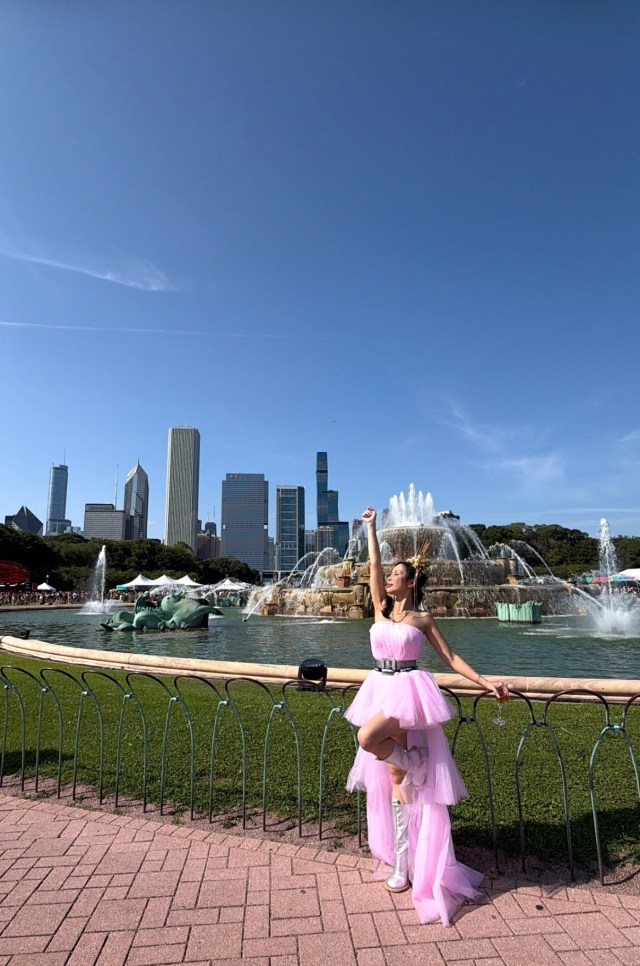
Farrell: That’s a very good point. I’m definitely going to pay a bit more attention in the Perry’s area. I know that in the past few years, when we go to Lollapalooza, my role is really to host. And this is the first year that I can put away my hosting hat because I have a legitimate job to do. I’ll have more time to pay attention to the musicians and looking to see who I want to collab with. I would love to work with Zara Larsson. I watched her a few years ago in Sweden. And I also saw a video of her on a Star Search type show. And she was incredible at such a young age. I got a chance to speak with her while we were both waiting for Pitbull. And she is lovely, incredibly talented. So that’s somebody that I would love to work with as well.
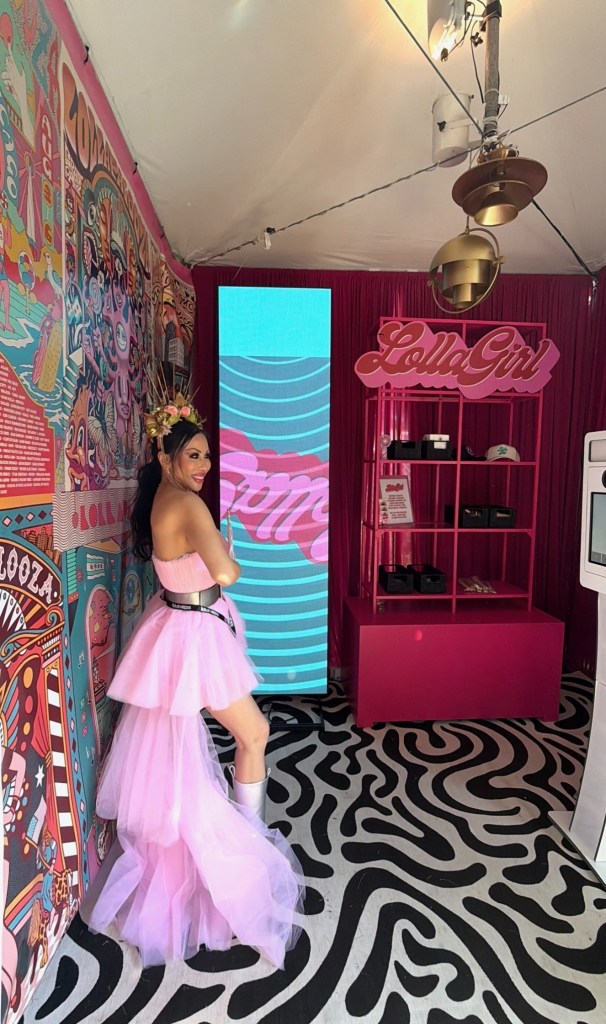
HP: What is a Lolla Girl?
Farrell: A Lolla Girl is a man or a woman that comes to a music festival confident in themselves. They are inclusive, they love music, and they are there to celebrate life with other like-minded people through music.
HP: When did you become a Lolla Girl?
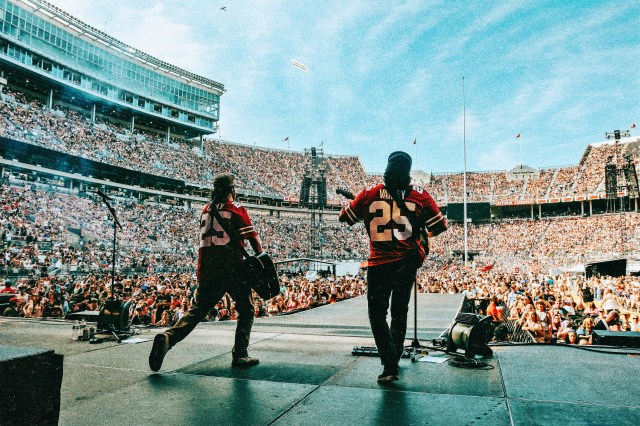
Farrell: I did become a Lolla Girl in 2004, the last touring Lollapalooza when we had Jane’s, Audioslave, Queens of the Stone Age, Incubus, Jurassic Five, Rooney, Kings of Leon, The Distillers, 30 Seconds to Mars on the second stage. And it was such a community. At the same time, Miles Copeland has his belly dancing stars on one of the stages. We started the Lolla Girl and we opened for Jane’s. We performed on stage between Audioslave and Jane’s Addiction. And that was the first presentation of Lolla Girl. So, it is a group. But it is a state of mind. It is something to be celebrated. Let’s be honest. The economy is not great. The world is going crazy. Our country is going crazy. It’s good to have a weekend, a few days where you can park all your worries and stress outside, come into the grounds and enjoy yourself and celebrate yourself, celebrate being alive.
HP: On a larger scale, who are the ultimate Lolla Girls to you?
Farrell: Because I spoke with her the first person that came to me is Zara. When she performs, there’s this joy of celebration that comes to mind, right? And Tate McRae, again, another very forward feminine energy dancer as well. I do love female performers that are vibrant, crossing boundaries and pushing the boundary. Lady Gaga. The past couple of years, we’ve been very lucky to have a lot of female performers. So, it’s really hard to pick one, but really any performer that shows up as herself, celebrating herself, bringing the audience into their world and being confident about it. Yeah. Interesting.
HP: For you, who’s the original archetype for the Lolla Girl?
Farrell: Cyndi Lauper. That’s the original Lolla Girl to me. That’s the one because from early on in her career, she never pretended to be anything else but herself. Even nowadays when she performs there is still that girl that did “Girls Just Wanna Have Fun” within her. It was never a character. It was her true self.
HP: What do you want people to know about these projects?
Farrell: This project, with Lolla Girl, with my own music, means a tremendous amount to me because I feel that, at least for myself, I’ve been in the supportive role for so many years. I’m sure other women feel this way. But for me, as a woman, as a mother, as a partner, for many years, at different times, starting with Satellite Party, whenever we do something, whenever I try to do something on my own, whenever Perry has a project that comes calling, everything is dropped. And I put what I want to do aside to be supportive of my husband. And this is really something that means a lot because it’s something that I have of my own. For the first time, I’m able to be my own forward-facing artist. I love being in a partnership, Perry and I are still working on many things together. But it is really the first time where my name and my contribution takes the leading role. And regardless of where it may or may not go, I’m just really thankful for the opportunity to even have a chance to show what I’m capable of, not to the world, but to myself. It’s good to see that I have more to contribute to life as an artist than being in the supporting role.