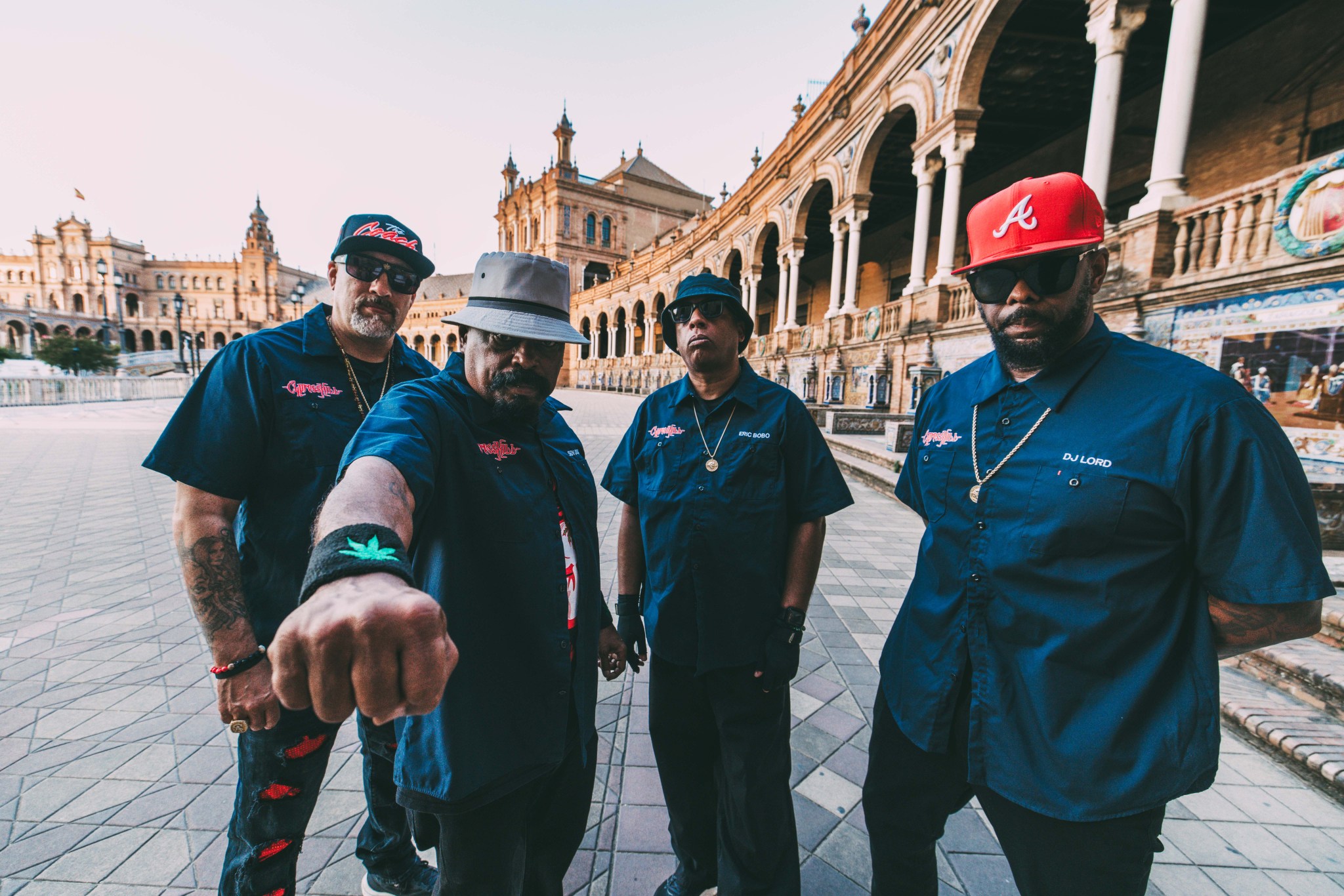
Cypress Hill’s B-Real was in Prophets of Rage with Tom Morello and Chuck D., arguably the two most outspoken artists/activists to emerge in the late 80s/90s, so the mix of music and politics in the Cypress world is not a total shock. Still, the iconic LA group has always been a stoner band first. So, seeing them deliver a standout set at Morello’s recent awe-inspiring “Power to the People” fest, easily the concert of the year to this point, was somewhat unexpected.
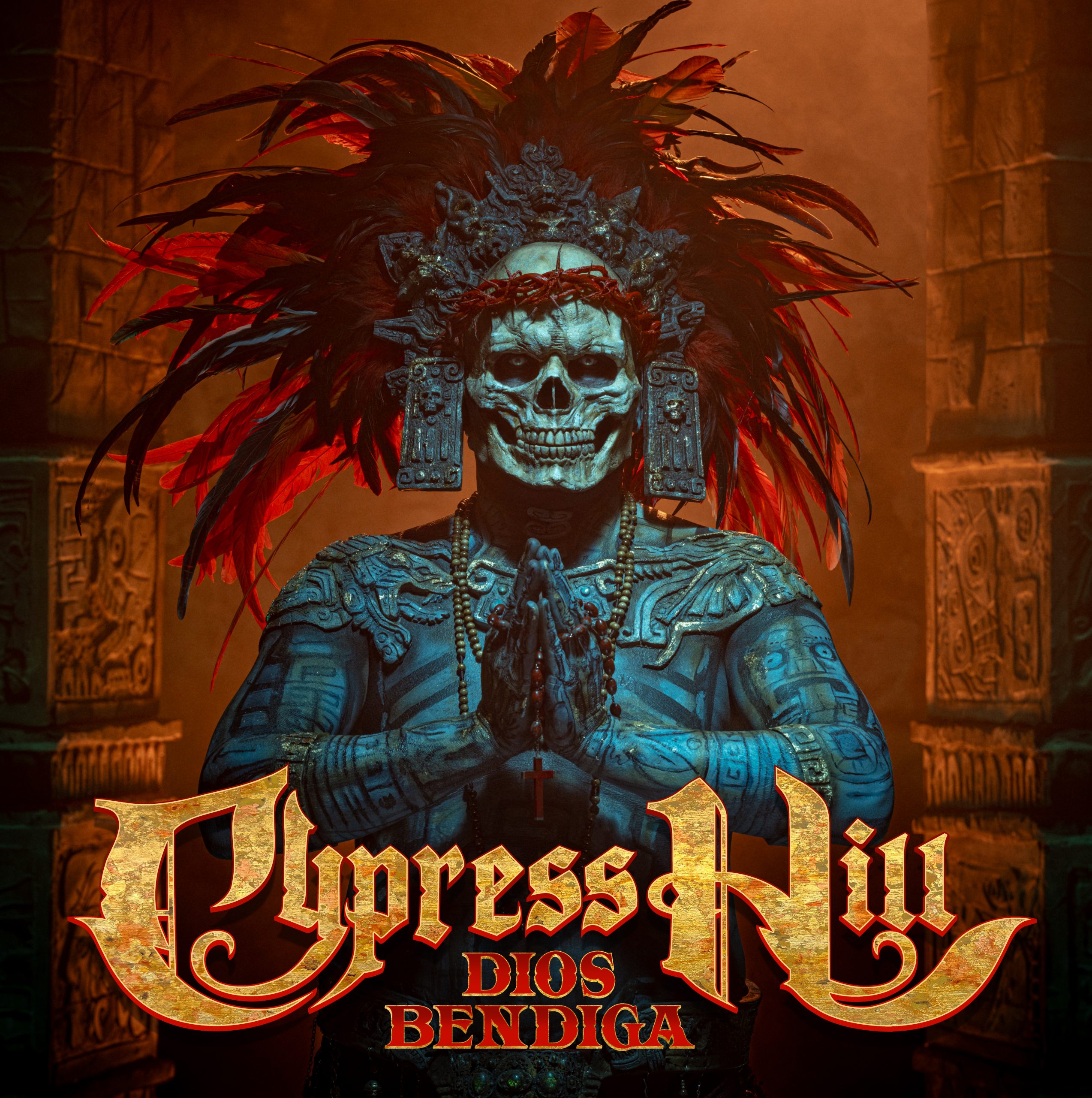
Turns out though that was not their first big statement this year according to Sen Dog. There was definitely some very intentional thought put into the release earlier this year of their first Spanish-language album, “Dios Bendiga,” which translates to God Bless You.
Their plan, he says, was always to release an album all in Spanish, which was especially important to him, as it brought back his childhood. But he points out, the timing was deliberate in that he wanted the Latin community to know the band was with them in the wake of ICE raids.
I spoke with Sen Dog about the album, why they are so excited for the challenge of playing it live, how it connects him to his roots – personal and geographic – and much more.
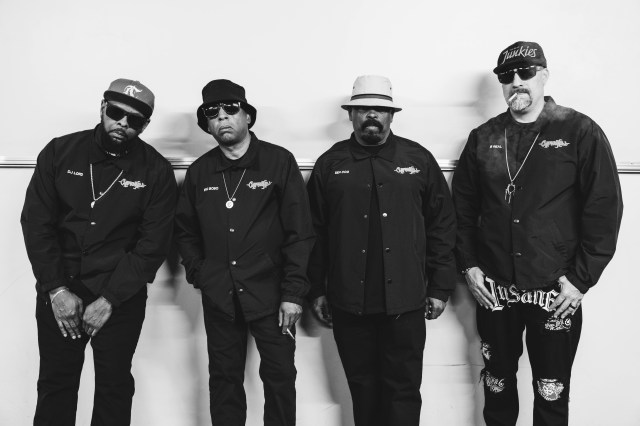
Hit Parader: When you come to visit L.A., having lived here for so long, especially as it ties in with this album, which is a Spanish-language album, which is such a huge part of L.A., do you see the city in a different way after living someplace else for a decade?
Sen Dog: Yeah, and when I do come, I’m like, “Man, this place is huge. It’s massive. It’s just territory everywhere.” That aspect kind of grabs my attention every time I happen to come in. But I also see it the same, like, “This is where I grew up.” I just get used to it right away. But there’s some changes that have occurred that are noticeable.
HP: I imagine when you do an album like this does it heighten your awareness of the diversity of L.A. or make you want to focus in on that a little more?
Sen Dog: Yeah, I think it made us want to focus in a little bit more on it because so many things have been going down, especially with the Latin community; the ICE raids and all that stuff. And I felt like it was the right time to reach out to people and get at them in their language and ensure support in some kind of way.
HP: Did the songs come to you in English? Or did some of them come in in Spanish once you started writing the album in Spanish?
Sen Dog: Well, it was already outlined that it was going to be a Spanish album. So, the language choice was never a different one. We always had the idea of recording a Spanish record with new songs for many years now. It was always just a question of when we all can get together and do it. We knew what was coming up, it was going to be a Spanish record, and that’s how we went about that. But definitely the ideas do come to me at the rarest and weirdest of moments and it could be in English or it could be in Spanish. Something just pops in my head, and I started going from there. So, I think when we went and did this record, we just jumped in there and did it, and that’s how we got the record done so quickly because it was just one of those things where we just had to go get in there and do it and we knew what we had to do.

HP: Were there things that influenced you that you hadn’t thought about in a long time? You start making the record and you remember music you heard when you were a kid, like stuff your parents played for you.
Sen Dog: Yeah, the stuff from the past I listened to when I was younger, even the stuff that I heard my parents play, that just stays with me wherever I go. and at any given time, I can remember a record that my dad had played in 1980 or something. And it just goes with me. So, whatever I choose to do, I kind of have this back catalog in my head that could give me ideas or help me when I get stuck or something like that, I could just think of something that opens my mind back up like, “Boom, oh yeah, there it is.” and a lot of it has to do with some early Latino hip-hop that I heard back in the days. Especially when doing this particular record there was a group called The Mean Machine from New York and they had a really cool record. Somehow, I was able to just tap into that and got myself loose and out of my own way.
HP: So many writers have talked about music coming from the subconscious. Do you feel that way and if so are there songs that surprise you by how influential they are in your own songs?
Sen Dog: I do think that music comes from the subconscious and either a song will come to me at a particular moment or I’ll just start thinking of a particular band or group or how they did whatever it is that they did and how fresh and impressive it was to me. And then when I go in the studio, I just try to remember how much importance a particular sound did play. A particular sound was important for me. I know when we’re doing what we’re doing, this particular side is going to stand out to somebody else. And it’s going to be a record that somewhere somebody is going to draw inspiration from. And I think that’s a very important part of music. But, for sure, just being musical and being and being able to recall music whenever I want, that definitely helps me out sometimes.
HP: Have you always been musical?
Sen Dog: I remember being young and even though I was more into athletics at that point, music was always prevalent in my house. And it was either my mom and dad playing some salsa stuff or my older sister, Myra, jamming some funk music or disco or something. It was just always around us. And I definitely was musical before I knew it was musical, if that makes sense. But it was for sure something that you just felt comfortable with having around your environment. And you go somewhere and let’s say you’re playing basketball, whatever, somebody has a boombox radio, and they start blasting some stuff that I heard my one of my older sisters play and I’m like, “Oh, I know this jam, this is cool.” And sometimes I’d be on the field playing baseball, but in the outfield singing a part of my psychedelic song to myself. For whatever reason, music would just appear and I’ve always embraced it.
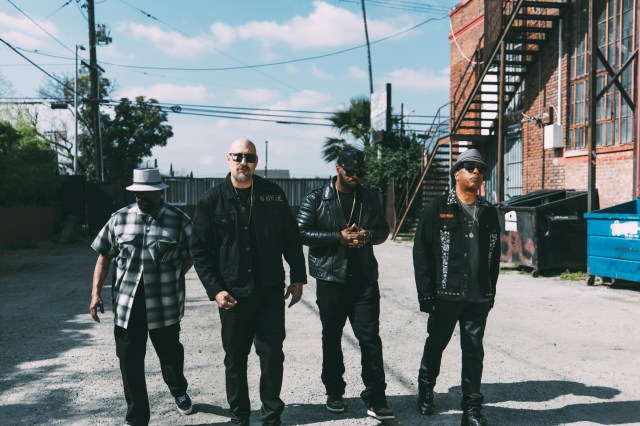
HP: Have you done any of the new Spanish songs live yet?
Sen Dog: I’ve been listening to the new material, and I think we’re going to perform it when we head to South America in November. Right now, at Rocklahoma, we played a snippet of a song from the Spanish album, but we more kept it to our English part of the catalog at that show. We’re definitely looking forward to playing it live for folks. It’s going to be a challenge, even though I’m Latino by nature. Still, I grew up in America. We talked English most of the time. And Spanish we talked at home. To remember a whole bunch of songs in Spanish will be a challenge to me personally. But I’ll be ready for that. As we perform right now, we’re just trying to give good shows and try to sneak stuff in here and there whenever we can or whatever. Everybody remembers their parts of what we did on the Spanish album. But we definitely look forward to getting out there and performing it and seeing how that goes.
HP: You say it’s going to be a challenge for you. I’m sure that’s fun after all these years of playing live. I’m sure you can go up on stage anywhere in the world and do “Insane in the Brain” and “(Rock) Superstar” and people are going to lose their minds. But for you guys to go up there and do something that’s different is really exciting because you don’t know if it’s going to work and that’s part of the thrill.
Sen Dog: Exactly right, man. When I think about it, mentally it’s challenging, but I know once we prepare for it and we execute it and people get to see it live and receive it well, that’s when I know that all the hard work, trying to keep myself mentally in the game to perform it [is worth it]. Because to do “Insane in the Brain,” “(Rock) Superstar,” “Hand on the Pump” or whatever, that’s already muscle memory. I don’t have to practice for that. And it’s been that way for a long time. So now there’s a new album in a different language and I got to practice for that and be mentally in the game. Can’t get too high one way or the other or too buzzed up or anything. I’ve got a job to do, and I’ve got to remember stuff so that’s the whole challenge. I guess the thrilling part of it comes in for myself because I know that I want to sound good and I want to help the song be the best song that it could be no matter what we’re performing. Therein lays the challenge; are you still good enough to be at this level, to have music in a different language and still be good? There’s a challenge there, I suppose. And I look forward to taking it on. But I definitely feel blessed that we have new material at this junction of our career. And we’re able to go somewhere and play it for people.
Listen to Dios Bendiga, out now.