
See Beartooth + much more in Issue 8 of Hit Parader Magazine here.
Beartooth has never been known to leave anything off the table, whether that is wide sonic ranges from the heaviest of breakdowns to the softest melodies, to the unfiltered, cathartically uncomfortable lyricism. This all stems from the architect of all things Beartooth, songwriter, lyricist, instrumentalist, and frontman Caleb Shomo. With the project and Caleb being synonymous, one cannot be without the other; the project serves as a vessel for confessional yet self-interpretative messaging as much as it is a vehicle for some of the most ear-catching metalcore to come out this century.
After Shomo’s previous record deal expired, Fearless Records provided the new home for Shomo’s artistic endeavors, and their unwavering belief in his vision combined with Shomo’s hunger to push his songwriting boundaries farther than they’ve ever gone before created the perfect storm: Beartooth’s sixth album, Pure Ecstasy. The final product is the most heartfelt record Shomo has ever produced, built less on formula, and more on what the creation process should be: chasing the joy of making the music you love. Hit Parader sat down with Shomo to talk about the mindset going into the record, the liberating recording process, the fantastic collaborators, and the emotional growth that came from his most revealing, vulnerable record to date.
Hit Parader: Just to start off, congrats on Pure Ecstasy coming out this Friday!
Caleb Shomo: Thank you so much. I can’t wait to get this thing going, man.
HP: The Surface was both a major commercial and creative success, number one on multiple charts, arena tours, with Pure Ecstasy as the follow-up. How did that success alter your mindset, if at all, when walking into the creation of the project? Pressure, confidence, anything?
CS: Definitely pressure. Pure Ecstasy is a big kind of milestone record in our career. I was on the same record deal for the last twelve years, and I did five albums and an EP on that record deal, The Surface being the last one on that deal. So when it came time, all of these things all kind of happened at once, where we ended up with a whole new team, a whole new label, and coming off the heels of a pretty successful album that was also a bit of a departure in our sound and the lyrical content that I’d usually been talking about, it was pretty intense. But I think what I chose to do to try to curb the pressure was I gave myself some basic parameters while making Pure Ecstasy, at least in the initial stages, and the parameters were just that. If there’s anything I’m afraid of, or anything that I’m scared might be too much, or that won’t make sense or connect or be easily palatable, that has to stay.
Basically, for at least the curation process of the music, the first year of just writing, none of these are final, none of these are anything. It was just very experimental, and I think I needed that space and to give myself those parameters, because it’s so easy for me in that situation to start overthinking and to try to do what I think people will want, when in reality I think Beartooth records are at their best, their most honest, and seem to be the most successful with our fan base, when I just try to make the most honest record I can. So yeah, I was just basically trying to curb the pressure to the best of my ability.

HP: Fair. To talk about the honesty, it’s been a trademark thing for all of your lyricism to be so hyper-personal. Has that commitment to honesty ever cost you anything personally as a writer, and what keeps you coming back to unfiltered lyricism and honesty as a form of expression?
CS: It’s a great question. Yeah, it’s definitely cost me things. This record is a really good example of that first year of writing that I was talking about. None of the lyrics were very personal. I was writing in this very different space where I was just trying to express power and empowerment through different ways, and the lyrics were very avant-garde and very different than anything I had written before. I think the reality was that I knew if I started diving into what I really felt like I needed to deal with in my life, I just didn’t know what was going to happen, and I was really terrified of that.
In hindsight, I’m definitely glad I did, and I feel a lot more myself and free, and I think my life is headed in a better direction for it. But when that decision ended up being made through various things to just go back to making a real Beartooth record, let’s just write the most honest songs we can about the most difficult shit that I’m going through at the moment, my life just kind of started to unravel completely as I knew it. Now that that’s out in the open, it’s just been a bit of a different reaction than any other forms of honesty that I’ve given lyrically, and I think it’s been a lot for people to take. Some people are okay with it, some people aren’t, and it’s definitely been hard to watch people be so divided.
But I guess I hope, and I do believe, at the end of the day, that it’s worth the price. I just wouldn’t have felt good putting out a Beartooth record that was me dancing around what I’m going through, because that really goes against why I started this project at all, because this project is a way for me to work through things. So sometimes when you dig deep enough, it comes with a price, but at the end of the day, I’m glad I did it, but it doesn’t make it any less scary.
HP: It’s understandable that both can be true at the same time. To pivot, Beartooth signing with Fearless after being on Red Bull for quite some time, I read a quote where you said, ‘Fearless has empowered you as an artist like nothing you’ve ever experienced’. I’d love for you to tell me a bit more about what that looks like and felt like from your end, and how that support translated to either the process behind the record or the risks taken with it sonically?
CS: There are so many ways. First off, just giving me the freedom and the budget, and the trust with that budget, to make really big choices about the record. You’d assume a lot of artists have these choices, and a lot of them do, but sometimes it’s not that simple, and budgets at a record label can be used in so many different places. So to take such a huge chunk and invest it into making this record was a little different for me. And the freedom, I would text the head of our label and say, “I’m going to go to Joshua Tree for two weeks, there’s a studio out there, and I’m just going to go and disappear, I have no idea what’s going to come from it,” and it’d be like, “Great, sounds good, see you in two weeks, let me know how it goes, send me a bill.”
At one point I was just kind of traveling around the coast, and a couple days before I check into a hotel I’m like, “Okay, I’m going to check into this really nice hotel for two weeks, I just have a feeling, and I’m going to work on some stuff.” “Great, sounds good.” “I want to go work at NRG, I don’t have anything prepared for tracking.” Because usually when you go into a bigger studio like that, that’s when you’re tracking, that’s when you’re really making use of the time, but they just let me go in there for a month with no thought of what’s going to come out of it.
It’s just that trust in me as an artist, and letting my process be whatever I need it to be at that time, and really having no input on the music, on anything. I would show them along the way, I’d say, “Come into the studio, come check out seven or eight songs,” and a lot of the time when you do that, label heads and people will give their opinions and say, “Okay, this sounds like a single, you should really dig into that one. I like this, but the chorus doesn’t, whatever, we can’t really work with this at radio, we can’t whatever.” And every single time, every one of the executives from that record label would just say, “Awesome, thank you for showing us, just keep going, how do you feel about it?” “I think it’s pretty cool.” “Awesome, as long as you feel good about it, we feel good about it.” To really have that trust when there’s that much on the line, a new record deal, they have no back catalog making them money yet, it’s just all trust and investment. It was really, really inspiring, and it gave me a lot of belief in myself as an artist, and it was really empowering.
HP: Not only just trust, but pure belief from their side in you as a person; to have that vision for that record must be a pretty great feeling, to have such inherent belief coming from someone in that sense.
CS: Yeah, it really is amazing. For most of my career I’ve made records in my house, I’ve made them on my laptop for very, very cheap. I did have one experience making an album called Disease that was a little more of that classic traveling around, and I did it in big studios and all that, but even that came at a price, and that came at tension, and that came with a lot of things that we had to work through as a whole team afterwards. And to just feel nothing but trust in any choice that I wanted to make, I spent almost the entire budget on just making this record, and honestly, they didn’t want to give me input, they didn’t want to be in my way, they didn’t want to be getting into my head. They just empowered me to make whatever record was meant to come out of me, and that is such a wild feeling, to know that I can really explore as far as I want to explore, and I’m just eternally grateful to them for that.
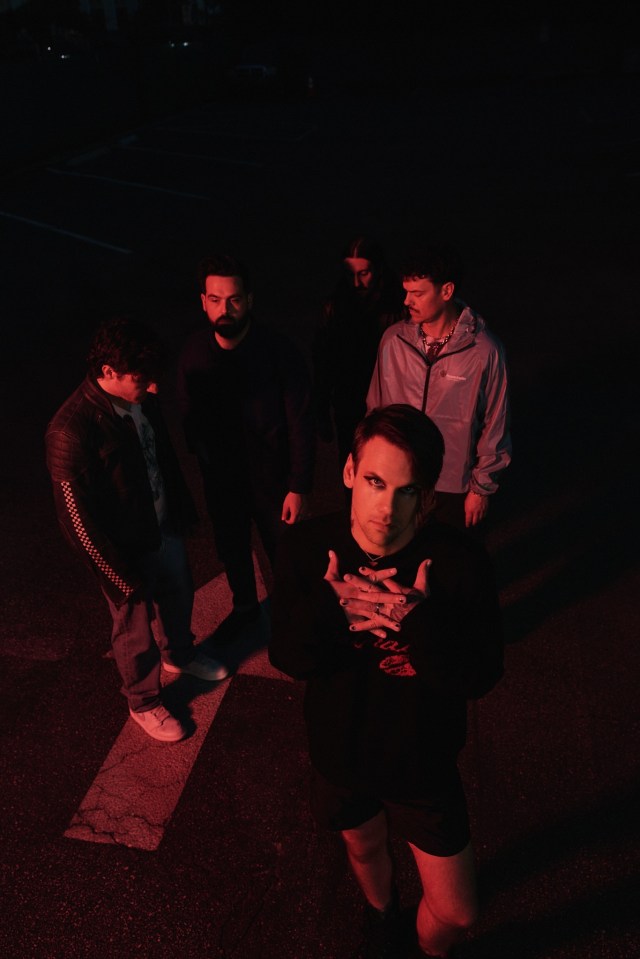
HP: And then with the record, you wrote with Misha [Mansoor] and Skyler [Acord], and it was produced with Jordan [Fish] as well, out of curiosity, what did that mix of writing and production partners unlock in you creatively that wouldn’t have happened if you tried to make this on your own, and in what ways do you see their imprint on the specific songs?
CS: With Sky, he really found a way to push me to musically and vocally do things that I don’t normally do, that I have always wanted to do, but that I was insecure about, or self-conscious of, or felt like I couldn’t pull off, whether that be chord progressions, whether that be influences, whether that be something as simple as singing in falsetto. He was so creatively empowering, and Sky and myself worked a lot in the earlier stages of making the record, which is where more of the music came out of, and a lot more of the vibes and all that. It was so much fun, and it reminded me of how great it can be working with other people on Beartooth music, when I can get out of my head and just allow it to be fun again, which can be very hard for me at times. And then with Misha, it was purely about chasing the joy, purely.
HP: I love that.
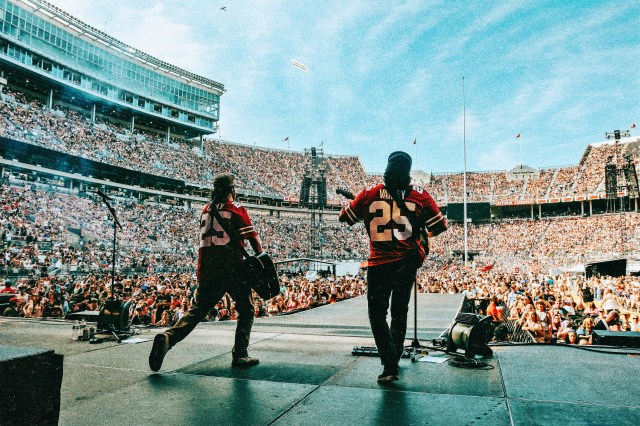
CS: That was our north star. That was the whole point. That was all we cared about. The song was secondary to us just being excited and laughing and being in the room. That session, the song “Pure Ecstasy,” first song on the record. We went into NRG, into a small room there that has an amazing PA, and we just absolutely cranked it, made some crazy guitar tones, and really all we were trying to do was, okay, what would be an insane way to open a stadium show, and then we would just do something, and there would be a smile or a laugh, and then we would chase it.
And honestly, that song, the original version of that song, is so much crazier than where it ended up. Jordan definitely helped rein it in and bring it into where this record ended up being. We wrote the song a year before it even got finished. But having the fun from him again, it was reminding myself that this really should be about chasing joy, at least in the process. And then with Jordan, he just brought everything home, and really after this year of all this crazy experimenting and a lot of insane things going on in my personal life, he just kind of reminded me what Beartooth really is, why I should be chasing making a real Beartooth record instead of using this more intense creative sound to kind of hide behind things.
He helped me just remember what the point was, which is really at the core Beartooth is just me trying to work through my shit the best way I know how, just making music. And he’s also just a brilliant writer. I’ve never felt chemistry in a room with anybody the way I feel chemistry with Jordan. We wrote four songs in five days or something, that all made the record, huge, pivotal moments in the album. “Free,” “Beautiful Again,” “Eyes Closed,” and “Lose You to Find Me” all just happened, just flew out of us.
HP: And those songs are so wide sonically as well. They’re not in one specific lane, “Lose You to Find Me” and “Free” are very, very different songs, which is cool.
CS: Yeah, he’s just so remarkable at building you a safe creative space to explore, and when he’s behind the wheel on the computer, he is just so fast, and he is so tuned into what actually matters. It’s very easy for me when I do it all myself to get lost in one thing. I’ll start with a chord progression, and then I come up with a guitar riff, and then I spend thirty minutes on that guitar riff, and then edit that guitar riff, and then I’ve lost the momentum of the song itself, and then I get lost in another thing. His whole goal is continuing that momentum in the studio and making sure the song itself gets finished, the structure, the chord progression, the tempo, the lyric, the melodies, yada yada.
And then after that he would hand it off to me, and then I would do all my guitars and the drums and do all the Beartoothification, if you will. But again, another eye-opening experience, and so much of this record just taught me that I really don’t need to be doing this alone. There are certain parts of it that need to be coming from my heart, and that I probably need to be doing by myself, but as a whole, just find people that you trust and let them do the thing that they’ve worked so hard at for so long, and it will be very, very helpful in the process.
HP: That’s a great segue, because I was going to ask: this marked the first Beartooth record where not every instrument was played by you, is that right?
CS: Yeah, this is, yeah.

HP: With Connor [Denis] doing the drums on the record, and then Misha, and then some bass parts done by Sky and Misha, what did it feel like to finally hand that role over to someone else, and how did hearing his playing back change your relationship to the songs and how you want to approach future projects with collaboration and such?
CS: It really helped me let go. It gave me a lot of, it just gave me a lot of perspective. Asking Connor to please track these drums was something that was a long time coming. I love playing drums, and I’ve played drums for a long time, but I’ve also been playing for almost a decade with the single best drummer in rock behind me, every single show. We’ve probably played somewhere near a thousand shows together, and we’re very improvisational with each other. He has learned my taste over so many years of playing the songs that I’ve written on drums. So to me it felt like, okay, I have somebody that I really trust to serve this song, and I know that I can push as far as I want to, to his magical touch and make it sound like him, and the further along we got in the process, that’s just the more that I craved.
So much of making this record was about me trying to reconcile with my childhood and with a lot of my formative years, which were spent touring on the road and making records, and that youthful energy, that love of music that I, in a lot of ways, have lost making Beartooth records. And when it came time to do the drums, he had the demos: there’s a rough outline of the drums, here’s the groove, here’s the tempo, here’s the whatever, but I told him, do not prepare for this beyond that, don’t learn the songs, don’t sit and learn every note. Just take in the song as it is with this rough outline, and then we’re just going to figure it out, and every song was a little different. There were some songs that, I guess, really the only parameter is I just wanted it to sound like Connor playing the drums.
That was something I missed about modern metalcore records or metal records, is a lot of the time the drums are programmed, which I have also done, and as convenient as that is, and as great as it is, it doesn’t make me think back to when I first heard Underoath, and you could hear in any song that Aaron is playing those drums, when I first heard Blink 182 and you’re like, the drummer is one of the frontmen, his drum beats are literally part of this song, and that’s all I wanted. I was like, you’re one of the best drummers in the world, you’re my favorite drummer, I just want you to do your thing. He came in, and we just got the drums sounding as good as we could, got him mic’d up amazing with this incredible engineer named Jake, and we would just feel it. Most of the songs ended up just being one whole pass of the song, minimal editing, almost no sound replacing, a little bit of help on the kick and the snare, and it feels like he’s playing. And that, to me, is so much more important than knowing I played the drums. The creative experience, all these memories that I have of us finding real magic in that studio in the moment, it gave me that thing I was craving that I missed from making records when I was a kid.
HP: When you step back from all of the individual songs and individual song lyrics and look at Pure Ecstasy as one long continuous piece, what do you feel you’ve learned about yourself that you didn’t know when you started writing, either the music or the lyrics or anything?
CS: I learned a lot about myself. I think this record lyrically, the whole process of making this record lyrically completely changed my life, and in a lot of ways it reminded me how important this project is to me, and that’s probably my biggest takeaway, that there is just nothing for me personally that can substitute making a Beartooth record when it comes to self-acceptance and when it comes to growth. For so long it felt like I was making the same record, and when I look back on those records in hindsight, I realize I was stuck, and I was forcing myself in so many areas of my life to just stay in this comfortable space that felt like it was going to work for everybody else, but it didn’t really work for me. Making this record really reminded me why this whole process is so important, and it’s so chaotic, the record lyrically, I think really is attempting to depict the complete highs and lows of life, and for me it was specifically the highs and lows of that month period where I wrote all the lyrics with Jordan. When I look back on that month and how I felt in that month, compared to how I feel now, I just understand there’s no way I would be here now if I didn’t do that, if I didn’t do the difficult thing, which is be very honest with myself, open up, dig deep, and really figure out what’s going on, which is what I’ve always attempted to do, sometimes with more success than others, but it’s the single best outlet I have for growth and for self-acceptance, no question.
HP: That’s amazing. And then just for the last question, what are you most excited about for the rest of the year? Could be anything.
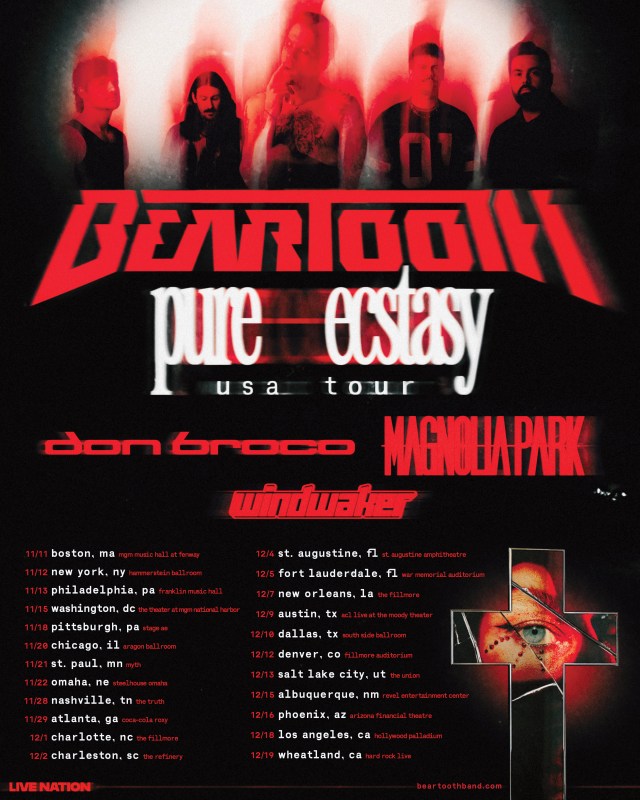
CS: Honestly, getting the whole record out, it’s massive. I feel like the whole, it very much, this album is like a record that should be digested as an entire piece, and this is always the worst time being in a band, when you’ve been sitting on this record for months and you’ve only been releasing these small pieces of it. Truth be told, I think we’ve been releasing a little more of the extreme sides of the record, and not giving too much of a whole picture of the meat and potatoes of the record. “Free” being the last song on side A, kind of being a ballad, “Pure Ecstasy” being this kind of exploratory, explosive opening song, literally meant to put you into this mood to digest the rest of the record. “Bullshit” definitely is a little more in line with the meat and potatoes of the record, but even then, that song is like a very specific kind of callback and throwback to old Beartooth. So I don’t know, I’m just ready for people to take in the entire piece and be able to formulate an opinion on it, because I think right now there are a lot of opinions being formulated with not a lot of information.
I am very, very excited to get back on the road. I’ve been touring for so long, and I have also been off the road currently in my life for a lot longer than usual, and I feel like I start to go a little stir crazy and almost forget why I do all of this when I’m off the road that long. And last thing, I’m very excited to see my family. My parents are actually flying in tomorrow, and we’re going to get to spend some really quality time together, which I haven’t really had a ton of over the last, I don’t know, maybe a year. So I’m very excited about that, and then my brother and his wife will be coming out in August, and that feels like it’s going to be very healing for me. So I cannot wait for those things.
Beartooth’s sixth studio album Pure Ecstasy is out August 28th.
See Beartooth + much more in Issue 8 of Hit Parader Magazine

Hit Parader #8: The Pretty Reckless
August 2026 — $12.99