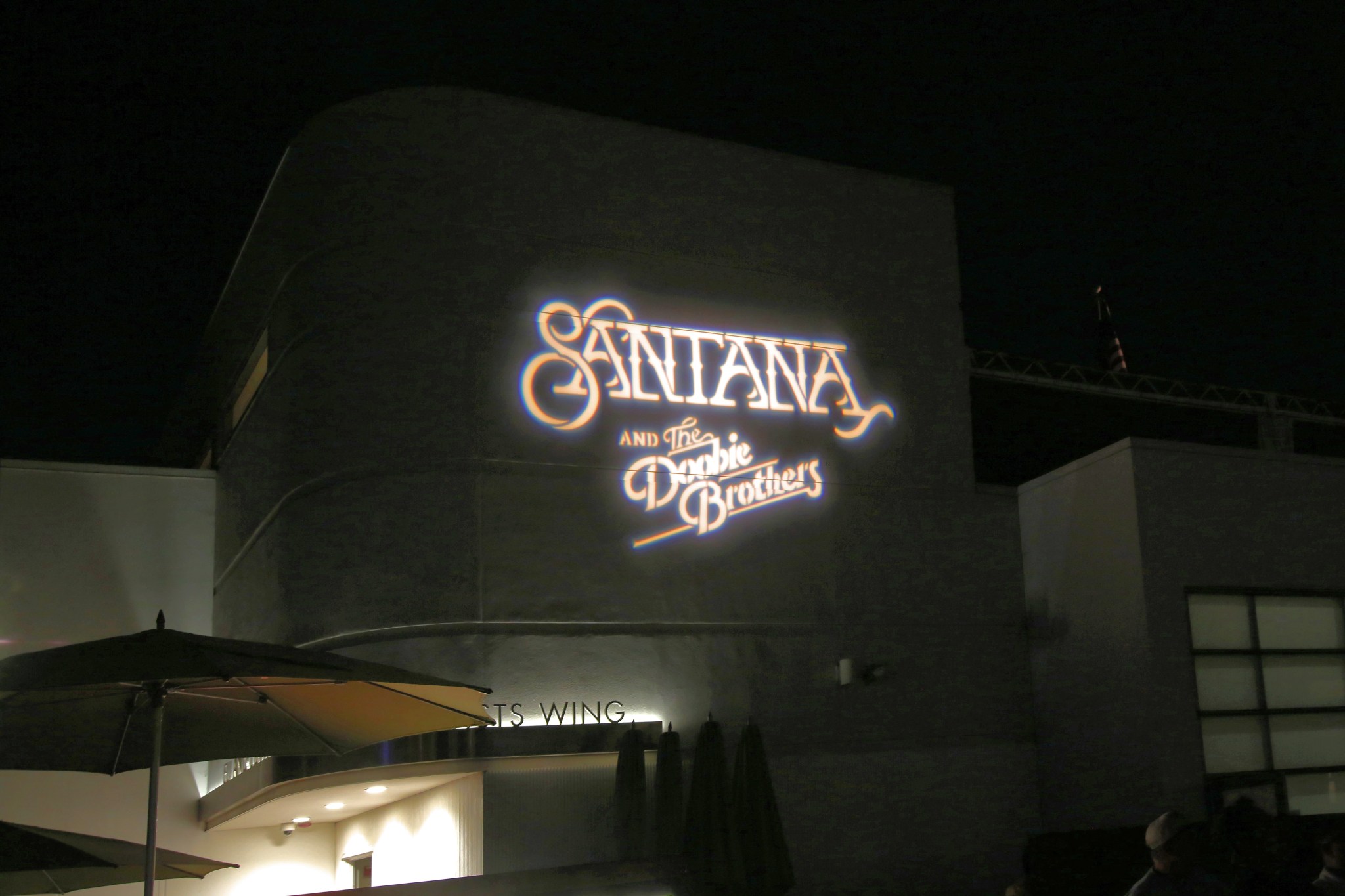
Intention, transcendence, unity. The “Oneness Tour” is aptly named, embodying the idea that music is something greater than performance alone. The familiar notion that “music is medicine” became the evening’s thesis at the Hollywood Bowl, expressed through sterling musicianship, movement and the collective experience of a crowd gradually becoming one.
Three resonant gong strikes beckon the audience into the journey ahead. The clamoring crowd settles into seats as an introductory film unfolds across the screens, invoking themes of spirituality, ritual and community underscored by intricate percussion. The atmosphere carries an unmistakably sacred quality, suggesting that what is about to unfold may be more than a conventional concert. As the footage gradually shifts from black and white to saturated color, the ten-piece band emerges. Cloaked in turquoise, beads and an effortless kind of cool, the group makes one thing abundantly clear: no element of the production has been overlooked.
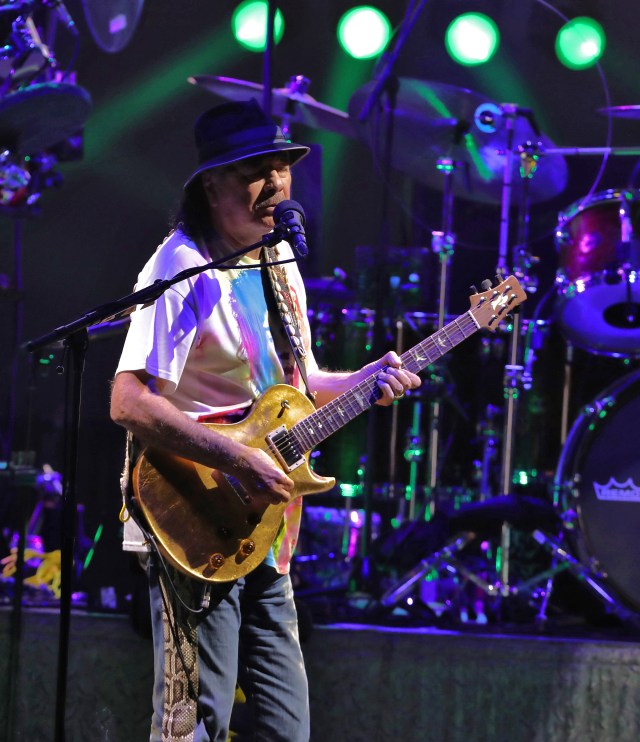
The man of the hour, Carlos Santana, appears with his one-off gold leaf PRS, and the band swells into “Soul Sacrifice” before melting into one of my personal favorites, “Jingo.” Behind them, the imagery continues to emphasize kinship, chanting, pure joy and dance. From the outset, Cindy Blackman Santana delivers an unrelenting drum solo, reinforcing the extraordinary technical caliber of Santana’s ensemble. The performance carries the fluidity of an enormous intuitive jam, yet every rhythmic turn feels deliberate. The musicians are remarkably intertwined, listening and responding to one another in an ongoing conversation, always in service of the song. Next thing I know, one of the vocalists unleashes a blistering trombone solo. Mind you, all of this occurs before a single word is spoken.
By now, roughly everyone in the front sections is standing, while those in the box seats seem to be negotiating a quieter social dilemma, watching one another before deciding how freely they are willing to participate. Some cannot resist. Bodies rise almost involuntarily, shoulders begin to loosen and feet surrender to the rhythms coursing through the air. The question becomes whether the music can quiet that sheepish voice insisting on restraint, composure and studied indifference long enough for the audience to fully embrace the experience. May the experiment begin.
As the evening progresses, the band settles deeper into a collective state of instinct. The frontmen move through sleek, coordinated choreography, contributing to the percussion when not singing, ultimately highlighting the ensemble’s collective spirit. When a song is not sharply punctuated, it liquefies imperceptibly into the next. Santana’s unmistakable guitar licks function as a North Star, reorienting the listener. The opening rake into the legendary phrase of “Black Magic Woman” lands with the immediacy of dropping a needle onto the original record. His precision is remarkable, but even more compelling is the emotional clarity of his playing. Santana does it all while casually chewing gum, delivering historic riffs with a nonchalance that reminds you exactly why he is who he is.
The Bowl itself offers a physical illustration of music as a universal language. The packed venue spans all generations, races, ethnicities and seemingly every walk of life, yet the response is uniform. As the band seamlessly weaves, bodies throughout the crowd mirror the rhythm instinctively. Hands air drum. Feet tap with force. Heads nod in time. The setlist moves through hit after hit with such momentum that there is scarcely time to intellectualize one moment before the next arrives. Perhaps most tellingly, the audience begins performing the gestures typically guided by a frontman without receiving any instruction at all. Lines are repeated. Hands clap on cue. It is apparent that the mental chatter is quieting; the walls are rapidly coming down.
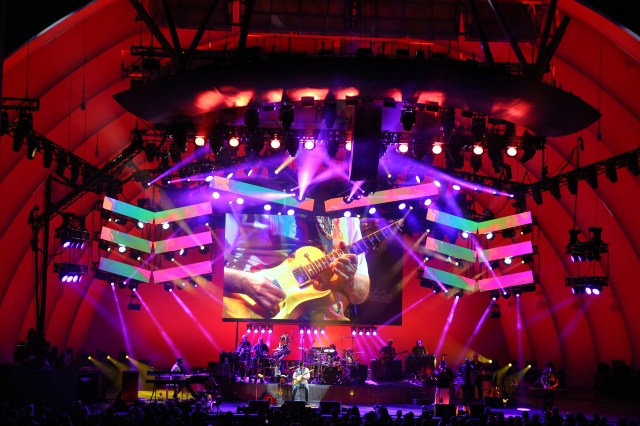
Santana uses his time to speak directly to the crowd about our ability to make a difference, invoking light, divinity, unity, harmony and oneness as an antidote to a world “infected by fear.” His words give language to what the concert has already been demonstrating all night. By “Corazón Espinado,” nearly everyone is on their feet as the singer moves to an extension of the stage and into the crowd. It felt like the evening’s peak until “Maria Maria” arrived. What ensues is pure celebration. Seats are abandoned. People jump, move and fully inhabit the moment.
“Smooth” brings the night to its final crest and whatever trivial reservation that remained has disappeared. The stage glows, wrapped in warm lighting as the musicians continue to display the extraordinary chemistry that carried the evening from its first note to its last. What began as a concert ultimately became a demonstration of Santana’s central philosophy: when intention meets musicianship and collective surrender, music does not simply fill a room. It dismantles the distance between the people inside it.