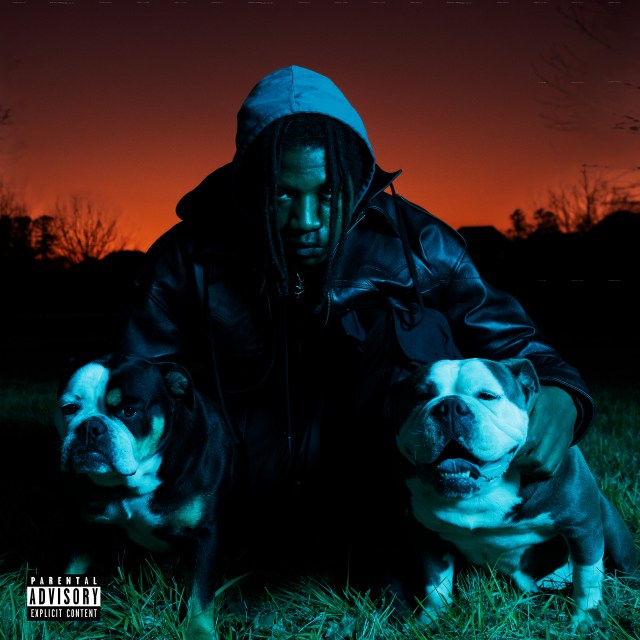
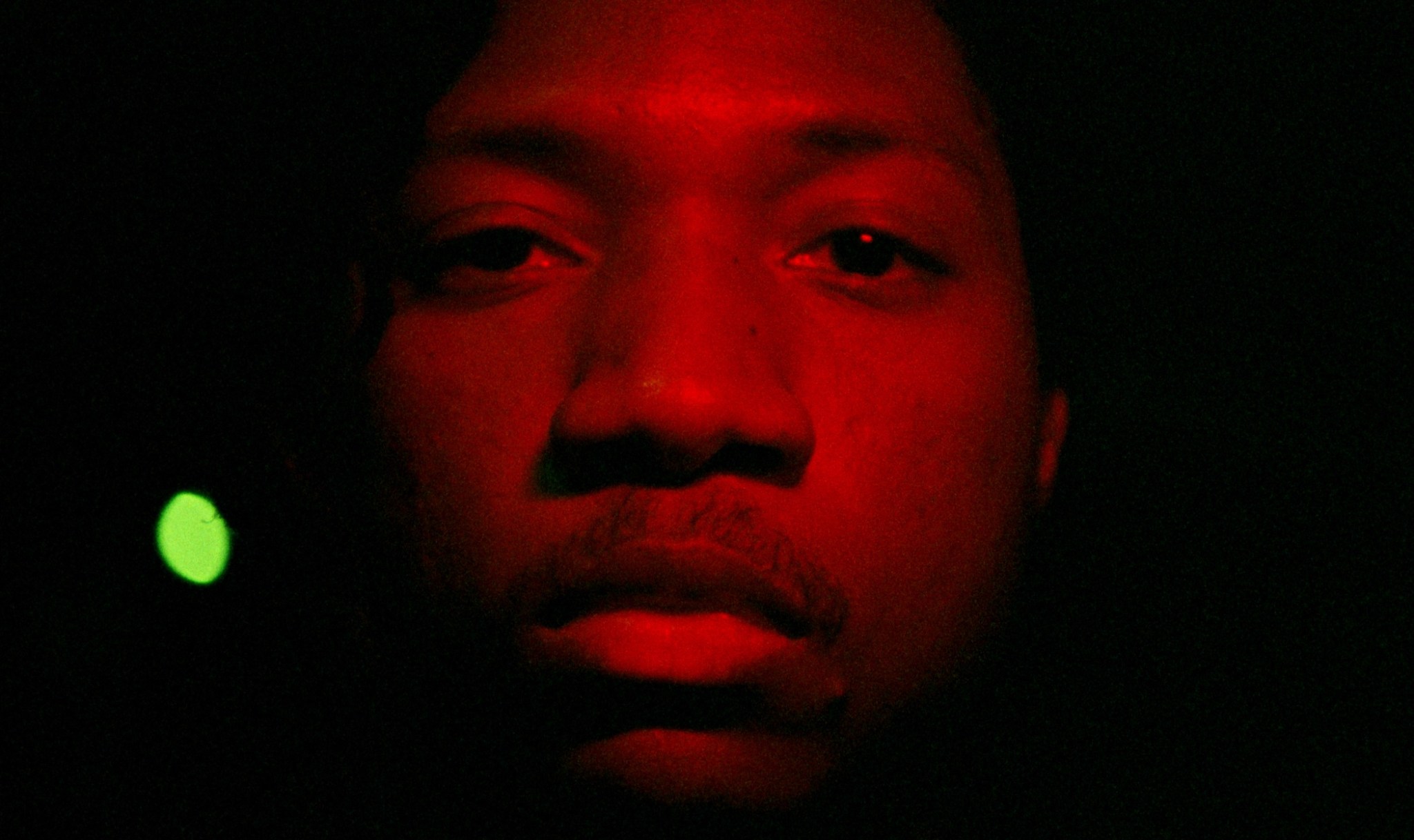
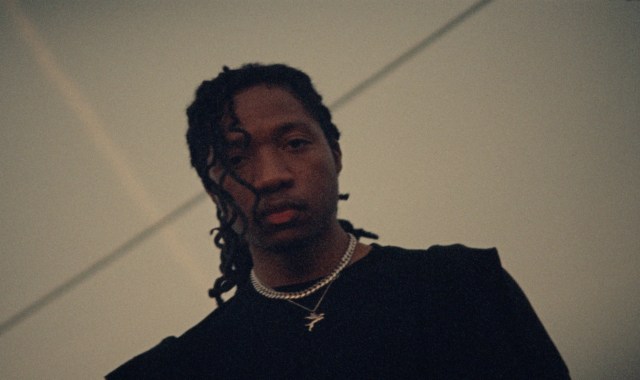
The mix of rap and rock is not groundbreaking on its own. But the unique blend that Kenny Mason has found over the years has made him a trailblazer. The Atlanta native is a shining example of what inspiration and appreciation for the music culture of an area can become. The DNA of Southern music is clear from the get-go, but he is not one to be bound by those same elements. Taking what fits his purpose and mixing that with his own unique sensibilities has become quite the theorem. His most recent LP BULLDAWG makes that clear as day. Kenny has always been one to shift the sonics and sound of a project from track to track. BULLDAWG feels his most personal in terms of sonic choices. It’s weird that a project where he has become more vague in the lyrics still feels the most personal. The tone and energy of the album convey an openness that would be hard to put words to in any way. Right before the release of his deluxe version of BULLDAWG, Kenny sat down with us to discuss the project, the southern music scene, and the growth that happens from album to album.
Listen to BULLDAWG: GRAVEYARD SHIFT here.
Hit Parader: How is your year going so far?
Kenny Mason: I’m having a great year. Everybody received the album really well. We did two tours, one in the States and one overseas. This has been perfect and is by far the best I’ve felt creatively.
HP: You’ve talked about how video game soundtracks were a big part of discovering rock music. If you could make the soundtrack to any video game, which would it be?
KM: I would go classic, like Tony Hawk Pro Skater. That’s the root of my love for alternative music. If they made a new one, I would want to pick all the songs. I think that would be fun.
HP: For the people who aren’t from the South, what’s one aspect of Southern music culture that’s different from others?
KM: The influence of the church/Southern Black gospel. Especially when it comes to R&B. Even early guitar-based music was directly from the church. Specifically, the Southern church culture. A lot of those chords and harmony choices are still present today in pop music. I think the Southern Black Church Choir is the root of all music. It’s probably one of the most influential music concepts of all time.
HP: You have a lyric off your Paris Texas feature, “DND.” It’s “No more rapping about the shit that I’ve been through. When I meet a fan, I feel seen through.” How has your relationship with vulnerability in music changed as you’ve gone through your career?
KM: That seems like a harsh bar to say. But if you think about it from my perspective, it feels like I’m inviting people into my life. I love my fans for sure. I want to create a culture of talking about things they can relate to. Talking about tough situations that I’ve been through and that they can relate to. Without oversharing or giving too much of myself away. In a way that’s a little more vague or palatable. While still getting the point across and conveying the emotion that people can feel. I just chose not to be so literal about the things that I go through in life. I think it gives people- some, not all- but bad apples ruin a bunch. It gives people the audacity to act like they know me or feel like they know me. They don’t know me personally; they know what I present to the world. I can still be personal without it actually exposing too much of my actual real life.
HP: I understand; it’s a thought I have often about interviews. I’m on the other side of that dynamic. Going into interviews, I know a lot about the person I’m talking to, but they know nothing about me. It’s this weird balance of trying to ask specific or in-depth questions without being too personal.
KM: It’s interesting. Even the concept of the average consumer today moves like a journalist. That’s why journalism is not as strong as it used to be. Every consumer is thinking about how they interact with an artist in the way a journalist would. Trying to analyze certain things. Sometimes the first thing people talk about is album sales. It feels very meta instead of just enjoying the art this person has put out.
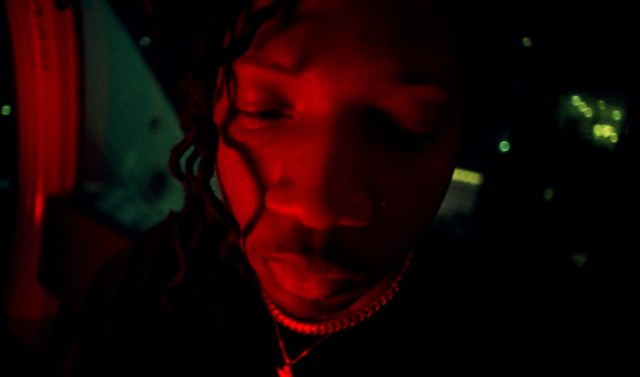
HP: That ties into a theory I saw you bring up about the main concepts behind BULLDAWG. It is something along the lines of everyone is an artist, and they downplay their art because they are forced into a specific medium. Do you mind explaining the theory?
KM: We live in a time now where people are observing themselves making art. It creates an invisible wall between them. It’s very meta. It feels like I’m thinking about the thing instead of doing the thing. The reason I feel like everyone is an artist is that everybody’s figuring out how to present themselves all the time. Just with the time we are in with social media, blah, blah, blah, all that stuff. People are constantly thinking about how to present themselves. Which, on a level, is cool, but it gets very weird. Saying that, at a certain level, people are constantly observing themselves. That pressure to perform, to always perform, may get in the way of actually making something cool or that connects for real with people. Which is why I feel more extreme things are the things that connect. They break the fourth wall of what this thing is.
HP: Even on a more minute level, artists used to always experience this when releasing something. This thought of “How is this going to be perceived?” “How are people going to react to this?” Now everyone is thinking about that before they hit post on Instagram.
KM: Even starting the concept off with whatever is going to get the most views and likes is the inspiration. Instead of doing some real inspiring shit.
HP: I imagine it’s even worse for the younger generation. I grew up not having a phone until middle school. But for the younger artists who have had phones their entire lives, it’s probably so ingrained in the idea of views instead of for creation’s sake.
KM: Yeah, they’ll probably be way better at it. It’s still a mindfuck-type shit to me. The rules are automatically different for being a creative or a content creator. It’s like the baseline. Even if you are a content creator and it is for social media, the baseline is different because you have to stay within the parameters of certain criteria. Whereas before, people were just figuring it out, and it was more free.
HP: Another similar quote—the one we were just talking about—came from the same answer, but you said, “The world treats us like scrap, but we’re really treasure.” That seems to be the prominent theme behind the album. Why did you feel like a junkyard was a great analogy to spread the message?
KM: It just felt like a cool analogy. Online, or on Instagram, I’m finding artists in the depths of the corners of the internet. I’m finding cool shit. Artists who are embodying what I’m talking about, as far as going against the norm. They are just sitting there. The people are telling them that they’re not valuable because they’re not getting any views or whatever. It’s not getting as many views as this thing that everybody is doing. My first album came out in 2020, and it’s 2026. There are so many artists that came out just in those six years that aren’t making music anymore, and it was so good. The only reason is that they were getting compared to this thing that’s making a whole bunch of money. It’s obviously powered by a machine-type beat. I’m not anti-machines or whatever. I’m with whatever gets stuff in front of people. If it gets good stuff in front of people, then I’m genuinely with that. But there has to be some type of nourishment towards people who are destined for this type of shit. Not so much manufactured stuff because it’s going to destroy culture. It’s literally a poison to the culture.
HP: On the one hand, algorithms are a good way to find some types of artists. I’ve found plenty of artists from different social media platforms that I end up loving. But it also causes people to affect their art because of how it affects the way they think about art. You should create art, and then the algorithm pushes it. It shouldn’t be one continual process.
KM: Everybody is not meant to follow the wheel of the algorithm. If there is a culture, there has to be a counterculture that goes against it. It has to be balanced in some type of way. There has to be a group of thought that is independent of that. Because that feels like something that no one can control. That just feels weird to keep trying to follow for real. I think the junkyard analogy is perfect because people are building their own cars from scratch. It’s the coolest metaphor: “I’m going to take this thing, and I’m going to make something functional of it.” It’s more special that way.
HP: When it comes to mixing genres, a lot of people fall into the trap of mixing a genre and just doing an aspect of a genre for the sake of it. You and Paris Texas are the ones that come to mind where everything feels like it’s for the sake of the track. How do you go about mixing genres in a way that feels conducive to the track and not just because you want to add something?
KM: That’s a good question. Number one is being well-studied enough to know the root of certain things. Why this chord is supposed to do this right here. When it’s supposed to stop. Just studying the music. We didn’t invent the wheel. People have done this in a cool way before us. It’s just understanding why those things work and putting your own spin on it. We are not the first ones to do hard rap drums and guitars. Just putting our own spin on it and understanding why it worked when it did. I also think having the discernment to break away from harping on the idea of it versus it actually making sense. Putting the sound before the look or the branding. I can’t speak for Paris Texas, but I also think they would kind of agree. It’s not a thing we were trying to be like, “Hey, we’re going to be a black artist who makes rock music that’s blended with rap.” We didn’t wake up and decide to be that. You just play around with sounds, and you’re inspired by stuff that you like.
HP: Earlier in your career, it seemed like people had issues labeling your music. Whether it was labels, people in the industry, or journalists. Early in your career, did that affect your creative process at all?
KM: I don’t think it affected my creative process. It tried to affect my business, as far as how I branded myself and what publications I decided to be a part of. Even down to what artists I was collaborating with. It tried to push me into a box, as far as image and adjacency. Creatively, I have always been confident and free to make whatever I want. It’s just people trying to figure out where it’s supposed to go. Instead of just enjoying it. I built the culture of a fan base that understands I can do anything. But it will still have that through line of being authentic to me. It’s less about genre and more about mood.
HP: Do you find that the expectations of fans who discover you from different songs change depending on the genre of the song? I did an interview with Internet Girl not too long ago, and when they brought up your feature, they talked about how they knew you for rock first, then found out you rapped as well.
KM: Yeah, I’m sure it does. That’s why I’m big on being an album artist. Once I bring people to the world, they understand more. They’re more open to “Oh, this can go either way.” I’m pretty sure there are some fans that like this sound a little bit more and then some that like another sound a little bit more. Overall, everybody can appreciate the through line of what I’m saying and the world I’m building. The taste level of what I’m doing, whether it’s rap or rock.
HP: You have mentioned before that Angel Eyes was in honor of your grandfather and how he represents the type of man you wanted to be. Then, for BULLDAWG, it represents the man who you’re choosing to be. That growth from who I want to be, then building into how I choose to be that person, is a very important thing for everyone to figure out. What caused that, and what are the things that you are looking for in regard to that?
KM: I think that Angel Eyes was a coming-of-age project for me. It’s interesting because it came out of nowhere. Kind of like growing up, or like I wasn’t actually prepared for it. It was supposed to be a deluxe for 9, and then my granddad passed away. Another friend of mine passed, and it turned into this whole story I had in my mind. I felt that I had to put it out at the time. I feel like it was literally me growing up. The character that I created in BULLDAWG is like my granddad. My granddad was very much a hardworking man. He took care of things in life, despite not feeling like he got as much credit, praise, or accolades as he deserved. Despite it, he knew what his responsibilities were and kept doing them. Angel Eyes was coming to age, and then BULLDAWG was the result of that. My take on BULLDAWG was my take on what masculinity is, too, in a way. In today’s time, or what it could be. My grandad was very much somebody who was an embodiment of that for me. All in all, the character in BULLDAWG would probably be close to a younger version of my grandad.
HP: One of your most consistent collaborators is Coupe. Any time I hear his tag on one of your songs, I know it’s going to be great. How did that relationship spark?
KM: The first day I met him, I knew off the bat that he was not only talented but hardworking and really ambitious. He really wanted to make things that were great or considered great for our time. That’s a sentiment I share for real. Surprisingly, not that many people feel like that. A lot of people just want to do things that are popular or make a lot of money. I can tell that Coupe, in his own regard, wanted to make things that would stand the test of time. That would be very original and authentic. Beyond the sake of whatever result it may bring. I could tell he wanted to make something that was really, really good. We bonded over making things that we thought were good and special. Our relationship is rooted in a love of music. A love of the music we grew up on, a love of music we consider to be the best, and our take on it. He’s from Macon, but he spent a lot of time in Atlanta. Whenever we get together, it’s very much that Southern rap feel. We obviously listen to all the Atlanta classics: Thug, Future, Gucci. Stuff like that, but also Southern rap in general. We listen to a lot of Memphis horrorcore rap like Lord Infamous, Project Pat, and UGK. He was somebody who felt cool to work with because he was willing to sit there and reverse-engineer things and nerd out over it. That’s why it has that synchronicity.
HP: Another recent collaborator is Shane Moran of Title Fight. How did that friendship start?
KM: I met Shane through my friend Neil. Serendipitously, he used to help tour manage and help out with their band stuff around 2015-2016. Back when I was still a super fan and watching everything they were doing. I had a conversation with him one day about bands that I like. Obviously, Title Fight was one of my first bands. He was like, “Those are my homies.” He introduced me to Shane, and he came to Atlanta. We just made music, and it felt like we had already known each other for a long time and had crazy chemistry. To me, it was a meant-to-be moment. It still feels surreal working with him because he very much embodies that sound and that feeling of listening to Title Fight when I was younger. I wake up and can’t believe that I’ve made music with him. It feels surreal.
HP: What’s one Atlanta artist that you think deserves more attention?
KM: There’s this kid, Jelani Imani. He’s a good friend of mine. His music is really good. He’s super talented and stands out. He’s got his own swag and voice. He deserves a lot more attention. I want to leave it on him for now. People should listen to him for sure. He has a project called The Stranger, and it’s got its own sound. It’s fire; I think people should listen.
HP: Any last message to the fans, readers, or listeners
KM: Thanks for rocking with me. Thanks for all the words. Thank you for coming to this world and feeling safe in it. I’m grateful for real.
Listen to BULLDAWG: Graveyard Shift here.