
After a certain number of years making music, whether the public sees it or not, being an artist can start to lose the golden shine that lured them in and feel like a job again. The long days at the studio, the long drives on the road, and feeling burnt out as a result.
Not for Polyphia.
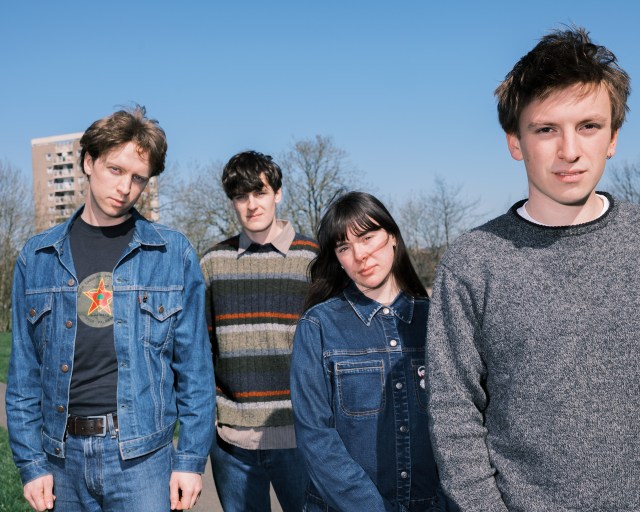
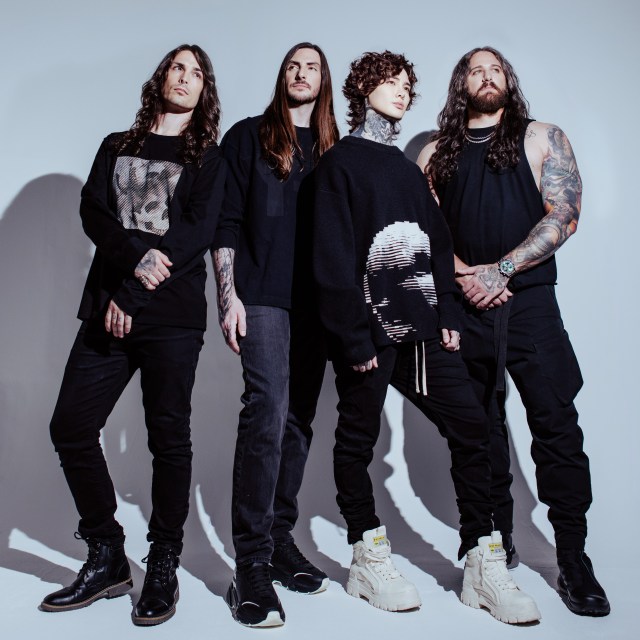
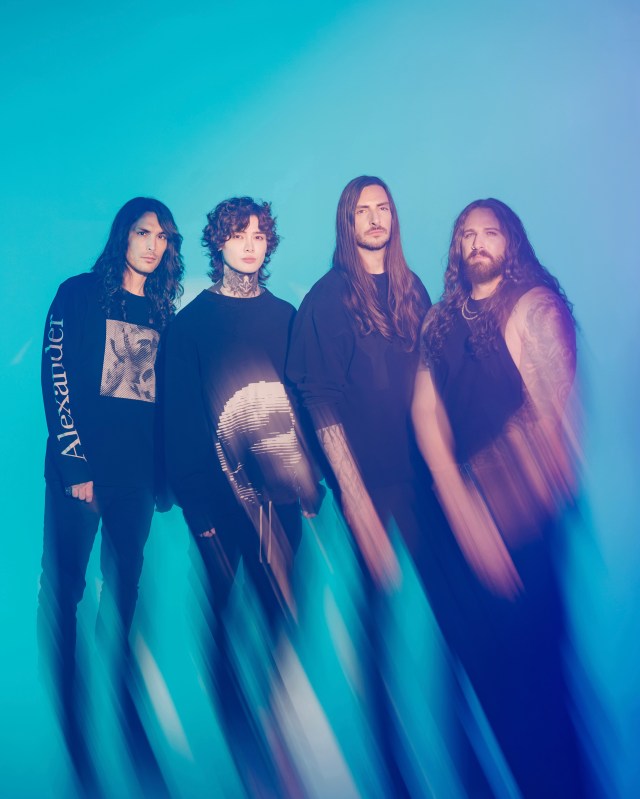
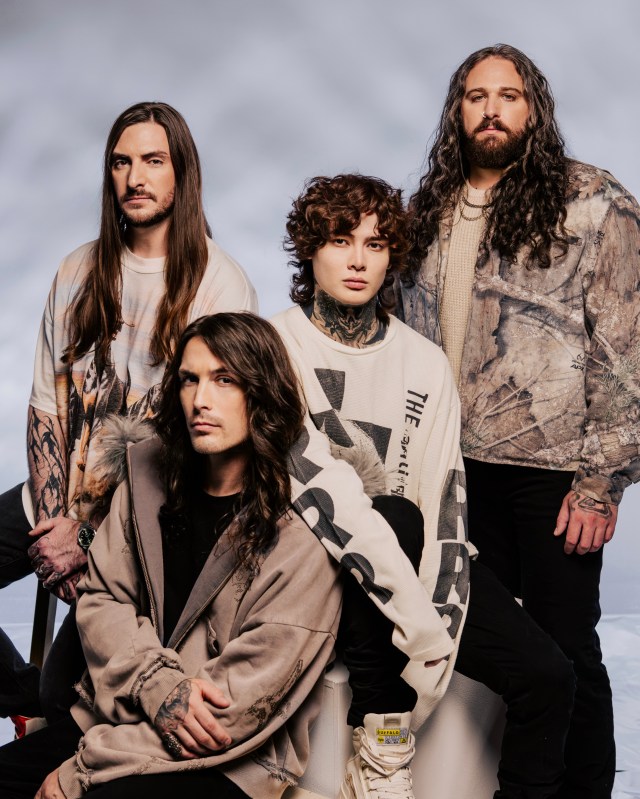
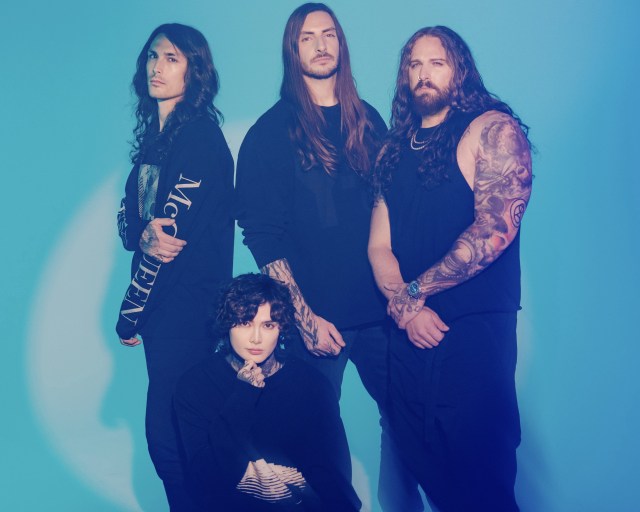
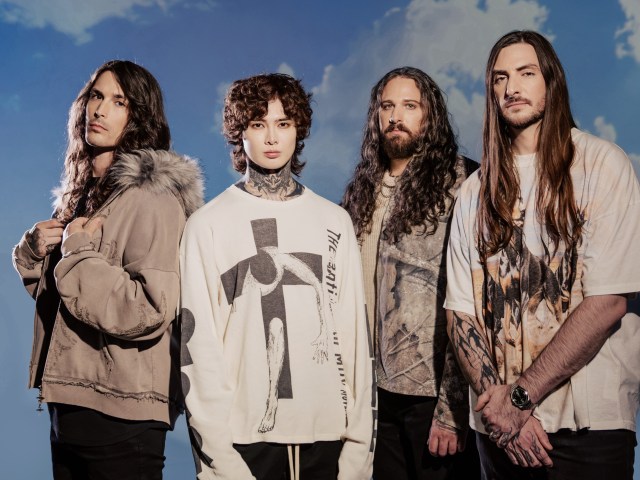
The Texas-born math rock band, formed in 2010, proved to themselves and the world that they’re the farthest thing from that with their fifth studio album, Be Not Afraid. Composed of guitarists Scott LePage and Tim Henson, bassist Clay Gober, and drummer Clay Aeschliman, the four-piece pushed themselves and their own musical boundaries to create their most sonically diverse work to date, all while returning to why they formed a band in the first place: to have fun making music with your friends. Hit Parader had the chance to sit down with LePage and Henson to discuss what continues to drive their innovation, how they’ve evolved over the years, and why, after 16 years, being in Polyphia is more fun than ever.
Hit Parader: What has been the most fun part about being in Polyphia this year?
Scott LePage: The writing, dude.
Tim Henson: Yes, the creation of the music.
SLP: Sessions we did to make the music, the writing of it, the community of it.
TH: Yeah, man, we kind of modeled all of the writing sessions after, I believe it was Ye’s My Twisted Beautiful Dark Fantasy, or some combination of those adjectives for that record. And what he would do is he’d fly everybody out to Hawaii and make everybody pull up to the studio wearing suits to get everybody in the vibe of the record. It needed to have rules printed out and taped to the wall of “No Twitter,” and no social media, no this, no that, but all things to kind of create this really sacred space. And he would make everybody wake up at the same time, and everybody would have breakfast at the same time, and then everybody would work out at the same time, and everybody would then lock the fuck in at the same time. And we did that for every session on this record, where we would allot two to three weeks at a time in a certain location. For previous records, Grand Theft Auto was our pastime, which was really fun. But it doesn’t do a whole lot. It’s more of a pacifier than an energizer. And so we replaced Grand Theft Auto with basketball, and that gets the blood flowing, gets your energy up. So adhering to that really strict schedule of everybody doing the same thing at the same time, and it made for magic, man, and it was so much fun, and there’s something so special about knowing what you’re doing is dope as fuck in the moment as you are doing it. It’s just like, ‘Oh my God, we did it, we got it,’ and you’re jamming shit, and then it’s just like, ‘Oh, well, what if it did this?’ And then immediately doing that, and then continuing to jam the song as you were making it. Very special stuff, and yeah, that’s the most fun.
HP: Because this record was the first where you were all four in the same room creating, rather than everyone writing separately and then bringing it together?
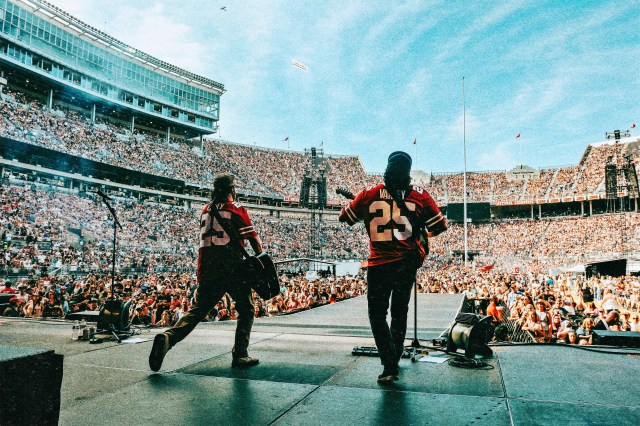
TH: Yeah, lots of in-the-same-room writing, where we’ll have kind of the general vibe or beat playing, and then just on the spot, making the hook, just singing it. And then translating that to a guitar on the spot, which on previous records is a lot harder when things like chord melody are involved, because then it’s like, you gotta figure out the root notes, you gotta figure out how to have the interplay between the top part and the lower part at the same time, as opposed to this record. It’s just like, ‘All right, well, we’ve done three records of that.’ The Most Hated, New Levels, and Remember That You Will Die are all steeped in chord melody. It’s just like, ‘Okay, let’s just rock the hook the way that it is in just one simple lead line.” Which definitely helps. Since Remember That You Will Die came out, we’ve been blessed with opportunities to play to crowds of 50 to 100,000 people at once, whether that’s at music festivals in Europe or touring with legends like System of a Down, Korn, and Avenged Sevenfold. And upcoming, we have one with Slipknot. And those lead lines, those single-note lead lines, travel so much better in a stadium context than chord melody on an electric nylon string. And so a lot of that was super intentional for how we expect to play these songs live.
HP: And after all this time, it just must be such a gratifying feeling to still have this much passion and enthusiasm and fun going into this LP after all these years.
TH: Dude, yes, bro. Because we always used to joke, ‘Yeah, one day when we’re 50, we’re gonna break up just to do the reunion tour.’ And I don’t think you could get there if you didn’t have fun. And I truly think that everybody should be chasing that excitement in their life, obviously in a positive way. I think that’s so important; if you’re not doing this because you want to, because it’s exciting to you, if it’s fun for you, then why are you doing it?
HP: That’s very fair. And I’d say it’s not your widest record, but your deepest in terms of just the production and the layering and the different ear candy that you included in the record. I’m curious if there are certain layers or things that you included that kind of stick out in terms of your favorite small additions in the record.
TH: Yeah. “Deny the Flesh” is one of the deepest tracks on the record. It’s also one of the most insane journeys of a song. But yeah, in terms of meaning, in terms of the musicality and just the themes that are happening in that song. I think more than just little ear candies and such, there’s so much thematically happening there that I know that we’re all really proud of.
SLP: Just to get some variety going on here, because I do agree, I think “Deny the Flesh” would be my first choice to answer that question as accurately as possible, but my runner-up would be “They Know Not What They Do.” That’s another journey.
HP: I love that. When I was listening through, it just felt a lot more trap/house-heavy, which I really like, and it’s a lot different from the earlier Muse material. And Scott, you even said that this record stemmed from a yearning to evolve throughout your entire career.
SLP: Yeah.
HP: What does evolution look like to you now in your career, musical or otherwise, and how has that changed, I guess?
SLP: Well, it’s kind of like we just don’t like doing the same thing twice, and obviously there are things that kind of cross over from record to record, like Muse to Renaissance is kind of a same-sounding type of mix or something like that, but it kind of really just comes down to what we can do with our instruments that makes it fun. What can we have fun with this time that isn’t just something we already did, and how can we explore it even further? This one is definitely the most explorative, I think, with The Most Hated being probably the second most experimental or explorative or whatever.
TH: I think, too, thematically and meaning-wise. I remember when we were naming the songs for The Most Hated, Scott and I were on a plane to China, and we had to turn the record in, and we just only had demo names, and we were like, ‘Okay, we’re really into Grey Goose Vodka right now. Let’s name a song ‘Goose.’ And we were like, ‘What’s another name for weed? Loud, right?’ And versus this time, every song and every sample and every artwork and everything about this record is so intentionally thought out. And so that, to your question about evolving as artists, it’s more than just, ‘Look at the cool sounds and cool shit we can do.’ It’s all intertwined, a piece of art that we’re all deeply, deeply proud of.
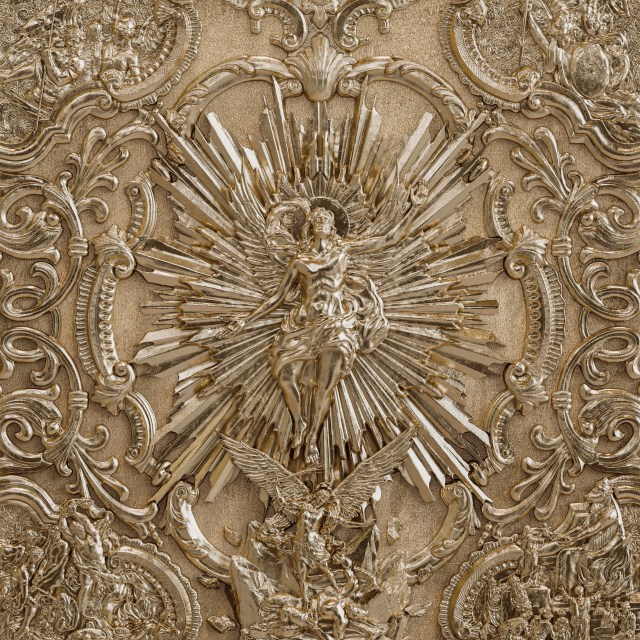
HP: And I love the intentionality as well, because I watched an interview that you did about a year ago. You were talking about spirituality after Remember That You Will Die, Steve Vai, and just the sort of realizations that came about during that album cycle. And I was curious, because a lot of the theming, the album titles, and the album cover have spiritual undertones. I’m curious if that intentionality was something that you were mindful of going into the writing process?
TH: Yeah, no, I think during the writing process, we were coming across things that were incredibly dark on a spiritual level. I don’t know what the spiritual implications are of what’s going on in those files, but it’s not good. It’s literally the opposite of good. And so when making this record, that’s kind of the things that we were incredibly aware of: the opposite ends of that spiritual spectrum, right? And so with wanting to, I guess, transmute all of that negativity into something good, this is where we’ve landed. And I think, like what I said, with how much intention went into choosing the samples for each song. And I think with repeated listens, I do hope that for the people that get it, I fully am aware that there’s going to be a lot of people that really misunderstand this record. But for the people that get it, I hope that with repeated listens, a lot of those positive messages really stick. Because if you think about what music is, it’s this thing that even when it’s not playing, you can find yourself singing or humming songs that you’ve heard, or sometimes it’s not even ones that you like, just things that get stuck in your head, right? Earworms. And a lot of modern-day music has been crafted with that intention.
HP: And that was the vessel of the samples, in your opinion?
TH: Yes, yeah.
HP: Because there were a lot of gospel samples I thought were really cool, but then I also heard the Alex Jones one, and that one threw me off a bit.
SLP: Yeah.
TH: I think it’s such a wild quote, right? I think it’s worth Googling. And I think just that is the one that is pretty out there. But again, it was included to draw attention to something you can verify for yourself. It’s very much worth Googling.
SLP: That’s one of those deeper ones.
TH: I’ll tell you, it’s goofy.
SLP: Yeah, it’s goofy, but it’s kinda like, if anything, I would argue that it’s goofy enough to make you wonder enough to hopefully Google it and be like, ‘What the fuck is he talking about?’ And then find out what he’s talking about.
TH: Yeah, it’s not an endorsement of Alex Jones, by the way. I don’t know if I have to say that, but I feel like again, I do think that there are gonna be people who really, really misunderstand us, and intentionally misunderstand us. And that’s okay; we made this fully prepared for that.
HP: That must be an interesting mindset going into a project, understanding that the art will sometimes be misinterpreted and being content with that as well.
TH: Well, yeah, we’ve never made anything for anyone but ourselves. We make the things we want to listen to because they do not exist in the way we want to hear them. So we’ve already won. We get to listen to this record now. Whether people understand it or misunderstand it doesn’t make a difference to us, because we’ll already be working on the next record.
HP: It goes back to the fun aspect as well. If you’re not making music for yourself, then you’re gonna burn out.
TH: Yes. You should have some conviction in what you are doing, whether it’s making a record or whatever you do in your life. I think that without purpose, there’s no meaning to it.
SLP: A fun sidebar thing to add real quick. Maybe not so fun. Every time, for whatever reason, psychology or whatever, when we release a record, I love it all the way up until the point that we release it, and then maybe I get one more week of loving it, and then I’m like, ‘Okay, well, I’m ready to do the next one.’ And then I just, for whatever reason, can’t listen to it the same way anymore. I’m curious if this record is going to be the same way for me because of how much I love it and how good it makes me feel, even remembering the fun we had doing it and all that stuff, and how different it is from all the other stuff. I’m curious to see how ready I am to do the next record after a week of this one being out. But if I had to take a guess, I would say this one’s gonna stick around for a little while on the playlist.
HP: And that’s a testament to how much effort and how much joy you’ve put into the record as well, which is great.
SLP: Yeah, for sure.
HP: From the start of your career, what are some aspects of Polyphia when you were starting out that you wanted to that you’ve kind of consciously preserved as you’ve gone through the years of being in the band?
TH: That exact point of just making it for us. We’ve certainly caused an uproar within our fanbase throughout the years. From Inspire to Muse was a very drastic shift that I remember, in addition to the drama that we had at that time with our lineup, I remember losing half of our fanbase that we built and just sticking it out through the years and then doing it again, from the “LIT” remix to The Most Hated. And then it seems like the same thing is happening now: you may not get what you want when you listen to us, but you will always get what we want. And that’s a promise that we can make to you. It does nothing for anybody but us, but there’s some integrity there. I don’t know if you can call it that, but to us, yeah.
SLP: Yeah, you can join the party if you want.
TH: Yeah, you’re always invited. You’re always invited to listen!
HP: For the last question, just to wrap up, what’s one thing at this point in your career that still reminds you why you do this?
TH: The fun.
SLP: The fun, yeah. We keep going back to the fun, but it’s really all about that. And listen, dude, I know not everyone can just have fun with every single thing in their lives, but you can choose the parts that you enjoy. The writing part of every album is something that Tim and I very much look forward to, because it’s the creation of it. And of course we look forward to the tour, because we get to go play the creation of it, but two years of touring on the new record is a good amount of time. And then when you come home from that last show, you just say, ‘All right, we need to take the next year, two years to just lock in.’ And I get to do the cool part again, or the creative part again. That makes us want to go back out on tour and express all of the new stuff that I have on this board that I wish I had covered.
TH: To Scott’s point, you can choose to have fun, and that’s something that has come across every aspect of being in a band for us. There have been times on tour when our van has broken down on the side of the road, and it’s December in Toronto or something, and it’s 3 a.m. on a Saturday, so Sunday, the mechanic shops aren’t even open, and we have to huddle next to each other for body warmth to survive. And you can choose to have fun in those moments, because it’s your boys. And that’s the cool thing: everybody in this band genuinely has fun with each other, and I don’t think that a good majority of bands can say that. And so yeah, maybe y’all should be fun-maxing.
HP: Fun maxxing, that’s great.
TH: Just give it a try, because it doesn’t have to be a shitty thing. It’s like, yes, it’s a shitty thing, but you can look at it; you can turn it into something goofy and fun if you want to.
Be Not Afraid is out now. Grab a copy here.