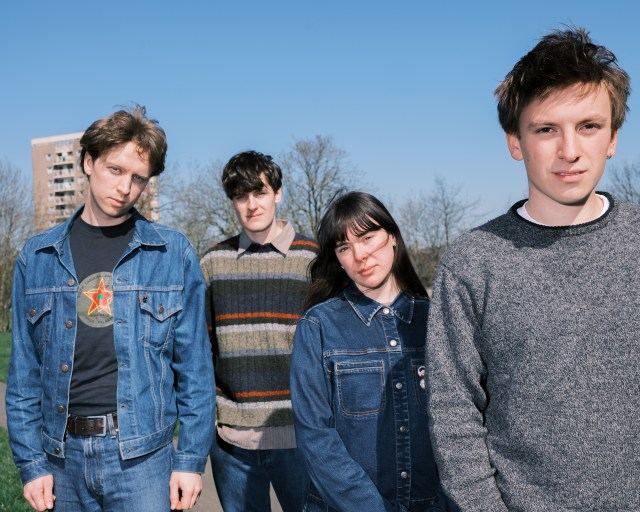
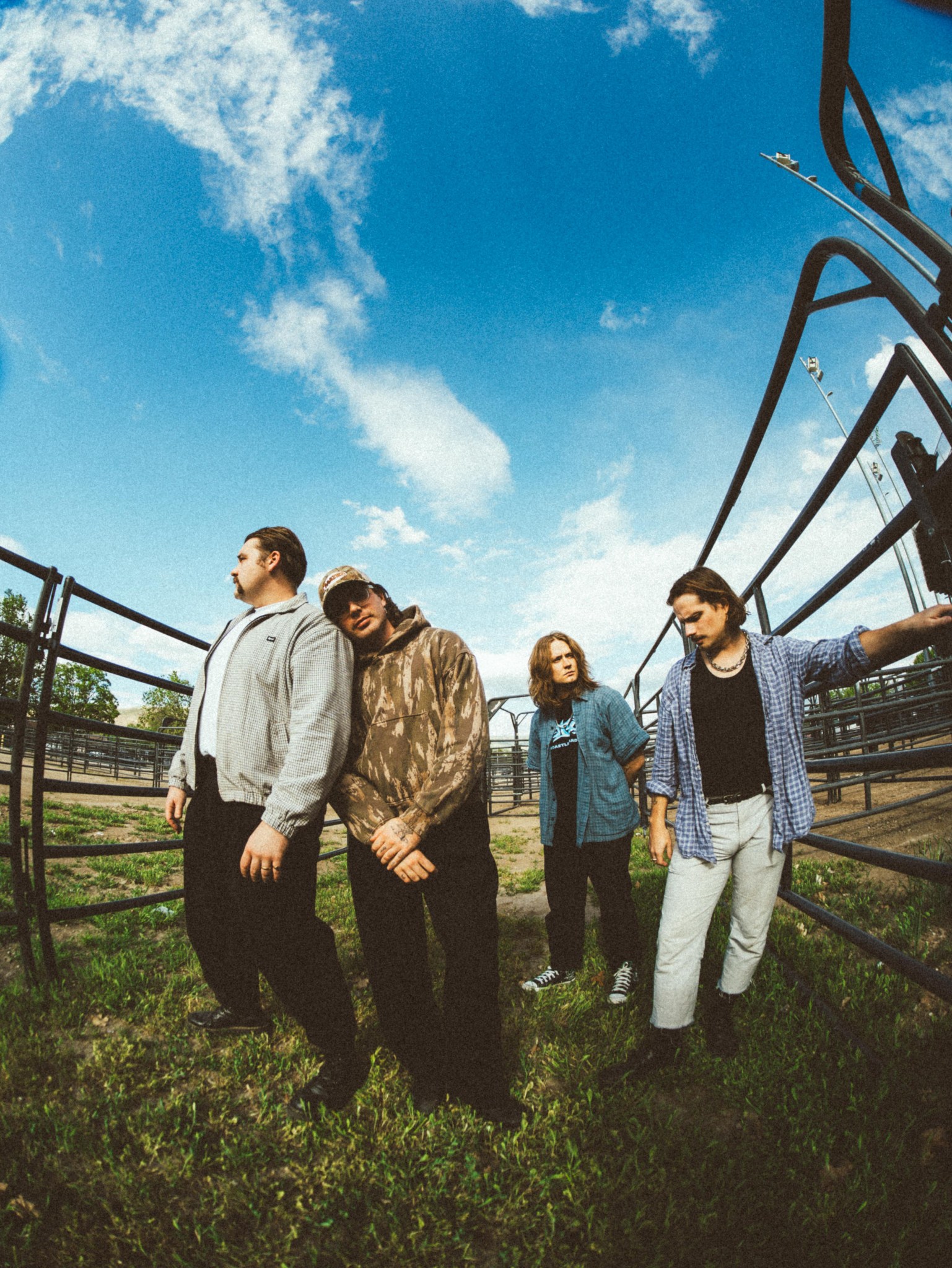
Over the span of a few short years, Vacations frontman Campbell Burns has watched his band transform from small shows in Newcastle, Australia, to packed rooms around the world. Yet Burns still discusses Vacations as if the band were a small project that just ‘happened to take off’. While the beautiful indie rock tracks are easy on the ear, there is much more lyrical intentionality hidden if you listen to the fantastic lyricism crafted by Burns. With a new chapter on the horizon, including new music, many shows, and their very own festival, MATES Fest, it becomes clear that Burns is less interested in chasing the abstract concept of success and more focused on making sure that Vacations’ artistic vision lives on, and that Vacations has always and will always be a band that you can discover and claim as your own. Hit Parader sat down with Burns to discuss more.
Hit Parader: So just to start off, while in Vacations, you’ve lived in Newcastle [Australia], Los Angeles, and then you recently, last year, moved to New York City. I’d love to know how each of those individual cities and the creative worlds around them kind of reshape the way you write, think about the band, and approach the day-to-day process as an artist.
Campbell Burns: So when I was in Newcastle, I kind of felt like I was in my own creative bubble. I was a part of a really strong, unified community of musicians, artists, and creatives. And I was young at the time. I would have been 18 when I was coming into it. So 18 is the legal drinking age, going-out age in Australia. So I started going to shows, meeting more musicians, and meeting a lot of like-minded people. And so with that in mind, and starting Vacations and then all these other bands coming together, that was really special and formative, especially in my earlier years, because I was really influenced by what people were doing around me, because it was real and it was tangible. Sure, I was influenced by things overseas or on the internet, but in terms of my own music career, I never really thought about much outside of Newcastle, which is kind of funny to say, because we’re now an international band, but when I was releasing those first couple of EPs, I did not consider anyone, even as far as Sydney, which is only two hours away, that people would be listening to it. And then it started going somewhat viral on the internet through YouTube, people like David Dean Burkhart, a huge 2016 bedroom pop kind of guy, getting that music out there. So shout out to him and everybody.
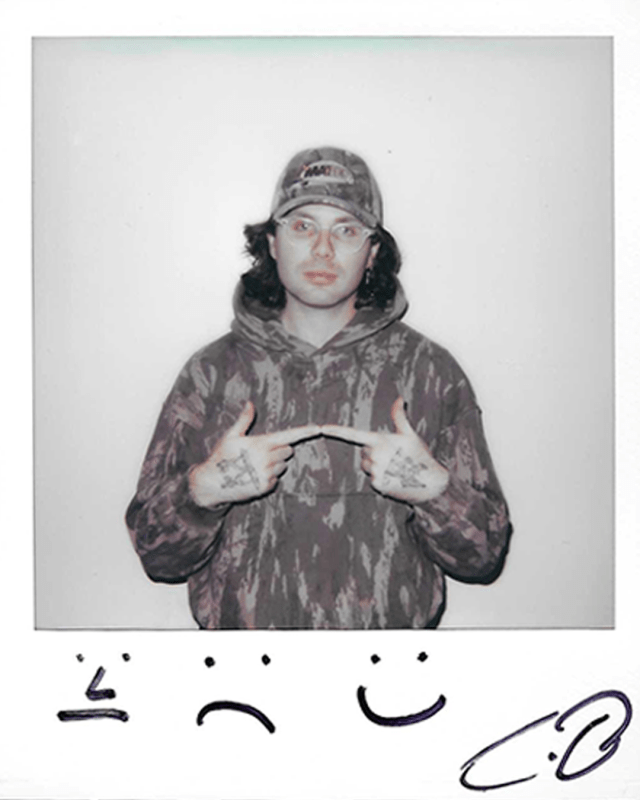
But then, I guess, moving to LA was a different step. Moving to LA was honestly kind of a blur. I say that I lived there for a year and a half, but that was really a stepping stone into the US. The most amount of time I spent consecutively in LA was only two months. I was barely there. It was more of a home base because I knew that I had reached my ceiling or my limit in Australia with what I could do, especially in terms of Vacations, and opportunities as a songwriter and producer on the side if I’m in my off-season. So LA felt like the next logical step. And it was eye-opening. It was very overwhelming as well, because I was dealing with culture shock. And then as I settled, I kind of had reverse culture shock going back to Australia. It was this double life. It was a bit strange at first. I’ve gotten a lot more used to it as I’ve settled into somewhere like New York, simply because I enjoy New York as a city to live in. I like LA, don’t get me wrong. I feel like LA is very much a city where you go to work. I just love living in New York so much, and it kind of reminds me of being in Newcastle, in the way that there’s community, and it’s accessible, and it’s easy to meet people. Everyone’s very forward-thinking and hard-working. I really appreciate that, not that you can’t find that in LA, but I think you have to be a lot more intentional about it, and I at least found it a bit more difficult. But then again, also to my own point, I was only there for maybe two months at a time, so.
HP: With both Newcastle and New York specifically playing a pretty big role in your life, if you had to choose an artist, some experience, or some form of media from both of those places, that has impacted your or the band in any way, what would that be?
CB: At least with Newcastle, I was part of a collective when I was 18 through my early 20s called No-Fi, as a play on Hi-Fi, Lo-Fi, and that was myself and a bunch of other musicians and artists, and we would put on DIY shows, art gallery exhibitions, big parties, and really try to celebrate the local community. And that was, again, really formative in my early years as a musician. And I was like, This is what I’m a part of, nothing else matters. I am here, and whatever else is happening, it’s whatever, because I just want to be a part of this. This is my world. So that was incredibly influential.
New York’s just different. I think for New York, it’s the idea of potential, the idea that anything could happen, and there’s always something happening here every day. It’s a very attractive quality in a city, especially with where I’m at in my career right now, because if I go back to Newcastle, it’s different, and I’m further along now. It’s kind of that big fish in a small pond. People have moved on from their bands, they’ve settled down, or they’ve moved into other lives. And as that naturally happens, especially with a career path like music, it’s tricky. Although we’ve played a lot of really good shows in New York, I feel like I’m always exposed to new music in New York. There’s always shows, bands always come here, people, friends from all over are always passing through. I just love that aspect of it. I feel like just by simply existing in New York, you are inspired, which sounds cliché as fuck, but I really do get it.
HP: No, but that’s fair.
CB: Yeah, now, after being here for a year, it’s only a walk outside and then anything could happen, whereas in most places, I probably couldn’t say the same.
HP: With you growing up with No-Fi, and doing a lot of DIY and community-focused things back in Newcastle, what would be one aspect of that DIY community-forward ethos that you would want to keep ingrained in your career as Vacations keeps growing?
CB: Putting a spotlight on artists that are up and coming, that are developing their craft, and always trying to build a community. I never want to be a successful indie or alternative, or whatever genre tag the record label wants me to say, but you know what I mean. I never want to be at a point in my career where it’s just like, ‘Oh, we’re not thinking about the opener, or we don’t care about those around us.’ There is always some aspect of those DIY roots that carry on into everything that we do now, because I care a lot. I think there’s a lot of really fucking cool musicians out there. All my friends are sick. I love them all, lots of talented people. I just want to bolster everybody. Because I’m in a point in my career where things are good, things are stable, and there are people around me that are making their first single, or maybe they’re an album in, and I’m like, ‘This is sick. Let’s work together,’ or ‘Come open this show.’ Or people will come to me and be like, ‘Oh, how did you get a manager?’ And then we can sort of trade stories. I think that the exchange of information is really important and valuable.
HP: And with that aspect of trying to bolster other artists that were once in the same position that you were in, you’re hosting the third iteration of the MATES Festival in June, which is super exciting, and the first one that’s in New York, if that’s correct.
CB: Yeah, first one in New York.
HP: With the past two iterations of the festival featuring a mix of Aussie and US artists on the bill, I’d love for you to tell me a bit more about the ‘bridge between scenes’ concept of the festival, and how the vision has evolved since you brought it to New York.
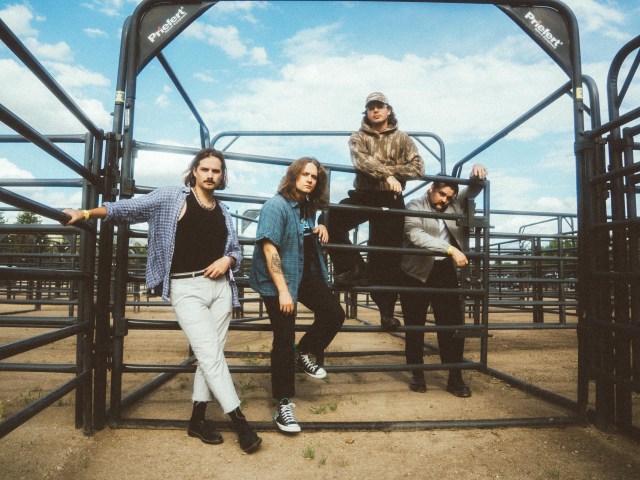
CB: There are so many good artists in Australia that I think more Americans need to be aware of, because in my time since being here, a lot of Americans will associate Australian music with maybe Tame Impala or maybe AC/DC. But I’ve also heard before that people thought that they were British. So it’s just trying to put a spotlight on artists that I really admire, I really love, and bring them to the US in front of an audience that we have down pat, just to make it more accessible, but also mixing that in with American bands that I really love. And long-term goal, I would love to eventually bring American artists to Australia and have them mix in with other Australian artists, and have this almost traveling festival. Maybe we do it again in LA, and then maybe in Sydney, and then it’s this back and forth. I think that’d be really beautiful, because I know a lot of people who I’ve met here like Australian music. So I just want to put them onto more bands that I’m connected with, or that my friends back home are listening to and telling me about, whilst mixing that in with what’s happening here in the US.
HP: Yeah, I looked at the lineup, and it’s a lot of stuff that I’ve already been a fan of. I’ve been a huge fan of Horse Jumper of Love for a decent amount of time, so it’s really cool to see them play on such an awesome bill. Grent [Perez] is also awesome. It’s really cool.
CB: And they did a song with my friend Samira, who’s in Winter. So I’m like, this is just a natural pairing. If you know, you know kind of thing.
HP: And then you dropped a couple singles off of your upcoming record No Place Like Home (From the Motel), which is a rerecording of your 2024 record, No Place Like Home. And from what I saw online, you actually did track it in a motel.
CB: Yeah, I mean, I gotta be real, it’s a set that we built, or that one of my good friends built, in Newcastle. But it was framed in a way where you can’t tell, like it looks like it’s actually shot on location. Which is cool, but that’s just that whole movie magic thing.
HP: I’d love to know where the idea to retract the record in a live setting originally stemmed from.
CB: We did a live session in Newcastle a few years ago at Sawtooth, which is a studio that I worked out of for a number of years. We had a really positive reception to it. We just kind of did a set list of Greatest Hits. And I think it was around when Forever in Bloom came out. I think it was because of the pandemic, because a lot of people were doing that. We were like, ‘This is a way that we can stay active and play a show, but on our own terms’, and be active while the world is on fire. So we wanted to carry that idea, but make it more thematic and push the artistic boundary of it all. So being able to close the chapter on No Place Like Home and say, ‘Thank you for all your support. Here’s a live version of the album’, but it’s not just a live album, it’s filmed as well, it’s in a set piece. I think it’s a really beautiful thing to do. It’s something that we want to try and do for each record or each release moving forward, because it’s just really fun. I also get a kick out of it because I’m like, ‘Cool, we’re playing the album from start to finish’, but also fans that might not have ever seen us live can also experience that album with us.
HP: Definitely. And then I was listening to the record, and a lot of the songs take a different shape than originally on the record, which I think is really cool.
CB: You know what, that’s cool, because you get so used to playing it live that I kind of forget what the album sounds like. You start adopting these small changes melodically, or the way I sing it is probably a little bit different, because singing in a studio versus live is always different for me, small things like that. So that’s actually cool to hear. I appreciate that a lot.
HP: When you’re playing songs live versus hearing them in the studio, what songs have changed the most once you’ve brought them to the live stage?
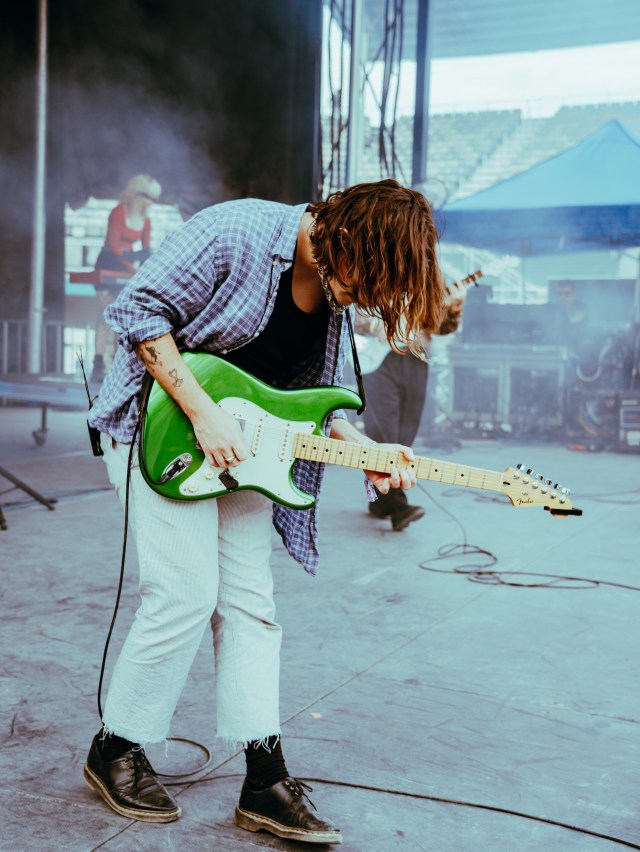
CB: At least out of No Place Like Home, I think it’s pretty faithful to the record, probably “Close Quarters” only because I sing that very differently, because so much of my vocal technique is stacking vocals. So in a song like “Close Quarters,” where it’s incredibly dynamic, I have to pick a lane and be like, ‘Okay, am I singing like this, or am I going to sing like that?’ And I remember playing “Close Quarters” live for the first couple of times. I did the more soft-spoken, almost talking kind of delivery, but it never really landed. And then I was like, I’m just gonna try shouting, I’m just gonna try projecting my voice. And that paid off a lot. There are other songs; it’s funny doing a song like “Telephones,” because for years, I was like, ‘Nah, there’s no way we can pull it off.’ None of us can play keys [laughs] You know, it’s like, how’s that gonna work?
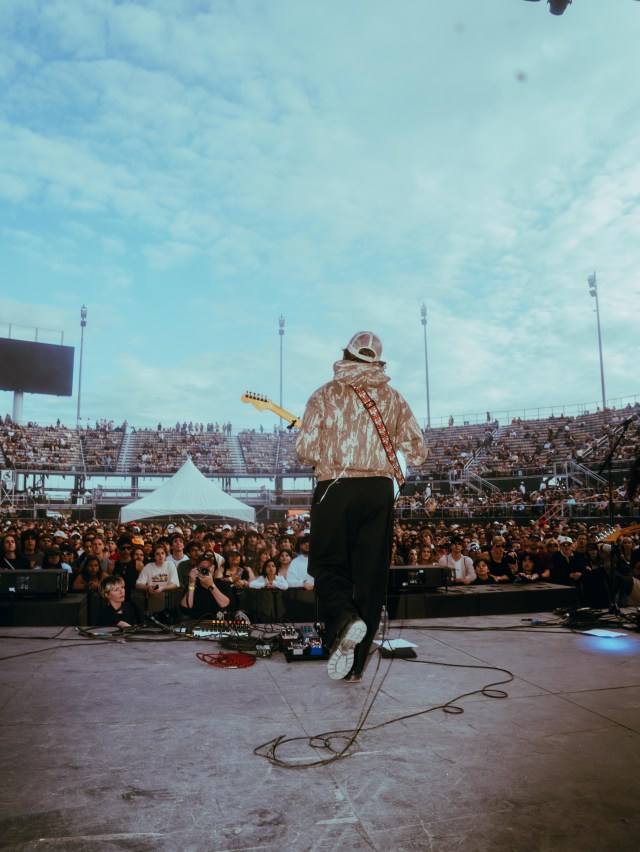
And then, I don’t know, the first US tour, we were like, Let’s just do it. This song is going off, let’s add it to the set list. I’m sure it’ll be a fun time. And it exceeded all expectations. But a lot of the guitar parts that I will play for that are usually improvised on the spot. I’ll just pick some jazzy chord progressions that can harmonize with the original chord progression and layer them. So that’s always fun. But I think we’re not like some other bands where it’s a completely different rendition live. We try to keep it, I think, for our own sakes, very consistent, so we can give a consistent show, rather than each night being something totally different. We’re not a jam band.
HP: I understand that. And you said in a past interview that one of the most important parts of your writing and your songs is that the emotional weight of the track connects with fans, too, in a sense, and I’d love to know if that enters your mind when you’re actually approaching songwriting, or how much that plays into your lyricism.
CB: It’s pretty funny, when I’m songwriting, I’m not really thinking about a whole lot. I’m just in the process of simply doing and trying to figure out what I’m trying to convey. I think as I’ve grown and matured as a songwriter, now I will actually ask myself questions and go, ‘Okay, what is this trying to say emotionally?’ Whereas when I first started out, I was like, ‘Oh, cool. I wrote a song. I have a sick riff or a good chorus, and I would just be stoked about that, but not necessarily, ‘What does this song actually mean?’ Whereas now I ask myself those questions, especially now coming up to our fourth record, because we’ve almost finished recording it. One of the things with that was there are some songs where I’m like, ‘Hold on, I’ve already said this before, or I’ve already used these exact same lyrics.’ What am I actually trying to say differently this time?
HP: That’s fair. And then, just to go back a little bit to the live record, for fans that have already listened to and like and love No Place Like Home, how do you want this project to feel different or convey a different kind of message or emotion, in a sense?
CB: I’m not sure, that’s up to the listener. For me, I get the satisfaction of playing these songs with my best friends and having a visual component to it. That’s really satisfying, and it feels fulfilling for me as an artist, but I would be curious if, as a listener, some people feel differently about the songs live, whether they like it more, or maybe they don’t like it as much live, or some parts they connect with more. I don’t know. That’s an interesting question to think about.
HP: And then, just to start to wrap up, tell me a little bit more about what your 2026 is shaping up to look like. Anything you want to plug?
CB: Gotta plug MATES. Big festival, really excited. New album. Lot of singles in the lead up—actually, no, there’s two or three singles in the lead-up to it. Also, a little bit of touring across the world. I can’t say where. I’m sure the locations are pretty easy to figure out, but it will be a lot more this year, whereas last year I had moved to New York and was settling into that, and everyone was kind of doing things in their own life, whilst also working away on this record. So we had kind of a break last year, which I think was really needed, and this year we’ll just be slowly ramping up everything on all fronts. So I’m really excited by the prospect of it.
MATES Fest is on June 20th, at Knockdown Center in New York City. You can buy tickets here.
Read the article in print in Issue 5 of Hit Parader Magazine.
Hit Parader #5: Sleep Token
May 2026 — $12.99