
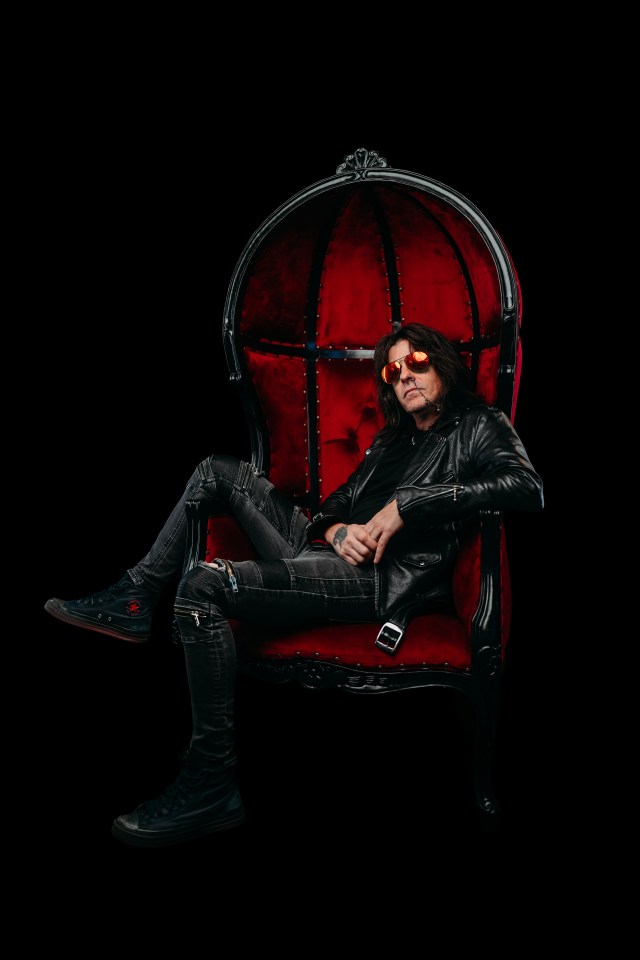
Four fantastic decades into laying down the low end for Skid Row, hard rock legend Rachel Bolan decided it was time to make a record that only had his name on it. Gargoyle of the Garden State, out June 12th, isn’t a pivot away from his day job; rather, it’s a raw, punchy punk dispatch from a longtime New Jerseian coming home after years away, compelled to tell his stories about his life, his way. Cut mainly with Bolan playing the majority of the instruments, alongside longtime friend and producer Nick Raskulinecz (Foo Fighters, Deftones, Rush), the debut solo record draws on all things in Bolan’s life: punk, hard rock, and years of hard-won experience. With three singles out, and more tracks to come, Gargoyle of the Garden State is the farthest thing from a side solo project, and more like a part of Bolan’s songwriting and creative brain that is only now seeing the light of day after 40 years. Rachel sat down with Hit Parader to discuss more.
Hit Parader: Just to start off, congrats on your debut solo record Gargoyle of the Garden State coming out on June 12th, that’s super exciting.
Rachel Bolan: Thanks!
HP: And this is your first solo record after decades with Skid Row. What do you think made now feel like the time to step out and release something under your own name?
RB: Man, I really don’t know. The time kind of found me. I had some songs written that I knew just weren’t right for Skid Row. And I was talking to my friend Nick [Raskulinecz], who produced the record, and he’s like, you should do a solo record. Let’s do it here. And I was like, that’d be great, but let me see if the label’s even interested. So they were, and then it all just kind of snowballed from there. I started writing more and more and more, and I’d send them to Nick. What do you think of this? What do you think of that? And then here we are now with the album coming out on June 12, and it was a really, really fun process. But why I waited 40 years, probably because of my day job with Skid Row [laughs]. It takes up a lot of my time. Skid Row is my life.
HP: That’s completely fair, and with it being produced with Nick [Raskulinecz], who’s worked on a crazy laundry list of records with Foo Fighters, Stone Sour, Deftones, but also worked on the latest Skid Row record as well. How did that existing relationship kind of approach the way you approached the record, and how was it different than The Gang’s All Here?
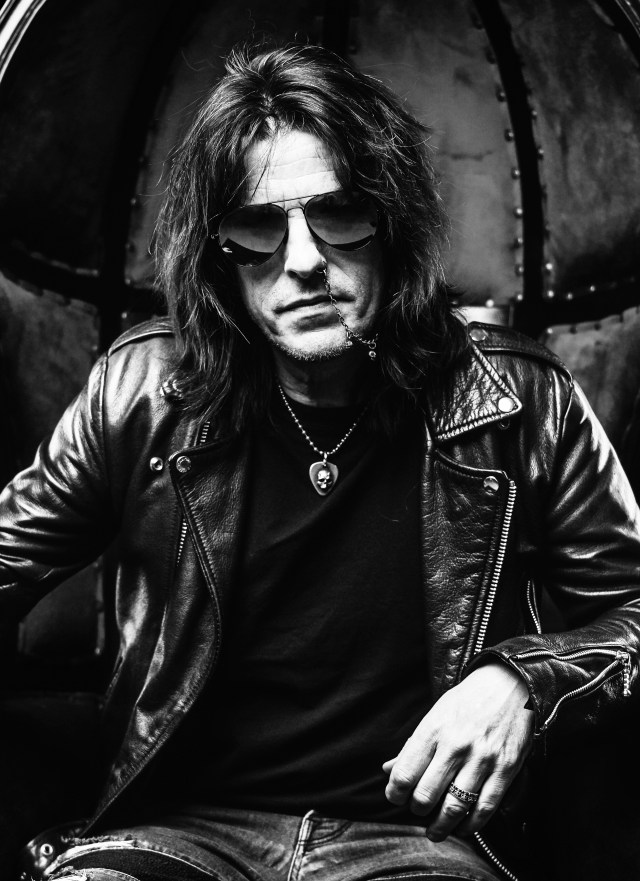
RB: Well, Nick is one of my closest friends, so working together was so fun. And it was really easy. And the second part of your question, the big difference was the decisions were made really instantly. It was just because most of the time, after the drums were done, after Rob [Affuso] finished drums, I just started playing all the guitars and the bass, and I just sat there across from Nick most of the time. It was just the two of us, unless one of my friends came in to do a solo or a vocal line or something. But when I do stuff with Skid Row, it was really odd at first, because I’d play something and I didn’t have my dudes to say, what do you think of that? I had to make the decision with Nick, or Nick is just like, just leave it as is. It’s you. So that was the biggest change for me, not having all my bros around to help make decisions with each other, whether it’s a drum line or a guitar part or bass part or vocal part. So just doing everything on my own. It came together really, really quickly.
HP: It made the entire project completely you, rather than having someone in the band to bounce ideas off of, so to speak.
RB: Correct. Yeah, yeah. Nick was the only guy I bounced ideas off of, and I trusted his opinion fully.
HP: That is super cool. And you said that you played a lot of the instruments yourself. What was your favorite and least favorite part of that whole process, and how did playing most of the instruments kind of shape the writing and recording process?
RB: I did it because it was raw. I would say a fairly good bass player. So that part wasn’t an issue. It was playing guitar. And I say issue, that’s probably the wrong term. But I can play guitar. Did I hit every note in all the bar chords? Probably not, but it’s my style. So the whole process was kind of my favorite part, not to cop out on an answer. And then once everything started coming together, there’s a song called “Bridges,” and I played sitar on it, a picking part. I played some acoustic on it. I played electric guitar and bass. And when we started putting the layers on, I was like, wow, this is pretty cool. And then I heard Nick on the phone. He’s like, yeah, Rachel’s over here killing it on guitar. And I was like, am I? That’s cool that my friend says that, and the producer that I really respect says that. So it was all kind of my favorite part, just building the songs from the ground up. And with it being my vision and my vision only, I was really on top of it to make sure that it all sounded the way I hear in my head.
HP: And then with that rawness that you talked about, you could definitely argue that a form of rawness is kind of quintessential to punk music as a whole. And if you want more polished, more quantized sort of stuff, punk isn’t really the realm to find that. And that’s really cool.
RB: I would agree with that 100%. I grew up listening to punk, and the reckless abandon of punk is what drew me to it, the energy, the angst, the honesty, and the subject matter. And a lot of punk songs, some is political. Some is just views of how they feel. And it wasn’t catering to anyone. It was just, this is what I’m saying, and this is what I want to say. And so I think that’s what drew me to punk rock, because they weren’t trying to write songs that would be on the radio by any means. At least that’s what I think. So yeah, and I drew on lots of my influences, punk and new wave and the whole Brit pop era and KISS and stuff. So everything kind of shows up in little bits, all my influences.
HP: That’s fair. And then it might be a bit redundant, and I apologize, but I’d love to just know a little bit more about the title of the record and what it means to you and how you kind of came to it initially.
RB: Well, I recently moved back to New Jersey, which is known as the Garden State, and I had been gone for almost 25 years. So to come back after that long and just feel at home again. But I wasn’t expecting to feel at home. I was expecting, well, I don’t know really what I was expecting. I knew the food was going to be really good, and I’d reconnect with some of my other friends. But it’s kind of a two-parter, because I wanted to call the album “Gargoyle” because, to me, gargoyles, I love gargoyles and the aesthetics of them, but a lot of people don’t know that each gargoyle has a different meaning and a different purpose for people that believe in mythical things. And so I always thought that was really cool. But they’re basically just there. To most people, it’s like they don’t really serve a purpose until they serve a purpose. So that’s how I kind of felt. And I wanted to call the album “Gargoyle,” and then move back here, and I was like, no, I’m back in the Garden State. Let’s call it “Gargoyle of the Garden State.” And it just sounded cool to me, and it made a lot of sense to me.
HP: And there’s a lot of fantastic features on the record. How did those partnerships kind of come to shape, and did you write any of the songs originally with collaboration in mind?
RB: No, I didn’t write anything with anyone in mind. It’s after I had demoed it and we got to the point of going in the studio and recording these songs. And I was like, man, who would sound really cool on this song? And these are all friends of mine. So I called Corey [Taylor], and I was like, hey, you want to sing this song? Think Sham 69. Just do it with some angst and stuff. So I sent him the song, and he’s like, let’s do it. And he flew out to Vegas. We recorded his vocals, and he’s so good in the studio. And same with Steve Conte, and same with everyone that’s on the record. I sent them the song or asked them if they wanted to be part of it, and they said yes. And I was lucky enough for everyone to say yes. And then I either did them in person, like Damon Johnson, for instance. He played five solos on the record. He came to the studio because he lives outside of Nashville, and that’s where we recorded. And he just sat there on a couch and played the most amazing pieces of music I’ve ever heard. And Scotty and Snake played on a song. They each played on a song, and they recorded remotely and then sent it. We dropped it in. And Steve Conte, the same thing, and Nuno Bettencourt, same thing. But I didn’t write songs around them. Once we got to the recording, I was like, who would sound really cool on this? And that’s how we did it.
HP: It must be a really cool feeling for you to write a song, have it fully demoed out, and then you hear someone else on the song, and then they agree with that thought that you had, where they also hear themselves and think it would be a good addition to the record.
RB: It was a great feeling. It’s a monumental moment in my career for me, because I’ve been doing this a long time, and to do my first solo this deep into my career is monumental. And to have friends along with me to do it, I can’t even describe the way it makes me feel from a friendship standpoint alone. It’s like, this is why I’m friends with these guys. They have my back, and they want to be involved, and they understand how important it is to me. So that’s one aspect. And then the fact that they’re also damn talented to be a part of it and make the songs better, it’s just an incredible feeling.
HP: And Scotty, Snake, and Rob also worked on parts of the record as well. I’m curious, you mentioned, were all of them remote recording as well?
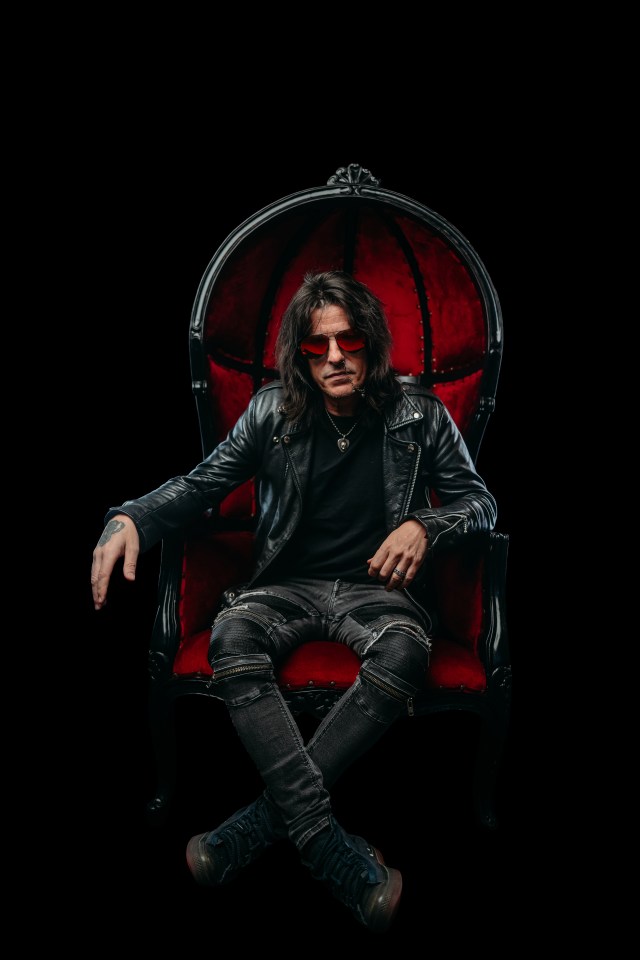
RB: No, Rob played drums on the whole record. He drove to Nashville, and he crushed it. He did 11 songs in like two and a half days. It’s a lot. And I knew he would, but he had them all. I sent them to him. And I know Rob and his work ethic, and he doesn’t want anything sounding less than 100%. And he’s such a great drummer. And he came in and just crushed it. And then Scotty is out in LA, so he did it remotely. And Snake is out in New York, on Long Island, so he did it remotely, just because it’s a lot easier than flying down for a couple hours.
HP: That’s fair. I’m kind of curious, how did working with Rob on your own material versus Skid Row project kind of change the workflow or studio dynamic, if in any way?
RB: It was the same, because we play together all the time. We know each other’s next moves, and it just wasn’t really any different. And the fact that he and I have similar tastes in music, we grew up listening to the same kind of stuff, a lot of the punk stuff and a lot of pop stuff. And so it was just really natural, and we play together so much. He’s been in Skid Row for 15 years, I believe. So we are so locked in like a rhythm section that he was my only choice to play drums. If he hadn’t played it, I’d have been like, oh man. Because we just understand each other really well. We know each other’s next move. So it was pretty incredible watching him.
HP: That’s so awesome! You said in a previous interview that “this isn’t a project, it’s a part of your soul”. I’m kind of curious, in your opinion, what parts of your life and/or soul show up most clearly on this record?
RB: Man, from teenage years right till now. There’s stuff. It might not be a whole song about it. It could just be a line. That’s the way I write, though. I write lyrics and then try to make sense of them after they’re all together. But I’m thinking of times just hanging out as a stupid teenager somewhere and getting into trouble or whatever. And that was a long time ago, but I think all facets of my life are somewhere on this record.
HP: That’s fair. And then, just to wrap up for the last question, as you get ready to drop Gargoyle of the Garden State, what do you think you’re most excited for people to hear or experience about the record or anything forthcoming?
RB: Well, when it comes out, I’ve been seeing a lot of comments just from the first single, and it makes me feel really good, because people say I can’t wait to hear the whole album. So I’m really looking forward to seeing what they think, see if it lives up to their expectations, which I hope it does. I put everything into this record, lots of time and lots of energy, and that’s how I do things. So I’m really hoping that it resonates with people.
Gargoyle of the Garden State by BOLAN is out on June 12th via earMUSIC
Read the article in print in Issue 5 of Hit Parader Magazine.
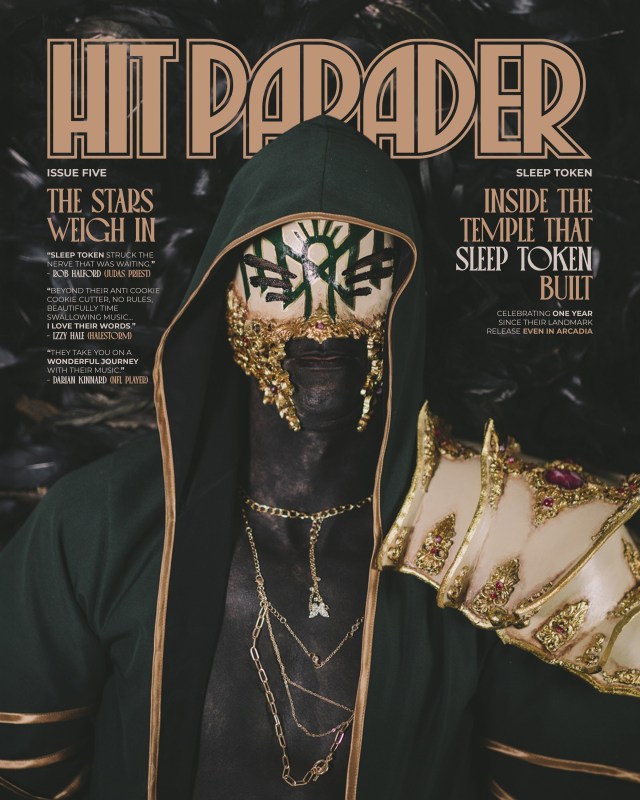
Hit Parader #5: Sleep Token
May 2026 — $12.99