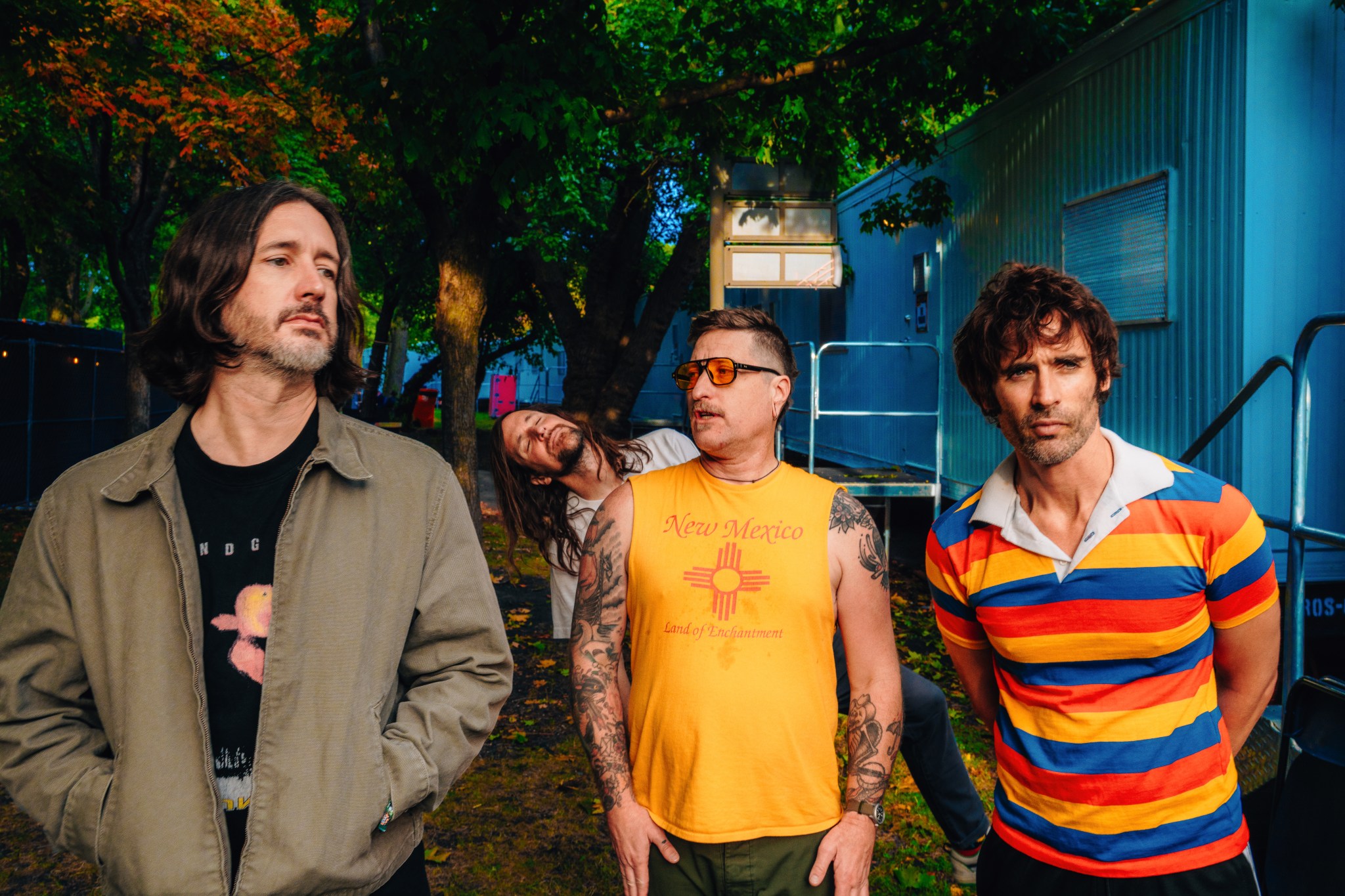
When All-American Rejects made “Move Along,” the alternative anthem and album of the same name more than 20 years ago, they were, by their own admission, kids themselves. Now, as they revisit the album decades later, they can look back on it with a new appreciation and perspective.
Frontman Tyson Ritter calls it, “That little beautiful time capsule fishbowl that we were in,” adding of the album, “It made something that culturally affected the trajectory of our band and its longevity. And I’m grateful for those 19 and 21-year-old boys who didn’t fuck it up.”
Those kids from Oklahoma looking for a way out of their hometown are now respected veterans of the alternative scene. That is a mantle Ritter says they take very seriously and very proudly. As he explained when I sat down with him and guitarist Nick Wheeler, following the unexpected success of their house tour, they became a beacon of light for musicians on how to do things differently. Ritter says they are very excited to keep that job going forward in whatever the Rejects do next.
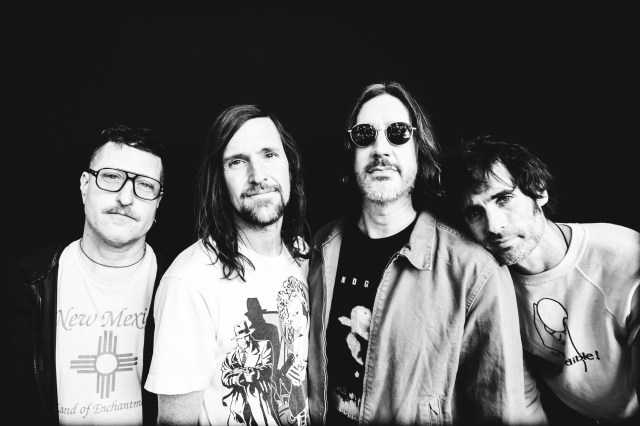
Hit Parader: Twenty years later, do you remember what you guys were eating when you made Move Along?
Nickolas Wheeler: Oh, absolutely. We were recording at Bay 7, which is a studio in the Valley that Howard worked out of at that period. And we would usually get food brought in, but we always ordered from Hugo’s was the big one. And Sharky’s, another big one. But we took Sundays off. We would work in the studio six days a week. And then on Sunday, we would have nothing to do because we were living at the Oakwood. None of us lived in LA. So, we were sharing a two-bedroom apartment at the Oakwood in Burbank. And every Sunday, we would drive up to Encino and eat at Chili’s. Because it reminded us of home. I’ve eaten at that Chili’s like a dozen times now. I wonder if the Chili’s in Encino is even still there. I don’t know if it’s still there, but funny story, last time I was there, probably 15 years ago, a super old car, might have been lsomething adjacent to a Model T, pulls into the parking lot on fire. And Jay Leno jumps out. It’s him just joyriding in one of his jalopies or whatever, but it caught fire and he pulled into Chili’s to get help.
HP: Going back to this record, Oakwood is a very strange LA place. I’m sure that you have some vivid memories of that place.
Wheeler: Yeah. I do remember that we were sharing a two-bedroom apartment. Mike and I were in one room. And Chris and Tyson were in the other. And there was a hot tub downstairs we loved to frequent every night. And during the first record cycle, we all got our first tattoo, which was the logo for our band right here on our chest. So, the four of us would all be sitting in the hot tub with matching tattoos. That was probably a sight.
Tyson Ritter: I think there was something neat about not knowing anything about Los Angeles and being content going back to the Oakwood every night, because I think we could have really became some sort of horrible Hollywood statistic as far as band records record in Hollywood, band is done. I think we were so naive. Also, so afraid of fucking it up that the Oakwood was like this fucking retirement home.
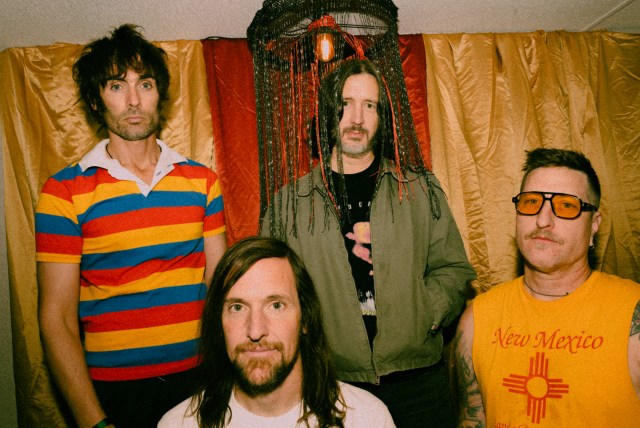
HP: When you go back and revisit music songs change over time. When you hear the songs now, do they feel like almost a different artist?
Wheeler: We’ve revisited this a little bit recently for probably the first time in a very long time, especially track five on. And it’s definitely more of a zoomed-out lens. When we’re in the studio six days a week making this record, every little detail is the most important thing. When we’re at CLA studio or whatever, and we take a CD to the car to do a test listen to the mix, it’s like, “Is the shaker too loud? Is it too soft?” Whatever. But now I don’t remember or care about any of that stuff. It is more just about zooming out and just being like, “What does this mean to me now? Do I still connect to this?” For me personally, I think the songs that we play often, I do still connect to. They do still feel like a part of me. But some of these songs, if you asked me to sit down and play them today, I wouldn’t even know where to start.
Ritter: Yeah, I think I have two heads about it. There’s that 19-year-old kid that was with Nick riding these and then getting in to hammer them out with Mike and Chris. And we were all babies. And I have completely removed myself from the fact that that’s anything that I am today because I’ve had seven trillion cells turn over 30 times since then. So, I am physically not the same person. I am emotionally not the same person. And I have a lived experience that that person doesn’t have. So, when I look back on it, I have to freeze it like Encino Man. It’s like, “Oh, look at this sweet little caveman frozen in a block of ice. He doesn’t want to hurt anybody. He just wanted to have fun in the world. And I really am proud of him. I’m proud of those guys for getting in there.” And honestly, we had so much going against us as far as where that process for that record started. We were coming off the trope of you have your whole life to write your first record, so what are you going to do for the second one? That we made anything out of it. Because we weren’t experienced musicians. We were guys that have played shows since we were 13. We didn’t go cobble a thousand songs. We weren’t prolific like Prince or anything. We wrote fucking 14 songs for this record. And those are the 14 we recorded. So being myself listening to this record, like Nick says, the songs that we play every night, the ones that have stayed, I’m so fucking proud playing those songs. And I know we’re a pop rock band. So, to me, the hits I love, I’m so proud of the hit songs on that record. And I know that that’s probably the most cringy thing to say, but it’s because I love these songs and I love watching people connect to them 20 some years later.
HP: When you look back at these songs are you surprised that the songs really do reflect who you are still as people?
Ritter: Yeah, I’m really proud of the flow. The beautiful thing about naivety and not knowing, I see it in my kids when they approach something, and I’m so cynical now, I don’t see it the way they do. I think, yeah, when you’re young, you see the world in a more pure light. You maybe have a little bit more hope for it. You maybe believe in it a little bit more purely. And that veil that gets lifted with time, you can’t put it back on. There are deeper cuts on that record that I love. We were talking about a song called “Straitjacket Feeling.” Nick and I would always cut an acoustic record together, and I think it was the one where those were always the simpler songs that leaned on not only the way that he arranged always such a unique and melodic complementary acoustic accompaniment, but it leaned on me to really dig deeper lyrically.
HP: Between revisiting Move Along and the new album, Sandbox, have you guys found yourself very prolific and inspired?
Ritter: Dude, we’ve been going so hard the last 18 months. The blessing has been very exhausting.
Wheeler: Yes, we’ve had those conversations, but we did not expect the last 18 months. We were excited to make some music, put it out and then just go back to what we were doing. The house party thing took us by surprise. A lot of the opportunities that have come our way we did not expect whatsoever. So, I think we’re looking forward to winding down a little bit the rest of this year. There are some more festivals coming up. We’re going to Australia for the Good Things Festival in December. And then we’re going to hibernate and see what comes from that.
Ritter: I’m excited about what the last 18 months has done. [It] has made us see how important…we tapped into something this year that was bigger than the music. And what that was was what it meant for young and independent artists. I don’t know how many artists come up and say, “Thank you for doing something differently, for not just going up into the giant corporate ladder and being an annuity for a giant machine to be able to gouge.” and basically what’s happened unfortunately with the way that the concert system has run itself up into this crazy level is that it’s eliminated the barrier for entry for young and aspiring artists to be able to even play out live. So, for me I’m of course excited about the new music if she comes around. But I think to be able to be vocal in support of young and independent artists, to be able to try to have a voice on their behalf to make sure that they’re safe in the future, not only from the emergence of non-man-made music that is now 44 percent of the songs ingested into the Spotify machine. We are living in a world where the war against independent artistry is going to be completely confronted and possibly annihilated. So, I’m really excited to, in our down time, continue to be a voice for the necessity of man-made music by young [artists] and by the same naivety that spun our yarn as a band from Swing Swing up until this Move Along record. There are those bands out there, and if we are not curious to find them, then they will never get their chance. Because this is a devastating landscape and vacuum for young and emerging artists to be able to make a scream in that abyss. So yeah, I feel like right now the world’s kind of opened up for us but I feel a definite responsibility to continue to walk in the path that we’ve been walking without sacrificing our message of playing for people who need music, not just want it.
Stay up to date with The All-American Rejects HERE.
Read Hit Parader Magazine in print.
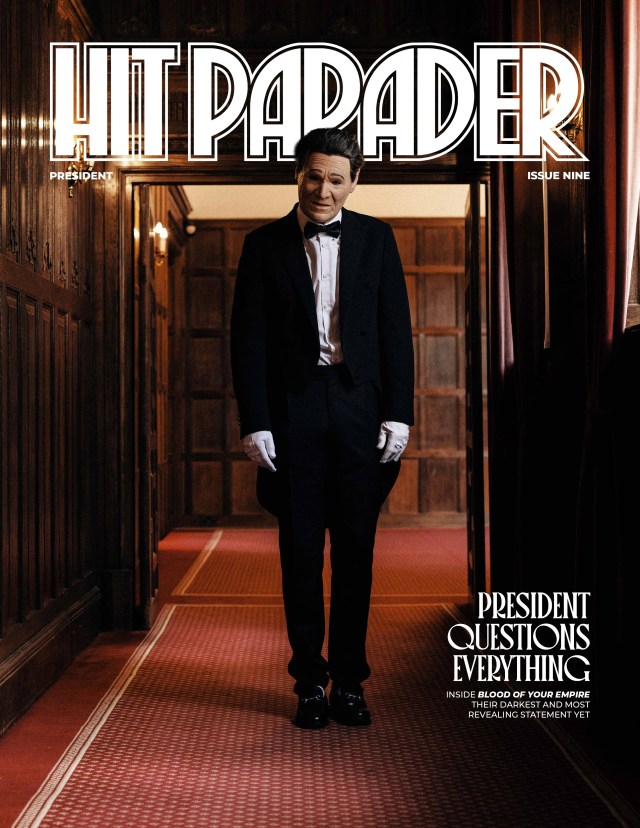
Hit Parader #9: President
October 2026 — $12.99
In This Issue…
Huddy Reclaims His Voice on 'Somebody to Hate'
No sophomore slump here. Huddy is back with his hard-hitting independent release, 'Somebody to Hate'. Hit Parader got the inside scoop.
Hannah Cole Finding Her Voice by Trusting Her Own Ears
In conversation with the Nashville-based artist on how growing up can lead to rediscovering the wonder.

The Beaches on Carrying on Traditions
The four members reflect on a career-defining new chapter fueled by the massive second life of "Edge of the Earth" and its pivotal appearance in Amazon's 'Off Campus'.
Linda Perry is Ready for Her Spotlight
Linda sits down with us to discuss her long awaited documentary Let It Die Here, the upcoming 4 Non Blonds LP, and everything that got her there.