Singer/songwriter/producer Sage Bava, who grew up on an animal rescue sanctuary in Upstate New York, left home at 16 and traveled the world, only to find that all along she belonged on that animal rescue.
“I was back on our family nature reserve, and it was just after the tumultuous moving around of the pandemic. During that time, I moved to Costa Rica, to Spain. I was kind of all over the place, and I had moved away from the farm at 16 and hadn’t really been back. So, to be back in that space after all those years, after the global pandemic, after so much that happened in my own personal life, I found this gratitude for where I came from, how connected to this land I am,” Bava says. “There’s a sycamore tree on the land, and right around when this song was written, I found this deep connection to this tree. It gives me chills even right now thinking about it. This tree will come into my dreams and give me a hug when I need it. And right around reconnecting to the land and reconnecting to where I came from, the gratitude was really immense, just to be alive and to have this connection.”
As someone who has talked to hundreds, if not thousands, of songwriters about how environment affects writing, it is not surprising at all that she feels that land profoundly in her new song, “Radiant Soul of Mine.”
Cred. Tarun Nayar
“There’s so much good intention in that land. My parents started it to preserve the forests and as a space for animals to go at the end of their lives or for animals to find rehabilitation. So, there’s so much goodness there, and I think there’s a lot of goodness and simplicity in this song,” she explains.
When she listens back to the track, one of a few on her upcoming album, In Whose Eyes, featuring iconic jazz bassist Christian McBride, she hears a direct correlation between her home and the song.
“I’m just happy and grateful that the song kept its original form. It was really written very quickly and then recorded live. We only did one or two takes, and I think we recorded it just a couple of weeks or months after it was written,” she recalls. “So, it feels like how it was when it was first written. I think maybe the surprising thing is just the preservation of the simplicity of where it came from. And it didn’t really stray very far from our piano on the farm to getting to record it with Christian McBride in New York a couple of weeks later; it’s pretty much the same thing.”
Just as returning to her childhood home brought her back to her roots, the jazz sounds on this record are also a welcome return for Bava to her early years and musical origins. Growing up in a home with a dad who played jazz piano at one point, Bava was always around music. Was she a prodigy? Well, that is a big word. But then, how many people can say they played with the great Les Paul at 10 years old? Probably not many, but Bava can.
“I’ve been doing music and musical theater and acting since I was quite young. So, I’ve done a lot of different genres in my life. But during that time, I rediscovered my love of jazz and my love of live music. The spirit of jazz, I think, is really at the core of its liveness. So, when I was experimenting with that, I came back to wanting a lot of it to be live, and I wanted to create a body of work. So, some of it is more of a pop electronic R&B route mixed in with that jazz part. And some of it is straight up ‘jazz,’” she says.
Old soul is one of those buzz phrases thrown around so often, like “authentic” and “genius,” that it loses all credibility. But when you talk to Bava, who is in her 20s, and reference things like the Great American Songbook, what other term are you going to use?
“I think there are so many great songs that have the core message that every human relates to. I could name a lot of songs, but I go back to the Great American Songbook era,” she says. “Songs like ‘Smile,’ by Charlie Chaplin, were written during the Great Depression. It’s such a simple song, but it’s so timeless, and it’s forever alive because of that timelessness and humanity just installed in it.”
The fact that she not only names “Smile,” but knows it was written by the “Little Tramp” himself, well, nothing else you can call that but an “authentic old soul.”
Not surprisingly, Bava was comfortable working with veterans. Where most younger artists seek out the producer of the moment to help them get on Spotify playlists, Bava sought out and worked with four-time Grammy winner Larry Klein (Joni Mitchell, Tracy Chapman, Herbie Hancock). She found working with a veteran like Klein exhilarating.
Cred. Aliana Cerullo
“I was creating this project for many years, and I finally had so many songs that I had so many different Pro Tools sessions and different versions of, and it was just a lot. So, I finally convinced Larry to help me finish the project and take all of these different songs and make them into the album that it is. We just did some overdubs together, and he helped with the mixing process,” she says. “It was fascinating to watch him work and watch him listen, and I’m so grateful to have gotten to work closely with him during the completion of this, just to witness how he works. It was really inspiring to me.”
That is not to say the multi-faceted Bava is simply a traveler out of time by a century. She is a hybrid, the perfect composite of the past and present, the kind of artist who composes on acoustic guitar and piano, but is also at home singing lead on electronic music tracks. You can see her range in the female voices she admires.
“I’m really fascinated and have always loved voices that sound like they have their whole soul in them. Voices that I grew up on, like Billie Holiday, Judy Garland, and Ella Fitzgerald, are so unique to themselves and have a spectrum of feeling in them, whether that’s vulnerability, strength, tenderness, or love. And more modern artists like Fiona Apple, Lianne La Havas, and Anastasia, Gabrielle Cavasa,” she says.
For Bava, the through line for this century-long run of great voices is the sense of self. “I think they continue this tradition of self-acceptance and self-empowerment through recognizing and loving all parts of self and not trying to sever parts of self, but really embracing the nature of self,” she says.
To her, self ties back into her belief in the importance of continuing our bond with nature. “I’m going to go back to my mantra: we are nature. The more we sever ourselves, the more we harm. I think it’s really hard to be in this world and not sever ourselves. It’s really hard to operate from our full self.”
Like so many great artists before her, Bava finally found her full self and the music she was born to make in the last place she expected – home.
For fans of the Seattle post-hardcore scene, hearing Johnny Whitney’s feral vocals live again was something people had nearly written off entirely, seeming as if the genre-bending Blood Brothers and their cult-following would take an incredible set of circumstances to see the light of day again. So it was a shock, a fantastic surprise, when the quintet, after being dormant for a decade, announced a sixteen-show reunion tour. After the tour concluded, one thing was apparent: Whitney and Blood Brothers guitarist Cody Votolato couldn’t let that momentum die, let that creativity fizzle out, and let that love for the gritty live shows they cut their teeth on in their teenage years go to waste.
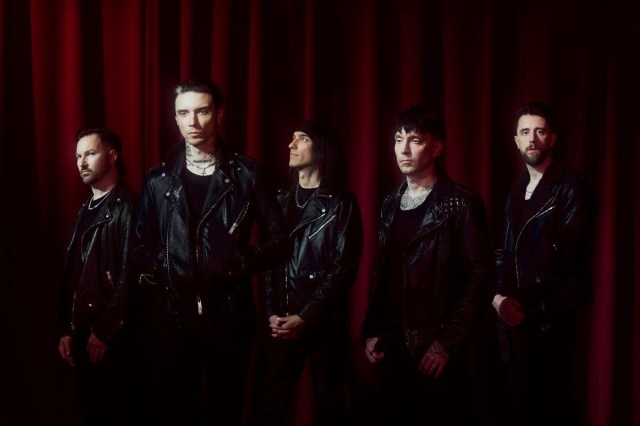
The result of that itch to create more was Evil Island, a brand-new band born from shared roots and driven by one common factor: to continue making the self-described “weird” music they love. With Blood Brothers drummer Mark Gajadhar, bassist Autry René Fulbright II of OFF! and … And You Will Know Us by the Trail of Dead, and guitarist Todd Weinstock of Glassjaw, the supergroup came together fast, and producer Ross Robinson was the final drop of gas on the log to make the blaze burn brighter than it ever had before. For Evil Island, the past isn’t something to replicate; it’s the spark that started the fire, and now the act and their brand new debut LP Terraform the Afterlife have taken their own urgent, jagged path of their own.
Hit Parader got the chance to sit down with both Whitney and Votolato to talk the freeing nature of returning to the genre they hold so close after all these years, the rewarding yet exhaustive recording process that went into it, the two-way trust exuded by both the band and Ross Robinson to create what Whitney coined…
“the most distilled-down version of what we’ve always been supposed to be doing.”
Cred. Richie Valdez
Hit Parader: So after the Blood Brothers reunion in 2024, how did the talks of making more music form, and what made this project feel like the correct vessel?
Johnny Whitney: Well, essentially, after the tour, we started getting offers for more shows with Blood Brothers, and in short order, Jordan and Morgan let us know they weren’t interested in going forward with anything else. So it wasn’t really this or that, it was, should we do something, or should we just stop doing this music that’s sort of in this vein. For me, I just felt really, really inspired to do more music after the tour ended, and I felt like I was going to go insane if I didn’t do something. Cody had been working on some songs separately for a while that he’d sort of been looking for a home for, and after about a couple months of trying to figure out what the next step was, I reached out to him and talked about the idea of doing something else, and it kind of went from there. We just went back and forth with the demos he had made. It happened really quickly, just getting the basics of the songs together. That’s pretty much how it went.
Cody Votolato: Yeah, I just remember the tour was really great, connecting and playing all together again, and one thing to note is that we all learned to play music together, so it was really cool to do that. So when it was coming to an end, and Johnny called me and was like, “I’ve got to do something,” I was like, “Oh well, great, I have songs and an idea for something.” And we kind of just started trading stuff back and forth, and then we were just kind of hoping Mark would get on board and want to do it with us, because we couldn’t imagine playing with anyone else at that point. It came to fruition really quickly, and then, I had a surprise birthday party, my wife threw it, she invited Johnny and Ross Robinson, and I think I had a handful of the demos done by that point, and just mentioned to Ross that we had a new band, and he was just like, “I have a record label, let’s make a record.”
We played him like two seconds of a demo on the iPhone, and he loved it, and that was in June. By October, we had signed to Blowed Out Records, and we were in the studio with them, and Autry had joined, and Mark came down, and that was when we were a band. The first time we played together was in the recording studio as a band, which is an interesting, kind of nonconventional way to start a project, but that’s the way we had to do it, because at the time Mark was living up in the islands near Seattle, and Johnny’s in the Bay, and Autry and I are in Seattle, and we did the record in LA, so everyone just flew out and got right into the studio.
Cred. Ross Robinson
HP: That’s crazy. Well, you answered how Ross came into the picture, but I’m curious how Autry did, and if there was a defining point where it switched from a brief recording project to a much longer time commitment.
JW: We never knew when that recording was going to end, it was like, how much longer? Past Christmas, we blew through Halloween, Thanksgiving, Christmas, New Year’s, Valentine’s Day, it was like, damn.
HP: Pushing five months of recording?
CV: It was long, yeah. So basically, I knew Autry kind of peripherally here in LA; we met many years ago, his band played with Blood Brothers in Atlanta in the early 2000s, and he and I would run into each other in LA every once in a while, and we’d hang out. He reminded me recently in another interview that the last time we’d hung out before he joined the band was the day Rick Froberg died; we bumped into each other at a party and hung out that night, it was super fun. I think we traded numbers, and then he called me out of the blue, looking for a tour manager for an artist he manages, and he knew I’d done some tour managing in the past, but I wasn’t doing it anymore.
He was kind of like, “Oh well, what’s been going on?” and I was like, “Oh well, Johnny and Mark and I have this new project we’re working on,” and he was like, “Who’s playing the bass?” and I was like, “I don’t know, maybe you.” [laughs] We texted back and forth for a few weeks and got together, I sent him some of the demos, and said, “Let’s just get together and jam.” We got together, and it was obviously great, and then it was like, okay, you’re in the band.
And then, like I said, we as a band had all sort of thought the record was going to be recorded in full in two weeks in October; we were like, we’re gonna go in and crush it. To me, that felt like a long time at this point, because making records isn’t what we’ve done as our day jobs for quite some time, so the days of going into the studio for months at a time are sort of a foreign concept; it’s more like you’re getting it in in the evenings or the weekends. One of the things that became very clear early on was, “oh, this is how Ross does it”. We dug deep, we spent the first ten days just doing pre-production and reworking the songs and writing new parts, figuring out new songs to write, because I think we went in with nine songs and ended up with eleven; we were like, we need a couple more.
After that, it just kind of took more time too, because I would work in the day and then go to the studio every night. After work I’d wrap up, drive to the studio an hour, stay in the studio till like eleven or twelve, and then drive home and rinse and repeat. So, just by the nature of us not being able to physically be there all the time, it took longer, but Ross went every single day, and he was editing and comping and tweaking and doing everything; he was there literally every day for probably the whole five months.
JW: He put way more into this than we did.
CV: It just ended up turning into something too, I think for him it was too important to just phone it in and finish it, he really took his time, and we redid things if we needed to, and it was unbelievably amazing, the best recording experience ever.
HP: That’s got to be somewhat grueling to a point though, for it to take that amount of time. Depends on the way you look at it, though.
CV: It can be exhaustive; candidly the part that became exhaustive for me was by the time we got into mixing, because we weren’t like, ideally, a mix happens: you come in, you listen to the mix, you give your notes, and you finish it. I was in Korea for part of the mixing, I was in Greece for part of the mixing, we were doing it all remotely, so it just takes longer, you get it, you listen to it, absorb it, send your notes, then they’ve got to do the work on the notes and send it back, it just takes longer, and that definitely made it take longer for sure. But that was probably where it got kind of taxing at a certain point for me; I was just like, man, how many more mixes can I listen to? But at the same time it’s the best thing ever, to have the luxury of somebody like Ross on the other end of that, taking your note and turning it into life, and honestly I don’t think we really had that many notes. It was pretty fucking fire from the start.
JW: So the least amount of conflict I’ve ever experienced in a recording. Ross also has the benefit of your record producer also paying the bill for the recording and being a part-owner of the record label and wanting to spend as much time as humanly possible, because he’s emotionally invested in the project; all that together equals any idea we’re interested in running down.
Cred. Marc Wierenga
HP: Going into the studio, what was the goal sound-wise, were you trying to break away from anything, make something completely new, capture something from before?
CV: I think we were pretty open-minded going in. Conceiving the songs, when I was writing the skeletons for the tracks, I really wanted to make something that was no-frills, I wanted it to be simple, to the point, and punk, and also have this sense of hardcore and the sort of weird shit we’ve always done, but truly to me the songs are just crafted like pop songs, they’re simple, traditional songwriting,
HP: Just with some tritones thrown in every once in a while.
CV: [Laughs] yeah, I’ll never get away from the nonsense I’ll throw on top on guitar of something, and Johnny’s always going to sound like Johnny, and then obviously Mark and I playing together, we crafted our instruments as children together, so our style is just, we’re really in sync with each other, but I think for the most part we just wanted to explore and see where it went. I knew going in with Ross, because I’ve made lots of records with him over the years, what the process was going to be like and what to expect: that it was going to be raw, and that he wasn’t going to let us record to a click; it was just going to be the magic and the mistakes.
So for me, I was just like, whatever, I’m gonna let Ross produce this thing, we’ve crafted these songs, and we have these ideas, and we’re gonna be able to deliver them, but I want to let the producer be the producer and let him guide how it sounds, how it feels, all that shit. We really allowed him to be a member of the band and trusted him. So that was my expectation going into it, that Ross was going to do what Ross does.
JW: For me, I wanted to, I feel like when we did the Blood Brothers reunion, I spent a lot of time trying to relearn how to sing that way, and I figured out the best way, the best version of that kind of vocal performance, via practicing, getting ready for the tour, and during the tour. From a vocal perspective, one of my main goals was to make the absolute best version of the kind of singing I’d done in Blood Brothers, because every Blood Brothers record we ever did, a lot of the time I was hearing the vocals back for the very first time while we were recording, because we had such terrible PAs that we practiced with, and I never really heard myself at all.
And that was also part of the reason I wanted to do another band, or another project, Blood Brothers or this or whatever. At the time, my headspace was, it took me like twenty-six years, but I finally figured out how to sing in a way that I don’t cringe a little bit when I hear certain parts of it, and every Blood Brothers record we ever did, there were like fifteen to twenty moments where I was like, ‘I don’t ever want to hear this again, I hate how this sounds.’ And so I really wanted to just, I felt like I had all the tools, I just needed to build a house, you know what I mean, and that’s one of the things I wanted to do with the record.
HP: That’s amazing, I’d say it for sure happened, the vocals sound great.
JW: Yeah, I’m really proud of it, and Ross, I’ll just keep singing his praises, the dude spent so much time, we would do every song, we’d do like fifteen to twenty-five vocal takes of it.
HP: That’s brutal.
Cred. Steve Hash
JW: Well, not all at once though, he kept all the vocals. When we tracked all the drums, he recorded the whole band, singing, guitars, whatever, and we did it over and over and over again, and some of those vocal takes were really good, and it really felt like the energy of us all playing together carried through, and also it was really exhausting, so there were moments where I was kind of at the end of my rope, and you could kind of hear it in my voice, and it kind of sounded good. So every time he came to put the vocals to a song, he’d have at his disposal vocal takes from October, vocal takes from November, a couple from December where I’d come up and say, “Hey, I feel like I didn’t get this thing right,” and he would comp together a version of the song that, he’s a visionary just for comping my vocals. He knows my voice so well, and he takes every single take and examines it and looks for these little bits of magic that he then elevates and puts into the final comp, and what it ends up with is something I would have never come up with organically. It’s him and me together, when you hear the vocals, so much of him is in that. He’s a fucking genius, I love him so much as a person and as a producer. Everyone should record with him, he should have no free time until he dies, he’s a phenomenal genius.
HP: I’ve never thought of comping itself as an instrument in its own right, but that’s such a cool way to think about it. I’m curious, you both started touring right out of high school and have had music be a huge part of your life since your teenage years. How did that early exposure to the industry shape the way you think about putting music out and touring this far into your career?
JW: I mean, I never thought I would, right, the really shocking thing for me, becoming a man of age, is that being a creative person and getting older, it’s so much, I’m proud of everything I did in my twenties, but all of it, from my perspective, is like sixty-five percent pure intention being smothered to death by thirty-five percent of anxiety, fear, frustration, and jealousy. And when I think of the work me and Cody have done with this record, and how easy it was, and how much I felt it every time we completed a song, I felt like I was going to burst into tears, it was just such an emotional outpouring, I’d never felt like that before, because there were too many things other than the creative purity of making something that got in the way.
HP: That’s got to be incredibly gratifying though, right?
JW: Yeah, I thought it would be, I thought my life would be over after thirty, honestly, my whole life, and the best years of my life have been since I turned forty, honestly, it’s been fucking phenomenal.
HP: Incredible, I love that.
JW: I encourage everyone to not die before they get old, it’s great.
Cred. Steve Hash
HP: Just for the last question, I’m curious, what role do you want both the record and this project as a whole to play in your lives going forward, and on the flip side, what do you hope it means to your fans, and what role it plays in their lives for people who’ve been following you for a while?
JW: Well, my relationship with music is always intensely personal, and there are records I’ve loved my entire life that I can’t imagine living without, because they remind me of things about myself, or things I’ve done in my life, or specific emotions that I can only feel when I hear those songs. So I’d hope something like that. In relation to other things we’ve done, I desperately hope, with every cell in my body, that this is the beginning of a new chapter that will last as long as my body can take it. I feel so excited to have people hear this record, to perform this record in front of people, and it’s kind of the only thing I want to do with the rest of my life personally.
And I hope, in relation to the other things we’ve done, especially Blood Brothers, that it’ll be something that scratches the itch that people might have, while providing something that’s more expansive, and in my opinion, a more thoughtfully and creatively crafted version of that style of music, with a lot more songwriting acumen woven throughout. To me, if you take the spirit of what me and Cody have tried to do with all the projects we’ve worked on, whether it’s Jaguar Love or Blood Brothers throughout our lives, this is like the pure powder-cocaine version of it. it’s the most, with the least amount of impurity, the most distilled-down version of what we’ve always been supposed to be doing, and I think it will come across to most people, because, again, I’m not trying to toot my own horn, but it’s just the best thing I’ve ever done. Above all, I just want people to hear it, I want people who’ve never heard Blood Brothers to hear it, I want people who’ve grown up their entire lives listening to Blood Brothers to hear it, I want Melania Trump to hear it [laughs], I want everyone to hear it; that’s how I feel about it.
CV: I’ll just put a little extra onto what you said about what music meant to you growing up, I just think, and this is something I learned from Ross actually, from doing records with him over the years, that playing music is probably one of the most important things on the planet. I think it creates a safe place for people, a safe place for someone who lives in the middle of nowhere and is kind of weird, and finds this sound that speaks to them, and it makes them feel like they’re not alone. To me, this kind of music can be that for people, because it’s not generic-sounding, it’s not trendy, it’s got its own frequency that resonates with people, and I think that’s what happened with Blood Brothers too, it’s music that resonates with a certain person and can create a safe place for them.
When we did the Blood Brothers reunion tour, there were a lot of young kids coming to those shows, and I think we were all pretty surprised that the things we were doing still connected with people of a certain age, and it wasn’t just forty-year-old PBR-drinking dudes, which, God bless them too [laughs], I’m in my forties, so they’re my friends too. But it was cool for us to see, oh wow, the music we make can speak to people who are out there finding themselves and figuring out who they are. And for this to potentially do that for somebody in Des Moines, Iowa, or Boise, Idaho, or some little crew of kids in the middle of nowhere, that to me would be the most gratifying thing to know. Even though I’ll probably never know that, but I think that’s what music can do, and that’s why I love that we got to make it with Ross, and we got to make it together, and it will be forever.
Listen to Terraform the Afterlife, out August 14.
Read the full interview+ much more in Issue 8 of Hit Parader Magazine.
In Hit Parader Issue #8, Taylor Momsen opens up like never before. On the cover, the Pretty Reckless frontwoman reflects on Dear God, the most personal album of her career, revealing why she sees herself as a songwriter before a singer, how grief and life experiences shaped the record, and why she’s no longer interested in… Read more →
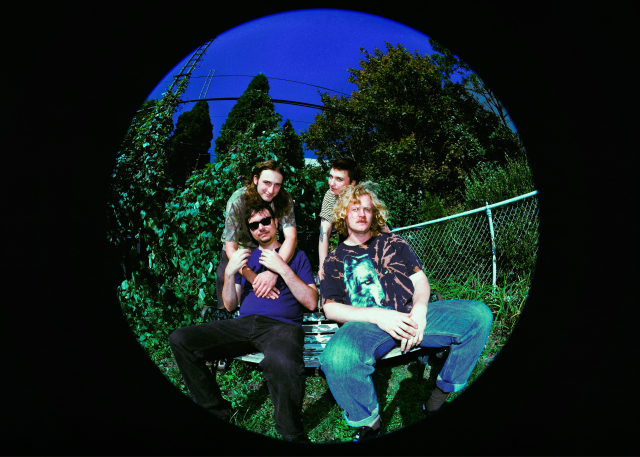
Tranquility is more than just a feeling but a combination of environment, mood, and circumstances. There are not many projects that lend themselves more to helping along this feeling than wave to earth’s new LP, bad pieces. The Seoul trio of Daniel Kim, John Cha, and Dong Q is back after a 2-year gap since their last entry in their discography. With an innovative take on a previous sound and a willingness to break what would be perceived as their old formula. The band has spent the time diligently heading towards a sound that feels both mature and inspired. The sat down with us to give us a glimpse into the writing process, talk creative risks they took on the album, and the intent behind the title.
HP: How is your year going so far?
Daniel Kim: We’ve been working hard trying to make a good album. I’ve also been working on my other band, The Poles. We’ve also been prepping for the tour.
HP: What’s the last notable song you guys listened to?
DK: I recently watched the new Spider-Man movie, and in the end, Steve Lacy’s “Oh Yeah?” is on the soundtrack. I’ve been listening to that one a lot.
John Cha: I bought some vinyls from the old Stevie Wonder records. It was the aquarium album. I’m not sure about the tile. It had “Higher Ground” and “Ribbon In The Sky.” (Original Musiquarium)
Dong Q: Amie Blu
HP: Getting into the album title Bad pieces. What is the story behind the title and what inspired it?
DK: While we were in the process of making the album, one of our team members showed us a photo of Yoko Ono and John Lennon’s bed peace protest bed-ins. We thought it would be fun to play around with those words.
HP: What were the themes that you wanted to display through invoking that imagery?
DK: This album contains songs about growth, about being confused, and about trying to find peace. But apart from that, through the process of creating these songs, a lot of them came out spontaneously, Like, Pieces. We wanted to convey the message of how these are somewhat bad pieces or ugly pieces, but when we put them together, they become one beautiful piece.
HP: Speaking on that spontaneity, when talking about performing in a jazz venue, you were able to improvise more than in other venues. Is that something you plan on bringing to this tour?
JC: It will be more of a curated show because, for bigger venues, we somewhat can improvise, but we set a more detailed show. So it has a large amount of structure to it. For the jazz venues, we have experience with small gig shows. We had jazzy songs and the space for that in the music. For the big venues, it is more structured and curated.
DQ: We actually don’t really think about improvising or internationally trying to improvise. It’s more about what we feel on that day while we are playing and the vibes of the room. WE try to focus on our performance, and then that brings out the improvising. It’s not an intentional thing.
HP: When talking about this new album, it feels like you guys have matured into your sound in a lot of ways. What were the objectives and themes that felt like a focal point going into the writing process?
DK: This album was made in a pretty straightforward, simple process compared to our previous records. Some of these final versions were actually the exact same as the demos. We’ve used the demos as the final version, and there was a lot of mixing. Tossing around demos and masters throughout this entire process. We tried to figure out a way to make a cohesive album throughout with that workflow. Overall, I think as artists, we as individual artists have grown and matured. I think that’s displayed on the album.
Cred. Ted Min @tedminted
HP: With the tones on this project, you guys still maintain the key feeling of wave to earth. There is this feeling of “warmth” that’s consistent throughout all of your work. How do you guys focus on keeping those key elements while experimenting with new sounds?
DK: Personally, that’s my preference, the warmth and vibe of wave to earth. This album we used a lot of songs from my other two members. I think in that process we could have had a completely different color and vibe to the album compared to our previous records. I try really hard to keep the original essence of our previous wave to earth records on this one as well. That’s just who we are.
JC: Still, the whole process is all from our hands. Even though we got quite sought out, we still don’t have any external producers. We’re still all producing. He’s doing the producing (points to Daniel). The entire project is coming out from our studio. From the mixing, recording, and mastering, all of that. That really felt quite essential to us to maintain that character of wave to earth. I think that’s why it contains the same soul.
HP: One thing that really stuck out to me—maybe it’s just the tracks that caught my attention—but there seemed to be funk and blues elements. Was that something that you naturally went towards, or was it something that was an intentional incorporation?
DK: For this album, in terms of what you asked, there was a lot of intention behind those things, incorporating blues and funk elements. We focused a lot on the essence of those genres. We tried to incorporate the essential elements of those genres into our songs. While trying, we also had to manage getting the wave to earth sound into it as well. That was the entire workflow.
HP: It was very impressive because even the tones of the guitars and the basses—you could tell the inspiration was there. But it felt true to you guys in a way that was very hard to do. It felt very well thought out.
JC: We also talked about it. We also heard the references to the genres. British and African American neo-soul are two different extreme ends, but they somewhat got mashed up. We were used to that sonic sound, but it felt like it had a wave to earth feeling to it.
HP: When it comes to writing, there is also The Poles and John, your solo stuff as well (Potatoi). How do you guys parcel through what is a wave to earth song versus the other bands in your creative radius?
DK: In regard to John. We listened together to a lot of his demos that he had. Some of those go to Potatoi, and some go to wave to earth. When I listen to the songs, I intuitively know which song should be on a wave to earth album. The same goes for The Poles. It’s more of my intuition and my feeling when I listen to the song.
HP: With the naming of this album, you guys have broken away from the decimal system from previous albums. You’ve also talked about how that was there to create the feeling of a work in progress. Is the lack of a decimal a sign of this project being closer to “finished” than others?
JC: We are kind of implying that theme as bad pieces is already incomplete.
HP: (That went totally over my head till this moment in the interview.)
DK: We don’t really want to stop using the decimal system. It is not about giving up the decimals. We will be utilizing the decimal naming scheme somewhere else.
HP: You guys obviously sing and write most of the music in English. I can imagine there are some words that don’t directly translate as well. Is there a Korean word or phrase that you would love to use in a song, but the translation isn’t fitting or succinct enough?
DK: When I write, I try to write in English. I don’t think there’s a lot of frustration in terms of not finding the right English phrase for a Korean phrase I have in my mind. More of the frustration is maybe because I haven’t grown up in an English-speaking country, so it’s not my natural language.
HP: What is the song off of the album that took the most out of you guys creatively?
DK: All of the songs on this album were probably the hardest for me to write. More than any other song in my life. But for me, “skylark” was the one that was the longest and the most out of us. It was a new type of song for all of us, a new type of music for all of us, and it took a long time to create. We had many blocks in the process while we were creating this song. Eventually, what really resolved the writer’s block was going back to our very roots. When we started music, we listened to a lot of Motown, and I think those elements helped us finish the song.
HP: That’s fascinating because that’s my favorite song off the project. There is a very clear amount of thought and intention that bleeds through the track.
JC: We had almost gathered up all our songs at that time. I had a little synth loop with the drum. It was right after listening to Olivia Dean’s “Man I Need.” It had shuffle groups. We still didn’t have any shuffle discography. So we talked about, “What if we do a shuffle thing with a taste of early 80s or 90s Michael Jackson?” We were going back and forth. At the production arrangement stage, it was quite blocked. He somewhat saw somebody playing a fretless bass. He was like, “Hey, John, you should get your fretless bass in that.” It is very unobvious to play a fretless bass in a funk group.
DK: That was crazy.
JC: It was crazy and very odd, but very nice and amazing at the same time.
HP: Yeah, I saw fretless bass in the credits for the song, and that stuck out to me. What do you think drew you to the fretless compared to a normal bass?
JC: Oh, the tonals. It’s very hard to match up, and I never tried to play one. Buying that fretless bass was also a rare experience. We went to some guitar shop, and there was a specific bass that was kind of broken. It wasn’t selling for such a long time, and we just felt that if we’re not buying it, nobody is going to. We got it somehow. We were pretty much considering how to use it in the album, and we were pretty much not doing it. He just made a spark and used it in no other way. So it was so special to play that only in that one song.
HP: What’s one band or artist you think should be more well known?
DK: He is relatively well known, but Nick Hakim. I think he deserves to be more mainstream. I’ve been listening to him since I was young.
DQ: Ryan Beatty, I hope he gets more attention than he has now.
JC: Potatoi.
HP: Any last message to the fans or listeners?
DK: This is our first full-length album in a very long time, and it might not be as good as your expectations, or it might be exceeding your expectations. But whether it’s good or bad, I just really hope that this album sticks with people for a long time and that I see you guys on the tour.
The year of the horse is all about change and forward momentum. To the sister duo of Aly & AJ Michalka, this is nothing new to them. Whether it was early Disney stardom, a blossoming music career, or a hiatus to get back to what inspired them, they have always moved forward with haste. Post-2017 hiatus, they have come back with a renewed passion. Taking the risk of a decade-long break worked out in their favor, as they now have a chance to sing about subject matter more fitting. Both they and the fans have grown into what we are witnessing now. They sat down with us at Bonnaroo Music and Arts Festival in the hopes the weather would allow what it did not last year. Unfortunately, it did not, but when life gives you lemons, you make a music video out of it.
Cred. Press Provided
Hit Parader: How is your guys’ year going so far?
AJ: It’s been a great year.
Aly: It’s been good.
AJ: We just released a new song; it’s called “Year of the Horse.” We just feel really energized and inspired by what this year has to bring and to be back at Bonnaroo when last year got canceled. We’re just so happy that we got to do a redo with our band. It’s really going to be magical. (The redo did not happen due to rain again.)
HP: Out of the pop stars from the 2000s who took a long hiatus, you guys have had one of the most successful second lives. When was the moment you realized that your fans are willing to mature with you guys?
AJ: When A Touch of the Beat came out.
Aly: That first record in 2021.
AJ: When that record came out, I think the fans were like, “Oh, we know exactly what they want to do with their music career.” I mean, they’ve really been here for us since the beginning of us coming back. Which was really 2017 with the EPs. I think Touch of the Beat really solidified this new sound, and our fans have been really supportive.
Aly: Just getting back to touring again. Being out on the road, living on a bus. Doing that after having been away from it for so long. It felt like no time had passed. It felt very second nature to us, and I think the second go-around we appreciated even more. It feels even more sacred and special because we hold these memories together, like nobody goes as far back as AJ and I do in the band. That’s very special.
HP: I have talked to a couple of artists who take a break and then come back later in life. They seem to always have a great appreciation for it.
AJ: I think it’s really great we took the 10 years off that we did. We were able to really figure out what we wanted to do once we hit our 30s.
Aly: There were definitely some missed opportunities. Lots of festivals we didn’t get to play. Shows we didn’t get to play, but in the long run for the band, I think it was good. It helped us find our sound, and we didn’t burn out from the music.
AJ: We’re right where we’re supposed to be.
HP: Going to the most recent album, you guys talked about how you went away from the pop style of writing. What was that experience like for you, and will you continue with that style for later music?
Cred. Press Provided
Aly: I think for us there are no rules. We can do whatever we want. It at least feels like that to us.
AJ: There is no genre.
Aly: I feel like the music in general just makes people feel good. It makes people feel seen and understood. I think when it comes to the writing process, we felt like we always needed to write a song in a certain format. Under three minutes and all these kinds of arbitrary rules, and now we don’t feel like we’re tied to that now. If we don’t want to write a bridge and we want the bridge to be an instrumental guitar solo, then that’s what it is. That feels really freeing as writers to not feel like we have to follow a certain format. That’s been really fun, and also to write with the live show in mind. Knowing this is going to go off really well live, so let’s lean into that. Not writing for the radio or for it to be a hit. If those things happen, great, but it’s more like honoring the live show.
HP: I was going to ask about that in regard to the new song: did you guys prepare for the live show, or is that something you figure out as you go?
AJ: No, when we’re in the studio we are trying to lay the foundation early for what that song will feel and sound like live. Then that informs the production, once we’re ready to go. We’re locked in with our band in a rehearsal setting. We just try to honor the song as best we can with how it was recorded.
Aly: Sometimes we get the opportunity to play the song before it’s recorded, and we’re playing it live, and then we go and cut the song. That’s the best opportunity because we can work the kinks out. I really love how we do that live; let’s put that on the record. For “Year of the Horse,” we’ve only played this song one other time in a live set. We’re going to play it today.
Cred. Press Provided
HP: From your newer catalog, if you could take one song and put it in an old set list from the 2000s, which song would it be?
AJ: New material in an old set list? Probably “Pretty Places.” That feels like a song that could have been on our first album. A foreshadowing of all the places we’re going to travel.
Aly: Maybe even “Slow Dancing.”
HP: Speaking about your old catalog, you guys have talked about how going back to it later in life, some songs took on a new meaning. What song for each of you feels like a different song now compared to when you wrote it?
Aly: “Rush,” it’s carried that same meaning of wanting people to feel accepted. To feel brave enough to embrace their new selves, but I don’t think we knew that it would become this LGBTQ+ anthem that it’s become. Which is so beautiful and special. I don’t think we could have ever anticipated that when we wrote it at 15 and 13. Over the years, I think it’s grown into that, and that’s beautiful. It feels very gratifying to be able to play it live.
AJ: The other one I would say is “On the Ride.” Even though we knew at the time that we were writing a song about our sisterhood, now that our sisterhood has grown even more, I feel like that song has taken on a new life. Now she’s a mom, and I’m an aunt. We’ve been touring together for years; it’s beyond where that song first started for us.
Cred. Press Provided
HP: Is the song part of something new, or is it more connected thematically to the last album?
AJ: It feels like a stand-alone situation because of the meaning behind it and this year becoming the year of the horse and what that means for Aly and me. I would say it’s a stand-alone thing, but it very much represents where the music is heading and where it has come from.
Aly: We’re in a space of wanting to create new music for the next album. We’re in a creative zone, and it feels good to be able to release something new from now until when that next record is out.
HP: Any last message to the readers or listeners?
AJ: We just hope that this year of the horse is as fulfilling for you as it has been for us so far. The Year of the Horse is all about change and recognizing one’s true self, which really was where the Year of the Snake came through: shedding the past. Now just trudging forward with exactly who you are, even if it’s a hard year.
Aly: Keep supporting live music. Come and see shows. We need that in this political climate. I think it’s very important to go and see shows. To be able to participate in that as a community is really special.
From their 2019 inception in the Capital of the North, Leeds-bred post-punk quartet Yard Act were never the outfit to sit quietly in the shadows. From the second their assertive statement of a debut LP, The Overload, was released four years ago, it was universally understood that the group wasn’t interested in beating around the bush regarding things they feel strongly about, and conforming to styles and genres that might be more commercially appealing. This is a self-accepted choice voiced by lead vocalist James Smith, saying “I don’t think we’ll ever be a big band in that sense, because I don’t think what we do is meant to connect on that level,” but to those who aren’t afraid of unapologetic political messaging and brutal honesty over screaming post-punk bound solely by the limits of the minds in the band itself, then their new LP You’re Gonna Need A Little Music, released on July 17 2026 via Island Records,will set your previously concieved bar a hell of a lot higher. It’s a representation of “four very different opinions that manage to democratically put the same foot forward” (Smith), additionally made up of guitarist Sam Shipstone, bassist Ryan Needham, and drummer Jay Russell; the four of them “wrestling and finding harmony and dissonance at the same time, and managing to do that while having fun” (Smith). It is glaringly apparent after the first listen how much thought, care, and effort went into this album, and the end result is some of the best post-punk to be released this decade.
The art of the album, above all else, is at the heart of Yard Act’s ethos, and with the music industry ever pushing artists toward releasing singles to optimize the algorithm, they’ve intentionally taken a step toward the way other artists came before. “We’re definitely luddites, we’re like relics in that sense,” Smith states, “We’re out of time as an albums band in this world.” Their philosophy of appreciating works (albums) as a collective piece rather than individual songs is a sentiment shared across all generations. “I think as a body of work, as a statement, a forty to forty-five-minute album [doesn’t] need to be changed,” Smith states, as “that’s what I grew up with, that’s how I got into bands, it wasn’t through singles.” While every single song on You’re Gonna Need A Little Music is incredible individually, the magic lies in the project as a whole, and the dynamic range it possesses. “I hate the idea of bangers,” Smith admits. “Bangers are for your frontal lobe, bangers are fun, but it can’t all be bangers all the time; it’s like fast food,” and that “substance and range is important.” The substance is evident, the range is captivating, and for the first time in Yard Act’s career, they made a record the way they always wanted to: fully together.
Cred. James Winstanley
The previous two full-lengths, The Overload and Where’s My Utopia?, were what Smith referred to as “laptop records,” where the creation process consisted of “writing and recording it on the back of the tour bus. Essentially writing it together, but one at a time.” Smith reflects, “I’d build a beat, or Jay would build a beat, and then Ryan would lay some bass on, and Sam would lay some guitar on, and I would lay some keys on, or Jay would lay some keys on, and then the vocals would be put up.” But to Smith, that inhibited the group, as those records didn’t translate directly to the live stage, Smith said that “We’re a live band, and we were going out and reframing those songs as new versions in a live format that we couldn’t capture that way.” So in the talks of the creation of LP3, one thing was clear: to accurately capture the core of the “live band” Yard Act is, they had to record the full-length entirely as a band, in the same room, at the same time.
They built a studio in their home base of Leeds and specced it completely to their requirements, which opened up new paths of exploration that weren’t possible before. “The main thing is that intuition led us a lot more,” Smith explained. “If you didn’t like the tempo of something, or needed to shift and modulate the key to fit the vocals better, we could just start again and do another take, and it would be done in three to five minutes, and then we’d have that version, purely based on impulse, what felt better.” Another thing Smith said made a substantial difference was the ability to create and act purely as a unit rather than the layered production style described above. “We found that we were thinking less about ourselves and more about the song,” Smith states. “The individual parts weren’t as important. You’re working as a unit at the same time.” A metaphor used by Smith makes the difference clear, because if the first two records were like “ants bringing a crumb at a time to the colony,” then You’re Gonna Need A Little Music is “a bear sticking its paw in a hive and scooping the honey out in one go.”
Cred. James Winstanley
The metaphor isn’t bulletproof, however, as the scooping of that honey ended up taking the group six months of straight writing, producing, and recording. That allotted time was a new experience in its own right, as “in the past we’ve had to conclude the endpoint so much faster because of time limits; those decisions are kind of made for you,” Smith stated. Nearly unlimited freedom in regard to time and resources was presented after two projects made in directly opposite conditions, and Smith says that “because we’d never had it before, at the very start I was kind of quite stressed about settling into uninterrupted creativity; I wanted to get ahead of myself because I wanted to understand the vision at the start.” But that feeling faded fast. “It disappeared by the end of the first month, and it got to a state where we just wrote a song a day, that was just for pure fun,” Smith confesses.
When you distill the idea of creating music down to its base form, the act is viewed a bit differently, and with a bit more whimsy, by Yard Act. “The grand artistic statement is disingenuous if you think that’s what you’re making; you’re just playing.” Smith chuckles, yet the statement does hold gravity. “I mean we’re playing music, but you’re playing like a kid.” With the stress fading and fear of time constraints and judgment gone, confidence and trust in one another filled that emotional space. “We had faith in the fact that the sound of the four of us and the chemistry we had would be our sound,” Smith states, adding that “nothing else could define it other than the fact that it was us four in that room making it.” After all those months of “playing”, experimenting with new sounds, and at its roots making a hivemind of a record, Smith explains that “it was only towards the end of the project we started to see how we could form and string these songs together, and see what the through-line was between the pieces.” But come together it did. During this recording period, Smith explains that “It was the happiest I’ve ever been, and I do think that shows on the record. There’s so much playfulness and joy on it, despite the fact it’s probably lyrically a darker record than the ones we’ve done.”
It is a fascinating thought, combining dark, political, personal grievances with the described whimsy coming with the freedom to create. But these motifs can be compartmentalized in a healthy manner for Smith, as he notes that “darkness is an energy you tap into and feel. Especially over a six-month period, you feel those low moments, you feel those moments of anger and darkness and aggression, but you don’t stay in them,” and that with the creation of songs with darker themes, “you have to have faith that the essence is still there, even though the mood shifted.” The core of the lyricism inspired by political angst, and dressed in a fantastical, consumable format, but one track in particular had a story behind it that broke that pattern: “Janey Said”.
The track was “inspired by a real conversation I had,” Smith said, adding that “it was originally called ‘Billy Said’ and it was set around a conversation I had in a cafe with my friend Billy.” While the vivid story told through the song was based on that conversation, Smith “didn’t really know what I was trying to say until I heard the song ‘Tom’s Diner’ by Suzanne Vega,” which, when comparing the two, is interesting as the songs could not be further from each other. “But as this person spirals into their own self-importance, they start to observe less and less detail as the song goes on, until at the end they don’t even ask Janey what their issue was, because they’ve become so embroiled in their own self-importance. So it’s kind of a reverse ‘Tom’s Diner,’” Smith states, as both the conversation with Billy and the track “Tom’s Diner”, “sparked the premise of how to reverse-engineer the idea, instead of realizing that you’re watching people and being watched, you stop watching and start just getting in your own head and thinking you’re the most important thing in the world, and you don’t notice anything going on in your peripheries.” This concept directly ties into the record’s core themes of hyper-individualism stemming from neo-liberalism, which, as Smith states, even for casual listeners, “you don’t have to be politically engaged to realize, you might not know it, but you are first operating under the neoliberal proviso of self.”
Cred. James Winstanley
These political call-to-actions, declarations, gripes, sneers, whatever you would want to call them, have always been, and continue to be, the seed that Yard Act’s tree grows from. Neoliberalism, the ideology and economic philosophy defined by corporate privatization and free-market individualism pushed simultaneously by the UK’s Margaret Thatcher and the US’s Ronald Reagan, is the political groundwork that has stained how people act in every way, not just economically. Smith states that he is trying to convey through the lyrics that “In regards to the American dream, I think that mentality has sort of penetrated the West, and the way Britain came on board with Thatcher and Reagan, we were the twin figureheads of neoliberalism, and then Tony Blair and Clinton carried it on for us.” The idea that people are functioning with self-interest too much in mind “has penetrated everything. Even to the point that art for art’s sake, I think it penetrates to the idea that we see music now as a product” and that the idea of commercialization and ownership “has eroded the creative and philosophical and educational tangent that brought us from the post-war world into what could have been a utopia.” All of this shows Yard Act isn’t afraid to speak out on how they feel, they aren’t comfortable with playing it safe and aren’t ready to live in a world where music, the art form we all collectively love, is distilled down to just a product to be consumed.
Yard Act’s rise over the seven years since the band’s inception has been staggering, going from Smith and Needham moving in together and writing minimalist rock tracks in Meanwood, a green suburb a mile northeast of Leeds, with a borrowed bass guitar, to having their debut record chart at #2 on the UK Album charts, playing Coachella and SXSW music festivals, and receiving critical acclaim for all the music they’ve released. That editorial eye affected Smith, both positively and negatively. “When we did South [by Southwest] in 2022, it was accelerating so fast, and we were getting all this praise and press attention, and the gigs were all selling out rapid fire, and the venues were getting bigger. Even at that stage there was no money, and we all dropped our jobs to do it, and we were like, ‘why are we skint [broke]’.” Smith continued by saying, “I think a lot of people thought we were instantly rich, and I had a breakdown, because I was like, ‘we’ve just played a thousand-cap venue, and I’ve got no money, this is messing me up.’” But as the financials evened out, time passed, and most importantly, Smith gained more and more deserved confidence in his own creative vision, the press critiques were less effective; while he “never fully got there, but I do care less and less every time, because I kind of hate that I give a shit about it,” Smith jokes. And with those experiences and mindset shifts came a new feeling going into this record: having no self-inflicted pressure.
“I don’t even feel pressure on myself for the first time, because doing this album unlocked something in me, where I realized I trust my own ideas.” That trust is apparent when listening; Smith is lyrically at his best on You’re Gonna Need A Little Music, and the instrumentation is better than ever before, with it feeling like how they feel it should: a band playing in-your-face kick-ass post-punk with poignant messaging alongside. “I can do what I want, I trust my own intuition, and I trust those guys with my life,” Smith explains. “It wasn’t an easy ride to get here. The last four years were so fucking hard, and we all changed dramatically in that time.” But just as the record took six months to find a through line, it took four years of grit, belief, and determination to get over the hump, and “through it all we all had each other.”
Listen to You’re Gonna Need A Little Music, out now.
The list of bands Peter Katsis, once named the “Best manager in music” by Vanity Fair, managed at various points in his iconic career is a who’s who of Hit Parader distinguished alumni – Guns ‘N’ Roses, Korn, Limp Bizkit, Smashing Pumpkins, Ministry, Audioslave, Bush, Jane’s Addiction, Ice Cube and more – as well as Backstreet Boys, Morrissey, Liz Phair and others. The incredible diversity of artists he worked with is a testament to his passion for music. The number of conversations we had over the years about David Bowie and the artists we lovingly argued about being “Overrated or Underrated” in a game we played in our weekly Friday night hangs at Chateau Marmont covered the entire span of the rock era since 1955. He could speak about James Brown, Iggy Pop or the house music scene in Chicago, his hometown and where his career started as a talent buyer, as eloquently as he could on any band he worked with.
As a manager, Katsis earned his lofty praise by pulling off crazy stuff like bringing Audioslave to Cuba to play to 70,000 fans in 2005, and holding a tour launch party for Korn at Hollywood Forever Cemetery, a soiree forever etched in music industry lore for Axl Rose showing up unannounced at one in the morning. Katsis said even he didn’t know Rose, who he would later work with, was coming.
One thing about Katsis, he believed passionately and fervently in the artists he worked with. No one was just a check to him. When I asked him repeatedly why he continued to work with the universally despised Morrissey, he defended him staunchly as a legendary songwriter (which no one argues) and a person (that is very arguable, ha).
The fact he would defend everybody is one of the reasons that, ironically, while he worked with controversial artists at times, he was so universally loved. Years after he worked with the Pumpkins or Korn he remained good friends with the band members, like Billy Corgan.
A larger-than-life figure, in many ways, the 6’6” Katsis was also known for his incredible spirit, humor and generosity. We spent New Year’s Eve together in 2019 with a group of friends. He bought three bottles of Dom for the table, $2,000 dollars later no one was having more fun than Katsis as he set off sparklers on the table. If one of the reasons to be in the music business is to satiate your inner child and never fully grow up, Katsis was a master at that. A brilliant manager, a loving brother to his sister Anastasia and an absolutely devoted father to his son Ian, he took his responsibilities very seriously, but he also never stopped having fun and loving life. And he never stopped being there for his friends. He would come out to shows to support friends, he loved listening to new music and was working with multiple new acts –including Devora and the Perfect Junkies.
I was fortunate to spend a lot of time with Ozzy over the years. And I remember thinking when he passed, as much as it was a loss, Ozzy sucked every bit out of life that he could. As a close friend of Katsis later in life, who got to talk to him often and see his exuberant joy and ridiculously large sense of humor just hanging out and at shows and parties, I can absolutely share the same about my friend Peter Katsis, he loved life as much as it loved him back.
Somewhere between Bradley Nowell’s handwritten lyrics, Jakob Nowell’s reflections, and a surprise announcement, it became clear the Grammy Museum’s celebration of Sublime’s eponymous album wasn’t about nostalgia. It was about continuity. Presented along with the museum’s Straight From Long Beach exhibit, the evening featured a panel moderated by manager Joe Escalante, a cozy acoustic set, and the presentation of a Diamond plaque recognizing more than 10 million certified U.S. units of the landmark album. Thirty years later, this record is still doing what iconic records do: creating new fans, inspiring new musicians, and proving that timeless music transcends generations.
The exhibit feels like a love letter to one of Southern California’s most influential bands, through rare artifacts capturing the DIY spirit that existed long before multi-platinum success. Asked about his favorite piece in the collection, Jakob lit up talking about his father’s guitar, affectionately calling it “the family axe, the legacy sword.” Another touching element comes in vintage home footage of Mama Troy singing the ABCs with a baby Jake, a reminder that behind one of alternative music’s most enduring legacies is, first and foremost, a family.
LOS ANGELES, CALIFORNIA – JULY 30: (L-R) Ivory Daniel, Eric Wilson, Bud Gaugh, Jakob Nowell, Derek Gordon, Kevin Zinger and Joe Escalante speak onstage at An Evening with Sublime at Grammy Museum. (Photo by Rebecca Sapp/Getty Images for The Recording Academy)
My connection to Sublime runs deeper than that of most writers. I front Sheblime, an all-female tribute to the band, but long before I performed these songs, I was a teenager in suburban New Jersey glued to KROQ. I still remember calling into the station during its tribute to Bradley Nowell a year after his passing, hoping to share what the band meant to me. Walking through the exhibit, I smiled when I spotted the same gothic Sublime sticker I once had on my bedroom mirror. It transported me back to discovering the band that shaped my musical DNA and showed me that punk, ska, reggae, hip-hop, dub, and alternative rock didn’t have to exist in separate lanes.
That spirit of fearless experimentation remains at the heart of Sublime.
During the panel, Escalante steered the conversation well beyond a standard anniversary retrospective, covering everything from international gigs to the art of building a setlist. When asked how the band puts one together, drummer Bud Gaugh deadpanned, “I put all the song titles in a blender.” After the laughs, he explained the science behind balancing tempos and energy, before sharing one of Bradley’s old pranks. When “Date Rape” became a radio hit, the band had already moved on to playing new songs, so promoters began writing it into contracts to ensure the band played it. “Brad would wait until the very end and wouldn’t even write it into the set,” Bud recalled, leaving promoters nervously waiting in the wings all night.
Having watched the band’s Teragram Ballroom reunion from stage left in late 2023, then seeing them go on to sold-out festivals, televised shows, international tours, and now the Grammy Museum’s event has been especially rewarding. Jake even admitted he feels far more confident now than he did heading into Coachella in 2024, a reflection of how much this lineup has grown together in a remarkably short time.
The acoustic set struck the same balance between celebrating the past and embracing the future. Eric Wilson played on a bass ukulele, and the core trio was joined by touring members Zayno and Trey Pangborn. Sublime classic hits like “Wrong Way,” “What I Got” and “Santeria” shared space with newer songs including “Until the Sun Explodes” and “Ensenada,” underscoring how enthusiastically fans have supported this new era. As Jake shared, “It’s a beautiful moment… for fans that are passionate about these classic records that shaped me as an artist, and so many over the years, to see them adopt something readily, it’s gotta be a one a million shot.”
LOS ANGELES, CALIFORNIA – JULY 30: Photo by Rebecca Sapp/Getty Images for The Recording Academy
Jake faces an impossible task that somehow feels surprisingly natural. He carries enough of his father’s style and charisma to make longtime fans feel instantly at home, but he isn’t trying to recreate the past. He’s even introducing Sublime to listeners discovering these songs for the first time. That’s no small accomplishment in an era dominated by algorithms, 30-second clips, and shrinking attention spans. While today’s audiences often don’t make it through an entire song, let alone an album, Sublime’s music continues to feel strikingly modern. Few bands could weave through five genres within a single track and make it feel seamless. Thirty years later, that fearless creativity still sounds fresh, and at times even futuristic.
That idea came into focus when Jake asked how many audience members found Sublime through their parents, then how many parents had introduced the band to their own children. Hands shot up throughout the room. Later, during the Q&A, a young boy named Jethro enthusiastically requested “Don’t Push.” The band laughed that they wouldn’t be playing it, but the exchange perfectly captured what the evening was really about: this music now belongs to multiple generations.
When Kevin Zinger and management presented the Diamond plaque, the applause felt like more than recognition of extraordinary commercial success. It was a tribute to a record that has continued finding new listeners for three decades, steadily dominating mainstream radio.
Jake closed with a message that felt as much like a mission statement as a farewell: “Long Beach forever… go make some music and start your own bands.”
Bradley Nowell never lived to see Sublime become a Diamond-certified band. He never toured Europe or watched parents pass these songs down to their children. Most heartbreakingly, he never got to watch his own son grow up. Decades later, Jakob stepped into the role at 28, the same age Bradley’s life was cut short. Now Jake gets to experience everything his father never could, carrying the music forward in a way that honors the past without being confined by it. For a band whose story once seemed unfinished, this feels like a beautiful next chapter.
Charli xcx released Music, Fashion, Film on July 24th, after a two year break from her massive cultural phenomenon, Brat. Most artists would continue to chase and milk such a big success by replicating the same sound, lyrical themes, and vibe, but Charli decided to take her time and go in a different direction for her follow-up studio album. Between Brat and Music, Fashion, Film was the 2026 soundtrack album for Wuthering Heights. This soundtrack both served as a creative reset for Charli xcx and a palette cleanser for her fans before going into a new direction. Music, Fashion, Film is the culmination of Charli’s career up to this point and her relationship with art and fame. The record paints a stunning picture of her love of art, the creation process, and the toll that being an artist and public figure has brought to her.
The release of Music, Fashion, Film followed a steady stream of lead singles. Four out of the eleven tracks were released prior to the album’s release, including “Rock Music,” “SS26,” “Wink Wink,” and “Camera.” Each single had an accompanying music video to continue pushing the aesthetics of the music forward in the culture. The music, music videos, and album cover are filled with widely known and respected figures spanning across the various mediums of entertainment and art that are present. Music, Fashion, Film’s album cover features her biggest inspirations and major figures from each industry: John Cale, Marc Jacobs, and Martin Scorsese.
Music, Fashion, Film continues the collaborative effort between Charli xcx and her co-writers and producers, A. G. Kook and Finn Keane. This team has worked together previously on multiple releases, most notably Brat, and now for Music, Fashion, Film. The records are vastly different from each other, but the collaborative DNA and strength of the team shine through in both albums. Charli and her team put everything into the presentation and package of her music and the world around it.
Music, Fashion, Film deals with Charli’s relationship with art, her fame, and her insecurities of reaching this status with the work that she does. Including these figures on her cover is a way of acknowledging her inspirations and also showing what she aspires to do with her own work. Many songs in this record deal with her insecurity and the toll that her position has taken on her both as an artist and as a public figure. It’s a very personal and honest record for Charli and perfectly shows her current mindset. Brat was a curated characterization of her, but Music, Fashion, Film feels like true insight into who Charli xcx is as a person and as an artist.
Music, Fashion, Film blends Charli’s typical electronic style that she has become well known for with a new indie-rock approach. While I appreciated the cultural impact that Brat had, the music was not aligned with my usual taste. Music, Fashion, Film is a fun new direction for Charli that brings in the sounds, vibe, and instrumentation of a genre that I love while making it her own artistic statement. This album heavily features distorted electric guitars, bass, drums, and familiar instrumentation to indie-rock music that isn’t typically as prevalent in her normal genre. The instrumentation and melodies on this album are very inspired and clearly something that Charli and her team put a lot of effort into curating.
The length of the album is perfect, clocking in at 30 minutes and 5 seconds. It lasts long enough to leave an impact and get Charli’s message across without overstaying its welcome or losing its novelty. Initially, my only personal grievance with this album was feeling like many of the songs themselves were too short. A few of the tracks have a shorter length around a minute or two and felt like they ended right as they started, but now I realize it keeps the momentum going strong. The songs are presented with many wonderful ideas that don’t drag on and keep the listener engaged while continuing to push forward. Perhaps Music, Fashion, Film could have had fewer tracks and let the remaining ones breathe for longer amounts of time, but I cannot argue at all with the final presentation that Charli xcx ended up with. Music, Fashion, Film is fast-paced and very energetic with a consistent and strong pulse. The tracklisting is perfect and one of the stronger elements of the album; it really keeps the momentum going strong throughout. Overall, Music, Fashion, Film is a very concise, honest, personal, and time capsule of Charli xcx in this current stage of her life. Capturing how she feels about her relationship with art, the creative process, and her own status in a deeply confessional way. You can listen to the record here and find her on tour here.
What is a Lolla Girl? According to Etty Lau Farrell, a Lolla Girl is a “State of mind,” one that involves fun, confidence, freedom and escape.
Farrell would know better than anyone how to define a “Lolla Girl.” For more than 20 years, she has been in the background at Lolla’s around the world, supporting her husband, Lolla founder Perry Farrrell, helping things run smoothly, engaging with the greatest artists in music as the hostess with the most.
Not this year though. After decades in the background, she is stepping proudly and joyfully into the spotlight, with two new dance music collaborations under her name — “Butterfly,” with DJ Rap and “Step Into The Light,” with VNSSA – and her own “Lolla Girl” activation. Yep, this Lolla belongs to Etty. And maybe the only person as proud as Etty is her husband, who, she says, has been there the whole time for her to fall back on if she needs it.
Hit Parader spoke to Etty about making her long-overdue star. turn
Hit Parader: I interviewed DJ Rap 20 years ago for the cover of LA Times.
Etty Farrell: That’s great. She remixed my song, “My Boy Lollipop.” And it was fucking good. With her jungle beats, she is second to none.
HP: How did you connect with her?
Farrell: As you know, we are working on songs, especially on my own. We were looking for producers, DJs to collaborate with. And Rap was someone that was recommended to us. At the time, I think she had a few songs already recorded. I think she’s trying to move a bit away from the EDM jungle world into more songwriting band world. So, she sent over a few songs, but the song “Butterfly” really resonated with me. When we recorded it, and it was as simple as she recorded the melody and the vocals. Then I recorded the vocals and the melody, sent it back to her. And then we realized it was suited for an EDM jungle track. And it is beautiful, I have to say.
HP: Then you worked with VNSSA. How much fun has it been working with these different artists and getting their different perspectives?
Farrell: I enjoy it very much. It’s something that I’ve been doing for the past few years with different producers. And I’ve come to learn that every single one of them do have different styles. Some of them are a bit more specific and some of them allow you to just do whatever you want and they’ll make it work. I’m going to be honest, it’s good to have something of my own that is not so tied to Janes or Perry even because in the past when we’ve I’ve recorded, it’s always been a collaboration. It’s always Perry and Etty. So, it’s nice to be able to step out on my own and explore what I can do, what I’m worth as an artist.
HP: Every artist says, when you go off and do your own thing, it also invigorates you and you learn new things. So, I’m sure when you come back to working with Perry, then it brings like a different education and different stuff you can do.
Farrell: Yes, but make no mistake, Perry is in the room with me. He is just trying really hard to hold back to not get in the way. But he enjoys being there. It is somewhat my real first time out, so I feel he’s a bit protective. So, it’s good to have him to fall back to. Part of being a human being is understanding how much you don’t know and how much more you have to learn. And it’s good to have him to fall back on because he’s clearly very experienced and knowledgeable. I feel nurtured, and that gives me a lot of confidence to move forward.
HP: I’ve always believed you learn from osmosis being around cool people. So, whoever you are working with they bring their own thing that you pick up on.
Farrell: Yes, absolutely. I sense that with VNSSA as we get to know her. I find that they all have different styles. VNSSA is very bold. When we work with her, I was able to record things in different ways and send them back to her. And she made this magical song called “Step Into My Light.” Where with Rap, she’s a bit more specific. But you are right. I do learn, especially in the EDM world, how they navigate songs. And as an artist, now I can learn and evolve how to best suit my talent, my contribution to each of the producers that we’re working with.
Cred. Press Provided
HP: You’ve been around so many great people. So, as you start to do this on your own, do you find there are lessons that you picked up over the years that you are then able to bring to this work?
Farrell: as you said, I’ve been around great musicians. Top tier. And I have to say one thing I’ve learned is exactly what you said — their integrity, the work ethics, that they will do whatever it takes to get the right sound. They’ll do the work it takes to get the sound they want. And they’re not shy about asking for what they want. So, a couple of times when we’re recording, you don’t want to be so demanding of your engineer or your producers. I do start to feel bad that I’m sending the song back once again. But then I realized, “No.” And even Perry would say, “It’s your song, it’s out there forever. Unless it’s exactly how you want it, you have to keep going back.” And that’s what I’ve learned from these musicians, they are so dedicated to their craft. And as a ballerina, I also understand that dedication. I am just wanting to be 100 percent, over 100 percent committed, dedicated and confident in what I’m sharing with the world.
HP: Now that you’ve started this, what’s coming up for you?
Farrell: We actually have recorded a couple more songs that we now need to go back and rework. And I’m hoping that these two songs become a calling card for me that opens me up to different EDM electronic artists that I can approach to work with. I really want to start doing collaborations because I really do enjoy it so much. So it would be, you know,
HP: Do you want to keep working specifically with women or are you open to working with all electronic artists?
Farrell: Well, that’s a tough one because I love working with women because I do feel that women are underrepresented, especially in electronic music. Very much so, which is why DJ Rap is so special because especially in the jungle drum and bass genre it’s impossible for women to break into because the sound is so intense and strong. But she did it. I love working with female producers, but of course, when you work with men and women, men do bring a different dynamic and sound.
HP: Obvious question, who’s on the wish list of people that you would just love to work with?
Farrell: I just saw him in France. Martin Garrix. I love his sound. That’s my number one wish list.
HP: How much fun for you now is it to be in this setting where you’re making your own music you’re to be at Lolla this weekend and watch all these artists that are potential collaborators?
Farrell: That’s a very good point. I’m definitely going to pay a bit more attention in the Perry’s area. I know that in the past few years, when we go to Lollapalooza, my role is really to host. And this is the first year that I can put away my hosting hat because I have a legitimate job to do. I’ll have more time to pay attention to the musicians and looking to see who I want to collab with. I would love to work with Zara Larsson. I watched her a few years ago in Sweden. And I also saw a video of her on a Star Search type show. And she was incredible at such a young age. I got a chance to speak with her while we were both waiting for Pitbull. And she is lovely, incredibly talented. So that’s somebody that I would love to work with as well.
Cred. Press Provided
HP: What is a Lolla Girl?
Farrell: A Lolla Girl is a man or a woman that comes to a music festival confident in themselves. They are inclusive, they love music, and they are there to celebrate life with other like-minded people through music.
HP: When did you become a Lolla Girl?
Farrell: I did become a Lolla Girl in 2004, the last touring Lollapalooza when we had Jane’s, Audioslave, Queens of the Stone Age, Incubus, Jurassic Five, Rooney, Kings of Leon, The Distillers, 30 Seconds to Mars on the second stage. And it was such a community. At the same time, Miles Copeland has his belly dancing stars on one of the stages. We started the Lolla Girl and we opened for Jane’s. We performed on stage between Audioslave and Jane’s Addiction. And that was the first presentation of Lolla Girl. So, it is a group. But it is a state of mind. It is something to be celebrated. Let’s be honest. The economy is not great. The world is going crazy. Our country is going crazy. It’s good to have a weekend, a few days where you can park all your worries and stress outside, come into the grounds and enjoy yourself and celebrate yourself, celebrate being alive.
HP: On a larger scale, who are the ultimate Lolla Girls to you?
Farrell: Because I spoke with her the first person that came to me is Zara. When she performs, there’s this joy of celebration that comes to mind, right? And Tate McRae, again, another very forward feminine energy dancer as well. I do love female performers that are vibrant, crossing boundaries and pushing the boundary. Lady Gaga. The past couple of years, we’ve been very lucky to have a lot of female performers. So, it’s really hard to pick one, but really any performer that shows up as herself, celebrating herself, bringing the audience into their world and being confident about it. Yeah. Interesting.
HP: For you, who’s the original archetype for the Lolla Girl?
Farrell: Cyndi Lauper. That’s the original Lolla Girl to me. That’s the one because from early on in her career, she never pretended to be anything else but herself. Even nowadays when she performs there is still that girl that did “Girls Just Wanna Have Fun” within her. It was never a character. It was her true self.
HP: What do you want people to know about these projects?
Farrell: This project, with Lolla Girl, with my own music, means a tremendous amount to me because I feel that, at least for myself, I’ve been in the supportive role for so many years. I’m sure other women feel this way. But for me, as a woman, as a mother, as a partner, for many years, at different times, starting with Satellite Party, whenever we do something, whenever I try to do something on my own, whenever Perry has a project that comes calling, everything is dropped. And I put what I want to do aside to be supportive of my husband. And this is really something that means a lot because it’s something that I have of my own. For the first time, I’m able to be my own forward-facing artist. I love being in a partnership, Perry and I are still working on many things together. But it is really the first time where my name and my contribution takes the leading role. And regardless of where it may or may not go, I’m just really thankful for the opportunity to even have a chance to show what I’m capable of, not to the world, but to myself. It’s good to see that I have more to contribute to life as an artist than being in the supporting role.
Newport, Rhode Island holds a special place in my heart. Every summer, I traveled with my parents and younger brother from our home in Colorado to visit my grandparents in Tiverton, R.I.
We always embarked on a day trip to Newport to take in the water views and indulge in some seafood. Of course, it wasn’t a trip to the coastal city without touring one of the Newport Mansions and learning about the exorbitant generational wealth that led to enormous vacation homes used for mere weeks out of the year.
When I was an elementary schooler, I relished in the majesty of the scenery and fun touristy shops with knick-knacks shipped from overseas. I didn’t realize that Newport was also the birthplace of crucial activism and counterculture movements catalyzed by music.
Founded by music producer George Wein, the first Newport Folk Festival took place in July of 1959. Originally located at Freebody Park, the festival was established to highlight and uplift American folk artists. At the historic event, the legendary folk singer and activist Joan Baez made her debut at only 18 years old.
During the Newport Folk Festival in 1963, musical and activist quartet The Freedom Singers performed “We Shall Overcome,” with Baez, Peter Seeger, Theodore Bikel, Bob Dylan and Peter, Paul, and Mary. They crossed arms and joined hands as a sign of solidarity during the Civil Rights Movement.
In 1965, Dylan played a highly controversial set. People widely recognized folk music as acoustic-driven, so when Dylan brought out an electric guitar for “Like a Rolling Stone,” they were shocked. Some audience members cheered; others booed. Regardless, it was a monumental moment for the popularization of folk-rock.
I attended the 67th annual Newport Folk Festival this year with around 10,000 other people each day from Friday, July 24 through Sunday, July 26 at Fort Adams State Park.
It’s a local and environmentally conscious affair. There’s a whole lane leading into the park that’s sectioned off for the thousands of people who bike to the festival. Newport Folk Festival reserves free parking for bikes close to the gates as well as daily $10 parking for motorcycles and $38 parking for cars.
The festival continues its sustainability efforts with designated bins for recycling, compost and landfills with volunteers who help you place items into the correct bins. There’s also the Bike Stage where audience members can ride stationary bicycles that literally power the stage.
Entering the festival, a sign hangs with a quote by Seeger: “We’re stronger when we sing together.” That’s the energy this festival brings. The staff is super friendly and welcoming. Many festivalgoers encapsulate the free-spirit vibe with varieties of bandanas tied in their hair or around their necks, wearing Tevas or no shoes at all.
Newport Folk Festival draws in diehard fans who come every year and snatch up tickets as soon as they’re available. Tickets consistently sell out before the lineup is announced because the artist curation is that good. People even paddle and drive their paddle boards, row boats, sail boats and speed boats to the harbor to listen to the music from the water.
I love how the festival has opened up to genres beyond folk music. For example, on Friday, festivalgoers could check out soft rock band Infinity Song, swing over to folk-pop trio Tiny Habits, hit blues rock band Hot Tuna, and end with alt-rock and synth-pop singer-songwriter Hayley Williams.
Infinity Song – Cred. @adamkissick
As per my suggested schedule, I began my Friday by checking out Infinity Song at the Harbor Stage. They performed “Haters Anthem,” a cheeky song about relishing in being a hater and feeling superior to someone. Their haunting harmonies were tight — they’ve fostered their connection truly from the beginning as a band of siblings.
Boston-founded folk-pop trio Tiny Habits played a lovely acoustic set on the Fort Stage, the largest of the festival’s performance areas. “This is very full circle for us. About three years ago, we were playing that little tent over there,” said band member Cinya Khan.
Tiny Habits created a cozy environment, giggling together between songs. Catering to their Bostonian fans, they played “hemenway,” a heartbreaking track inspired by a street in Beantown.
And they casually showed off James Taylor’s signature on their guitars from when they opened for him on tour.
One of my favorite parts of Newport Folk Festival is the surprise onstage collaborations. Tiny Habits brought out indie-pop artist Medium Build for their new single “Anything He Was” off their upcoming album Keepers. Medium Build popped up with a bucket hat and cheesy grin for a verse and even more layered harmonies.
Tiny Habits ended their set with the adorable love song “tiny things” off their debut EP of the same name. A man in the audience said, “That was very sweet. That was very light and airy,” and he was exactly right. Tiny Habits is a calming reset on a hot day.
With history tracing back to the ‘60s, Hot Tuna was a legendary pull for the festival. Guitarist Jorma Kaukonen and bassist Jack Casady began their musical collaboration with psychedelic rock band Jefferson Airplane. They were pioneers of the genre and were inducted into The Rock & Roll Hall of Fame.
Lifelong friends Kaukonen and Casady developed Hot Tuna as an acoustic side project in 1969 and have been writing and performing as the duo ever since. At the festival, Kaukonen sang his single “Barbeque King” with smoky vocals and intricate fingerpicking. Hot Tuna had the audience under their spell with their bluesy, soulful performance.
As people began to clap, an audience member remarked, “I’ve never seen more white people in my life.” They weren’t wrong.
By this point, I rationalized purchasing a Del’s lemonade for $10. I was sweating profusely, and the cool frozen treat saved me from the heat.
As a female singer-songwriter enthusiast, I headed over to Lucy Dacus’ set. She gazed across the stage to take in the crowd with a bashful expression. Dacus began with “Hot & Heavy,” showcasing delicate vocals and introspective storytelling.
Lucy Dacus and Hayley Williams – Cred. @bosconcertphoto
“I’m so happy to be here. I have dreams that are set right here,” she said of the festival’s Fort Stage. Her crew brought out a blue velvet settee for the guest portion of the performance, which included a duet of “Bullseye” with Hayley Williams, “Heavy Metal” with Madi Diaz, and a cover of “Time in a Bottle” by Jim Croce with Brandon Flowers of The Killers.
Matt Quinn — frontman and songwriter of indie rock and folk band Mt. Joy — had his Jack Johnson moment playing a solo acoustic set. Seagulls soared overhead as a couple held each other and swayed to the music. Quinn performed Mt. Joy’s crowd pleaser “Julia” and the band’s pandemic-inspired track “Bang.” “I wish it was ‘Stick Season’ but I really like that song,” Quinn joked, referencing his friend Noah Kahan’s viral hit.
I attempted to catch Ms. Lauryn Hill’s set, but she was late – audience members talked about how they weren’t surprised. After 15 minutes of waiting, I left to watch badass punk princess Hayley Williams.
Miss Paramore did not disappoint. She kicked off with “Kill Me” from her latest solo album Ego Death At A Bachelorette Party. Williams bounced around from piano to guitar to synths and impressed the crowd with powerful angsty belting.
It was sweet watching Dacus act as Williams’ most hyped fan on the side stage. She jumped in the air with a huge smile as everyone else nodded along to the music.
Since she was booked as Hayley Williams & Friends, Williams brought out a clown car’s worth of incredible musicians.
Hayley Williams & Friends – Cred. @adamkissick
“Hi everybody, this is probably one of the highlights of my life,” said folk and rock singer-songwriter Joy Oladokun. Williams and Oladokun both grew up in Nashville and shared a special moment singing Oladokun’s bittersweet track “I’D MISS THE BIRDS.” They gently reminisced, crafting a love letter to the place they both knew they needed to leave.
Wearing a fluffy wolf head hat, Remi Wolf premiered her new song “Twiggy” with Williams. She stomped around to her funky pop track about simple daily moments with a loved one.
On Saturday, a mom sported a Trousdale shirt while anxiously awaiting the folk-pop trio’s set with her two young children.
The group came out in their classic Powerpuff Girls-inspired green, pink, and blue outfits. They dealt with microphone issues on “Any Day Now,” and you could feel that they were a little rattled. However, they worked through it and had the crowd dancing at 11:30 a.m.
Their latest album Growing Pains leans into Americana, country, pop and rock with a fun Journey riff on “Lonely Night.” A woman in front of me kept shaking her head and pulling out her phone to record another song because she couldn’t help it.
Trousdale – Cred. @adamkissick
Trousdale closed out their set with their playful, yearning track “If I’m Honest.” While the front section of the crowd had seats, most people stood up to clap and dance along.
When I attended Newport Folk Festival in 2024, the Bike Stage was a more chill spot to casually snag a place to sit on the ground. This year, people sardined to get as close as possible.
Indie-folk singer-songwriter Madi Diaz played an intimate acoustic set with clear, controlled vocals and raw storytelling. She explored the dangers of falling in love on “Same Risk” while a shade sail rippled in the wind above her.
When Diaz dealt with feedback issues, she joked, “This is like real music. This is not AI. Can you believe?”
Some of the sets encouraged diverse groups of people. Ahead of Lizzy McAlpine’s performance, a sea of girls with wavy hair and white tiered skirts stood near the stage in anticipation. McAlpine also channeled ethereal Clairo vibes with a white shift dress and loose claw clip holding up her long brown hair.
She played “The Light in the Painting,” the first single off of her forthcoming album Angel. Her band constructed an eerie, echoing soundscape almost like a purposeful version of an orchestra tuning their instruments at once. The single felt simple yet vast, like rays of sunshine streaking through a skylight.
Lizzy McAlpine – Cred. @adamkissick
Tiny Habits and McAlpine have been friends for years, so the trio came out to sing harmonies on “Pushing It Down Praying.” McAlpine performed her unreleased single “Over Country,” explaining that it was inspired by legendary Newport Folk Festival performers James Taylor and Joni Mitchell. It’s a sweet folky ballad about loving someone who accepts you as you are.
Before I headed to my final day at Fort Adams State Park, I discovered an Instagram account dedicated to documenting people napping at the festival. The account’s bio states, “The most expensive nap these people will ever take.” It was hilarious to parse through photos of people all cozy on their picnic blanket or even face down in the grass.
I didn’t dwell on the hourly cost of those naps for too long before checking out Brittany Davis & Black Thunder. “Big black blind and loud up in here. If I can’t hear ya, I can’t see ya,” said Davis. They are a Black and blind artist who describes that they “see” the world through sound and music in their artist bio.
Their debut album Image Issues was improvised in 72 hours, an impressive feat. Davis returned to the festival’s roots in protest music with their song “All You Get.” Growling into the mic and bouncing across the keyboard, they sang about society failing to progress and uplift minorities. It was jazzy and experimental while still refined. Davis’ words quieted and slurred at the end as they seemed to lose faith in humanity.
Self-categorizing her music as “bootgaze,” Clover County is an up-and-coming singer-songwriter inspired by Sheryl Crow and The Chicks. The 24-year-old artist writes about coming-of-age themes and was excited to make her Newport Folk Festival debut.
She explained that her dad was born in Providence, so being back in Rhode Island felt like home. Since her dad couldn’t make it to the show, she dedicated “Paradise Road” to him. The bittersweet track details her journey becoming a “good long distance daughter.”
strongboi, lo-fi duo Alice Phoebe Lou and Ziv Yamin, performed their groovy, synth-driven track “flame.” They even had some high-energy cowbell action going.
I took a brief break to treat myself to a lobster roll from MatuNuck Oyster Bar to complete my New England festival experience. Given the $10 lemonades, I was shocked that they sold for only $25 a pop.
CMAT – Cred. @richfury
There was nothing better than eating the buttery roll while dancing along to Irish country-pop singer-songwriter CMAT. She definitely won for most engaging performance of the weekend.
As a white cape trailed down her body, she bounded onstage singing her campy single “The Jamie Oliver Petrol Station.”
CMAT leaned into the theatrics, striking a fainting pose and waiting for applause. She and her band coordinated their outfits in different variations of black and white gingham, which was quite adorable.
Her joy was infectious. CMAT explained that some people comment mean things about her physical appearance online, and she theatrically collapsed onto the ground. “This is crazy because I’m very sexy,” she said before launching into “Take a Sexy Picture of Me.”
There’s something so magical about queer women singing together. Bowing to the lesbian icon, CMAT brought out Brandi Carlile. The duo sang “I’d Want U,” which CMAT described as a “sapphic torch song.” CMAT leapt into the crowd for “Stay for Something” and engaged with as many fans as possible before her time was up.
Tom Morello encompassed the ethos of the festival. The Grammy winning guitarist from Rage Against the Machine is known for calling out injustice. He performed the rock track “Soldier in the Army of Love” with thrashing guitar. He also dedicated a cover of Bruce Springsteen’s folk-rock song “The Ghost of Tom Joad” to his late mother Mary Morello who was an activist until she passed away at 102 years old earlier this month.
I wrapped up my weekend by admiring Carlile’s soaring vocals and enchanting melodies. “It’s heaven to be here,” she said before singing her beautiful love song “The Story.”
Carlile said some of the most amazing times of her life have happened at this festival.
There’s something magical about this specific place and people. While often reaching stifling temperatures, the festival sits on a serene location overlooking the ocean. People have the freedom to lounge in lawn chairs or dance near stages. Music artists feel like old friends reconnecting with their community.
Rhode Island will always be one of my favorite places in the world. I love the sprawling greenery and the fact that people stop in the middle of the street to let you turn left. It’s remarkable how much rich musical history lives within decades of idyllic weekends in Newport, and I’m lucky to have experienced part of it.