There Are Good Times To Come If You Fight For It: With Genesis Owusu

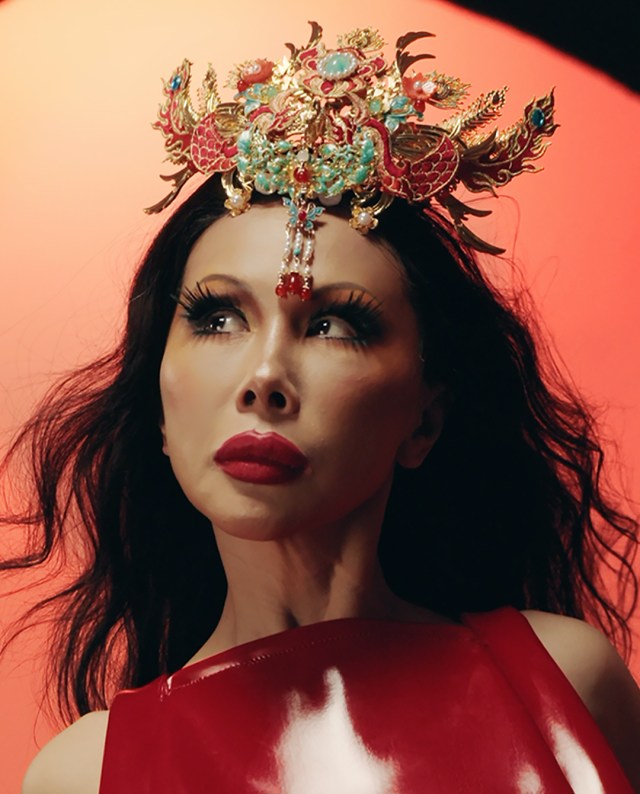
If “music is inherently political,” as he phrases it, then Genesis Owusu’s (real name Kofi Owusu-Ansah) previous concept album about a roach fleeing God was politics drenched in obvious metaphor; on his new project, REDSTAR WU & THE WORLDWIDE SCOURGE, he rips the mask of metaphor off so there is no misinterpretation, no dilution, and no room to hide. The Ghanaian-born, Canberra, Australia-raised genre contortionist is stepping out of metaphor as simply Kofi, releasing his most pointed, unfiltered, unflinching work to date. His third full-length, released May 15th, arrives after a meteoric rise to fame that has established him as one of the leading visionaries in modern alternative music, with a blend of rap, punk, and pop that feels impossible to label and even harder to blend as seamlessly as he does. 

Across this work, it is evident that he’s less interested in building alternate realities, as in past full-length projects like STRUGGLER and Smiling with No Teeth, and more interested in forcing the listener to sit in the one we are in today; bigotry, income inequality, and cycles of violence are all part of it. The stakes feel higher now: there is nowhere for Kofi to hide lyrically, and you can’t hide because you live it. At a moment when many artists are pigeonholed into choosing either to live in comfort or to confront these issues, Genesis Owusu is hellbent on the latter; we had the amazing opportunity to sit down with Kofi to talk REDSTAR WU & THE WORLDWIDE SCOURGE, the climate that shaped it, and what he hopes translates to the listener. 


Hit Parader: Just to start off, you said in a previous interview that your work is defined by being kind of on the cusp of different identities and cultures. How does that in-between space kind of shape the way that you approach themes, not only on this record but also on previous records?

Genesis Owusu: I think, for the most part, it influences the sonics. I grew up in a fusion of cultures that also created the platform for a fusion of sounds. My family immigrated from Ghana to Canberra, Australia, so I was going outside at school in the playground, and it was AC/DC, pub rock, and then I was going inside, and there was Jollof rice cooking on the stove and Ghanaian highlife playing. Because of the fusion of cultures, there was already an innate fusion of sound, but also a fusion of perspective, seeing how the same situations played out in different parts of the world, how they were similar, how they were different, things like that. It’s all one big fusion, and it comes out in the music.

Cred. Jamieson Kerr

HP: I read before that you grew up in a community that was not predominantly Black and/or Ghanaian. How did that experience of growing up Ghanaian in Canberra play into that side of your music as well? 

GO: It kind of drew the line from the start. I was a Black man in a predominantly white place. There was no confusion as to the fact that I was an outsider, and a lot of the time it wasn’t in any kind of malicious way. Sometimes it was, but a lot of the time it was just, ‘Whoa, you’re different, you’re the first Black person we’ve ever seen.’ And I had just come from a country full of Black people. I was like, damn, there are a lot of white people, this is crazy. But I think the fact that the distinction was so apparent made it easier for me to be like, okay, I’m already the outsider, so let me just do things differently. Let me not even try to contort myself in any way to try and become something that I’m not. It was like the ground was already laid for me to just do my own thing, because everyone can already tell that I’m different, so let me just be different and lean into it.

HP: You said, in contrast to STRUGGLER and Smiling with No Teeth, REDSTAR WU [& THE WORLDWIDE SCOURGE] is very much ‘you discussing the here and now’ versus the world-building that you did in other projects. How did stepping away from metaphor change the emotional weight of making the record for you personally, and the way you approached different themes?

GO: I think it made it so there was nowhere to hide. For both me and for the listener, the world is chaotic and confusing enough, so I can’t be trying to obscure anything any further. I just need to cut through. I need to say what I want to say, and you need to hear it, whether it’s uncomfortable or whatever. Which is very different, because usually I can talk about things, whether they’re uncomfortable or foreign, and dress them up a bit, make them a bit pretty or fantastical. Whereas this time it was kind of like, I just need you to hear this as directly as possible. I don’t need any fantastical interpretations of what I could mean. It’s like, no, this is what I’m saying, and that’s what it is. Whether that comes with backlash or people not liking it, that’s just what it is. I’m going to put it out there, and what happens happens.

Cred. Jamieson Kerr

HP: With enough noise in this world as it is, there’s a sense that being as direct as possible is really needed. I hate to think that there is backlash to direct messaging in such a hostile time, but is that something you’re aware of?

GO: Yeah, there’s definitely been loss of opportunity, both from people taking opportunities away or me refusing opportunities based on my own morals and deciding to work with certain brands or people. There have been people that are pissed off. There have been death threats. There’s also stuff that I’m sure I haven’t realized, like maybe being secretly crossed off people’s lists. But there has also been a lot of relief from people to hear things being said directly. It’s great to resonate with people, whether they’re like-minded or not, just the fact that the music has sparked a thought or a conversation that maybe they’re not having regularly. The DMs have gone crazy, positively and negatively, but that’s what I came to do. I came to say what I need to say and spark conversation, and it’s happening.

HP: Art is inherently political, no matter how you want to dress it up. 

GO: I definitely feel like if you don’t agree with the messaging, it’ll be a hard listen. But at the same time, it would actually be great if there were people who didn’t agree with the messaging and were still open enough to listen. Maybe it sparks something, or even if they don’t agree, as long as it sparks some sort of thought or conversation, I’m happy with that.

HP: I love that. Every era you’ve had with album cycles, you’ve changed your look each time, and this time you said it’s more ‘just Kofi’ rather than a character like the past two records. How did that decision, along with the bluntness of the record, change the way you approached the visual aspect of the rollout, like the documentary, the photos, the styling?

GO: I brought it back to me as a person, and I think going back to Ghana was a really pivotal point in all of that, not only from an artistic standpoint but from a personal standpoint. That was my first time going back to Ghana as an adult, so being able to see my country through a fully formed perspective was really important. It allowed me to see the fullness of my heritage, my family, my lineage, especially if I was going to make an album as myself, not as a character, but as Kofi and what that means. It became the center point of all the visuals. Music videos were shot there, the album cover was shot there. It made it more real and more personal.

Cred. Jamieson Kerr

HP: That’s amazing. And correct me if I’m wrong, but a lot of the film crew and personnel you worked with were locals?

GO: Yeah, the director and creative director we flew from Australia, and then everyone else was from Ghana.

HP: That’s awesome. Tell me more about that experience, and the motive behind that intentional decision. 

GO: Definitely. Especially with the ‘Stampede’ music video, it was very much like ‘I’m not going to go to Ghana and impose my will on Ghana’. I’m not going to go there and say I want it to be like this or that. It was more like observing what’s already there. You see bike riders in the video because there’s a huge bike-riding subculture in Ghana, and horse riders on the beach because there’s a huge horse-riding subculture. It was me going back as an adult, serving as the conduit to show my listeners in the West, America, Australia, and the UK, what Ghana is. It was important to have locals around us to show us what Ghana is like, so I could then show the rest of the world.

HP: A form of documentation versus directing, in a sense.

GO: Yeah, exactly.

HP: With REDSTAR WU [& THE WORLDWIDE SCOURGE] being a third album, and the first two already stacking awards and critical praise, how did that history shape the pressure or freedom going into this record?

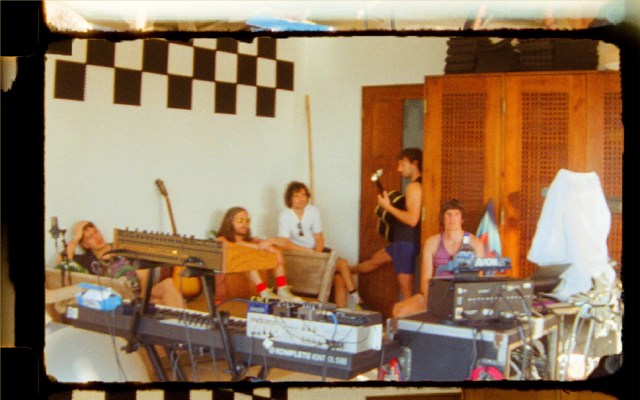
GO: I remember making my second album and feeling a lot of external pressure because of the success of the first. I was thinking, ‘What do I do? Do I try to make hits? Do I try to do this or that?’ And then that second album ended up being about a roach running away from God, and it turned out really well. So when people accepted it and it got critically acclaimed, it showed me that I’ve cultivated a listenership that will go on the journey with me. So, going into the third album, I was comfortable doing what I wanted. Staying true to who I am has always worked for me, so I didn’t feel pressure. I just spoke my truth. I went to Wales to record it with my friend in his church, and it was just the two of us for about two months, throwing sounds at the wall, seeing what stuck, just jamming and playing. This is what came out of it.

HP: That’s insane. I read that your routine was just wake up, breakfast, talk politics, and make music all day for about 60 days straight.

GO: That was pretty much it, yeah [laughs]. 

Cred. Jamieson Kerr

HP: It’s crazy. How did the ability to fall into that routine, and keep outside variables constant, affect your creativity?

GO: The fact that there was nothing else to do helped. I was in a small town called Barry. Beautiful place, beautiful people, real small-town living, but not very exciting. Everything was happening in the church. If you went outside, there wasn’t much going on, so the routine and lack of distraction made for a really vibrant creative experience.

HP: Fair enough. I read about a conversation you had with your manager, asking if you were willing to ‘die on this hill’ in terms of your stylistic approach. How has that ethos steered you creatively while building something as direct and politically charged as REDSTAR WU?

GO: That ethos is what made the album what it is. Music is really important to me, and the reason I make it is important. It’s how I communicate; it’s my therapy and catharsis. Trying to dilute that for money or fame would be a betrayal of self. I always tell younger artists to define their version of success early, because people will try to impose their version onto you. You might reach what others think is success and still feel empty. My definition of success is expressing myself authentically through my art and living comfortably off it. If I have to distort that to make more money or appeal to more people, I’ll feel terrible because I’ve betrayed myself. I know what I’m here to do: to speak my truth and push boundaries. That’s why I’ll stand on that.

HP: If all the external noise disappeared tomorrow, accolades, touring, everything, what would you be most proud of?

GO: Just the art itself; everything else has always been a bonus. The fact that I’ve been able to create political, abstract, authentic art and put it into the world is something I’ll always be proud of. I would have been proud of it even if no one listened. Yeah, I think, regardless of all the external noise, that’s something that I’ll always be proud of.

HP: Out of curiosity, when you and other people have said your music is a piece that is inherently political, what do you personally hear in that word? Is it a label that you either consciously embrace or feel as if it’s just a natural part of your music and your story leading up to it?

GO: I mean, life is inherently political. Going back to the start of our conversation, growing up as a Black man in a pretty white area taught me almost immediately that my life, in particular, is inherently political. I think my music, from the start, has always been political, but because I dressed it up in more fantastical ways, you could listen to the sound or enjoy the stories without necessarily engaging with that layer if you didn’t want to. Now it’s front and center, and that is by design. As a person, I’m inherently political, so my art is always going to be inherently political, because life is inherently political. That’s just what it is.

Cred. Jamieson Kerr

HP: That’s fair. In the same way that Kendrick Lamar’s Good Kid, M.A.A.D City is a more digestible medium, but it’s inherently a political album, and then To Pimp a Butterfly is a lot more direct and to the point, where you can’t really dance around what it is about. 

GO: Yeah, exactly. That’s exactly it.

HP: Just to wrap up, how do you want this record to function for your listeners? More as education, catharsis, a call to action, a place to feel less alone, or something else entirely?

GO: I want it to be a battery in people’s backs. I want people to hear it where, if you’re aware of what’s going on, you’re aware; if you’re not, you become aware. You get a top-down view of the situation we’re in, but without feeling demoralized or apathetic. I want you to hear this music, understand what’s going on, and feel energized to do something, to go outside, create community, and create change. I want this to be the soundtrack for someone’s rebellion. That’s how I want this album to function.

HP: Like a call to actually do things without being pessimistic about the future.

GO: Exactly.

HP: Life is always going to be cyclical. If you don’t have anything to compare bad times or good times against, you don’t really know what you’re looking for. It gives me hope that there are good times to come if you have something to compare it against.

GO: Yeah, and there are good times to come if you fight for it, if you do something about it.

HP: Exactly. Out of curiosity, what kind of messages or reactions or DMs to the record have hit you the hardest so far?

GO: I think the ones where people see the album as the articulation they couldn’t do themselves. I get a lot of messages saying, “I have felt exactly this way but have never been able to put it into words,” and it’s nice to be the mouthpiece for those people. That’s been really meaningful.

Listen to REDSTAR WU & THE WORLDWIDE SCOURGE, out now. 

See Genesis Owusu + More in Issue 7 of Hit Parader Magazine

Exploring Hilary Duff’s ‘Metamorphosis’ Into The Undisputed Icon of 2026

If you were between the ages of seven and ten years old in 2003, you had one true god, and her name was Hilary Duff. Your bible? Her post Lizzie McGuire debut album, Metamorphosis. Anyone whose chosen diva was this particular blondie who happened to be anywhere near Southern California was likely one of the 17,500 fans packed into L. A.’s Forum on July 9, 2026, night two of her two-night sold-out triumph in her adopted home. 

Songs off Metamorphosis were so different from what we hear on the airwaves in 2026. Those records aren’t about being the baddest in the game or even really about boys. Her songs were about blossoming into a young woman and not knowing what any of that shit means, leaving yesterday behind, and doing “a crazy dance.” 

Duff’s impact with the 2001 hit TV show Lizzie McGuire was a game changer. Those days, a lot of the television shows centered around young girls were about their secret magical talents of wizardry, psychic abilities, or fighting crime after school. But Duff wasn’t playing the popular girl, nor was she the big scary nerd weirdo. She wasn’t “It Girl” status. She also wasn’t “MOTHER”. Lizzie was your friend. That’s what made her special. She was someone who sat at lunch with you, lent you a jacket to tie around your waist on a rainy day, and studied with you for an exam you were both going to bomb. For a generation of girls who fought for their lives through the age of low-rise jeans and heroin chic, Lizzie was a very comfortable and cool place to be. Returning to that era once again, 20 actual years later, felt like finally coming up for air, even just for the night. 

Cred. Michael Drummond – @michaeldrummnd

Back in 2005, my best friend Lisa’s lovely mother took the two of us to a Hilary Duff concert at the Dodge (now Payne) Arena in our hometown of Hidalgo County, TX. Bestie & I were sporting our new tour t-shirts while her mom wore earplugs. I still remember needing to stand on the chair to be able to see the very top of Duff’s head while she danced around the stage in the same arena my brother had hockey practice. 

But now, it’s 2026. Lisa & I are all grown up, living in L.A., fresh off work, hopping in an Uber, one White Claw deep, to see the “Mature” singer perform again, this time at The Forum. We were both a little choked up talking about how special it is to see her again and all the dreams Hilary inspired us to chase. Back at that ’05 concert, we were a part of the swarm of nine-year-olds that used to dominate her demographic. But on this Thursday night, the only handful of little ones we saw were the children of people who grew up with Duff just like we did, which tugged on our girlhood-coated heartstrings pretty hard. 

The Forum was dripping in Duff everywhere you looked – from just plain sparkles to ultra niche homages to Lizzie lore. Her stage had this modern popstar approach to a 70s disco/psychedelic aesthetic in the key of neon pink that really fits her latest work.

Cred. Michael Drummond – @michaeldrummnd

Her show opened with a badass overture of her song “Wake Up,” which is also what she opened with back in ’05, so I was instantly covered in girlypop goosebumps. The first thing I noticed was how tight her band is and how strong the musical direction is overall. They hit every mark when it came to the recognizable hooks and track elements that made everyone scream in the name of nostalgia. It was honestly stunning to hear thousands of people collectively remember the iconic and hittable note changes in the final choruses of the hits. They also brought this very cool indie rock approach to the transitions that updated the big ones and meshed in the latest project beautifully. 

In her newest album, Luck…or Something, Duff gives her OG fans this intimate eye-level look inside her inner monologue that navigates arguably complex and introspective ideas. 

The singer tells these sexually confessional tales you’d expect from maybe a friend in confidence, much less a grown woman who’s lived most of her life in the limelight. The whole album feels like reading-intensive therapy notes covered in glitter glue that, for some reason, we’re lucky enough to read.

She still manages to meet us in the middle like she used to with songs like “Mature,” which roasts an ex who’s still dating way too young, and other cuts like “Holiday Party,” which examines the female experience of wondering whether the guy you’re seeing is screwing around at a work party—and then feeling guilty for even thinking it.

Lyrics like “at the dive bar giving you head” and “touching myself by the front door” miraculously fit between her squeaky-clean pop catalog throughout this 21-song set list. Mostly I’d say because the sonic choices made on her new project gracefully complement her previous album’s aesthetics. 

It felt like the crowd got to celebrate the actual Metamorphosis of those early records about innocence, first loves, and adventure into the exciting, brutally honest, and deeply candid stories she’s now so confidently performing in shiny tops and blue jeans. It was honestly healing to finally hear about all the places that butterfly we once knew flew to, where she chose to land, and everything she discovered along the way. 

I’m not really a nostalgia seeker myself, but Hilary Duff is a different story. By the second song, I had already cried off all the colorful gems Lisa helped me stick on the corners of my eyes before we left. I was emotional because the show felt like catching up with an old friend that you haven’t seen since the third grade, and you didn’t realize how much you needed to. 

Cred. Michael Drummond – @michaeldrummnd

The moment that did push me over the edge was after she sang “So Yesterday”. Hilary went fully nonverbal for like two minutes, gazing out into the screaming abyss of a sold-out crowd with THE most authentically humble expression I’ve ever witnessed a live performer wear on their face. She was so clearly moving through different shades of gratitude to the point where I felt like I could hear the thoughts she was having. “After all this time? In the age where the algorithm that runs our lives buries even the greatest alive? In a city where something ‘cooler’ is happening every single second of the day? All these people are here tonight to see me and sing along? On a Thursday?” Yes, and we missed you, girl. I think we need you now more than ever.

By the end of the show, a lyric I didn’t understand a week ago from a song she played third to last off the new record suddenly made sense. “How did I get here, was it luck or something?” 

See Hilary Duff Live Here

Get the latest music news, exclusive interviews, and editorials in this month’s issue of Hit Parader Magazine.

Making Detroit The Yacht Rock Capital 

Like punk, which is an attitude as much as a style of music, yacht rock is not just a genre, it is a lifestyle. It is a state of mind, an escape from reality, a retreat to a simpler time. 

So, Michael Scoenith and Scott Kusmirek know that the home of yacht rock can be any physical location as long as the vibes are right. To that end, the two promoters/yacht rock devotees, who are both based in Michigan, are making Detroit the home of yacht rock the weekend of July 17, 2026, with a two-day celebration, Yacht Rock Detroit, on the river.

Featuring a mix of original yacht rock artists such as Pablo Cruise, Three Dog Night, Ambrosia and John Ford Cloey, and Yacht Rock Revue and Seven Wonders, a Fleetwood Mac tribute band, the two-day concert/party is the second annual event. We spoke to Schoenith and Kusmirek about all things yacht rock.


Hit Parader: Where did the idea to celebrate yacht rock first come in?

Michael Schoenith: You’ve got to remember that this is something that’s slowly sweeping the nation. As much as LA takes credit for the music, you look at Michigan and you look at how many boating licenses we have. We get one summer and yacht rock is a part of life now. And LA has always been ahead on things when it comes to cappuccino or sushi, right? But this is really taking over the whole nation. You start seeing it happening everywhere, from New Orleans to every major city.

HP: Why do you think that is?

Schoenith: The world is very loud right now, and this allows you to turn it down a notch. We’re not going after the nostalgia of a particular decade. You think of Yacht Rock as 70s, I might think of it more as early 80s. But we’re just trying to take you back. Yacht Rock just takes you back to simpler times, where you get to unplug a little bit and enjoy life in the moment. You don’t need to scroll. You don’t need to be on your phone. You don’t need to worry, worry, worry. It just takes you back to a simpler time in everyone’s youth, whether you were 16 or 25.

Cred. Yacht Rock Detroit

HP: I’m sure you find this at the festival, there is nostalgia for people who weren’t even alive then, they are wistful for a time that they didn’t get to see. So, I imagine with the festival, you have fans there who were not even born during yacht rock. 

Schoenith: Correct, people romanticize it. Obviously, I’m going to plug the Rooster Tail here, but my grandfather built the Rooster Tail in 1958 where the festival is being held, and we brought in all sorts of major artists back then, Tony Bennett, Bobby Darin. My dad in his early 20s hated that music, it was just old person’s music, so he brought in Motown. That was all before I was born, so I romanticize myself about the Motown Mondays that used to happen here, what that must have been like to see the [Four] Tops and Temptations and Diana Ross being shy, not a diva but being a little girl who would work so hard she’d sweat and her fake eyelashes would fall off. None of them knew they were making history at the time, but I grew up working here at the Rooster Tail and just romanticizing about these times where Bobby Darren was doing that and he’d go fishing every day on the water here. It’s just these stories I’d hear and that I still hear from people. and you’re 100 percent right about the kids not being born. I’ve got adult children all in their 20s. And honestly, it started as a joke. I was wearing a sweater like this and one of my sons said, “You look like one of those yacht rock guys.” And my other son’s like, “Yeah, Dad, have you ever heard of this band called Chicago?” I didn’t know if they were kidding me or not. They’re trying to turn me on to this old music that I already know. And, and next thing you know, I said, “Let’s throw a party.” And that was last year. Then with Scott being a musician and being a true yacht rock devotee, he knows everything. It brings you back to when music was a little simpler, when you could hear the chords and you knew what instruments were being played and it was manually done. It’s a cool sound; it’s dance in your chair kind of music.

Cred. Yacht Rock Detroit

Scott Kusmirek: To talk about my grandfather a little bit too, my grandfather was the president of Seabird Jukebox Company out of New York. I’m from New York, Long Island. So, I was in the music business, through the record business all through the 70s growing up, and my father ran a lot of locations across the country. We were working with all the major labels because we were putting out these hit songs and all that old vinyl I grew up with. My father’s first eight track was Pablo Cruise, so I was in the thick of it. Then when I got older, I ended up playing for the Gin Blossoms for 10 years. And when I was living in L.A. at the time, I saw these guys on YouTube making fun of Yacht Rock, and it was hilarious. I moved back to Michigan and started throwing yacht rock parties on Marquette Island over by Mackinac Island back in 2014. No one ever heard what it was. I happened to meet Michael and put this thing together that we’re doing this year. There is a time period back then in the 70s and 80s where it was just analog. I think these festivals take people back to that 70s and 80s time period and these kids that are seeing that are going, “Wow, life isn’t like that today.” That’s why they’re getting involved in these yacht rock shows, plus the music is timeless. 

Schoenith: It’s like an adult family thing, too. Being in my 50s with 20 some year-old children, I can go to the same festival with them, and we both get something different out of it. And this year, we’re mixing the Instagram TikTok famous DJs. I don’t want to say it’s all ages, but all ages 21 and up. So, there could be a 25-year-old and a 55-year-old having equally as good of a time. It’s not like, “Oh, my parents dragged me to this.” Sometimes it’s the kids dragging their parents.

HP: I remember those videos, they were hilarious. But you could tell they were done affectionately. 

Kusmirek: Yeah, the skit they did with Michael McDonald where he’s going from studio to studio, it was like that for him. He was singing on everybody’s record, so it was crazy. 

Cred. Yacht Rock Detroit

Schoenith: And, yeah, it started out as a joke, it was a punchline. But in the end, the music won. 

Kusmirek: It started out with AM Gold. Remember when they were pushing those AM Gold CDs and albums and stuff? And it never really stuck. But when they labeled it yacht rock, now it’s here for a while.

HP: What were you looking for in putting this together?

Schoenith: We put it on last year and we had one big national act that wasn’t really Yacht Rock. We called it Yacht Rock adjacent. It was Lou Gramm from Foreigner. But we started real late in the game, and we had a lot of cover bands. Last year the vibe was incredible. And we didn’t know what direction to go. Do we go with just all cover bands or do we double down? And we were about to go with all cover bands. Then Scott came to the door and he’s like, “Michael, I know these guys. I can get you these bands.” Scott and his team put together a huge lineup. I’m looking online and I feel we have the greatest weekend lineup in the country for a yacht rock festival when you look at the names and the people that are playing over 20 hours right in a in a two-day period. I think Scott put together the greatest and then the cherry on top is the two DJs, Mr. Wired Up and Party Pupils. They’re blowing up huge right now because the genre is taking off and they’re mixing yacht rock songs with like Duran Duran and Kendrick Lamar and New Hit. So, I think the lineup is out of control. 


Dive into fresh music news, interviews, and editorials in the newest issue of Hit Parader Magazine.

Can I Ride: SIDEPIECE on New Music, Their Own Compilation Album, and What’s Next

Over the last few years, SIDEPIECE has become impossible to ignore in EDM, leaving a lasting mark on the genre while turning small-club sets into full-production spectacles and becoming a can’t-miss act at some of the world’s biggest festivals. The DJ and production duo of Dylan Ragland and Ricky Mears keep pushing out music they love, always finding new ways to make their world, and the world their music fills, just a bit louder and a bit more fun. If co-productions with Diplo and Disco Lines, along with official house remixes for the likes of Lil Wayne and Bobby Shmurda, do not already make the case, these guys mean business, and they are not slowing down anytime soon. Hit Parader caught up with them to talk about the busy yet exciting year ahead, the moments that keep them grounded, what led to their new single “Can I Ride,” out today, and what their Lip Service Compilation album, released on their own label, means to them. Their love for the craft is infectious, and this interview makes it clear: SIDEPIECE is here to stay, grateful to be here, and ready to have a good time. 


Hit Parader: Just to start off, tell me about your favorite moment from live shows, track releases, or anything else this year!

Dylan Ragland: We created something called the Disco Lips. For anyone who doesn’t know, our logo has always been lips; that’s kind of our theme, so we built these 10-foot-wide, giant lips. It was a whole process. They were super expensive, super detailed, and completely worth it. When we finally saw them finished, they were amazing, hand-pieced mirrors and everything. The first show we used them, seeing the crowd’s reaction when we lit them up for the first time was pretty epic. We always have big shows, but for me, that felt like our whole team coming together to create something special, and now it’s something people talk about.

Ricky Mears: Yeah, one that stands out, we played Brooklyn Storehouse, and it felt like the perfect venue for the lips.

Photo Cred. SIDEPIECE

DR: Yeah.

RM: But Orlando and a few other places looked incredible too.

HP: And that was your biggest show to date, right? Or the biggest headline?

RM: The biggest headline we’ve ever done as SIDEPIECE, yeah.

HP: That’s insane. And you brought out Bobby Shmurda?

DR: Yeah, perfect timing, his hometown.

HP: That’s awesome. We’ve been asking every artist we’ve interviewed today the same question: what’s one song or album that has changed your life, for better or worse?

RM: Mine’s probably not dance music. It’s hard because they’re so different, but I’ll give two. Deja Entendu by Brand New, kind of post-hardcore rock. That record is just ingrained in my head; I love it. And honestly, I love Slipknot. Vol. 3 (The Subliminal Verses) is another one, I can basically recite both of those albums front to back. I just get obsessed with them.

DR: This is tough for me. I’d say The Battle of Los Angeles by Rage Against the Machine, mostly because of the time in my life when it came out. You form a lot of core music memories when you’re young, and I was already a big Rage fan. I’d also say Untouchables by Korn. That one stands out because I had to sneak into a record store to get it, I was underage, and the parental advisory sticker actually mattered then. So it’s not just the album, but the memory around it.

HP: Out of curiosity, what’s a recent moment, within the past year or so, that reminded you why you do this?

RM: We were just talking about this. We played a show in South Korea, a small, sweaty club with maybe 500 or 600 people, and they were going crazy the whole time. Singing along, fully engaged, not a bunch of phones out. When we walked offstage, we were like, “That’s what house music is about.” It wasn’t a huge festival, it was just a packed club in a place where we don’t even speak the language, and they were completely with us.

DR: Yeah, music is a universal language, especially dance music. For me, it’s when people come up and say things like, “This song changed my life,” or “I met my wife at your show,” or “Your music helped me through something.” That’s always wild, because we all have those experiences with music, but to realize you’re part of someone else’s story in a positive way is powerful. Even when we think of our music as just fun, simple dance tracks, you never know how it’s connecting with someone.

Photo Cred. SIDEPIECE

HP: That’s fair. You’ve got a huge summer coming up, Europe, festivals, all over. Best market you’ve played, most surprising market, and where you’re most excited to go this summer?

DR: Aside from Bonnaroo? [laughs]

RM: Bonnaroos sick! A surprising one, we played Pensacola, Florida, near Panama City. You wouldn’t expect it, but it was one of the rowdiest crowds we’ve ever had. For two hours, people were going absolutely crazy.

DR: Yeah, consistently we’ve had some of our biggest crowds in LA, Denver, and the Pacific Northwest. This year we had one of our biggest shows in Chicago, and obviously Brooklyn. It’s hard to pick just one place.

HP: I caught a moment in the Brooklyn set where you sampled a 95 South track, that was really cool.

RM: Good catch!

HP: I’d love for you to tell me about that track, and your process for finding unique or niche samples.

Photo Cred. SIDEPIECE

DR: You’re the king of segues; that’s actually our next release, and we’ve been opening our set with it. I was digging through 95 South’s catalog on YouTube. Some of their bigger tracks have been over-sampled, so I went deep, listening to every album, every song, just looking for a line. I was on a plane when I heard the one we used and thought, “That’s it.” It had this female vocal hook, which actually isn’t even the main group, it’s a feature.

RM: Yeah, when we reached out, they didn’t even fully remember it. They were like, “We’ve got the contracts, you’re good.” When Dylan made the first version, we all immediately felt like, “This is SIDEPIECE.” It didn’t feel like a remix; it felt like something we had to properly sample and release.

DR: A cool full-circle moment is that we got members of 95 South to record lines for the intro, so they’re actually featured on the track.

HP: So it’s not just a sample, it’s a collaboration.

DR: Exactly.

HP: That is so cool. And I heard that the Lip Service compilation album is dropping this summer, congrats! How do you choose artists for that, and what’s it like being on the other side of the industry supporting new talent?

RM: Lip Service came from the same mindset as digging for samples. Even before we had a label, we were finding tracks on SoundCloud and playing them in our sets. As SIDEPIECE grew, we realized we could build something around that, finding artists who are excited to send us music and get it out there. We’ve discovered a lot of talented people who genuinely care about what they’re making.

DR: For us, it’s two things: we have to love the song and want to play it, but the artist also has to believe in it and push it. It’s not just about social media; it’s about caring enough to want people to hear your music. If you love your track, you’ll naturally want to share it.

RM: We’re going to post your song because we believe in it; we want you to do the same.

DR: It’s also meaningful for us because we benefited from people taking a chance on us early on. We wouldn’t be here without that, so it feels good to be able to do the same for others.

RM: And the compilation is going to be great.

DR: Yeah, the music is awesome. First of many.

HP: That’s amazing. I’m stoked for you all.

DR: Appreciate you having us.

RM: Thanks, man, it means a lot.

Photo Cred. SIDEPIECE

Listen to “Can I Ride” by SIDEPIECE feat. 95 South, out now.

Finding Duende in Los Angeles at Rosalía’s Lux Tour

Rosalía’s “Lux Tour” cannot be described in words but only felt. The cultural expression “Duende,” rooted in flamenco tradition, is the closest thing to being able to depict Rosalía’s work of art or do it any justice. The term “Duende” references the spirit of creativity and the intangible magical force that evokes the divine in both the artist and the audience. It’s the elusive magic that seems to only arrive when artists least expect it. Magic that can only appear when the artist is expressing an undeniable level of raw honesty, humility and surrender that simply cannot be faked, imitated or rehearsed.

Reverent fans filled the L.A. Forum, paying homage to Rosalía’s Lux album in white veils, all-white outfits and an array of head scarves. My personal favorite was a man in a yellow silk robe with a perfectly bedazzled neck brace as a nod to Rosalía’s character “Magick” from her recent acting debut in Euphoria. Traditional flamenco music played as everyone found their seats. The energy of the arena felt more like entering a theatre as the Heritage Orchestra filed into the center of the room. It was clear this tour was going to be different than anything we’ve ever seen or felt.

Photo Cred. @baeth

Jimi Hendrix’s “Angel” played just before a delicately placed Rosalía in a white tutu was revealed from the opening of a giant box for “Sexo, Violencia y Llantas” and “Reliquia.” The initiation began with the beat of “Porcelana,” which grew into a dance any professional dancer, choreographer and rebellious bun head like myself would’ve lost their minds to be a part of. Even so, with grace and grit, Rosalía continues to be one of the few music artists who can keep the eyes of a trained dancer on her while surrounded by seasoned backup dancers. Whether it be dancing on pointé, rolling her flamenco wrists, or riding a pillow across the stage Motomami style, all eyes are on Rosalía. 

The Spanish singer-songwriter’s attention to detail in every note, every visual, every frame, every look, served a purpose and cracked open a new level of emotion. The heavy-hitting team of choreographers Charm La’Donna, (LA)HORDE, Dimitris Papaioannou and traditional flamenco artist Jose Maya managed to give us the essence of Rosalía through their movement. From contemporary ballet and hip-hop, to floating hand choreography and a full-blown rave with “Berghain.” In collaboration, her creative team found humility and freedom in the movement that seamlessly serves the story and leaves the ego at the door. By the time Rosalía sang “Saoko,” reminding us that we didn’t just come to cry, we came to shake some ass, everyone was on their feet. Even conductor Yudania Gómez Heredia and the Heritage Orchestra got down and gave the dancers and head-banging audience members a run for their money. 

A quick confessional moment as the hilariously candid actress and musician Odessa A’zion took the stage to confess inside the booth. Naturally, this led to flirty banter discussing Rosalía’s tongue exercises, because why not? “La Perla” followed with what can only be described as art on art on art and Rosalía in true goddess form as she floated through the air. 

Photo Cred. @baeth

Heritage proceeded to hit us with a freight train of emotions that perfectly complemented Rosalía’s flawless and soulful vocal runs that would stop flamenco legends in their tracks. The transfixed audience tried to hold back tears with lumps in their throats for “Divinize” and “Mio Cristo Piange Diamanti.” Rosalía then let her hair down and proceeded to show us that she could easily decide to be a full-time rock star if she felt like it. Heavy beats evoked the feeling of a modern-day drum circle of sorts and shook the arena for “CUUUuuuuuute.”  All while a giant fog machine reminiscent of a spaceship swung through the air in slow motion, changing tempos with the music and taking on a life of its own.

Watching a clip of this tour on your phone would be the equivalent of seeing a photo of a glass of fine sauvignon blanc but never truly tasting it. An untethered emotional rollercoaster ride that every person undoubtedly went home feeling moved and forever changed by, whether they meant to or not. “Lux” left me stunned with tears in my eyes, a smile on my face and a tiny white feather from the end of Rosalía’s set that seemed to magically float up into the palm of my hand. Duende that can only be felt from inside the arena if you’re lucky enough to be Divinized by the angel herself.


See Rosalía on tour here.

Izzy Escobar Continues Her Rise to Superstardom

A year ago, when I first wrote about New York-based Izzy Escobar, I promised she would be “The pop princess of 2026.” Not to toot my own horn, but, boom, right on schedule.

So far in this year she has played multiple fests, been a star of synchs with a track on the soundtrack to The Devil Wears Prada 2 and the final season of the acclaimed HBO show Hacks (with a song written with the legendary Diane Warren), a s well a s a cover of Dolly Parton’s “Here You Come Again,” for the hit Amazon series  Every Year After, and now her first sports anthem, “Hotshot (Extra Time)” written as part of a campaign with Extra gum for The World Cup.

As we both agreed upon reconnecting almost a year later, it has been a surreal, whirlwind year for Escobar, with many, many more “How did I get here?” moments to come in the ever-exploding career of the soon-to-be superstar.  


Hit Parader: I interviewed Ibrahim Malouf the other day. And we were talking about the fact that he had a song on the World Cup as well. I asked him, “Did you ever think that as a trumpet player from the jazz world, born in Lebanon, that you would ever have a song in the World Cup?” And he laughed. So, did you ever think, as someone who grew up in classical, that you would have a sports anthem?

Izzy Escobar: Honestly, no. It was a bit of a curveball. I think that the cool thing was this was my first time working on something that was so strategically placed for sports. So, I got to put myself into a position where I was like, “Okay, what would it be like to be in extra time, to be an athlete, to be on the field?”  and try to merge the two worlds, like my classical sound, my jazz roots, but also not delineate too far from extra time and what Extra is doing. It was a cool task. It was a fun test and a cool moment for me to try something new. 

HP: Do you have any sports background?

Escobar: I did play soccer as a young girl. So, there is that. 

HP: When you get to the highest level, you watch how each other gets and stays there, and there are so many similarities. You must have the same discipline, the same ambition, the same drive, all of that is the same to make it in both sports and music. 

Escobar: Totally. I’ve been thinking about that more and more lately, especially because we just obviously had the Knicks winning in New York, and now, we’re going into soccer season. And I think because of this campaign and because I’ve recently been surrounded by the sports world, I’m starting to realize that maybe there are more similarities than I thought between the mindset of a musician and the mindset of an athlete. and when I was watching the Taylor Swift docuseries on Disney Plus of her “Eras” tour she was like, “You have to train like you’re an athlete.” It’s so true. It’s not only the work ethic, but I think a lot of it comes down to, honestly, exactly what the Extra campaign was talking about with just being in the present and being in the moment. It’s a physical game but it’s also a mental game. It’s probably more of a mental game than it even is physical. So, I have noticed a lot of similarities between the two. 

HP: Obvious question. If there’s one athlete that you can interact with that you would love to sit down with and just pick their brain, who would it be? 

Escobar: I feel like at the moment, just because we’re in soccer season, I’m going to go with Lamine Yamal, who’s playing for Spain. 

HP: All right, who’s your prediction now that you’re becoming a soccer expert? 

Escobar: You know what I’m going to say. I’m going to say I’m rooting for either Spain or England because England is ‘Sunny in London.” I went to London to record the EP, so I have roots there. Let’s go with England.

HP: How has being in this world influenced you?

Escobar: It’s so inspiring to see all of these stories of the most amazing athletes and musicians. You go into their stories, and you realize that it wasn’t always sunshine and rainbows, per se. It’s about really learning how to be in the moment during these, like, chaotic times and just persevere during difficult moments. For example, I had to learn about extra time within this campaign when a game goes into extra time. And the amount of pressure that you’re under, I’m like, “Oh my gosh, this is exactly how I feel when I’m about to release an album. And I only have one shot at this. Here we go.” I think going back to the idea of being present, being in the moment, it’s incredibly important regarding athletes and musicians.

HP: Being in New York, how’d you celebrate the Knicks’ win?

Escobar: I went out. I was running in the streets with everybody. I was cheering. I was celebrating. I walked towards MSG with a bunch of friends. It was awesome, it was an amazing night that I’m never going to forget. 

HP: Watching a championship and being part of the celebration, how does that compare in terms of energy to a sold-out show or playing a festival like BottleRock? 

Escobar: If I had to compare the two, the thing that would be similar is the adrenaline aspect. Before we go on stage for a show, you’re hit with so much adrenaline. If you’re going to extra time for a game, you’re hit with adrenaline. If you’re even watching a game and your team is at the end, the Knicks game is a great example because it was so close, and so I think it made me even more excited. About the song, I’m excited to have made a song that’s like, “Okay, I’m locked in, anything can happen, any team can win at this moment.” And to have a song that surrounds that idea is very exciting to me now that I’ve thrown myself into the sports world a bit. 

HP: It hasn’t even been a year since we did that Forbes interview. What have been the strangest moments for you?

Escobar: This, right now. I sat in this exact location last time I talked to you for the first time, and you’re the first person to really champion me and do that interview. And I think to just take a moment of reflection to think about how much has happened in between the last time that we talked, whether it be The Devil Wears Prada or whether it be the momentum from the EP, or then especially I’m sitting here with you right now talking about being immersed in a world that I couldn’t have told you I was going to be immersed in a year ago, which is getting to experience a fandom of something that’s not even just music. It’s the merge of a fandom of music and a fandom of sports. One thing that I am really proud of with this song is yes, it was a task that I had to try to figure out how to blend the world of sports. I incorporated crowd sounds and goal kicks and things in the song in the anthem, but then also like, “Okay, this needs to sound like Izzy, this still needs to sound like my voice, and I still need to use the same effects. I still need to embed myself in my own world and make it my own while also assimilating to the world of soccer and sports.” And I think the cool thing is these opportunities come up and it is about staying true to yourself still, regardless of what it is that you’re sharing. 


Listen to “Hotshot (Extra Time)” by Izzy Escobar, out now.

Brinley Amicon Turns Guitar Dreams Into Reality

Men have been picking up guitars for centuries to impress women. At least the ones who are honest about how and why they started playing. So, why shouldn’t turnabout be fair play and women have the same idea? 

Of course, in the male mind, the hoped-for result, the vast majority of time they start guitar, is getting laid. For women, or at least Brinley Amicon, when she started playing at fourteen, it was more in hopes of meeting a hero.

 “My best friend and I, at the time, desperately wanted to meet Aerosmith. And we thought, ‘What would be easier than getting a job, starting a band to meet them?’ We’re like, ‘Oh, we’ll surely make plenty of money, cross paths and that sort of thing.’ So, instead of getting a job at the local grocery store, we said let’s start a fucking band,” she says, laughing.

So, the obvious question: Did she ever meet the elusive Aerosmith? “Joe Perry, I’ve been trying to meet for years. He is the reason that I started playing guitar. And there are multiple occasions where I bought a meet-and-greet ticket for Joe Perry, but he got sick and had to cancel. Then I got tickets to their Vegas residency, but they canceled the day before. And then Aerosmith was supposed to do that grand finale tour, but they canceled that. But I did recently see him open for The Who, and he brought out Steven Tyler, and of course, Brad Whitford was up there as well. That was incredible, but I’ve not personally met them yet.”

Cred. Brinley Amicon

But as the cliché so often goes: “Everything happens for a reason.” Amicon might still not have met Perry, but more than a decade after she started guitar in hopes of meeting her favorite band, and became hooked on Aerosmith through Guitar Hero, she is well on her way to becoming a guitar hero of her own.

A dozen years after she and her best friend began their first band, she is endorsed by Gibson, Marshall amps UK, Ernie Ball, and more. Her YouTube covers of artists such as Slash, Billy Idol, Eric Clapton, Ozzy, and more always generate thousands of views per video, and she has played with and been mentored by the likes of Joe Bonamassa, Halestorm, and others.

“I’ve had the honor and pleasure of really getting to know Lizzie and Joe from Halestorm over the past few years. They’ve been great friends and have always been around to chat and offer their expertise and their thoughts on all these sorts of things. And listening to Lizzie speak is so incredibly inspiring and important. Her dedication to kicking down these stereotypes that come along with being a woman in rock specifically is important; it really is. Along with Lizzie, someone who really speaks to me is Joan Jett. I resonate with strong personalities that take no shit, are commanding the room, have this commanding presence and are resilient no matter what obstacles are thrown in their way.”

While Amicon has her female role models, she has just as many male guitar players who have become, as stated, friends and mentors.  “Adam Jones from Tool is one of the most genuine, kind-hearted people. The first time I met him, he invited me to his Fourth of July party with friends and family, and we were just chatting about guitars and music. Through that I’d go to some Tool shows, which are just one-of-a-kind insane stuff,” she says. “Then, of course, Joe is one of my closest friends probably, and he’s another one that has helped bridge worlds and kick down the doors. His name in the guitar world, along with Adam, holds quite a bit of weight, and the main thing with Joe is we’re just great friends; we have a lot of similar interests. If it’s The Simpsons, Mel’s Diner or the Sunset Marquis, we’re cut from the same cloth. Then with the guitar thing he’s always given me the opportunity to bring me into his world.”

Cred. Brinley Amicon

With all the support she has gotten, Amicon is ready to take the next step in her music and move from her highly successful social media covers to releasing original music in a band. She has done it before, but never at this level.

“I was in a band when I started playing guitar. The first band that I started was two months into playing. So, honestly, I’ve been writing and recording since I really started playing. There was certainly some music from that band out at the time, but I intentionally wiped it to start over because this new project is really what accurately represents me as a guitar player/songwriter/musician,” she says. 

It took some turmoil, which everybody who’s ever been in a band understands, but Amicon finally found the combination of musicians to bring out the music she can’t wait to share with the world.

“It’s certainly been an interesting journey, but I wouldn’t change it for anything. Like you said, a band is such a complex thing, but once all those pieces fit together, it’s such a joy. It takes time, you’re in a four-way relationship, essentially, you get to know every part of these people. And part of that is learning how they communicate, what is the best way to collaborate, and what is the best collaboration process? How do you make sure everybody’s voice is heard? And with this tug-of-war, push/pull effect, sometimes there’s one piece of the puzzle that may not work, and then you’ve got to swap it out. It’s an ongoing learning process, but it’s one of the most rewarding things to be a part of,” she says, “I’m super excited for the studio and what we’re going to be cooking up in there alongside Mike [Elizondo]. I feel probably the best I’ve ever felt about the project and this collection of work.” 

Now that Amicon has met so many of her heroes, when her record comes out, she may finally get the chance to thank Joe Perry in person for all the inspiration.

“It’s really Joe for me. I saw Aerosmith two weeks into my playing guitar. And after I saw that show and I saw Joe Perry, I was like, okay, ‘This is what I need to do for the rest of my life. He’s just so effortlessly cool and has so much style, attitude, and presence. And me at 14 years old, I was like, ‘Okay, that’s the one. That’s what I want to do.’ It would certainly be a dream-come-true moment to finally shake his hand and meet,” she says.

Alt-J’s Joe Newman on his Solo Debut: Portrait of the Artist as A Young Father 

With Alt-J, frontman Joe Newman enjoyed commercial and critical success, including hit singles such as “Breezeblocks,” “Something Good” and “Left Hand Free,” as well as major festival appearances such as Glastonbury, Lollapalooza and Coachella three times. Yet, for his just-released solo debut, The Canyon, you will not see the name Joe Newman prominently displayed anywhere. Instead, it is credited to JJerome87. 

As Newman explained when we connected recently, the pseudonym allows the music to remain at the forefront.

“Ultimately, I think my dream has always been I want people to be familiar with the songs, not necessarily familiar with me. I like that I have my anonymity to a degree. That’s a little hard to do when you go solo, but I certainly have hidden slightly by using this moniker,” he says. 

Like so many artists before him, Newman likens going from the safe confines of a band, where you are with like-minded friends striving for similar goals, to being on your own as a solo act, to being akin to starting over. And in his case, it is especially true because the immediate success of Alt-J never gave him proper time to adjust to popularity.

“We went straight from university and then all of a sudden, we got management, we got a booking agent, we got played on the radio and then within eight months we were touring. Then, very quickly, we won a Mercury Award and an Ivor Novello; things then just blew up,” he says. “That was my experience of giving it a go in a band. You don’t realize how lucky you are because your success is all you know. So, I think now, doing this as a solo career and experiencing the consecutive release of albums, you find a place in the world of music. And if you’re lucky, you can write a record that guarantees the next record. That’s where we were. We found a place. Then, when I’m working on this solo album, in a way, I feel like a new artist again. So, it’s very easy for me to look back on the band and think, ‘Wow, that was really cool and lucky. We worked really hard, but that’s crazy rare for something like that to happen.’”

Cred. Zachary West

Though the instant fame was a difficult adjustment, Newman is grateful for it because that connection has given him the confidence to grow with his listeners on each subsequent album.

“I definitely feel validated to be more like myself with every album I write because people respect it or the fans respect it. They enjoy it, it means a lot to them. They process it through their own filters, and it means something different to them. And it’s a really important part of their life. And that connection is really important. In a sense, I have an audience where I can talk more like myself through prose and songs,” he says.

By that principle, The Canyon would be the most Joe Newman record made to this point. Or at least it is a natural extension, to him, of the bond he has built with fans of Alt-J. 

“There are so many things that connect to examples of my personality that I’ll see again through writing new music. And I think if people like what they hear, you lean into pleasing that audience, and you do so with the understanding that you like it too. It’s like a rapport with you and your audience, essentially, writing,” he says. “So, what you write in the future is a more detailed understanding of what they’ve liked leading up to that point because you’ve had more source material to draw from. You have more of an acute set of understandings towards how you write, who you’re writing for, what you like to write and what they like to hear.”

The concept he floats of new songs being a continuation of the already established dynamic between the artist and audience is similar to one that exists in literature, which suggests all writers are constantly rewriting the same theme, just trying to perfect it. While it is not quite that simple, Newman does see elements of that in his work.

“There is an element of all the songs are just siblings. Some look like each other, and some don’t; some are better looking, and some aren’t. Others are just different levels of different characteristics within, but they all share the same DNA. I don’t know which one’s an advancement of the canon but perhaps ‘Mr. Alligator’ is,” he says. “It’s got an interesting guitar riff; it’s cinematic; it’s where my voice likes to be; it’s where the rhythm of my voice is most safe in terms of feeling good. I’m utilizing field recordings. We’ve got the jump ropers in that song. We’ve got them enjoying the recording day while we get them to do the jump roping, we’ve got them enjoying that day on film and on mic, and we’ve peppered that around the album. We’ve given it so much life, and we’ve injected it with so much atmosphere and energy, I think it encapsulates everything that I wanted to achieve for this album, and I think it’s a build-up of things that have slowly been happening from the first Alt-J album to the most recent.”

Cred. Zachary Gray

At one point, the conversation turns to film when Newman mentions being a big fan of Martin Scorsese and the era of film he represents (his favorite Scorsese films: The King of Comedy and Goodfellas). Once the subject of movies emerges in the interview, it is easy to see his cinematic influences, especially in the album’s brilliant closer, “Pennine.”

Newman does see film and visuals, in general, as a big influence on his work. “I think, in the UK, you’re prescribed the American cinematic vision at an early age. And it means that you end up watching a lot of American cinema, and you fall for it, and it becomes a large part of your diet. It had a huge impact on someone like me who grew up being interested in fine art. Then I went to universities, art college to study art,” he says. “I always thought in pictures, so I’d have these fantastical visions of things that I like to put into the music. And I think that built this cinematic. atmosphere because when I wanted to reinforce the message, I would use field recordings as well, which would blur the lines between this play on the radio experience and a song. I like to marry those worlds, and then I think you incorporate other, less traditional accompaniments into the music using brass and strings. So, you’re building this mood, and you’re thinking it like you’re scoring a film.”

If The Canyon were a film, to him, it would be a documentary of a key time in his life.

“I think the through line is probably behind the scenes. It’ll be, for me, the feelings that I had at the time; my daughter being born and raising my child, spending time away from the band to do this. It will feel like a time capsule of a period as a young father.”

The Struts’ Luke Spiller: Rock Star Frontman and Introspective Singer/Songwriter 

As the frontman for the popular UK rock band The Struts, Luke Spilller, is used to, well, strutting around on stage like a young Mick Jagger at times. A highly energetic, prancing showman with rock star energy, Spiller is known for that flair à la Jagger.

Of course, Jagger, who many consider the prototype of the rock frontman, is also credited as co-author on two of the most exquisite and tortured rock ballads of all time – the brilliant “Angie” and “Wild Horses.” So, why shouldn’t Spiller also be able to put away his dancing shoes from time to time?

He does exactly that on his recent solo single, “When I Die Will I Miss Living,” a profoundly tender ballad on mortality and appreciating life, he tells me, was at least partially inspired by the poetry of Billy Collins. 

 Don’t worry, though, Struts fans who crave the energetic and rocking Spiller. He says the new Struts album is nearly done, and he promises plenty more sex, drugs, and rock and roll. Right now, he is in his musical sweet spot, where he gets the best of both worlds – rock star frontman and introspective solo artist. And as he tells us, he is loving it.  


Hit Parader: How much fun is it to do those David Bowie-inspired shows with Mike Garson? Mike is just one of those people who’s got a million stories, but more than that, he absolutely loves music. So, for you, how inspiring is that to someone who’s been doing it this long, who still is that excited by it?

Cred. Joseph Lynn

Luke Spiller: Yeah, Mike’s story is not only really inspiring, but I think back to when I first started playing shows with him, probably about three to four years ago now. And I’ve just learned so much. I think by the time I did my first couple of shows with him, I saw myself as quite a well-rehearsed performer, to an extent, as a singer as well. It became quite apparent as soon as we started doing those first couple of shows that I still had a lot to learn. It was a very different type of performance, and Mike plays in a very specific way. It requires a completely different part of the brain from rock and roll music.

HP: It’s what allowed him to work so well with someone like Bowie, who could do everything. For you, what are your favorite Bowie songs to do? 

Spiller: I love doing “Changes.” That’s one of my favorite Bowie songs of all time. And I love the way that Mike and I do it. “Moon Age Daydream” is always great. Super fun. It depends as well on how we’re doing them. I’ve done a few shows where it’s literally just Mike and me playing for two hours. And then we’ve done performances where we have a big band around us. So, interpreting the songs can also lead to different favorites. I love doing “Life on Mars” with him as well. And we also do a whole array of Bowie-connected covers. Like we do “Perfect Day” (Lou Reed) from Transformer, which was produced by Bowie, and then we’ll dip our toes into other people that Bowie loved as well.

 HP: I was looking at your Instagram, and you said you were surprised by the response to “When I Die Will I Miss Living.” Why were you surprised?

Spiller: I was surprised because by the time I’d finished it, I’d been playing it on a little solo tour and, to be quite honest, I was kind of over it. I’d also heard some feedback, which I guess I’d kind of taken personally, regarding my solo stuff. It had come from a lot of immediate Struts fans, who were very much getting sick of me doing introspective slow ballads. And the solo record had already been alive and existing online and physically for about a year by the time “When I Die” came out. So, I was expecting people just to be like, “Fast forward, can you sing about some sex, drugs and rock and roll and make it fun and upbeat?” Yeah, I was really taken aback. I was given a lot of testimonies and stories that, to be quite frank, I’m not really even qualified to respond to, genuinely difficult moments in people’s lives that they wanted to share with me. Which again I found very touching, and which was attributed to hearing the song itself. So, I was quite surprised.

Cred. Joseph Lynn

HP: I’ve always found from talking with writers, the simpler and more vulnerable a song is, the more people connect with it.  So, when you think about it, does it become less surprising?

Spiller: After getting the initial feedback for the last three weeks, I do understand, after reading people’s messages and stories, how it resonates with people. Going back to my own personal experience, you hit the nail on the head where you said sometimes the more stripped back and personal a song is, the more universal it becomes. And I guess I was reflecting on the experience that I had with the 10 tracks from the solo album before this song. I had a couple of moments like this, and they weren’t received in the same way, maybe because they were album tracks. That probably also has something to do with it, they weren’t like focus songs. “When I Die” is a song unto itself, but I can see the appeal now after reading everything that I’ve read about the song.

HP: This feels like a song that came to you very quickly. Am I right? 

Spiller: Yeah, totally. I have these phases where I either spend the mornings at the piano or on a guitar, and I’m just really fishing, so to speak, for the first couple of hours of my day. And then sometimes I go through these phases where I flip that, and I don’t even touch an instrument, and I just sit, and I really have a newfound appreciation for just carving out a great lyric. This was one of those moments when I was back for the Christmas holidays in the United Kingdom. And of course, coming back, I had terrible jet lag for the first three to four days. So, I was up at about six a.m. in wintertime in the UK, and there was no sunlight. And I would spend about two or three hours watching the sun come up, essentially, and I’d just sit there with coffee. I was in one of my lyric phases, and I was reading a lot of Billy Collins, the American Poet Laureate. I feel like if anyone’s familiar with his work, you’ll see how that really inspired the subject matter and the lyrics. He has this way of making the mundane and the everyday into something not quite heroic, but more, he can turn it into a beautiful philosophical thought and feeling. I remember thinking of that phrase, and I thought, “Oh, gosh, that’s so Billy Collins. I can imagine him signing off a poem in that way.” I just ran with the idea, and I think I wrote about five different stanzas with that line being the cadence. Then I started hearing this very basic melody in my head as I was writing it out. And that’s why it happened so quickly. I picked up a guitar, and I thought, “It’s going to go here, and this is where it goes.” It all fell into place perfectly. I lived with the bare bones of it for a few months, came back to LA, and then took it to my producer, John Levine, and my friend, Nick Perry. We just jammed it out a bit, and then it was done super quickly.

HP: For you, did the song stand out right away?

Spiller: With the solo record, I gave myself the constraints of writing an entire album that was based on my own experience of love, sex, and heartbreak. And I worked within those constraints for a very long period of time; that’s all I was writing about. And “When I Die” was the first moment when I broke away from that. It was leading me somewhere else, where I thought, “Oh, this is a bigger idea than your typical love song,” even though by the third verse, I managed to make it into a love song essentially.

HP: I’ve talked to so many artists who enjoy the balance of the bigger thing and the more intimate thing for you. Are you looking forward to going back to the sex, drugs, and rock and roll for a moment just to balance it all out? 

Spiller: Yeah, I’ve literally just got back from Nashville a week or so ago, and we’ve completed The Struts’ fifth album. I’m actually in the process right now of typing out all the lyrics for the DSPs and of course the album booklets and stuff as it’s sort of like getting being it’s getting ready to be mixed properly and I can say for certain that none of those 10 tracks on the album go anywhere close in terms of asking the big questions that we tend to ask ourselves in more introspective moments. It’s a completely different hat that I put on when it comes to the band. I like that, I think it’s good. It helps me to apply these different skills I have in different ways. But yeah, The Struts stuff is more rock and roll poetry in the sense of my heroes, like Bon Scott, for instance. And the solo stuff is way more lyrically driven to a sense where I think you could sit and read the lyrics and they would read pretty well if you were to say them in a monologue.

Diaries Of An Almost Popstar: Pride, Allies, And What The Bible Really Says In Support Of The LGBTQ+ Community

I’ve performed on stage at Pride Festivals across the country now for the past three years. As a pop singer-songwriter who is Christian, straight, has read the Bible twice and minored in world religions, here’s why I think standing with the LGBTQ+ community is important now more than ever. 

Looking out at the crowd, faces painted, massive smiles, adorned with gems, there is no doubt in my heart that each face in this crowd is a child of God. Pride isn’t just a festival; the money that it generates goes toward health programs, youth housing, and counseling services. Supporting and advocating for groups that are typically ostracized by the church is how Jesus built his ministry. Not only did he joyously welcome those who were deemed outcasts, He called out religious leaders who were living in hypocrisy. 

When I was first asked to perform at a Pride Festival back in 2024, I was extremely hesitant. I write music for the girlies and the gays, but I’m just a girlie, not the latter. Why would I take up space and a voice in the community? When I politely declined with that reason, Luis Cortes, one of the executives of Pride Sacramento in California, called me nearly immediately after and said: “No, we need vocal allies now more than ever.”

Cred. Sandra Jamaleddine

I believe there is irrefutable historical and scriptural evidence that being vocal for marginalized groups is inherently Christian and a Jesus Christ taught value, despite what modern Western Christians are doing. 

Growing up in a Baptist Church in the 2000s, I was taught that being gay was one of the biggest sins because it refuted the symbol of Christ’s relationship with the church as a bride and groom. A Christian conservative family is wildly uncommon in New York, but my very Bronx-y family, specifically my father, made our family views known on nearly every public outing. Although I had more grace in my delivery, I’m my father’s daughter and rarely keep my opinions to myself. 

It wasn’t until an upperclassman I sat near in choir asked me point blank but in a whisper, “Heather, you know I’m gay; do you really think I’m going to hell?” that I felt a crisis of conscience. “No,” I whispered back, “I’ve lied before, and I’m not going to hell because I lied. Jesus died for me, so I just have to put my faith in Him and ask for forgiveness.” That’s when he asked, “But Heather, is loving another man really sin?” 

One of my favorite Bible scholars and pastors, Martin Niemöller, once said: 

“First they came for the Communists 
And I did not speak out 
Because I was not a Communist 
Then they came for the Socialists 
And I did not speak out 
Because I was not a Socialist 
Then they came for the trade unionists 
And I did not speak out 
Because I was not a trade unionist 
Then they came for the Jews 
And I did not speak out 
Because I was not a Jew 
Then they came for me 
And there was no one left 
To speak out for me.”

Niemöller delivered those powerful lines back in 1946; it was in reference to the rise of Nazi Germany and how being silent in the face of fascism leads to your rights being taken away as well. Over the past few years, I’ve been seeing this quote resurrected not only applied to the current state of America but also to the rising “religious” right growing across the world. 1946, the same year when Niemöller delivered these words, was the same year the English translations of the Bible used the word “homosexual” for the first time. 

Cred. Sandra Jamaleddine

The word “arsenokoitai” shows up in two different verses in The Bible, Leviticus 18:22 and Timothy 1:10; but it was not translated to mean “homosexual” until 1946. Other languages and their versions of the Bible have adapted to using that word in much later interpretations. In German, before 1983, 1 Timothy 1:10 read, “Man shall not lie with young boys as he does with a woman, for it is an abomination.” Arsenokoitai from Ancient Greek to Latin is paedico and praedico, which is the base of our word pedophile. After further digging, Ed Oxford, a leading Bible scholar working on a more accurate translation of the Bible, discovered the American company Biblica, who owns the NIV version of The Bible, paid for this new 1983 German translation. At that time, Germany didn’t have enough of a Christian population to warrant the cost of a new Bible translation. Biblica funded the entire project and let their interpretation influence the decisions that were made in the word choices, resulting in “homosexual” entering the German Bible for the first time in history. 

For decades in Pop Music, we’ve had pop stars lean in and love on the queer community. Madonna, Britney, and even Paris Hilton have been musical voices advocating for legislation and safe spaces. But before that, in the framework of pop music, Diana Ross is celebrated widely as a gay icon. Her 1980 hit, “I’m Coming Out,” was one of the first songs to set the tone of Pride. She was also one of the first fundraisers to rally support at the start of the AIDS epidemic. The Diana Foundation is recognized as the oldest active LGBTQ+ organization in the nation. She often calls her philanthropic work with the community “her ministry” while talking about her devout faith and growing up in the Baptist church. Not to mention, she has the most brilliant rendition of “Amazing Grace.” If I’m to try to become a pop star who builds a legacy of great music, faith, and compassion, why not build off the framework of a legend like Diana? 

Throughout the New Testament, Jesus lives and speaks through the importance of community. Jesus built His community in radical contradiction to the ancient Hebrew religious ways. Rather than spending his social time positioning Himself in the religious hierarchy, across the synoptic gospels He chooses to spend time and eat with societal outcasts. The act of eating a meal with the community of others in the Middle East at this time was an act of fellowship, acceptance, and peace. By doing this, he rebelled against purity laws. This was a scandalous endorsement of their “immoral” lifestyles. Most rabbis of the time practiced a strict avoidance of anything they deemed unclean. Matthew, Jesus’ disciple who was a tax collector before following Jesus, full-time. The Roman Empire was occupying the region at the time, and tax collectors were deeply despised by the Jewish people for extorting their own people. Jesus kept the company of tax collectors, prostitutes, and other people ostracized by His culture and considered these individuals dear friends. Why should I do any different? 

Cred. Sandra Jamaleddine

When I’m performing at Pride, I feel genuine love radiating from the crowd. If they didn’t know me before the lineup announcement, I have no way of knowing that. I hear the bellowing chorus sing my own handwritten words back to me. Roses from my merch stand were being waved back and forth. Although I don’t identify as a queer woman, I’m fully loved and accepted for who I am here. 

Like any festival I’ve played, I enjoy also being in the crowd outside of my set, chatting with the attendees and learning more about the who and the why. There’s an infamous photo of me eating lasagna in the crowd during Pride 2024. I handed out forks like flyers because the craft team gave me a massive hot tray. We all laughed and danced, shoving spoonfuls of cheesy pasta into our faces. Music is all about expression and connection. I love knowing why my lyrics hit for some people. I love learning more about the people dancing with me. Audience members are individuals and come to shows with the vignettes of their whole lives. They could have grown up listening to your early tracks, or they could be someone who connected with your song in a certain season of their lives. But Pride has the biggest why of them all. Why, out of all of the festivals in the world, are these people here? 

“Pride is where our community gets to take a breath and remember its own heartbeat. It is a celebration, a protest, a homecoming, and a promise all at once. For so many LGBTQ+ people, Pride is the moment they realize they are not alone, that their story is connected to something bigger, braver, and more beautiful than the fear or isolation they may have been carrying. That is what makes Pride so powerful. It brings us back to each other. It turns grief into joy, visibility into strength, and community into something you can actually feel. Pride reminds us that even in difficult times, we know how to make light, and we know how to invite others into it.” Luis Cortez 

Past keeping “the church’s” social outcasts as friends, Jesus advocated for the ancient Mosaic Laws to be reconsidered. The first story that comes to my mind is when Jesus stopped the Pharisees, religious leaders, from killing the woman who was caught in adultery in John 8. The men of the church brought an unnamed woman to Jesus’ feet. They claim they caught her in the middle of the act and asked Jesus how to punish her. They then cite the Mosaic Law of the times. Laws that condemn her to death by stoning. Jesus pauses to write in the dirt as if He didn’t hear them. When He is done writing, Jesus turns to the Pharisees and famously says, “he who is without sin, cast the first stone.” Although it’s not recorded what He had written down, scholars believe that he etched into the dirt the sins of the men trying to condemn the woman. The Bible then goes to say that the men convicted by their own guilt disperse. And Jesus says, “I do not condemn thee.” This is not the only example of Jesus admonishing and going against the religious elite by defending His society’s pariah, but the one that sticks out most to me. 

I believe, as an educated Christian, it is important for us to truly study the text, not out of context but in its full context. It’s vital for us to embrace our God-given compassion and marry empathy with Bible scholars who teach about the historical significance and the people of the times to better understand the words and the choices made in the sermons we hear today. In fact, Jesus says nothing about homosexuality during the 33 years he was on earth. Our current Christian patriarchy will weaponize forgiveness and Jesus Christ laying down His life for others to condition followers to be meek in the face of injustice. While Jesus was very loud and direct about standing up for those whom the church had put down. 

If Christians are called to be people who are following in the ways of Christ, then we should listen to the words He directly says and follow in the actions He makes. My takeaway from reading the Bible and applying it to my life is to act like Christ in my every day-to-day. Through this lens, America is my modern-day Jerusalem. The Pharisees, deciding who is good enough to get into heaven, are my republican congressmen. Anyone ostracized by their religious elite that Jesus loved and advocated for is someone that I will love, show up for, and advocate for. Jesus is my Lord and Savior, commanding me to honor him by loving and accepting others, especially when the corporate church and the religious subculture are telling me to do otherwise. So, I will always put on my mascara and rhinestones, sing, dance, and march with Pride.