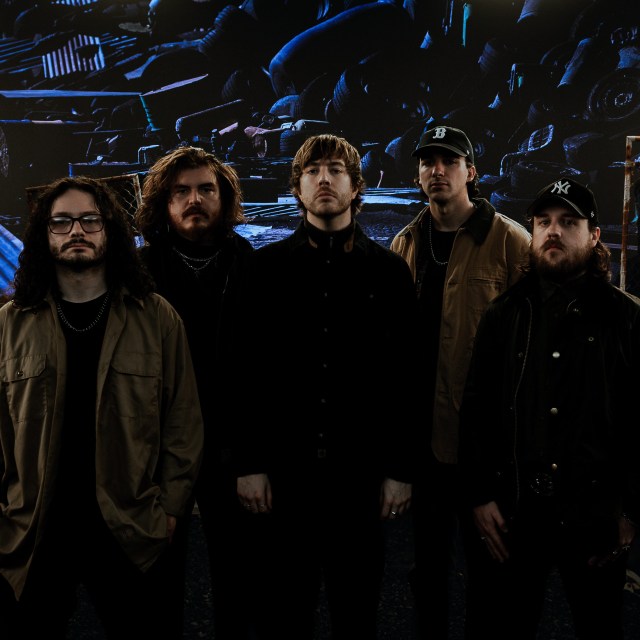
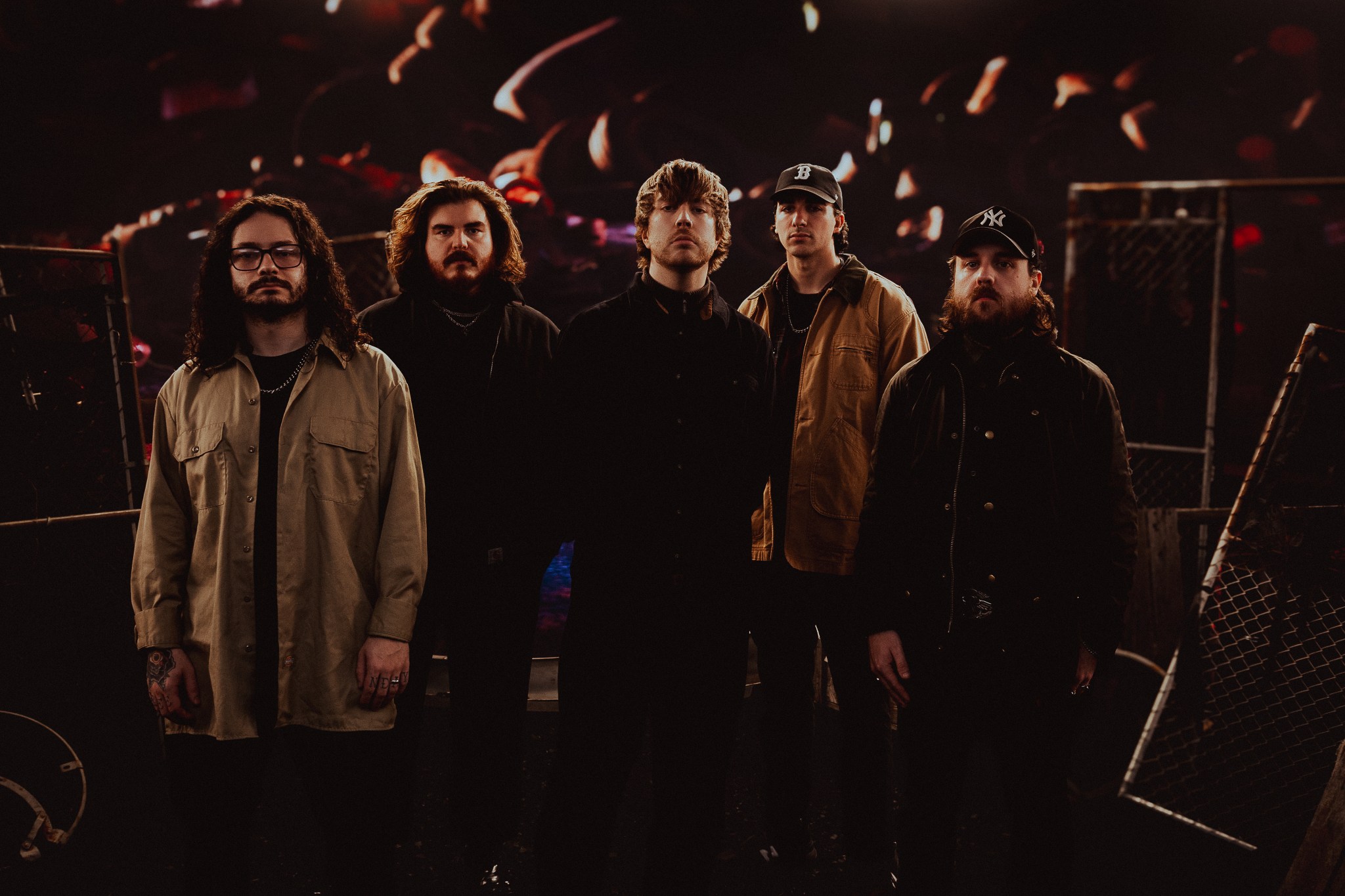
Gatekeepers are a long-gone role that we only truly notice the importance of when they are absent. One genre where their absence can be most felt is hardcore. Boundaries lead singer Matthew McDougal is here to take on some of the responsibility. He has some concerns about the newfound attention the scene has found and its impact on perception. The ideals the band holds for the genre stem from the growth it has provided them in their lives. Their newest record, Yearning: The unbeautiful after, may have been a good case study on what the genre at its best can be. The project, while being cathartic and dark, does not stray from challenging the band and the listener in ways not common today. Overall, they are positioned to be a trailblazer for the genre for quite some time. I met with Matthew before their show on the “Hive Mind” tour to discuss the band’s future and the health of the genre.
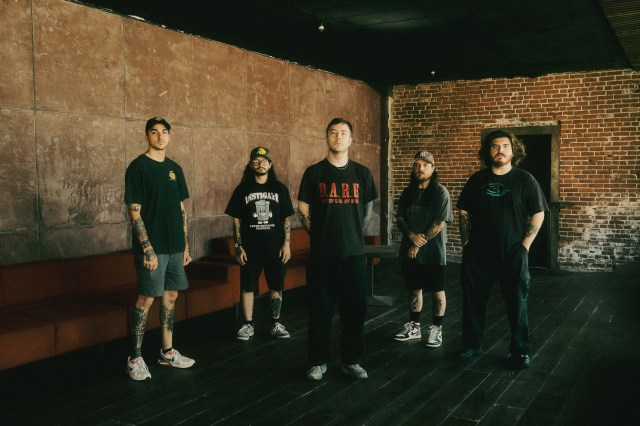
Hit Parader: How is your year going so far?
Matthew McDougal: The start of the year was a little rocky because rolling out a record is a pain. Rolling out a record on a new album is a pain. There were a lot of growing pains surrounding putting out this album. New producer, new label. It used to be that we talked to one person and were like, “Here’s what we want to do.” That one person would approve it. Now we have to talk to a whole web of people who are involved in a label. You ask one person, and then they need to check with five other people. Then one of those five doesn’t get back to you, so it never moves. The beginning of this year was a tremendous pain in my fucking ass. Not in a way that is permanent. It was fine. It was the type of thing that, hopefully, next time it’s easier. We had the summer off for the first time in forever. The summer is such a busy time to be touring, but we did.
HP: What did you do with all the time?
MM: Fucking nothing. It was awesome. I sat my ass in a chair, and I watched movies and played video games. Life couldn’t be better. We just toured non-stop last year, right into putting out a record. Into touring at the top of the year. Eventually, summer hit, and there was nowhere left to play. We had this tour, so we couldn’t do the states again. We just came from Europe in June. There was nothing left to do. Unless we’re going to go to Brazil. It’s just to go home and wait until people want to see you again.
HP: What one album do you think is criminally underrated?
MM: Vol. 3: The Subliminal Verse Slipknot. Everyone talks about Self-Titled and Iowa. Then there’s a time skip, and it’s either you talk about Slipknot in ‘99 or you talk about them in 2026. When half the members aren’t in it anymore. Subliminal versus was still the core, and they were transitioning out of, “Well, Nu metal isn’t very viable; what else are we going to do?”
It was one of the first records my brother bought me. I have a soft spot for it because it’s heavy, weird, and gross. Corey starts singing more. There’s nuance to it, and it’s never part of the conversations about Slipknot’s best records.
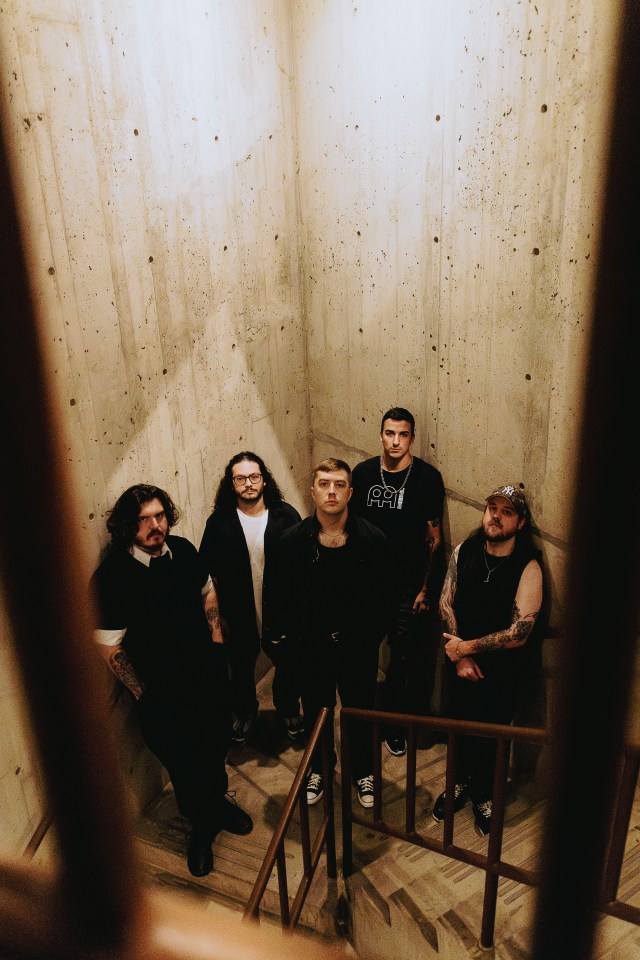
HP: You guys have been on a bunch of different lineups with a bunch of different styles of bands. How is it trying to adapt your setlist to the rest of the lineup?
MM: It’s 50/50. There are tours we’ve done where it’s easy for us to acknowledge that we are supposed to fill the slot of the heavy, scary band on tour. A tour we did earlier was Amity Affliction and August Burns Red. Which are both metal bands, but not the style that we are. Where it’s much darker, heavier, and scarier. The themes are darker. The kind of metal we play is more screaming, less singing. It lends itself to something that’s more on the edge of the genre. For tours like that, we will every so slightly meta-game a set to wonder if we should placate the fans that they are going to bring, like, “Hey, we have stuff like that too.” Or is it better to peacock and be completely unlike the rest of the tour? We’ve done both. Both feel good. Sometimes it’s a bit of a cheat code being the heavy band on a not-so-heavy tour. We’ve done a Beartooth tour where nothing sounds like us. There were times when it was like, “Man, this crowd is not here for us.” They were there to see Caleb up there in an unbuttoned shirt, and he’s showing off his abs. Everyone is wearing pink, and that’s just not what we’re doing. I would say it’s more often that we just try to be true to ourselves. We’re a band that has a large breadth of genres. On this tour, it’s a lot of heavy. After us, there’s a grunge band (Superheaven). After that, there is a rapper (Denzel Curry). If you’re here for Knocked Loose, we are the first inkling of that style you get for the first 2 hours you’re in the building. When we were building the set, we were like, “We have to play new stuff because we just put out a record.” As for the new stuff that we’re going to play, it has to be the heavy stuff. Otherwise, it’s a mixed-band bill, and it can be a little tough to sell to people who don’t know everybody. We figured we’d play to a ton of new people, and we have. We are just going to stay true to ourselves and try to give people what we think is an honest interpretation of us. A pretty melodic but heavy band.
HP: I saw you talk in a previous interview about how being experimental earlier in your careers has allowed for more of a creative leash from fans. How much confidence does that give you that you can take those risks?
MM: You’d think that’s how it would work. Something that we’ve started noticing is that the more people who figure out who you are, the more susceptible to their judgment you become. It used to be that when we made stuff, the only people who knew about us were people who liked us. They would co-sign anything we did because we did it. The last two records: a bigger label, more tours, and bigger tours, and we’re getting in front of people that don’t like it. I want to say I’m less confident. I don’t feel wounded by it. There is a hesitancy around being too strange. It used to be whatever we did; the only people who knew about us were like, “Yeah, do whatever.” We’re further from that than ever now. Am I less confident? No, we just have to grit our teeth way more. We have to keep our heads down, and if we want to do something, we have to be certain we want to. Because we’re going to hear about it from people who don’t like it. That was a big part of this year, especially putting out the new record with a new label. We got in front of so many more people, and people who were never going to like it. Who’s more vocal than a group of people who don’t like something? We had to learn the skill of ignoring negativity without writing it off completely. Sometimes people who don’t like something can be right. You have to be like, “Yeah, this wasn’t the best we could do.” I would say a little less confident, and that’s the talking point internally in the band. Are we pushing ourselves in directions we don’t need to go for the sake of doing it?
HP: I found that I almost always end up talking with bands about this. How growing a larger audience affects the way your goals change. How to make sure you are still attuned to the band and not what everyone else wants.
MM: I think there was this necessity in the beginning. There’s this hunger and this immediacy that’s like, “I need to create.” I played my first show when I was 16; now I’m 32. You do that for half of your life, and the needle starts to move. You need fewer things. You need different things. There’s a time when we’ve made music, and it’s been an exercise in creativity. How bizarre can we make it while it still feels like a boundaries song? There are times when we make songs that feel like when you google boundaries, this song plays. It should be defining what we do 80% of the time. Following that needle and being like, “How do I need it?” It definitely moves, and it can be difficult to know why you’re making stuff. Sometimes, are you doing it to go through the motions? Are you doing it because you need to? That probably comes with the more music you put out, the more you know. I can’t relate it to painting or writing. I would imagine that you reach a point where you feel like, “I’ve already done that. What do I do now, or do I quit?”
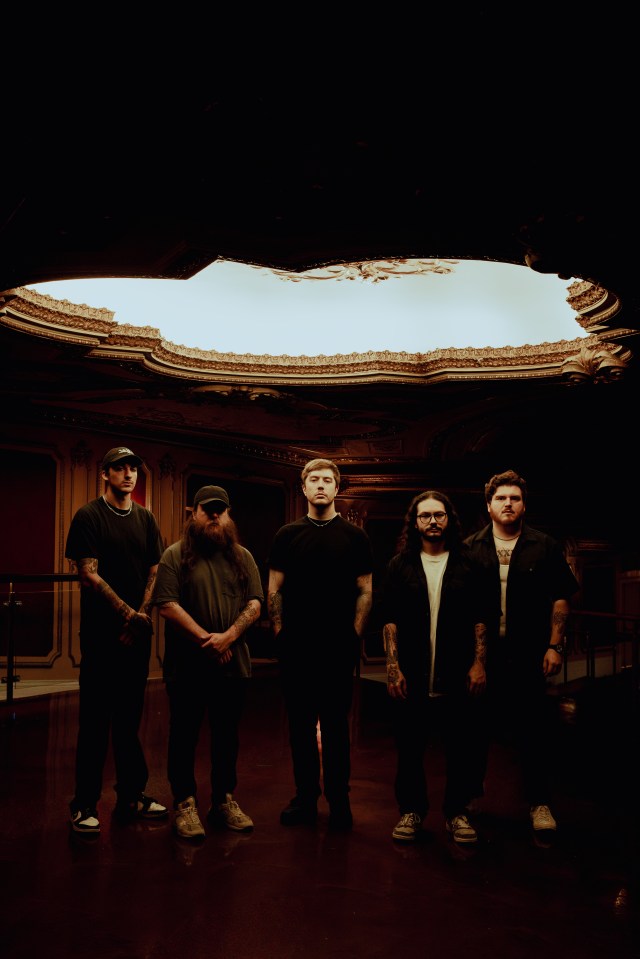
HP: You have also talked about the state of heavy music and how it’s in an interesting spot. It seems like some of the noise for the genre has died down. You were talking about how it was a great opportunity for the band because there could be a resurgence. What are the traits or ideals that you want to build the new wave of heavy music on?
MM: It’s weird because I don’t think the audience for heavy music necessarily went anywhere. Heavy music has been broadened during COVID. Access to it is exclusively through your phone. Then shows came back, and those people who had never heard heavy music started going to shows. They don’t really know the etiquette of it. They don’t actually really like heavy music. They like Bad Omens. Which has heavy parts depending on which record you listen to. You can get something that is more core-leaning or more Octane-Radio-leaning. A lot of people going to heavy shows don’t like the genre very much. I could sit here and name 60 bands that I have next to no respect for because I don’t think what they’re doing is all right. It’s not conducive to the genre. I think it’s just noise. You’re just trying to get your 15 minutes, and the second it stops working, you’re just going to do what is popular. That core audience that likes music that is aggressive, edgy, and pushing some type of envelope. It’s vulnerable, and it talks about things that are uncomfortable to talk about. Not every song is some fucking love. Not every song is about how you miss somebody or these vague, nothingburger metaphors about darkness and shadows. All that shit is for the birds. I really hate it more than I hate most things. It’s encroaching on the thing that is dearest to me. It almost feels like inflation. It’s not that the fans went anywhere. They’re still here, but they are being ostracized by their own community. It’s being co-opted by people who don’t belong here. They are going to be doing something else in 2 years. They’re tourists. I don’t know how to keep those people away from something that they don’t actually like.
I’m sure there are people who would disagree with me. That would be like, “No, having more eyes on something is intrinsically good because it allows for growth.” That’s why I used the term inflation. It’s growing artificially. Bands that have one EP out but have a world tour. It just doesn’t make sense. I’m not even big on paying your dues. Just because I ate shit doesn’t mean other people have to. But when bands get tour offers when they have one song out. If that’s not a sign of inflation, I don’t know what is. You have that group of kids who aren’t ready for the highest level of it. When they burn out two years from now, they’ll break up because you’ve been on the road for ten months. Their life has fallen apart, and it does not matter because the people who signed them already made their money off you. That’s always happened, but it happened in smaller, less observable ways. Bands have careers before they’ve even played a show. That’s fucking nonsense for heavy music in particular. Something that is supposed to be an outlet. It’s supposed to be about expression. You haven’t expressed anything. You haven’t done anything.
HP: That’s insane because performance is a key part of the expression for the genre.
MM: That’s everything. The whole thing is being in the room with people and saying, “Bro, me too. The thing that you’re describing, I get it.” That’s the core of heavy music. It’s supposed to be people who can’t figure it out normally. That can’t fit into society. They can find their own culture of people who agree and identify with that. The people who go, “I also don’t know what I’m doing. I also feel like the world is out to get me. I also feel permanently unlucky.” It’s not for the people who are doing fine. I don’t like it when people who are doing fine are involved in it. If you’re side stage with your fucking phone recording yourself while a band plays that you have no relationship to, you’re just some two-million-follower person on the internet; I don’t think anyone could contribute less than what you’re contributing.
More than anything, people want to be acknowledged in an area where they don’t exist. They want to fit into a world but they don’t want to spend the effort actually building and surviving in. That’s why people are so fucking excited to be on stage in some viral video. To do all this main character shit. Crowds surf with their phones and take a selfie when they reach the stage. You want to be in a band so badly, but you have no urge to create anything. So you’re doing this instead. I don’t get it or identify with it. You don’t belong to this community. You’re just going to go to whatever other subculture you find yourself near.
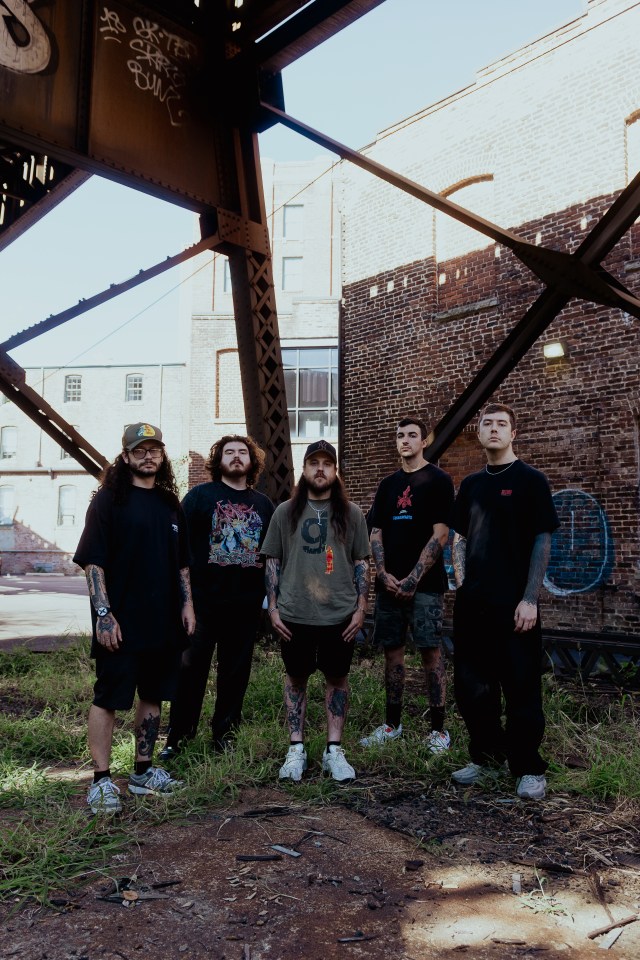
HP: As we discussed, being around hardcore music is something of a semi-recent event in my life. But something I’ve learned to appreciate from going to shows and watching a band over time is that this is what it’s supposed to be. Live shows are the key to the genre, and streaming is secondary to the experience. It’s almost as if streaming is just to help you think of the live show.
MM: That’s the whole point. It’s bizarre how backward that has become. That the meta game of bands that don’t put out records. They only do singles, and they drop one once a month. They never put out a piece of music that is a start-to-end experience. They want a moment to go viral. They want people to make fucking get-ready-with-me videos to be part of their song. They hope that fills 2,000 cap rooms. It’s fucking insane. I don’t know how there’s such a palette for it. I don’t know how people put up with it. It’s probably because it comes with success. If those people are at your show, then people who want to mimic what they do show up as well. There are a bunch of people in this room, but none of them are here to see you. They’re here to see each other. It’s a weird dynamic. They’re here to take a picture to prove they were there and then leave.
HP: A quote I saw from you that really struck me was “The music should confront the listener in some way because that is what the genre is supposed to do.” That idea of not only comforting but also challenging in the ways that people may need to grow. Where they can be challenged in a healthy way.
MM: Without that in the genre, I don’t identify why you are in this world. Until a few years ago, it wasn’t popular to be here. There used to be this stigma around being in a band because it is such an outside way to live life. To pull the trigger every couple of months, leave your family, leave your friends, and then get in the van because it’s the only thing that makes sense to you. Now bands do their first tour in buses. It’s fucking crazy. Confrontation and confronting the listener don’t have to be a negative thing. That’s one of the mainstays of therapy. You are speaking to somebody in a safe place who is going to confront your thoughts and feelings. Not that I would relate music to therapy because obviously one is more qualified. I’m only relating the idea that you can be safe/comfortable and be confronted at the same time. You can have parts of your life that need addressing. You don’t always have people in your life who can do that. Something like a song that is impersonal and doesn’t have a person sitting in front of you. That’s the whole point. That’s why streaming is second to being in the room, hearing that song, seeing that song, and feeling that song. You’re in a room full of like-minded individuals who have gone through it or are going through it. No matter what it may be. At least now you’re in a room with 100 that, if you have conversations with them, will find things that are similar about you. I went into the crowd at half the tours that we were on. I tried speaking to people on the floor, which should be music because we’re at the same show. It was almost impossible. We don’t have to like the same things, but I don’t know how you end up in this world if there’s no common ground between us.
HP: That ability to find common ground allows for the ability to challenge somebody. When I was going through tough times, what got me through was the people I had around me who I trusted had my best interests in mind. Having someone you connect with or relate to be the person who challenges you is so integral to growth.
MM: It’s how you develop. When you don’t have those people in your life. A lot of people don’t have parents, and if they do, they may not have good ones. What if you’re an only child? What if you’re like me, and halfway through high school you left because of a nervous breakdown? What if all those support systems that work for people don’t work for you? You’re just in the middle of the ocean. There’s nothing around you that you can grab onto. Something like a song that can be found independently on your own. It doesn’t come with judgment. It doesn’t come with a person in your face telling you this is how you’re supposed to listen to it. That is what is so good about the genre and music in general. When it leaves that. It wasn’t to be clicky, jockey, and popular; I don’t know what the point is anymore.
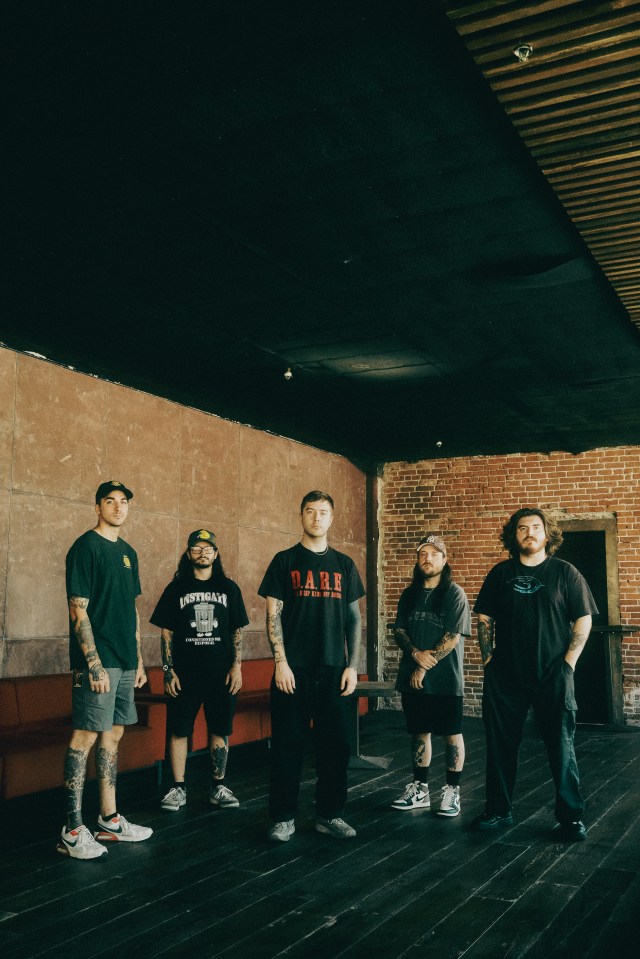
HP: This new project in particular covers a lot of very heavy topics like grief. How do you balance what you’re willing to share with the audience versus what is too much exposure?
MM: I wouldn’t say I dealt with it a ton on this record because I have figured out how to do it. What you’re describing is a very real crossroads. On our first album, I was sharing parts of myself that I wasn’t comfortable sharing but felt necessary. I needed the outlet. I didn’t have a support system that I was closely connected with that could help me through things. I wasn’t in therapy yet. I didn’t have the friend I have now. There was a necessity to it that was like, “I don’t want to tell these things to people, but I don’t have another way to get them out.” Eventually you reach this crossroads, that is, do I keep anything for myself? It can feel very opportunistic to expose the hurt and damaged part of yourself. What is, in turn, either direct or not, for success. There are people who farm negativity, and that is their thing. They are just permanently unwell because without it, they don’t know how to create. You see it a lot in authors. It’s everyone who’s ever drunk themselves to death at 40. That was the only way they knew how to do the thing in life that felt good, which was to create. If they stopped that thing, then they would lose the thing that was most important to them. There’s some version of that when you are talking about things like grief. Intense emotional things are to be discussed, and you’re looking for somebody to connect or identify with. I reached the point where I just figured it wasn’t about me. It’s not about what I have to say and what I have to share. The most helpful thing was removing myself from it and testing less, like I was exposing myself. More so, just starting a dialog about things that everybody experiences.
HP: In Nik Nocturnal’s interview, you talked about wanting to make timeless music. You also said that it was an impossible task. How do you guys go about attempting that while knowing that it is rather difficult? Is it something that you think about, or do you just try your best and hope it lasts?
MM: Those are almost the same thing for us. If we are aligning ourselves with something that feels like only a moment in time. I don’t know if that’s us at our best. If you’re chasing what’s popular, you’re always behind the curve. By the time it releases and people are listening to it, we’re already onto something else. I think that’s sort of a road to nowhere. For us, trying our best has always been, “Well, what do we like? How long have we liked it for?” Does it feel like a mainstay of who we are, or does it feel like something that people are paying more attention to right now? You see that in music all the time. There are always fads. There’s always a thing that will be here for a little bit. Then people get sick of it, and they turn it on. Which is even worse than not listening to it. They started to resent it because it felt too similar and familiar. We’ve always felt that it’s best to just avoid any type of trend as best we can. Even if we loved it, it would be for the wrong reason. We try to do what feels like we would have done it five years ago or five years from now.
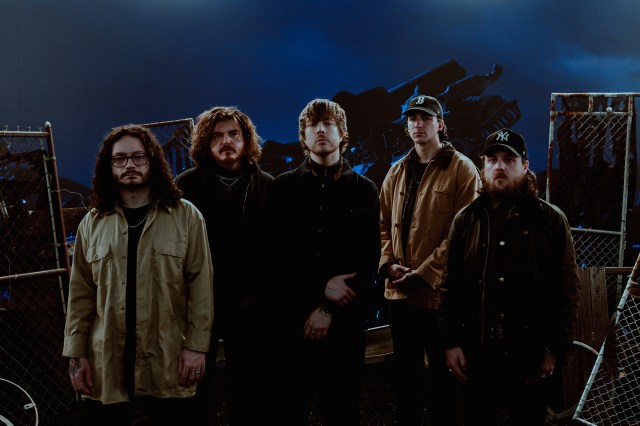
HP: How did that approach develop as your career progressed?
MM: Because we didn’t have the disadvantage of being overly accepted or celebrated for the type of stuff we were making. You see this massive resurgence now and everything about a revival band. Everything sounds like Saosin and Underoath; that’s what’s popular right now. I would never dream of doing something like that right now because by the time you’re ready to be a part of it, the conversation will have moved. Everyone will be doing something else. Early on, we knew what we were going to make was just because we liked it. Thankfully, the greatest benefit to this band is that all five of us don’t really like the same things. The thing I like about heavy music is not what Cory, our guitarist, likes. He’s much more melodic. He doesn’t even listen to a ton of heavy stuff. Which I know is such a fucking cliché thing that people say in bands. He loves pop, Hyper-pop especially.
HP: Me too.
MM: He loves Porter Robinson. He’s been locked into him for the last year; that’s all he listens to.
HP: His single wit Ninajirachi is ridiculous.
MM: It’s great; everything he shows me is awesome. Genres of music that have an intensity that is not heavy always fascinate me. When you think intense or heavy, you think of metal/hardcore. Then something that’s like, “What if we just turn everything up to 11, but I’m only singing this very intentional auto-tune the whole time?” Music is awesome. We all like different things. So when we’re creating stuff, we’re never really trapped in the idea that’s like, “Oh man, listen to this band that just put something out. We should do something like this.” Because we’re not listening to the same things. I’ll bring something that is grindcore-y, and Cory will bring something like “Cheerleader” by Porter Robinson. We should do something with this type of ascending scale. Then Cody’s like, “I only listen to Black My Heart and Boston Beatdown.” Nathan listens to, without exaggeration, the videos on YouTube that are supposed to mimic schizophrenia. The two hours of droning were nothing but broken up by metal scraping sounds. He’ll listen to that all day. Tim is a little bit of everything. He might be the most normal musically. He likes what he likes. When all five of us meet, there’s no chance of any one sort of trend pulling through. We’re each going to fight each other on it the whole way.
HP: Do you guys fight a lot on that stuff, or do you have a concrete system?
MM: Yes.
HP: Is the concrete system fighting?
MM: The concrete system is the checks and balances that come with five people agreeing on something creatively. It’s difficult because creativity and expression are so unique to the person. There are times when I write lyrics, and someone will be like, “Are we sure that’s it? ” I have to be like, “Yeah, I’m sure that’s it.” Then we write a part, and I’m like, “This is boring.” They’re like, “It’s supposed to be a simple part.” The most important part is being vulnerable enough to voice your concerns. In bands, more often than not, there are one or two people who do everything, and the rest just show up. So we try our hardest to avoid that pitfall. Eventually, if one or two people are doing everything, it’s going to start to feel the same. That’s an issue a lot of bands have. They either do or don’t deal with it. The five of us are checking each other so constantly with our intentions behind something. Is this because parts like this are cool? Is it just because you listened to something that sounds like this and you don’t even realize you’re accidentally lifting it? I make a huge effort when we’re writing not to listen to music that is too current. It is a completely accidental, innocent thing the band does all the time. Where you whoops a daisy a part into your song because you think of it. Six months later, you’re going through your Spotify, and you’re like, “Oh, this is that part.”
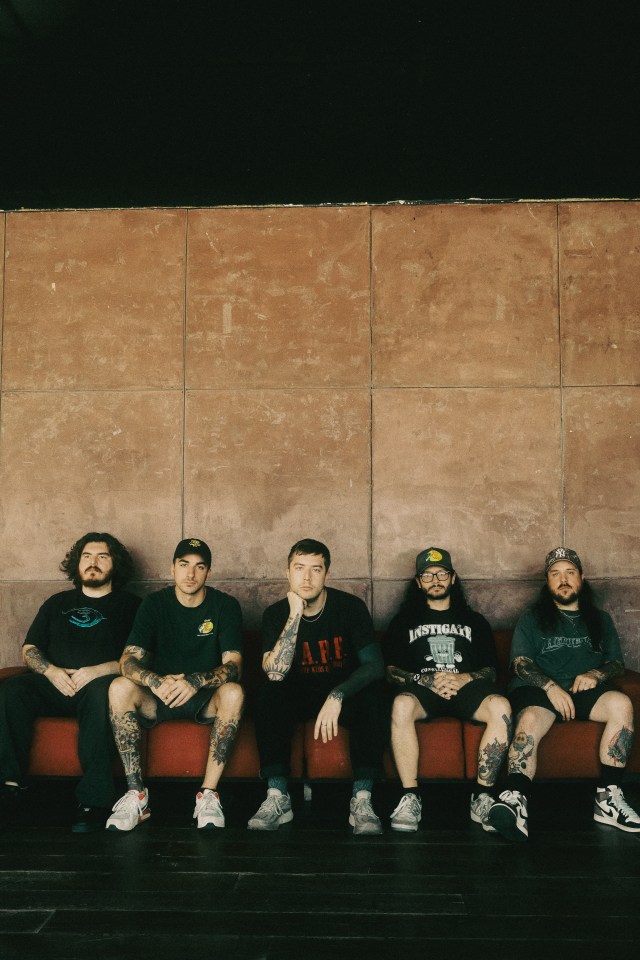
HP: There’s a reason why A&Rs can’t really listen to demos. It’s so easy to think you came up with something when, in reality, you heard it 8 months ago, and one chord, cadence, or style really stuck with you.
MM: Think of any time you’ve had some version of Déjà vu. Something for an inexplicable reason feels familiar. You can accidentally spill things that you think are inspiration but are actually mimicking. It’s an honest enough mistake. I try to avoid it completely because I would hate to feel proud of something and then realize it wasn’t ours.
HP: What’s your favorite album of the year so far?
MM: This album isn’t out yet, but I’ve enjoyed all of the singles and their previous works. This album could suck, but it’s by this band called Like Roses. Every song has some type of part that catches my ear or makes me want to listen to it again. It’s more emo-leaning. It’s not heavy music by any means. It’s almost 2011 sound and fury pop punk. Almost a Such Gold type thing. It’s fast and intense, but it’s not overly hook-driven. It’s not designed to one day become Blink-182 or Green Day. There is plenty of stuff I’m finding from a year ago.
HP: We can be a little lenient. It can be late 2025, Grammy rules.
MM: I revisited a lot of Turnstile recently. To me, that’s season-changing music. It’s windows down, jacket on. It’s getting dark early. It’s very end-of-the-summer music. I was listening to High Power, which is a band that used to sound more like Turnstile, that sort of high energy. I call it hardcore, but it’s not guys screaming exactly. It’s more of an “everybody in the room singing along” type of stuff. Similar to Haywire, where you’re not moshing but you’re jumping off something.
HP: Any final message to the fans, readers, or listeners?
MM: Not to be cheesy, but to search, to keep looking. One of the most harmful things in the world is isolation. When you give up trying to find a way out. It just gets harder and darker. The world comes in around you. If you keep looking for new people to speak with, to hang out with, and to make stuff with. You’ll find your little piece of the pie. You’ll find where you belong, and the only way you never find it is if you don’t look for it.