“You are alive right now, and it matters, and you get to decide why.”
A core pillar of synthwave music since the start has been escapism. The beating synths, the gated drums, the futuristic yet nostalgia-inducing imagery. Tyler Lyle from the band The Midnight has been a master of that and one of the genre’s pioneers and main faces, but that hasn’t always been the case. For the Atlanta-based songwriter, he finds a place in both nostalgia and being grounded in the today, the now, the present.
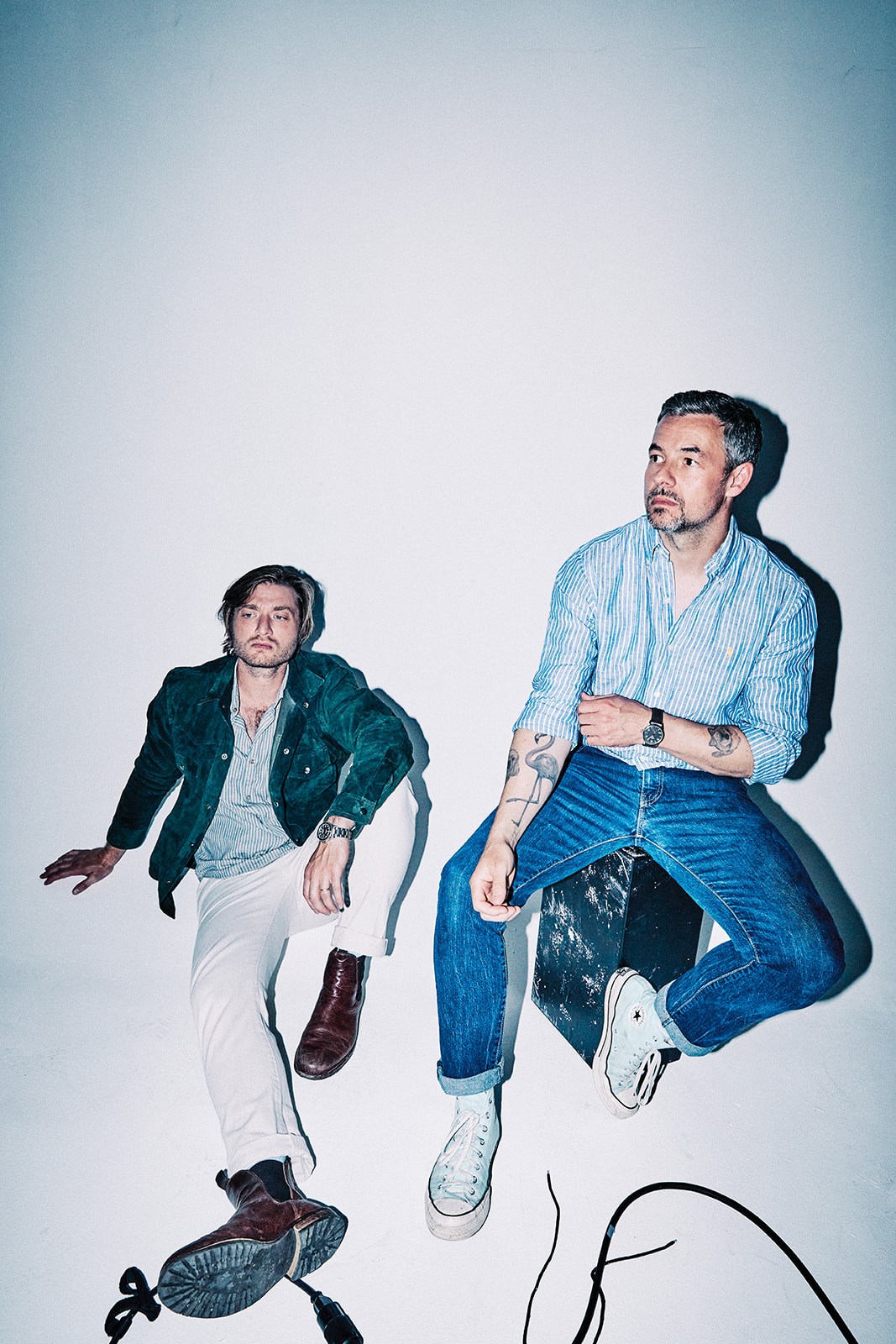
Lyle’s newest solo project, six years after his last, The Transcendentalist is his jump back to the present, removing all the nostalgia-provoking qualities of his synthwave work in The Midnight, co-fronted by Tim McEwan, into a softer indie singer-songwriter project discussing and reclaiming themes that deserved their own project. Hit Parader got the chance to sit down with Lyle to talk about the new album, his approach to songwriting, his transformation over the years, and what made him who he is today.

Hit Parader: What’s a song that you’ve wished you’d written, not specifically because it’s a hit, but for some other reason?
Tyler Lyle: I will forever be jealous that Josh Ritter wrote a song called “Last Temptation of Adam” on his record Historical Conquests of Josh Ritter. I think he’s an excellent songwriter, and he’s been a hero of mine for a long time. And I think that’s the most perfect song that’s been composed in the last generation. Before that, it was “Highway Patrolman” by Bruce Springsteen.
HP: Tell me more about the Josh Ritter song. What, in your opinion, makes that song so strong?
TL: “If this was the Cold War, we could keep each other warm,” I said on the last occasion that I met Marie. They find a missile silo, and they go into it thinking, and he’s kind of pretending that the world has ended so that they can fall in love. But there’s this big button that launches the nukes, and he’s always tempted to launch the nukes so that they could be stuck down there forever. And it’s just perfect, it’s Shakespearean, and it’s lighthearted. Just the lines are so good. “W-W-I-I-I.” Yeah, it hits all the things. It’s a myth, it’s poetry, it’s a love story, and it’s under five and a half minutes long.
HP: It seems very world-building, which is something that I admire a lot about your lyricism and the way that the Midnight puts out music, as well as your own solo stuff.
TL: Thank you!
HP: Over the years, how conscious have you been of dancing the line between building a world that’s detailed while still leaving room for the listener to leave room for interpretation?
TL: I think that’s part of the fun of building the world, that there are what we call archetypes. “Jason” is the desperado, the outlaw. “Crystalline” is the siren, the femme fatale. “Chariot” is the steed or the night rider. These are all sort of archetypal concepts in myth, literature, and story that have existed throughout time, and that really big, kind of world-building artists like Bruce Springsteen, Parliament-Funkadelic, or Alabama use these archetypes in their own kind of vernacular, in their own kind of way. So I think using archetypes is really helpful because when you present an image or a symbol, it’s not descriptive. People are allowed to kind of put their own spin on it. They have their own interaction with what “Summer’s Ending Soon” means to them. You give kind of this neutral palette of symbols and archetypes, and they fill in their own meaning, which seems a lot more valuable and generous than how I used to approach it as a singer-songwriter, kind of more of the Nashville narrative kind of style of songwriting. I felt much better as a songwriter once I got myself out of it in some core way.
HP: I love that. And you’ve cited Jung in a lot of interviews before this as well, in terms of that archetype-building as well, which I think is really cool.
TL: “You’re lucky if you live long enough to become a caricature of yourself.” I think Keith Richards said that. Yeah, I see a Jungian analyst, and I am highly influenced by depth psychology.
HP: I feel like a throughline in a lot of what you’ve cited before, Joseph Campbell, The Republic, Søren Kierkegaard, is just exploring the journey from the unknown to truth, almost.
TL: Ooh, that’s great!
HP: Do you think songwriting, in your eyes, is a means to find truth or kind of learn to live honestly with questions that never really resolve?
TL: I saw Marina Abramović give a speech at the Savannah College of Art and Design where she said, “My paintings are the ashes of my art,” which I take to mean that the artistic process itself is life happening inside of you. The medium that you paint or sing is some kind of outer manifestation of that. I think the process of trying to distill life into something understandable is the actual art, and the songs are the byproduct of that, if that makes any sense at all.
HP: It’s the journey that creates the character development rather than the end goal.
TL: Yeah, proof of the journey, the brochure that the journey happened.
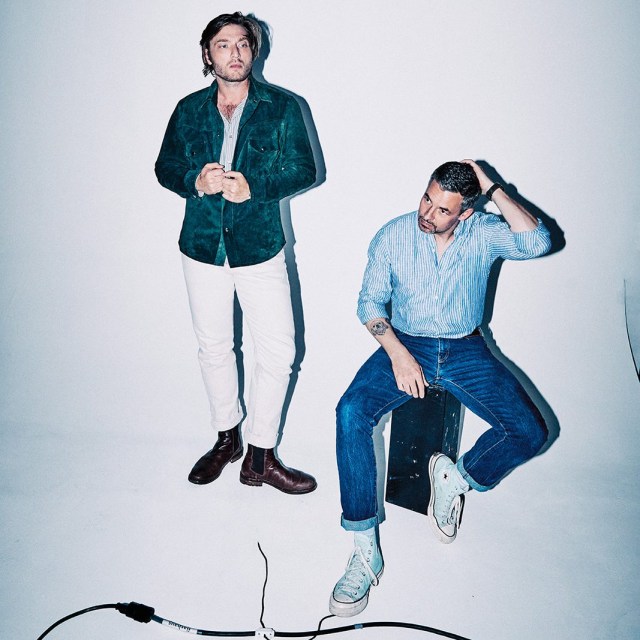
HP: I love that. When you look at the whole arc of the Midnight up until this point, since the first record release, what feels most different from the band you first imagined going into it, the writers’ rooms in L.A.?
TL: Yeah, well, I should say that the Midnight was a side project for Tim and for me. He was living in Copenhagen when we met, with a kind of dream of working in the L.A. pop scene, and I was trying to write songs for other artists as well. And what we were making was on the side. We were cheating on our artistic profession to make these weird little songs together, which felt almost transgressive in how pleasurable it was to make something that broke so many rules. It was taboo to have a saxophone in the songs at the time, and a song like “Vampires” doesn’t have “vampires” in the chorus. There’s no chorus. It’s a sax hook. It’s an A part and then a sax hook. We were just in a sandbox because we kind of made a conscious decision that we weren’t going to pitch these songs to artists. We weren’t going to share everything with our publishers when we were making it. This was kind of a sandbox for the two of us, and now that it’s become something, I think I’ve said this before as well, but The Velveteen Rabbit, as it’s loved, becomes more real. I think the world that we were just imagining has become something that’s taken on a new dimension, new depth, and now we get to approach it as something that has solid mass, and we get to explore it and discover it rather than going to a blank page and going, “Okay, what should we do?” Initially, we were just throwing paint on a wall, and now that paint has uncovered enough stuff that we now feel like we have our marching orders for as long as we are allowed to do this.
HP: That’s exciting. I’m curious: was there a moment in your mind when the project shifted from a side project to where you were like, “This is now my main focus”?
TL: Yeah, yeah. I remember our lives kind of changed when Endless Summer came out. Watching the Bandcamp numbers on release day, it was like, “Oh, this is a thing. This exists.” And then in 2017, we were playing our second live show ever at the Globe Theatre in L.A. My wife had just found out that she was pregnant and we were gonna have a baby, and then we played this show to a sold-out crowd of 1,200 people or whatever it was, and I was so nervous. And then the next day was the day that all the managers and all the booking agents and everyone called. That was the day that our lives kind of changed, and I think those two events, my wife being pregnant and this thing having such an uplift all of a sudden after having struggled for 10 years in the music industry without much happening, that it was like, “Okay, I’m gonna be a good dad, and I’m gonna really give my artistic and professional energy to the Midnight,” and that’s really been the story for the last eight years. And it’s only since things feel stable enough to be able to kind of switch gears and go back to the more confessional singer-songwriter stuff that I come from.
HP: I don’t know if “jarring” is the right word, but it must have been an interesting feeling to finally see that switch flip after all the effort you put into the music industry over all that time.
TL: Oh, yeah. Jarring. No, that’s the right word. I call it the sadness and deprivation tour from 2007. Really, my last solo tour across the U.S. was in 2015. It was mostly in a hatchback with my acoustic guitar in small rooms, and it was an incredible training ground for what happened with the Midnight, but yeah, it was unexpected. There’s a line, “I wasn’t looking for you,” in a song called “Deep Blue,” and when I sing it every night to the audience, I mean it very genuinely. “I wasn’t looking for you.”
HP: With that transformation, as well as just transformation being a throughline in a lot of what you write, what have you changed your mind about in the last few years that has improved your creative approach, creative life, anything in that sort?
TL: Yeah, yeah. I was living in L.A. around the same time that Mumford & Sons and the Lumineers were gaining a lot of traction, and a lot of executives didn’t know what to do because there weren’t a ton of Nashville-style acts in L.A. So I was the Nashville guy in L.A., even though I’d never lived in Nashville, and I really thought that the confessional songwriting thing, I thought that would carry me. But trying artifice instead of authenticity and just pushing into something that was not my home, that didn’t feel comfortable, was more rewarding at that time. So I once wore a big hipster hat and would say that authenticity and integrity are the most important things to your art, and I think that was also a mask. And it wasn’t really until I consciously pushed into territory that felt inauthentic, that felt synthetic to me, that I was able to kind of find a voice in the outer reaches, places that I didn’t think that I belonged, that I was able to kind of tease a story that felt a little more like mine rather than some image I was trying to uphold of myself as a young man.

HP: So maybe I’m misreading this, but the pure, authentic version that you started out with almost felt inauthentic when you were trying to reach for new sounds, in a sense.
TL: What do they call it? A centrifuge. Sometimes you spiral inward, and sometimes you spiral outward, and I think it took me kind of spiraling outward to find parts of myself that I didn’t know I was missing, if that makes sense. Costumes that are out there that I didn’t know I was going to put on, once I did, felt more like myself. So it really took kind of an exploration to find parts of what I thought was not my story.
HP: How has your relationship with the concept of nostalgia changed since the beginning of the project?
TL: It was a novelty in the beginning, and kudos to Tim for showing me outrun, which is what we were calling it back in 2013. And it felt to me like this kind of throwback to the ’80s sounds, where these were the sounds that I was listening to as a kid, when my mom was pushing me in the stroller at Kmart in the ’80s. And I liked the idea that there’s some, I don’t know, primordial cave part of my subconscious that these sounds, like the DX7 and the gated snares, just exist in some part of my child brain. That bringing them back consciously felt like kind of rediscovering a part of myself that was undiscovered. But nostalgia can be a double-edged sword. It can be, talking about psychology, it can be regressive in a way. There is one sense in which people have had a hard week, and on a Friday night, they just need to escape into a neon-soaked rock show. And there’s nothing wrong with that, and we want to serve that.
But for those who are paying too much attention and want to really get all of the juice from the squeeze, nostalgia is also very dangerous. It can keep you from living in the moment. Really, nostalgia is our entry point. The Greeks had tragedy to show you a whole story and then to land you in your life in the moment at the end to hopefully do it a little differently or better, and that’s our hope with nostalgia: no, you can’t go back. “We move forward because you can’t go back.” That was the first song that we ever wrote, and so I feel like those twin sides of the sword have been served.
My dad was a country songwriter. I grew up on country radio. A lot of songs are about moving to the big city, and it’s not panning out how you want. You just want to go home, right? That’s a form of regression, not necessarily a negative form. And then you’ve got other songs that are like, “Just a small-town girl living in a lonely world.” “Don’t Stop Believin’.” Kelly Clarkson has “Breakaway.” Springsteen has “Born to Run.” There’s almost this kind of American spiritual song embedded in pop music that’s about leaving your small town and going out. That’s a form of transcendence as well. But I think that it’s a matter of balancing paying homage to both of these impulses. One, to retreat into the memory of your childhood. There’s nothing wrong with that.
HP: The centrifuge analogy holds up there as well.
TL: That’s right. But also, if you want to be challenged by it, and if you want to see this as an artistic pursuit, which I hope that our fans do, the circle ends back where you start with “You are alive right now, and it matters, and you get to decide why,” and that’s where we hope, because that’s where we want to land as the people on stage and the people writing the songs.
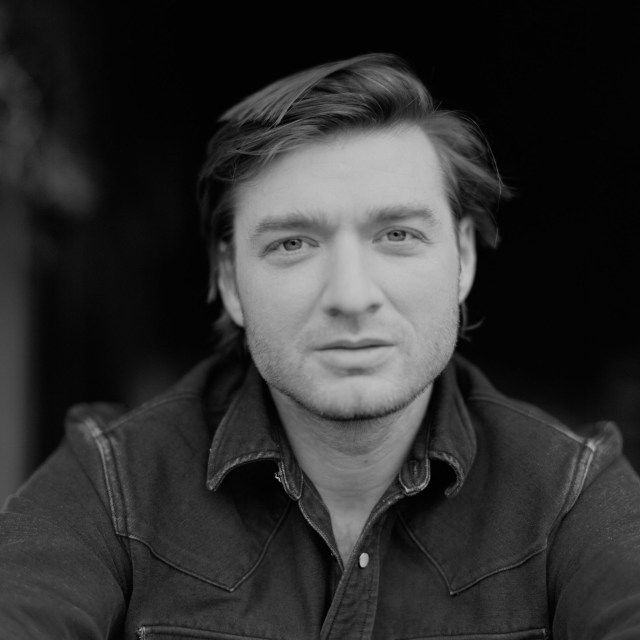
HP: And as the best, or worst, segue of all time, since you talked about transcendence, your solo record, The Transcendentalist, is coming out in just under a month. Some people might not really know, just from viewing you through the Midnight lens, that you started out in the singer-songwriter sphere and grew up in it. You were just talking about the country-alternative vein that your father raised you on. Do those roots ever feel like something that you almost left behind when the Midnight took off, or were they a foundation that informed everything that you’ve done since?
TL: No. Anybody who grew up on country radio in the ’80s and ’90s knows that “Good in Red” is a ripoff of Reba McEntire’s “Fancy,” or that “Shadows” is Garth Brooks’ “The Thunder Rolls.” I’m just writing songs. I feel like we get to Trojan horse it because my production partner in this thing is from Denmark and has none of these references in his head, and gets to make things sound very clean and big and beautiful and synths soaked in reverb. And I think it’s those two sort of twin engines that have given us the success that we’ve enjoyed.
HP: What aspect of that singer-songwriter origin informed you the most about the way that you approach songwriting today, even with the Midnight or your solo record?
TL: Yeah. Well, when Tim and I first met, I was reading a book called The Gift by Lewis Hyde, and it’s a gift. I just finished it again on tour, and it’s such a good book. I highly recommend it to any creative people. But it contrasts Walt Whitman and Ezra Pound, and when I got in the studio with Tim, I just thought, “What if I don’t write a song? What if I don’t write a narrative? What if I just describe the scenery?” And that’s what I did for the first few records. “I’m not going to tell a story from start to finish. I’m just gonna use description words,” and with that, I was able to kind of tell a story that felt more compelling than the confessional singer-songwriter place that I’d come from. How it relates to my solo work is that with the Midnight, I thought, “Well, archetypes and take my own story out of it, that’s the real way to write songs.” But then my wife was diagnosed with cancer in 2023, and I’d been working on this large project. It was going to be 40 songs called The Transcendentalists, with an S, and I’d been recording it in my home studio. And it was about all sorts of characters transcending, crossing over some kind of boundary in their lives. And when I got the news, and we had the year of hell that was chemotherapy and just really living on the edge of yourself, I looked at that big intellectual project where I was trying to out-clever myself, and I just thought, “What’s my story? What’s my confessional in this moment, this life-changing season?” And so I picked 10 songs that are mine. They’re my story, and it’s confessional, and it’s back to the roots of the whole thing. And it’s not clever. It’s just a simple meal in that regard. So with the Midnight, there’s always going to be a bit of window dressing and a bit of extra production. And with my solo stuff, I give myself a little more leeway to be complicated. I don’t really have to get the approval of any other artists to get it through. So, yeah, I think really kind of coming back to “Oh, these are my songs.” Even though one has a banjo and the other has a synthesizer, they’re my songs. This is my story. I’m a songwriter, and there’s some continuity through the whole thing.
HP: The lyrics just happen to take a little bit more ownership of your journey and what you’ve been through, in a sense. How has your relationship with the songs going into this album cycle changed since you’ve written them?
TL: They were both written during this time of… depression is sadness without a reason. Grief is sadness with a reason. So I would call it grief. Tim was out of a relationship and was not in the best place emotionally, and I was fighting with my wife for her life, and so a lot of very stark questions about mortality and about living in the moment. So that’s how it colored it. Now, I think I’ve said this a few times to the VIPs before the shows, but next up, I would just really like a silly, lighthearted, not complicated record so that life doesn’t have to imitate art, or the other way around. I’m most proud of that record in terms of the Midnight’s catalog, and I’m very proud of The Transcendentalist because of the story around it, but also because it felt like you got to go to the dark place and bring back a few little glimmers of gold. But you release the record so that you can move on to the next one, and so I’m grateful to be able to release this record and move on to the next songs, which I hope are a little less complicated and certainly less dire.
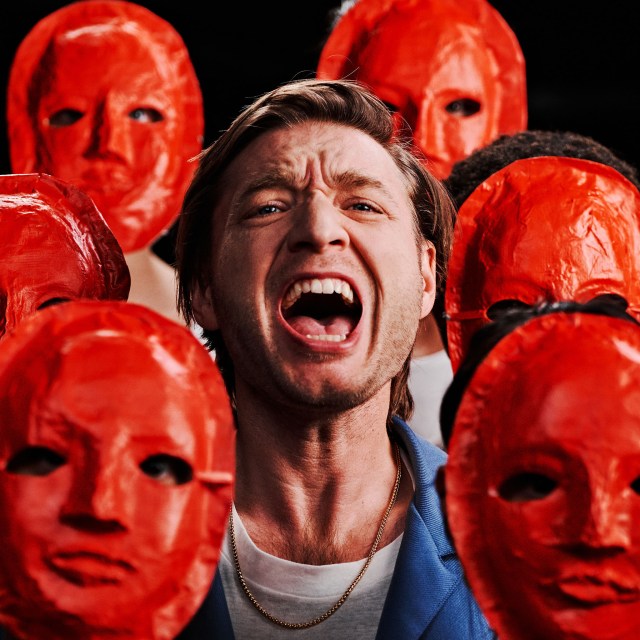
HP: When you step back from The Transcendentalist as a whole, what do you think it captures broadly about yourself that previous solo records, records with the Midnight, couldn’t have captured?
TL: I picked the title around the time that my son was being born. The Floating Years was about being stuck in place, which was my last solo record that came out in 2019. I thought The Transcendentalist was going to be about becoming a dad. I thought it was going to be about finally, after a prolonged adolescence and being able to exist in this music space where I’ve been able to forego growing up for a long time, I thought it was like, “Okay, it’s time to finally grow up.” But actually, the shift of parenthood, and then the pandemic, and then my wife’s cancer journey, it empties you out and clarifies what you’re here to do, and I think that actually now I am the transcendentalist. I have changed tremendously in the last eight years since my son was born, and gosh, it might just be age, but also some bit of circumstances, that I’m a different person fundamentally, and thank God, and I have grown up in spite of myself.
Listen to The Transcendentalist, out 10/23