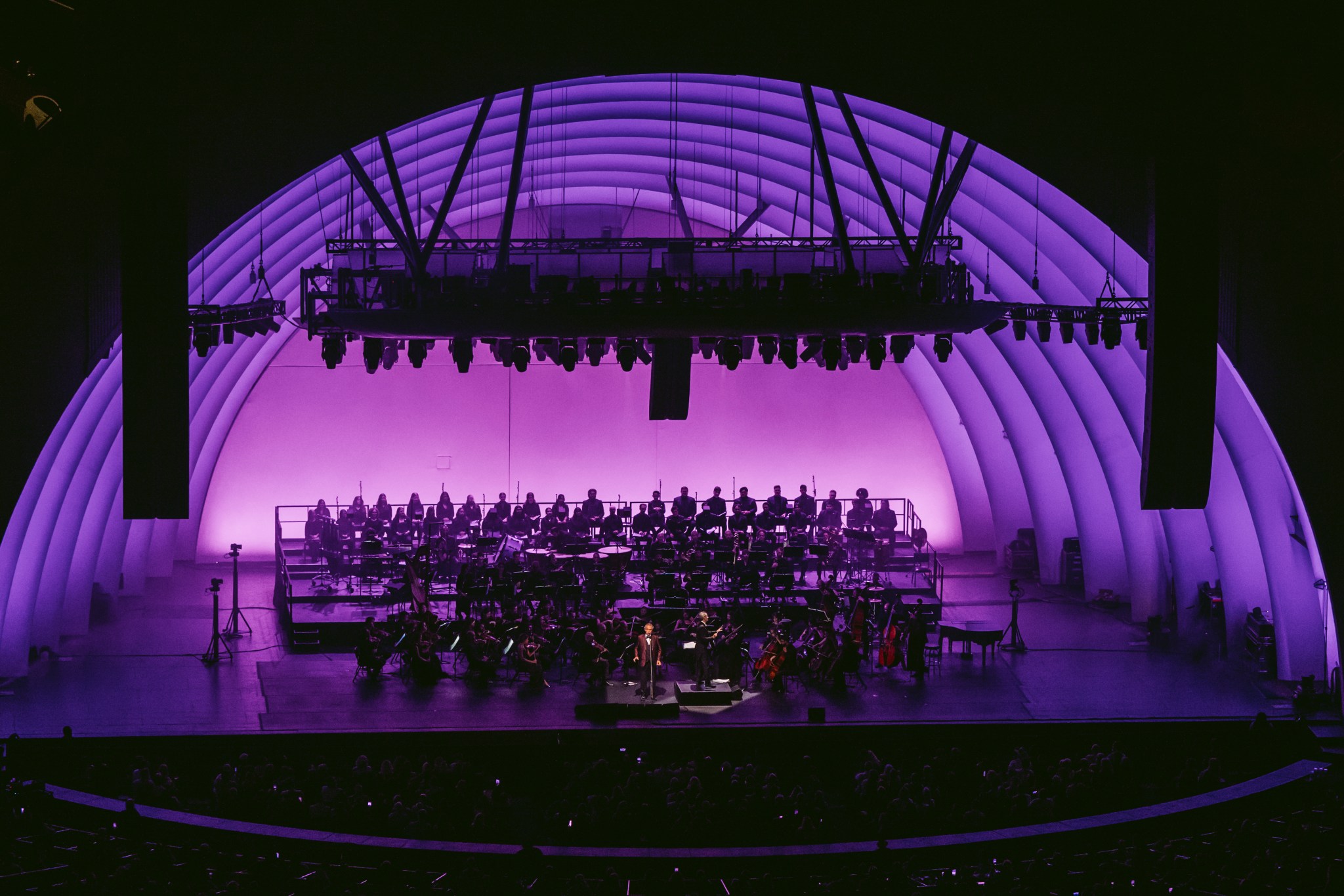
Music is a language everyone knows. Los Angeles is known for its wide diversity, with multiple languages spoken across the city. So, what connects us all? Music.
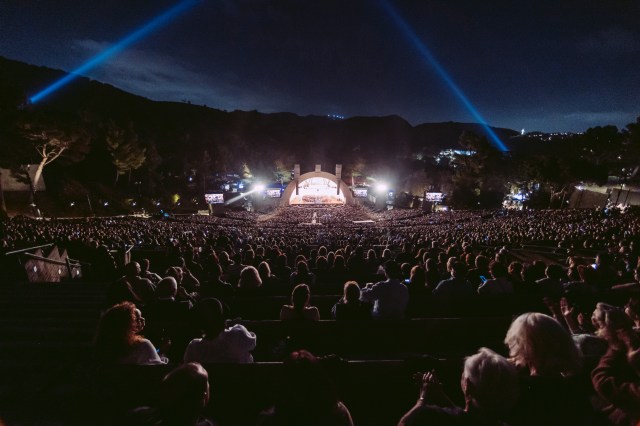
I saw this come to life during Andrea Bocelli’s concert at the Hollywood Bowl. I couldn’t translate a single word, but I still felt so connected. When I looked around, there were people from all different backgrounds enjoying the show together, in a language many of us didn’t understand. That is what makes music so beautiful.
It seemed like all of LA was searching for that connection, because the traffic getting to the Hollywood Bowl was horrific. Once we arrived, there was a huge line to get through security. Thankfully, it moved quickly, and we made it to our seats right before the show started.
I had a second to glance around, and since the Hollywood Bowl allows guests to bring their own food, I saw people with all different types of cuisine. The person to my right had tacos and the person to my left had kabob. It was a perfect little reminder that LA isn’t just a melting pot of cultures, music is one too.
Once I looked back toward the stage, a video started playing. It took the audience back to Italy, where Bocelli first fell in love with “one of the most beautiful forms of art, Opera.” It traced his journey through clips from his performances, like The Merry Widow and Macbeth.
Bocelli then walked onstage and immediately hit the crowd with his voice, bursting into song effortlessly. I was completely blown away. People always say an artist sounds better live, but this proved it beyond doubt. You could feel the real depth and emotion behind every note. It’s worth remembering that Bocelli performs entirely from memory and instinct; he’s been blind since he was twelve, and somehow that makes the way he commands the stage even more remarkable.
Standing in the middle of the Hollywood Bowl, he couldn’t see the thousands of people watching him, but his voice still reached every corner of the venue. He feels the room, and the room feels him.
None of this would’ve been possible without the incredible choir and orchestra, brought in all the way from his hometown in Italy. They were truly amazing all night. The Conductor, Steven Mercurio is a close friend of his, and you could tell. They moved together like they’d been doing this for decades.
Then the first featured vocalist, soprano Aida Garifuillina, walked out in a sparkly silver dress that shimmered under the stage lights. But her gown wasn’t the showstopper, her voice was. She walked onto the stage so casually and then produced a sound that changed the entire room. That’s when it hit me: this isn’t just a hobby, it’s pure art.
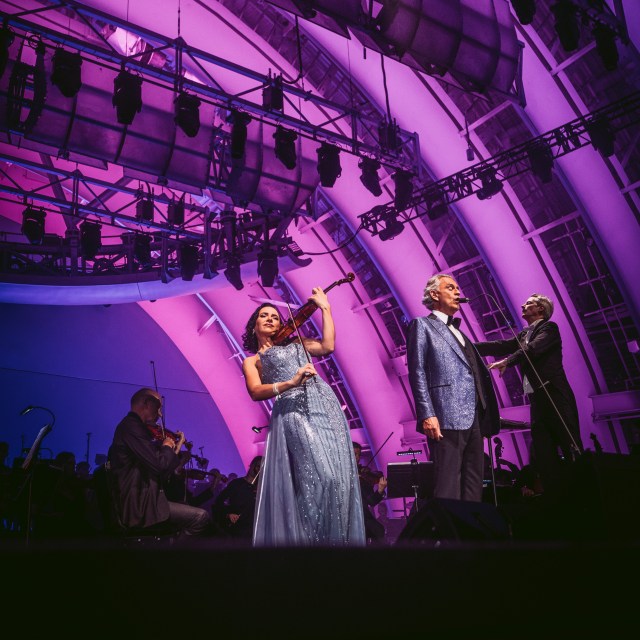
Then came my favorite part: violinist Rusanda Panfili:
So much talent, and she had a smile on her face the entire time. She played like the violin was part of her. It was impossible not to watch her. I could’ve listened to her all night.

A woman in a red ball gown then joined Bocelli on stage, and the two performed together before breaking into a dance. As they moved across the stage, the audience began clapping along. Nobody had to tell us to do it. We just did.
And that moment summed up the entire night for me.
Nobody needed to understand the language.
Another duo came onto the stage and sang together. The message became even clearer: you don’t need words to get a message across. A melody, a rhythm, a voice or even the movement of a dancer can say something on its own.
Then baritone Edward Parks walked on so calmly, you almost didn’t notice him, until he opened his mouth. His voice was unreal, and it looked completely effortless.
While he and Bocelli sang together, a ballerina in light blue came out, joined by a male dancer in navy and white, and the two of them acted out the music with their bodies.
Even without understanding the lyrics, you could understand what the music was saying just by watching them. Their faces carried so much emotion, and every moment seemed connected to a change in the music. They reached for each other, moved apart, spun across the stage and launched into jumps that hung in the air. Instead of simply dancing in the background, they were translating the song through movement.
Their costumes made the performance even more powerful. The woman wore light blue, while the man wore darker navy and white. The different colors seemed to match the emotion of the music and made their movements stand out even more. Their detailed outfits also made the dancing feel like part of the story instead of just something happening in the background
Then came, “O Fortuna,” by Carl Orff’s, one of the most dramatic moments of the first half. The massive percussion and choir made the entire Bowl shake. You could feel the drums in your chest.
Then another video played, this time a montage of moments from his career, clips of him being announced as the “the winner,” being welcomed onstage at shows around the world, and being celebrated throughout his decades-long career. It was another reminder that the man standing in front of us wasn’t just performing one concert; he was bringing decades of music with him.
When Bocelli returned to the stage, he had changed from his burgundy jacket into a sparkly silver one. The change matched the shift in the music. The burgundy jacket fit the more dramatic beginning of the concert, while the silver one made the next part feel brighter and more celebratory. It was almost like his outfit changed along with the mood of the show.
Later, Bocelli made another outfit change that felt especially fitting for Los Angeles. He appeared in a costuming, one-of-one Los Angeles Lakers letterman jacket with “Bocelli 30” across the back. The jacket was offered to the highest bidder and was also going to be signed by Bocelli. All proceeds went to the Andrea Bocelli Foundation, the nonprofit Bocelli and his family founded in 2011. The foundation works to support children, young people and communities through educational programs and projects aimed at fighting poverty, social exclusion and barriers to opportunities. So even something as simple as a jacket became part of the night’s larger message of connection and giving back.
The show eventually shifted into one of its most unexpected sections: the piano.
Bocelli sat down at the piano himself and performed “Romania” and “II Mare Calmo Della Sera,” with Pia Toscanini also featured.
It was fitting because the entire tour is celebrating the upcoming thirtieth anniversary of Romanza, the 1997 album that helped make Bocelli an international star (the anniversary edition of Romanza comes out this Friday 9/25).
And then came the part that felt especially LA.
Jennifer Hudson walked onto the stage.
Bocelli and Hudson performed “One Right Here,” a new song written by Diane Warren for the upcoming film Maserati: The Brothers. Warren herself joined them at the piano.
Then Hudson and Bocelli performed “The Prayer.”
This song has a special history with Bocelli. He originally recorded it with Céline Dion, and the two performed it together at the 1999 Academy Awards.
Céline Dion wasn’t able to be there because she had just returned to performing in Paris. So even though she wasn’t on the Hollywood Bowl stage, her music was still felt that night. In a way, it felt like a tribute to her while she was making her own return thousands of miles away.
This time, Hudson took Dion’s part, with David Foster, who co-wrote the song, playing piano.
And suddenly, the idea that had been sitting in the back of my mind all night came back again: music really does not need a translation.
Here was an Italian tenor, an American singer, an American songwriter and a Canadian musician all coming together on a song that has traveled across countries, languages and generations.
Foster stayed at the piano for another performance as Pia Toscano sang “All by Myself,” another song famously associated with Céline Dion. It made the moment feel even more special, knowing that Dion’s music was being celebrated in Los Angeles while she was performing again in Paris.
Near the end of the concert, Bocelli paused and said,” Let me say something in my terrible English. I hope you can understand.” He talked about still there at the Hollywood Bowl and reflected on the relationship between his music and Los Angeles over the years. He explained how much it meant to him that we are still here for him at the Hollywood Bowl, just like audiences had been nearly 30 years ago.
And looking around the audience, I understood why.
Thirty years can pass. People can come from different countries. They can speak completely different languages. They can eat tacos or kabobs. They can know every opera in the program or have never been to one before.
But once the music starts, everyone understands it in their own way.