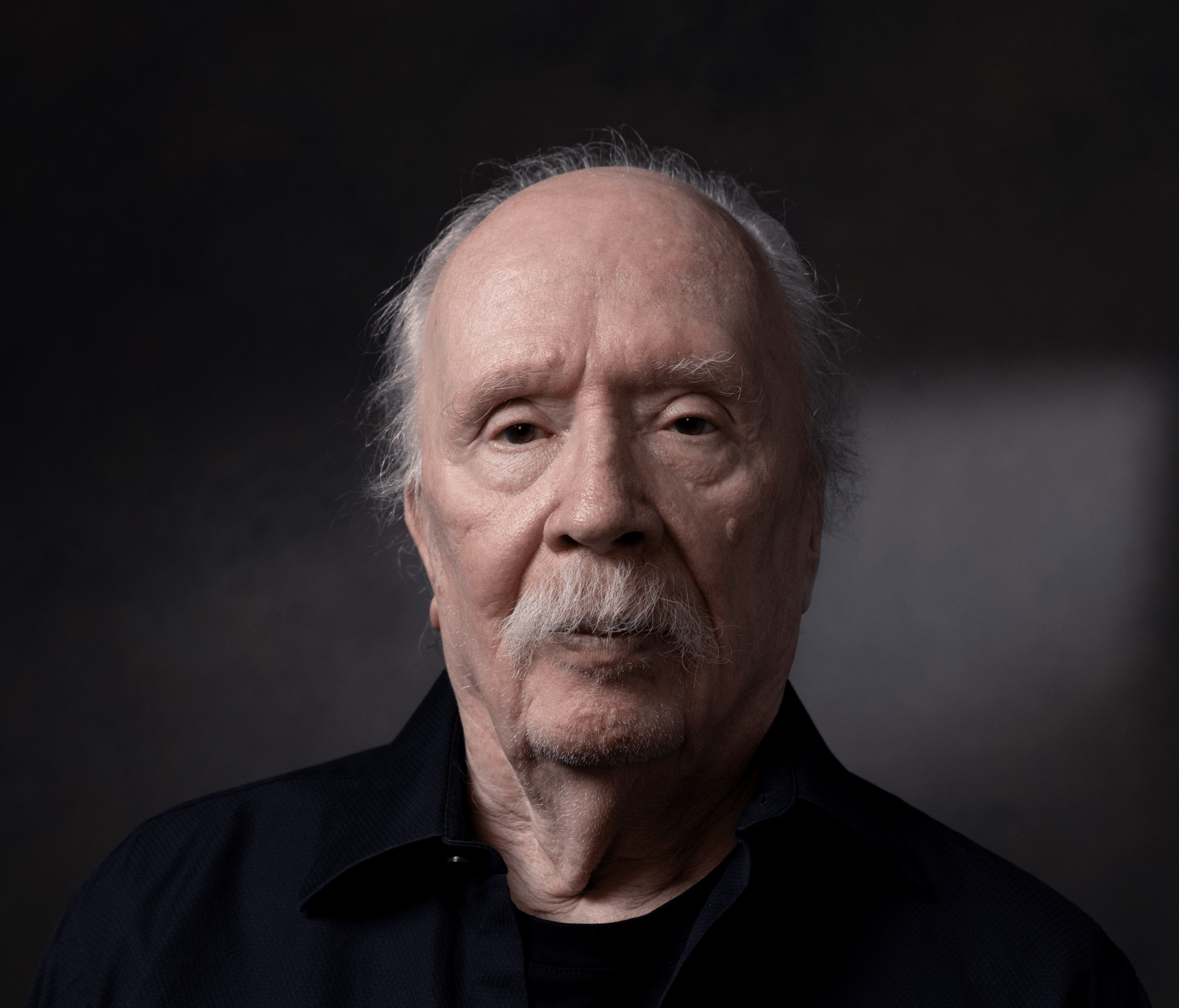
Any form of introduction for John Carpenter is redundant at best; the horror/sci-fi master has made and scored a laundry list of works that any other filmmaker would be honored to have made on just one, and at age 78, doesn’t seem to have any signs of taking a break with his creative endeavors and innovations. After waking after a night’s rest, a dream Carpenter had just couldn’t shake his subconscious, and after time, led to arguably one of his most ambitious projects: a full-length graphic novel based on that dream, and a corresponding album meant to score the read. Enlisting the help of long-time musical collaborators and family, Cody Carpenter and Daniel Davies to help bring the musical vision to life, as well as Sandy King and Sean Sobczak to help bring the literature side to fruition, the result is one of Carpenter’s most interesting, adventurous, and visionary projects to date. Hit Parader got the honor to sit down with John, Cody, and Daniel to discuss everything Cathedral.
Hit Parader: So, just to start off, most bands walk into studios with demos and a rough direction on where they want to go with a project, but you guys started the record with a script and more of a storyline to start. How did day one actually look for you three going into the actual production of the record?
John Carpenter: Day one, well, I had a dream. I told him [points at Daniel Davies] the dream, he said that’s a great idea, and then we decided to score it. I don’t remember what the first piece was for music.
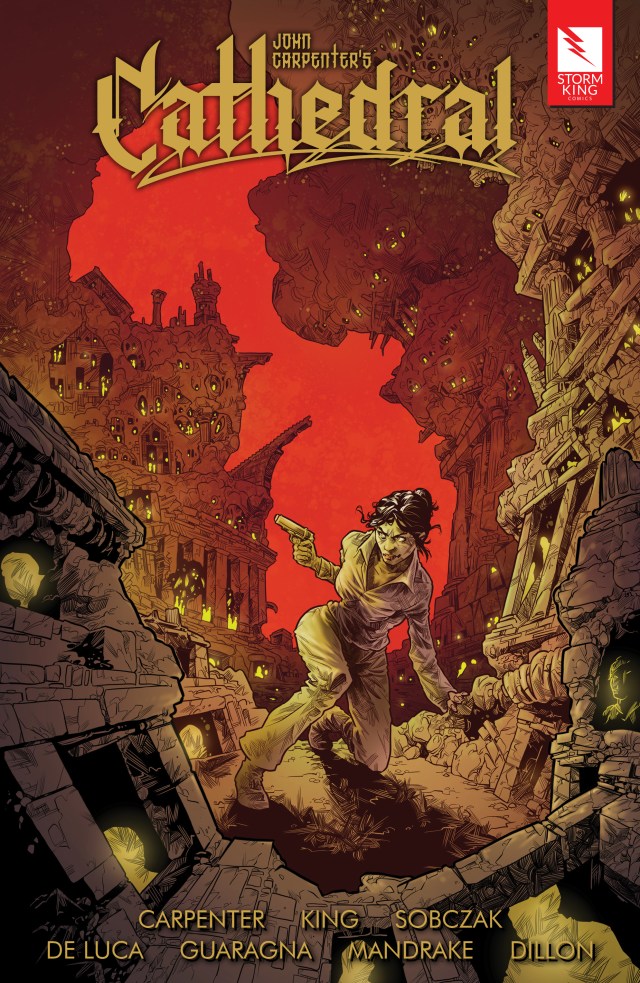
Cody Carpenter: I could be wrong, but I think we had early versions of some of the music.
Daniel Davies: A couple riffs, and we each bring in sketches, we call them sketches. They’re like rough ideas that we then build on. John will say, “Oh, we need something for this scene,” and go write a riff and kind of develop that way, and he paints a picture of what the scene is going to be, and then we just score it based on that.
HP: With the score and the graphic novel coming from that dream, out of curiosity, how long after you woke up from that dream did you start piecing that story together, or was that something that happened far down the road?
JC: Well, I tried to remember the dream, and first of all I thought maybe it was something I had eaten, because it was so, my God, it was elaborate. I usually don’t have dreams like that. But then I think a couple of days went by, and I kept thinking about, well, if I made a movie out of this, who would I star in it? And it went from there, and then I finally told Daniel, and we got on the road. So it was a while, that was like weeks, I guess, before we really started cooking.
HP: In that time that passed, did the story kind of stay intact, or did you find yourself filling in gaps with new ideas that weren’t originally from it?
JC: Well, I don’t know, I think it pretty much stayed intact. I think I invented a couple things on the way, but pretty close to it.
HP: What were the specific challenges or freedoms of scoring a story that you didn’t direct for a movie, but you did write the story of?
JC: They [referring to Daniel and Cody] did most of the work, so it was no challenge at all.
HP: There you go.
JC: Look, our process is really simple. We work from instinct, and we just come up with musical ideas that seek to fit the sequence, or the character, the sequence, the mood, whatever’s required. So we just make music; that’s the joy of all this.
HP: Did those characters within the story come from the dream, or was that something that was brought to life after the actual concept was put to paper?
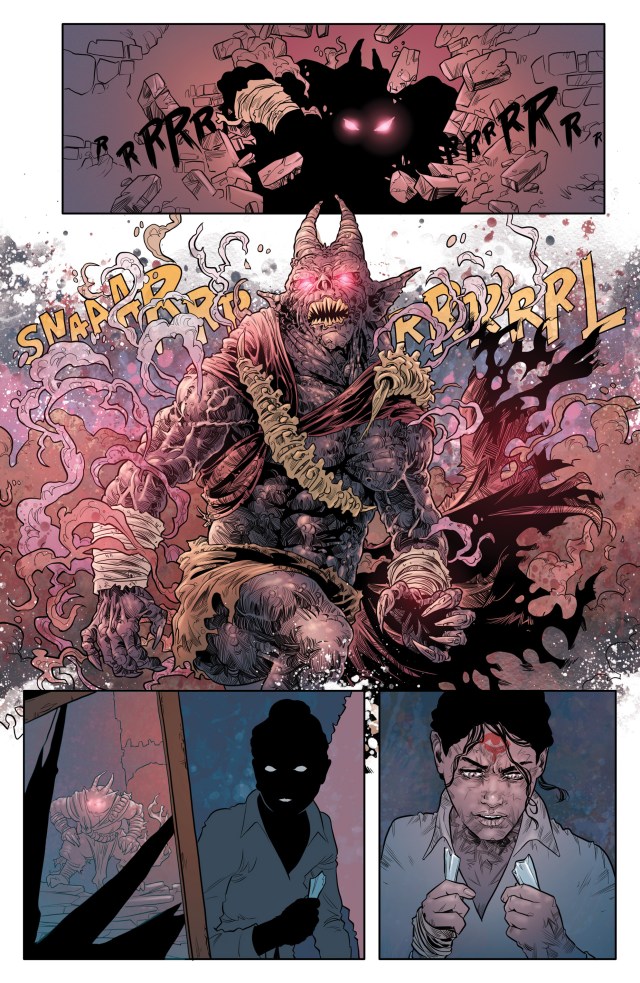
JC: I have to admit something: the story was fleshed out, the characters were fleshed out by Sandy King and Sean Sobczak when they wrote the graphic novel. So they took my kind of an outline, the dream was an outline. It wasn’t full of characterization, it was this girl hero who was avenging her father’s death, and that’s about as far as I got with it. So others brought the thing to life.
HP: Who’s the scariest character in the book that everybody should be keeping an eye out for?
JC: Oh hell, the Dark Lord, the demon. Of course, the bad guy, the ultimate bad guy, he rules the underworld, and he’s coming after you.
HP: And you’ve worked on certain parts of other graphic novels, but this is your first full-length novel. What made this feel like the correct time for you to work on a project like this?
JC: The correct time, well, I’m 78 years old, how much time do I need? I mean, let’s do it now. We may work on more like this, we’ll see.
HP: And the graphic novel based on the dream has a corresponding score, which is arguably the band’s heaviest work to date. Daniel, you said that you didn’t intentionally make a heavy metal record, but it kind of evolved that way. At what point in the process of you guys scoring this did it become clear that Cathedral was tending towards a metal record?
DD: Oh, well, when you hear “abandoned cathedral,” when John described the story, the first thought I had was just thought of heavy guitars, big drums, making it sound like it’s in an abandoned cathedral, and feeling that, and choir, and just low heavy guitars; that’s just what was my first thought. And then a lot of the time John will just say “this needs a heavy riff”, and then I’ll make something, and it just happens to work. And then we need a battle sequence, it just kind of flows that way, and it just sounded good, so we kept going. But it’s not a predetermined thing, we’re just going with the flow of what takes us, and where the story is guiding it.
HP: And with the record supposed to be sequenced with the graphic novel, how intentional was the pacing throughout the novel and the music side as well?
JC: Well, when we’re making music, we make music. When we’re doing the writing in the graphic novel, that’s right; it’s not like a movie where you watch the images and then react to that. We didn’t have that going, we had ideas. For example, this giant creature comes up and bites her, and then we’ll score that. So it was different for us.
HP: And, Cody, you were described by John as the maestro of the group. What were your first thoughts when the record started trending towards the heavier realm? And since your solo work lives closer to the prog and fusion area, did the heavier direction feel like more of a stretch from your original work, or something that you’ve been wanting to explore more?
CC: You know, we all sort of like heavy metal music, so it just sort of felt natural for all of us, including myself. My dad’s a bass player, Daniel’s a guitar player, and I guess I’m the keyboard player, so that’s kind of the metal band right there. We just need Scott [Seiver] on drums.
JC: Yeah, we do.
CC: So it wasn’t too much of a stretch for any of us, it’s something that we love, and it just kind of came out that way.
JC: Plus, we have sections of the songs that go into keyboards, into very atmospheric parts, and we don’t do that, he does that.
CC: Well, we all do it.
DD: Yeah, and we all learn from rock and roll.
HP: Of course, and that ties in exactly to just story and hero arcs as a whole, because if you had an album that was pure metal the entire time, it wouldn’t follow the arc of the story as well.
JC: That’s correct.
DD: Scores are riff-driven, so it’s always there, just how you orchestrate it.
HP: Speaking of orchestration, I’d love to know a little bit more about the other musicians and the other studio time that went into the making of this record.
DD: Oh yeah, well, we had Scott Seaver, who plays in the live band, play on this record doing drums, and then we had a cello, viola, and violin on it, which we haven’t done on our other records.

HP: But with this being admittedly your first heavier record, were you all consciously drawing from other sources of inspiration, musical or not, or was it purely based on what felt right when certain scenes were being described by John?
JC: My heavy metal inspiration is basically Metallica, I love Metallica. You familiar with that group, right?
HP: Of course.
JC: I’m kidding.
HP: One of the best.
CC: Yeah, although this album may be more heavy metal oriented, you can hear that style through a lot of my dad’s other stuff as well. Even though it’s not guitars and drums and stuff like that, you can feel that same emotion in some of his other stuff, and some of the other Lost Themes stuff that we’ve done together, so it’s not a complete departure from stuff that we’ve done in the past.
HP: An extension of sorts.
CC: Yeah, that’s perfect.
HP: Daniel, for you, with your background with the other projects that you’ve been a part of, like Year Long Disaster, Karma to Burn, did this record give you another outlet to fully express those other roots on Cathedral in a way that you haven’t been able to do in other Lost Themes records?
DD: Maybe, there’s not a thought really behind it, and nothing makes me feel better than loud guitar.
HP: It’s making good music, that’s what matters.
DD: What’s the feeling, and that’s always where we’re starting from. What is the scene, what is the feeling, how do we capture that? And maybe it’s slow and plodding, or it’s heavy and fast, and it’s just all based on instinct. And we have the opportunity to, you just start to see the images, and that’s just what it conjures up.
HP: With all of you guys playing different roles in the creation of the music, how does the division of personality actually play out in the creation of the music?
CC: I think we all trust each other, and we bring out the best in each other and play to our strengths.
JC: You understand, we’ve been together one way or the other for a long time, so there’s a lot of secondhand stuff going on here, and a lot of trust, an amazing amount of trust.
HP: You guys have been working together for so long, and known each other for so long, that I’m assuming it’s become second nature more than anything.
JC: That’s true.
HP: I’d love to know how long the project took once John brought it to you guys, and if there was a scene that was easiest and hardest to score?
DD: Doesn’t feel easy or hard, the whole project felt really inspired and exciting, and we would have an idea, and that would lead to another idea, and then we would get that together and just keep going. It wasn’t hard, it just flowed. It was just over the course of six months, maybe.
HP: Just to start to conclude, you guys have made films, scored them, and now built an entirely new world around what has come from a dream. At this point in your career, do you think Cathedral feels like a culmination of something, or just the start of something new?
JC: This is the start of something new, a brand new. I never thought of this before, what would scoring a graphic novel be? No one’s done that before, so we’re pioneers, so to speak.
DD: Except for the other guy [laughs].
JC: Exactly, exactly. We just love making music, man.
HP: At the end of the day, that’s all that matters, is just making art that you love.
JC: That’s correct.
HP: Amazing. Cathedral is one of the closest things to a new film of yours in years. Is there any dialogue or discussion on bringing the project to life out of the graphic novel sphere?
JC: Well, I am wide open to offers from the major studios. The thing is, Cathedral would be a somewhat expensive project to do, so it wouldn’t be like my other stuff. Most of my movies cost less to make, so. It would be a very grand project, and so far no one’s offered us a lot of money. A limo has not pulled up in front of my house, taking us to Hollywood yet. But we’re waiting for the limo.