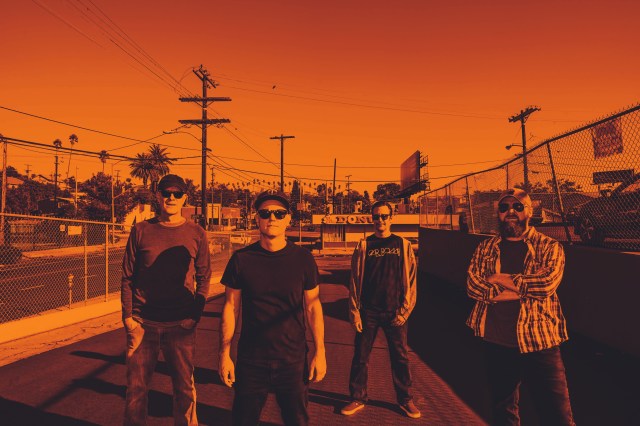
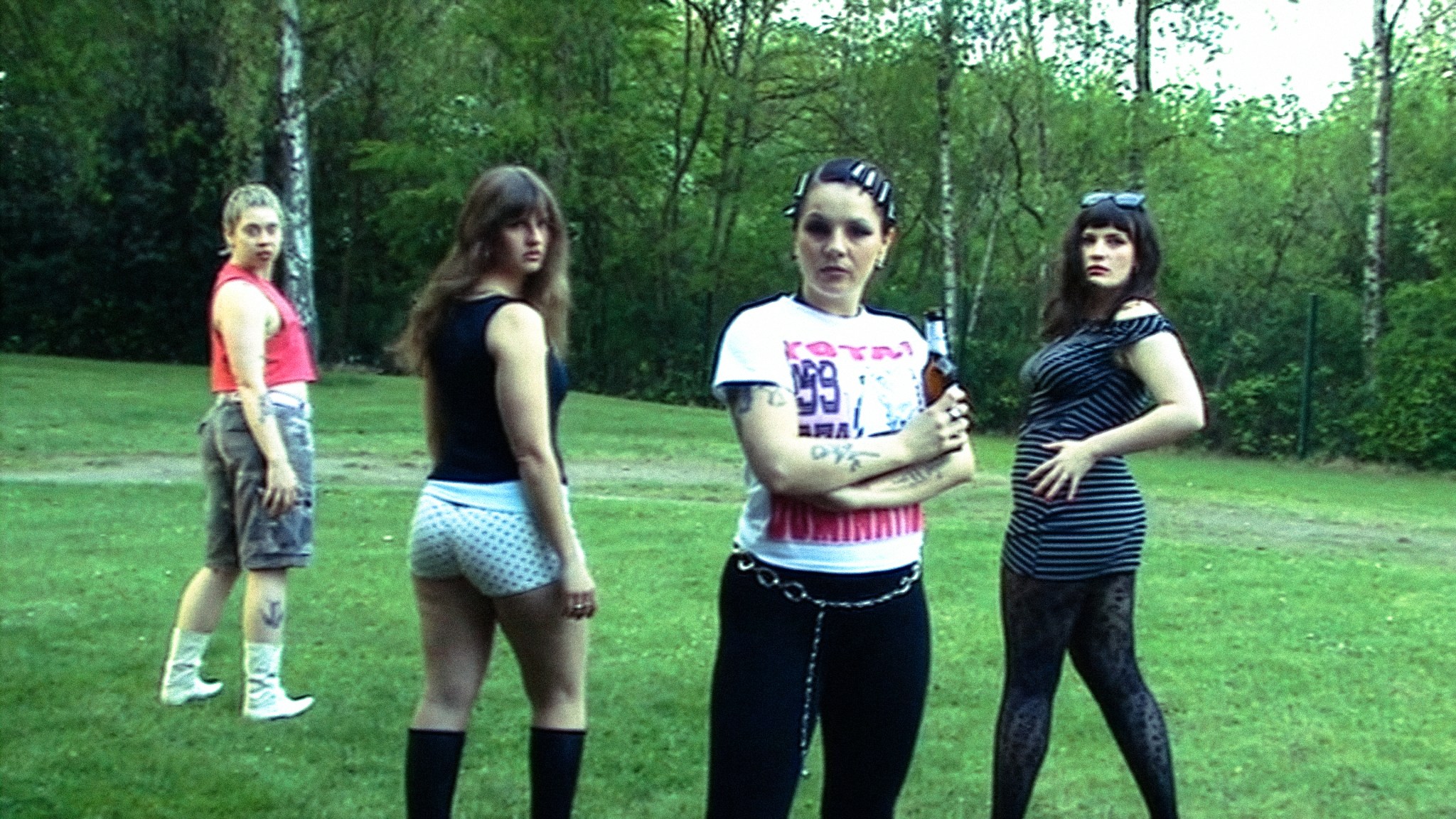
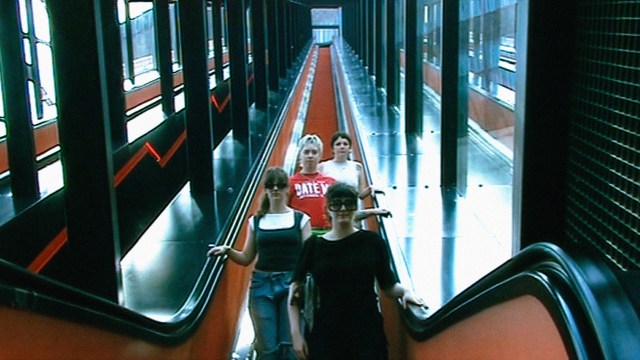
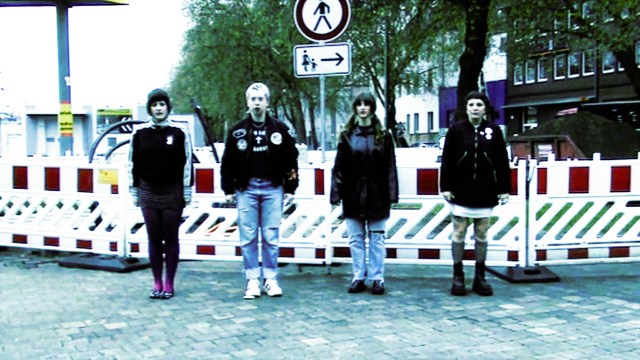
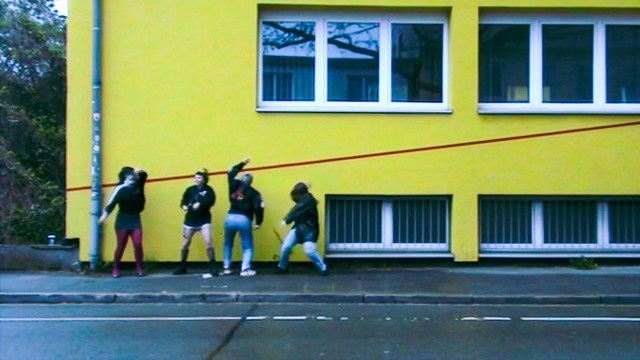
If you’re not performing music with your best friends and having a blast doing so, you might just be doing it wrong, and nowhere is this clearer than in the riot grrrl group Panic Shack. Formed in 2018, the Cardiff-based group, consisting of Sarah Harvey on lead vocals, Meg Fretwell and Romi Lawrence on guitar and backing vocals, Em Smith holding down the low end and singing, and Nick Williams on drums, earned a respected reputation for their highly entertaining live shows, witty lyricism, and an obvious enjoyment of their craft. Their sound is rooted in the punk classics that came before them, but having grown up on music far from it, the tongue-in-cheek powerhouse of a band has been building one of the best modern punk catalogs over the past few years, culminating in their highly acclaimed self-titled debut, Panic Shack, released last year, and earning a deserving stamp of approval from UK legends Sex Pistols by opening the US leg of their upcoming tour.
Not that they need that endorsement, as Panic Shack’s ethos makes one thing abundantly clear: They love making music, they love putting on a memorable live show, and they are not slowing down. On the cusp of their first headline run of US shows, the group is ready to bring their chaotic, humorous, hard-hitting set to the other side of the Atlantic. Before Panic Shack packs their bags and brings their Welsh energy to the US, Hit Parader sat down with Meg and Emily to chat about their fantastic single “grin & bear it”, the North American shows (and the dangerously long drives in between), my obvious lack of understanding of Welsh slang, and much more.
Hit Parader: Just for an icebreaker, if you had to give your top three favorite things that have happened to you as a band this year, what would they be, and why?
Meg Fretwell: One is this single coming out, “grin & bear it”, because I love it. I just love it, I think it’s class, and another one was announcing the tour, the North American dates, because that feels like the biggest thing in our career.
Emily Smith: Going to Texas as well. Going to Texas was great – the second time we’ve been, so fun.
HP: Love that. Congrats on “grin & bear it” coming out; that’s super exciting! I read that the track was sparked during a night shift in 2023. I’d love to know what was going through your mind that led you to get those lyrics out in that scenario?
ES: I think it was at the time; it was over lockdown, so everything was so fucking stagnant, and nothing was going on. You just kind of felt like jobs, there were no gigs, literally working overtime, still skint (broke), so yeah, I think it’s just been a theme of ours forever. We’ve always just been a bit skint and worked really hard, and it’s getting more and more challenging, juggling a successful band and working too. So yeah, it’s about struggles.
MF: Yeah, it feels super poignant now. It feels like the perfect time to drop the track. It’s had many versions, but it feels like the right time.
HP: And with it having a lot of versions before landing on the final version that came out, what changed between those versions, and what changed the most since the first iteration?
ES: The music, the vibe.
MF: It sounds a lot darker now, heavier, grittier, angrier.
ES: Yeah, your feelings just get stronger and stronger the more fed up you are. So I think we really channeled some rage into this.
HP: That’s fair. Out of curiosity, what was the signifier that the track was on its final iteration, and you finally got it to the point where you were ready to put it out?
ES: We didn’t finish writing until probably the day before. We were changing things up. I think the main “you’ve got to get this done” thing was we needed to release a single, and we work really well under pressure.
MF: I mean, we always work best under pressure. We need someone to give us a deadline. Otherwise, we will procrastinate.
ES: Dilly dally a little bit.
HP: And we all do that. I understand that so much as well. I mean, completely fair. I’d love to know a little bit more about working with Ross [Orton] on the track as well.
MF: Yeah. It was kind of funny because we had been reworking the song on GarageBand. We’re kind of novices in our own production realm. Emily’s actually really good; Emily can set up a really sick Kyle drums on GarageBand, which we use for all of our projects really, until we can get Nick on them, or we put an 808 down. So we sent it to our management, and we had no idea they had sent it out to Ross, because we always wanted to work with Ross, and we didn’t know he’d been sent it. He came back and said he really liked the sound of it. And we were ultimately just embarrassed but also chuffed (excited) because he liked it, and then when we got to the studio in Sheffield it just went so smoothly and it was so chill, and we just clicked. We just really got on with him.
HP: Out of curiosity, you said that on your debut self-titled album, you consciously moved away from the label of just being in the category of punk. I’d love to know what genres, sounds, or other forms of inspiration you drew from that might surprise fans and that you haven’t discussed before.
ES: I think we all just really don’t want to put ourselves in a box, and I guess we call ourselves a punk band, or other people call us that because of the way that we write songs, and the Riot Grrrl movement. But we all love dance tracks and girl bands, like Sugababes, Confidence Man, we love little dance-y tracks.
MF: Yeah. We like to party and dance, and we really wanted to experiment, adding synths and stuff to the record. We got to do that, and yeah, it is very ‘us’, but we wouldn’t really have been able to do that outside of the studio, because we just don’t have the means. We have our guitars, and that’s it, so it was fun to go in and experiment with more dance-y stuff.
HP: That’s awesome, and I would argue that genre lines are blurring more than ever in today’s music industry as well.
MF: Yeah, I think so. I don’t even like some of the genres that people come up with. They’ve come up with “indie punk” and stuff like that. We were raised on indie guitar music. We totally collectively bonded over that when we first got together, aside from going on nights out and listening to dance music, we love classic indie rock.
HP: What originally drew you towards Riot Grrrl and that sort of cathartic form of emotional expression?
MF: I think it’s just that we happen to be women making music. But if we’re speaking actual Riot Grrrl inspiration, there’s a film about Bikini Kill and Kathleen Hanna called The Punk Singer, and this was before I was even in a band, that was so inspirational to me. You can watch it on YouTube still, and that pretty much changed my life, before band stuff. I think we just get lumped into that category because we’re women who are angry and making music. But specifically, yeah, Bikini Kill and Kathleen Hanna.
ES: Yeah, I remember listening to The Slits for the first time when I was 15 and I’d never heard anything like it, and I was obsessed. I thought it was so fucking cool.
HP: So you formed in 2018 as a metaphorical middle finger to exclusionary music scenes, and you’ve been vocal about making it feel more accessible to play music, especially for women. What’s one concrete change that you would wish could happen, either socially or structurally, that could help people wanting to make art take that first step?
ES: I think I didn’t even know that being a sound engineer or being a tour manager was even a possibility until I started gigging. I was like, being a lighting person or a sound person is such a cool job, but you don’t see many women doing that. I just think you’re not exposed to it, or you don’t see the representation, so maybe some programs where you can get into those things, because it’s not just about being on stage and being a performer, it’s everything that goes with it as well.
MF: And particularly people from working-class backgrounds, those jobs or being in the arts and creative industries, you don’t even know about them. So, like Em said, more programs, more resources, free resources for people to get into the creative industries and be able to express themselves creatively, and those being taken seriously as a job. Because in our working-class communities, it’s not taken as seriously, and that sucks. So you’re always pushed into doing something that makes you money. I think it’s just about accessibility and realizing that you can do that.
HP: Completely agree. And you have some shows coming up in the US! What about Cardiff, Wales, or the UK music scene do you want American audiences to understand through your music and live performances?
ES: I just want them to have a good time.
MF: Obviously, I hope they get our sense of humor, because we don’t take ourselves very seriously, and I hope the people in North America find us as funny as we find ourselves. I hope that doesn’t get lost in translation.
ES: I don’t think I’ll be talking much on the mic. I’m gonna say that. Nobody ever knows what I’m saying [laughs]. They don’t in the UK really, to be honest.
HP: Has that ever been an issue, from the touring that you’ve been doing through different parts of Europe, with the Welsh accents?
ES: Yeah, I’d say so. It’s crickets a lot of the time when I’m talking. I’m either seriously not funny, or they’ve got no clue what I’m saying.
MF: That’s crazy. You are seriously funny to me, I’d be pissing myself. I’ll have to translate Emily’s accent sometimes for people, but it’s funny. I think just double down on it. I understand the Irish, there’s a lot of Irish bands out at the moment, I can always understand them, so I don’t get why people can’t understand the Welsh accent.
HP: Oh man, that’s great. Out of curiosity, what aspect are you most excited for, and what are you most nervous about, for the upcoming shows?
MF: I am most excited to play the shows and connect with people and figure out who is turning up to a Panic Shack show. We’ve got an idea here and in Europe, but I’m really excited to be able to connect with people. The thing I’m most nervous about is the long drives. We’ve never experienced doing a 10-hour drive, that’s not happened before.
ES: Yeah, I agree, that’s the same as me.
HP: To start to wrap up, if you could keep one thing about how Panic Shack is remembered 15, 20, 25 years from now, beyond chart positions, songs, accolades, what would you wish that to be?
ES: When people see us, they can tell that we’re best friends, and I think it would be nice for them to remember that we’re real tight mates who just love each other.
MF: Like girlhood, just a representation of that, and that being something to be remembered, and also just how fit we are.
ES: Yeah, like how bangin’ our asses are.
MF: Yeah, it would be nice to be remembered for people thinking we’re funny and best mates, and that against all odds we managed to do this.
HP: If you’re not making music with your best friends, then you’re not doing it right.
ES: Exactly.
Catch Panic Shack on tour here.
See Panic Shack + much more in this month’s issue of Hit Parader Magazine.
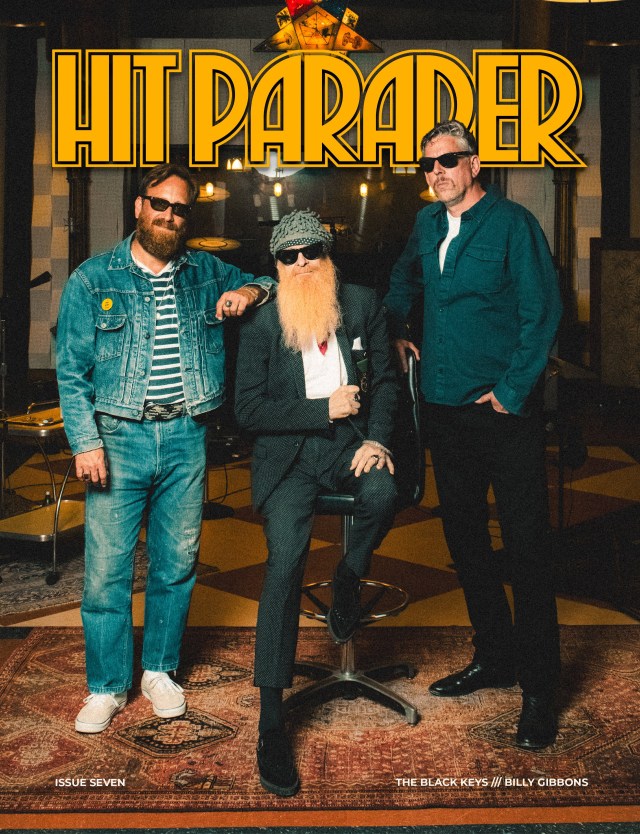
Hit Parader #7: The Black Keys x Billy Gibbons
July 2026 — $12.99