Lollapalooza 2026 Was a Reminder That the Magic of a Festival Comes From the People

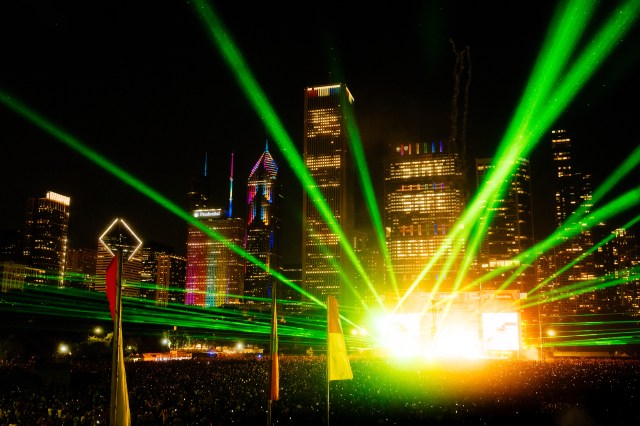
Lollapalooza 2026 returned to Grant Park in Chicago this past weekend, and while it may be in the rearview mirrors for some, I am still processing the experience. It was my first year in attendance at the festival, and being from Los Angeles myself, I’ve heard bits and pieces about the music-driven extravaganza that takes place during the region’s most desirable months. 

But if there was one thing I noticed on my own volition, it was that the people here are no ordinary festival people. Lollapalooza has carefully cultivated a community that extends beyond the park’s 319 acres and spills into the city streets, the after-shows, the glamorous pre- and post-parties, and even the outskirts—the “cornfields,” they say—reinforcing that a festival is not defined by its stages, but by the people who fill the space between them.

On Wednesday evening, I touched down at Chicago O’Hare, and I’m rushing off the plane because one of my best friends of 15 years, Amanda, has flown in from New York to meet me. We’ve always bonded over our shared love of music—as many do. We were together when we saw All Time Low for the first time at 14 (when she crowd-surfed for the first time), and Trey Songz at 16, when I got so high off a blunt, I bummed from two random French girls that I thought my stomach was going to explode. And here we are, together working in our respective music-related fields, meeting up to go to one of North America’s biggest music festivals. Best of all, we are staying with the third part of our trio, who lives just on the fringes of Chicago in Michigan City. 

Lorde – Cred. Charles Reagan

The plan was simple: we would wake up, work and take the train to the festival in the evening. After, we’d check out the after-shows for our favorite artists and split a rideshare home. At least, that is how we planned it. Thursday night at Lollapalooza—from what I heard—was great. John Summit apparently crushed his hometown headlining debut, Lorde brought out Charli XCX for “Girl, So Confusing,” Sombr was joined by boy band-to-the-gods 5 Seconds of Summer, and the testy Midwestern weather withheld its sunny skies from afternoon until close.

We, unfortunately, were stuck to the seats of the South Shore Line, playing 20 questions because, may the odds be ever in our favor, the train completely broke down. “I’ve never seen this happen before,” the conductor said in earnest. No amount of begging would retract the steel doors, so we sat scanning minute-long snippets of the first day’s sets. 

When we were finally released, after being paraded across hot train tracks, my friends and I arrived just in time for Finn Wolfhard’s after-show at Subterranean. Tall, lanky and with uninhibited confidence, the Stranger Things actor lit up the cozy venue with stellar stage presence and epic electric guitar skills—backed by a band that even included a violinist. The crowd was clued into his new album, Fire From The Hip, which was released a few weeks prior, but he was still sure to play all his hits from his barely year-long career as a professional musician. “If I don’t move and I can’t see/I choose the latter, choose the latter,” he belted in all its alt-rock glory. 

It wasn’t until Friday night that we were boots-on-ground in the festival, and we were already off to a better start because A) our train didn’t break and B) we remembered to buy rain ponchos. As expected, the forecast called for a very wet evening, but first, we were able to catch a few minutes of Not for Radio’s ethereal set: a mossy, fairy-like garden land that frontwoman María Zardoya commanded with her airy vocals.

Nettspend – Cred. Nathan Zucker

Like any festival, you’re already on the move before the last lyric, and trekking across Grant Park is not for the weak. All the way at Tito’s Stage, my friend and I decided to indulge our curiosity at Nettspend’s set and were fascinated by the way that the rapper was able to captivate the shirtless throng by essentially mumbling into the microphone for 45 minutes. I attempted to push through the masses but was immediately deterred when fans started throwing drinks. 

That was one of the only experiences during my first Lollapalooza I could even mark as unpleasant, and even so, as I pushed away from the stage, the many “excuse me’s” and “so sorry about that’s” that followed were a consistent reminder that this is not a typical festival we’re dealing with. Maybe my view of festivals is skewed by the influencer-ridden, frenzy-filled battlegrounds that the big leagues have become (Coachella, for one), but Lollapalooza has some of the friendliest people around, and it makes it nearly impossible to have a bad time.

While we were disappointed not to have been a part of the thousands gathered for Zara Larsson’s girl-powered set or catching Yungblud bringing a diehard fan onto stage, we did make it by the skin of our teeth to Charli XCX—and the whole experience was pure poetry. She looked razor-sharp in a trench coat as she strutted down the catwalk, but the real showstopper was in collaboration with Mother Nature herself. The stage fell silent, and the sky darkened when the forecasted rain finally began to pour. As the audience wrestled into their plasticky ponchos, “I think I’m gonna die in this house” blared from the speakers, and it was hauntingly beautiful. 

What else was important about the festival was that every corner of Grant Park catered to a different crowd, and somehow they all fit together under the same festival umbrella. That included families, too. I cracked the joke to my friend a few times that we should drop her off at Kidzapalooza—yes, a designated stage where children can live out their dreams of being festival-goers—but there really were parents who felt secure enough to bring toddlers into the mix. I’m not sure I would after later seeing a video of a bag of urine being crowd-surfed out of the audience, but to each their own.

For me, Saturday’s biggest takeaway wasn’t a singular performance: it was how often the festival reminded us that thousands of strangers could still find ways to connect. Crater-sized puddles of muddy slosh encouraged respectful tiptoeing as strangers tried to avoid splashing one another, though plenty of people simply embraced the mess. Elsewhere in the park, a lesbian mud wrestling ring reportedly broke out—exactly as enthusiastic as you’d expect.

That same sense of togetherness carried over once the music started. We began with Geese, where Cameron Winter quickly won over a devoted crowd. “This song is about adversity,” he crooned, and with no further explanation. In the few songs I caught, it was enough to completely understand the hype around the band that’s been unfairly labeled an industry plant.

Olivia Dean – Cred. Greg Noire

We barely had to pivot to catch headliner Olivia Dean grace the nearby stage with all her British charm and jazzy ballads. She prefaced the next song she was about to perform, “Carmen,” a ballad she wrote in tribute to her immigrant grandmother—and really, for any immigrant out there. But the overarching message of the set, and quite frankly, the entire festival was this: “I don’t know how we’ve become so fearful of each other,” Dean preached. “We’re all just people.”

To which Lollapalooza is a refreshing reminder. Complete strangers were holding open porta-potty doors for each other, stopping in their tracks to take group photos, lending lighters, voluntarily scooting over so you could get a better view of the set you’ve waited months to see. It feels like nowhere else, let alone the loud, overstimulating metropolis that is a music festival, can bring this out of people anymore. But it did, and if I were an artist lucky enough to perform here, I’d certainly be feeling the love.

As our Saturday came to a close, we accomplished the impossible: seeing not two, but three acts, all scheduled at the same time. We sprinted through the sea of Olivia Dean fans to end up in a neon wonderland of sweaty dancing for Disco Lines and ultimately landed at JENNIE, who governed the stage with expertly in-sync backup dancers. 

To cap off the night, because nothing ever just ends at Grant Park with Lollapalooza, we made our way across town to The Salt Shed. Here, 5 Seconds of Summer had drawn an incredulous block-wrapping line to see the recently resurrected boy band for themselves. The show wasn’t just the band’s pop-punk-fueled bangers like “She Looks So Perfect”; instead, the four-piece went a different route with a DJ set fusing popular songs with their own hits—and eventually throwing blow-up doll replicas of themselves into the crowd, because why not? 

And somehow, the night wasn’t done surprising us yet. It came from an Uber driver who told me if I guessed which 70s artist was playing on the radio, he’d give us the ride for free. Spoiler: it was Stevie Wonder, I did get it right, and he really did cancel the ride so we wouldn’t have to pay. “I’m a man of my word,” he assured us. 

INJI – Cred. Chad Wadsworth

By Sunday, the crowds were still going strong — rushing into the park as the rain finally cleared. We were particularly excited to catch banker-turned-party-girl-music maker INJI for her high-energy set in the heat of the day. Racing onto the stage in a pink toy car, she brought out all the theatrics and catchy lyrics that made her songs like “Bellydancing” and “Gaslight” go completely viral on TikTok. 

Back-to-back on the T-Mobile Stage, we experienced MUNA’s infectious indie pop sound transitioning into Beabadoobee’s grungey lo-fi tracks, which were really one of the festival’s highs. And while we heard Tate McRae closed out her Sunday night set by dipping herself in gold, my posse had already crammed into the South Shore Line alongside the many glitter-tinged, slightly damp and heavily exhausted Lolla-goers ready to get the best sleep of our lives. We thought we were, too, until we missed our stop and ended up miles away in the cornfields of Indiana. But in a rare change of fate, a lovely woman and her daughter were willing to rescue us, no questions asked. 

Others might not see Lollapalooza through the same rose-colored glasses as I did, but I personally think the air of this festival is different. It could be the drugs, or the disorientation that lowers your inhibitions, but I’d argue the magic beyond the music is that, for four days, friends reunite, artists truly connect with their fans and the whole city falls into a kind of symbiotic psychosis where, in an era that often feels increasingly self-focused, everyone genuinely wants each other to have a good time.

Etty Farrell : The Ultimate ‘Lolla Girl’

What is a Lolla Girl? According to Etty Lau Farrell, a Lolla Girl is a “State of mind,” one that involves fun, confidence, freedom and escape.

Farrell would know better than anyone how to define a “Lolla Girl.” For more than 20 years, she has been in the background at Lolla’s around the world, supporting her husband, Lolla founder Perry Farrrell, helping things run smoothly, engaging with the greatest artists in music as the hostess with the most.

Not this year though. After decades in the background, she is stepping proudly and joyfully into the spotlight, with two new dance music collaborations under her name — “Butterfly,” with DJ Rap and “Step Into The Light,” with VNSSA – and her own “Lolla Girl” activation. Yep, this Lolla belongs to Etty. And maybe the only person as proud as Etty is her husband, who, she says, has been there the whole time for her to fall back on if she needs it.

Hit Parader spoke to Etty about making her long-overdue star. turn 


Hit Parader: I interviewed DJ Rap 20 years ago for the cover of LA Times

Etty Farrell: That’s great. She remixed my song, “My Boy Lollipop.” And it was fucking good. With her jungle beats, she is second to none.

HP: How did you connect with her?

Farrell: As you know, we are working on songs, especially on my own. We were looking for producers, DJs to collaborate with. And Rap was someone that was recommended to us. At the time, I think she had a few songs already recorded. I think she’s trying to move a bit away from the EDM jungle world into more songwriting band world. So, she sent over a few songs, but the song “Butterfly” really resonated with me. When we recorded it, and it was as simple as she recorded the melody and the vocals. Then I recorded the vocals and the melody, sent it back to her. And then we realized it was suited for an EDM jungle track. And it is beautiful, I have to say. 

HP: Then you worked with VNSSA. How much fun has it been working with these different artists and getting their different perspectives? 

Farrell: I enjoy it very much. It’s something that I’ve been doing for the past few years with different producers. And I’ve come to learn that every single one of them do have different styles. Some of them are a bit more specific and some of them allow you to just do whatever you want and they’ll make it work. I’m going to be honest, it’s good to have something of my own that is not so tied to Janes or Perry even because in the past when we’ve I’ve recorded, it’s always been a collaboration. It’s always Perry and Etty. So, it’s nice to be able to step out on my own and explore what I can do, what I’m worth as an artist. 

HP: Every artist says, when you go off and do your own thing, it also invigorates you and you learn new things. So, I’m sure when you come back to working with Perry, then it brings like a different education and different stuff you can do. 

Farrell: Yes, but make no mistake, Perry is in the room with me. He is just trying really hard to hold back to not get in the way. But he enjoys being there. It is somewhat my real first time out, so I feel he’s a bit protective. So, it’s good to have him to fall back to. Part of being a human being is understanding how much you don’t know and how much more you have to learn. And it’s good to have him to fall back on because he’s clearly very experienced and knowledgeable. I feel nurtured, and that gives me a lot of confidence to move forward. 

HP: I’ve always believed you learn from osmosis being around cool people. So, whoever you are working with they bring their own thing that you pick up on. 

Farrell: Yes, absolutely. I sense that with VNSSA as we get to know her. I find that they all have different styles. VNSSA is very bold. When we work with her, I was able to record things in different ways and send them back to her. And she made this magical song called “Step Into My Light.” Where with Rap, she’s a bit more specific. But you are right. I do learn, especially in the EDM world, how they navigate songs. And as an artist, now I can learn and evolve how to best suit my talent, my contribution to each of the producers that we’re working with.

Cred. Press Provided

HP: You’ve been around so many great people. So, as you start to do this on your own, do you find there are lessons that you picked up over the years that you are then able to bring to this work? 

Farrell: as you said, I’ve been around great musicians. Top tier. And I have to say one thing I’ve learned is exactly what you said — their integrity, the work ethics, that they will do whatever it takes to get the right sound. They’ll do the work it takes to get the sound they want. And they’re not shy about asking for what they want. So, a couple of times when we’re recording, you don’t want to be so demanding of your engineer or your producers. I do start to feel bad that I’m sending the song back once again. But then I realized, “No.” And even Perry would say, “It’s your song, it’s out there forever. Unless it’s exactly how you want it, you have to keep going back.” And that’s what I’ve learned from these musicians, they are so dedicated to their craft. And as a ballerina, I also understand that dedication. I am just wanting to be 100 percent, over 100 percent committed, dedicated and confident in what I’m sharing with the world.

HP: Now that you’ve started this, what’s coming up for you?

Farrell: We actually have recorded a couple more songs that we now need to go back and rework. And I’m hoping that these two songs become a calling card for me that opens me up to different EDM electronic artists that I can approach to work with. I really want to start doing collaborations because I really do enjoy it so much. So it would be, you know, 

HP: Do you want to keep working specifically with women or are you open to working with all electronic artists? 

Farrell: Well, that’s a tough one because I love working with women because I do feel that women are underrepresented, especially in electronic music. Very much so, which is why DJ Rap is so special because especially in the jungle drum and bass genre it’s impossible for women to break into because the sound is so intense and strong. But she did it. I love working with female producers, but of course, when you work with men and women, men do bring a different dynamic and sound.

HP: Obvious question, who’s on the wish list of people that you would just love to work with?

Farrell: I just saw him in France. Martin Garrix. I love his sound. That’s my number one wish list.

 HP: How much fun for you now is it to be in this setting where you’re making your own music you’re to be at Lolla this weekend and watch all these artists that are potential collaborators?

Farrell: That’s a very good point. I’m definitely going to pay a bit more attention in the Perry’s area. I know that in the past few years, when we go to Lollapalooza, my role is really to host. And this is the first year that I can put away my hosting hat because I have a legitimate job to do. I’ll have more time to pay attention to the musicians and looking to see who I want to collab with. I would love to work with Zara Larsson. I watched her a few years ago in Sweden. And I also saw a video of her on a Star Search type show. And she was incredible at such a young age. I got a chance to speak with her while we were both waiting for Pitbull. And she is lovely, incredibly talented. So that’s somebody that I would love to work with as well. 

Cred. Press Provided

HP: What is a Lolla Girl? 

Farrell: A Lolla Girl is a man or a woman that comes to a music festival confident in themselves. They are inclusive, they love music, and they are there to celebrate life with other like-minded people through music.

HP: When did you become a Lolla Girl?

Farrell: I did become a Lolla Girl in 2004, the last touring Lollapalooza when we had Jane’s, Audioslave, Queens of the Stone Age, Incubus, Jurassic Five, Rooney, Kings of Leon, The Distillers, 30 Seconds to Mars on the second stage. And it was such a community. At the same time, Miles Copeland has his belly dancing stars on one of the stages.  We started the Lolla Girl and we opened for Jane’s. We performed on stage between Audioslave and Jane’s Addiction. And that was the first presentation of Lolla Girl. So, it is a group. But it is a state of mind. It is something to be celebrated. Let’s be honest. The economy is not great. The world is going crazy. Our country is going crazy. It’s good to have a weekend, a few days where you can park all your worries and stress outside, come into the grounds and enjoy yourself and celebrate yourself, celebrate being alive.

HP: On a larger scale, who are the ultimate Lolla Girls to you?

Farrell: Because I spoke with her the first person that came to me is Zara. When she performs, there’s this joy of celebration that comes to mind, right? And Tate McRae, again, another very forward feminine energy dancer as well. I do love female performers that are vibrant, crossing boundaries and pushing the boundary. Lady Gaga. The past couple of years, we’ve been very lucky to have a lot of female performers. So, it’s really hard to pick one, but really any performer that shows up as herself, celebrating herself, bringing the audience into their world and being confident about it. Yeah. Interesting. 

HP: For you, who’s the original archetype for the Lolla Girl? 

Farrell: Cyndi Lauper. That’s the original Lolla Girl to me. That’s the one because from early on in her career, she never pretended to be anything else but herself. Even nowadays when she performs there is still that girl that did “Girls Just Wanna Have Fun” within her. It was never a character. It was her true self.

HP: What do you want people to know about these projects?

Farrell: This project, with Lolla Girl, with my own music, means a tremendous amount to me because I feel that, at least for myself, I’ve been in the supportive role for so many years. I’m sure other women feel this way. But for me, as a woman, as a mother, as a partner, for many years, at different times, starting with Satellite Party, whenever we do something, whenever I try to do something on my own, whenever Perry has a project that comes calling, everything is dropped. And I put what I want to do aside to be supportive of my husband. And this is really something that means a lot because it’s something that I have of my own. For the first time, I’m able to be my own forward-facing artist. I love being in a partnership, Perry and I are still working on many things together. But it is really the first time where my name and my contribution takes the leading role. And regardless of where it may or may not go, I’m just really thankful for the opportunity to even have a chance to show what I’m capable of, not to the world, but to myself. It’s good to see that I have more to contribute to life as an artist than being in the supporting role.

Coachella’s Rowdy Sister: Stagecoach Festival Reviewed

The cowboy-boots-sporting, rowdy sister of fellow Goldenvoice desert festival Coachella, Stagecoach has long been the toast of the country music live experience, set apart by what Stacy Vee, Executive Vice President at Goldenvoice/AEG, who has been booking the festival since 2015, calls a “California sound.” Stagecoach is known for its immersive three-day experience and genre-spanning spunk, with this year marking nearly 20 years of the evolving festival, the 2026 lineup dancing between worlds of country, Americana, rock ‘n roll, EDM, and rap music. 

Photo by Faith Nguyen

On day one, I found myself in the Toyota Music Den for Noah Cyrus, an artist that reflects that Stagecoach soft-borders ethos, having found her way to country music via a few genre detours. Impressed by her surprise guest performance with Midland last year for a glimmering performance of “Put The Hurt On Me” at the Mane Stage, I knew I couldn’t miss her set this year. In 2025, I’d heard rumblings of Cyrus’ intention to pivot to country music, but it was her beaming smile and tangible joy on stage with Midland that made me believe it. Her gentle, Southern belle tone buoyed the track in such a way that I even preferred it over the trio’s studio version, and to see her make her bona fide Stagecoach debut with a soaring set all her own Friday evening of the festival, with such sincerity and unmistakable gratitude, made clear just how dedicated she is to making her mark as a country artist.

After missing Counting Crows’ set (Yes, I’m still heartbroken I wasn’t able to sha-la-la-la live among my fellow “Mr. Jones” devotees), I found respite at the Mustang Stage for The Red Clay Strays. Singer Brandon Coleman dresses like, sounds like, and even holds his axe: a custom, 1950s cigar box-inspired guitar, like a time traveler. I’ve never before seen a singer with such unshakable, ‘holy-spirit’ self-assuredness, to the point that his crowd commentary between songs felt not unlike a sermon. Coleman is a vocal advocate for mental health, and shortly before performing a fiery, choral version of “Devil In My Ear,” he offered a message of hope, reminding the audience that support is never far. Apart from the band’s indisputable ability to spellbind musically, I found myself most struck by the endearing contrast that such an old-fashioned appearing singer has such modern empathy.

Photo by Faith Nguyen

By far and away, the most electric moment of day one was the end of Dan + Shay’s Palomino Stage performance, where simply teasing the beginning of “Tequila” ignited the crowd into the loudest call-and-response of the weekend. Fans were transfixed, at Dan + Shay’s will, and it was obvious that the two of them were just as electrified as the crowd in one of those rare moments where an artist and an audience enter symmetry, allowing for the mystic to materialize in the space between them.

Despite the high winds lifting relentless dirt and hay in the air on day two, it all fell away for me during Teddy Swims’ evening set at the Mane Stage. As a ‘70s and ‘80s zealot, Teddy bringing out David Lee Roth to duet “Jump” by Van Halen was a major highlight for me (especially considering Roth’s signature rockstar outfit, as if no time had passed since 1983). Teddy closed his set with his mega hit “Lose Control,” his timeless, rich tone reverberating with the winds, somehow sweeter live than on record.

Goldenvoice is known for its unparalleled skill in curating festivals, made most clear by their remarkably intentional marketing that extends beyond pre-promotion. Stagecoach, in particular, has a lengthy history of booking acts in relation to their upcoming releases and tours, allowing the festival itself to uplift an artist. During Charles Wesley Godwin’s
set, shortly after he brought out Willow Avalon, he announced that he had a new single coming out soon, called “Better That Way,” featuring Luke Combs. Godwin then revealed that the Stagecoach festival speakers were playing the studio version all weekend, despite it being unreleased.

Photo by Nathan Zucker

Similarly, later in the night, Gavin Adcock introduced his upcoming single “Wannabe” by triumphantly announcing to the crowd, “There’s no better place to play a song live for the first time than Stagecoach!”

Both moves by both artists drive listenership, interest, and presaves in a way that Godwin and Adcock would otherwise not have had, had Stagecoach not coordinated booking with their releases. In both cases, Stagecoach was the only place on earth you could hear either unreleased song that day. It’s strategic, marketing-arm moves like this that set Goldenvoice and Stagecoach apart, and keep the festivals and their chosen artists growing, year after year.

In the history of Stagecoach, the festival had never been forced to evacuate until Saturday night. At Gavin Adcock’s set, the band had just blazed through the first-ever live performance of “Wannabe,” when suddenly his mic was cut off. Adcock and Co. attempted to go on, but soon the screens were taken over by emergency notices, and beers and food were being thrown on stage like a disgruntled crowd reception in the ‘70s. It felt like I’d stepped back in time again.

However, the swiftness with which Goldenvoice worked to keep attendees safe was anything but vintage. The festival managed to fully evacuate for about two hours, reopen, and, sunshine woman, headliner Lainey Wilson, still performed, as did late-night star Pitbull — I remember thinking what an impressive turnaround; unprecedented and unheard of at this scale.

As the sun set on day three, Third Eye Blind took the Mustang Stage. Following a boisterous live version of “Jumper,” the band fell quiet as they transitioned to the next song; guitarist Kryz Reid playing a stray, quick, two-chord, all-too-familiar combo. Excitedly having recognized the chords, immediately I turned to my friends, yelling, “ARE THEY ABOUT TO PLAY ‘HEROES’ BY DAVID BOWIE?!” My volume garnering the attention of strangers, all of them soon facing me instead of the band. When Third Eye Blind indeed started playing “Heroes,” all stared in disbelief, many clapping and throwing a thumbs up my way. Now, one of my favorite live Bowie covers, singer Stephan Jenkins’ own reverence for the Starman peaked when he adoringly belted “and we kissed, as though nothing could fall,” covered in golden desert afterglow.

Photo by Julian Bajsel

As of this weekend, Post Malone is now, deservedly, the first-ever artist to headline both Coachella and Stagecoach. Those who know little about his career might see his country transition as a surprise or cash-grab to go after trends, but Austin Post from Texas has dreamt of a career in country since he was posting Bob Dylan covers on YouTube at age 17. His successful pivot from rap to country with such resplendence is not achieved without his stellar band, who expertly reimagine his earlier hits like “Rockstar” and “Circles” for country-leaning live shows; the former transforming completely to rock ‘n roll by way of menacing electric guitar work (courtesy of guitarist Justin Richards), bolstering the chorus. Halfway through his set, shivering underneath a kind stranger’s jacket, I was awed as Post Malone honored late country icon Toby Keith with “Courtesy of the Red, White and Blue,” a choice that brought many attendees around me to tears. If there were any doubt in a sea of pure country fans of a ‘rapper’ on stage, in that moment, Post Malone proved himself true (red, white, and) blue.

As Goldenvoice/AEG Executive Vice President Stacy Vee has said, Stagecoach is about the people. From the crowd itself, full of people that actually say “excuse me” as they pass, and strangers who would offer a shivering girl their jacket, to the way the festival is booked and marketed, where lesser-known acts are given a chance, believed in, and later go on to return, playing the Mane Stage — their aim is true, and masterfully attained, even in chaos.