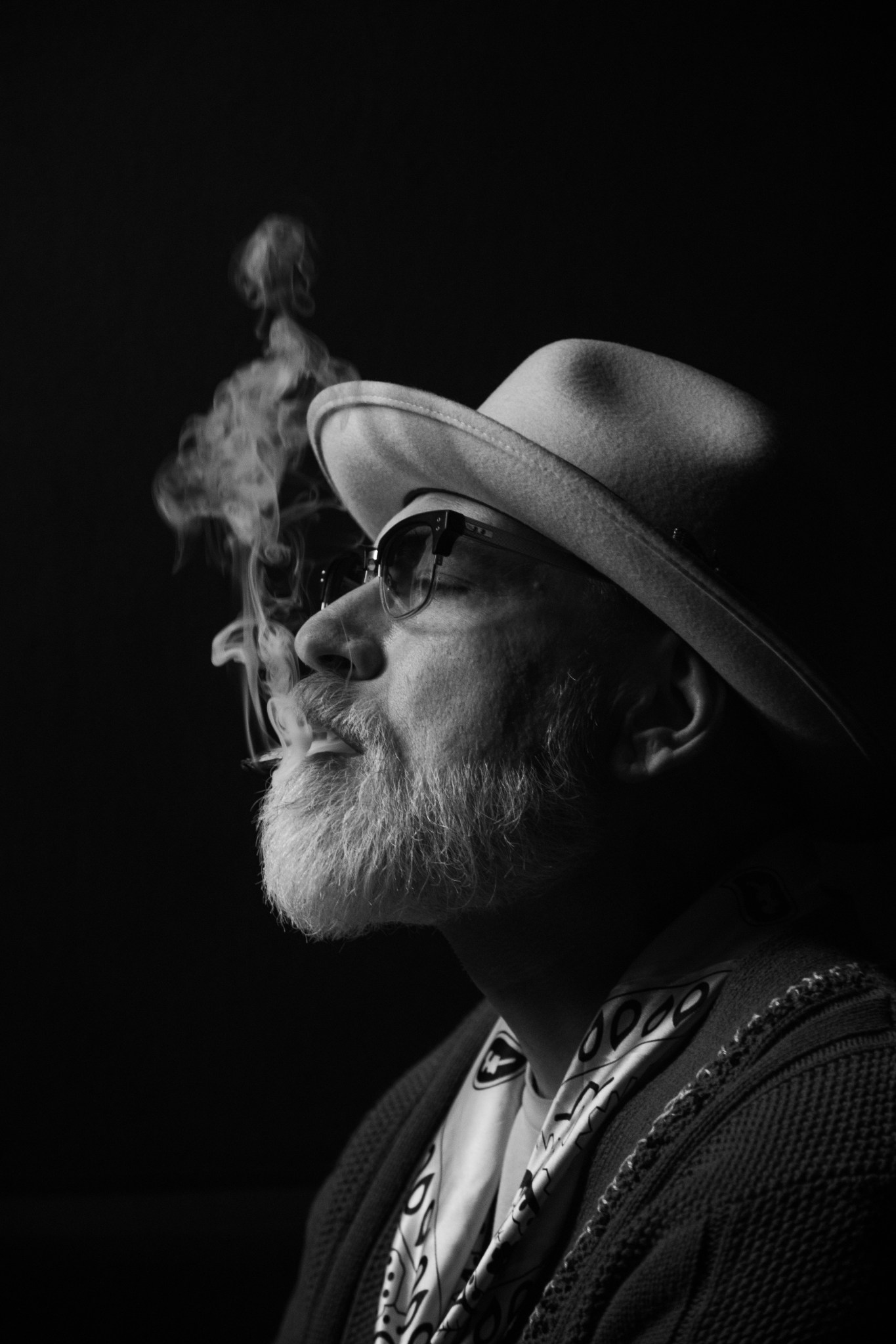
At 57 years old, Everlast has experienced rock stardom with the hip-hop group House of Pain and songs like “Jump Around,” and critical acclaim as a solo artist with the Grammy-nominated “What It’s Like,” off the album, Whitey Ford Sings the Blues. In 2000, he won a Grammy for Best Rock Performance by a Duo or Group for teaming with the iconic Carlos Santana. He has truly experienced it all in music. So, when he says he now cares most about making music people can connect with and relate to, it is definitely not just a sound bite.
His superb new album, Embers to Ashes, is a true singer/songwriter work. Produced by Yelawolf in Nashville, the insanely vulnerable collection finds Everlast reflecting on his life in L.A., from before he became famous to losing his home in the Altadena fire and subsequent divorce. Not surprising he says of his first record in over a decade, “All of a sudden, I had something to say.”
He still has a lot to say as I found when we spoke about the new album, his friendship with Cypress Hill, the weirdness of fame and more.
Hit Parader: Was most of this album done in Nashville?
Everlast: Yeah, we recorded the whole album here.
HP: Do you hear a lot of Nashville in there?
Everlast: Not really. It’s really an album about L.A. Over half the songs are direct references of L.A. The whole album, though it was written here, we sat down and this is the first album I had top line writers’ chip in and help write with me. Usually the MCME doesn’t allow that, but Yelawolf really talked me into trying it. So, the first stage was sitting down and making sure that we weren’t just writing songs for anybody. We were writing my songs. So, we started talking about my life over the last 10 years and all the things. And I had a few seedlings of songs and a few fully written songs like “Rubber Bullets” and “1987.” And I think there’s one other, “Lies,” I think I had fully kind of had hashed out. But the album, even the title is just about the Altadena fires was called the Woolsey fire and I lost a home in that and not because of that but subsequently I got a divorce so this whole really stormy period of my life had occurred. and at a time when I thought I was retired, I didn’t have a desire to make music. There was nothing inside me bursting to get out. But the only Nashville I hear in it are the guys that I know are from out here, the players. I hear them, but we didn’t overtly try to sound country or anything like that. I don’t think it’s a country record by any means. I just came here because this is where some killers were, and this is where me and Yelawolf decided to make the record.
HP: Songwriters always talk though about receiving transmissions, meaning ideas. Do they ever stop?
Everlast: I always have a guitar on me just for my own sanity. But for a long time, I was just sitting around singing other people’s songs and some of my own. And then one day, ideas start happening. Then I realized, “Oh, it’s time to get a studio.” My dear friend, Alchemist just helped produce an album with Erykah Badu. She’s been 15 years since she made a record, I believe. And she’s expressing a lot of the same thoughts I was having at the time. I was done because I didn’t have much to say. And then all of a sudden I felt like I had something to say or something to talk about that was connection worthy. I don’t care about the bread. I am all right. I do good. I do really well. I’m not hurting for money and I’m not greedy enough to want to be a billionaire. So, the only purpose for music to me is connection. It’s to be able to say something that when it hits the next person, they have that almost embarrassment of like, “Wow, like I got caught naked. I didn’t think anybody else thought that too kind of moments.” That’s what I search for in my songs.
HP: As a fan what were those first songs that kind of like where you had the feeling the song was speaking directly to you?
Everlast: Oddly enough, and I’m not a huge punk rock guy, but I’d probably say Suicidal Tendencies. “All I want is a Pepsi,” that song [“Institutionalized”]. The first one that popped off for them. I think it was just because that was the same generation as me. I wasn’t a huge punk rock guy, but I like that song. Things jump out at me. I was starting my hip-hop adventure at that point. In LA, all those cultures blended a lot, hip-hop, punk rock and all that. But yeah, that’s what flashed to my mind right now when you asked that question. Then probably right after that, it would be just rap music in general, but that was less personal, something about “Institutionalized.” I got in a lot of trouble when I was in high school and stuff. So, I think there were parts of it that I related to.
HP: Is that why it’s that important to make an album like this that is vulnerable and ties into aging? It reminds me of later Warren Zevon.
Everlast: Warren Zevon, to me, is one of the greatest songwriters who ever lived “Keep Me in Your Heart” might be the greatest song ever written, period, just because of the circumstances and how beautifully it worked. I get chills whenever I hear Warren’s voice or songs. I got lost in the question there, though. But yeah, there’s this whole concept of turning your back on hip-hop or something some fans will say about you. But I made seven hip-hop albums and every record I’ve ever made except this one has had hip hop on it. So, at this point for me, the only reason to make music is to do something new and adventurous and something that’s a little scary. Which, in my case, really the scariest thing to me is being vulnerable. Chuck D told me many years ago. It’s not hard to be hard. It’s not hard or tough. It’s hard to be soft. And that’s stuck with me for most of my life. So, that’s where I go with my music these days. It’s trying to, again, find that moment, that space inside you that makes the person listening go, “Whoa, I didn’t know anybody else thought that or felt like that.” When the truth is we all do.
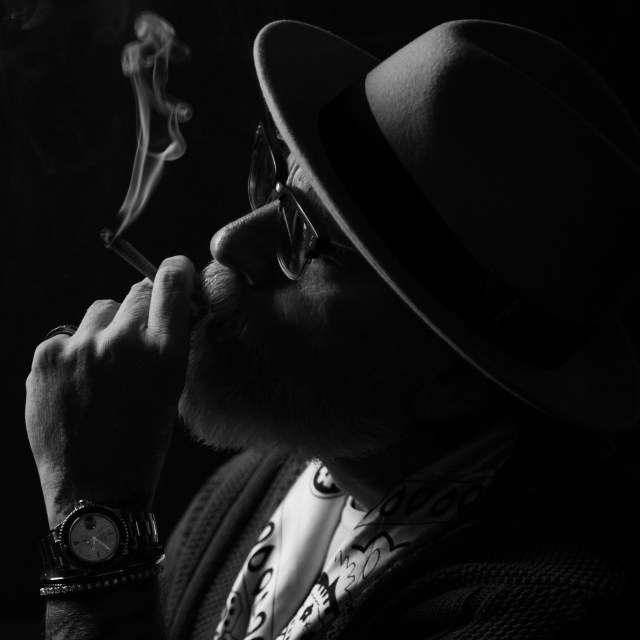
HP: Did the songs come easily?
Everlast: We wrote 14 of the 17 songs, literally a song a day, in two weeks, I think. And I showed up with a bunch. I showed up with ones that didn’t even make the record that I’m recording now for some other project. But it just became “What’s tying into the theme of this?” And it just kept coming back to L.A. and my youth. Like “1987” is literally about the year before I signed a record deal with Ice-T. It was like the last normal year of my life, that I actually existed in the same mental space without the music industry or even a small amount of fame in 1988 was a lot to me. So, the whole record ties into living and coming up in L.A.
HP: It made me laugh when you said the last normal year of your life. What is normal anyway?
Everlast: Yeah, I say that to my kids all the time, but the last year before any of this touched my life, before even the dream was dreamt. Because I just fell into it in a weird way. I was a graffiti writer, hung out with a bunch of rap cats. I started rapping just for fun with them. And one of them, my best friend most of my life, Divine Styler, was like, “You should demo up something. You can rap.” And then somehow, it got to Ice-T through them and I wound up with a record deal. But “1987” was literally about normal; doing beer runs, running out of the liquor store with 12 packs of beer and going to Zuma 7 and drinking them in the middle of the night. That’s another part of it, there are a lot of places in that song and a couple others that don’t even exist anymore. The fires took them all out. It’s crazy.
HP: When you look back what are some of those standout moments that blow you away in the best way?
Everlast: Some of the craziest things to me were being on Saturday Night Live, winning a Grammy, these kinds of weird things. I don’t remember them. The Grammy, I wasn’t even in the building when it happened. I got there late or something. But my best friends, I’ve kept a small circle. Cypress Hill and them are my best friends since 1990. I guess the craziest thing I can say would be Carlos Santana hunting me down when I played Saturday Night Live, coming into my dress room to beg me for my song, literally beg me for my song, “Put Your Lights On” for his album. I was blown away by that. I would have just given it to him, but he was like, “I need this.” I was like, “We’ll figure it out.” But I was still trying to figure out how he even got a copy of it at that point. I was blown away by it.
HP: I spoke with both Cypress and Yelawolf recently about how inspired and excited they are by new challenges. How much does being around people like that inspire you?
Everlast: I liken it to my father was a construction worker; the same six guys probably worked together for 40 years. But when they started building houses, it might’ve taken them a week to build a house, but l20 years in they built houses in three days. That’s all I’m around is guys like that because that’s all I want to do is learn something. Yelawolf taught me a lot; he’s 10-15 years younger than me or something and every day I was like, “Oh my god, I never even thought of it that way.” That’s who I try to surround myself with and luckily the friends that I have that are in the business are those guys, like Cypress Hill, always pushing themselves, trying to do something different a little. Those are my brothers. And it’s who you surround yourself with; I try to be the least greatest person in the room. That’s my goal almost every day.