Two Is Enough: A Conversation With Soft Play

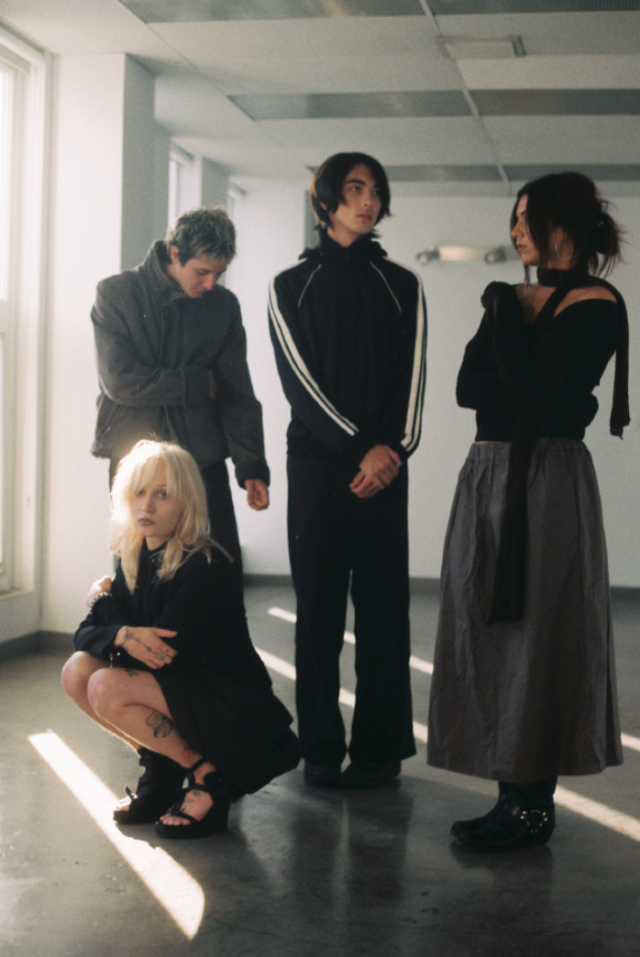
Life as a two-piece punk band comes with its pros and cons, but it’s also the only one that Isaac Holman and Laurie Vincent have chosen.

The English duo embraced the benefits of having fewer mouths to feed while sharing their additional multi-instrumental responsibilities when they got together in 2012. Then they spent a decade touring the world and releasing three albums as Slaves — often shown as Slaves (UK) in the States — before changing their name to Soft Play and releasing 2024’s Heavy Jelly to new levels of popularity and critical acclaim.

But regardless of what the band has called itself, Holman and Vincent have been embraced not only by the punk scene, but also everyone from rappers to metalheads. And as Soft Play has risen to larger stages not just in the UK but around the world, so has their genre-crossing sound and fan base.

Hit Parader caught up with the electrifying duo backstage to chat about their increased international popularity, getting beaten up in music videos, and desire to remain a duo.


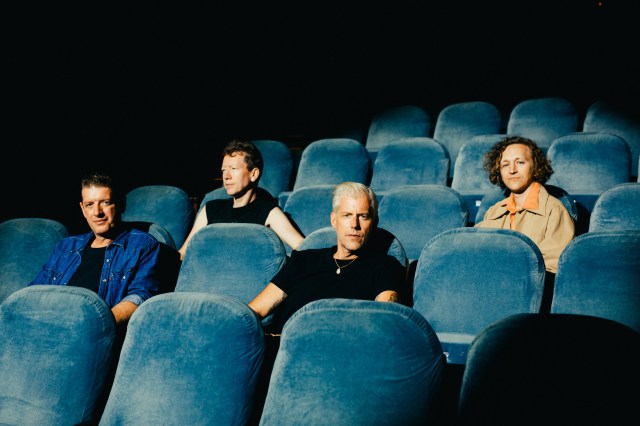
Photo: Jude Harrison

Hit Parader: Soft Play has played and worked with so many different genres of artists. What do you think gives you that cross-genre appeal?

Isaac Holman: Last year, we played with Robbie Williams, Kneecap, IDLES, and Slipknot, so we can go from pop to metal to rap. There’s this continual dialogue where we say, “You need to watch us live,” and that’s been a battle for us because we’ve only just started making records that translate straight off the bat and that people get. People are often like, “Oh, I didn’t even realize you were a two-piece!” So it’s a challenge, but you know, that’s what life is.

HP: What went into the decision to keep Soft Play as a duo instead of adding more members?
Laurie Vincent: We wanted more members. This was all a mistake. We were looking for more members. 

Holman: We wanted a drummer, but we couldn’t find anyone that wanted to drum for us, so Laurie brought these drums to my house and was like “Bang on these until we find a drummer.” I’d never drummed before, so it was just like a happy accident.

Vincent: We had no friends, basically.

Holman: Now it’s gone too far [to add a member]. But if someone from Blue Man Group wants to join, that’s it. They’re in, but they have to stay blue.

Vincent: Would you go blue with them?

Holman: Fuck it, yeah. I want to know the secret to how they get so blue. Is it hard to wash off? In my drawer at home, I’ve got a swimming cap and blue paint, because I was going to go blue for a party once. I don’t think it was even that long ago — maybe like a year or so. I’ve got that ready to go. I’m ready to go blue. Maybe the next big gig, I’ll go blue. But I’ll have to make it clear that I’m not a Smurf.

Vincent: People will be like “Who the fuck are you and why are you playing with a Smurf?”

Holman: “Why is he wearing his swimming cap and got some of that shit blue paint on it?” 

Vincent: “Because he’s a legend.”

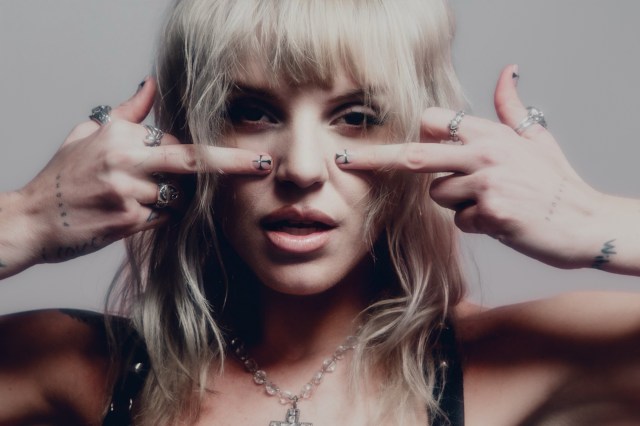
Photo: Jack Foote

HP: How has it felt over the last few years with the name change and the international growth the band has seen?
Vincent: Well, I think we’re disproportionately big in the UK, and that’s always been a frustration for us. We could play to 1,000 or 2,000 people a night in the UK and Russia, but nothing near that anywhere else.

Holman: We would come off the stage at these big festival slots, or headline shows selling out Brixton Academy — which is 5,000 people — and then play to 80 people in Boston, so it was quite a weird thing. Now it’s slowly catching up, and I think the new name, the new record, and the work we put in is paying dividends. It’s great, but it’s exhausting.

HP: Aside from the new record and the energy of the live shows, it feels like your wild music videos can draw people in.
Vincent: If we had more money, they’d be even more wild. Our vision gets tapered drastically.

Holman: We just come up with these crazy ideas, and people try to facilitate them. I realized the other day that on a subconscious level, it’s heavily influenced by The Slim Shady and Marshall Mathers [LPs and their music videos]. We grew up in the 2000s watching “My Name Is” and seeing Eminem in his Superman suit with his bum showing and putting it on people’s faces, so that’s the era of music videos that we hold highly. 

Vincent: That’s the alter ego of our band — deadly serious, but also ridiculous.

Holman: The music videos have to be the way we get our message across, because the music itself can be pretty heavy at times. We want to have fun, and I guess our idea of fun is getting beaten up.

Vincent: I get beaten up in nearly every video.

Holman: I was quite pissed off in the “Act Violently” video. I didn’t like wearing that tracksuit.

HP: What else would you like to see the band do going forward?
Holman: I’d like an equilibrium worldwide, where we can just be at the level we are at in the UK everywhere. I think that’s when everything will make sense, and touring will become a bit easier and more manageable. 

Vincent: I just want to keep writing records we’re really proud of and be even heavier. We’re going to basically be a metal band when we come back.

HP: Is there anything you’d want to tell people who are unfamiliar with Soft Play?
Holman: “Everything and Nothing” is our best crafted song, but you need to come see us live to understand it.

Vincent: I’d start with Heavy Jelly and work your way backwards, probably. And yeah, definitely come to a gig. Also, I don’t get Labubus.

Holman: That’s important. Laurie doesn’t get Labubus and I say “Free Palestine.”

Soft Play appears in our “What Does Punk Mean To You?”
article in Issue #1 of Hit Parader:

Hit Parader #1: Yungblud Edition

October 2025 — $12.99

YUNGBLUD is bringing the rock star back to rock. At just 27, the British firebrand stunned 45,000 fans and the world at Ozzy Osbourne’s farewell show with a jaw-dropping, emotional cover of “Changes.” Critics and legends alike are calling it one of the greatest live performances of the past 25 years. In a genre starved…

From Motel-6 to Main Stage: A Conversation With Microwave

After breaking into the 2010s alternative scene with 2014’s Stovall and 2016’s acclaimed Much Love, it took nearly a full decade before the Atlanta guys in Microwave began to see the post-hardcore band as a realistic career path.

Having opened for a who’s who of the alt-rock world (from Jimmy Eat World to Joyce Manor, Motion City Soundtrack to the Wonder Years), vocalist/guitarist Nate Hardy, bassist Tyler Hill, and drummer Tito Pittard never questioned their choices with Microwave from a creative perspective, but the van-based life of a touring rock band wasn’t exactly paying their bills.

But following a pandemic-forced break after their 2019 release, Death Is a Warm Blanket, Microwave saw a shift in their trajectory, with the next generation of fans discovering the band (along with many of their peers). That push helped 2024’s Let’s Start Degeneracy and recent tours become the group’s biggest successes to date, with even more planned with the 10-year anniversary of Much Love to celebrate as well.

Hit Parader spoke with the band backstage about their recent growth, anniversary shows, and much more.


Photo: Bridget Craig

Hit Parader: Now firmly in your second decade as a band, what’s it been like to see your steady growth really starting to pay off?
Tyler Hill: Honestly, we had a little bit of a gap before our last record because of COVID, and when we came back was really the first time the band was ever financially profitable or anything. So to us, it feels like more of a recent development.

Nate Hardy: We spent a long time just touring and sleeping on people’s floors and all sorts of different places. Motel 6 was as nice as it got. But yeah, it feels awesome to have that growth since the pandemic and be a viable thing that we can focus on. That’s always the fear when you start out as a band. You have to quit every job and find a new job every six months because you’re trying to “make it,” so you can’t focus on songwriting or trying to become a better band with your full energy and focus. I feel like it’s finally a viable life path for us right now.

Tito Pittard: It  feels great. I love music and focusing on making the best music and performing the best that we can.

Photo: Bridget Craig

HP: How different was it to see this next generation of fans and bands that were introduced to you after the pandemic break?
Hardy: We toured with Hot Mulligan and Mom Jeans before they popped off, and I feel like those bands and a handful of others were good at Twitter and being funny on the Internet, so they were able to attract a younger audience than we did. We got to be in the periphery of that as a band that tours with them, so we saw a bump around 2022 when those bands were popping off. We did a tour with Story So Far, Mom Jeans, and Joyce Manor in 2022, and that was when we could see this as a viable thing for us. It was like “OK, now people generally fuck with this realm of the music scene.” 

Hill: We started to see bands like Free Throw and others from our 2010s scene get a new generation of fans. That was also when we started getting messages where people were like “You guys were my favorite band in high school” and now they graduated college and have successful careers.

HP: A lot of those bands from that 2010s scene — including Microwave — are celebrating big 10-year album anniversaries. What’s it been like to look back on those first couple albums?
Hill: I definitely had a “Holy shit, I can’t believe it’s 10 years” moment. There was a point when we first started when I said to Nate, “Yo, the goal in 5 years should be to sell out the Tabernacle,” — which is the craziest thing for a band that was playing to 5-20 people in Atlanta. We didn’t do it in 5 years, but we did it in 10, and I don’t even know what the word is to describe how I feel about that.

Hardy: People are always conflicted between whether it’s like “Oh, if you do a nostalgia tour, then it feels like that was the golden era and your new music is less relevant,” but I feel like if you ask anyone in music what their favorite songs of theirs are, it’s always the most recent thing they did. To me, it’s like we’re refining and trying to get better all the time, so the more recent stuff is more of a representation of who I am now. But the nostalgia thing has a big place, and I feel like you do yourself a disservice as a band if you’re unwilling to relive that “golden era” for just a little bit and try to recapture that vibe. I think it’s cool to celebrate that.

HP: Speaking of new music, Let’s Start Degeneracy was a hit with both critics and fans. Did that surprise you after a handful of years between albums?
Hardy: I don’t think it was a surprise, but it did feel good. It would be a little bit more depressing if the only songs people knew or cared about were the old ones.

HP: With a bunch of growing successes in your rear-view, what are some of the upcoming goals you all still have for Microwave?
Pittard: It’d be cool to be a headliner at big festivals like Riot Fest, like our boys in Knocked Loose. They crush it every time.

Hill: Yeah, it’d be pretty cool to be able to level up the production and stuff. I think we’d probably have a lot of fun with that.

Hardy: I want flames on the stage. I’m trying to play some shows where we can afford flames. We already did the first 5-year plan of selling out the Tabernacle, so the next 5-year plan is to play shows that include flames.

Microwave appears in our “What Does Punk Mean To You?”
article in Issue #1 of Hit Parader:

Hit Parader #1: Yungblud Edition

October 2025 — $12.99

YUNGBLUD is bringing the rock star back to rock. At just 27, the British firebrand stunned 45,000 fans and the world at Ozzy Osbourne’s farewell show with a jaw-dropping, emotional cover of “Changes.” Critics and legends alike are calling it one of the greatest live performances of the past 25 years. In a genre starved…

Near-Death, Full Throttle: A Conversation With Cliffdiver

For a band that’s only two albums into their career, Cliffdiver has already been through more ups and downs than most acts with twice their tenure.

 From quickly becoming the buzziest band out of Tulsa with 2022’s Exercise Your Demons to nearly dying in the most Final Destination van accident on their way to 2023’s Punk Rock Bowling festival (a chain link snapped off of a truck and burst through the window of their van, lodging itself in the neck of bassist Tyler Rogers, who was knocked unconscious and hemorrhaging blood while driving the van), most people’s first introduction to the pop-punk/emo band was sensational in one way or another.

And while Cliffdiver’s sophomore effort, 2024’s birdwatching, hasn’t led to quite as many dramatic headlines, it has seen them grow their fanbase, entrench themselves in the national scene, and refine their sound while dropping from a whopping seven band members down to five.

With more music on the way and a continued head of steam as the band continues to plow forward, Hit Parader caught up with co-lead vocalist Joey Duffy backstage to talk about the Oklahomans’ successes, goals, and how near-death experiences can shape a band.


Hit Parader: How has the band grown since the release of birdwatching as opposed to the immediate jumpstart of Exercise Your Demons?
Joey Duffy: It’s been really interesting and transformative going from our first album with us all coming together, trying to learn each other and how to write together, to putting out birdwatching, which felt like a trauma response for a lot of us. After we all almost died in the accident, we had that perspective of sitting back down and saying, “OK, what do we really want to talk about? What’s important to us? How do we write an album about all of these different emotions, instead of the linear story that Exercise Your Demons was?” I think a lot of people have connected to the more personable nature of this album, and it’s more of a collection of moments than a story. It’s nice to see people go crazy for the new songs live, which isn’t what you always see. People are screaming the new songs, which is a beautiful thing. We’ve just got to get more people to listen to it.

HP: What was it like to get back in the van after the accident?
JD: We had to process a lot, but we made jokes about it because that’s what we do in Cliffdiver. You’ve got to laugh about the pain, or else it will overcome you and drown you in the ocean of regret. When we were in the hospital on the day of the accident, Tyler was like, “Are you guys going to keep going to Las Vegas?” We’re like “No, dude, we’re not going to go to Las Vegas right now — especially not without you.” But right when we got in the van a month later, Tyler drove first and said, “Alright, let’s try this again.” Now, there’s stress related to that accident that’s always present when you’re driving. When the van swerves twice, everybody’s clenched up, looking down the aisle, going, “Is this it? Is this Final Destination, and it’s finally catching up?” But it’s been an important meditation on the stoic nature of life that everything is so temporary. We were having the best day ever that day, playing Madden in our brand new van. We were driving to Zion National Park to hang out in the wilderness, and then all of a sudden, we’re all almost dead, even though we were all doing the right thing. But as someone who’s been very suicidal in the past, it’s a calcifying moment of “Oh, I don’t want to die.” In that moment, death is there. You have the opportunity, but you go “No, no, no. I’ve got to be here to watch my son grow up. He needs me.”

HP: How different is Cliffdiver as “only” a 5-piece band compared to your old lineup?
JD: Last year, when Gil [Erickson, guitarist] and Dony [Nickles, saxophonist] left the band to focus on their families, it was the question of “How are you going to bring that same energy and vibe and enthusiasm with a different sound?” We really came together to figure that out. That’s the good thing about having a band full of fabulous musicians. I’m happy to admit that I’m the least-talented member of the band, but I bring a lot of other stuff. Now, I’m picking up the guitar more, trying to write some guitar stuff for the next album that we’re working on right now, and we’re pretty excited about the opportunity to evolve again and push our own barriers to see what we’re capable of and what it’ll be like.

HP: Having played so many huge festivals and tours, where else would you want to perform?
JD: The goal is to go play all over the world. We want to play in Japan, Australia, England, South America, everywhere. We want to explore the world. I spent so much time not traveling because I spent all my money on getting messed up, so now I want to see everything. I want to breathe in all these new airs and see all these birds in different countries. I saw like 70 new birds in Ireland, and it was the greatest. That’s what rock and roll is about — not drinking and looking at birds. I also hope that we’re playing on the main stage at more festivals. I hope my son’s up there when he’s 23 playing guitar or piano with us, and I hope we do this forever because I think that the world needs as much hope as possible. That’s what Cliffdiver is to me. It’s being able to look at people and say, “It gets better, I promise. I’m an idiot, so if I can get a little bit better, you can too.”

HP: Are there any other messages you want to share through Cliffdiver?
JD: Just that it’s a weird time to be a musician. With the rise of authoritarianism, it’s never been more important for musicians to use their platform to speak out for disenfranchised groups, tell people that they’re going to be OK, and fight for people when they can’t. Be okay, you have to use your voice to call out this kind of bullshit when we see it. People should be free to be who they are, love who they want, and not have to worry about secret government hit squads kidnapping them in the streets. Fuck ICE. Fuck Trump. Trans rights matter. Free Palestine. Love your neighbors. That’s it.

Cliffdiver appears in our “What Does Punk Mean To You?”
article in Issue #1 of Hit Parader:

Hit Parader #1: Yungblud Edition

October 2025 — $12.99

YUNGBLUD is bringing the rock star back to rock. At just 27, the British firebrand stunned 45,000 fans and the world at Ozzy Osbourne’s farewell show with a jaw-dropping, emotional cover of “Changes.” Critics and legends alike are calling it one of the greatest live performances of the past 25 years. In a genre starved…

Serious Metal, Seriously Fun: A Conversation With The Barbarians of California

Following the release of last year’s debut album, And Now I’m Just Gnashing My Teeth, the Barbarians of California have been one of the fastest-rising metalcore bands on the planet. Bringing a fresh take on the heavy genre-bending sound made popular by bands like Every Time I Die, the group helmed by AWOLNATION’s Aaron Bruno and veteran rock producer Eric Stenman has found a musical home with bands and fans throughout the punk, metal, and hardcore scenes.

With new singles actively releasing through the end of 2025 and their sophomore album in the works, there’s no reason to think the Barbarians’ momentum should slow down anytime soon. From recently playing arena shows opening up for Deftones to landing on some of the biggest music festivals of 2025 (and likely 2026), Stenman, Bruno, and the rest of the band have clearly found a unique niche of mixing metal and hardcore sounds with their existing pop-rock sensibilities to deliver a crowd-pleasing sound like no other.

Hit Parader caught up with Stenman backstage to discuss the band’s rise, mixing things up in the metal scene, and more.


Hit Parader: What’s gone into the recent rise in popularity of the Barbarians of California?
Eric Stenman: There’s just so much love involved. Any person that throws a like on a social media post or listens on one of the streaming services, it all means so much to me. I made music back in the early 2000s, then I went into the studio side of things, so to come back later in life and be able to write and perform music and get any acceptance of it is just mind-blowing. I appreciate every interaction with every person at every stage.

HP: Barbarians is obviously a heavy band, but it has a wide range of fans, so how does it feel to play festivals where you’re by far the heaviest act?
ES: We’re always walking that balance, because we are very heavy and try to melt faces with the music, but we also have a comedic element and a lot of melody in there. We want it to all make sense and not come out of left field, but we welcome being the heavy band with a twist that can hopefully fit in elsewhere. I don’t know whether or not we’re succeeding in that, but it’s been a blast so far, and we can’t wait to just keep tweaking people’s heads out a little bit.

HP: With so much attention on the debut album last year, what’s the focus going forward for the band?
ES: We’re in the middle of putting out a few new songs, and we’re working hard to get the next record out. We just want more of this music to exist in the zeitgeist because it’s so fun to make these songs as fans of the music. Whether 5 people listen to them or 500,000, it’s just fun to put more music back into the world that you love so much. We’re just focused on more songs and more shows. 

HP: Seeing as you played in bands when you were younger and then moved into the studio for a while, what was it like coming back to the stage this time around?
ES: The immediate thing I’m struck by is the instant feedback. It used to be that you’d play a show in Denver and go, “I think they liked us. Those two people in the front were clapping hard.” With social media, you now get instant feedback of good and bad comments — and I appreciate the bad too, because I get a laugh out of it and learn from that. It’s also the immediacy of releasing music, because there used to be so many gatekeepers. You had to go to a real recording studio and spend a bunch of money to get the record done, and then maybe sign to a label and wait six months for the label to figure out their plan. Now, you can literally finish a song and have it out a week later on the same platforms as Metallica and Taylor Swift. That’s a huge game-changer.

HP: What can fans of And Now I’m Just Gnashing My Teeth expect from the new songs?
ES: The challenge for any band is to always sound like you, but with a new spin on it. Obviously, we’re a baby band only on our second record, but it still has to be worth someone’s time. You want them to hear something new, but you don’t want to leave them scratching their head because it’s so different. We’ve all had our favorite bands make records that are just too far off the reservation, and that’s not what we want to do with Barbarians. We want to do what we do, but better. We set a benchmark that we’re very proud of, but we have a chip on our shoulder, and we want to beat it. 

HP: At a lot of the big festivals and such, you’re playing to crowds that aren’t necessarily familiar with Barbarians. Is there anything you’d want to tell those people?
ES: I think it could serve as an introduction to people who don’t love heavy music, hardcore, or metal. This could be a gateway drug into those genres, because I think we have a catchier twist, and we want you to bob your head. I love math rock and math metal, but I also like to know where the “1” is and be able to bob my head to it. If you hit a good riff, let me hear that riff some more. Some bands hit it at 4:50 into a song and never go back to it, which makes me sad. I want to hit that riff early and often, and I want people to find at least one part of one song that gets them to bob their head. We don’t claim to be a pure metal band or anything, but we try to strike a musical nerve where we can.

The Barbarians of California appear in our “What Does Punk Mean To You?”
article in Issue #1 of Hit Parader:

Hit Parader #1: Yungblud Edition

October 2025 — $12.99

YUNGBLUD is bringing the rock star back to rock. At just 27, the British firebrand stunned 45,000 fans and the world at Ozzy Osbourne’s farewell show with a jaw-dropping, emotional cover of “Changes.” Critics and legends alike are calling it one of the greatest live performances of the past 25 years. In a genre starved…

Back With a Bang: A Conversation With The Ataris

With so many bands — particularly pop-punk bands — celebrating major anniversaries for their albums from 20-25 years ago, it’s no surprise that a lot of them are jumping back on the nostalgia bandwagon.

But while the Ataris could go from town to town selling out shows and drawing crowds at festivals by playing So Long, Astoria over and over again, they’re not content with just living in the past. Instead, Kris Roe and his collection of friends are finally releasing their long-awaited sixth album in March, pushing the band’s discography forward for the first time since 2007’s Welcome the Night.

Hit Parader spoke with bassist Mike Davenport about the band’s return to the spotlight, maturity, and much more.


Photo: Press Provided

Hit Parader: Looking back on the last 30 years, what does the “story arc” for the Ataris look like?
Mike Davenport: It’s funny because it’s not just an arc, but an up-and-down kind of situation. When you’ve been a band 30 years, you see yourself start really small — our early shows were played to 19 people in a bagel shop or something — and then you get to this point where you’re playing these festivals like Reading and Leeds in Europe with 50,000 people or whatever. But you also hit lulls in your career along the way in this very Spinal Tap way, where you’re like, “What happened and why are we here?” Then things start to come back up again. It’s just like everything with music, it has its ebb and flow. When we started our first tour, we called every basement, backyard and VFW hall we could. We got in the van and just booked anywhere we could play. So from those days to 30 years later playing shows like Riot Fest and Aftershock, we couldn’t be more grateful.

HP: How different is it to be in a band as a father, compared to when you started basically as a kid?
MD: Well, one big difference is that when we would go out on tour in our early days, we’d go out for three, four, five months at a time. We’d barely come home. It was like a “We don’t know what home is” kind of thing. Now in our older, wiser days, we try to mostly do weekends and get home for a couple days in between. It’s still a crazy grind, but you get home and make sure the kids are in school and that your wife still loves you. That’s the most important thing, but it takes a lot of time to learn that.

Photo: Tijs van Leur

HP: How does it feel to see the nostalgia and love for not just The Ataris’ So Long, Astoria, but also some of the other massive albums from the first half of the 2000s?
MD: There’s a lot of nostalgia for that era going on right now. I grew up listening to a lot of metal bands as a kid — and Hit Parader was a magazine I read for a lot of those metal bands — and hair metal really never saw the resurgence that pop punk has. It’s so weird to me that our genre has kids latching on to it again, almost like a second coming. We all blew up in the late ‘90s and early 2000s, but then there was a downswing where even bands like Blink-182 went from playing stadiums down to venues like the House of Blues. But now, for the last 10 years or so, all of us have taken this big step back up because the next generation has come in loving pop punk. I’m just wondering if hair metal is finally coming next.

HP: What goes into striking the balance of not being a full-time band anymore but still making the most out of the weekend festival gigs and such?
MD: I just think it’s maturity. We’re all pushing 50 now, and as we get older, I think we realized that the balance is just as important to our success in playing music. We all laugh at each other, because we have this disease where it’s like we’re sick because we love that time on stage so much. That hour or however long it is that we get on stage drives us inside, and we have to have that, but finding the balance between that and our real lives at home is very tricky. We all have families and kids and those kinds of things, and now we’re able to manage it better because we’re older and wiser than we were as kids.

HP: How have you seen the music industry as a whole change over the decades?
MD: Well, we used to sell records. We don’t sell records anymore. It’s all about the live show now. We get paid better these days to play shows than we did back then, but we don’t sell records, so we don’t get paid on that end of it. The good news is that the kids are 100% into what we’re doing right now, so it’s good to know that it didn’t just fade away. There was that time in the middle where maybe we thought we were going to go the way of the dinosaur.

HP: After so many years together, what do you want to see the Ataris do in the next 5 years?
MD: I used to think “5 years? Talk to me in 5 days!” But now that we’re a little bit older and wiser, I can think a little further ahead. We love getting to play in other parts of the world, so the next couple of years will definitely have us in South America, Australia, and places like that. The goal for the next couple of years is to play in as many cool places around the world to as many of our fans as possible. We just got up to Alaska for the first time ever in our career, so we’re trying to hit all of these places where our fans can see us live.

HP: What was it like to record a new album for the first time in nearly 20 years?
MD: It feels good. We all finally got focused on what was important, what our job was in the band, and put behind us a lot of things that had been tearing us apart in the middle years.

The Ataris appear in our “What Does Punk Mean To You?”
article in Issue #1 of Hit Parader:

Hit Parader #1: Yungblud Edition

October 2025 — $12.99

YUNGBLUD is bringing the rock star back to rock. At just 27, the British firebrand stunned 45,000 fans and the world at Ozzy Osbourne’s farewell show with a jaw-dropping, emotional cover of “Changes.” Critics and legends alike are calling it one of the greatest live performances of the past 25 years. In a genre starved…

Still Riding the Wave: A Conversation With Senses Fail

While many of the 2000s biggest rock bands are back for the first time in a while to celebrate 20- or 25-year anniversaries for their iconic albums, Senses Fail never really went away. 

Having released an album every few years since 2004’s breakthrough Let It Enfold You, vocalist Buddy Nielsen and his bandmates have remained remarkably consistent over the last 20+ years. And with tour dates and festivals on several continents each and every year, the veteran post-hardcore act shows no signs of slowing down. 

Hit Parader spoke with Nielsen backstage to chat about the past, present, and future of Senses Fail.


Photo: Press Provided

Hit Parader: What’s kept Senses Fail consistently going for decades as other bands have taken some pretty extensive breaks?
Buddy Nielsen: I think at the end of the day, it’s really what I like doing. There were some times where we might have slowed down behind the scenes after the mid-2000s, but I just really enjoy music and the act of touring. I love traveling, and I think the main thing that really buries a lot of bands — aside from money — is that they don’t like traveling. So if you’re not making money and you don’t like traveling, it’s really hard to keep the band going. And the money comes and goes, everybody goes through that, it doesn’t matter. I think Neil Young said, “Sometimes you’re playing clubs, sometimes you’re playing stadiums,” and that’s coming from someone as iconic as Neil Young. There have been times I’ve seen Bob Dylan playing 1,000-capacity theaters, and you’re like, “Really?!” But that’s the reality, it’s not always the big fest or the big show. When that’s OK, and you still love doing it, you can ride the wave of whatever your career is going to be — because it’s not going to be linear. I think that freaks most bands out, because they expect their career to just be this linear rise. There’s always going to be some ebb and flow to it, but if you still love traveling and playing, then generally you can make it all work.

HP: How different is that traveling and playing now as opposed to when you were doing it early on?
BN: It’s difficult sometimes. I got food poisoning two nights ago, and sometimes I show up sick because I’ve got two kids at home. It’s a lot more like we’re here to do business instead of the extracurricular activities. Those happen, and they’re fun, but that’s few and far between. I went to bed at 9 last night and slept for 12 hours, because I just can’t do all of it anymore. The people that never stop are the ones who are no longer with us, unfortunately. It’s more like showing up to do a job now. We look at it like it’s our job to go out there and be consistent and represent the memory of what the band is to our fans. We’re there to give people a chance to have some sort of escapism from this shithole we live in. (5:41) There you go.

Photo: Press Provided

HP: What’s it like to play a festival where half of the bands were inspired by Senses Fail and the other half inspired you?
BN: It’s cool because I’ll get to hear records I grew up on, and it feels like it’s just passing the torch from one generation to the next. We’re right in the middle right now, and that’s a testament to the festivals. We love playing festivals. I know some bands hate them, but it’s always been amazing to come out and see everyone. I’m just excited to be able to continue having fans come out, because that’s one thing I don’t take for granted. I think a lot of people just assume once you have a fan, you’re always going to have a fan, but I don’t think that’s the case. You’ve got to really continue not to bum them out, and that’s our goal.

HP: Speaking of festival sets, how do you balance wanting to play more recent music with the nostalgia side of your catalog?
BN: For a festival, we’re going to play mostly the hits, but if you come see a headline show, we’ll mix it up. We have shows where more than half the set is from our more recent, heavier records, but we find a place and time to do it. At a festival, you’re playing to people who only know one song from your band, so you should play that one song.

HP: How does it feel to be celebrating big 20-year album anniversaries with a lot of bands you’re friends with these days?
BN: I still keep in touch with Mikey [Way] from My Chem[ical Romance], and we’re always talking about stuff like that. Like when they played MetLife Stadium was just so crazy, because that was their dream for as long as I’ve known them. I’ll post some flyers from old shows where the bill was like Senses Fail, My Chem, and some random band that isn’t around anymore. It’s just nuts to look at that and reflect on it, even as the members of the bands who are doing it. It’s crazy to be allowed to do this for so long, because it was a completely different world we started in. To have started in that world and exist in that for so long, and then end up in this one, navigating all the bullshit — it’s been a wild ride for a lot of the bands.

HP: After all this time, what’s left for you to do with Senses Fail?
BN: There are a lot of places we haven’t gone yet. We just went to South America for the first time, and I’d love to go to Southeast Asia and China. I want to do more of that and more festivals — bigger festivals too, like Coachella. I want to do everything for the rest of my life, so someone’s going to have to tell me when it’s time to stop.

Senses Fail appears in our “What Does Punk Mean To You?”
article in Issue #1 of Hit Parader:

Hit Parader #1: Yungblud Edition

October 2025 — $12.99

YUNGBLUD is bringing the rock star back to rock. At just 27, the British firebrand stunned 45,000 fans and the world at Ozzy Osbourne’s farewell show with a jaw-dropping, emotional cover of “Changes.” Critics and legends alike are calling it one of the greatest live performances of the past 25 years. In a genre starved…

The Party Didn’t End: A Conversation With Dance Hall Crashers

When Dance Hall Crashers disbanded (for a second time) in the early 2000s, most believed that the ska punk group had run its course and would just be a well-remembered part of the East Bay scene — much like the scene’s seminal stars, Operation Ivy, before them.

At the start of 2025, the band announced their return after more than two decades away, featuring major dates like Vans Warped Tour and Riot Fest (in addition to a smattering of headlining shows), but what no one expected was just how much Dance Hall Crashers’ popularity grew during their years off.

Following the modest success DHC had the first time around, the legacy of the ‘90s ska punk scene ebbed and flowed as the subgenre faded in and out of favor. But with each new generation of bands, Dance Hall Crashers’ impact grew even as the band remained on the sidelines.

Now that they’re industry veterans back playing shows exclusively on their own terms, Dance Hall Crashers is ready to bring their party to all who’ve missed them since 2004. 

Hit Parader caught up with the band’s vocalists Elyse Rogers and Karina Deniké, as well as guitarist Jason Hammon, backstage to chat about


Photo: Alexander Ripa

Hit Parader: It always seems like Dance Hall Crashers are having a tremendous amount of fun at every show. What goes into that chemistry night after night?
Elyse Rogers: Well, we actually all get along off the stage, too.

Jason Hammon: We actually do. It’s crazy.

Karina Deniké: I think if you’re going to spend the time to write and create fun music and take people out of their home environment for a stage show, you want it to be a place where you can have a good time. The world is crazy right now, and the news is often tough to listen to, so you want to provide a place where you can have fun and forget everything else for a minute — forget your normal life, work life or whatever it is. So to me, a stage show should be a fun, good experience, and that’s what I try to think about when we’re on stage. “Let’s make this really fun. Let’s all be here together — meaning everyone that’s at a festival or everyone that’s at a show of ours — and just enjoy ourselves. That is definitely an attitude that I try to bring to our shows.

HP: Speaking of those festival shows, when you go to a festival now after taking a couple of decades away from the scene, what’s it like to see the next generation of bands that grew up listening to you as kids?
Deniké: It’s great. I think it’s really fun.

Rogers: I think it’s super inspiring. I love to see bands like the Linda Lindas who are killing it. There are a bunch of younger bands who are not only just carrying the torch, but also doing their own thing with it. There are different issues that they have to deal with today that we never had to deal with, and I think it’s awesome. The music scene is thriving.

Deniké: And then we selfishly get to see our favorites at the festivals too, like Jawbreaker, Weezer and Green Day [all of whom played Riot Fest 2025].

Photo: Chris Cuffaro

HP: Given the current divisive political climate throughout the world today, do you think it’s more important than ever for bands like Dance Hall Crashers to bring unity and joy to people through your shows?
Hammon: I think so.

Deniké: I totally do. I think that I appreciate it more than I used to because things are really tough right now. Any kind of sense that we’re all in this together and reminding people that there are forces of good that are trying to keep us all together feels more special than it ever has before. [Dance Hall Crashers] shows and festivals do that specifically, and it makes it feel like every moment is special right now, which is not always how I felt.

Rogers: And I also think that just bringing levity to the world is so important at the moment, so we do our best to do that as well.

HP: Having come out of the ska punk scene of the ‘90s, what’s it been like to come back and be able to play with so many different subgenres of bands and fans?
Deniké: It’s fun. Sometimes we’re the kind of random odd man out — or odd woman out — but I think that’s a really good balance for us. Having us on a bill for [a big show or festival] brings something different. We’re a little of this and a little of that, and we try to bring a little bit of our influences to every set — and I think it works.

Hammon: We’re like the misfit toys anywhere we go. When people hear us, they know it’s us because there are not a lot of bands like us. We used to always be the odd ones out, because the ska scene was kind of sour on us at various times and we never really fit in anywhere else. Now, it’s like everybody is just really happy that we’re playing again. It’s really fun.

HP: How does it feel to see that reception from fans and the scene and industry to have Dance Hall Crashers back and seemingly bigger than ever before?
Deniké: I think it’s incredible. I mean, it’s exceeded any of our expectations of what that could possibly mean, and it’s been really beautiful.

Hammon: More than anything else, I think it’s been totally humbling for us.

HP: Now that Dance Hall Crashers is back, what kinds of things would you like to see the band new both in the immediate future and 5 or 10 years down the line?
Deniké: I think we’re really just taking it day by day. Our ethos right now is that if something sounds fun and we all want to do it, then we will. We’re not making plans beyond that, you know?

Dance Hall Crashers appear in our “What Does Punk Mean To You?”
article in Issue #1 of Hit Parader:

Hit Parader #1: Yungblud Edition

October 2025 — $12.99

YUNGBLUD is bringing the rock star back to rock. At just 27, the British firebrand stunned 45,000 fans and the world at Ozzy Osbourne’s farewell show with a jaw-dropping, emotional cover of “Changes.” Critics and legends alike are calling it one of the greatest live performances of the past 25 years. In a genre starved…

Fast Food, Heavy Riffs: A Conversation With Mac Sabbath

In the world of obscure subgenres of rock music, there’s likely only one act that can be described as “Drive-Thru Metal.” And that band is the grotesquely unique Mac Sabbath, the hard-rocking quartet of mutated fast food mascots composed of Ronald Osbourne, Slayer MacCheeze, Grimalice, and the Catburglar.

As the name might suggest, Mac Sabbath is a fusion of heavy metal songs (particularly Black Sabbath tunes, but they don’t rule out some of the other greats) redone with lyrics about food (particularly of the fast and cheap variety). It’s hilariously wild, heavily costumed, impressively entertaining, and walks a very strange, greasy line between performance art and hard rock in ways that rival the biggest four-letter names in that space (like KISS and GWAR, for instance).

On one hand, that combination is every bit as ridiculous as it sounds, but at the same time, simply referring to Mac Sabbath as a “parody” band almost doesn’t do them justice. The four mutants can rock as well as any non-fast-food-themed band out there, and arguably find ways to do some of the classic songs just as well, if not better than their original versions — just with ridiculous food-based lyrics.

Of course, seeing as they’re time-traveling mutants from another dimension (or something along those lines), they’re not exactly the easiest bunch to land an interview with. Thankfully, Hit Parader caught up with Mac Sabbath’s “manager,” Mike Odd (who’s definitely not also in the band) backstage for an entirely accurate interview (which is totally not full of in-universe jokes and stories, as per usual) about the band’s mysterious origins, their musical stylings, and much more.


Hit Parader: How did you get involved managing Mac Sabbath?
Mike Odd: Well, I got roped into it. I had an oddities museum in East Hollywood called the Rosemary’s Billygoat Odditorium, and they called me Mike Odd, because I’m a freaking weirdo. When you have a place like that, you put yourself into the world of strange, and you get all these calls. It’s always like ‘Oh, come out and see my two-headed otter skeleton in my shed’ and blah blah blah. So I get this call to come out to this burger place, and I’m like ‘Oh, it’s going to be a Virgin Mary toasted on a hamburger bun or something, and they’ll do an auction.’ Then I go out there, and they’re having this fight club in the middle of the night in the basement of this really large hamburger chain that the upper management does not know about. 

HP: Wait, what happened that evening at the basement fight club?
MO: Well, it was a lot of stuff I can’t talk about, but I’m there in the basement, and there’s this band playing these Black Sabbath riffs and screaming about Monsanto and GMOs — and the band is all these mutated fast food mascots. It’s just chaos. Then the band came up to me like ‘We want to be a real band and have you bring us above ground as our manager, because we saw that you had your own monster band [Rosemary’s Billygoat].’ They knew that I knew a couple of places in LA that I could put them, and they’re all talking about being time-travelers and crap. So I booked them this thing and shot a video of them as a goof, and then all of a sudden MTV picked it up, Black Sabbath posted it, and we went to England to play Download Festival with Kiss and Slipknot and Motley Crue. That was when I was like ‘I guess I have a new job that pays a little better than selling oddities.’

HP: Mac Sabbath feels like something that could only come to be among the weirdos of Los Angeles, and yet now it’s spread all over the world.
MO: Well, that’s where it got birthed, but they quickly shipped us off to England, which was very shocking to me. The word is getting out now, so the [non-weirdo] jerks will be there soon I guess. Already, we play some festivals that are way too big to be all weirdos. If there’s a big festival or we’re in a big city, there’s going to be a certain percentage of jerks even at Mac Sabbath shows. Sometimes we go places and I can’t believe how few jerks there are. The band will play to many thousands of people and seem very well-received — even if the stage is much further away from the weirdos than usual. I think we keep the jerks at bay.

HP: How difficult is it for Mac Sabbath to come up with all of these various food — and particularly fast food — references, while still fitting them into Black Sabbath and metal songs?
MO: That’s one of the things I’m always amazed by, because the original Black Sabbath only lasted like 10 years, and here we are in our 11th year. I just don’t even know how to feel about that, but it just keeps happening. They just come up to me like ‘This is our new song. It’s an Iron Mai-Denny’s song, and it’s about a fish sandwich.’ Then they told me it was called ‘The Grouper’ and I’m just like ‘How does this keep going? How much longer can this happen?’ It seems like they’re going to run out of foods sooner or later.

HP: With so much going on and the state of the world right now, it seems more important than ever for acts like Mac Sabbath to give some of the weirdos a little absurdity and levity. Is that something that goes into consideration for the band?
MO: I think it absolutely always has been 100% about that. It’s not all just jokes and good times though, because there’s a moment at the finale of the set where they actually close with a Black Sabbath song as a tribute to Ozzy. Things get a little serious at the end there, which freaks me out, because I’ve never seen that side of the band before.

Mac Sabbath appears in our “What Does Punk Mean To You?”
article in Issue #1 of Hit Parader:

Hit Parader #1: Yungblud Edition

October 2025 — $12.99

YUNGBLUD is bringing the rock star back to rock. At just 27, the British firebrand stunned 45,000 fans and the world at Ozzy Osbourne’s farewell show with a jaw-dropping, emotional cover of “Changes.” Critics and legends alike are calling it one of the greatest live performances of the past 25 years. In a genre starved…

Prolific by Design: A Conversation With James

As a band with not one, but two massive platinum singles from the ‘90s, it would be perfectly understandable for James to just cash in on the nostalgia and fill venues with “Sit Down” and “Laid.”

Instead, they took about half of the 2000s off and returned with a mission to release a new album every couple of years that would rival their 20th century success. Roughly 400 songs across 18 albums later, the English indie rockers have reached a point where they can play for (nearly) any audience and put a uniquely catered set together every single night.

Hit Parader spoke with vocalist Tim Booth on his tour bus about the band’s prolific output and how they keep it interesting.


Hit Parader: Seeing as James has played at so many different festivals recently, what is it about the band that makes it fit in with so many different crowds?
Tim Booth: We don’t! Lollapalooza [1997] taught us that. We were opening for Korn, Tool, Snoop Dogg and Prodigy, and there was a lot of [homophobic] abuse coming our way. So we dressed up in mini dresses and sparkly, matching, pastel, mirrorball shirts, because we felt like “If they’re going to call us that, we may as well embody it.” But that was really the only tour where we struggled, and at the end of that tour, Korn said “You’re our favourite band! Will you come on tour with us across the States?” We went “Thanks, but we’re done with that.” It was very kind of them. But I think it’s because we’re good live, and we aren’t scared to go on at any time and win people over. We have 400 songs and 9 exceptionally talented multi-instrumental musicians, so we’re not afraid to adorn any stage. We quite like not being headliners.

HP: What’s helped James not just remain a band, but also be so prolific over the years?
TB: We went through some hell in the ‘90s with the usual clichés of addiction. I ended the band then because I thought someone would die. We came back in 2006, and virtually everyone’s been pretty clean since then. We worked out our psychological differences, and the last 6 years have been the most fun in our 44 years together. We stopped trying to be tortured artists and became a bit more of a love bomb. We still have the tortured artists in there, but I think we’re closer to Springsteen than indie music. We came a year and a half before The Smiths — although we have less difficult human beings to work with. Every band goes through shit, but we’re in an amazing place now. We’re still hungry. We had a No. 1 album last year and knocked Beyoncé off the charts in the UK. We still write all the time, and when we write, we will jam 120 pieces of music and then choose 15 for an album. Last album, we had so many left over that we put a second album out from demos that we didn’t develop.

Photo: Press Provided

HP: With that many songs, how do you decide which ones go on the album?
TB: Every song is improvised between the four of us, and that’s one of the most enjoyable parts. We hire a cottage in the middle of nowhere, jam for six days, and do that four times every two years to create a pool of music. Then we sift through it and work on which ones to develop into songs. Then we bring it to the band, and they contribute their parts. I don’t see people writing like that. I see one or two singer-songwriters, but this is four, and none of us control the process. I might try to drag the song one way, and then someone else will drag it another. We give each other permission to do that, and then we’ll vote in the end on what direction is better. Sometimes one of us gets upset, but it’s not a big upset. 

HP: How has the live show of James evolved with the additional members and hundreds of songs?
TB: We change the set every night, depending on who we’re playing to and what day of the week it is. We play safer with a festival audience, but we play a full two hours when we’re on tour. We do it our way, and that keeps it fresh. I can’t understand bands who play the same set every night. I don’t know what the guys are going to do each night. I don’t even choose the set list anymore, it’s all shared — and we may change it in the middle of a set. We may look at the audience and go “We’ve lost them, let’s pull them back in with some songs.” We pick a particular crew because the lighting man and sound man know that we might change the songs at any second, and they have to adjust — they can’t just press play on some computer programs and let it run throughout the whole gig, like most pop acts. It’s a living, breathing piece of communication dependent upon the mood of the audience, what’s going on in the world, what Trump’s done today, who got shot, which city is the National Guard invading and how far has the fascist takeover of America progressed.

HP: What drives James to keep cranking out new music instead of just relying on the nostalgia of your hits from the ‘90s?
TB: We’re turned on by difference. We’re turned on by the song we jammed that sounds like nothing we’ve ever done before. We’ll want to work on those songs and neglect the songs that come a little bit too easily. We’ll stop playing certain singles for years because they’re too easy. We like songs that take people on a journey, challenge people a bit more and give us room to improvise. We’ve always had to make music that could compete with anything we did in the ‘90s, and that’s why we make 120 songs and choose 15, so we can keep the standards really high. We have to accept that some of our audiences may slag us off because we don’t always play “Sit Down” or “Laid,” but when you’ve got 400 songs, there’s always going to be someone who didn’t get their favorite song.

James appears in our “What Does Punk Mean To You?”
article in Issue #1 of Hit Parader:

Hit Parader #1: Yungblud Edition

October 2025 — $12.99

YUNGBLUD is bringing the rock star back to rock. At just 27, the British firebrand stunned 45,000 fans and the world at Ozzy Osbourne’s farewell show with a jaw-dropping, emotional cover of “Changes.” Critics and legends alike are calling it one of the greatest live performances of the past 25 years. In a genre starved…

From CBGB to Everywhere: A Conversation With Helmet

Emerging as the alternative metal band from the ‘90s NYC scene, Helmet has always found its way as a unique icon of the hard rock world regardless of genre or other labels.

Across nine albums and countless tours, festivals and other massive shows, singer/guitarist Page Hamilton and his band have left a mark on anyone and everyone who was looking for something a little “different” in the rock world.

Hit Parader spoke with Hamilton backstage in Chicago to chat about the band’s history, legacy, and what’s next.


Photo: Press Provided

Hit Parader: After coming up in the New York City scene of the ‘90s, what’s it like to look back on that era now?
Page Hamilton: It was amazing. I think about interviews that John Stanier — my original drummer — and I had done, and people would ask us “Is there a scene in New York?” and we’d say “Nah.” But looking back now, it was an amazing scene. There were so many bands that were our brothers and sisters, like Surgery, the Honeymoon Killers, Das Damen and Skunk, and bands from all over New Jersey, New York and Connecticut would come in to play places like CBGB. We actually auditioned at CBGB. I went in there with a four-song demo tape when Louise Parnassus and Hilly Krisstal were just sitting there. I remember when Kim Deal or Frank Black would be in town and they would be hanging out at CBGB. There was another place called Max Fish where we ran into Gibby [Haynes] from Butthole Surfers one night with Scott [Weiland] from Stone Temple Pilots, who was opening for the Butthole Surfers. There was a great community in the Lower East Side and East Village at least. It was a fun time.

HP: Helmet has really floated between subgenres in the hard rock world for so long, what’s it like to play some of these giant festivals with such a wide range of acts?
PH: I love it. We’ve always felt like the awkward stepchild. We’ve played metal festivals with Motley Crue, Black Sabbath and Marilyn Manson, and we also played the Warped Tour when it was more emo and screamo bands like Thursday, Blink-182 and that whole world. I remember [Warped Tour leadership saying they were] standing in the crowd and seeing two 16-year-old boys watching us like “Wow, what is this? This is different but it’s amazing!” They didn’t know us at all, but they were into it. And I love bands like the Buzzcocks and the Sex Pistols and some of the punkier stuff. My old drummer hated it, but I fucking think they’re great songs.

Photo: Press Provided

HP: Having been in Helmet for 36 years now, how different does it feel at this point of your life as opposed to the early years?
PH: I feel very secure in my place in music as a singer, songwriter and guitar player now. I don’t have a guitar-shaped pool at my mansion in the hills or anything like that, but that was never my goal. My goal was to make music that I believed in and could be honest singing, and we still do that. My band has now been together with this current drummer for 20 years, and my bassist is the “new guy” for the last 15 years. I love them like little brothers. They were teenagers when Helmet came out. Being a rock star could last you two years, or — if you’re lucky — it could maybe last a lifetime. If you want to be a rock star, then don’t take any advice that I have for you, but if you want to be a musician that will never, ever, ever fade away, that’s what I want. You wake up and you play music. You play your guitar, you sing, you write songs. You do something because you have to be honest about it. I’ve always been honest about what I do. I’ve never wanted to be a rock star, I just wanted to be a musician. I’ve been so lucky to make a living doing what I love.

HP: Speaking of your songwriting, how different is that process for you now as opposed to three decades ago?
PH: I know so much more now, and I feel like when I sit down to write, I still have a lot of the same techniques. I always surround myself with books of poetry and everyone from Ezra Pound to E.E. Cummings and Sylvia Plath to William Butler Yeats. I still open books and read a line to get an idea from that or from personal experience. A lot of stuff from TV commercials and the consumer culture that we are part of as capitalists always inspires me to write some stuff. I’m also more confident in my singing now than I was back then. Back then I had two styles, I could sing in this range of about an octave and I could scream and belt out stuff really hard. Now, I feel like I have more like a three-octave range. I found my zone as a baritone. I know that and I love it. It’s still about developing a musical idea, not just stringing a bunch of riffs together.

HP: What’s it like to play with these major artists who were inspired by you?
PH: It’s cool. I’m totally honored and flattered that I’ve gotten to hear Chino [Moreno, from Deftones] say “These lyrics inspired me” or Dimebag [Darrell] from Pantera say “I told you that you’d influence me,”  or Serj [Tankian] from System of a Down say his brother and he were huge fans and we had a big impact on them. It makes you feel like you’re doing something right.

After 36 years, what’s left for Helmet to do?
PH: I don’t know. We put out an album, Left, about two years ago, so maybe we’ll do another album. We’ll definitely continue to tour, but a lot less intensely than we did back then. I have other musical projects that I need to do, and I like being home with my girlfriend now. I don’t want to tour for 18 months at a time anymore now that I’m old enough to be on Medicare.

Helmet appears in our “What Does Punk Mean To You?”
article in Issue #1 of Hit Parader:

Hit Parader #1: Yungblud Edition

October 2025 — $12.99

YUNGBLUD is bringing the rock star back to rock. At just 27, the British firebrand stunned 45,000 fans and the world at Ozzy Osbourne’s farewell show with a jaw-dropping, emotional cover of “Changes.” Critics and legends alike are calling it one of the greatest live performances of the past 25 years. In a genre starved…