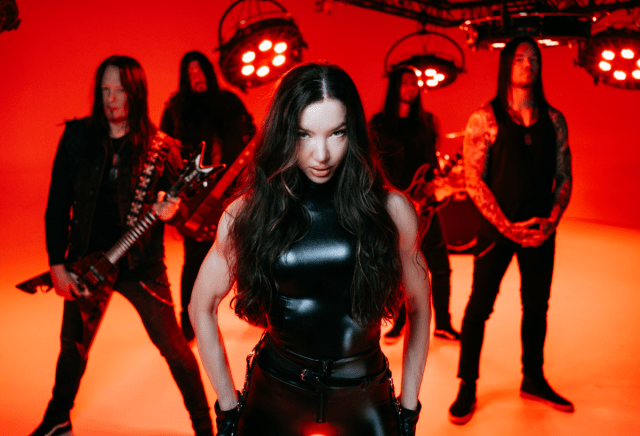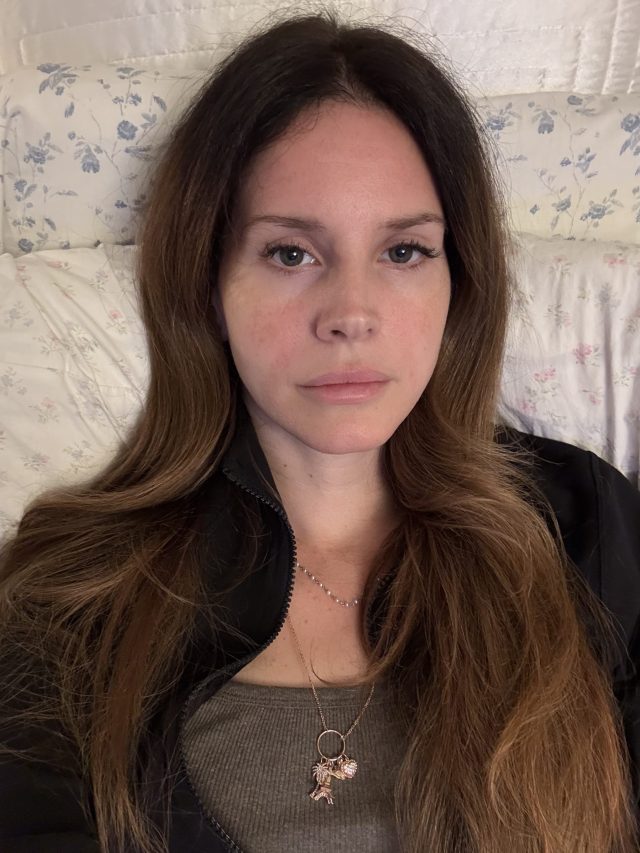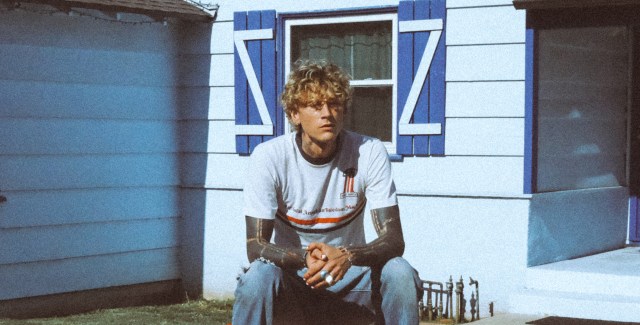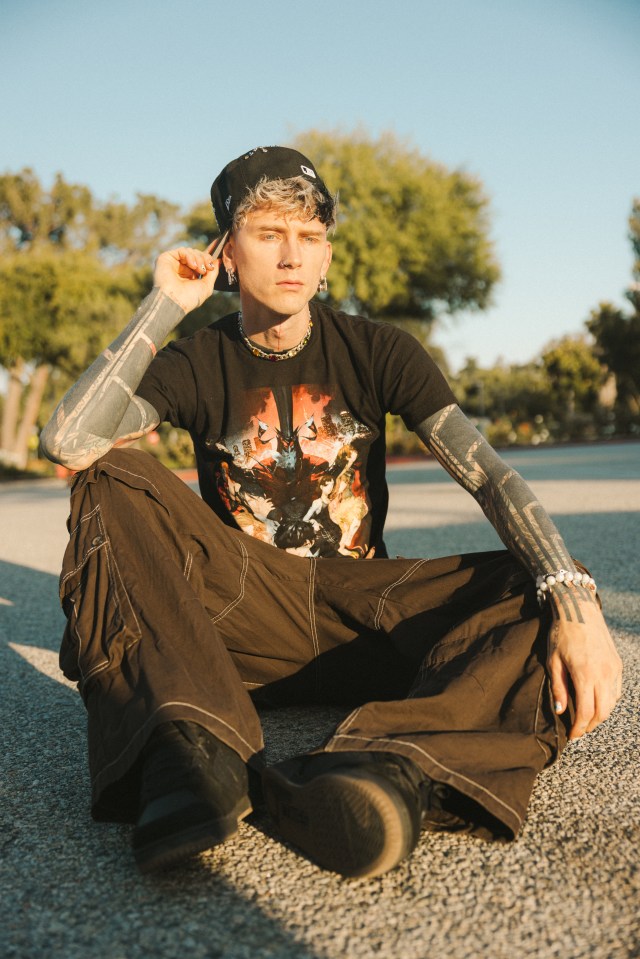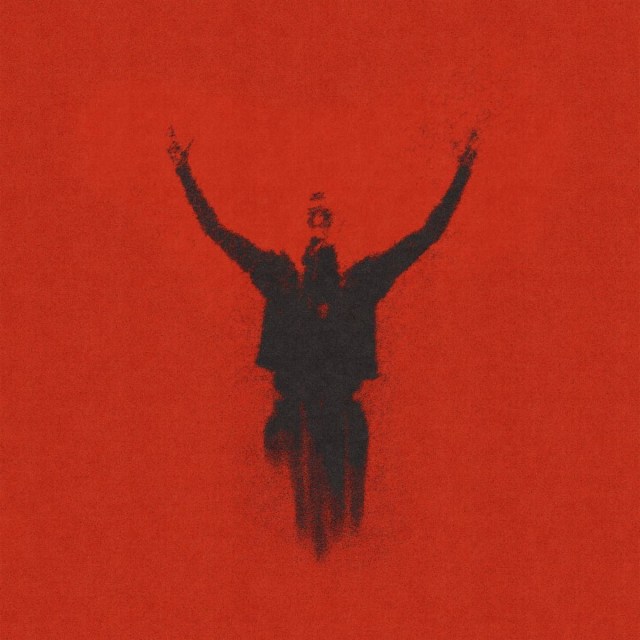
Erin LeCount is staking her claim as one of alt-pop’s most thrilling new auteurs. The 23-year-old singer, songwriter, and producer has released her latest single, “DON’T YOU SEE ME TRYING?,” the newest preview of her forthcoming EP PAREIDOLIA, due February 27 via Atlantic Records.
Entirely self-written and self-produced, the track finds LeCount operating in the charged space between art-pop and baroque-pop — a collision of heavy synth bass, frenzied live strings, and fractured vocal chops that feels both sonically soaring and emotionally spiraling. Lyrically, it’s a raw meditation on self-sabotage, relapse, and the strange euphoria of courting your own downfall.
Pareidolia EP Artwork
The song follows previous singles “I BELIEVE,” “MACHINE GHOST,” and “808 HYMN,” all of which will appear on PAREIDOLIA, an EP LeCount describes as a portrait of a “downward spiral” told through a distorted, unreliable narrator. The project takes its name from the psychological phenomenon of seeing meaning in random patterns — a fitting framework for music that feels intentionally warped, intense, and hyper-introspective.
LeCount is currently wrapping her first U.S. tour with two nights at Los Angeles’ The Roxy this week, after the initial run sold out in under a week and prompted additional dates in New York and L.A. Meanwhile, her earlier single “I BELIEVE” has already surpassed 1.5 million global streams, and she’s been named BBC Radio 1’s Future Artist of the Month for February.
With PAREIDOLIA on the horizon and a growing international profile, LeCount is shaping up to be one of the most compelling — and meticulously crafted — new voices in alternative pop.
Wet Leg are keeping the momentum high. The British duo have shared a frenetic new remix of their single “mangetout,” reworked by Charli xcx collaborator The Dare — a fitting pairing that leans into the band’s wiry, danceable edge while amplifying their club-ready bite.
The remix arrives after Wet Leg and The Dare bonded while DJing together at an Austin afterparty last October, and his version injects the track with his signature blend of electroclash, dance-punk, and sleazy indie swagger. It’s another victory lap for “mangetout,” which has already racked up Radio 1 and 6 Music A-list spins and recently featured in HBO’s buzzy Canadian sports-romance series Heated Rivalry.
The drop comes as Wet Leg ride the success of their sophomore album moisturizer, which has drawn rave reviews — Rolling Stone awarded it four stars, praising the band’s ferocious return, while Pitchfork called it “a near-reinvention.”
Awards season is also calling: Wet Leg are nominated for Group of the Year and Alternative/Rock Act at the 2026 BRITs, marking their first return since their memorable 2023 performance of “Chaise Longue” with Boss Morris.
On the road, the band are in the midst of dates across Australia and Japan before heading back to the U.S. for Coachella in April. A stacked summer festival slate follows — including Governors Ball, Bonnaroo, Primavera Sound, Isle of Wight, and Rock en Seine — alongside their biggest-ever headline UK shows at London’s Alexandra Palace Park. They’ll also open for Alanis Morissette in Glasgow later this year.
In other words: Wet Leg aren’t just back — they’re everywhere.
Fri 13th February – Laneway Festival, Melbourne Sat 14th February – Laneway Festival, Adelaide Sun 15th February – Laneway Festival, Perth Wed 18th February – Toyosu Pit, Tokyo Thurs 19th February – Gorilla Hall, Osaka Fri 20th February – Diamond Hall, Nagoya Sun 12th April – Coachella @ Indio, California Sun 19th April – Coachella @ Indio, California Wed 3rd June – Primavera Sound @ Barcelona Sat 6th June – The Governors Ball, NYC Sun 7th June – All Things Go festival, Toronto Fri 12th June – Bonnaroo, Manchester, Tennessee Fri 19th June – Isle of Wight Festival, Isle of Wight Sun 21st June – PinkPop, Landgraaf, NL Fri 26th June – OpenAir St. Gallen Festival, Switzerland Sun 28th June – La Prima Estate, Italy Tues 30th June – Bellahouston Park, Glasgow w/ Alanis Morrisette Wed 1st July – Trinity College, Dublin Wed 8th July – Castlefield Bowl, Manchester Thurs 9th July – Millenium Square, Leeds Fri 10th July – Alexandra Palace Park, London Sat 25th July – Latitude Suffolk Sun 26th July – Tramlines, Sheffield Sun 2nd August – Hinterland Festival, Saint Charles, Iowa Wed 12th August – Paredes de Coura Festival, Portugal Fri 28th August – Rock En Seine, Paris
South Arcade has spent the last year moving at the speed of a loading screen that never quite finishes buffering. One city dissolves into the next. Time zones blur. Vans replace bedrooms. For Cody Jones and Harmony Cavelle, that disorientation is not a side effect of momentum, but the point itself. The band’s ascent has been defined by motion — by an almost gleeful refusal to stay still long enough to overthink what is happening. When Jones describes the year as feeling “teleported to about a million places,” it lands less like a complaint than a mission statement.
There is a particular kind of vertigo that comes with a first headline tour, especially one that stretches across the United States. South Arcade has felt it keenly. Cavelle jokes that they have spent more time in a van than in a house this year, but the joke lands because it is true. For a band whose sound thrives on velocity, friction, and sudden left turns, the road has become both workplace and laboratory. “I wouldn’t change a thing,” Jones says, echoing Cavelle almost word for word. That unanimity feels earned. Touring has not diluted their identity. It has sharpened it.
Life inside the tour bus is not the communal jukebox fantasy fans might imagine. More often than not, the band disappears into headphones, retreating into private sonic worlds between shows. When music does bleed into the shared space, it is usually courtesy of their tour manager, who delights in throwing on whatever strange artifact he has recently unearthed. Horror soundtracks, unsettling atmospheres, things that make everyone glance around the van, wondering what exactly they are listening to. Jones laughs about it, half amused and half horrified, but the randomness feels instructive. South Arcade is a band that absorbs chaos and finds melody inside it.
Jones has also been digging backward, rediscovering a European nu-metal band called Pleymo, a relic from the Nineties with at least one song that once seemed unavoidable. Revisiting that album has become a minor obsession. Cavelle, meanwhile, gravitates toward artists like Ericdoa and Thxsomch — voices that live in the space where pop, post hardcore, and internet culture bleed together. On a tour that also includes Jutes and Wes Ghost on festival bills, those listening habits feel less like guilty pleasures and more like reconnaissance. South Arcade is paying attention to the ecosystem they are moving through.
Photo: Chiara Ceccaioni
That awareness becomes most obvious onstage. This run marks their first headline tour in the US, and the response has been immediate and physical. Jones singles out Los Angeles, specifically the first night, which doubled as a Halloween show complete with costumes and an audience ready to abandon self-consciousness at the door. Cavelle notices a broader pattern. American crowds tend to commit from the first note, while U.K. audiences often hold back, arms crossed, waiting to be convinced. Neither approach is judged harshly, but the contrast has been illuminating. In the US, South Arcade is greeted with a kind of open-armed enthusiasm that mirrors their own performance philosophy. Play hard. Decide later.
They have also had the benefit of learning in public, opening for bands like Bilmuri and Magnolia Park. Jones speaks with particular reverence about Bilmuri’s drummer, describing him as a machine, a force of precision and stamina. Watching from the wings, hanging out after shows, absorbing those details has been formative. “You learn from the best,” Jones says, framing it less as imitation than selective theft. Take what works. Leave the rest. Cavelle boils it down further, calling it simply “learning from the peers,” but the implication is serious. South Arcade sees themselves as part of a lineage, not an anomaly.
That sense of participation extends to their online presence, which has exploded over the past year. Both Jones and Cavelle laugh when the topic comes up, equal parts proud and sheepish. Social media, they admit, was once a source of anxiety and performative desperation. Early on, they chased trends with a kind of frantic sincerity, trying anything that might trigger the algorithm. Jones winces, remembering street covers posted before they had any original music out. Cavelle recalls scrolling back through their archived posts backstage in Seattle and cringing at how much they cared. What changed was not strategy so much as self-understanding. The content that resonates now is an extension of what they are already doing. Live footage. Band practice chaos. Four cameras are set up in a room while friends mess around and make noise. The humor is loose — the stakes low. Ironically, that lack of concern has made the output feel more authentic and effective.
Photo: Chiara Ceccaioni
“The less you care, and you still be yourself,” Cavelle explains, “you do not hate doing it as much.” It is a rare admission in an industry that often treats authenticity as a branding exercise.
That growing comfort has paralleled a clearer musical identity. Jones talks about how the band had not fully articulated their influences early on, even to each other. Those conversations came later, after enough shared experiences to recognize common ground. What they listen to. What excites them. What they want to write about. The result is not a narrowing of scope but a confidence in their eclecticism. Jones punctuates the thought with a joke about his spiky hair, but the aesthetic shift feels emblematic. South Arcade looks and sounds like a band that has decided who they are allowed to be.
That clarity is audible on their new EP, PLAY!, and particularly on the single “Drive Myself Home.” Much of the EP was written on the road, in snatches of borrowed studio time and long van rides punctuated by laptops passed between seats. Cavelle describes ducking into random studios in the middle of nowhere, places that might have little more than a drum kit and a sense of urgency. Against that backdrop, “Drive Myself Home” came together quickly, almost mercifully. Jones laughs about the relief of a song that simply works, especially when writing on tour can feel like trying to build something solid on shifting ground.
The EP itself was not conceived as a traditional concept record. Instead, Cavelle frames it as a collection of tools for the stage, songs designed to fill gaps in their live set and amplify the energy they want to project. The title, PLAY!, is both directive and philosophy. It references video games, movies, and a distinctly early 2000s maximalism that allows for dance breaks, heavy drops, drop-tuned riffs, and auto-tuned pop flourishes in the same breath. The unifying thread is not genre but intent. These are songs meant to be experienced in motion.
Photo: Press Provided
Asked to distill the EP into a single track, Jones gravitates toward “Fear of Heights,” citing its heaviness, its breakdown, and its almost video game-like momentum. He likens it to the sensation of blasting through L.A. traffic with Crazy Taxi energy, a comparison that feels perfectly calibrated to South Arcade’s blend of nostalgia and immediacy. He also mentions “Supermodels” for its all-encompassing quality, while Cavelle insists that every track, including “Drive Myself Home,” carries that same hybrid DNA. The refusal to choose feels honest. This is not a band interested in hierarchy.
The road ahead offers little in the way of rest. The U.K. shows loom, followed quickly by Australia and Europe. New songs will be tested in real time, refined under lights and sweat. Cavelle expresses particular excitement about “Blood Run Warm,” a track that reveals a softer, sadder side of the band. Jones jokes that his current look may not suit it live, but the humor does not undercut the significance. Vulnerability, it seems, is the next frontier.
South Arcade is moving fast, but they are not running blindly. There is intention beneath the chaos, play beneath the polish. In an era where bands are often expected to arrive fully formed, South Arcade are documenting their becoming in public, one show, one post, one song at a time. If the year has felt like a million teleportations, it is because they are building something in transit, refusing to wait for arrival before they start playing.
Jack’s Mannequin, one of three projects that make up the ultimate emo & alt rock trifecta anchored by Andrew McMahon, recently took a leap of faith, putting two albums out in one year; the Everything in Transit anniversary re-issue and the Everything in Transit: Strings Attached EP. McMahon is no stranger to juggling many things at once, and tells all about what life is like with three ultra-successful bands, a charitable organization, an entire cruise dedicated to his bands, and health-related ups and downs.
Photo: Lupe Bustos
Hit Parader: Jack’s Mannequin is celebrating 20 years with the MFEO tour. I was told that out of 30 of those dates, most of them sold out insanely fast. What’s it like to still see that kind of response after two decades? Andrew McMahon: It’s been very nice. You know, I think anytime you put up a tour, I’m always crossing my fingers that the dates go quick. And so, I think this was like, a little bit untested. We put up Something Corporate last year. But really, it had been, you know, with Something Corporate like 20 years since we got the whole lineup back together. A lot of these guys that play with me in Jack’s also play with me in the Wilderness, and we’ve done some Jack’s stuff. So I was curious how the response would be, but it’s been very nice to see people excited to come out to these shows.
HP: In August, you surprised us with the strings attached version of Everything In Transit, which reimagines everything with new acoustic and orchestral arrangements with Suzy Shinn and Allie Stamler. It looks like that was at Treehouse studios in LA. How did you end up with those creative partners, and what led you to reimagine the album in that style specifically? AM: Originally the idea was, hey, you know, this anniversary is coming up. Obviously this record was super important for me and for a lot of fans as well, and so originally, my thought was well, maybe I could just go in and cut piano, vocal versions of the songs and have like, the acoustic version of the album. Suzy was a natural phone call for me. She’s been a collaborator of mine over the years. We’ve been friends for a long time, and have a lot of mutual friends that we work with, and I love her records, so I reached out to her to see if she was free and when we got in there, and sort of started that process of like, okay, we picked a song, and I played the piano and sang, and even if I’m like, re-recording something, I want it to stand on its own two feet, and something about that didn’t quite feel right.
So we started just experimenting by doing what you call prepared pianos, where we would put sticky tack across the strings of the piano and record the left hand and the right hand separately. And it started to kind of evolve into these sort of weirder, fun experiments around the songs. Probably the first or second day, we invited Allie over just to see what would happen if we threw some strings on it, and that kind of was the key to unlocking everything. It became this sort of really fun, stream of consciousness process where we’d sit in a room together with Allie on the violin, and we would stack string parts and just kind of throw the kitchen sink at it, and then in the editing process, kind of figure out what was working.
But, yeah, it was like a two week kind of hang, where we just pulled songs up and played around with them and landed on these five mostly because we just ran out of time. The goal was to do all ten, but I was like, I’d rather do five and have them be really special and feel like a sort of B side to the original A side of each song, and, yeah, that’s how it all came together.
HP: Was there any experiments that you tried that were super off the wall, and you were just like, “This is absolutely not gonna work?” AM: There were a couple times where I was playing drums, and you know, it started like, cool, this needs rhythm. And we would go down that road for an hour or two, and then the next day come back and listen, and just be like, okay, let’s not do that. So there was a moment where we invited a drummer over to do a little bit of work on the mix tape, but those were most of the failed experiments. I mean, again, the beauty of the studio is there are always tons of failed experiments, but usually it’s kind of in playfulness, and you go, okay, that didn’t work, let’s move on.
HP: So we’re looking at 20 years cancer free for you. Congratulations! That’s so awesome. I know that your timelines kind of lined up in an unexpected way back then, where your diagnosis and the wrapping kind of happened at the same time, and then your stem cell transplant happened on release day. These were all very unexpected things. So how does that kind of change how you looked at that particular album? AM: Well, I mean, almost immediately the assumption would be, you find out that you’re, you know, sick with cancer at 22 and that, it’s a slap in the face, for sure, but I think there were these sort of premonitions written into the lyrics of the record. I think a lot of it had to do with just I was moving so fast through the world at that point, it was like, working with Something Corporate, and then rushing home to get in the studio and work on this Jack’s Mannequin record. And then the record is picked up, and all of a sudden there’s all this energy, and it was this really frenetic time. And so there are lots of lyrics in the album that talk about hospitals and like the first line, I think on the whole album, is “She thinks I’m much too thin, she asked me if I’m sick.”
You know, there were so many of these little moments sort of written into the album that when I ended up actually being sick, you know, I felt like there was something in the DNA of the album, like the fact that the project was named after a pediatric cancer survivor. There were all these little signals you know, coming from the universe that, for me, I took as a sign that whatever path I was on was the one I was meant to be walking and then certainly, you know, when one, miraculously, my sister was named a match for my stem cells, and then the target on that date kept moving, and then, in the last minute, ended up landing right on the release date of the album. You know, I think, if nothing else, when you’re sick like that, you’re looking for hope, and you’re looking for any sign that you might be in the right place at the right time, even if it doesn’t feel good. And I was sort of in the moment, buoyed by that sense of purpose, and that there was some intention behind all of this. And, it was integral, and kind of getting me through the other side and feeling like I was where I needed to be, regardless of how uncomfortable that was.
Photo: Lupe Bustos
HP:That’s a really beautiful point of view. So that led to the Dear Jack Foundation. Which happened shortly after, in 2006? AM: Yeah, originally, I was raising money for other organizations, and we were finding there was so much adoption by my fans to this cause, and as somebody, I think, who, early in my career, didn’t really have, like a philanthropic sort of angle on what I was doing. There was no charity that I was really attached to, and this obviously became a mission for me. Fans were raising so much money for the organizations that we were partnering with that around 2006 we decided, okay, well, let’s start taking this money in and sending it to the organizations that we feel are really closely aligned with our mission, which for me was adolescent and young adult cancer, which is wildly underfunded and something that is really much more well understood now than it was 20 years ago.
But there were a lot of young people slipping through the cracks in the cancer world. And as we grew, you know, I was able to bring on staff, and now we have an incredible staff of six people who run programs that are native just to our organization and we’ve seen a lot of growth over the last few years post pandemic.
We really got on our feet and have been delivering a lot of really meaningful programs to young people who are both facing a cancer diagnosis and those who have survived one.
HP: I know it’s benefited and helped a lot of young people, but are there any participant stories that you’ve seen or heard that stand out to you? AM: Yeah, I mean, there’s so many, sadly, people that we’ve lost along the way, but who were engaged with our programs that as an organization, because we’re small, we’re able to get close with a lot of the people that we work with, and certain members of the community become really ingrained in the process.
There’s a young man named Chris who passed several years ago, who we had a really close bond with, who was a drummer and came up and played drums with the band on a couple of occasions. And we got to take him out to a festival show, and I spent a lot of time with him, and he was very dear to us there. There are a lot of instances of the couples who attend our breathe now retreat. We host a survivorship retreat for young couples that are, you know, realigning the balance of their relationships post cancer. It’s a tricky thing that my wife and I went through, and we really wanted to pay it forward by helping other survivor and caretaker partners that have gone through this. And just in the last year, when we did our cruise, we had one of those couples on stage speaking about their experience and how important it was to bringing their relationship back in focus post cancer.
Those stories are largely why we continue the work. Because we see people who are moved by what we do, and also who are able to see some hope and a way through to the other side of their experience through what we’re doing with them.
Photo: Lupe Bustos
HP: That’s such important work, because caregivers are not given a handbook. You just do the best you can. So it’s really nice to have that resource available to them. You just touched on the cruise a little bit there. We’ve been on a music cruise (with a baby). It’s such a different world, but everyone was super cool and accommodating. AM: Even with ours, we had a lot of families come out on our cruise, and which is like, such a loving environment. And I know that there are certain cruises that are, it’s just a crazy party, and there’s certainly a lot of partying on the boat. But I feel like our fans are such a nurturing community and I see, like, a little one cruising around or at the show, and I think it actually helps to round out the community experience, you know, to have little ones there and be able to sort of celebrate as a fully formed community.
HP: What’s that like for you to be on the cruises and be essentially like neighbors with these other bands and all these fans? AM: It’s amazing. Honestly, like look, I don’t recommend it for every band, because I know there are people that are a little more introverted and I totally understand. And I think for me, because so many of my fans around the country, but especially when we talk about these flyaway things and the cruises and stuff, I know so many of them, if not all by name, by face, and city and there’s a general sense on the ship that, because we’re all there together, and we have all of this time together, that the temperature comes down a little bit on the fandom, and it becomes a little more of a, “Oh, we’re all here at this, like, amazing gathering,” and fans are meeting fans, and the band and I are out shaking hands and hosting belly flop competitions or flip cup or whatever it is. And it’s intense, not so much from the community aspect, but just for me, just because I’m bouncing from event to event and doing lots of shows.
But, I liken it to kind of stepping onto another planet for four days and sort of surrendering to the experience and just really, like, there’s just a smile painted across my face for four days straight. And it’s a lot of love and super nourishing in a way that I hadn’t really anticipated, truthfully.
HP:Is there some possible etiquette you may have learned over time that you would like fans to know and respect when it comes to those boundaries being blurred? AM: You know, honestly, I have not really had anything happen to me. I’ve done two other Sixth Man cruises. I’ve done the Rock Boat twice, and then this will be the second year we do our cruise. I have to admit, there is very little, if anything, that I found jarring or strange, like, I’m a music fan first, right? I was the kid waiting outside the tour bus for my favorite bands to come out and say hi. So I think I have, like, a fan mentality within me that there’s very little that throws me off. I think the bigger thing is how to sort of bring those conversations into a human one to one interaction, and feel more like peers and people who, you know, I have respect for my fans, they take care of me. I have a job because they like my music! There’s a part of me that I’ve like shared with them that’s so deep and so personal. So I really just try and kind of focus on what makes us alike, rather than what makes us separate. And I think that is helpful. I’d say the biggest thing on the boat, and like my one note will be like, because I like to creep into the silent disco at the end of the night, and this year I feel like every DJ switched their channel to my music when I came in, and so, that’s the one thing that I would request a change on the boat, because when I go down to silent disco, I want to dance to whatever they’re programming, not to my songs. But that’s less of a fan thing and a little more of an internal conversation with our DJs.
HP:How did you pick who’s on the lineup, and who is on the lineup, this year? AM: Usually the way that we pick the lineup is we start with bands we love, right? We start with bands like, that we’re fans of, and a lot of times bands that we’ve toured with before. But a lot of times, what I try and do is pick bands that I know not only are amazing live bands, but also are great hangs. Frankly, this is a way for me to be in a space with bands that I’ve toured with, that I love, that I don’t get to see all the time, because we’re all on the road doing other things, and it’s a chance to dig in deeper with some of those old friends. So we usually start there.
And then, of course, we lean on Sixth Man, and my agency, and my managers, to hint me to acts that I might not know about, that they think would do well on the cruise, and bands that would be fun to introduce our fans to. So like this year, obviously all my bands will be playing, and we have the Maine and the Starting Line, which are you know, our dear friends. I’ve been a huge fan of Petey forever, so Petey is on this round with us. Michigander, who I love, Flor, Annika Bennett, Ivory Layne. Then there’s a band called Trousdale, who I’ve never toured with, but have been on some of the other Sixth Man cruises. And they were like, “You have to get this band. They’re gonna blow up, they’re an amazing female fronted act.” So I mean, it’s a lot of that. And then we’ll have sets from guys in my band. So Will and Brian from Something Corporate will do their own set. Zach will do his own set. Bobby, who plays in Jack’s, will do a set with his band. So, yeah, it’s a ton of music like, there’s not a band on this bill I wouldn’t be psyched to see. So the fact that we’re all in one place playing multiple sets, I think fans are gonna really dig it.
HP: It’s a really good lineup! So with the tour, I know $1 from each ticket is benefiting the foundation. Is there a charitable element to the cruise? AM: Yeah, we donate a portion of all the sales from the cruise to the foundation as well. Last year, I guess a little over a year ago now, the Eleven Eleven benefit was on the ship. So we were counting down and raising money in that space. I’m sure we’ll do some things on there as well to support the foundation separately. But we also have a portion of each cabin going to the foundation, too.
HP:That’s a really great way to raise money. So completely changing gears, the vinyls. I saw Brooklyn Vegan and Tower Records have a couple different colorways. On your personal merch site, we got that red, pink, kind of splatter, and on the B side, there’s an etched image. Can you tell us more? AM: The ones we’re selling on our site, it’s actually been kind of a crazy thing, because I’m traveling a bunch. I just signed 4,000 of these postcards that are getting enclosed in our variant, and then the same thing will happen with the liner notes on the reissue of the 20 year. So I’m going to have to find time in the next two weeks to sign 5,000 of those. So it’s an adventure, right? We were sort of like shocked by how well both performed. I was kind of nervous about putting out two vinyls at the same time. You know, I pinch myself, honestly, that people care about this music as much as they do. It’s, like, you know, it feels good all these years later, for sure.
HP: I love that you’re not turning to auto pen and stuff like that. It really shows how much you care about the fans, because so many people are doing that now. AM: My God, my fans would kill me if they thought that I was doing that, I would feel like, I mean, it’d be one thing to do it and not sell it as an autograph, but just, you know, say it’s a part of the artwork. But yeah, again, I think coming up in sort of like the punk scene, not being a punk, but sort of being surrounded by that ethic of being really earnest and really true to your fans and just not trying to pull some bullshit to make $1 I think is so deeply ingrained in my ethos, in the way that we try and run our business that, yeah, I just wouldn’t. I would say they were unsigned.
HP: Switching gears, can we talk about Red Rocks? I’m trying to wrap my head around how you juggle the requirements of being support, opener and headliner, when I’m seeing other people do a 20 minute set and they’re on the verge of passing out because they’re doing all this movement and the heat and there’s so much happening, and you just went, bam, bam, bam. Did all of it. How do you juggle all of that? AM: I mean, a lot of it is adrenaline, right? And just, you know, especially with the Red Rock show, I don’t think there’s a single event that I put more of myself and my time and the time of my team and bandmates. It was just such a high priority that we did it and did it well. It was probably more than a year in advance of that show that I said, I can do this, and we’re going to do it, and we’re going to find a way to do an evening with all three bands.
But, I mean, there’s an element of, like, training, right? Luckily, I’d been on the road with Jack’s, and we were doing two hours a night on the Jack’s tour. So it was really about, okay, how do we add an hour plus to that. I built in these little vignettes and little breaks in between the sets, and took a 15 minute intermission before, sort of the big super jam of all the bands on stage, kind of sharing each other’s catalogs.
But yeah, I’ve got a lot of stamina. I mean, it’s kind of like a thing that I’ve been known for over the years; I could get no sleep and run around for two hours on a stage and take a day’s worth of phone calls and be ready to party after it’s all done. My energy level since I was young has just been really high.
But one of the lessons, like, I’ll put it like this, I wouldn’t have been able to do another one of those the next day. It took a bit of recovery, but knowing it was this island unto itself, and that I was going to throw everything I had at it and just sing my heart out until the last note was played. It miraculously came together about as flawlessly across the board from a production and execution standpoint as it could, which was mind blowing to me, considering, we rehearsed it, but we only did one run through of the actual whole show. We had massive technical stuff happening during that run through that I was like, you know, just walking on a stage like this.
But I think when you just get into the swirl of it, and there’s just this massive energy, you know, it doesn’t go one way, from the stage; it comes from the stage to the fans and back. And it kind of becomes this sort of energetic thing that carries you through it.
HP: That was making history. Anything else you want to share with fans before we go?AM: I’m sad that this tour is over. It was a really beautiful moment to get to be back with these three guys and just live inside of this catalog and all these memories for a while.
GG Magree does not so much ease into her debut album Spit Love as she detonates it, blood-splattered, hypersexual, deeply vulnerable, and defiantly self-authored. When we speak, she’s running on adrenaline and insomnia, toggling between editing videos, finalizing a zero-budget short film funded by a strip club owner, and reckoning with the emotional fallout of a two-and-a-half-year creative purge. The record emerged only after Magree scrapped dozens of songs, confronted a breakup, came to terms with her sexuality, and followed an instinctive late pivot sparked by a single track, “Wet Dreams,” that unlocked what she calls the truest version of herself yet. Equal parts Nine Inch Nails abrasion and Charli XCX abandon, Spit Love is less a debut than a rebirth.
That sense of reclamation runs through every corner of Magree’s world, from her cannibal-stripper short film, shot in three days with no dialogue, to her blistering critiques of an industry that once tried to sand down her edges. After years of being told to dress smaller, sound safer, and stop being “too gory,” Magree burned it down, cleaned house, and chose herself. What emerges in this conversation is an artist obsessed with connection — between sound and image, body and audience, chaos and control — who believes real art needs a pulse, a heartbeat, and the courage to be misunderstood. Spit Love isn’t asking to be liked. It’s daring you to feel it.
Photo: Evan Would
Hit Parader:So first off, congratulations on the debut album. It’s incredible, it’s fun. GG Magree: I can’t sleep, man. I’m like fucking crazy. It’s so surreal, and I’m lying in bed, and I just keep thinking that like, I don’t know, I’m not doing enough, and I’m like, what more can I be fucking doing? I’m editing three videos right now, I have a short film that comes out with it, you know? You’re just never satisfied as an artist.
HP: And the short film’s phenomenal. Which is such a unique piece to accompany a record. Which came first in the process? GG: The short film is crazy, and I was literally making my post about it right now. So basically, this is how the short film came about. I had finished my album, and I needed another creative outlet, so I went to do these really crazy pop-up renegade shows. And I was doing one of the rooms by the bridge and I met this girl and she comes up to me, she’s like “Oh my god, I’m such a fan of your work, I make music videos” and stuff like that, she’s like “We should work together” and I was like “Fuck a music video, I’ve done that. Let’s make a fucking short film.
I have so many ideas, I’m such a visual person, whenever I write music, there’s always a visual that comes with it.” So she was like, “Okay, when can you do it?” and like, you know, I’m a broke fucking struggling artist, I was like, “I have a show in Philly that I could then jump on the train and come down to New York in three weeks, so we could shoot it then?” So I wrote a short film, and we shot the short film with no budget within three weeks.
HP: That’s so wild to hear because it absolutely does not have the no-budget feel whatsoever.
GG: We literally got given a thousand dollars from a strip club owner.
HP:[Laughs] What?
GG: Yeah, that’s the most fitting thing that could have happened. And we paid for an Airbnb, which is the scene where I eat the heart, and I kill the victim. So we used the only budget that we had for that. And so basically I just wrote this short film, and I met this other girl on the interim, her name is Buttons, she’s also been the director with me because I was definitely biting off way more than I can fucking chew with this, I was like “I can do a short film that’s easy.”
HP: [Laughs] I feel you.
GG: So, she coached me, I’m very like… you’ll get to know me, and I’m very fast paced and ADHD, and it’s fucking fine. I have really good ideas, and I just sometimes need someone to help me execute the ideas. So then I met this girl called Buttons, and she came on as co-director and co-producer, and basically she came in and saved the day. And yeah, we did this short film, we wrote it in three weeks, we shot it in three days, and then we started editing it.
And basically, I always wanted to do a short film with zero dialogue, because for me, that was the most interesting. After all, you can say so much with dialogue, but when there’s zero dialogue, you can’t say a lot.
HP: True.
GG: You have to be very emotive. What I realized when I was doing this was that I had already submitted my album to Rise. I was like, hold on a second, I just made a fucking short film from my album. I now need to write songs that explore these emotions that I’m going through. Because for my album I had written 52 songs. I was going through a lot at that point in my life. You know, I was going through a breakup, definitely was coming into a fucking midlife crisis, like coming to myself and my identity, and in terms of my sexuality. I then discovered I was bisexual, and just so much was happening. So I told Rise, I was like, “Can you give me a little bit more time?” and I wrote this one song called “Wet Dreams”, which is out.
HP: It’s amazing. One of my favorites.
GG: When I wrote that song, it unleashed this, like, what I think is the best version of my artistry. The last six songs that I wrote after I wrote “Wet Dreams” ended up being the six songs that are on my album, and the last song I wrote is now the lead single on the album.
So I’m one of those people who’s always like, “Let the universe guide you,” you know? I’m that person. And I did, and for that, I’m so grateful, because I’m like, “Oh fuck yeah,” I actually did it and it fucking worked.
My catalog of music now is just so stacked. [laughs] I feel like I really discovered who the fuck I was in this album, and it took that entire process of two and a half years of making all this shit to figure it out. Okay, this is what I stand for, this is who I am, and this is how I’m going to maneuver myself as an artist.
Photo: Evan Would
HP: One more thing on the short film, the cannibal stripper. Is her inability to understand traditional love a metaphor for anything deeper?
GG: For sure, you know, I lost my grandma in a super tragic way, and I have been in toxic relationships after toxic relationship, and abusive relationships as well. And it wasn’t until I had this day sitting in the fucking shower, something, maybe I was driving, I don’t really remember, I just had this “If you don’t get out of this cycle, it’s literally going to fucking happen to you.” I think that for me, not understanding what love was, or how to love properly, or you know, like ever again.
I was going through so much when I was writing this entire album process. I was coming to terms with all this shit that had happened to me in my life that I just suppressed the fuck out of, and so it’s definitely like, I think that when I love, I love so fucking intensely. You know, I come from a really healthy family. My family is just so loving, and when you’re in these relationships with people that use love as manipulation and torture, it becomes really fucking confusing. Because you’re like, “Wait. The way that I am with my friends is so loving, genuine, and pure.” Then when you’re in these toxic relationships, you’re like “I don’t understand, is it me? Is it them?” and then I feel like the cannibalism and love mixture of it all, it’s like when you don’t understand love you’re just kind of fucking leaking it inside you and you mostly just want to get inside it… I don’t know, I’m a gory bitch.
HP:[Laughs]
GG: I just think that the metaphor of cannibalism and love in itself is so interesting to me.
HP: No. It totally is. Okay, actually just thought of something else on the short film. Hypothetically, if it were optioned for a feature film, are there any casting ideas you have in mind?
GG: I mean, Evan Peters is my number one.
HP: There you go.
GG: He’s always been my number one. He’s been my number one since I was… I think 20. Like, I love him. If Evan Peters ever reads this, like baby daddy, come on. Yeah. I would love to have him be the love interest that I get to eat. Just, actually fully eat him, you know?
HP: [Laughs] Yeah. Okay. Get in there.
GG: [Laughs] I love it. Get in there.
HP: Just get in there. So, back on the album. Is there anything outside of music itself that influenced your creative direction? I know the short film gave some direction when that was realized, but were you digging anything at the time that seeped into the album’s creative too?
GG: I definitely took a lot of references from Euphoria. I love really over sexualized imagery, so I really loved it, and I know a lot of people didn’t, but I loved The Idol. I really loved Anora, Spring Breakers, Kids, you know, I feel like there’s that whole world that I’m just super obsessed with.
That’s all in the short film, and I feel like for the album, I have to say that it’s a mixture between Nine Inch Nails and Charli XCX.
HP: Spot on.
GG: From really playful to dark and gritty.
Photo: Evan Would
HP: You mentioned early on in your career that you unfortunately ended up being molded into something that you weren’t, which is unfortunately all too common for talented women. What was the defining moment in which you just said “Fuck this” and emerged from all that?
GG: You know, through my entire career, I was told to dress this type of way, not be too crazy, not be too big, not dress scandalously, wear big boiler suits with a big t-shirt so that no one can see what you actually look like. I feel like it even came down to the music that I was making. It was like “Don’t be too gory.” And so a lot of my earlier music is like so light and fluffy.
I always have the craziest imposter syndrome. Just like “This isn’t me,” and I feel like when COVID happened, I cleaned out my team, because I was just so fucking depressed. I just didn’t know who the fuck I was, and I’m standing up on a stage telling people to love me and to listen… and I’m just like “I’m not real.”
Then I just did a lot of self fucking healing, and then when I started writing this new body of work, this new album, I went on such a crazy journey. But it feels crazy. I was talking to my best friend, my housemate, and I was like, “I feel the most me I think I’ve ever felt in my entire life.” And that feeling, I didn’t think I would ever get here. I didn’t think I would be as proud as I am to carry such a forefront for women in the industry because I am super hypersexual. And I don’t do it to get attention or anything like that, I do it because it’s just me.
HP: That’s you, yeah.
GG: It’s really important to break the stigma of what society thinks you should be and just be your fucking self. You know, you’re gonna have haters, you’re gonna have people that say, “Oh, people only like her because she’s hot,” or “People only like her because she prances around in a fucking bikini.” Cool, if that’s what they like me for, go off.
HP: Totally.
GG: I don’t care. At the end of the day, I’m not trying to be chosen or picked. I’m just doing what I love.
HP: Going to side track here, but you’ve done Coachella, Ultra, Lollapalooza, so you’re familiar with the tradition of the fan totems. Do you have a favorite you recall seeing or one that resonated with you more than others? And then if we were making a totem inspired by Spit Love… what should it look like?
GG: I guess my fans started this thing where I would always just spit alcohol out on stage, and then all of a sudden it became like this whole “GG spit in my mouth” situation. And my fans every show I have, they’re like screaming at me, “Spit in my mouth,” and obviously like I can’t because of like, you know, like you just can’t do that anymore. It’s just like the world is too sensitive. Just in case anything ever happened, I would just, you know, you just can’t do it. But I love when girls write GG spit in my mouth across their chest, and they pull up their shirt, and it’s on their tits.
HP: [Laughs]
GG: That’s the vibe.
HP: Totally the vibe.
GG: I think for Spit Love it would pretty much be the same, because I don’t know, I just have a fascination with spit.
HP: Don’t we all?
GG: Don’t we all.
HP: Right.
GG: I just openly admit it. It’s the difference.
Photo: Evan Would
HP: I remember that you had recently said that we as a culture are on the verge of weaning out TikTok influencer music, which I totally agree with, and that we’re returning to real music… What do you think is driving this change?
GG: I think that we’re just craving human connection. I think that music is the universal language. Everyone understands it, and I think that clickbait shit is just on its way out. It’s no way to connect — you can’t connect to people, or can’t connect to a song within three seconds. That’s just like not how it works, you know? I feel like, especially with AI music and shit that’s all coming out, art needs a pulse, it needs a heartbeat, and I just feel like the amount of shit that’s thrown at the arts every fucking day, it is really hard to cut through the bullshit. But when the bullshit cuts through, it really fucking cuts through. You look at artists like Yungblud, man, that guy’s fucking crushing it. And he deserves it, because he’s a true fucking artist.
HP: For sure.
GG: You know, he’s just… It’s so crazy, there’s a little rock scene in L.A., and I look at all the dudes and some of the people that are in that scene, and I’m just like… “You guys are not fucking rock stars.” Like… “You guys are just fucking pussies.”
HP: That was the thing when I was choosing the first cover and the exact reason why we went with Yungblud over a ton of others. It was something we took seriously.
GG: Oh my god, I totally forgot that you went with Yungblud! Oh hell yeah, go for it.
HP: So we have a club here in Nashville that’s also called Hit Parader, and he played there as the final stop on his tour, true rock star vibes. He jumped on the bar, broke things in our club, went over schedule, and hung out afterward.
GG: I went to this show back in L.A., I’m not going to say who it is because I don’t believe in doing that, but it’s someone that, you know, they’re “a Rockstar” out in L.A., and it’s like they’re all just sitting there in their fucking leather jackets just not doing anything. What happened to the spontaneity, the fun, and the excitement? Then you see the girls, and they’re up on the fucking bar, they’re dancing and pouring water on themselves, they’re creating havoc. Like, I even watched back in the day, you know that one video of fucking Bush, and he’s like singing out in the rain with his fucking shirt off.
HP: Absolutely.
GG: We don’t have that anymore.
HP: We do not.
GG: No, it’s dying. But then artists like Yungblud come along, and his trajectory and how big he’s gotten. It’s so fucking deserving because he’s a true fucking rockstar.
HP: Yeah. He really is. He’s a good dude, too. You see him, the way he interacts with his fans, and he cares.
GG: That’s another thing, you know, I was always told “Don’t talk to fans,” by my team when I was coming up, and I would be so confused. They would usher me out, and I just felt so isolated. What is the point of being an artist if I can’t connect? I’m making music that’s not me, I’m standing up there in a fucking boiler suit, and I’m told not to talk to anyone. Now I like to hang out after my shows for at least 30 minutes, sometimes an hour, and just fucking chat. Because at the end of the day, the fans are the reason I even get to do this. Like, the only fucking reason.
HP: You got the right head on your shoulders.
GG: I’m trying. It took me a while to get here, but I’m here. And that’s what I’m saying, I feel like the most me. The most grounded I’ve ever been in my life, and it just happens to be at the time I’m releasing an album, so I’m just like UGH.
HP: Yeah. I know we’re on a tangent here, but that’s another thing about Yungblud that I thought was impressive. He talks about how he’s still having to evolve, and he had these people in his ear on a previous record telling him to do this and that, and that it didn’t turn out how he wanted it to. So now he’s saying how this newest record is one that he’s proud of because he was able to just do himself.
GG: And that’s the thing, you have so many people in your ear telling you what to do, and because the dream is so big and you want it so bad, you have trust in people. You have trust in the team that they’re guiding you, and most of the time, they don’t know what the fuck they’re doing either. You know what I mean?
I’m currently managerless because I had an indifference with my manager, and it was down to the point where it was either going to be the album that I wanted or the album that someone else wanted. The only way to break the cycle is to choose the album that I want. Navigating doing an album by yourself, I mean, my label is the fucking best man.
HP: Yeah, Rise is great.
GG: The girls on my team and the guys on my team, I talk to them every day, and I would be fucked if I didn’t have these people. And they’re out of their office helping me shoot a visualizer down at the beach. Like, tell me another label that would help you do that. It’s so crazy because when I met the girls, I had such an instant connection. I felt so unsafe in my career for so long, and when I met them, I felt, oh my god, it felt great.
HP: That’s so important, especially when you’re doing such a vulnerable project.
GG: Yeah, and that’s what they said. They said, “Give us you,” and that’s what I did.
Photo: Jordan Kirk
HP: I’m curious, if I logged into your Pinterest account right now, what would be the wildest thing I would see?
GG: Hold up. Hold up.
HP: Oh god.
GG: I have it open right now. It’s like a really bad addiction, actually, because you know how everyone is like “Oh yeah, I’m doom scrolling on TikTok or Instagram,” I’m just like “No, I’m just out here making fucking Pinterest boards.”
HP: [Laughs]
GG: Oh, okay, it’s not that bad, honestly. It’s a girl, because I want to put a bunch of piercings all over my face for a photo shoot. It’s got a bunch of piercings. It’s a poster that says “Filthy” on it. It’s a girl with a scorpion on her fucking mouth. [laughs]
HP: [Laughs] Okay, all right.
GG: It’s a tank top that says “Wet” and “Sex” on it. And it’s some nail designs.
HP: It’s a good mix of stuff.
GG: It’s a good mix of, I feel like I always, I don’t know, I just go on Pinterest and I just get ideas of photos and things like that. I don’t know, I feel like I’m always trying to write out of the box. It’s so easy to write about generic shit. And I even do this when I write songs for others.
It’s like when you go through the session, and people are like, “Can you write a song about a boy and a girl that are in love and he cut?” And it’s like, I can, but let’s write it from a different perspective. Or you know what I mean? So I’m always trying to get as creative as I can. Even when I was writing my album, I had a song about joining the cult. Like a cult of finding yourself in a way that’s not… that sounds so culty. [laughs]
HP: [Laughs] Right.
GG: With us, you’ll find yourself.
HP: [Laughs]
GG: But I love this journey. It’s more like I feel like the journey that I kind of went on, and it’s more like a self-help cult.
But yeah, I don’t know where I was going with that. I was like looking at photos, and it was like a bunch of witches dancing around, and I was like, “Oh, that’s a kind of a vibe, like freedom expression, blah, blah, blah.” and then, you know?
HP: It’s a vibe for sure, yeah.
GG: It’s like a cult.
HP: Back on the album itself, Spit Love, I know you mentioned writing a ton of songs that didn’t make the record. Out of the ones that did make the record, is there one in particular that you gravitate towards right now? Whether that’s liking it the most, feeling like it represents the album the best, or whatever.
GG: I think “Siren” is my favorite. It is, for me, musically, the direction that I want to be known for. It’s definitely the most dancey. It’s kind of what I like to say, it’s like punk trance. It’s very sort of Florence. It’s Crystal Castle-y.
HP: Mmhm, I hear that.
GG: It’s really like the melodies in it are super catchy, and I feel like it’s really unique, sexy, and mysterious.
Photo: Jordan Kirk
HP: With the show dates coming up, any locations that you’re most excited about playing again? Any places that you love to visit?
GG: Honestly, I’m really excited for the next little run because I have Coming Out in San Francisco, and it’s going to sell out, which is great. And we’re turning a warehouse into a strip club.
HP: I did not see that, that’s incredible.
GG: Then my show in L.A., we’re actually installing these like hose-like cylinders on the top of the ceiling, and we’re creating a real blood rave. So the blood is going to just [downwards motion] on everyone.
HP: Sold.
GG: It’s not real blood, though.
HP: Bummer.
GG: [Laughs] And then I’m playing the House of Yes for the first time in New York, and that’s been on my vision board because you know, I’m a club kid at heart so I just like love the LGBTQ+ community and I love, you know, when people get super dressed up and that’s the most iconic venue.
Also, I’m announcing my Denver show, which will sell out too, because that is my biggest market in the US.
HP: So much going on, that’s awesome.
GG: Lots of cool shit. And I’m pretty sure I just landed a booking at one of the craziest sex clubs in Germany.
HP: Oh shit.
GG: That’s right.
HP: So, how do the fans receive the music over there? Do fans react differently in certain countries?
GG: I’ve never played in Germany, but it’s my second-highest streaming country.
HP: Well, that’s cool.
GG: Yeah, it’s really cool. The show will be at KitKat Club. I’m just trying to finalize all the things right now. But I’m really excited because I have a lot of fans out there, and I’ve just never played there. And to do it at a space like KitKat Club is just so iconic because it’s just the coolest, like Berghain. But Berghain isn’t really a sex club, like, you can fuck in there if you want, but KitKat is a sex club. So I’m really excited, and also I don’t have to wear clothes, like, fuck yeah! You know? [laughs]
HP: [Laughs] No, that’s awesome.
GG: I can actually DJ naked.
HP: I love it.
Photo: Jordan Kirk
HP: So, if we’re concocting a Spit Love cocktail for that club, what would it contain?
GG: It would be some type of bloody margarita because margaritas are my favorite thing in the world. If I could drink one drink for the rest of my life, it would just be a margarita and watermelon, and then I would love to put human blood in there because like, why not?
HP: Yeah, not fake blood, human blood this time. Let’s go for it.
GG: Let’s get fucking freaky with it. But I would be like, “Oh no, it’s just fake blood.”
HP: Yeah, just tell them it’s fake blood.
GG: Literally, but maybe it’s like a watermelon margarita with a little dash of blood, and we’re just like, “It’s just fake, don’t worry.”
HP: Now we’re talking. A watermelon margarita sounds so good right now.
Alemeda is living her life in a way that anyone who grew up on 2000s Disney would be proud of. By day, she is playing in front of thousands, opening for Halsey, and riding jet skis with her friend/labelmate Doechii. By night, she is curled up with 2 cats at home and a family who is none the wiser to her streams or follower count. One could say she is living the best of both worlds. First popping up on playlists and feeds with the 2021 bedroom pop banger, “Gonna Bleach My Eyebrows.” She lets the labels applied to her roll off before you can hit post on a blog or article. The 2024 EP “FK IT” was a rebellious jab at all the things she needed to get off her chest in her early 20s.
Coming back to the studio was a time for reflection. As one gets older, the anger subsides, and one can contextualize more. Her latest Ep “But What The Hell Do I Know,” is a picture-perfect example of this. As time goes on, so should art, and her growth has given color to a project that was already as vibrant as ever. Reflecting on the early childhood, when pop music was a foreign concept to the household. To this day, with the loss of some relationships and the gain from others. She puts all her lived experience into a succinct and well-thought-out EP. She took the time recently post-tour to chat with us, discussing everything from a cat sanctuary as a retirement plan, missed out nostalgia, and an impactful interview in Ethiopia.
Hit Parader: How is your year going so far? Alemeda: It’s been pretty busy and pretty good. Just been touring and doing festivals.
HP: I know you are a proud cat mom. What’s one thing every cat owner should be aware of? A: I have 20 for you. I think they need to be aware of how much they need to be taking care of their cat’s teeth. I get my cat’s teeth cleaned every six months. Every six to eight months. And I think people don’t know that kidney disease and then gingivitis are the two leading causes of cat death and early cat death. You take care of those things, and your cat can live for a good 20-something years.
HP: You have mentioned building a cat sanctuary. Is that in the works? A: I literally started planning it now. I told myself, “I’ll start planning when I’m, like, 25 or 26.” Right now, obviously, music is my main thing, and that’s my ultimate goal. So I feel like that’s my retirement plan. I guess I’ll just do that in maybe my 30s or something.
HP: In a previous interview, you talked about how the songs of FK It were either hateful or spiteful songs. You said that for a new project, you wanted to branch out. Do you feel like you branched out on this project, and was there a struggle trying to change the framing of the subject matter? A: I think it’s because I write my music based on what I go through and from my perspective on things. Obviously, your perspective when you’re 20, which is when I wrote the first project, and then your perspective when you’re 25 is like two different people. I think it just naturally came, so it wasn’t really hard at all. But I think when this project came, I was consciously going through it, like, “Okay, I’m not gonna just write an ‘I hate you, don’t call me’ type of song.” I want it to have more depth to it and more of a variety of real feelings that people feel. I don’t think I could have written this when I was 20, because I don’t think I was mature enough or in the right space to do it, but I do think I did what I wanted to do. What I could do on an EP, and it kind of opened up the portal for me to do all these things even more on an album. But definitely, I touched base on more of an understanding of certain feelings.
HP: Going from 20-25 and having that maturity, where do you think this maturity most affected your creative process? A: In how I wanted to be perceived and how I wanted my message to come across. Because I think the first project was definitely more of a crash-out. I was like, “I don’t care. If people think I’m a hateful person, people think this and that, but I think, for the small fan base that I do have, I did want them to feel like they were growing with me. Because I feel like my fans have always been my age. It’s not like I have, like, 14-year-old fans, you know, and I’m doing shit for them. I don’t know, it just kind of translated over. When I was writing, it was just one of those things where I was like, “Okay, I want it to come across like I’ve grown,” because I have, and I didn’t want to, like, keep myself stuck in this bubble of writing “I hate you” music.
HP: When you’re heading into the studio, are you focusing on an emotion, a genre, or an instrument? What’s the launching point for a song? A: I’ll think about an instrument, because usually, the majority of my songs start off with guitar loops. Then we just write off the guitar loop, do the melodies off the guitar loop, and then we’ll add the rest of the production. But I think I also will go to the studio with my diary, and sometimes I’ll write about the current feeling I’m feeling or the current situation I’m going through. But sometimes I’m like, “Oh, I don’t feel like shit today; I don’t feel like anything. So I’m just going to go through my diary.” A lot of my songs off the first project were written like that. I come in with, you know, a vibe, an instrument, and a sound I want to embody that day. And then, you know, whether it’s like a previous or current feeling.
HP: As a kid, you weren’t allowed to listen to a lot of music. What is one artist you wish you could have listened to back then? A: Probably the strokes. People have such nostalgia, and I don’t. The unfortunate thing about not being able to listen to music when you’re young and then rediscovering it is that it’s so cool, you get to rediscover everybody older and really appreciate it as an adult. It’s your own opinions about things, not like what your parents put you onto, but I love nostalgia, and I get FOMO when everybody’s feeling nostalgia about certain projects and artists. And I think for them, like, for sure, it’s one of them. Like, I’m like, “Damn. I wish this were something I listened to as a kid.” I can now feel that nostalgia, but it’s more just to appreciate the music for what it is in the current moment.
HP:Getting into some of the songs on the album, “I’m over it” is about a friendship that ended due to addiction. You also talk about the lingering care for the person. Why did this feel like an essential story for your EP? A: In terms of friendships, it was one of the most traumatic things I’ve gone through as a friend. I feel like, because all my family’s in Ethiopia, I didn’t really grow up with a lot of family in America. So, I only have my direct siblings, my mom, and my three siblings. So I think when it came to friendships, I viewed them more as family, because I was like, “Okay, I don’t have cousins, and I don’t have all these things.” I really held them to a standard that they probably shouldn’t even have been in. But I think I cared about my friends so much. It wasn’t an acquaintance that had nothing to do with my life. My friends were so integrated into my life, and this specific friend had that happen to them. It felt like my own sister was going through it. So it’s kind of just like, “Damn.” It happened years ago, but I couldn’t even write about it. Even when we were writing about it in the studio, I was crying. I had to keep turning around and drying my eyes or doing just something. It was such a traumatic thing for me. I tried to storytell a lot in my other project, but when I listened to it now, I didn’t think they were really storytelling songs. It was more just, “this is what I feel, and this is kind of what happened, but this is what I feel,” and I wanted these songs to have more of a real, raw idea of what I’m actually going through. I felt like I needed that just so that when I did get to writing an album in the future, I’m comfortable with the idea of shit I actually went through being out in the world. I think it was just something I felt like I had to do to really be real and show real parts of what I go through in life.
HP: On this new project, your voice sounds very unreserved. How did you go for a vocal evolution, and what were you looking for when it came to that? A: I feel like I’ve always known my vocal capabilities, but it never came across in the studio because I wasn’t comfortable enough to do it. Also, through collaboration, I was able to get, like, for “Beat A B!tch Up,” the song with Doechii, I did this crazy Haley Williams-ass vocal run, and that was a note directly from Doechii. She was like, “You have to do this, yell at the end. You have to do this crazy vocal yell.” I would not have thought to do that. When I did the song originally, I didn’t have anything like that, so I was like, “damn.” Collaborating, which I hadn’t done a lot in the past, has helped me open up on the project. Just in general feeling like I don’t want the previous project to sound like a continuation of this one. So I was pushing myself. Also I feel like I found my team of people that I’m really comfortable with and love to work with. Producers such as Tyler Cole and this producer named Stint. I feel like, because I was so comfortable in the rooms with them, I was able to open up more. I’m very introverted, so that definitely helped.
HP: How did that friendship with Doechii come about? A: We’re signed to the same label, and we got signed around the same time of the year. We’re also a year apart in age. So I think it was just kind of like we’re all here in this little bubble of trying to push our careers, and we have the same manager/label. I think she just inspired me so much, because ever since she started, I feel like she’s been so sure of herself and so confident in her art and everything she does.
HP: How has that friendship affected both your art and you as a person? A: I always say her coming around definitely helped me find myself as an artist. The confidence she has is natural. If you’re not an insecure person, it will inspire you, in my opinion. I was just like, “Damn, okay. I need to be sure of myself like that, too.” I feel like I’ve had imposter syndrome and second-guessed myself since the moment I started. Her coming around helped me be like, “No, I’m here, and I’m here for a reason.” As I said, when we did the song together, she pushed me to do a certain note. So I think she just — she’s just an inspiring person.
HP: A lot of times when people bring you up, they put you into a category or genre that can either be just incorrect or borderline insensitive. What lens do you want the media and your fans to view you through? A: At the end of the day, I’m always going to be a black woman doing something. That’s how it’s going to be viewed. Like, it’s never just going to be like, “Oh, you’re a rock artist. You’re an alternative artist. You’re a pop punk artist.” It’s going to be a black girl who’s doing something. So I think I don’t mind that perspective. I think it only gets slightly offensive when people are like, “Oh yeah, this is R&B,” and I’m like, “No, it’s not.” I feel like that bothered me way more than people said that in the beginning. I’ve had people straight up be like, “Yeah, this is hip-hop.” And I’ve actually said to someone straight up, “You wouldn’t say that if I were white. You would not put me in that category if I were white.” At the end of the day, I don’t really feel like I need to fight it anymore. I feel like just existing is going to combat it. And I feel like all the people who listen to my music know exactly how I feel about that. Somebody will call me an R&B artist, and the fan account on Twitter will literally be like, “No, she’s not.” So I don’t even have to say anything anymore. I think I’ve made it so clear what I want to be represented as, and it’s just an alternative rock/pop punk artist. It’s definitely something a lot of black alternative artists have to deal with.
HP: The reason I asked was that some places had you listed as an R&B artist, but when you press play on the music, you do not hear that at all. A: Yeah, back in my crash-out days, I used to reach out to people who write blogs, and I’d be like, “Hey, this is incorrect.” They would actually go and change it. So, back when I was bold enough to do that, I would do it. But now I don’t even feel the need.
HP: In an interview you did with “D!nk After Hours” back in Ethiopia. The interview was done at one of the first clubs in Ethiopia, and in a different interview, you said the palace was torn down four days later. How do you look back on that experience now? A: It’s just so wild, because when we went out there to shoot a documentary that’s coming out with this EP. Everyone went, and it was, low-key, a dangerous time — a civil war zone happening, and we were just kind of like risking it. I mean, there was a lot of safety to it, because I have all my family out there, but running around with big cameras and a group full of white people was not blending in at all. So I think it was just really crazy. And I’m not surprised that they did it, but it just made me feel kind of sad. The government kind of just straight up said, “Okay, y’all got three days to get out of here, because we’re gonna crash everything down,” with no compensation for anybody. They’re kind of wilding right now. But I think you could read something in the headlines and hear about it, but you go about your day. But knowing that I was in there, we were there, this guy owns this club, and everything’s gone now, it just made me kind of sad. I was like, damn, I could talk about governments all day long and how much they suck.
HP: That is exactly why I wanted to ask about the experience. I can read headlines or hear about it and feel bad, but I was not there. I did not meet the people. A: Yeah, it’s heavy because it’s just like, damn. There are a lot of messed-up things happening in the world right now, and I think this is probably less than what’s happening in other places. But it’s like, still sad that people are like this. The country already has a lot of poverty; in the same way, our economy is inflating, but theirs is worse. Because the money out there is called Birr, and that holds no weight anywhere. It’s just sad to know that the government is actively making their lives harder when most people can barely eat or find food to eat. So it just, yeah. The only thing I could describe is, like, really sad.
HP: Horrible transition, but I know you’ve talked about your love for Disney movies before. If you could retroactively star in one, which one would you choose? A: Hannah Montana, I feel like I’m Hannah right now.
HP: You have the double life going on? A: I feel like it’s because my family does not really know anything about my career. I go back, and I’m just myself. No one talks to me about anything because no one really knows. It’s a perfect balance for me.
HP: I was going to ask about that because some interviews have asked about how that may be sad. To me, I would love it because then you do not have to worry about what they think. A: Yeah, it’s amazing for me. I will say I’m very independent, and I don’t need my family’s support. I can support myself with this. To me, this is a dream.
Born in Lubbock, Texas, singer/songwriter Sydney Ross Mitchell had an immediate welcome to Los Angeles moment when she arrived four years ago.
“One of the first parties I was ever taken to in L.A., they had dancers, and there were silver platters with pretty favors on them. Party favors, you know what I mean,” she says. “Being carted around and offered to people, and at this point in time, I think this was maybe the second night I was in Los Angeles ever in my life. I was absolutely terrified. My mom is going to kill me,” she points out, laughing at telling this story.
Mitchell didn’t just grow up in a small Texas town. She grew up in a deeply religious environment, so her move to L.A. to pursue music has been full of wtf moments.
“Which one was the most culture-shocking? Literally everything about it. Restaurant culture here is so different, [like] when I started serving here. Even the culture of there being hot new restaurants and who owns them is the same; it’s the same guy who owns this one, and then the menu is curated by this celebrity chef. That was all completely foreign to me,” she says. “Something that really did shock me, even though it might sound silly, is how many people who are in their 30s and are not married and don’t have kids. That was just a group of people that I never knew growing up. It was very normal for me in the culture of my hometown to be married by the time you were 22 or 23. My mom, when she was my age, had me, and I was her third kid. So, when I got here, and I met people who are 32, single, and just focused on their career, that was something that I had really never seen before, but was really exciting to me, and I think kind of opened my eyes a bit to there are so many ways to live a life.”
Photo: Sabra Binder
That juxtaposition between the two worlds – “I do know that whenever I’m at home and I tell people that I live in L.A., they usually go, ‘Do you feel safe there?’ It is usually the first thing they say,” she says – has led to the stunning EP Cynthia, a brilliant eight-song collection driven by the contrast between her two worlds. What makes the EP so compelling is the authenticity. As you are listening to it, it feels like Mitchell is right there telling the stories directly to you.
“There are several songs where I talk about my mom and my religious upbringing. And I think I was surprised by how emotional it made me to go back there,” she says. “I didn’t realize that there was still so much I had to say regarding that stuff. But ultimately writing about it did feel very healing, and I feel like it has brought me a lot of peace, I would say, overall in regards to the subject matter.”
Having grown up around choral music and literally in the church building, her grandmother worked as director of children’s ministry, Mitchell was a latecomer to music as a fan.
“It wasn’t until I was probably 17 or 18 that I had this huge awakening. I made a Spotify account, and then all of a sudden had access to this extraordinary world of music that I didn’t know existed. I got really into the Rolling Stones and Bob Dylan. Of course, your Joni Mitchell phase, super into Fleetwood Mac, and the great Townes Van Zant. I got into Outlaw Country for a while. And so there was a really great time there. And I think that has blended a bit,” she says. “I think you can definitely hear some of the country in my music. I still love country music. But I also think you can tell that I really loved Lana Del Rey when I was 13. I loved M83. I loved how cinematic that felt. I feel like my influences are quite broad musically, which I love.”
Photo: Cole Silberman
She also reminds herself that she is a late bloomer as a working musician. “Something I have to remind myself of often is that I’ve really only been very seriously pursuing music…I met my first managers about two and a half years ago. And prior to that, not very long ago, I’d never played a real show. I’d never done a real session in L.A. I didn’t have any sort of social media presence. I wasn’t sharing my music anywhere, I’d released probably three songs,” she says. “And so there definitely was kind of a come-to-Jesus moment for me of it’s time to lock in. It’s time to take this seriously. Which I always did, but I feel like everything just started making sense to me a couple of years ago.”
But now that she does, the sky is the limit. Mitchell can’t wait to play live. “I’m really looking forward to figuring out what I want the show to be like, who we’re going to take, who the band is, and how I want to arrange things. It’s going to be very exciting. I really want to make it an experience as much as I possibly can. So, yeah, I’m very nervous, but very much looking forward to it,” she says.
So are we.
Syndney Ross Mitchell’s new EP Cynthia is now available everywhere on Disruptor Records, a division of Sony Music.
2026 was a monumental year for the 16th annual festival on the water. It marked the largest ever edition of ShipRocked with a completely sold-out boat, over 30 bands, surprise performances, and more. Now, ASK4 Entertainment has revealed the dates, ports, and theme for ShipRocked’s 2027 voyage.
ShipRocked 2027
Following the record success of 2026, ShipRocked has planned its return in 2027 to make history again. They will set sail on January 24 and return on the 30, departing from Miami on the Carnival Horizon. Then, they will travel to Mahogany Bay in Roatan, Honduras, for the first time ever before landing in Cozumel on Mexico’s Yucatan Peninsula. “ShipRocked Samurai” has been dubbed the official theme for the voyage.
Fans at From Ashes To New’s theater show, courtesy of ShipRocked / ASK4 Entertainment
Guests who attended ShipRocked 2026 are already pre-registered for the 2027 sailing; all others can find information on the ShipRocked 2027 public pre-sale on their website.
Unforgettable Voyage
This year, fans of rock and metal traveled from around the world for six days and nights of immersive performances, meet & greets, travel, and more on the Carnival Horizon from Miami to Half Moon Cay, Celebration Key–Carnival’s newly-opened private cruise port on the island of Grand Bahama–and Nassau in The Bahamas.
The Greek-mythology-themed rendition featured a meet & greet and ShipDocked with Halestorm, a surprise acoustic set from Wage War, a guitar clinic with Marcos Curiel of P.O.D., and more. On board, fans could venture to the VIP spa for a relaxing escape, or to the on-board tattoo parlor where featured artists from Paradise Tattoo in Florida, and Chris Bishop (Crobot) of Snake Eyes Tattoo in Austin could provide a lifelong souvenir.
ShipRocked 2026 Family Photo, courtesy of ShipRocked / ASK4 Entertainment
Along with the unforgettable experience, ShipRocked also worked to change lives by raising a record-breaking $200,000 through their Cancer Sucks! onboard charity auction. This brings the total to $1.2 million going toward medical research in order to find a cure for cancer.
Amy Harris with Consequence.net described ShipRocked, saying it “wasn’t just a party at sea; it was a living, breathing ecosystem of metal, community, and collective release…this isn’t just a music festival on a boat — it’s a full-blown community forged at sea.”
The overall music lineup for ShipRocked 2026 featured Halestorm, Motionless In White, and Knocked Loose, along with Wage War, AWOLNATION, Suicidal Tendencies, Avatar, Starset, Sleep Theory, From Ashes To New, and Kittie. The full SR26 lineup was rounded out by ’68, Andy Wood Trio, Archetypes Collide, aurorawave, The Barbarians of California, Dead Poet Society, DeathByRomy, Dinosaur Pile-Up, Emi Grace, Fox Lake, The Funeral Portrait, GANG!, Holy Wars, House Of Protection, Kemikalfire (Arejay Hale & Taylor Carroll), Lowlives, LYLVC, Not Enough Space, The Pretty Wild, Shepherds Reign, UnityTX, Zero 9:36, and all-star band The Stowaways.
A year after stepping behind the mic as a host rather than a frontman, Billy Corgan is celebrating the first anniversary of The Magnificent Others, the wide-ranging podcast that has quietly become one of his most intriguing creative projects outside of The Smashing Pumpkins.
Launched last year, Corgan’s show has distinguished itself from the crowded podcast landscape by leaning less on celebrity chatter and more on probing, sometimes philosophical conversations about creativity, legacy, and the costs of making art. In its debut season, The Magnificent Others welcomed an eclectic roster of guests — from Gene Simmons, Tom Morello, and Pat Benatar to Malcolm McDowell, Penn Jillette, Carrot Top, and Michelin-starred chef Curtis Duffy — all filtered through Corgan’s distinctly earnest, occasionally cosmic perspective.
From the start, Corgan made clear that the show would be guided by his personal curiosities rather than algorithm-friendly bookings. “I’d like to celebrate people in the culture that I feel are either misunderstood or overlooked,” he said when the podcast launched. “I only want to talk to people that I am passionately interested in talking to.” That ethos has carried through conversations with everyone from REO Speedwagon’s Kevin Cronin and The Doors’ Robby Krieger to younger artists like Yungblud, as well as outliers like Brady Bunch alum Susan Olsen.
As the podcast enters its second year, Corgan says he’s aiming even higher. “Given the tremendous support for my show’s first season, the goal now is to expand the reach and scope of our guests to something far more universal and dare I say, spiritual,” he explained — a fitting ambition for an artist who has long toggled between the sacred and the surreal.
The anniversary comes amid a typically busy period for Corgan. Over the past year, he oversaw the reissue of Machina for its 25th anniversary and spearheaded a sprawling 30th-anniversary celebration of Mellon Collie and the Infinite Sadness, complete with deluxe vinyl, archival live recordings, a one-of-a-kind performance with the Lyric Opera of Chicago, and even high-end chocolate collaborations.
Between running the NWA wrestling promotion, popping up for surprise sets at his Madame ZuZu’s Tea House in Chicago, and continuing to write and record new music, Corgan’s reach only seems to expand. With The Magnificent Others, he’s carved out yet another space — part confessional, part cultural salon — that feels very much in line with his restless, ever-evolving creative life.
Listen to the podcast here and watch the most recent episode with Gilles Mendel below:
Wolf Alice are returning to North America with a single, high-profile date that’s already shaping up to be one of the summer’s must-see rock shows. The British band will headline New York City’s Pier 17 on July 29, marking their lone confirmed North American appearance of the season. Artist and fan pre-sale begins Wednesday, February 11 at 10 a.m. EST, with general on-sale following Friday, February 13 at 10 a.m. EST.
The show arrives in the wake of the band’s acclaimed fourth album, The Clearing, which is out now. The record — written in London’s Seven Sisters and recorded in Los Angeles with Grammy-winning producer Greg Kurstin — finds Wolf Alice at their most assured, balancing emotional introspection with the melodic muscle that has become their calling card. Upon its release last year, The Clearing topped the U.K. Albums Chart and earned a spot on the 2025 Mercury Prize shortlist, making Wolf Alice one of the only bands to receive nominations for all four of their albums.
Fresh off a sold-out North American tour, the band are also in the midst of a banner awards season. They’re nominated for three BRIT Awards — Best British Album, British Group, and Alternative/Rock Act — and are set to perform at the ceremony on February 28 in Manchester. In a separate bit of cross-genre buzz, frontwoman Ellie Rowsell recently contributed backing vocals to Harry Styles’ new track “Aperture.”
Since emerging from North London in 2013, Wolf Alice have evolved from precocious indie upstarts into one of the most consistently lauded British bands of their generation. With landmark festival sets at Glastonbury and Radio 1’s Big Weekend behind them — and a globe-spanning tour in support of The Clearing — the Pier 17 date feels less like a victory lap and more like another statement of intent from a band still very much in motion.
Stream their latest album, the aforementioned The Clearing now here.
For tickets to the The Rooftop show at Pier 17 artist pre-sales are here beginning Wednesday, while general on-sale begins Friday the 13th at 10am EST here.