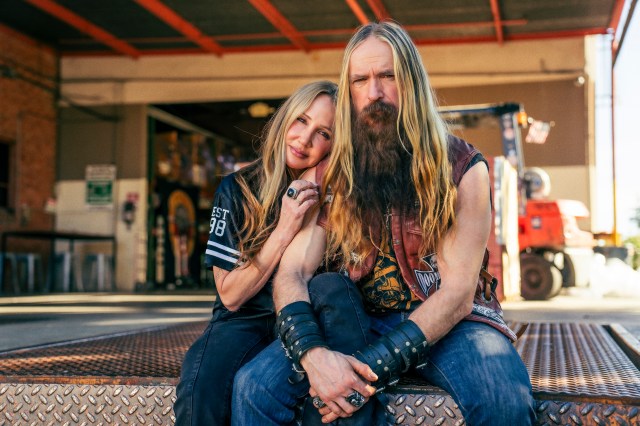
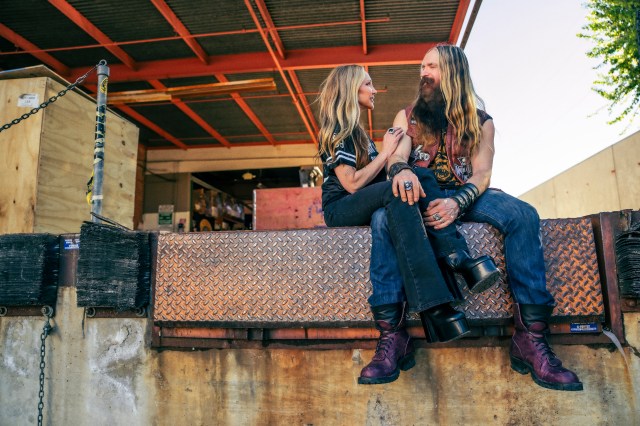
Barbara and Zakk Wylde: Their Only Joint Interview On More Than 40 Years Together

Guitar hero Zakk Wylde started playing with Ozzy Osbourne when Wylde was only
nineteen. So, Osbourne became not just a best friend, but a mentor for Wylde during
their decades of music together.

It turns out though Osbourne’s influence and guidance went well beyond music. Ozzy
and Sharon Osbourne were famously married 43 years in what is considered a fairy tale
marriage in the rock world. Together for 43 years and working together as well, they had
a lot to offer Zakk his wife Barbaranne, who first met in sixth grade, has been together
now over 40 years and just happen to be a couple in marriage and music like the
Osbournes.

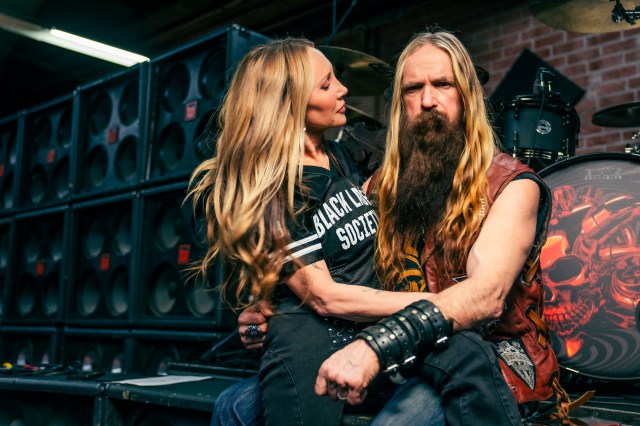
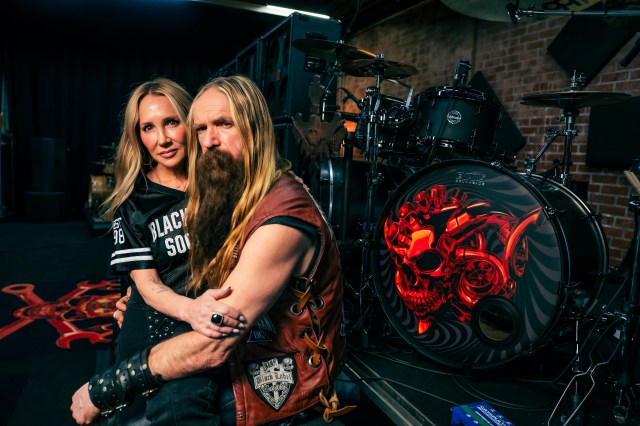
In an exclusive interview before Zakk’s Black Label Society release their powerful new
album, Engines of Demolition, a superb collection that showcases the full range and
power of the band’s musical range, the Wyldes sat down for their only joint conversation
on marriage, the Osbournes, songwriting and more.

Hit Parader: Do you guys have a song as a couple?
Zakk Wylde: Yes, “The End,” by The Doors [laughs].

Barbranne Wylde: No, “A Song For You,” Ray Charles version, was our wedding song and is our song.

Zakk: But I do use the Ultimate Warrior’s theme music when I enter the love dojo every night. And I come running into the bedroom just like the Warrior when he attacks.


HP: All right, well, even the Warriors’ music is better than “The End.” I love The Doors, but that’s a divorce song. Priscilla [Zakk’s publicist] is telling me you guys have been together 38 years?
Zakk: This year we’re going to be together 78 years now, we’re going on. And that’s dating; we’ve actually been together for 102 between dating and getting married.

Barbaranne: Okay, so I’ll interpret after he answers the question, and give you the real answer. We have been dating since ’85. So, we’re going on 41 years. But we actually did date in eighth grade. Zakk and I have known each other since sixth grade. And in eighth grade, we went to see the Urban Cowboy movie. He tried to go up my shirt. I wouldn’t let him, and he broke up with me the following Monday. Then we started dating again in our senior year of high school.

Zakk: I have gotten to second base, though, since then.

Barbaranne: Now I have to beg him. But when we first got together back in our senior year of high school, we were best friends. Zakk was actually dating my sister. And I was dating the bassist in his band at the time. And then he basically broke up with the bassist for me and said, “I’m going to marry this girl.”

Zakk: Well, now I tell her every day to look and read the fine print in the wedding contract because I have to remind her at all times, it’s like the Willie Wonka contract. So, if there’s something that she’s like, “I don’t want to do, or go,” I say you should have read the fine print. Always read the fine print. As a major manager, you’ve got to know that.

Barbaranne: Yes. I’m pretty good at negotiating content.


HP: Are you guys fans of the artist Patti Smith by chance? I was listening to “Ozzy’s Song.” There’s a great Patti Smith song called “Farewell Reel” that was written for her late husband. It’s one of those little songs that no one pays attention to, but I have always loved. Recently she was doing an interview with Anderson Cooper, and he played the song for her and she started to cry. “Ozzy’s Song” reminds me very much of it, it’s that same vulnerability and openness.

Zakk: Yeah, without a doubt, man. I agree, it’s pretty special.

Barbaranne: I can’t speak for Zakk, although I do sometimes, but I think that it was cathartic writing those lyrics because Ozzy was everything to us and will remain that. So, I think it was cathartic for Zakk to be able to put his soul, heart, and feelings into writing those lyrics.

Zakk: I wrote the lyrics in our library looking at one of Ozzy’s books, the one where he’s pointing and says, I am Ozzy. I was listening to the tune, wrote the lyrics, and when I got done, the book fell off the bookshelf, and it hit me in the head. I looked down at the book, and I heard a voice that said, “Now go make me a ham sandwich and go light on the Coleman’s. And make sure you wash your hands before you make my sandwich.” I went and made a ham sandwich like I had since I first auditioned for the band. And always go light on the mustard, Zakk, it mustn’t overpower the flavor of the sandwich. You must taste the rye bread, or sometimes sourdough, because it’s healthy. Never overpower; with great power comes great responsibility. I heard that the first time Ozzy told me that with the power of Coleman’s mustard. Then I saw it again in Spider-Man when it said with great power comes great responsibility and I was like, “That’s what Ozzy told me when I was making sandwiches with Coleman’s mustard.”

Barbaranne: You’re not going to get a serious straight answer out of him.

Zakk: Surely you must think I’m kidding, I’m not kidding, and don’t call me Shirley.

HP: It does make sense because, Zakk, as you and I talked about, Ozzy was one of the
funniest motherfuckers in the world.

Zakk: Exactly. I tell everybody, in 2018, when we did the “No More Tours 2” thing, we were in rehearsal, and these three guys came in. One guy has got a briefcase with them or whatever, and none of us know who these guys are. Are they monitor guys, lighting guys? So, none of us knew, and then Oz came up, and he’s like, “Sharon got me a vocal coach.” I go, “Well, Oz, Sharon just wants you to be great, she just wants you to be awesome.” He goes, “Yeah, I suppose. It’s a little late in the game for a vocal coach, though, isn’t it?” It was like that all the time. He was hysterical. He really was so funny.


HP: Barbaranne, talk about for you, how inspirational it has been to get to spend so much time with her. And for both of you guys to be around that, because, Zakk, as you and I talked about, as bat shit as Ozzy was in a fun way, he loved his family so much and was such a great family man.
Barbaranne: We’re definitely family with the Osbournes. When Zakk got in the band in 1987, we were babies ourselves, and Zakk calls Sharon mom. She’s basically a second mom to him. His mom passed away when he first got in the band, and Sharon kind of assumed that role for him. And we couldn’t be closer. The kids — Jack, Kelly and Amy — were a brand-new baby, one and two when Zakk got in the band. So, we all grew up together, and they’re our family.


HP: From the music business side, talk about how much you’ve learned from Sharon because she is quite legendary for not taking any shit.
Barbaranne: Nope, she takes no shit. Almost every really big decision that I’ve made, I run it by her. A lot of times, she’ll just text me back one sentence, and I know exactly what she’s trying to tell me to do or not to do. I’ve learned everything from her. As a matter of fact, when I first moved to California and decided I wanted to work in the music industry, Sharon gave me a list of names, numbers, and addresses of other people that she associated with in the industry. My entire career in this industry, she has been my role model and given me the greatest advice. And she even gave me amazing advice, woman to woman, when Zakk was in the throes of drinking. She’s had lots of experience with that, too, and she said you can love him from a distance, Barbaranne. That is the greatest advice she’s ever given me.


HP: Is there anything that really stands out about the early days?
Barbaranne: When Zakk first left to join the band, there was like a series of tests that he had to go through because they had to see if this kid could write. And then after seeing if he could write, it was, could he do a live show and not be shit scared on stage? So, they didn’t announce that he was Ozzy’s guitarist for quite a bit. But when he first went to England to see if he could write with Ozzy, and they lived on this farm area together. Zakk didn’t drink at all as a kid before he left for Ozzy. Then he proceeded to get sick all over the plane. I did not like this. They decided to do a press conference in New York City to announce to the world that Zakk was the new guitar player for Ozzy. Sharon pulled me aside, and it was the first time I had met them. She said to me, “May I have a word with you?” I said, “Yeah, of course.” She’s like, “I need to ask you, does Zakk have a drinking problem?” And I said, “Oh, my, no, he never really drinks.” And she’s like, “Well, he does now.”

Zakk: I was the only one that would drink with him because Oz would name names. He would tell you where the bodies were buried and where we hid the money. It was bad; everybody was in fear of losing their gig.

Barbaranne: Actually, it was very funny, we all knew if you didn’t want something on the five o ‘clock news, don’t tell Zakk and don’t tell Ozzy. But one time, I was over at their house with them. And Ozzy said to me, “I’ll tell you one thing about Zakk, he doesn’t fuck around. And if he did, I would tell you.” And I said I know.

HP: Ozzy made people feel like family. So, now in the band leader role, do you strive for the same dynamic?
Zakk: Yeah, ever since us being in high school with Tommy Carrick, John Kern, and my buddies and the like, we all enjoy each other’s company, and we all enjoy hanging out. I never understood when you hear about bands fighting. We always enjoyed being together, and with Ozzy, it was the same thing; we all enjoyed hanging out with each other. It’s the same thing with the Pantera celebration; everybody rolls together. It’s always a good hang.


HP: Let’s talk about the writing on this album a little bit. One of the songs that stood out to me was “Better Days & Wiser Times.” I’ve talked about this with so many artists. As you get older, you just get more comfortable. You’re happier in life, you’re more confident. So, for you, was that a song that came very easily?
Zakk: Ozzy always said, “I don’t think you’re so much a writer, but you’re a receiver. You pick up on an antenna.” For lyrics, I always end up writing the lyrics last. I have to figure out what I want to sing about because it could be something that you went through that you told me about, and that inspired me to write a lyric.


HP: Were there songs on this record that surprised you? And Barbaranne, same for you. You’ve known him since sixth grade, but I’m sure there are still moments that blow you away.
Barbaranne: I hear him when he writes on the piano, or he’ll be in the garage, and he’ll just be like writing rips or whatever, and I’ll say to him, “What is that? Make sure you record that or save that.” Then when he starts to put lyrics on it, he’ll have me run up to the studio, and he’ll be like, “I want you to listen to what I’ve done tonight.” Sometimes it’ll just blow me away, and a lot of times I will say to him, “What did you write that about? Where was your head at?” Because I’m living with him, and we’ve known each other’s families, we grew up together in the same little town in New Jersey. And I think that I know what he’s written about. And a lot of times I’m totally blown away.

Zakk: I’m a mystery wrapped in a riddle. You don’t even know me.

Barbaranne: Yes, you’re an enigma.

Zakk: After 68 years of marriage, you still don’t know.

Barbaranne: You’re an enigma, dear. Yes.
Songs That Shaped Me: Flea’s Jazz Favorites

Red Hot Chili Peppers’ bassist Flea will release his first jazz album, Honora, March 27.  The album, which features both giants of the jazz genre and friends of his like Nick Cave and Thom Yorke, is the culmination of a life-long love affair with jazz.

So, when he agreed to take me through a playlist of some of his all-time favorite jazz tunes, the list was deeper and more eclectic than I ever could have imagined.

In no particular order, here’s 12 tracks.

1

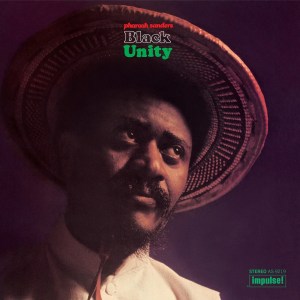
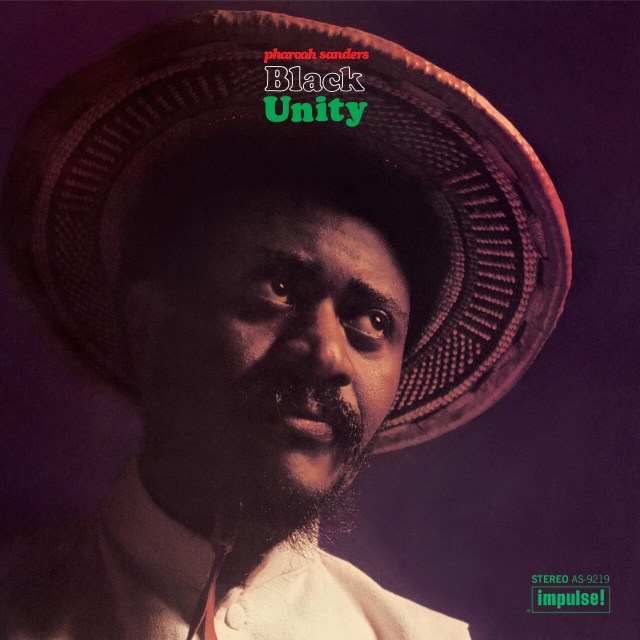
Pharoah Sanders – Black Unity

Impulse!, 1971

I chose that song because I don’t know how long that song is. It’s like 20 minutes long. And for 20 minutes, in a state of pure free improvisation over a very simple chord pattern that gets turned inside out and backwards and upside down, these guys wail their brains out. I think there’s like six or seven of them, including Stanley Clarke on bass; two bass players, Stanley Clarke on electric and Cecil McBee on upright. But it maintains dynamics. It’s entertaining, it’s so powerful and spiritual. It’s just an incredible feat. There’s been a lot of great free jazz. And this might be the pinnacle for me; just the sound of it, the ferocity, the poignant tenderness of it. It’s just fucking mind-blowing. I actually tried to kind of copy it on my record, and it just turned out being something totally different. It sounds nothing like “Black Unity,” but it’s a song called “A Plea.” It’s the first song I put out. It wasn’t like I tried to copy it, because I would never, but I liked the structure of it over this simple chord progression, this improvisation. And I ended up doing something totally different when I got in the studio. But when I heard it, that was the initial spark that made me go make “a Plea.”

Pharoah Sanders - Black Unity

2

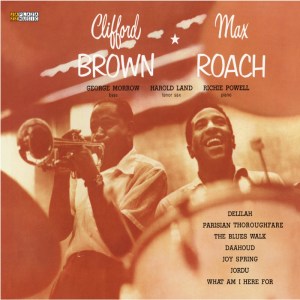
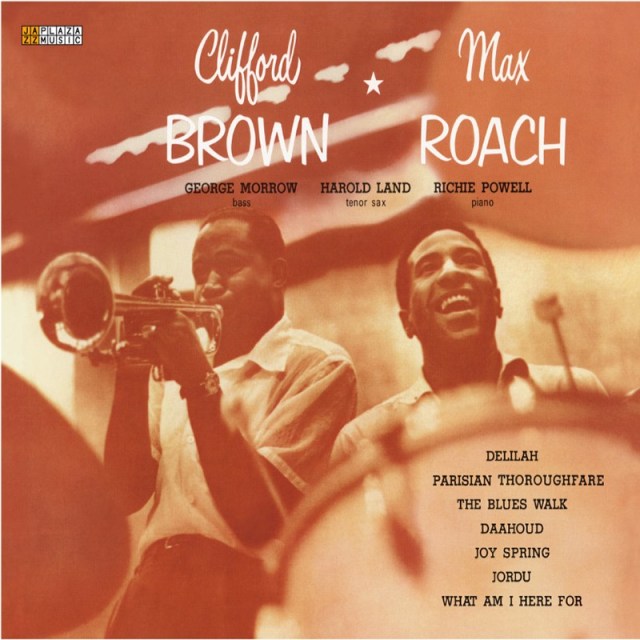
Clifford Brown and Max Roach Quintet – Joy Spring

EmArcy, 1954

This is a song that I first got into when I was about 12 years old. Clifford Brown on trumpet, of course, Max Roach on drums, George Morrow on bass, Richie Powell on piano and Harold Land on tenor saxophone. It’s the most beautiful… just the clarity, warmth and the presence of Clifford Brown and Harold Land playing the solo. The melody and the composition by Clifford, it’s just so beautiful to me. When I was a kid and I heard it, it just made me feel like human beings were beautiful and that human beings could be great. It’s the kind of thing that always makes me have faith in humans. Really there’s something that as a young boy started my love affair with Black America, too. all my life, from when I was a little boy and I heard it, and it was just like, “Well, the world is really cruel and fucked up, but here’s this beautiful thing. And this is the best of what people can be and it’s right there for you. I just love Clifford Brown, he’s my favorite trumpet player of all time. I love him. He’s the greatest. And Max Roach, what he did, what he continued to do from Charlie Parker until the 80s. What a career, man. What an evolving, beautiful guy.

Clifford Brown and Max Roach Quintet - Joy Spring

3

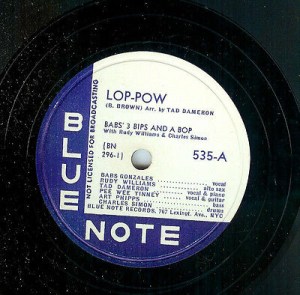
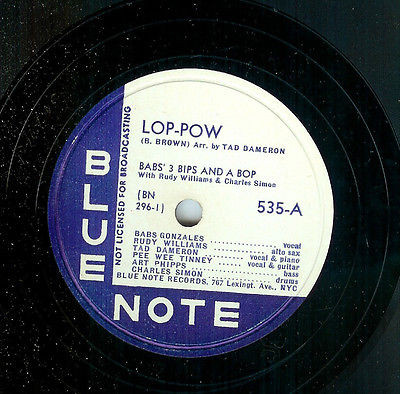
Babs Gonzales, 3 Bips & a Bop – Lop-Pow

Blue Note, 1947

There’s been a lot of happy music played, but you’d have to go into Louis Armstrong or the Earl Hines group, The Hot Sevens and Hot Fives, in order to reach this level of sheer unadulterated, whimsical joy. “Lop-Pow,” by Babs Gonzalez, and really all his recordings, but this one is the one I’m picking. It’s just so fun and lighthearted and this is the song that when I die, and if I hopefully die under circumstances where there are people in my life that love me and care about me at my funeral, this is the song that I want them to play and to listen to. It’s just so beautiful and as a celebration of life and of passing into whatever the next dimension is, I would like everybody to listen to “Lop-Pow” and dance. I always used to think that I wanted “Bold as Love,” by Jimi Hendrix, to be the song. Actually, I would like both of them to be played at my funeral, “Lop-Pow” and “Bold as Love,” Jimi’s is more heavy and melancholy and brave but Babs Gonzales let it all hang out. He was just such a character, he was a guy that was really on the scene there in the 40s and hanging out with everybody. He wrote a great book called Paid My Dues.” It might be the greatest music memoir of all time. He wasn’t a real serious musician, he was on the scene and he was just a real party guy who partied with everybody, Bird and everyone. He was beloved.

Babs Gonzales, 3 Bips & a Bop - Lop-Pow

4

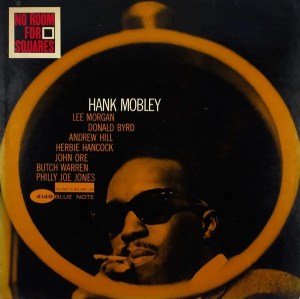
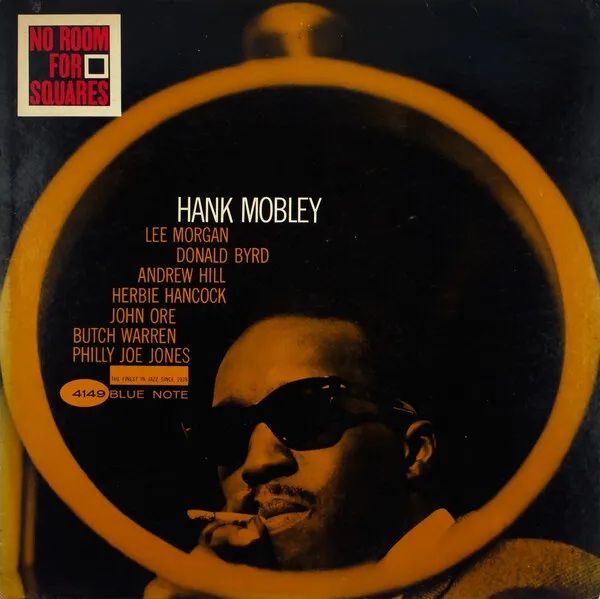
Hank Mobley – Old World New Imports

Blue Note, 1963

It’s really great. The album’s No Room for Squares. And yeah, it’s on this track, “Old World New Imports”, it’s Donald Byrd on trumpet as both he and Lee Morgan play on it. Herbie Hancock, Philly Joe Jones. For me, in the bebop time, it’s the most exciting one. That era is my favorite era. I guess it’s early 60s. And it has this incredible head. “Beep, bo, ba, da, ba, da, beep boop. Pa -par -da -pap -a -pap -da -pap -da -pap -da -pap -dap,” and it’s so exciting. When I was in high school, we had our friend Scood, who was the first guy we knew who had his own apartment. So, we’d all go over there and hang out. And he was a great music man with a great record collection. And he used to play this song, it’s straight bebopping. Me and my friends, man; me, Anthony, Patrick English, Tree, Scood, we would just dance around and listen to it and smoke weed. It was just incredible the sound of it. So, if you want to know what shaped me, and what me and my friends did right around the time we started the Chili Peppers, what we were listening to was Hank Mobley.
Hank Mobley - Old World New Imports

5

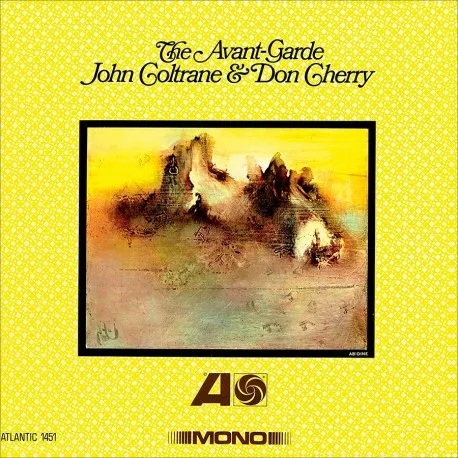
Don Cherry and John Coltrane – Bemsha Swing

Atlantic, 1960

This is something we listened to too, around the same time. It’s from the record the Avant-Garde by Don Cherry and John Coltrane. It’s just a great, funky, free jazz [tune], but I don’t even know what you call it. I guess free jazz is it. It’s Don Cherry and John Coltrane with Charlie Haden on bass and Ed Blackwell on drums. The way that Don Cherry plays his pocket trumpet on it, it’s so earthy and real and it’s not so virtuosic. He’s playing real free, and the way that he’s playing this shit, look, he could be out technically played by 10 million trumpet players, but none of them could ever sound like Don Cherry on this, the way he plays. Then Coltrane comes in and it’s that deep Coltrane, just fucking wild going for it. But it’s just the funkiness and the bass of the rhythm section and the way that Charlie Haden and Ed Blackwell laid down that rhythm, it’s just so funky and it just has this magical quality of space and melody and funkiness. It’s also something that we listen to constantly. Actually, it’s a song that we loved it so much that the Chili Peppers used to cover it all the time in this comedic, funny way. Because it goes, “Bop -b -b -b -b -da -b -da -b -da-da -da -da -da -da -da -da -da -da,” we called it “Fuck You.” And we’d always go, “Fuck you, fuck you and your mama and your grandma, too. Fuck you. Stick it, you know, whatever. It was this improvisational joke that we did all the time. Jesting aside, the thing that we were listening to was that version by John Coltrane and Don Cherry with Charlie Haden and Ed Blackwell.

Don Cherry and John Coltrane - Bemsha Swing

6

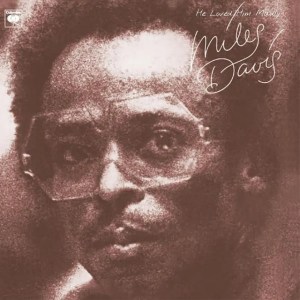
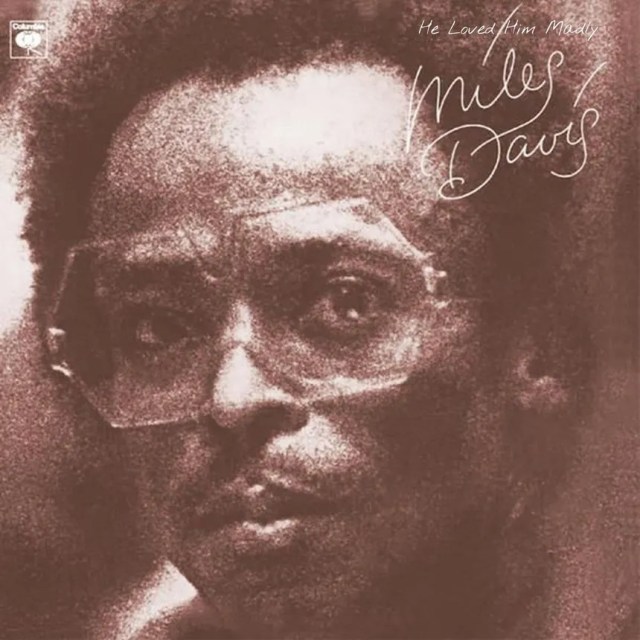
Miles Davis – He Loved Him Madly

Sony, 1974

I’ve loved Miles Davis since I was a kid, and I heard Kind of Blue when I was 12 or something. But Get Up Into It is a record that I got into about 10 or 15 years ago. Actually, Warren Ellis, he of the Bad Seeds and the Dirty Three and some other great music, turned me onto this album. I really love Warren and respect him, so when he told me to, I went and listened to it. Somehow, it’s like all the Miles records I listened to, and I listened to it all, from Birth of the Cool and Kind of Blue to On the Corner. It’s just a big fun record that got away from me. I skipped it, and it’s such a distinctly great record. And “He Loved Him Madly” is like a 20-minute ambient, psychedelic trip the fuck out beauty. Just put on “He Loved Him Madly,” and listen to it. Put the phone away, put it on and let your mind go. Free your mind and your ass will follow. Listen to “He Loved Him Madly,” by Miles Davis from the Get Up With It record, because it’s deep. It’s everything that I want in music. You can just take a bath in it. It’s so warm and just great. The musicians are so sensitive and the way that they relate to one another it’s super loving and warm, but also you feel this fucking power and the violence that is always lurking. It’s just beautiful, it encompasses humanity.

Miles Davis - He Loved Him Madly

7

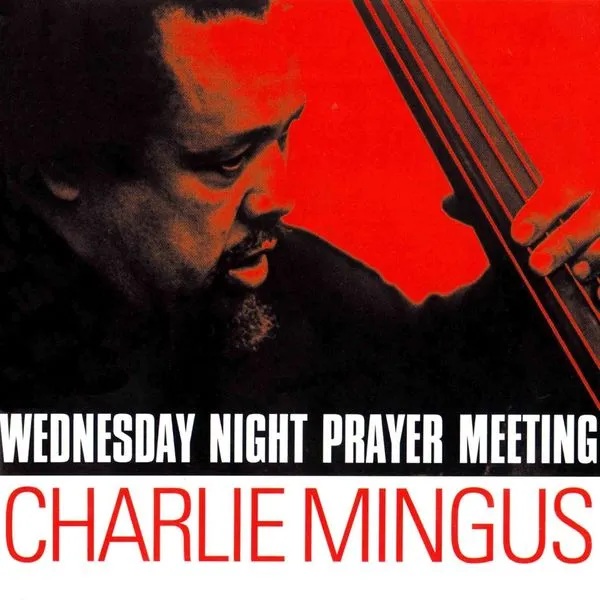
Charles Mingus – Wednesday Night Prayer Meeting

Atlantic, 1960

One of the greatest recordings of all time and one of my favorites, it has such a funky bluesy mean headbanging, a feeling of community, togetherness, intensity, spirituality and intellectual love. It says, “Wednesday Night Prayer Meeting,” it has a real church feeling to it, a gospel feeling, foot-stomping, banging [feel]. It’s in six, eight and they’re like getting down and you hear Mingus and whoever yelling and these guys are playing these wicked hard solos. It breaks down to this cool clapping pattern where it just goes into rhythm and back and you really feel the depth of the pain, the joy, the hope of black America in it, and I love that. It’s beautiful.

Charles Mingus - Wednesday Night Prayer Meeting

8

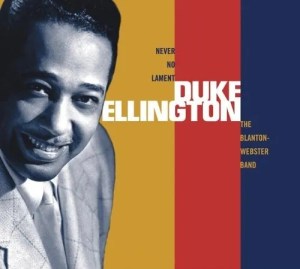
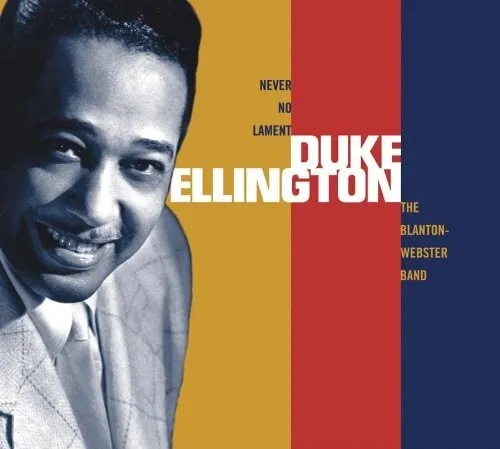
Duke Ellington – Never No Lament

RCA, 1940

It’s from my favorite recording era of Duke Ellington. They put out this box set of this period of time for Duke Ellington called the Blanton-Webster Band. It’s with Jimmy Blanton on bass and Ben Webster on saxophone. I really could have picked any song off this because it’s all great. But the box set is called Never No Lament. All of the songs, every track on it, every note they could just do no wrong. That band is so smoking. The arrangements are so good. The songs, the playing, the feeling. And this was a band that worked constantly. They were always on the road. They were just recording, working, going for it at their peak. It’s hard to say at the peak because they were always at their peak. Duke Ellington is just a national treasure who evolved constantly and grew and changed and did all this music from a very minimal [place], just by himself on the piano to the Money Jungle sessions with Mingus and Max Roach to all this stuff. I really love this music. This record, the Never No Lament box set, the Blanton-Webster years of Duke Ellington, it’s incredible. This is a great tune from that album. But listen to the whole thing. It’s just like the best of us, once again. I get carried away into that time.

Duke Ellington - Never No Lament

9

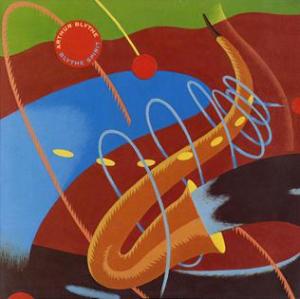
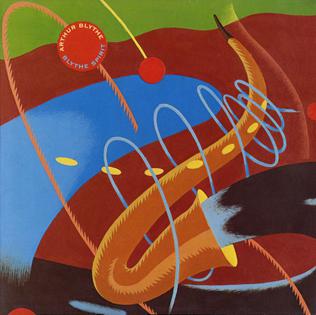
Arthur Blythe – Misty

Columbia, 1981

From his album, Strike Up the Band. It’s another one that we used to listen to early days before we started the Chili Peppers, during that period of time. We really love this album. I could have picked the song, “Strike Up the Band,” from the album, too. It’s really great. It’s this great tuba on it. It’s just really fucking righteous, man. I love Arthur Blythe. He’s an L.A. Alto saxophone player that really made a lot of great music. We really love this album. Actually, there’s a guitar player on it named Kelvyn Bell, who we really loved. And we really loved that first Defunkt album. He played in that band, too, on that album that Joe Bowie did. It’s just beautiful music, it’s so poignant. The song “Misty” itself being a real great song, and Arthur Blythe, what he does with it starts off real beautiful, then they just go real wild and out and super dynamic, incredible cuts right through the fucking air. Errol Garner, who wrote the song, “Misty,” couldn’t read or write music. And he’s up there for me with the greatest musicians of all time. I always feel like when I’m doing my jazz studies and I’m trying to fucking decipher all the way chords move and all this stuff and man Errol Garner just did it by sheer love and commitment and immersing himself in this language and world.

Arthur Blythe - Misty

10

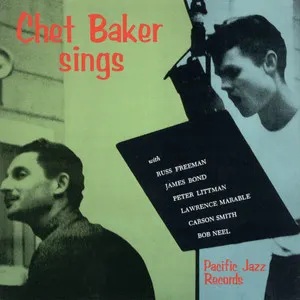
Chet Baker – I Get Along Without You Very Well (Except Sometimes)

Pacific Jazz, 1954

I couldn’t leave out Chet Baker because I just love him so much and I was fortunate enough to hang out with him a little bit towards the end of his life. His singing and trumpet playing is so lyrical and beautiful. The record is Chet Baker Sings. It’s just beautiful music. I love his voice, the way he plays. Put that record album on, it’s super romantic, sincere and beautiful. There’s always just this feeling with Chet, the underlying tragic feeling and vulnerability of the guy that was always strung out and suffering and trying to make it. But it’s just a beautiful album.

Chet Baker - I Get Along Without You Very Well (Except Sometimes)

11

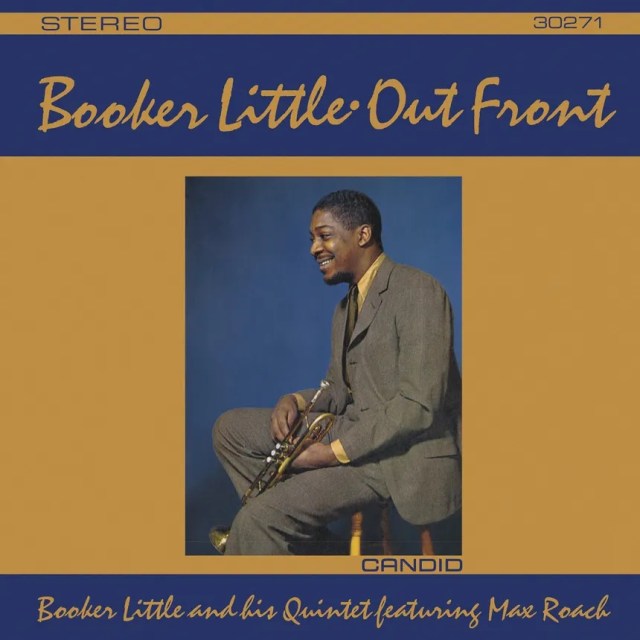
Booker Little – Man of Words

Candid, 1961

One of my favorite trumpet players of all time, Booker Little, who was an acolyte of Clifford Brown. Much like Clifford Brown, Booker died very young. Clifford died in a car crash. Booker Little died of uremia. I just love Booker Little. When I look at photos of him and listen to him, or hear anything about him, he just seems like such a beautiful cat. My son’s middle name is Booker after Booker Little. There’s so much that I could have chosen. He didn’t really record a lot because he died so young. But on his record, Out Front, the song, “Man of Words,” it’s a pretty simple harmonic context with him just blowing this beautiful trumpet playing. Man, it’s like a clarion call; it’s just this beacon of light, of beauty, and when I hang up, I’m gonna go cook my eggs before I got to fucking practice myself and I’m gonna go listen to it because it’s just so fucking awesome. It’s a cry of love.

Booker Little - Man of Words

12

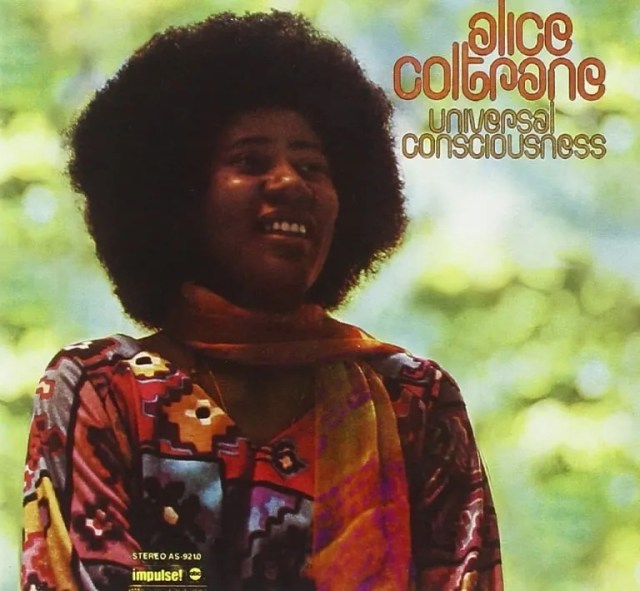
Alice Coltrane – The Ankh of Amen-Ra

UMG, 1971

It’s the last song on her album, Universal Consciousness. It’s just beautiful, I feel like as a kid I didn’t really get Alice Coltrane well enough, didn’t pay close enough attention to what she was doing, and I wish I would have, because I kind of got it late. I didn’t really get into Alice deeply until 10 or15 years ago. Man, these records are so incredible. Universal Consciousness is right around 1970, when she made her universal consciousness journey to Satchidanananda. I could have picked any song because it’s all beautiful. I chose “The Ankh of Amen-Ra,” just for the mode of “He Loved Him Madly.” It has this warm, ambient quality. You just put it on, and it just makes your house filled with love and beauty.

Alice Coltrane - The Ankh of Amen-Ra

Flea’s solo jazz album, Honora, is out March 27. Enjoy the visualizer for “A Plea” below:

Dance, Divinity and the Dichotomy of Self: Claire Rosinkranz on Her Second Studio Album 

Following the release of her second studio album, My Lover, the fierce up-and-comer of bedroom pop, Claire Rosinkranz, returns to her childhood ballet theatre with the same discipline and dedication that went into the 13-song tracklist.


Photo: Press Provided

Claire Rosinkranz has been practicing ballet since she was three. So, when she waltzed into her alumna studio after a nearly five-year hiatus, no one batted an eye. Her ballet instructor explains to me that when Claire laces up her pointe shoes, it’s like not a day has passed; she can jump right in with the same poise, stamina and rhythm that makes her just as much a devoted and talented musician — and she wasn’t wrong. 

Rosinkranz is a self-described perfectionist, “as are most artists,” she adds, and ballet’s heavily disciplined environment was her prominent reinforcer growing up. “The drive, the discipline, the persistence, just going over and over and over until it’s perfect,” says Rosinkranz, carried into the studio, where she works closely with her producers — one being her father, Icelandic composer Ragnar Rosinkranz — to make music that feels authentically to her, “like my journal.”

Her entire world was centered around music — both of her parents and her grandma are immersed in the industry — but there was a time that Rosinkranz went tête-à-tête with the idea of becoming a prima ballerina. Homeschooled and practically eating, sleeping and training at the studio, this wasn’t all that far-fetched for her, but instead of pursuing a life en pointe, the young dancer found herself drawn to the classical scores soundtracking each ballet session. “Hearing all of those melodies was part of the inspiration for making music,” she recalls.

At the youthful, yet wise-beyond-her-years age of 11, Claire was at a crossroads. The answer? Turning to a higher power. “I had a moment where I said, ‘Okay, I need to really focus my energy in one place because I want to be really good at it, and so I said, ‘God, am I gonna do music or dance?’” she admits. The Rosinkranz prodigy firmly heard “music” and made it her number one since. 

“I would fill notebooks up—front and back — every single page,” she shares. “I was very OCD about this, front and back has to have a song: the verse, chorus, verse, bridge, chorus, but I didn’t put out my first thing until 15-years-old.” The teen songwriting awakening resulted in the release of “Best Friend” in 2019, followed by her game-changing single, “Backyard Boy,” in 2020, that chalked up a billion global streams and scored her an MTV Trending VMA for Best Breakthrough Song. 

With the recent release of her second studio album, My Lover, it’s easy to admire how she’s kept up the momentum. “I don’t feel this way often, but recently I’ve thought, ‘Wow, my life is perfect,’” she laughs. “I feel very inspired, very excited, very motivated, and in a place where — it sounds a little cheesy — but I really just want to create and create and create and create; I’m hungry to create.” 

Forward momentum for the bedroom-pop singer hasn’t come without its challenges, though. With detrimental health issues causing her to take a step down from the stage and tap into wellness and recovery in 2020. And lately, if she’s realized one thing from her whirlwind past tour dates, it’s to honor rest like it’s sacred. “The more internal side of what I’ve learned is you have to be very aware of taking care of yourself because it is a machine and it is a monster,” Rosinkranz shares of life on the road, which included touring alongside Maroon 5 on their “Love Is Like Tour.” “I know there are certain people who can just party, party, party and, totally be fine, but that’s not me.”

To pull good from the bad, overcoming her illness ended up being a driving force for a good half of her latest album. “Chronic” is a questioning, hard-hitting ballad that lyrically captures the confusion of illness. Lyrically speaking, she sings, “I wanna feel better, but something about being sick is easy twisted, comfortable/ Maybe I’m dying, so comfortable crying.” 

Rosinkranz quite literally rooted the album in the metaphorical idea of a garden, where music serves as the soil for her creativity to blossom, and within that is nonlinear, theoretical “growth” and “death.” Upbeat moments like “My Lover” and “City” are the kind of euphoric, dance-in-the-kitchen or hands-out-the-car-window songs that Claire likens to the metaphorical blossoming and growing. Yet those high-highs can’t exist without valleys that allow for the process to keep cycling. “Both life and death can exist in the same place together and still be beautiful because of each other — you can’t have life without death and death without life,” as she puts it. 

Leaning heavily into the metaphor of planting the album in time and place, Rosinkranz still imagines My Lover as an everlasting repertoire. “Being timeless is a really important thing for me going forward in my music,” she says, and not only when it comes to songs. Claire’s most cherished activities — horseback riding, surfing and par for the course, ballet — are her current pursuits that she feels she could do forever, but “what I think all of those have in common is they can be beautiful, feminine, delicate and sensitive, but you also have to have a lot of strength and a lot of discipline and a lot of drive.” 

Much like her album — and her psyche, softness is met with an undercurrent of strength and authority. You’d hear it in the stirring, fast-paced “Crazy Bitch Song” in comparison to the brooding “Funeral” or in person, a 22-year-old singer-songwriter dressed in a dainty white tutu, leg warmers and ballet slippers hitting the barre with fierce, unwavering focus after deboarding a plane from the Big Apple just a day before. 

“The dichotomy of woman?” I offer. “Exactly,” she echoes. “Dichotomy of Claire.”

My Lover is available everywhere now. Tickets to an upcoming show and more can be found here.

From the Archive: Linkin Park: Sudden Superstars

From the pages of Hit Parader: May 2002

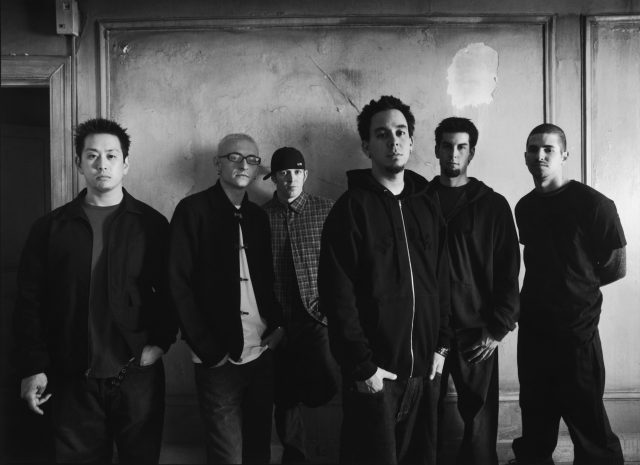
Perhaps the oldest saying in the book is that when opportunity knocks, you’d better be ready to answer the damned door! And none of us can deny that over the last two years opportunity has certainly knocked time and time again on the door of Linkin Park. And you know what? This California-based rap/metal unit has not only answered that call, but they’ve responded to it like few “rookie” bands have ever done before. With sales for their debut album. Hybrid Theory, now well past the quadruple platinum level, their recent DVD, Frat Party at the Pankake Festival, a bonafide best-seller and response to their recent headlining Projekt Revolution tour rating as an overwhelming success, there’s no denying the impact that Chester Bennington (vocals), Mike Shinoda (vocals), Brad Delson (guitar), Joseph Hahn (turntables), Rob Bourden (drums), and Phoenix (bass) have now had on the contemporary music scene.

But all that they’ve accomplished so far seems to have only further whetted the collective appetite of this ever-ambitious un it. Not only have their tours, their DVDs and such MTV-friendly songs as “Crawling” and “One Step Closer” further solidified the often tenuous relationship between metal, hip-hop and electronic forces, but their future plans which include the imminent release of a remix disc featuring contributions from everyone from Marilyn Manson to Crystal Method seem determined to push the boundaries of contemporary music to even greater extreme. But according to the ever-informative Mr. Delson, all of this just seems to be part of Linkin Park’s still-evolving creative process.

“It’s always been the primary goal of this band to not recognize any particular musical boundaries,” the guitarist said. “I can remember a bunch of us hangin’ out in Mike’s bedroom just playing around with the idea of mixing together every kind of music we could think of. We didn’t care if it was metal, hardcore, techno or hip-hop, we wanted to find a way to use it and make it work. That’s still our mission to take diverse sounds and make them our own.”

“We’ve never wanted to be limited by any musical boundaries.” — Brad Delson

Linkin Park’s unique ability to turn conventional contemporary music sounds on their ear has been one of the key qualities in this band’s rapid ascension up the rock and roll
ladder of success. But perhaps even more important than their ability to take so many seemingly divergent musical reactants and create their own music “hybrid” is their ability to make it all sound so natural and so “real.” In sharp contrast to too many other rap/metal bands who cloak their ham-fisted attempts at sounding “cool” under a “we’re-so-real” halo, for Linkin Park the successful amalgam of these potentially combustible rock and roll elements stands as one of their greatest achievements. Perhaps, as Bennington explains, it is the LP brigade’s unique chemistry and special “team spirit” that has allowed the group to accomplish so much, so fast.

“The one quality that always shines through with this band is our willingness to do everything we possibly can to make an idea work,” the vocalist said. “We don’t like to hear why something can’t work or shouldn’t work. To our way of thinking, it’s our job to do our best to make it work. It’s really amazing that after practically living together non-stop for the last two years, we still get along great and never really have any problems. That’s why we can always work together to make an idea come together; it’s that ‘team’ mentality that has really made so much of this special for all of us.”

It’s hard to believe that prior to the release of Hybrid Theory in the fall of 2000, there were many who doubted whether the rap/metal form could ever truly make an artistic impact on the contemporary music world. While clownish acts like Limp Bizkit had long since proven the commercial appeal of this mismatched musical marriage — at least in its most blatant form — there had yet to be a band that had utilized the varied formats of hip-hop and hard rock with true elan and style. Then along came Linkin Park with an eclectic, powerful and eminently compelling approach that immediately signaled that the rap/metal union had finally come of age. But somewhat surprisingly, instead of opening the floodgates for the expected avalanche of Linkin Park imitators seemingly destined to emerge in the wake of this band’s groundbreaking success, it now appears as if the LP boys have virtually scared off much of their competition.

“We don’t like to hear why something can’t work or shouldn’t work. To our way of thinking, it’s our job to do our best to make it work.” — Chester Bennington

“I think that a lot of young bands hear a band like Limp Bizkit, and their first reaction is ‘Hey, I can do that,'” said an influential music industry insider. “But when they hear the music created by Linkin Park, their reaction is one of awe and respect. There’s so much going on in the music, and so much complexity and power contained within their format, that they may well have intimidated some young bands. They’ve certainly raised the bar as far as how a band can utilize both hip-hop and metal influences. In that regard, they’ve done both themselves and the entire rock industry a great service.”

While it’s highly unlikely that the members of Linkin Park ever set out with the express intent of intimidating any new pretenders to their rap/metal throne, that is unquestionably the net result of their efforts. It is amazing to consider all that this So Cal-based unit has accomplished in so short a time, but it seems quite apparent that their on-going successes has only served to further inspire this group’s creative juices. In fact, Delson can barely contain his enthusiasm as he begins to think ahead to what this ever-unpredictable unit may have in store for us in the weeks, months and years to come.

“I know we’ve already got some ideas floating around for the next album,” he said. “To be honest with you, I think they’re surprising us as much as anyone. That’s the way we like it. We’re not going to try and duplicate anything that we did on Hybrid Theory. There may be a number of things that the fans can relate to, because that’s just the way we write and play. But we’re not letting anything limit us or hold us back. If we hear something new that motivates us, you can bet that we’re going to try and find a way of incorporating an element of it into what we do.”

“We’re not letting anything limit us or hold us back. If we hear something new that motivates us, you can bet that we’re going to try and find a way of incorporating an element of it into what we do.” — Brad Delson

If Linkin Park were working the tables in Vegas, you could bet your bottom dollar that they’d be holding a winning hand. That’s the way it’s been for the better part of the last two years for vocalist Chester Bennington, guitarist Brad Delson, vocalist Mike Shinoda, drummer Rob Bourdon, keyboardist Joseph Hahn and bassist Phoenix. Their debut album, Hybrid Theory, emerged as the biggest-selling album of 2001, moving over four million copies. Their videos for songs like “One Step Closer” and “Crawling” won a variety of industry kudos while remaining MTV playlist staples. Along the way, this multi-talented California-based unit almost single-handedly proved the on-going viability of the oft-criticized rap/metal form. Indeed, it has been a series of “royal flush” hands for this ever-inventive unit, a fact we recently discussed with the highly enlightening Mr. Shinoda.


THE YEAR OF LINKIN PARK

Interview by: Henry B. Shaw

Hit Parader: Four million albums… not too shabby!
Mike Shinoda: [Laughing] No kidding! I think we were all pretty surprised when the final tally came in at the end of last year, and it was announced that Hybrid Theory was the year’s best-selling album. We knew how many albums it had sold, but we really hadn’t followed how well everyone else had done. I mean there were some MAJOR releases last year. And we ended up topping them all. Amazing!

HP: In many ways Linkin Park single-handedly “saved” the whole rap/metal world. It had fallen into a real party-hearty category before you came along.
MS: We never viewed ourselves as one of those bands that just took rap and hip-hop elements and mixed them with metal. There’s always been more to what we do than that. I know back when the album first came out, people heard that we were a rap/metal band and figured we’d be like Limp Bizkit. Nothing against them, in fact we love them, but we aren’t anything like them. Our music is a very natural and very powerful hybrid. That’s why it works.

HP: You’ve become known as the “rap guy” in the band. How do you react to that?
MS: Well, it’s true, so I guess I should react to it with a lot of pleasure. But I’ve always looked at what I do and what Chester does as two pieces of the puzzle. We definitely compliment each other, and together we give the band some of its distinctive quality. I mean, let’s face it, I’m never going to have a voice like Chester — in fact I can think of very few people who have ever had a voice like that. But I’m very happy doin’ my thing and helping the band do theirs.

HP: One of the elements that has emerged as a key to the Linkin Park “sound” is the power of your lyrics. Has that always been a vital element of your approach?
MS: That’s something that has always been there, right from the beginning. We’ve always wanted people to not only get into the energy of the music and get into the beat, but we also wanted them to be able to hear our lyrics and relate to them. I’ve noticed that a lot of current bands don’t even bother to include a lyric sheet inside their albums anymore, and we wanted to make sure we did that. Our lyrics are very personal, but they’re not about really crazy things. For the most part they’re about every day things that everyone has experienced or can experience. The fans hear our songs and then hopefully their own stories fit right in. That’s the way it should be with music. You have to be able to relate to it on a personal level, or it looses a lot of its appeal. One of the greatest compliments that we can ever have is when a fan comes up to us after a show and thanks us for a song and says that we put into words what they were feeling. Wow, that’s the best.

HP: Where does the band stand as far as the next record goes?
MS: We’ve been so busy that it’s been a little tough to focus in on it the way we’d like. But I guarantee you that we will. We’re one of those bands that’s determined to stick around for a long time… whether people want us to or not. [laughs] The only way to do that is to keep making good albums. We know that a lot of people will be looking at us next time to see if we can repeat what we did on Hybrid Theory, and the answer is that we won’t. By that I mean that while we’d love to repeat the success, but I think you’re gonna hear some really different and exciting things on the next record.

“You’re gonna hear some really different music on our next album.” — Mike Shinoda

HP: Take us through the band’s creative process for writing a song.
MS: We’re very much a team in this band, we like working together and writing together. No matter who may have come up with the basic song structure, when it comes to something like the chorus, you can bet that everyone wants to put their own two cents in. It works for us. I imagine for some bands that can lead to chaos, but for us it’s been great. We challenge and push one another, but since we’ve been together for so long, we just seem to sense what will work, and what won’t work for a given song. We never even argue about those things. We just trust one another totally.


HP: Tell us something that would really surprise us about Linkin Park.
MS: Maybe the most surprising things is how well we all still get along. Sometimes you hear the horror stories about bands that have been together on the road for a year or more, and that’s just not true with us. We started this whole thing as really good friends, and we’re still really good friends now. I don’t think we’re the kind of band that’s got a lot of hidden secrets or surprises. With us, it’s pretty much “what you see is what you get.” We all have our tastes in music, but even those are pretty normal. I like all sorts of things — from rock to rap. Chester has really diverse tastes. Brad’s taste may be a little surprising because occasionally we catch him listening to pop music. But all those influences and tastes are cool. They all go into the mix and comes out as Linkin Park.


Black Veil Brides Announce 7th Studio Album 

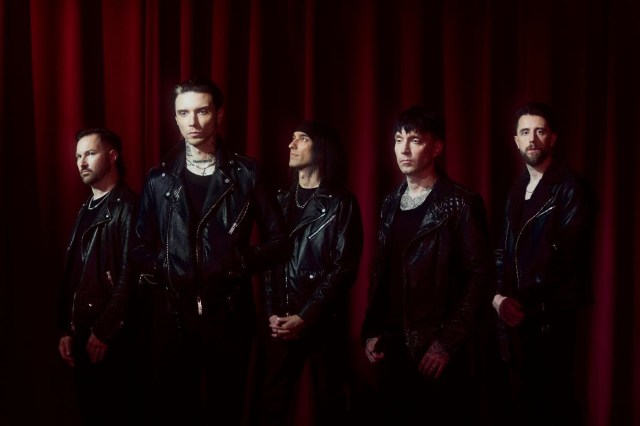
After building tremendous anticipation with their heavy anthem, “Certainty,” Black Veil Brides have officially announced their upcoming album and revealed its striking title track.

Revenge & Resilience

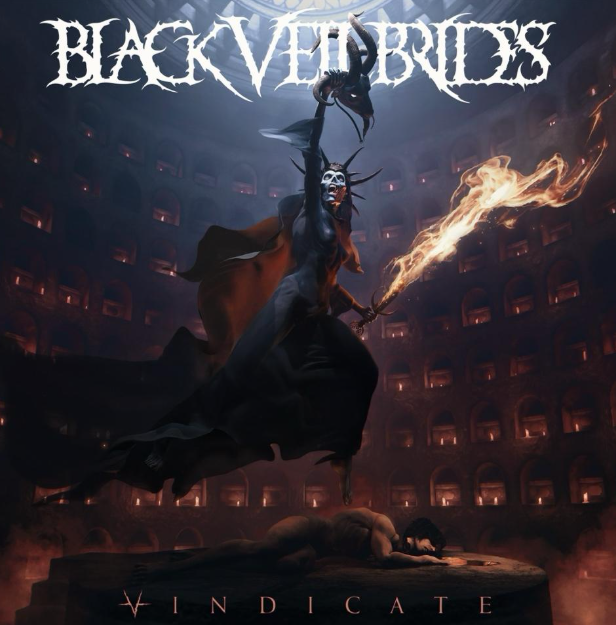
Vindicate Artwork

Their seventh studio album revolves around revenge and struggle, yet always falls back on resistance. Available May 8 via Spinefarm, Vindicate perfectly showcases the band’s evolution while still perfectly maintaining the essence of what makes BVB so special. Frontman Andy Biersack revealed, “This record is rooted in the feelings of revenge and vindication. These are emotions that can either push us forward or hold us back. There’s a duality to them. They can fuel growth, drive ambition, and help us rise above what’s tried to break us, but they can also become destructive if we let them consume us.”

The tracklist explores all corners of vindication. Some target fairness and revenge, while others lead with a more introspective approach. It is an honest confrontation of self, others, past, and pain, delivered through heavy guitars and Biersack’s dynamic vocals.

He continues, “It’s for anyone who’s ever had their dreams doubted or their fire challenged by people who couldn’t see their vision. We’re all born with that spark. The world will try to take that away at times, but this record is about holding onto it, fighting back, and turning those struggles into something powerful.”

Vindicate

The title track, available now, follows “Bleeders,” “Hallelujah,” and “Certainty.” Its calliope intro is immediately punctuated by distorted guitars and Biersack’s powerful vocals. His signature high contrast vocal performance cycles through rich singing and screams, mirroring the song’s visceral lyrics.

“This song above all else was lyrically inspired by the chip I’ve had on my shoulder since I was 16 years old and started this band.” Biersack tweeted, “I was immediately torn down and sneered at by my peers within the ‘scene’ and those around me and to this day this band and our fans have always had to fight through that to one degree or another. Beyond that though I find that it’s representative of every one of us who have to deal with someone attempting to destroy our ambitions simply because they do not possess the skills or wherewithal to make their own dreams come true.”

“All of us are born with a fire and a belief in ourselves, often times though the world around us will try to stamp it out.” He continues, “This is a song about never letting them drag you down. If you are a fan of what we do, you have given me more than you could ever imagine and I thank you ardently and sincerely for allowing me the opportunity to do this for all of these years. I hope you enjoy Vindicate!”

The accompanying music video was directed by George Gallardo Kattah, who also directed the stunning “Certainty” music video. It laces religious imagery with the NSFW; nuns, apples, and all. Watch the video below!

Music Discovery of the Month: Meet The Real Charlotte MacInnes

You may think you know Charlotte MacInnes. Maybe you saw her in the musical Gatsby: An American Myth, with music by Florence Welch, or the TV show North Shore, or glanced at her name online and seen various stories. So, maybe you have heard of the young Australian singer/songwriter. But I promise you, you don’t know Charlotte MacInnes yet.

For starters, MacInnes will be the first to tell you until you have heard her original music, you can’t really know her. “I do feel a very emotional kind of freedom because when you sing other people’s songs and read other people’s words it can be very empowering. But there is nothing more empowering than being able to say your own words and sing your own words,” she says to kick off our utterly enthralling hour-long chat. “It gives a whole new feeling to something I’ve been doing my whole life. I’ve been writing songs for a long time but then lots of people being able to hear them is a very different experience so I’m beyond thrilled.”

Sure, the absolutely charming and delightful MacInnes, who smiles and laughs often in our conversation, spent an extended period on stage every night singing the songs of Welch to audiences. But she purposely lists herself as a singer first in her Instagram bio and that side of herself hasn’t been shared with the world, at least outside of her hometown.

“I perform my own songs live exclusively at a little bar in the tiny town that I’m from. I probably knew everyone at that pub, and I don’t think they even really knew. I wasn’t announcing. ‘I’m going to sing some originals.’ I was like, ‘Let’s just chuck them in the set and see what happens,’” she says.

As someone who says, “I had really big feelings when I was a teenager,” and managed to turn a barroom cover of KISS’ “I Was Made For Lovin’ You” into an emotional plea, MacInnes proudly wears her heart on her sleeves in both life and music.

“I think vulnerability is the ultimate strength. I really believe that. I think hardening your heart after heartbreak, and I don’t mean heartbreak romantically, I mean it in all forms. Things break your heart all the time. It’s part of life. But that kind of feeling is integral to the human experience. And if you can capture that emotion and put it to song then you’ve got [Joni Mitchell’s] ‘I could drink a case of you and I’d still be on my feet.’ How can you speak to the bittersweetness of life and love without being vulnerable? I don’t think you can,” she says, showing a wisdom well beyond her years.

The first step to getting to know the real MacInnes is through her debut single, “Struck,” where she definitely reveals herself, forcefully declaring, “No fear to meet my creator/If I fail, I’m not a failure.” Yes, she is vulnerable. But she also makes it clear she isn’t someone you mess with.

She is damn proud of that message, even if it surprised her as much as anyone. “I didn’t think I would write songs that were empowering. [But] I love songs that are empowering,” she says. “I was in a shop the other day and a Florence and the Machine song [“Spectrum”] came on saying, ‘Say my name,’ and I was like that’s what I want my song to do. The feeling I just received when that comes on and I’m like ‘Oh, all of a sudden in this shop I can do anything. Get the horse outside, I’m going to get on the horse and I’m going to ride. I’m going to change the world.’ That experience of that song coming on while I’m in the shopping center can change the course of a day and therefore, everything. That would be my dream for the destiny of my songs.”

So, imagine her joy when she heard from friends who heard the song before release it had done for them what “Spectrum” did for her. “My friend said to me, ‘Your music makes me want to be disorganized and not in a way of not having my things together. It makes me want to be chaotic in the best way.’ I think the music is like a feminine chaos. It’s not conservative,” she says. “I want women to feel like they can get on a horse and ride anywhere they want to go.”

Most importantly “Struck” gave her that feeling that she could go anywhere and do anything.

“I didn’t know that I had the strength I had until I listened to ‘Struck’ back and I went ‘Whoa, that feels like a promise to myself, and I better fucking keep that promise,’” she says.

The song was finished six months ago. Has she kept the promise? “One hundred percent.”

Thin Lizzy and the Misfit Who Made Irish Rock Unstoppable

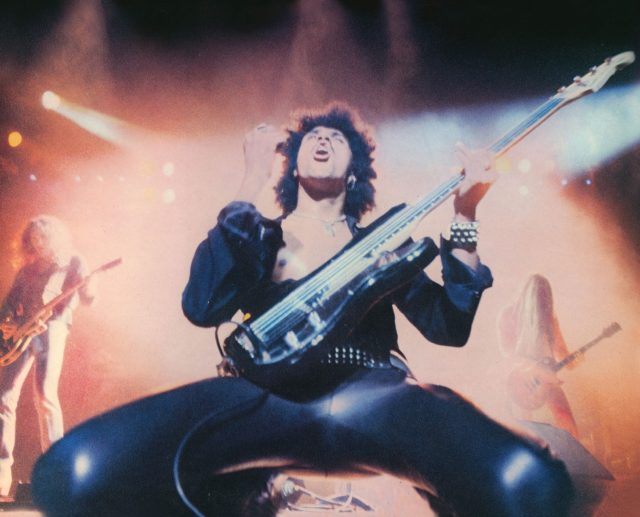
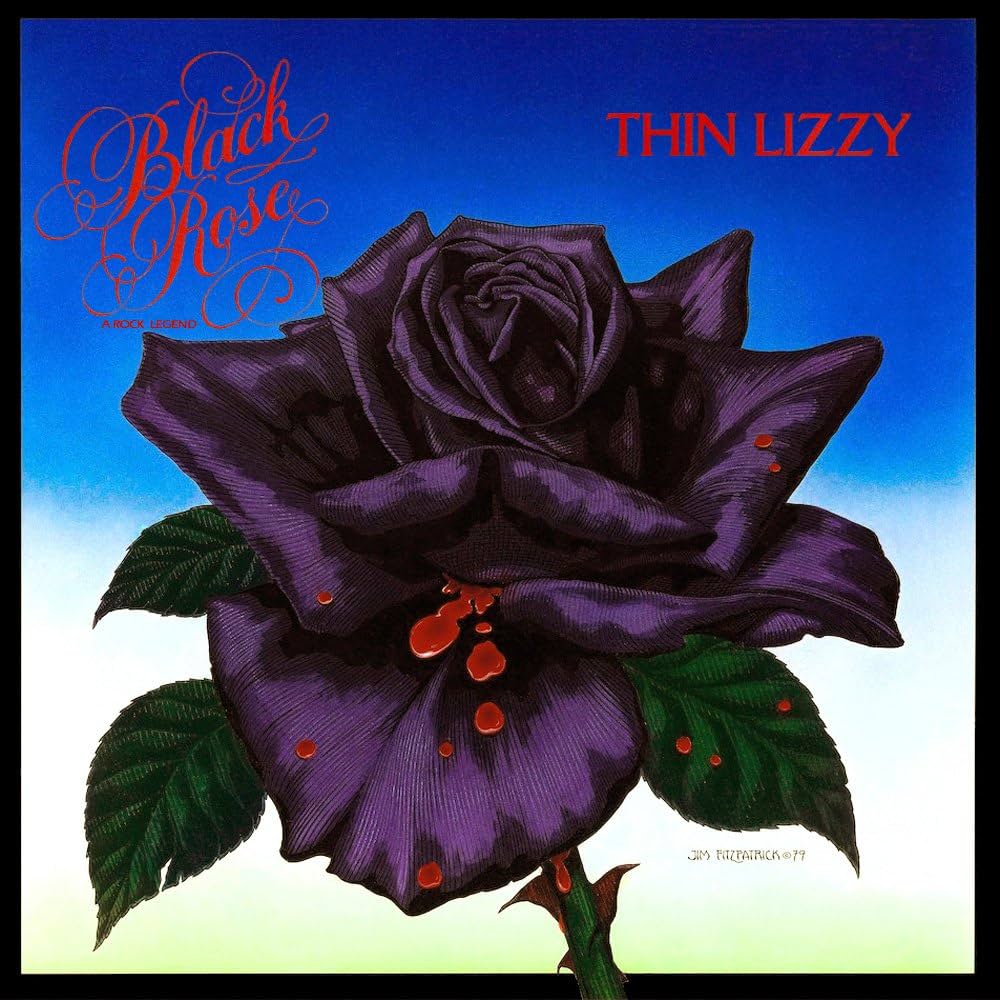
When, at the beginning of Thin Lizzy’s 1979 album Black Rose, Phil Lynott tells you to “Do Anything You Want To,” you get the sense that he knows what he’s talking about. There’s conviction in his voice, a knowing, a telling: “You can do anything you want to, because that’s what I do.”

Indeed, who did what they wanted to do in life more than Phil Lynott – and who knew better about the “people who investigate you … insinuate, intimidate, and complicate you”? Lynott’s path, on paper, was certainly different from any other popular music pioneer of his time: he was a half-Black Irish Catholic born in England and raised in the whiter-than-white Dublin of the fifties and sixties. He was born the year his country was made a republic and wouldn’t live to see the dissolution of the Troubles. Let me put this into context – in the scope of Irish history, he’s preceded by one other successful Black Irish musician: Rachel Baptist, an opera singer who performed two centuries before Lynott was born. 

If you find yourself realizing that you don’t know much about Phil Lynott or Thin Lizzy, I don’t fault you. We Irish-Americans like to joke about that muscle of emotional repression we so often exercise, but I’ve found that our paralyzing inability to talk about the uncomfortable things in life has led to an unfortunate ignorance of Ireland herself. I’m Irish-Catholic from Chicago born just after the Troubles, and never in all my years of parochial education was that era of Irish history recognized in the curriculum, let alone the legacy of 700 years of English colonization. I didn’t realize why my family had migrated to the US around 1850, or why we didn’t speak a lick of the Irish language, or why it was unthinkable that we would attend a Protestant service in lieu of Sunday mass. It was only when I fell in love with James Joyce as an undergraduate (a mandatory fling for many English majors) that I began to unfold the history of my own heritage, and the more I learned, the more baffled I was at all I’d missed living across the pond.

That Irish-American ignorance has cultural consequences, too. I came to Thin Lizzy with a similar sentiment: how the hell was I unaware for so long of such a pioneering figure in Irish music? Certainly he’s remembered fondly in Ireland, where he and his bass guitar are immortalized in sculpture on Harry St. in Dublin, and where Thin Lizzy hits still frequent Irish radio stations. American listeners are most often acquainted with “The Boys are Back in Town,” their most, perhaps only, enduring hit song in the U.S. But Thin Lizzy are woefully underdiscussed even among the loudest and proudest Irish Americans.

Lynott’s legacy gets a little more complicated with the story of his death. Regrettably, he’s one of those artists whose life, legacy, and body of work have become a footnote to the circumstance of their death. You know the story – it’s the official narrative of Jim, Jimi, Janis, and Amy: the preternatural talent who is overwhelmed by fame, fortune, and the burden of proof begotten by those things. They turn to hard drugs, make a few public scenes, and die by overdose, ideally in a hotel room. They are first a tragedy, then a cautionary tale. Lynott is an easy fit for this template: he lived past twenty-seven but not quite to thirty-seven, dying after a heroin overdose in his home on Christmas Day. In a sense, you couldn’t write a more ironic death for an Irish Catholic who struggled so openly with the whole God thing. But what Lynott achieved in his thirty-six years of life is far more remarkable than any death I’ve ever heard of, no matter how Swiftian. 

I want to talk about the capacity of music to unite – but in order to do that, I need both of us to abandon our twenty-first century cynicisms. Banish any image you have of Gal Gadot and Natalie Portman singing “Imagine” to an iPhone camera and stay with me. What Thin Lizzy did should have been impossible – at least, to the naked observer. The original lineup of Thin Lizzy were Phil Lynott and Brian Downey – two Dublin Catholics who attended the same nationalist boys’ school – alongside two Belfast natives, Eric Wrixon and Eric Bell. For these four men to come together despite the very contentious border that divided them was nothing short of a miracle. As Thin Lizzy mutated over the years, its lineup remained diverse: Gary Moore was from Belfast, Scott Gorham was American, Snowy White was English, and Brian Robertson was Scottish. 

It seems contradictory that Thin Lizzy could, in their particular time and place, transcend so many borders – racial, religious, geopolitical – and still remain purely and thoroughly Irish. Luckily, their frontman was used to being seen as a contradiction. Instead of running from his own shock factor, he embraced it: “To be [B]lack and Irish like Guinness is normal”, he once told the Daily Express, “… everyone else is a bit weird.” 

When I say that Thin Lizzy were purely and thoroughly Irish, I don’t mean that they wrote anything like U2’s “Sunday Bloody Sunday” or Sinéad O’Connor’s “Famine” – as the band’s primary songwriter, Lynott’s unique flavor of tírghrá was less politically overt than some of his peers in Irish music history. In one interview with the Irish publication Hot Press, he expresses his wish for a united Ireland in one breath, then squirms out of political sentiment in another: “What do you think of Gerry Adams?” “I haven’t heard too much of him”. 

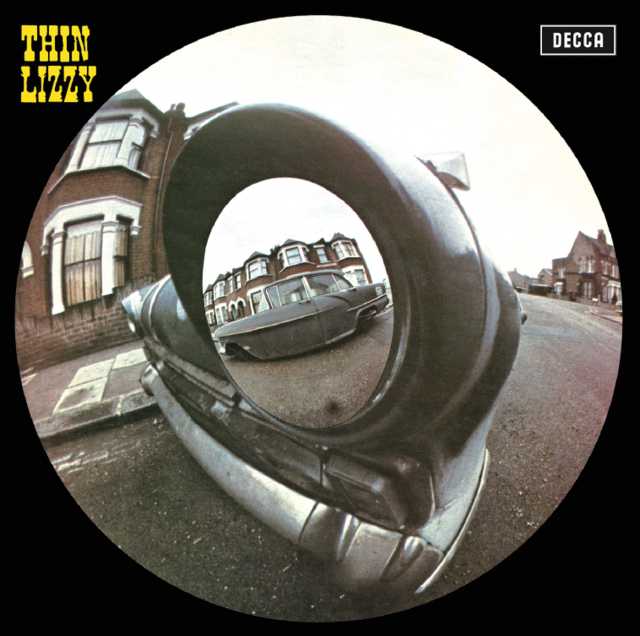
Rather, Thin Lizzy’s Irish roots were finely woven into their sound. The song “Róisín Dubh” is an obvious and oft-cited example: it features an arrangement of four traditional Irish songs, references Irish mythological hero Cú Chulainn, and pays tribute to a slew of Irish literary legends (“Brendan, where have you Behan?”). But take a fine-toothed comb through the Thin Lizzy discography and you’ll find there’s a lot more where that came from. Across a twelve-album run, Thin Lizzy forged a distinct path for Irish rock as a genre, fusing traditional Celtic cadences and ornamentations with the sounds of hard rock. It’s most plainly evident in their self-titled debut album, released in 1970: “Eire” is a proto-“Róisín Dubh” in its references to Irish mythology; “Dublin” is a plaintive ode to “the town that brings me down / that has no jobs / is blessed by God”; and in “Return of the Farmer’s Son,” Eric Bell’s guitar remarkably mimics the cadence of a fiddle. Later, their breakout single was a version of the traditional tune “Whiskey in the Jar” – a decision by their label, Decca, that the band would come to resent, finding it poorly representative of their sound.

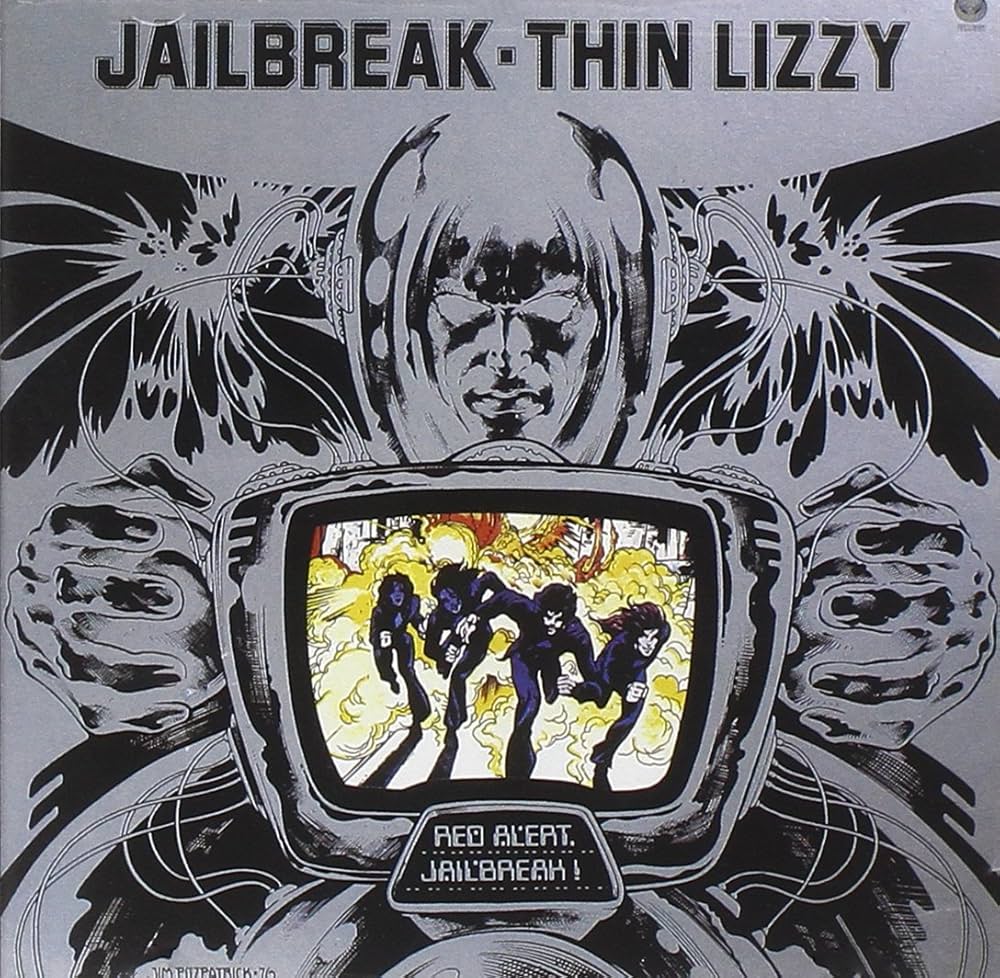
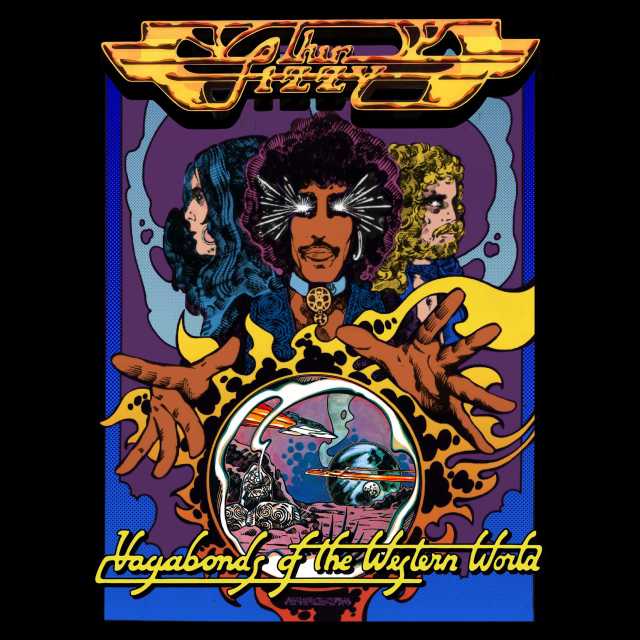
It makes sense: why release a single written by anyone other than Phil Lynott when you had, well, Phil Lynott? By their third album, Vagabonds of the Western World (1973), Thin Lizzy was enacting entire self-contained epics. Lynott penned fables that rival the very mythological tales he cited: “Showdown” (Nightlife, 1973), “King’s Vengeance” (Fighting, 1974), “Emerald” (Jailbreak, 1975), and “Genocide (The Killing of the Buffalo)” (Chinatown, 1980) are prime examples of Lynott’s lyrical storytelling chops. Lynott was never one to limit himself as a songwriter: in one breath, he plays the role of an ardent lover, as in “Rosalie” (Fighting) and “Still In Love with You” (Nightlife); in another, he plays the irreverent heartbreaker, as in “Don’t Believe a Word” (Johnny the Fox, 1976). He could play a devoted family man too, as in “Philomena” (Fighting) and “Sarah” (Black Rose: A Rock Legend, 1979).

Everything that Phil Lynott did to pioneer Thin Lizzy’s sound – and everything that distinguishes Thin Lizzy from their peers in the genre – was a result of his refusal to accept the limits imposed on him. Yes, rock music could sound like a traditional jig translated into electric guitar, just as Lynott could be Black and Irish, and just as Thin Lizzy didn’t have to confine their lineup to the borders of the Republic. Lynott did more than just prove Irish folk was compatible with classic rock – he proved that there was ample room for a misfit like him in rock music.


Hit Parader Legend Interview: The Black Crowes In Fighting Form On Brilliant New Record 

More than 30 years into an iconic career that sees them nominated for the Rock and Roll Hall of Fame again this year, the Black Crowes have delivered one of the hardest hitting records of said career.

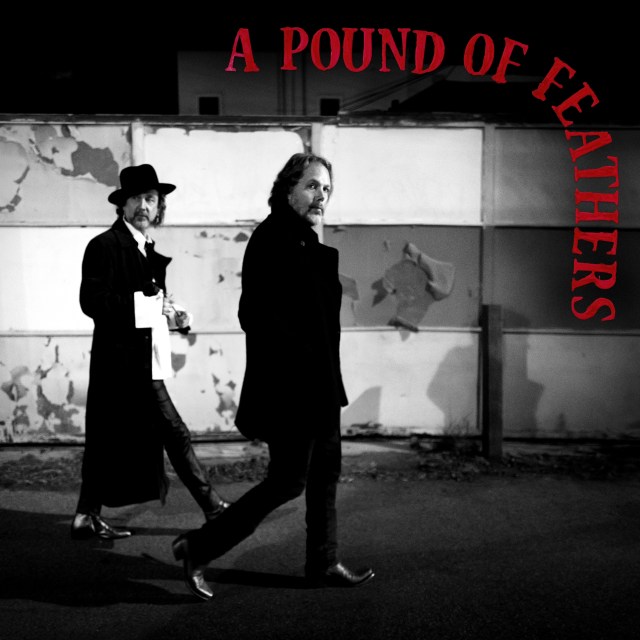
A Pound of Feathers finds the band returning to their youthful spirit, fighting days and rock and roll roots, only now blended with experience, wisdom and the savvy of three decades of music.  

I spoke, in separate interviews a few hours apart, with brothers Rich and Chris Robinson. What I found is they are still in fighting form on A Pound of Feathers. Only now they have channeled all of that energy, aggression and vigor into the music – lyrically and melodically. The result is a monster of a rock record.   


Photo: Errol Colandro

Hit Parader: I’ve always been a big believer in how environment affects writing and recording. Talk about, you know, that back and forth between Topanga, which is completely its own world, and such a legendary recording space. Then you go to the Hudson Valley, which is probably most associated with The Band. Two very different environments. Do you feel like when you listen to this album that you can hear both places in there? 
Rich Robinson: Yeah, I can. I never pre-edit myself. So, I write what comes and I don’t get in the way. I’m just like, “Whatever comes, comes.” Then you take it and you throw it on the table, and they coagulate to where the 10 or 12 [songs] would seem to work well together. But yeah, I’ve been living at our moms in Nashville, and I had a place down there and so kind of living between up here, down in Nashville and LA, we finally moved mainly to LA but after the fires we just had a backup up here. Yeah, living in all of those places gives you a perspective and again each one has a very distinct feeling. When you get to Upstate New York, Hudson, near Woodstock, those areas which I made three solo records in Woodstock. I made one Magpie Salute record, which was another band I was in, up there. And the Crowes made two albums in Woodstock. So, there was a run where we really made a lot of records in that area. And there was something that was coming to us from that place. Now Chris lives in Laurel Canyon, and I have a place in Topanga. Maybe you get a little bit of the urban and a little bit of the hippie mixture as well. Music I’ve always likened to a mosaic or a stained-glass window. Every time you have a new experience, or you hear something new, it adds to the color of how your filter works. Sometimes a new color can come in and shine on this. And then this filter works and changes ever so slightly. There are really interesting songs on this record. There are songs that are unlike what I’ve ever written before. I would say “High and Lonesome,” “Eros Blues” and this last song, which is called “Doomsday Doggerel.” All of those are really different for me. But they still work within the broader context, which is what I like. 

HP: When you go back and hear the new stuff on this record you say is so different do you hear where that came from or does it surprise you? 
Rich: It surprises me. It harkens back to our true beginnings in the Atlanta music scene in the mid-80s because “High and Lonesome” reminds me of a Clash song or something. There’s a mixture of some stuff that we grew up listening to, The Specials, the Clash or English Beat, these types of bands, or the Smiths. Then a song like “Doomsday,” I’ve been getting back into the B-52s. And Ricky Wilson, that guitar player, played some of the coolest shit on guitar. The chordal structure and the songs that the B-52s had on those first two records were so fucking heavy and far out. I’m friends with Peter Buck and we were talking about it, and he booked them at Emory University when he was a kid. They played this party and the head of the school was like, “I don’t think you need to be booking any more bands in here.” Just think about that scene that was happening. So, “Doomsday Doggerel” came around because I was trying to get a sound for another part of another song and I wanted this Cramps sounding sound like a big Gretsch with a ton of reverb and tremolo. I just kept playing this thing over and over again and in typical fashion Chris was like, “What is that?” I’m like, “It’s nothing, I’m just trying to get this sound.” He’s like, “No, that’s a song. You’ve got to finish it. What is it?” So, I just kind of wrote that song and that was one that came really quickly. But I was thinking about the B-52s. I was thinking about these weird, pointy guitar parts.  I found myself going back to some of our earlier stuff. 

HP: What was that early journey like for you?
Rich: You’re exposed to what your parents listen to when you’re a kid. Then when you’re prepubescent you start to branch out on your own. I remember the first record I got was If You Want Blood You Got It, the live AC/DC record and it was amazing. What a phenomenal band in the way Angus played. Then you get a little bit older. And I remember that took us down to more of a punk rock thing. We were listening to the Dead Kennedys and Black Flag. We would go see them play in Atlanta. Then R.E.M. hit and when R.E.M. came it was a shock. There was something about “Radio Free Europe,” which was the first song I heard from them. It just grabbed me. It was a revelation. Everyone in our scene just jumped right into that. Then we would go see R.E.M. and they would play a Velvet Underground song. Then they’d play a Big Star cover. Then they would do like an Aerosmith cover. And it all made sense. None of it was weird. We grew up being into that. All of that music made sense in the same context. We started going back to our roots when we were kids, when my dad loved Crosby, Stills, Nash & Young, Joe Cocker, Mose Allison and Muddy Waters to Sly Stone and Bob Dylan. So, when we jumped back in R.E.M., we started getting into The Byrds. Then there were all these bands on the West Coast, like the Paisley Underground, Rain Parade, Dream Syndicate, Long Riders and the Three O’Clock. Those were all heavily influenced by 60s music. That got us back into rock and roll music as our platform and rock and roll music was the broadest music when rock and roll first started in the late 60s and into the early 70s before everyone was genre-fying everything. You could turn on a rock station and listen to Joni Mitchell and then the Rolling Stones and then Bob Dylan and maybe Neil Young and then go back to Pink Floyd. It was all accepted as music and no one gave a shit about what it was. That’s where Chris and I kind of started when we made Shake Your Money Maker and then on to Southern Harmony and then on to Amorica and we always brought in these new influences. It all worked and it was all part of the broader spectrum of what everyone listens to. 

HP: You’re doing some dates with Guns N’ Roses, and then you’re doing the tour with Whiskey Myers. Whiskey Myers. I’m sure it’s so much fun for you to have that camaraderie.
Rich: We’ve never played with Guns N’ Roses. I’ve never even seen Guns N’ Roses live, which is amazing. Chris saw them a couple of times. I know Slash and Duff and Izzy really well and those guys are amazing. They were rehearsing a couple of months ago and I was just over there meeting my tech to pick up a guitar and I went in and saw them and they sounded fucking great. But yeah, to go play those shows with those guys and then this up and coming band, we’ve always been able to do that. The summer that we made Amorica we toured with the Rolling Stones and Page and Plant at the same time. There was one year where we toured with AC/DC and Neil Young. In the same tour, we would go from playing with Neil Young to driving up to play in stadiums with AC/DC. It all made sense to us.

HP: I got to see you at Steven Tyler’s event, Janie’s Fund. How much fun is it creatively and then how rewarding it is to do an event like this?
Chris Robinson: I’m super proud to be a part of it and if I can do anything for that, it’s really…I have to say, man, when those women give their testimonials about the things they’ve been through and where they are today, it’s really moving. And I find it very sincere. And like you said, also to be all sorts of cool people. I know I have friends there, but I also know I’m going to meet someone I never met before. Yeah, it couldn’t be cooler. 

Photo: Ross Halfin

HP: What I find also from talking with artists is it feeds your soul creatively. So, then you’re excited when you come back to the Black Crowes. 
Chris: To be honest, whatever’s wrong with me hasn’t been completely diagnosed because the one reality about whatever is going on in my life is I’ve yet to not be inspired. I won’t say that I haven’t had moments where that well has dried up a little bit, like end of the 90s Black Crowes. I was feeling pretty, destitute in terms of my level of inspiration. Those were circumstances out of my control. But the light never went out completely. Where we are today is the same thing. People are like, “Wow, you can make a record so quickly.” I’m like, “It was two years. Rich writes all the time. I’m constantly writing in notebooks, I’m constantly drawing on a piece of paper or writing on a menu or whatever, something that I’ve overheard, something that I want to say, something I want to remember.” I think we’ve really been lucky that way. As a matter of fact, I think we would be so much more damaged and resentful. I was teasing about cynicism before. I think a certain level of critical cynicism is important for any poet, But I just don’t have an idea how to function in the fucking world that doesn’t see the magic everywhere. But that’s never been our problem. We’re always ready to express ourselves and especially something new. Those are the times; we see it right now. The fucking world is chaos. So much of it seems out of our control. But when we’re creative, when we’re writing, when we’re in that place, when we’re writing songs, when we’re recording, when we’re on stage, when we’re playing, those are some of the only times we ever actually do have the reins on our own narrative. I think that’s one of the reasons that dedicating our lives to the muse is deep, but it’s also problematic when you’re in the real world.

HP: Rich and I talked a lot today about the antenna being up and the signal coming in. As a writer you have no choice, the songs are coming to you whether you want it or not. 
Chris: Yeah, I agree. So, could the average person actually have dinner with Baudelaire? I don’t know. He was a pretty prickly character. Gregory Corso, from all accounts, was not a pleasant person to be around. But it would be nice to be around him because he was a great poet. My point being you’re drawn to poetics, to art in general. You’re drawn to self-expression because of some other pain. Some of it’s more traumatic than others. Some of it could be anything that drives us to be courageous enough to leave the normal. I think there used to be a bigger recognition of that. There definitely used to be more of a celebration. Now, maybe this is just the way the world, the way the worm turns. But I’m far away from it, so I don’t know all the specifics. But it definitely seems like the outsider part is what fed rock and roll. That’s what gave us the Rolling Stones, the Beatles even though they are perceived as something else. Bob Dylan comes from a place where he can’t stay in fucking Minnesota, he can’t even stay Robert Zimmerman. He has to be Bob Dylan. The people that I’m influenced by and inspired by the most, whether they be directors, novelists, poets, rock and roll people, folk singers, whatever it is, always seem to have that as a big part of who they are.

HP: From a writing standpoint, were the things that you were really surprised by on this record? 
Chris: I can’t say that I was surprised, but I can say that I was really fulfilled. We’ve always pushed ourselves and we’ve always followed the muse wherever it takes us, whether that’s into more pastoral sounds that we were seeing in a way with Warpaint into Before The Frost…Until The Freeze kind of stuff. But also, I don’t feel that’s outside of how I feel. I just feel like we’re creating and this is our habitat right now, sonically, and these are our themes. In terms of this, one thing about starting this whole life back with the Black Crowes, the best thing about the Shake Your Money Maker tour was really getting back to our rock and roll roots. We have a lot of roots, but it feels good. I like the high energy, the big riffs and guitars. So, that kind of set us on course. Happiness Bastards is a record I’m really proud of, but I do have to say that record is far more put together and safe in some ways than A Pound of Feathers. A Pound of Feathers is just a , complete blank canvas, Rich and I, Jackson Pollack-ing all over the place. I look around in these dark days in this fucking country, and I see things that hurt me.   They hurt my soul. They hurt my heart. They hurt me as your neighbor. They hurt me as someone that wants to see the best out of people, that wants to see kindness prevail. I understand these problems are intricate. I understand a lot of these problems are going to be hard to decipher. But I also know that whatever is happening and the ways that the powers in control are handling them look ugly to me and they feel ugly. I’m not a person driven by fear and ignorance. and I’m not the type of person to make a political statement on a record. But within my poetics, within the kind of the things that I hear a lot of, it mirrors a lot of how we feel on this record. It’s darker. It’s looser. It’s funkier. It’s heavy. 

HP: Does the music offer you an escape or release from the dark days?
Chris: I find solace in some of the decadence of my youth. I find inspiration in that we’re doing an interview right now and I’m not talking about my fucking workout routine or how many fucking years I’ve been sober. I need something else, I need something far more interesting and I need something far more. We played with Queens of the Stone Age a few months ago and I was like, “Man, the teeth are still in that animal. That’s the kind of energy I need right now during this time. I don’t want to lay back. I don’t want to be mellow. I want things in tune, but I don’t need them to be that harmonious right now. I like a little dissidence. It’s like a little punch. Because that’s how I’m feeling, even at 59 years old. 

A Pound of Feathers Album Cover

The Black Crowes new album A Pound of Feathers is due to release March 13th via the band’s own Silver Arrow Records label. Grab a copy on their site here and grab tickets to their upcoming shows here.

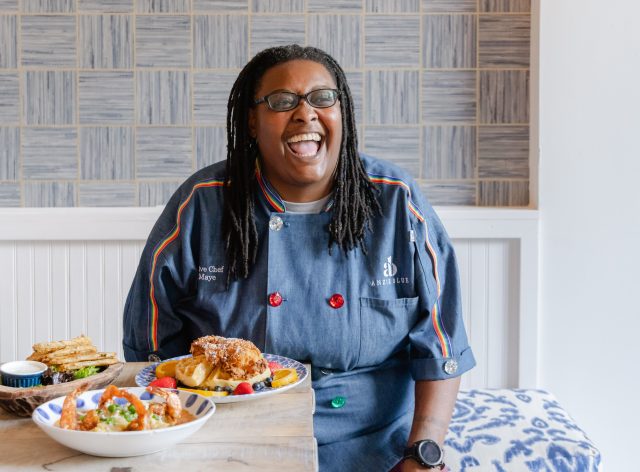
Dinner Menu: A Culinary Composition by Chef Star Maye, Scored by Beyoncé

When the Plate Has a Soundtrack

Welcome to the first edition of a new monthly feature, “Dinner Menu,” where we celebrate one artist or iconic album by having a chef soundtrack a menu with the music of their choice. For the inaugural installment Chef Star Maye pairs a tantalizing menu with Beyoncé. If you are ambitious enough to try one of these menus with our soundtrack send us video or tag @HitParader. We would love to see and share it! – Steve Baltin

There are artists who perform — and then there are architects of experience.

Beyoncé and Chef Star Maye exist firmly in the latter category.

Both women understand a rare truth: excellence is not about reinvention — it is about reverence, refinement, and range. Beyoncé builds eras rooted in cultural memory yet unapologetically forward-facing. I do the same on the plate — transforming familiarity into fine art without stripping it of its soul.

What follows is not simply a menu.

It is a three-course narrative, where food and music move in harmony, each amplifying the other.


COURSE I: THE FOUNDATION — ROOTS, REMEMBRANCE, AND JOY

Cornbread Bowl · Candied Sweet Potatoes · Mac & Cheese · Braised Mixed Greens · Fried Chicken

Soundtrack: “Before I Let Go (Homecoming Live)”

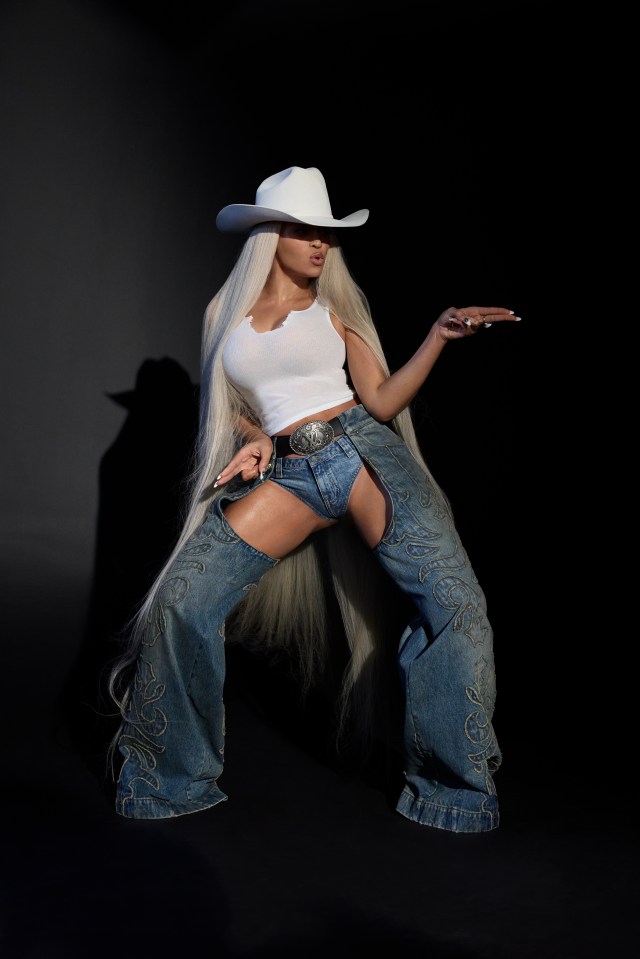
Photo: Mason Poole © Parkwood Entertainment LLC.

This course arrives like an embrace.

It is warm, intentional, and deeply rooted — each component carrying generational memory. The crisp, golden fried chicken speaks to ritual and gathering. The greens are slow-braised, patient, and wise. The mac and cheese is indulgent without apology, while the cornbread and candied sweet potatoes echo comfort, care, and celebration.

“Before I Let Go” is the perfect companion because it functions the same way this plate does: it activates community. Beyoncé’s Homecoming rendition didn’t modernize the song — it elevated it, framing Black joy, tradition, and excellence as worthy of the world’s largest stage.

My approach mirrors that same intention. I do not dilute Southern or soul food for acceptance. I frame it with reverence, allowing technique and presentation to enhance—not erase — its origin.

This course is the statement piece.

It says: We know where we come from, and we honor it beautifully.


COURSE II: THE EVOLUTION — CONFIDENCE, REFINEMENT, AND ASCENSION

Spiced Double-Cut Pork Chop · Brown Sugar Molasses Yam Purée · Heirloom Carrots

Soundtrack: “Upgrade U”

Photo: Blair Caldwell © Parkwood Entertainment LLC.

If the first course is foundation, the second is elevation.

The double-cut pork chop is commanding — seasoned with precision, unapologetically substantial. The molasses-laced yam purée introduces a depth of sweetness that feels intentional rather than ornamental. Heirloom carrots add balance and color, grounding the dish in restraint and sophistication.

“Upgrade U” is not about becoming someone else — it is about recognizing your worth and refining your presentation. That same philosophy lives on this plate. These are familiar ingredients, but they arrive disciplined, elevated, and assured.

This is where my culinary voice becomes unmistakable. I understand that luxury is not excess — it is clarity of vision. Every element is chosen, every flavor calibrated. Nothing is accidental.

Much like Beyoncé’s evolution from performer to global icon, this course represents mastery: the moment when skill, confidence, and identity align.


COURSE III: THE ARRIVAL — LUXURY, INDULGENCE, AND COMMAND

Oscar Filet Topped with Shrimp & Lobster · Roasted Corn Succotash · Crispy Smothered Potatoes

Soundtrack: “Partition”

Photo: Blair Caldwell © Parkwood entertainment LLC.

This course does not ask permission.

The Oscar filet is bold, impeccably cooked, crowned with shrimp and lobster as a declaration rather than a flourish. The roasted corn succotash adds texture and brightness, while the crispy smothered potatoes ground the dish in indulgent satisfaction.

“Partition” works here because it embodies controlled opulence—sensual, confident, and unapologetically self-possessed. It is not about spectacle for attention’s sake; it is about knowing your power and using it deliberately.

I am approaching luxury in the same way. This dish is indulgent, yes—but never careless. Every bite signals authority. This is cuisine for diners who understand that refinement and confidence are inseparable.

This is the arrival moment.

The course that lingers long after the table is cleared.


THE CLOSING NOTE: A SHARED PHILOSOPHY OF EXCELLENCE

Beyoncé builds worlds through sound.

Chef Star Maye builds them through flavor.

Both women:

  •  Lead with cultural integrity
  •  Elevate tradition without dilution
  •  Create experiences that feel intimate yet iconic

Our work reminds us that true luxury is rooted in authenticity. When food has a soundtrack and music has a texture, the result is more than art—it is legacy.

This menu does not merely feed the body.

It tells a story, scored in confidence, plated with purpose, and served at the highest level.

– Chef Star

Songs That Shaped Me: Noah Cyrus’ Favorite ‘70s Songs

Noah Cyrus’ I Want My Loved Ones To Go With Me was hands down my favorite album of 2025. For me, Cyrus’ brilliance all starts with her profound and thoughtful songwriting. 

Though having just turned 26 January 8 (a birthday she shares with Elvis Presley, David Bowie and The Doors’ Robby Krieger), Cyrus is a decade into an impressive career. And throughout those 10 years she has consistently shown the ability to blow away listeners with her writing, which is often in collaboration with Australian artist PJ Harding.

Cyrus understands how important songwriting is for her ultimate goal. “I want to be a career artist for myself in my personal lifetime. What that means to me is writing songs that connect with people,” she says. “No matter how many people, if there’s still somebody listening, I will be making music. I get that, I think, from my dad. I’ve watched him never lose his love for music. And I’ve been doing it for 10 years now. What’s kept me going is my music. Moving forward is something very important to me.”

Cyrus gets much of her musical inspiration from her family, particularly her dad. I asked her to dig through her childhood memories and record collection to pick the songs of the ’70s — and a few just beyond — that influenced her songwriting.

In the debut of a new monthly feature, Songs That Shaped Me, Cyrus kicks things off with a brilliant playlist. As she tells me, “I’m such a huge fan of Loretta Lynn. That’s somebody whose songs have really inspired me. I could have made you a playlist of 100 songs. So yeah, no, I have some good inspirations.”

In no particular order, here are Noah’s 18 songs that shaped her.


1

Terry Jacks – Seasons in the Sun

Bell, 1973

“Seasons in the Sun” is my first memory of music. You know how memories of a kid turn on like a light switch? It’s darkness beforehand, and then there’s the memory. My memory is just lights on and being in my dad’s music studio, which was also a like workout area. He had just a boombox and it wasn’t his music studio. It’s his place he would go and listen to his mixes, and it was just his little spot in the house. And he would go there and we would go and play. I remember him playing “Seasons in the Sun” and like asking me to sing it to people. That’s my entire first memory of music. As I grew, that song became even more meaningful to me. I had a resurgence of that song in my life recently in the past weeks. My tour manager of many years, Keith Albrizzi, he’s a legend to the industry and worked with me and Miley and artist friends of mine. He passed away on January 1st and he was battling ALS. He was in my life since I was eight years old. His son and I went to school together. Keith would drive me home from school, he and his wife would help us do our homework and I would always be at their house after school. He and I grew so much of a connection that when the time came, I asked him, “will you be my tour manager?” He’s just been an incredible guy through everything and when I lost him, I just kept hearing that line, “Goodbye to you, my trusted friend. I’ve known you since nine or ten. And so together we’ve climbed hills and trees.” All of that really reminded me of my relationship with him.

Terry Jacks - Seasons in the Sun

2

Bob Dylan – You're Gonna Make Me Lonesome When You Go

Columbia, 1975

I love that song. I have so many memories of that song. Dylan, obviously, is a true singer-songwriter and been a fan of him through my dad and I just grew up with Dylan. That song has inspired many of my songs I’ve written with PJ. Yeah.

Bob Dylan - You're Gonna Make Me Lonesome When You Go

3

Bob Dylan – It Ain't Me, Babe

Columbia, 1964

It was a song during my first breakup. I just remember being in my room super sad listening to this music and that song. It’s just another really brutally honest record and it’s a very undeniable Bob Dylan written song or written song. It’s definitely a song from childhood that I carried into adulthood with me and has been a long-time favorite.

Bob Dylan - It Ain't Me, Babe

4

Fleetwood Mac – Storms

Warner Bros., 1979

Lyrically, the visual side that the lyrics give you is something that’s been an inspiration to me. My love of was a big inspiration for “Way of the World,” these Fleetwood Mac light rums, very flowy. That feeling of the weight lifting off of your shoulders. It’s always been a very comforting song to me, and, I don’t know. It’s a song that I’ve loved for a very long time and has recently been very inspirational to me and my songwriting, especially just speaking about nature and relating that to things in life.

Fleetwood Mac - Storms

5

Fleetwood Mac – Landslide

Reprise, 1975

“Landslide” was my introduction to Fleetwood Mac as a child and is a song that obviously is about growing and the pains of growing and getting older and that’s a common theme in my music. This song kind of inspired me to touch on those themes and speak about those because those are fears that I’ve had from a very young age. It’s said so honestly and so beautifully and it’s always been a song of comfort but also one of those songs that when I hear it, it makes me want to cry immediately.

Fleetwood Mac - Landslide

6

Bob Seger & The Silver Bullet Band – Against The Wind

Capitol, 1980

My favorite song by Bob Seger, I have the album cover tattooed. The horses running in the water. Again, my dad loved Bob Seeger. He used to cover him whenever he was just performing in bars. He was singing “Night Moves.” I came across “Against The Wind” on my own, but I also learned that it was one of my grandma’s favorite songs whenever it released. And I learned that when she was passing away. It was my last memory of enjoying music with my grandmother. And that was recently. “Against The Wind” sonically, just like Fleetwood Mac, inspires that lightweight feel good song that you can also speak about a tender moment.

Bob Seger & The Silver Bullet Band - Against The Wind

7

Eagles – Wasted Time

Asylum, 1976

This was my parents’ song, and they would listen to this whenever they had first met. And through my childhood, I remember them dancing in the kitchen to this song and us playing it in the car and them singing it at the top of their lungs. It’s a beautiful memory that I get to keep within that song. I’ll always keep a really important and special time and part of my life within that song. It’s like a snow globe and I get to shake it and look back and look inside it and I think that’s really beautiful.

Eagles - Wasted Time

8

10cc – I'm Not In Love

Mercury, 1975

It kind of throws you off, within this group of country and classic rock records. But yeah, I just love the vulnerability and the conversation of it. It also carries this really cool production. It’s been a record that I found in my teen years. And I love this record.

10cc - I'm Not In Love

9

Don McLean – Vincent

Capitol, 1971

Again, it’s learning to be visual with songwriting. This is a song that was very visual. You get a picture in your mind and that’s been a practice of mine over the years of being a songwriter is how visual can I be. Also, it’s just a beautiful story told about something that happened so long ago and it’s told in this modern way without being cliché. It’s one of the most beautiful songs, it’s up there for me with “Landslide” and “Seasons in the Sun.”

Don McLean - Vincent

10

Pink Floyd – Wish You Were Here

Columbia, 1975

I love this song. The Pink Floyd production on this record really inspired this album and the more alternative sides of the record. It’s also just been a song that I’ve connected to through loss. I feel like it captures so much nostalgia as well. Whenever I listen to it, it just feels nostalgic. And that’s something that I am so fond of in music and getting that feeling. But any time you hear, “We’re just two lost souls swimming in a fishbowl,” it’s just the most freeing thing. The fun part of loving a song is having those songs that are so memorable and so relatable and give you that feeling.

Pink Floyd - Wish You Were Here

11

America – Horse With No Name

Warner Bros., 1971

I love America, and my dad loved America. It was a big part of my time growing up in Nashville, riding around on four-wheelers and sitting in my dad’s side-by-side Polaris listening to this song and in his truck. So, I have a lot of nostalgic young memories to this song.

America - Horse With No Name

12

Neil Young – My, My, Hey, Hey (Out of the Blue)

Reprise, 1979

Neil, I have not had the chance to ever see live but that would be one of my dream people to go and see. I would love to go and see Neil. But Neil Young is one of my dad’s favorite artists. And “My, My, Hey, Hey,” has been a song played around through my entire life.

Neil Young - My, My, Hey, Hey (Out of the Blue)

13

Led Zeppelin – Going To California

Atlantic, 1971

“Going to California” we recently had been playing this on tour. It was one of my brother’s favorite songs, and I remember him playing that. Also, I’ve written so many songs about California, and I feel like that are trying to mention California or Los Angeles or L.A. When people think of where I’m from in California they think of city. But to me, I think of the hills. I think of the mountains, the ocean, the desert and how beautiful California is. It’s a state of mind. I love that song so much, and it’s inspired me greatly.

Led Zeppelin - Going To California

14

Johnny Cash and June Carter Cash – Jackson

Columbia, 1967

Oh man, that’s mine and my dad’s song. That song has inspired me and it’s definitely inspiring my newer music. I definitely have been referencing some Johnny and June. That’s been an inspiration for myself and Orville [Peck] for future things. And my dad and I used to sing that song all the time. We still do whenever we’re together. We both just love that song so much. And Johnny and June, he would always put on everything Johnny and June.

Johnny Cash and June Carter Cash - Jackson

15

Elvis Presley – Unchained Melody

RCA, 1978

I had to throw that one in, as it is literally one of my favorite songs of all time. Elvis and I share a birthday, which is happening tomorrow, us and David Bowie. So, I’m in good company. I chose specifically “Unchained Melody” because it’s such a beautifully written song no matter who was singing it. I love Elvis’ performance of it. I also very much love a newer version of it, which is Orville’s cover of it. There have been so many incredible artists to sing that song it’s hard to pick one. But I’ve loved that song forever and Elvis was never not around, whether it was in pictures or bobblehead sitting on my dad’s desk or records on the wall or playing in the air. My dad used to say that I was Elvis reincarnated. So, I think I have a very special relationship to Elvis.

Elvis Presley - Unchained Melody

16

Dolly Parton – Coat of Many Colors

RCA, 1971

You can’t get cooler and you can’t get better hair. That’s for sure. “Coat Of Many Colors” is my mom’s favorite song of Dolly’s other than “Here You Come Again.” She’s obsessed with that one too. But that’s an early memory of singing that song with my mom and experiencing her reminiscing about childhood herself. And that’s always been a favorite in our house.

Dolly Parton - Coat of Many Colors

17

Dolly Parton – When Someone Wants to Leave

RCA, 1974

I love the raw honesty of that song. It reminded me a lot of your question on if I’ve ever heard my inspirations in one of my songs afterwards. I definitely have heard that inspiration come through in a lot of the honest songs that me and P.J. have written about heartache and breakups. Dolly has been a huge inspiration to me and my dad and her have been friends for many years. So, her voice was around a lot and that carried a lot of weight.

Dolly Parton - When Someone Wants to Leave

18

Emmylou Harris – Bury Me Beneath the Willow

Dolly, 1976

I love the connection to her and nature through the song and the depiction. It’s been a song that I’ve loved forever, but also a song that has inspired me through the last couple of projects I’ve made. I found myself referencing it a lot in the studio this last time as well. And my favorite is the Trio of Emmylou, Dolly and Linda [Ronstadt]. That song is one of my favorites of hers and with “I Saw the Mountains” and some of the new songs that I’m writing and a lot of the more acoustic descriptive songs that connect back to nature they’ve definitely probably referenced that song.

Emmylou Harris - Bury Me Beneath the Willow

And that’s it. Noah’s newest record, I Want My Loved Ones to Go with Me (Deluxe), is out now everywhere. On behalf of Hit Parader, it comes highly recommended. Her most recent releases include a feature on her brother Braison’s EP Looking Forward to the Past via the song “As Long As You’ll Stay,” as well as the just-released “Light Over the Hill” from the Reminders of Him film starring Maika Monroe and Tyriq Withers.

Photo: Hannah Khymych