While All-American Rejects admittedly had a blast dressing up as KISS to perform at Warped in Mexico City, a set that was introduced and endorsed by “The Demon” himself (Gene Simmons for those not in the KISS army), Simmons is very confident that now that KISS has said farewell to the road, after more than half a century of touring, there will never be another band or spectacle quite like his group in the annals of rock.
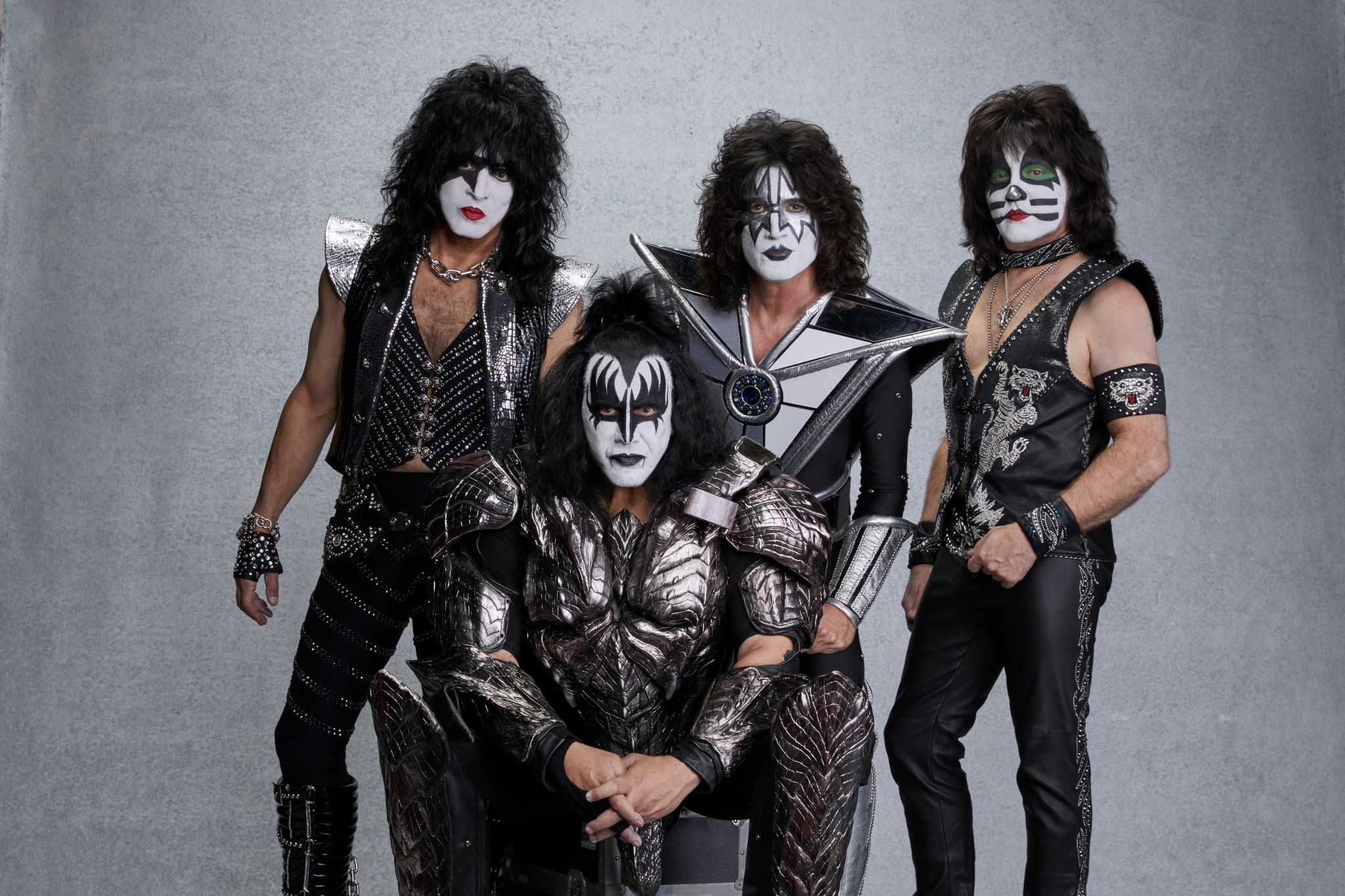
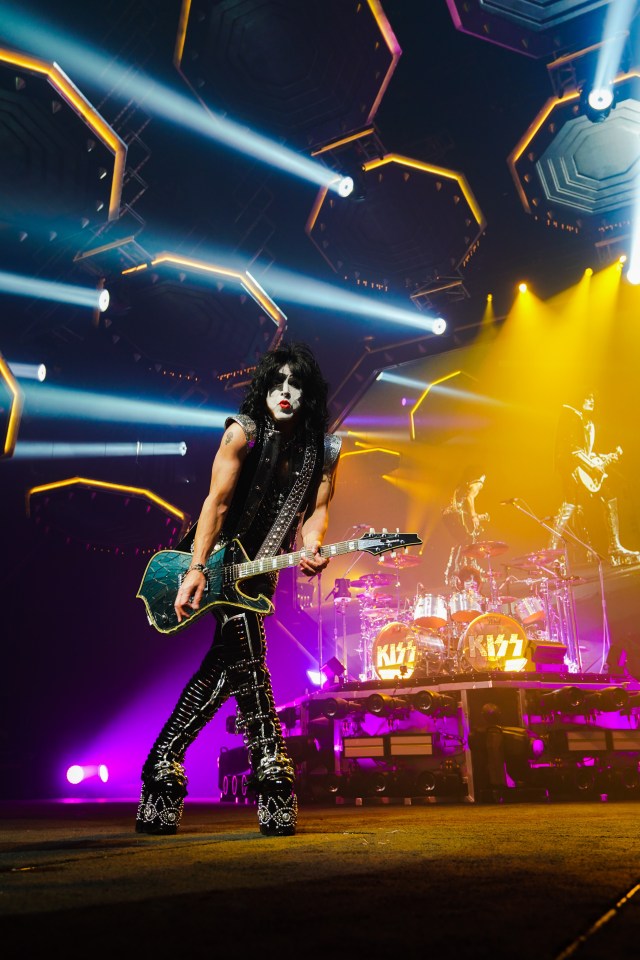
“There is now not, and there probably will never be, another band like KISS. For a simple reason, no other band is stupid enough to put on seven-inch platform heels that weigh nine pounds each, guitar that’s close to 15 pounds with the studs and everything else, full weight, 40 to 50 pounds of additional weight with the armor and all that stuff,” Simmons quips. “You’ve got to spit fire and fly through the stage and do that stuff for two hours. Who’s going to do that? We love Bono and Thom Yorke and all the greats. But if you put Thom in my outfit, he’d pass out in a few minutes. Are you kidding me? And then fall off the seven-inch dragon boots and break his neck.”
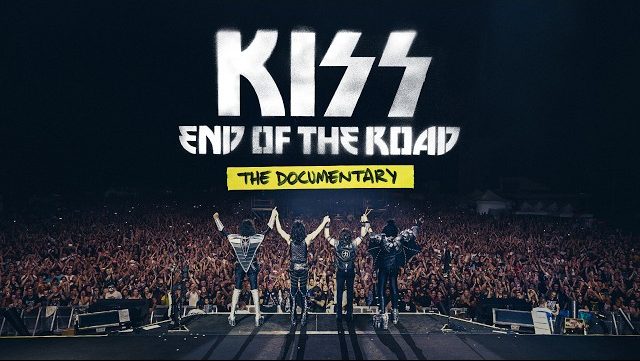
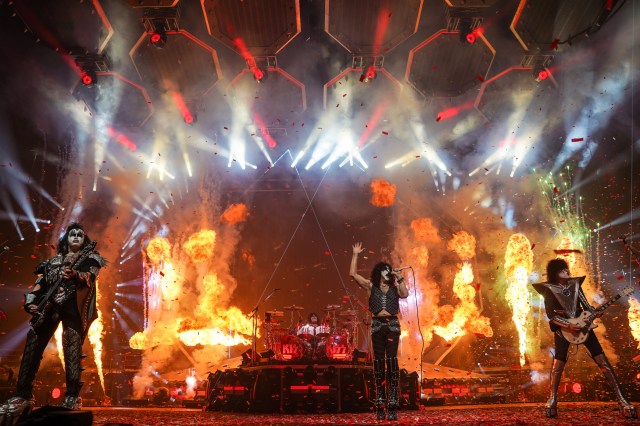
As much as the thought of Radiohead trying to perform in KISS gear brings a smile to our collective faces, we have to agree with Simmons, the KISS “End of the Road” tour, chronicled in the upcoming End of the Road documentary, premiering November 19, is the true end of an era.
Not surprisingly, when Hit Parader spoke with Simmons and Paul Stanley about the documentary in separate interviews this past week, both were feeling very nostalgic about saying goodbye to a massive chunk of their adult lives.
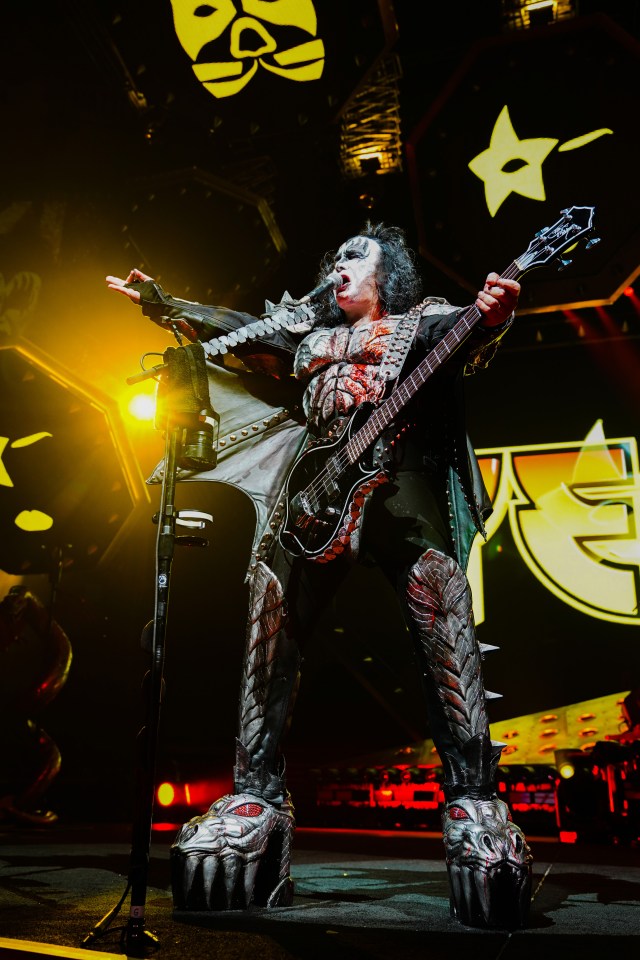
Simmons took us back to the beginning days in the boroughs of New York more than 50 years ago.
“The short story is one day, one of us said, ‘Hey, let’s go to Woolworth, where they have everything.’ And we wound up in the section of Woolworth’s where they have gags, like those plastic ice cubes that had flies in them, or whoopee cushions. For some reason, we all picked up clown makeup. Stein’s clown white and Stein’s clown black. And Paul immediately went to lipstick, red lipstick that chicks wear. We didn’t know what we were doing. There was no master plan,” Simmons says. “And we went back up there. We also bought two $15 long mirrors that were about four feet high. They were about two feet wide, maybe less, and four feet high. And when we leaned them against the wall, they warped a little bit. In the middle, they kind of bent. So, we looked like we were in a freak house. As you got closer, your nose would get bigger, all that stuff. And we got off on that. Before we knew it, we were all putting makeup on our faces. And I can’t tell you that there was a plan because there wasn’t. And we fumbled our way through it. What came out was pretty close to the makeup we wore for half a century.”
Looking back on it now, with the wisdom of being 77 and sans the impetuousness of youth, he laughs, realizing now the whole thing was pretty insane.
“We were aware that there wasn’t any other band out there doing what we were doing. We were an anomaly, as scientists call it. With no experience, no resume, these four idiots off the streets of New York, certainly unqualified, decided to put together the band we never saw on stage. It’s a pretty crazy idea — let’s look success in the face and completely ignore it because success would mean hit singles and trying to be The Beatles. Get four good-looking guys with the same haircuts and stuff like that, or The Stones. But we decided to go into the Twilight Zone. There’s never been a band like that,” he says.
For Stanley, it was, and remains, the fact that it is wholly unique that makes it so special. And that is what he wanted the tour and subsequent documentary to showcase.
“I have to say the ‘End of the Road’ tour was really about crossing T’s and dotting I’s and making sure that everybody understood this was the last time they would see us and we could validate and justify the love that we all had for each other by committing ourselves to doing the kind of show that only we can do because it’s more than a show. It’s us,” he says proudly. “Anybody can buy a show. Any band can buy a production company and put a show on. But the people on that stage are the engine.”
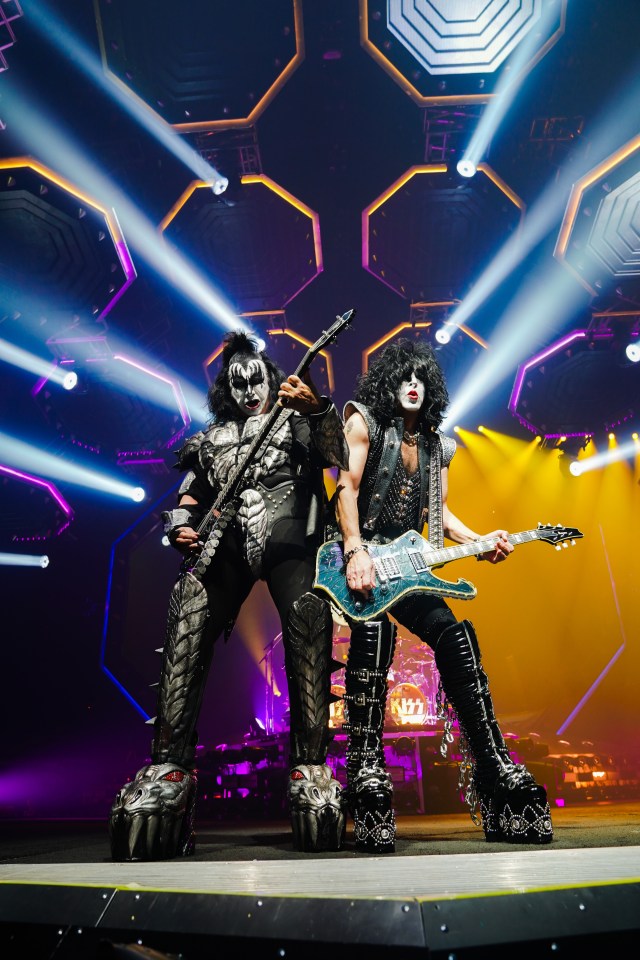
Of course, there is no way to go back to the beginning of KISS and talk about the people on stage without including the late great “Spaceman,” Ace Frehley, and the “Catman,” Peter Criss. And both Stanley and Simmons acknowledge them.
“Mind you, Peter and Ace are at the foundation of this behemoth. Without them, we never could have built this,” Stanley concedes. “And with them, we couldn’t have finished it. So that’s not to take away from them.”
What, in his mind, allowed him and Simmons to “finish”? “I think Gene and I have always had a very strong survival instinct. We have always been very committed to determining our own fate and not letting anybody else ever coerce or sabotage us. We’ve taken our lumps for things we’ve done that didn’t work out. We also always learned from everything we did and never lost sight of the importance of hard work and the work ethic,” he says.
What also allowed them to make it was the insane cross-generational support of the legendary “KISS Army,” the fans who have been with the band for decades. They wanted to say thanks for that loyalty, hence the film.
“What strikes me so much about the whole documentary is that people get a chance to see how much responsibility and sense of obligation we have and have always had to our fans to give them something extraordinary and to give them something that no one else has given them,” Stanley says.
Members of the Rock and Roll Hall of Fame who have sold over a hundred million albums worldwide, played to millions of fans, including an estimated 150,000 at a 1983 concert in Rio de Janeiro, KISS have earned their biggest honor from the audience, namely being handed down generationally in families. They saw it nightly when they looked out at the crowd and saw sometimes three generations — grandparents, parents, and kids – in the audience.
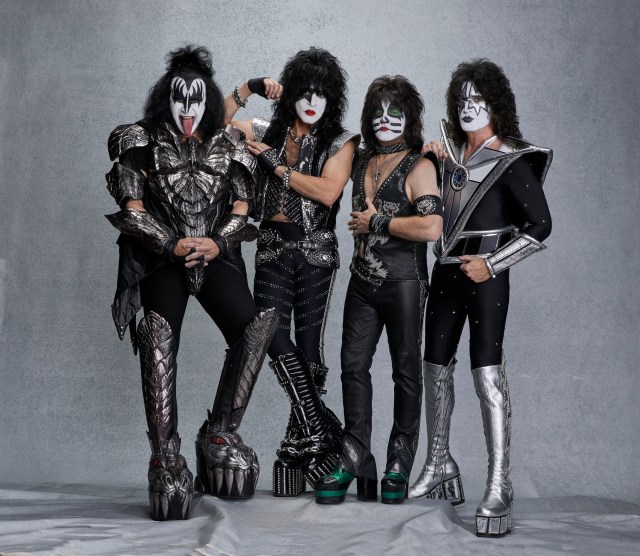
“We all share it together, which is about as big a compliment as you can get. It’s literally been passed down as a legacy,” Simmons says.
“That’s poignant. That’s deep, deep stuff. It’s what I think all parents hope for: those moments of sharing a common experience. Seeing the joy in little kids’ faces or having a parent hold their child up in front of the stage, that’s an honor. That’s something that we have experienced that most never will,” Stanley adds, expanding on Simmons’ thought.
It’s not an accomplishment they could have ever imagined, because, as both point out, when they started in the early 70s, there were no examples of that longevity. The Stones, the benchmark for endurance in rock, were not even teenagers yet. Simmons now recalls his goals were way simpler.
“All I ever wanted, and my dreams came true, was to record an actual album, have it come out on a label, and then go to a record store and buy my own record. Oh, my God, that was like you climbed Mount Olympus and you joined the gods, even for a short time,” he says.
More than five decades later he recalls those first moments as vividly as if it was yesterday.
“That happened as soon as the first record came out, February 18th, 1974, on the East Coast, February 21st on the West Coast. I went into a record store and bought the first KISS album. I thought that was the best thrill. I remember listening to Nightbird, Alison Steele on WNEW. which was an FM station. That was the cool station. They’d play all the British records. And I was over at my girlfriend Jan’s place. She was in the basement of her mom and dad’s place. And we tried to be quiet because we got intimate and so on. And the radio radio’s in the background playing WNEW loudly so that mom couldn’t hear. And this music comes on and I thought it was Slade, one of my favorite bands. And I go, “Wait a minute, I know those words. That’s me, I’m singing ‘Cold ‘Gin.’” I heard that, and I stopped. I can’t tell you the feeling. It was surreal because it’s like Alice in Wonderland. You’re in this reality and then she goes down the rabbit hole and you can’t believe it because you’re in a different reality. In the real world, we exist here. And then the Beatles and the Stones and everybody else are there on the radio and in record stores. That’s a different reality. And all of a sudden, there we were.”
For Stanley, he just knew he wanted to be in the best, biggest band in the world.
“When I was 17, I believe, I saw Led Zeppelin. That was life-changing, that raised the bar for me to something that was out of my reach. But it was important to know that that existed, that perfection, that excellence,” he recalls. “Bands come and go, but there are bands and then there are phenomena. And I’ve always preferred being more than a band and always aspired to being more than that.”
So, having both gone wildly beyond their dreams, KISS saying goodbye to the road and Simmons being 77 and Stanley 74, you might expect them to chill. Hell no. as Simmons explains from North Dakota, where he is doing two solo shows, it was time to end KISS, but he has a lot left.
“Touring with KISS was like a small city, a juggernaut, private jets and three triple-decker buses, 20 tractor trailers and 60 people and five miles of cable. It’s crazy stuff. But we loved it. And at some point, because we’re smart enough to know when to get off the stage doing that, the physicality of your age. We’ve all seen bands that shouldn’t do what they do on stage for longer than you know. But I still look great. My physicality is great. But at 77, I can’t do what I did in my 20s. So, this solo band is easy. I show up with a guitar pick. The promoters give us amplifiers and drums and everything, and it’s just shits and giggles,” he says.
Similarly, Stanley has his own labor of love, his Soul Station project, which pays homage to the great soul classics, like Motown, of the 60s and 70s.
“We’re really like this family, an international family of people all bonded by this great music. We just have such a ball that, yeah, it’s just a matter now of time. The dust keeps settling from the ‘End of the Road.’ Then it becomes, ‘Okay, what now?’ And Soul Station is just so much fun for me. And thankfully, so much fun for everybody else. I love that music and being able to hear it. I’m not only in Soul Station, but I’m also a fan,” Stanley says.
However, while they are both excited about what is ahead for them individually, they want to take every minute to bask in the unparalleled legacy they created and celebrate what the End of the Road documentary shows and represents.
“We want people to see that behind this juggernaut are people. That’s what makes this what it is and has made it what it has been. So, I have a lot of pride in it and no regrets on that final tour because it was everything that I hoped it would be because we worked our asses off,” Stanley says.
Watch the live premiere of KISS: End of the Road!
Premiere Ticket Link: Live at 9:00 PM EST / 6:00 PM PST