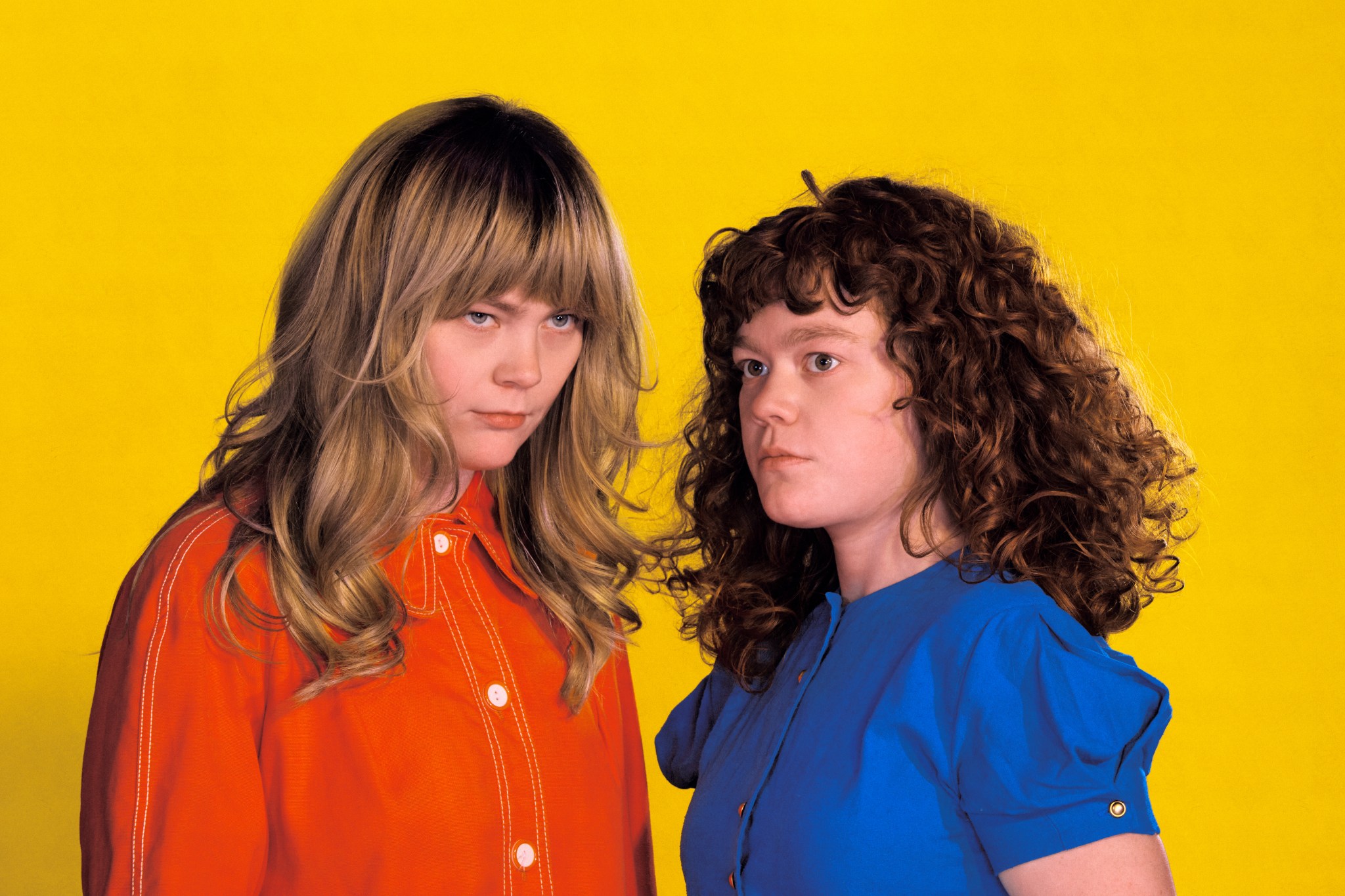
Growing up in Bowling Green, Kentucky, the sister duo of Girl Tones has always paved their own path, from their booking to their distinct branding to their loud and one-of-a-kind rock sound. This ingenuity, combined with kick-ass rock music, led to a buzz, one that caught the ear of Bowling Green’s own Brad Shultz of Cage the Elephant. Seeing their vision, Shultz agreed to produce the group’s debut LP, Precious, and subsequently release the project on his label, Parallel Vision. What came as a result is a fiercely DIY debut that feels unmistakably like Girl Tones, shaped by and written through the last four years of the band’s career. Hit Parader got the opportunity to sit down with Kenzie and Laila, to chat everything Precious.
Hit Parader: Bowling Green is such a central part of the band’s story, but it’s not always a city that people immediately associate with a rock scene or a rock breakout in the U.S. What did growing up in the Bowling Green scene, in the Bowling Green DIY scene, teach you about building your own momentum?
Kenzie Crowe: I think Kentucky as a whole is underrated for all the amazing art that comes out of here, actors included. It’s not just music. We’re kind of just in the entertainment. There’s more to Kentucky than a lot of people think, I feel like. There is a really creative scene around not just Bowling Green. We really learned how to do things DIY. There used to be crazy house shows, and this is far beyond mine and Laila’s time here. Those house shows were going on forever. I have heard literally floors caving in from these house shows. There’s some real, real-deal stuff here. I think you want to stay in your hometown a lot of the time, so I feel like when there’s not much to do other than a mall and a bowling alley, you start becoming more creative and find new ways to entertain yourself. I think that’s really where the scene comes from, is boredom. It taught us to be creative, and we did our own events in Bowling Green. We made friends with the venue owners and learned how to set up our own events and sell out venues there in Bowling Green, just me and Laila, really. That’s what I would say we learned from it, is to take control of your own destiny, not to be cheesy, but at least that’s how I feel.
HP: That’s fair. Yeah. With that sort of taking control and the whole DIY ethos of that upbringing, is there any part of that DIY ethos that you want to preserve as you keep growing, and you keep playing bigger and bigger shows, and you keep putting out bigger and bigger releases?
Laila Crowe: Oh yeah, we still do pretty much everything ourselves. We are hands-on with every excruciating detail, so we have not lost that.
KC: Even in our own personal lives, Laila is a seamstress. She literally makes costumes for us. We are very DIY. It’s just something we love to do.
LC: Yeah, that’s how we were raised. Our parents always had that mentality. If we were like, “Oh, we wish this thing was happening,” they’d just be like, “Well, then do it. Just make it.” Because it’s easy to sit around and be like, “Oh, I wish there was this. I wish there was that.” But no, you have to take that initiative, like “Well, why isn’t there? Let’s just do it then. We want this thing. I want a perfect Dorothy recreation costume. I’ll just make it then.”
HP: I love that. What is one of the greatest things that you’ve learned non-musically while taking such control over your art?
KC: Honestly, it’s easier said than done, because you’re right. It is more than just the music. We are business owners at this point. It’s been really hard for us to hire and sometimes fire people. That is just a really difficult thing to do, and I think maybe we were a bit naive coming into this. We just were like, “Oh, we’ll just be recording music. We’ll just be touring.” There’s so much more to this industry than that. That was very eye-opening for me to realize, “Oh, this is a business, for sure.”
HP: And how many moving parts there are as well, that the listener does not see. The hassles of releasing music, pitching, booking, advancing, and all that sort of stuff.
KC: I gotta say one thing. Our first tour with the Velveteers, we went on tour with them. We had no idea about advancing. I had no idea that you had to do that.
LC: I didn’t know what that was. I don’t know about that.
KC: And so we literally were showing up at venues, and it went fine, to be honest. But anyways, I just think that’s so funny. We were that naive. We didn’t even know about advancing shows or anything like that. No idea.
HP: It worked out, which is the best part, but yeah.
KC: [laughs].
HP: Congrats on the record coming out! Debut albums can sometimes carry somewhat of an unspoken pressure to be the correct introduction for a band. Did you ever feel that pressure, that Precious needed to explain Girl Tones to everyone at once, or was there another mindset going into the project?
LC: I think every time we record anything, we’re trying to make it the best that we can. When it becomes a larger body of work, all that focus and attention and care makes it all blend together, or work together seamlessly, I feel like. But of course, coming up with the title and the order of the songs and the packaging and everything, we wanted everything to be perfect. I don’t even know how many times we read through the lyrics just to make sure there were no typos. There’s, of course, pressure on it because of how much it means to us and how long we’ve been working on it. This has really been in the works for four years now, so it’s been a long process.
KC: I don’t think it’s pressure from what other people think of it. I think it’s pressure we put on ourselves to do the best we can for us, that we’re capable of.
HP: And that’s honestly a good thing to have, because it shows how much you care about your art as well.
KC: Yeah. When I write a song, I’m not thinking, “What are other people gonna think of this?” And I think that is something that is difficult to learn, and I’ve heard from a lot of artists that they do think about that. They’re like, “How are people gonna perceive this?” I’ve never had that issue.
LC: Because we want something that we’re happy with, and what we like. It’s not gonna appeal to everyone, but what does?
KC: Yeah. If people aren’t hating on your music, it’s probably boring.
HP: And also, if you’re not writing music specifically for yourselves, then it’s a lot more difficult to self-justify career longevity. It’s not as fulfilling, almost.
KC: It’s like, what’s the point? What are you doing this for at the end of the day?
LC: If it doesn’t mean anything to us, how’s it gonna mean anything to someone else?
KC: And people know that. People can see that. People know when something’s fake.
HP: That’s fair. What was one of the first big creative decisions going into this project that established the album’s direction, even from four years ago to now?
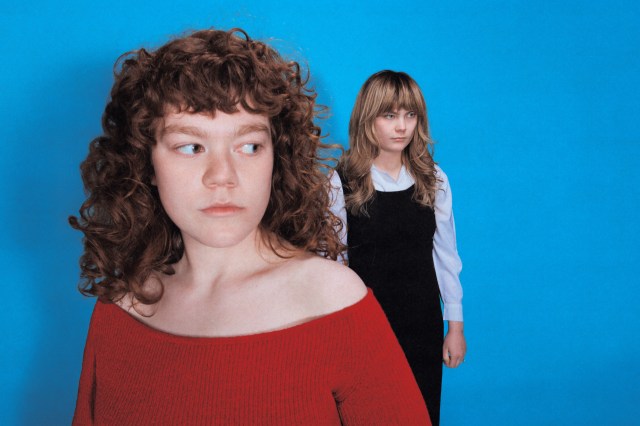
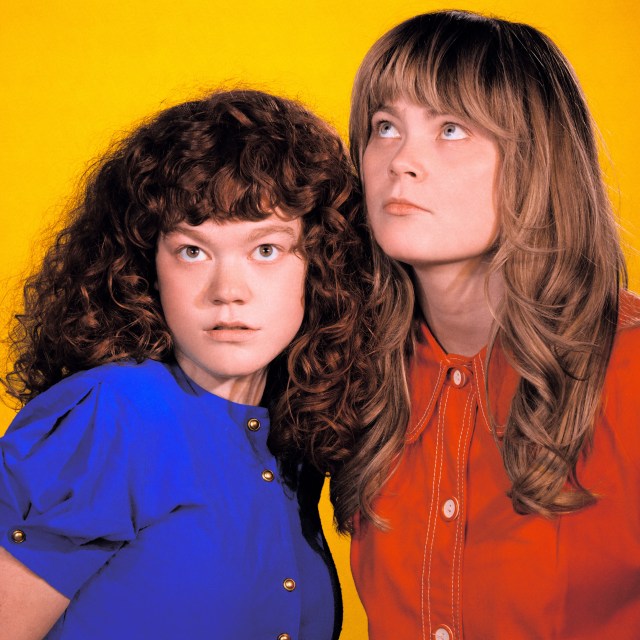
KC: I think the biggest thing was probably choosing the aesthetic of the primary colors. Not that that has anything necessarily to do with the music, but overall branding, I think that was probably the smartest decision we have made in this, as far as being able to market ourselves and our branding, or our brand identity. I think that was probably the smartest thing to do. And we love the White Stripes. We love Oliver Tree. They both have these very, very distinct characteristics.
LC: You know what’s them.
KC: And I think also another thing is, low-key, our hair. Laila’s hair is, in and of itself, a good branding thing. People literally recognize her just by her hair.
LC: Which is funny, because I didn’t do that on purpose.
HP: That’s awesome. Out of curiosity, is there anything specific to the way that you wrote the songs or recorded the songs? Was there a specific decision early on that really shaped the way that the record turned out?
LC: Yeah, yeah. The song “Precious” stood out, because we started out with a lot of rock stuff. Given how we’re set up, it’s guitar and drums, so it’s hard to expand out of that, especially in a live setting. But we both were classically trained, and everyone has dimension to them, and it’s not just one thing all the time. We had this song that, for the longest time, was just called “The Ballad,” and it’s actually with me on piano. It shows more of the dimension, as people will say we’re a punk band, or we’re just a rock band, or whatever, and it’s not just that. We’ve always admired artists like Beck or St. Vincent, where no two of their albums sound exactly the same. But you can still tell it’s them, because it’s not them putting anything on. They’re still just making what they feel like making and not restricting themselves to one genre. I think it was really important for us to make that come across in this album. So when a song like “Precious” will finally come out, which is the ballad, there are strings involved. Kenzie plays cello on it. It’s a lot more slower-paced and more emotional. And we have another similar song. It’s not as ballady, but it’s called “Mirror,” and it’s on acoustic guitar, slower tempo, and we haven’t really released anything like that, as far as singles go. t’s part of a bigger-picture thing, so you don’t want to put that one bit out. And it’s such an important song. It’s the title track. I think it was just important for us, thinking of the album, to show more range and not restrict ourselves to one genre or one tone for every single song, because then all your songs are going to sound the same.
HP: Heck yeah. What did you want the album to say about Girl Tones that your earlier singles could not say on their own?
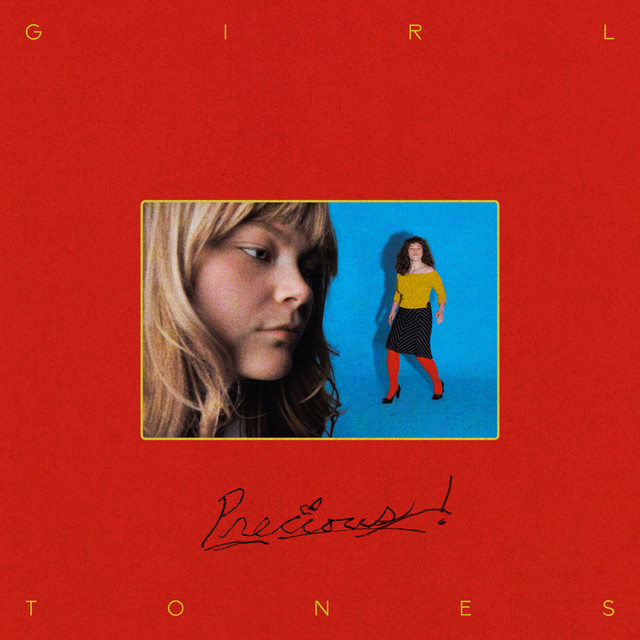
KC: The title, Precious, comes from our Abuelita, who used to say that we were precious to her and that she was so proud of us all the time. She would always say that about us. On the actual album cover, you’ll see the word “precious” written in cursive. That’s actually her handwriting that we use. Basically, the album’s idea is that our art is precious to us. It’s just a precious form of media to us. I think compiling all these songs together is us presenting our baby to everybody. We want people to think about the songs. We don’t want it to be where we’re explaining every single song. We want people to actually listen to the lyrics and take what they need from them. We don’t want to blurt out every single thing about it. Actually listen to it and see what you think. At the end of the day, we have always believed this, is that I have my meaning of the songs. Laila has her meaning of the songs, so the person listening to it has to have their own opinions and feelings about the song. We’re not gonna tell you how to think about the song. I think it’s a precious project to us that we’re giving to you to see what you think about it. You don’t have to hear us talk about it anymore. Just listen to the music and see what you think. And then tell us. Tell us what you think!
HP: When you listen back to the final recording, where do you hear the biggest difference between the band that began making it and the band that finished it?
LC: Definitely in songs like “Cherry Picker.” That song we recorded right after our first tour. When a band hasn’t toured before, and then they come back from tour, it’s a different level of how you approach your craft, because you have something you can’t achieve from just practicing. Us sitting in the basement practicing, we don’t really get much done because we don’t really want to [laughs].
KC: We hate practice [laughs].
LC: We never outgrew that. When Kenzie and I were in classical, we would not practice the entire week until the night before our lessons, and then we would try to squeeze as much in as possible. We never outgrew that. We still do that now. But when you’re on the tour, obviously it’s the show, but it is also the ultimate form of practice. You are in front of a new crowd every single night, and you’re testing out new things and building the show with that live energy. That’s not something that, even if we were to practice consistently, you could build from practicing in your basement to no one, because you don’t know how people will actually react. It’s the same with a stand-up comedian. He’s not gonna know if the jokes hit if he’s telling them to the mirror. When we had first gotten back from our first run of tours, it was two back-to-back tours, 47 days total. It was a great experience, but it took a lot. But when we got back, we pretty much immediately jumped into the studio, and it was the day before we ran into the studio, or a couple days, we sat down for an hour, and we put together “Cherry Picker” and “Volcano,” and it was just a different level of the flow of creating the songs. We just sat down and cranked it out.
KC: It felt really easy.
LC: Yeah, it was just easy, because we were in that zone of pretty much practicing every single night the same stuff. We were so locked in with each other that it came out of thin air, almost, and then we went into the studio and knocked it out easier than we had really recorded any other songs. It usually takes us a couple of days for each song, if we’re lucky, and I think we did both those songs in three days. That definitely changed the tone, and every song since then, I feel like I can personally see and feel the difference.
KC: “Glowing Buzz” was another one of those, where we were going to the studio that day, and we did not have any material at all. And I just came up with that riff and the melody, and it was just like, “Wow, this is actually pretty solid for just coming up with this right before going to the studio.” And then we get there, and it went really well.
Listen to Precious here.