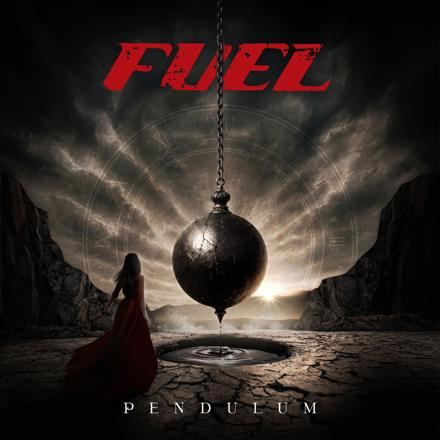
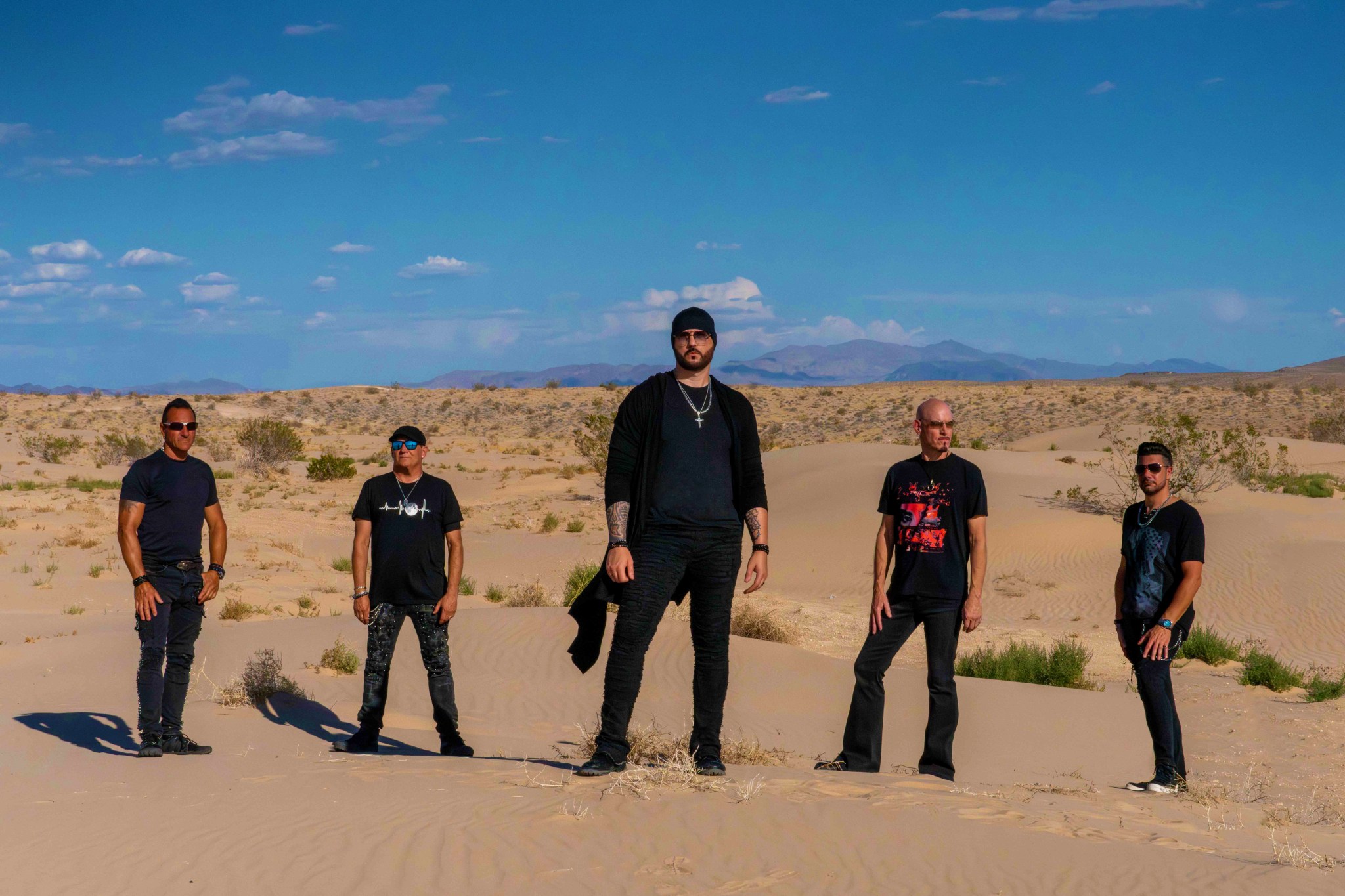
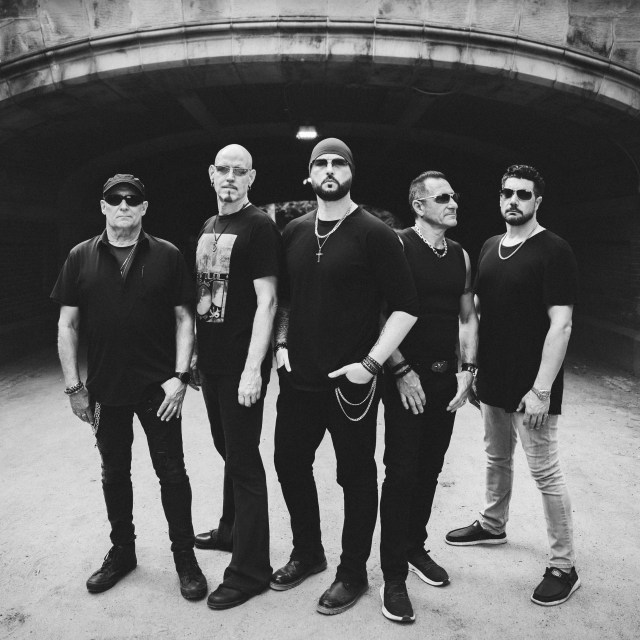
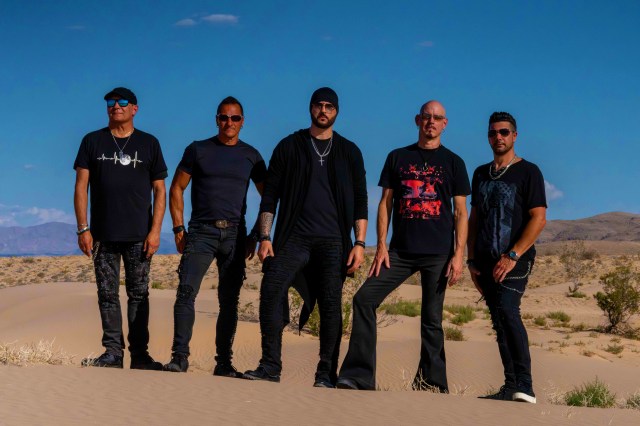
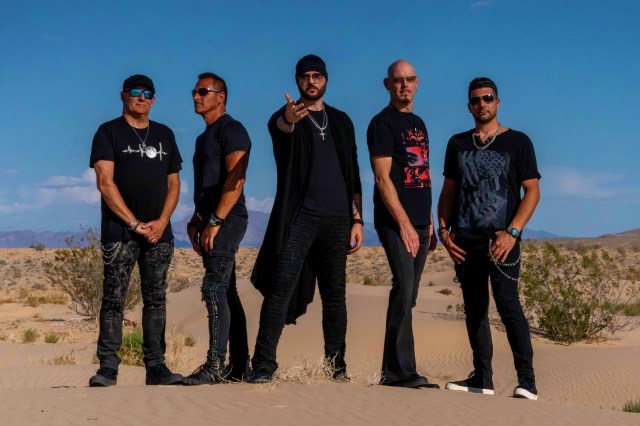
You can never get tired of playing the same songs night after night when each crowd brings new reactions, and each show leaves you with new stories. That same sense of deriving something fresh and new from something tried and true runs through the veins of the central Pennsylvania-born hard rock legends Fuel’s brand-new album, Pendulum, set for release on 10/30. The record was their first project in five years since ÅNOMÅLY and their first studio project since the addition of Aaron Scott, who caught the band’s attention after his performance on Season 19 of The Voice, singing “Hemorrhage (In My Hands)”. Even with the band having precedent in their workflow, led by founding member and primary songwriter Carl Bell, the project turned out to be their most collaborative work to date, with Scott’s mark being made throughout the LP. Hit Parader had the chance to sit down with Aaron Scott and drummer Kevin Miller to talk all things Pendulum, and it’s clear how much joy this new chapter of the band brings them both.
Hit Parader: With “Shimmer” and “Hemorrhage” following Fuel through the years, it’s adapted to the changing industry, evolved through CDs and the different ways you buy music, and impacted so many different generations of listeners. Over the years y’all have been a part of Fuel, how has your relationship with those hits changed as the band has evolved?
Kevin Miller: That’s a good question because so many people say to me, “Dude, do you not get tired of playing the same X number of songs all the time?” And my answer is absolutely not, because every time the audience changes, whether it’s 1,000 people or 100,000 people, I’ve played “Shimmer” so many times live; it never gets old. I played “Hemorrhage, “Bad Day,” and all these great songs that Carl has written. And the reason why they don’t get tired to me is that the energy of the room is different every night. It’s the same energy, but different. Therefore, I don’t feel like I’m playing this old song. To me, it’s new all over again. I hear the lights drop, the intro starts, the crowd screaming, and come out and hit it.
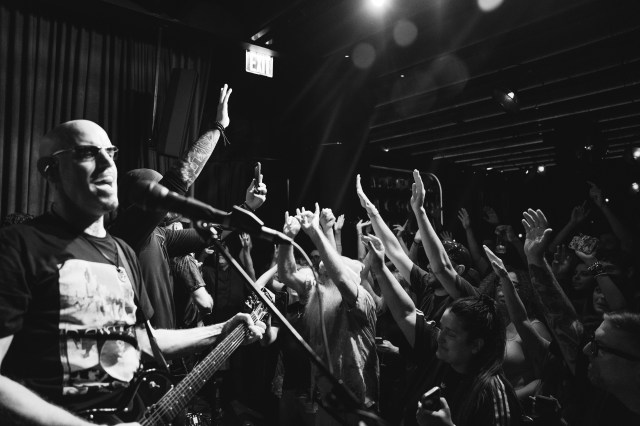
Aaron Scott: Well, one of the cool things is that, since we’ve been around a while, people grew up on this music, and now they bring in their kids, or there are kids who are cowho that heard this song on the radio or something like that. But every single night you get to watch multi-generations enjoy the song, and in their own way. When you talk to the people who grew up on this music, myself included, you hear the stories they bring back. “This song takes me back to this,” and so they’re reliving something. But also the younger generation is like, “Well, this also helps us understand a different time of music, a really, really amazing, cool time of music.” You definitely feel like everybody misses music being like it was in those days. So you hear a lot of that. But going to what Kevin said, when we start a show, we don’t start out with “Shimmer” and “Hemorrhage.” We obviously play those later in the set, but you feel that anticipation every time you’re starting up a song. They’re like, “Is it going to be? Is it going to be? Is it going to be?” And then when you start that first note of “Shimmer,” or that first hit of “Hemorrhage,” you just see people explode with joy, out of excitement, because they’re hearing that song. And that’s special. You don’t get tired of that, no matter how many times you play that. That’s a really special thing to get to witness.
HP: I love the way of looking at it, not as you’re playing the same song, but as if you’re playing it to a new audience, so it still feels fresh in that sense. With all the distinct chapters that Fuel has been through, in your opinion, what feels most defining/exciting about the current chapter that you’re in?
KM: For me, it was the excitement that Aaron brought to the group, as far as being the new singer, but he’s the new singer who was always a fan of the band. So you had the fandom of a guy that is now like, “Holy crap! I’m now the front guy of the band.” And we refer to the movie Rockstar, where you were a fan of the band, and all of a sudden now you’re up there, and he says that on stage. He’s like, “Listen, not only am I up here singing these great songs and being a fan of the band.” When I called him, I gave him the first set list and asked him when he wanted to sit in. Said, “Hey, man,” because we just thought he was just going to sit in for a minute, and he knew all the songs, so it was really, really cool for that.
And then he comes out of nowhere, and he’s like, “Hey, Carl, not trying to step on your toes or anything, but I wrote a song, and I know you’re Carl Bell. You’re the songwriter, and I just don’t want to…” And Carl’s like, “Well, send it over. Let me hear it.” And he sends it over, and next thing I know, my phone’s ringing. Carl’s calling me like, “Dude, Aaron just sent me a song. I’ve never had anybody, and no offense to you, but I’ve never had anybody in the band who does Pro Tools and actually can craft a song to where they send it to me, and it’s actually a song.” He brought a whole new energy and a whole new lifeline that took the heavy lifting off of Carl, so he doesn’t have to toe the line all the time to be the songwriter and create and create and create. Now he’s got a dude in the band who actually creates, and they bounce stuff off.
AS: Honestly, all I know is what I’ve stepped into. Everything that came before me, I don’t know, and I don’t try to control, and I don’t try to worry about it. I just know that I’m my own guy, and I want to step in and be the best bandmate I can be. And I still want to take that fandom with me into the camp because it is very true. I just feel like I’m a fan who was out in the audience and got called up on stage. They handed me the microphone, and I got to turn around and sing it right back to the fans that were with me, and that’s genuinely what I feel like. And when I’m up there, I want to connect with people because I’m one of them, and that’s easy. That’s really easy for me to do because it’s a genuine thing. I genuinely love the music, genuinely love the songs. And I think really for me, we take on the reality that there have been many different maybe renditions and maybe what they might call this band, Fuel, but one thing that has survived through all these years is the songs. And that’s really what’s been so cool to see.
There are going to be people who are going to say, “Well, it’s different. I don’t appreciate it. I don’t like this. It’s not the same.” But when those songs kick on, and they know those songs, and they love those songs, all that just kind of dissipates. Nobody cares. They just enjoy the music, and ultimately, isn’t that what a band is supposed to do anyway? It’s bringing music that people love and enjoy and can celebrate and have fun with, and that’s exactly what we do.
HP: The record process for Pendulum was very collaborative, very synergistic, almost. And I was doing research before this, and I saw a clip where Carl was talking about how with ÅNOMÅLY, he did almost all of it. And then it switches to Pendulum, where it’s such a collaborative means. I’d love to know what those writing sessions looked like for Pendulum, not just the songs Aaron was making, but also beyond them?
KM: First of all, as many people can say it’s fun, it’s great; it’s work, man [laughs]. Just because now everything that I’m doing is so under the microscope, so I got to make sure that I know the parts. Aaron will send me a song, and then I will record it at home, send it back to him, going, “Okay, is this what you’re thinking?” Because if they send me, as a drummer, I know that they want their verse patterns. I know what they want with their chorus patterns. But all the fluff, then that’s when I get to ‘Kevinize’ it and be like, “Well, he’s got that standard drum fill in there.” And then I’ll change that, send it back to him and Carl, and be like, “You guys feeling that?” It’s the same thing. Mark is playing something, and Carl’s like, “Yeah, I don’t like that. I don’t like that. Oh, that I like. Do that.” Tommy, same thing. He’s doing bass scales, and these guys wrote the songs, so you’ve got to stay in your box and make all that work. But it’s pretty intense because you’re not only trying to make yourself happy as a player and get all the stuff that you want to do as a guy in the band, but then you’ve got the songwriter who hears it a certain way, so you’re trying not to dance on his stuff too much with that. But this was one of the easiest ones that I’ve made with the band. It was really fun. Dan Malsch from the Soundmine Recording Studio was amazing to work with, and this guy’s done all the Ghost stuff and Avenged Sevenfold and all these great bands up there. So he was just super, super cool and easy, and he’s got a cool barometer as co-producer, kind of mixer guy.
I would do stuff, and he’d be like, “Yeah, that fill was just a little much.” And I’m like, “Yeah, damn it.” [laughs] And then you scale it back. I’m like, “How’s this one? How’s this one?” In the song “Want It” that Aaron wrote, there’s a break in the middle, and when we were coming back in, I probably recorded 15 different fills. And every time I sent one back to Carl and Aaron, they’re like, “Yeah, not that. Yeah, not that. Yeah, not that.” And out of my frustration, I was just mad, and I just did one hand, and they’re like, “Oh my God, that’s the fill!” [laughs] So again, was the record fun to make? This one, for me, absolutely. I love that Aaron let me be me on his songs. Carl let me be me on his songs. And that is a cool place to be when you have two really good songwriters who know what they want, but still give you the freedom to bust out and do your stuff. And they did it with everybody in the band, and I’m really proud of the group as a whole.
AS: You hit everything right on the head. Dude, for me, I was a schoolteacher before doing this, and I recorded at home and did an album with a local band back home, and I did a solo, did all that, and learned Pro Tools through that process. But you’re stepping into Fuel, and you’re stepping into these guys, and you’re stepping into Soundmine Recording Studio with Dan Malsch, who’s worked with great, great musicians. So I was always intimidated, and I was kind of not sure what to expect, especially working with Carl, because I know, as a songwriter, you have a vision of a song in your mind, and you’re chasing that. And sometimes you get it pretty quickly, and sometimes you just are chasing it day after day, and it finally clicks sometimes, but sometimes it just takes forever. So I’m trying to be genuine as a songwriter myself, but I also know I’m working with great musicians and great people in this. So I wanted to be as out of the way as I could be.
But what I loved was that they brought me in and just said, “No, we want to hear what you think. We want to see your vision in this,” which they didn’t have to say, but they wanted that. And then Tommy comes in and plays bass, and Carl and Kevin say the same thing to him: “We want you to play with this and do what you want to do.” And there are a few moments on quite a few tracks where Tommy does something or brings up an idea that we didn’t think of, and we brought it into the song, and it made it better.
KM: Yeah, Tommy is the most quietest guy in the middle. He’s the loudest, quietest guy you’ll ever meet. So if you need a joke, you go to Tommy. But most of the time, Tommy stays out of the business and all that. But he’s sitting there in the studio, and he goes, “Hey, you know what, you guys need an 808 hit, right?” And then we put it in there, like, “Tommy, holy crap!” Just stuff like that.
AS: And then when it came to recording vocals, Carl was in the control room, listening to every take I did. So that’s the moment for me as this singer growing up, listening, loving Fuel, and now to be in the studio with a microphone in front of me, and the take goes, and you’re like, “This is it. Let’s see what happens.” And to do takes, and Carl to say, “You’re right there, man. You can feel it. You’ve sensed exactly where I want you to go. Keep going, keep going, keep going.” And then he fed you back, saying, “That was good. You got another one? What else? Just show me something different.” And the gratification, just that honor to work with him, because he and I, we pretty much lived in that studio. We didn’t leave, and so we were pretty much, for over two weeks straight, just all business in the studio, going at it. And that’s valuable insight because I got to see how Carl thinks when he writes, and in a lot of ways I saw myself in how he writes and how he thinks about a song because he’s not too zoomed in. He’s looking at it from that bird’s-eye view of “I just want this whole thing to come together and feel the way I hoped it would feel.” So you balance that as a songwriter, but you’re bringing in other people with other visions, other ideas, and the way we married all that together was amazing to see it all come to life.
HP: That’s awesome. I will say, two weeks for a full record in the studio is pretty efficient.
KM: That was just vocals, vocals, and guitars. Because what I did before the guys even came in, I had the demo tracks. So what we did was I went up there, and because we decided that the demos were going to be what they were going to be, I went in and I pre-tracked all the drums before they even showed up. So then all the drums and guitars were pretty much 90% done. But yeah, the two weeks for vocals, and that was literally 15-hour days for two weeks. Aaron was a tired boy when we got done with that.
AS: Dude, I’m going to tell you something. I haven’t divulged this to any other interviewer. It was me taking off on the airplane. I had an ear infection, apparently, that I wasn’t aware of, and I took off, got up in the air, and my right eardrum ruptured. So, on my way to the studio to go record vocals for two weeks, I couldn’t hear out of my right ear. We tried to delay my recording vocals for three or four days when we got there. But finally, about that fourth day, Carl’s like, “Dude, we’re kind of getting to the end. Do you think you can try to record vocals without being able to hear out of your right ear?” And I had never done anything like this. I was like, “Ah, we’ll see.” And I think we started doing the sessions, and Carl was in the studio making that face, and he’s like, “You should rupture your eardrum more often, dude. You freaking sound awesome.” I’m like, “Oh, okay. This is wild.” That was just a crazy experience.
HP: It worked out, but that must have been an interesting 24 to 48 hours leading in.
AS: Yeah.
HP: What was one of the most useful or helpful conversations you had while making Pendulum?
AS: For me, it wasn’t so much a conversation as it was watching Carl work. It’s sometimes the little things that you don’t say, or the things that you let other people say, that speak louder than the things you try to say. And I think there were moments there where I could have seen Carl, given his accolades, given his accomplishments in songwriting, where he could have just told us, “No, no, I’m not listening to you. I’m not letting you bring in an idea. I’m Carl Bell. I wrote these great songs, and I’m going to do it my way.” But to see him invite, sit, listen, and entertain ideas, to me, I think it wasn’t necessarily a conversation. It was more just a display of teamwork in that. I guess that humility to accept his idea might be a good idea, but he will take another idea, and we’ll all take another idea. And that, to me, spoke a lot of volumes because if Carl Bell, who wrote “Hemorrhage” and “Shimmer” and all of these great songs, can sit there in the studio and listen to little old me bring an idea, then that speaks volumes about who he is.
KM: Yep, and I will double down on that by saying it was the coolest version of Carl that I’ve recorded with. He was very open to a lot of stuff, and on one of Aaron’s songs, I decided that I would put a part in halftime. And normally Carl’d be like, “Wait, what did you do there? Don’t do that.” But when I did that, I got the phone call of, “Dude, that halftime thing was exactly what that needed to set up the next part.” Carl hears things a certain way, just as all songwriters do. Aaron hears things that I don’t. These guys hear shit I don’t hear. Let’s just say that. I’m in there, and they’ll hear things, and I’m like, “Yeah, I wouldn’t trip over that.” But then when it’s done, I’m like, “Oh, I see what they did now and why they did that.” I’m not at that level of songwriting. I tried it. I suck at it. They’re better at it than I am. I’m good with that. I’m fine with going in there and just hitting shit and being happy. But it was never really a conversation. It was just an understanding that flowed through the camp in a cool way. So it was one of those “not much said, but said a lot” things.
AS: Carl said a lot when I was in the vocal booth. He said, “Trust your instincts.” I would say that’s one thing because he could tell that we’ve all done the work to become established musicians, to have the ear, to have the musicianship, to take a moment that you feel and do something. And Carl encouraged that. He didn’t shy away from that. He said, “Trust your instincts. Feel it out and go for it.” And boom! When you get that kind of green light, you get a better result.
KM: Well, I think everybody played so much better because of that. When you’re just like, “Okay, this is what I’m thinking, Carl, and I’m going to do this,” and da-da, and he’s like, “I like that. Go ahead.” It was cool. So for people online breaking his balls, like, “Carl’s a control freak.” Listen, the guy did all the heavy lifting back in the day; cut him some slack. I have my career because of the guy. He wrote really great songs. So you could break his nuts all you wanted, being a keyboard warrior and telling me he’s this, that, and the other thing. Well, I can name 100 guys in bands that I know that are the guys who write songs, from all the big bands, and I’m not going to mention any. You know the term “too many cooks,” right? Sometimes you’ve got to have a head chef, bro. That’s the bottom line. And if the head chef is the one coming up with the dish, you cook it the way he wants it cooked.
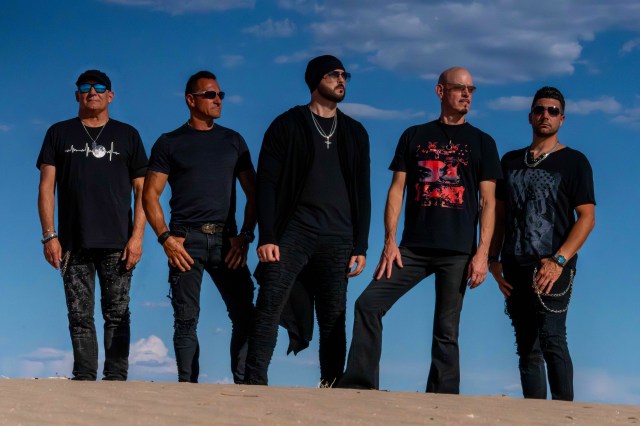
HP: With the catalog carrying such a distinct identity, if a longtime Fuel fan hears Pendulum, what do you hope they recognize immediately from it, and what do you hope surprises them and is new and is something that they haven’t heard before?
AS: Honestly, when I sat down with Carl and we all kind of collected it all together, as a Fuel fan, my genuine reaction was, “This is what Fuel was evolving into,” I feel, from Natural Selection. So when you go into songs like “Won’t Back Down,” “Quarter,” and songs on that album that hit heavy and hard, that’s a lot of what we’ve done. But we also brought with us an honor to the past because we have a remake of a song, “Innocent,” and we even went beyond that and did a cover of a song before us and made that current, too. Made it unique to a Fuel thing, made it current to today’s music. But my genuine, honest answer was, “Wow, this feels like what Fuel would have been from Natural Selection to now.” And to me, as a fan, that’s what I love the most because you don’t take what Fuel was and is and just throw that out and just completely start over and change that. You evolve that into something that Fuel fans from yesteryear can connect with, but also people who love music as it is today, because there’s a lot of great music out there now, can also connect with that and put that right in their playlist.
KM: Yeah, and just being part of the process from early on to the present, I think this album is a great representation of who we are in 2026/going into ’27. I love the heavy stuff. So we were always known, again, when Aaron went back to say that this song, this song, this song that was heavier, those are the songs we always leaned on as the band. There is not a song that I’m disappointed about on this record at all. There’s not one, and that doesn’t always happen.
Listen to Pendulum, out 10/30. Presave/stream here.