
In terms of American cities and the most prestigious music histories, Detroit is right up there with any city. Motown – which includes Aretha Franklin, Stevie Wonder, the Temptations, the Four Tops and Diana Ross – Eminem, Madonna, Alice Cooper, Bob Seger, Jack White, techno, Iggy Pop, the MC5, the Stooges, the list goes on and on.
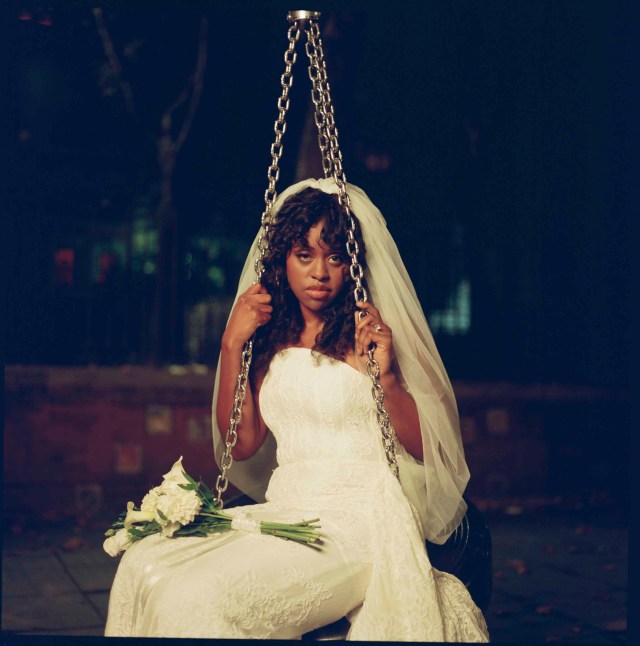
Now the next potentially great artist to come from the Motor City is the impossible to define Victory Boyd, an extremely promising singer who melds soul and folk into a superbly vulnerable and powerful hybrid of genres. The result is the beautiful debut album, Confessions of a Lonely Girl, an emo, folk and soul collection.
As Boyd told us when we spoke recently, Detroit is not just in her music, but in her
blood.

“I think Detroit is just one of those classic American cities that has a lot of unique aspects that are different. A lot of really classic American cities have manufacturing in common or something that drew families from all different parts of America. For Detroit it was the motor industry, and it drew a lot of people from the south. My grandparents talk about when they migrated to Detroit and it drew a lot of people of all different persuasions to these industries. But that was because of all these various people having this promise of a better life if they move to Detroit,” she says. “Because of that, you attracted a lot of extremely hard workers, a lot of culture and all of these aspects.
You had my grandmother for example, she was a sharecropper and she was one of 14 siblings and they grew up working the fields down south but then they migrated to Detroit and then they worked in the motor industry, but they came with music too. It was never just coming to do nine to five jobs. It was bringing the entire culture. And then that culture became what we know as Detroit today. It’s the melting pot of all of these things.

So, I’m a product of that exact storyline. It’s not just a product of music but a product in in family values and all the things that come from that from that lineage of life. With that comes a particular sound. There are all sorts of things that come from that origin story. I’m one of those individuals.”
While Confessions might be difficult to categorize musically, Boyd can easily explain her thinking behind the record’s sound and feel.
“The biggest influence, sonically speaking, is I have this theory called darkness and glory,” she says. “Basically if you want people to feel the triumph and the beauty of glory then you have to show them the darkness that came before. For example, every morning we see a sunrise we can appreciate as beautiful because it came after nighttime. Or if you knew that they used to be in prison for 20 years and now they’re walking free, you can celebrate the fact that they’re just simply walking around outside and that’s a point of glory, not just a mundane moot point. With that theory I always try to contrast things with my storytelling both sonically and lyrically.”
A large part of what makes the album so effective is that Boyd had a clear idea of what both darkness and glory sound like to her. And she was determined to make sure listeners understood the sound of those feelings as well.
“This album starts with loneliness. How does loneliness sound? I re-recorded that first song, ‘’Confessions of a Lonely Girl,’ with at least five different productions. And I landed on a version where I recorded it together with a vibraphone player, because the sound of a vibraphone feels so warm, sad and comforting. It’s not just in theory that I try to capture the darkness and sadness, but in sound. You have to really feel and be immersed in this sad experience so when we get to the end, and the last song on the album is called ‘Steady,’ and it’s just so much joy, so much life, it’s the joy of marriage and the joy of finally realizing and coming into love after experiencing such dark and sad feelings of loneliness. I want people to experience the miracle of love and recognize that it is a miracle and not just mundane, everyday life that everyone gets. So, the album is contrasted heavily from how it starts and how it ends. And the sound is always bending towards painting.”

When she says painting, she is referring to the idea of painting a story, art as a medium. Something she learned as a child from C.S. Lewis. “His writings are very profound for me and specifically as a child going to watch the movie Chronicles of Narnia, it resonated strongly with me and even as a child moved me to tears. And I wanted to create stories like C.S. Lewis, create art pieces like Chronicles of Narnia that would resonate so strongly. So after when I got a little older, I was maybe seven years old when I saw that, I started writing stories that appear to be fictional because they’re whimsical and they’re not exactly something that you would see as real life but behind these whimsical fictional stories is truth. Having that flexibility as an artist to invent and to create things that are not real for the purpose of being able to communicate through entertainment, through a fun story, universal truths that could really help empower people and even save their lives. And so sometimes you have to meet people where they are. In America, especially, many people are seeking to be entertained.”
Inspired by movies like Chronicles and the 2012 version of Les Miserables, starring Anne Hathaway, Russell Crowe and Hugh Jackman, Boyd learned a valuable lesson about creating art in America. If you want to include a message you need to wrap that message in candy coating. And Boyd says yes, this album absolutely includes a message she wants everyone to hear and understand.

“I always have a key thesis for all of my albums and for this specific one it is it is the message of divine love. It’s a type of love that that comes to find you and reaches out to you and a lot of times it’s written from a woman’s perspective, but the woman in this story is representative of the whole world. Everyone in this world desires the kind of love that is steadfast, that is unconditional and not going anywhere, even if you fall, this divine love that transcends all of the limits that human love can give,” she says. “I personally had to walk through and test this theory of this divine love. When I started writing this album, I thought that this divine love was when a man would come into my life and be the love of my life and cherish me and protect me and provide for me and do all the things that a wonderful husband would do. I never had that experience, but I finally got to have that experience. I thought that this was the pinnacle destination that answered all of these desires and hopes. Dreams about finally being one of those chosen ones that is loved. I found that human love can only go so far. Seeing that fall apart, going through divorce and finding myself on the other side, that I am still loved by God. That’s really where this album leads to in the end. The whole idea is that your faith, hope and love is never in vain because there will always be a divine love that is always there with you.”