Yard Act’s Newfound Freedom on ‘You’re Gonna Need A Little Music’

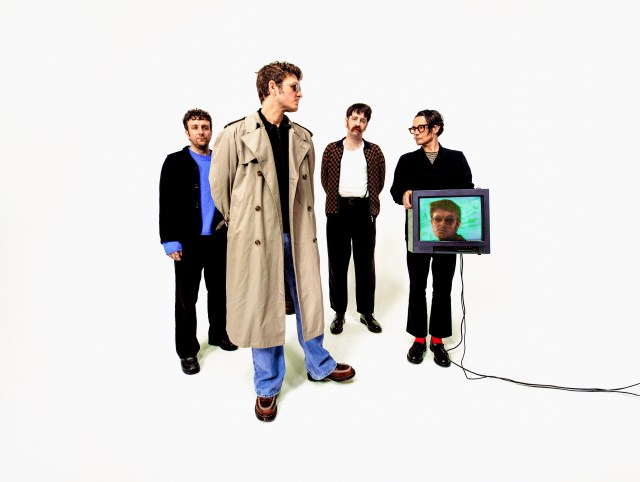
From their 2019 inception in the Capital of the North, Leeds-bred post-punk quartet Yard Act were never the outfit to sit quietly in the shadows. From the second their assertive statement of a debut LP, The Overload, was released four years ago, it was universally understood that the group wasn’t interested in beating around the bush regarding things they feel strongly about, and conforming to styles and genres that might be more commercially appealing. This is a self-accepted choice voiced by lead vocalist James Smith, saying “I don’t think we’ll ever be a big band in that sense, because I don’t think what we do is meant to connect on that level,” but to those who aren’t afraid of unapologetic political messaging and brutal honesty over screaming post-punk bound solely by the limits of the minds in the band itself, then their new LP You’re Gonna Need A Little Music, released on July 17 2026 via Island Records, will set your previously concieved bar a hell of a lot higher. It’s a representation of “four very different opinions that manage to democratically put the same foot forward” (Smith), additionally made up of guitarist Sam Shipstone, bassist Ryan Needham, and drummer Jay Russell; the four of them “wrestling and finding harmony and dissonance at the same time, and managing to do that while having fun” (Smith). It is glaringly apparent after the first listen how much thought, care, and effort went into this album, and the end result is some of the best post-punk to be released this decade. 

The art of the album, above all else, is at the heart of Yard Act’s ethos, and with the music industry ever pushing artists toward releasing singles to optimize the algorithm, they’ve intentionally taken a step toward the way other artists came before. “We’re definitely luddites, we’re like relics in that sense,” Smith states, “We’re out of time as an albums band in this world.” Their philosophy of appreciating works (albums) as a collective piece rather than individual songs is a sentiment shared across all generations. “I think as a body of work, as a statement, a forty to forty-five-minute album [doesn’t] need to be changed,” Smith states, as “that’s what I grew up with, that’s how I got into bands, it wasn’t through singles.” While every single song on You’re Gonna Need A Little Music is incredible individually, the magic lies in the project as a whole, and the dynamic range it possesses. “I hate the idea of bangers,” Smith admits. “Bangers are for your frontal lobe, bangers are fun, but it can’t all be bangers all the time; it’s like fast food,” and that “substance and range is important.” The substance is evident, the range is captivating, and for the first time in Yard Act’s career, they made a record the way they always wanted to: fully together. 

Cred. James Winstanley

The previous two full-lengths, The Overload and Where’s My Utopia?, were what Smith referred to as “laptop records,” where the creation process consisted of “writing and recording it on the back of the tour bus. Essentially writing it together, but one at a time.” Smith reflects, “I’d build a beat, or Jay would build a beat, and then Ryan would lay some bass on, and Sam would lay some guitar on, and I would lay some keys on, or Jay would lay some keys on, and then the vocals would be put up.” But to Smith, that inhibited the group, as those records didn’t translate directly to the live stage, Smith said that “We’re a live band, and we were going out and reframing those songs as new versions in a live format that we couldn’t capture that way.” So in the talks of the creation of LP3, one thing was clear: to accurately capture the core of the “live band” Yard Act is, they had to record the full-length entirely as a band, in the same room, at the same time. 

They built a studio in their home base of Leeds and specced it completely to their requirements, which opened up new paths of exploration that weren’t possible before. “The main thing is that intuition led us a lot more,” Smith explained. “If you didn’t like the tempo of something, or needed to shift and modulate the key to fit the vocals better, we could just start again and do another take, and it would be done in three to five minutes, and then we’d have that version, purely based on impulse, what felt better.” Another thing Smith said made a substantial difference was the ability to create and act purely as a unit rather than the layered production style described above. “We found that we were thinking less about ourselves and more about the song,” Smith states. “The individual parts weren’t as important. You’re working as a unit at the same time.” A metaphor used by Smith makes the difference clear, because if the first two records were like “ants bringing a crumb at a time to the colony,” then You’re Gonna Need A Little Music is “a bear sticking its paw in a hive and scooping the honey out in one go.”

Cred. James Winstanley

The metaphor isn’t bulletproof, however, as the scooping of that honey ended up taking the group six months of straight writing, producing, and recording. That allotted time was a new experience in its own right, as “in the past we’ve had to conclude the endpoint so much faster because of time limits; those decisions are kind of made for you,” Smith stated. Nearly unlimited freedom in regard to time and resources was presented after two projects made in directly opposite conditions, and Smith says that “because we’d never had it before, at the very start I was kind of quite stressed about settling into uninterrupted creativity; I wanted to get ahead of myself because I wanted to understand the vision at the start.” But that feeling faded fast. “It disappeared by the end of the first month, and it got to a state where we just wrote a song a day, that was just for pure fun,” Smith confesses. 

When you distill the idea of creating music down to its base form, the act is viewed a bit differently, and with a bit more whimsy, by Yard Act. “The grand artistic statement is disingenuous if you think that’s what you’re making; you’re just playing.” Smith chuckles, yet the statement does hold gravity. “I mean we’re playing music, but you’re playing like a kid.” With the stress fading and fear of time constraints and judgment gone, confidence and trust in one another filled that emotional space. “We had faith in the fact that the sound of the four of us and the chemistry we had would be our sound,” Smith states, adding that “nothing else could define it other than the fact that it was us four in that room making it.” After all those months of “playing”, experimenting with new sounds, and at its roots making a hivemind of a record, Smith explains that “it was only towards the end of the project we started to see how we could form and string these songs together, and see what the through-line was between the pieces.” But come together it did. During this recording period, Smith explains that “It was the happiest I’ve ever been, and I do think that shows on the record. There’s so much playfulness and joy on it, despite the fact it’s probably lyrically a darker record than the ones we’ve done.”

It is a fascinating thought, combining dark, political, personal grievances with the described whimsy coming with the freedom to create. But these motifs can be compartmentalized in a healthy manner for Smith, as he notes that “darkness is an energy you tap into and feel. Especially over a six-month period, you feel those low moments, you feel those moments of anger and darkness and aggression, but you don’t stay in them,” and that with the creation of songs with darker themes, “you have to have faith that the essence is still there, even though the mood shifted.” The core of the lyricism inspired by political angst, and dressed in a fantastical, consumable format, but one track in particular had a story behind it that broke that pattern: “Janey Said”. 

The track was “inspired by a real conversation I had,” Smith said, adding that “it was originally called ‘Billy Said’ and it was set around a conversation I had in a cafe with my friend Billy.” While the vivid story told through the song was based on that conversation, Smith “didn’t really know what I was trying to say until I heard the song ‘Tom’s Diner’ by Suzanne Vega,” which, when comparing the two, is interesting as the songs could not be further from each other. “But as this person spirals into their own self-importance, they start to observe less and less detail as the song goes on, until at the end they don’t even ask Janey what their issue was, because they’ve become so embroiled in their own self-importance. So it’s kind of a reverse ‘Tom’s Diner,’” Smith states, as both the conversation with Billy and the track “Tom’s Diner”, “sparked the premise of how to reverse-engineer the idea, instead of realizing that you’re watching people and being watched, you stop watching and start just getting in your own head and thinking you’re the most important thing in the world, and you don’t notice anything going on in your peripheries.” This concept directly ties into the record’s core themes of hyper-individualism stemming from neo-liberalism, which, as Smith states, even for casual listeners, “you don’t have to be politically engaged to realize, you might not know it, but you are first operating under the neoliberal proviso of self.”

Cred. James Winstanley

These political call-to-actions, declarations, gripes, sneers, whatever you would want to call them, have always been, and continue to be, the seed that Yard Act’s tree grows from. Neoliberalism, the ideology and economic philosophy defined by corporate privatization and free-market individualism pushed simultaneously by the UK’s Margaret Thatcher and the US’s Ronald Reagan, is the political groundwork that has stained how people act in every way, not just economically. Smith states that he is trying to convey through the lyrics that “In regards to the American dream, I think that mentality has sort of penetrated the West, and the way Britain came on board with Thatcher and Reagan, we were the twin figureheads of neoliberalism, and then Tony Blair and Clinton carried it on for us.” The idea that people are functioning with self-interest too much in mind “has penetrated everything. Even to the point that art for art’s sake, I think it penetrates to the idea that we see music now as a product” and that the idea of commercialization and ownership “has eroded the creative and philosophical and educational tangent that brought us from the post-war world into what could have been a utopia.” All of this shows Yard Act isn’t afraid to speak out on how they feel, they aren’t comfortable with playing it safe and aren’t ready to live in a world where music, the art form we all collectively love, is distilled down to just a product to be consumed. 

Yard Act’s rise over the seven years since the band’s inception has been staggering, going from Smith and Needham moving in together and writing minimalist rock tracks in Meanwood, a green suburb a mile northeast of Leeds, with a borrowed bass guitar, to having their debut record chart at #2 on the UK Album charts, playing Coachella and SXSW music festivals, and receiving critical acclaim for all the music they’ve released. That editorial eye affected Smith, both positively and negatively. “When we did South [by Southwest] in 2022, it was accelerating so fast, and we were getting all this praise and press attention, and the gigs were all selling out rapid fire, and the venues were getting bigger. Even at that stage there was no money, and we all dropped our jobs to do it, and we were like, ‘why are we skint [broke]’.” Smith continued by saying, “I think a lot of people thought we were instantly rich, and I had a breakdown, because I was like, ‘we’ve just played a thousand-cap venue, and I’ve got no money, this is messing me up.’” But as the financials evened out, time passed, and most importantly, Smith gained more and more deserved confidence in his own creative vision, the press critiques were less effective; while he “never fully got there, but I do care less and less every time, because I kind of hate that I give a shit about it,” Smith jokes. And with those experiences and mindset shifts came a new feeling going into this record: having no self-inflicted pressure. 

“I don’t even feel pressure on myself for the first time, because doing this album unlocked something in me, where I realized I trust my own ideas.” That trust is apparent when listening; Smith is lyrically at his best on You’re Gonna Need A Little Music, and the instrumentation is better than ever before, with it feeling like how they feel it should: a band playing in-your-face kick-ass post-punk with poignant messaging alongside. “I can do what I want, I trust my own intuition, and I trust those guys with my life,” Smith explains. “It wasn’t an easy ride to get here. The last four years were so fucking hard, and we all changed dramatically in that time.” But just as the record took six months to find a through line, it took four years of grit, belief, and determination to get over the hump, and “through it all we all had each other.”


Listen to You’re Gonna Need A Little Music, out now.

Still Sublime

Somewhere between Bradley Nowell’s handwritten lyrics, Jakob Nowell’s reflections, and a surprise announcement, it became clear the Grammy Museum’s celebration of Sublime’s eponymous album wasn’t about nostalgia. It was about continuity. Presented along with the museum’s Straight From Long Beach exhibit, the evening featured a panel moderated by manager Joe Escalante, a cozy acoustic set, and the presentation of a Diamond plaque recognizing more than 10 million certified U.S. units of the landmark album. Thirty years later, this record is still doing what iconic records do: creating new fans, inspiring new musicians, and proving that timeless music transcends generations.

The exhibit feels like a love letter to one of Southern California’s most influential bands, through rare artifacts capturing the DIY spirit that existed long before multi-platinum success. Asked about his favorite piece in the collection, Jakob lit up talking about his father’s guitar, affectionately calling it “the family axe, the legacy sword.” Another touching element comes in vintage home footage of Mama Troy singing the ABCs with a baby Jake, a reminder that behind one of alternative music’s most enduring legacies is, first and foremost, a family.

LOS ANGELES, CALIFORNIA – JULY 30: (L-R) Ivory Daniel, Eric Wilson, Bud Gaugh, Jakob Nowell, Derek Gordon, Kevin Zinger and Joe Escalante speak onstage at An Evening with Sublime at Grammy Museum. (Photo by Rebecca Sapp/Getty Images for The Recording Academy)

My connection to Sublime runs deeper than that of most writers. I front Sheblime, an all-female tribute to the band, but long before I performed these songs, I was a teenager in suburban New Jersey glued to KROQ. I still remember calling into the station during its tribute to Bradley Nowell a year after his passing, hoping to share what the band meant to me. Walking through the exhibit, I smiled when I spotted the same gothic Sublime sticker I once had on my bedroom mirror. It transported me back to discovering the band that shaped my musical DNA and showed me that punk, ska, reggae, hip-hop, dub, and alternative rock didn’t have to exist in separate lanes.

That spirit of fearless experimentation remains at the heart of Sublime.

During the panel, Escalante steered the conversation well beyond a standard anniversary retrospective, covering everything from international gigs to the art of building a setlist. When asked how the band puts one together, drummer Bud Gaugh deadpanned, “I put all the song titles in a blender.” After the laughs, he explained the science behind balancing tempos and energy, before sharing one of Bradley’s old pranks. When “Date Rape” became a radio hit, the band had already moved on to playing new songs, so promoters began writing it into contracts to ensure the band played it. “Brad would wait until the very end and wouldn’t even write it into the set,” Bud recalled, leaving promoters nervously waiting in the wings all night.

Having watched the band’s Teragram Ballroom reunion from stage left in late 2023, then seeing them go on to sold-out festivals, televised shows, international tours, and now the Grammy Museum’s event has been especially rewarding. Jake even admitted he feels far more confident now than he did heading into Coachella in 2024, a reflection of how much this lineup has grown together in a remarkably short time.

The acoustic set struck the same balance between celebrating the past and embracing the future. Eric Wilson played on a bass ukulele, and the core trio was joined by touring members Zayno and Trey Pangborn. Sublime classic hits like “Wrong Way,” “What I Got” and “Santeria” shared space with newer songs including “Until the Sun Explodes” and “Ensenada,” underscoring how enthusiastically fans have supported this new era. As Jake shared, “It’s a beautiful moment… for fans that are passionate about these classic records that shaped me as an artist, and so many over the years, to see them adopt something readily, it’s gotta be a one a million shot.”

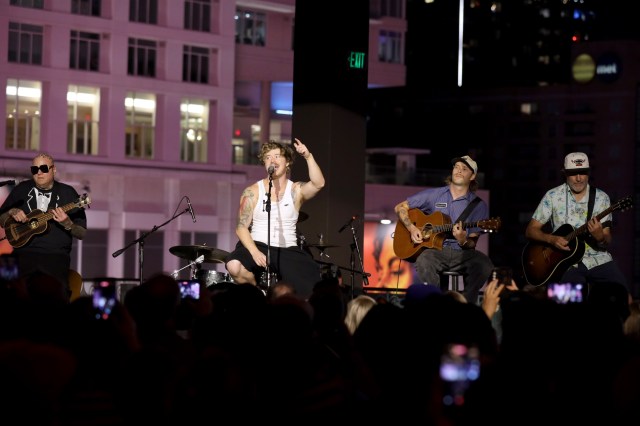
LOS ANGELES, CALIFORNIA – JULY 30: Photo by Rebecca Sapp/Getty Images for The Recording Academy

Jake faces an impossible task that somehow feels surprisingly natural. He carries enough of his father’s style and charisma to make longtime fans feel instantly at home, but he isn’t trying to recreate the past. He’s even introducing Sublime to listeners discovering these songs for the first time. That’s no small accomplishment in an era dominated by algorithms, 30-second clips, and shrinking attention spans. While today’s audiences often don’t make it through an entire song, let alone an album, Sublime’s music continues to feel strikingly modern. Few bands could weave through five genres within a single track and make it feel seamless. Thirty years later, that fearless creativity still sounds fresh, and at times even futuristic.

That idea came into focus when Jake asked how many audience members found Sublime through their parents, then how many parents had introduced the band to their own children. Hands shot up throughout the room. Later, during the Q&A, a young boy named Jethro enthusiastically requested “Don’t Push.” The band laughed that they wouldn’t be playing it, but the exchange perfectly captured what the evening was really about: this music now belongs to multiple generations.

When Kevin Zinger and management presented the Diamond plaque, the applause felt like more than recognition of extraordinary commercial success. It was a tribute to a record that has continued finding new listeners for three decades, steadily dominating mainstream radio.

Jake closed with a message that felt as much like a mission statement as a farewell: “Long Beach forever… go make some music and start your own bands.”

Bradley Nowell never lived to see Sublime become a Diamond-certified band. He never toured Europe or watched parents pass these songs down to their children. Most heartbreakingly, he never got to watch his own son grow up. Decades later, Jakob stepped into the role at 28, the same age Bradley’s life was cut short. Now Jake gets to experience everything his father never could, carrying the music forward in a way that honors the past without being confined by it. For a band whose story once seemed unfinished, this feels like a beautiful next chapter.