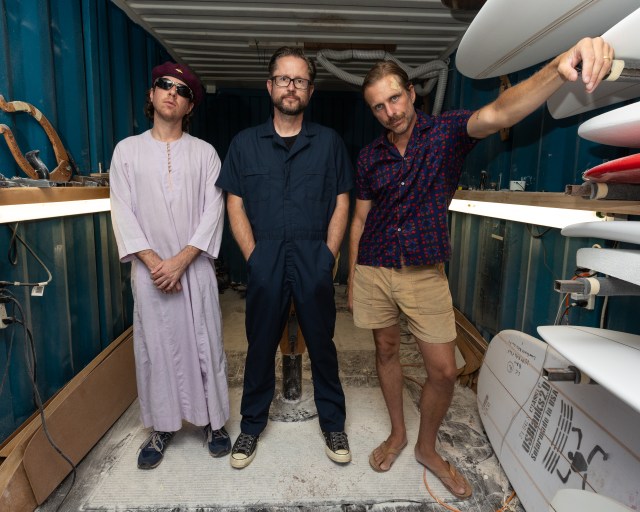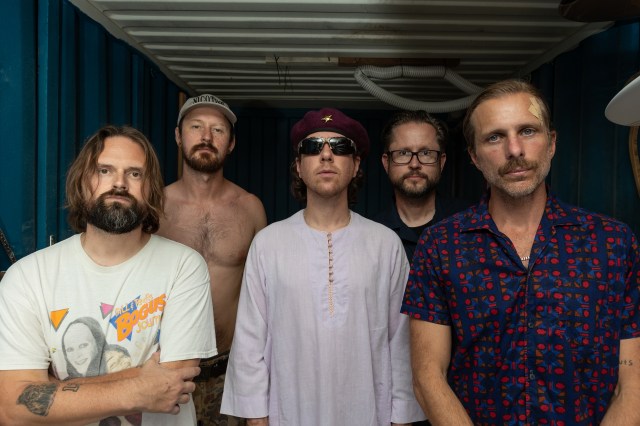
Back on His Own Terms: A Conversation With Cobra Starship

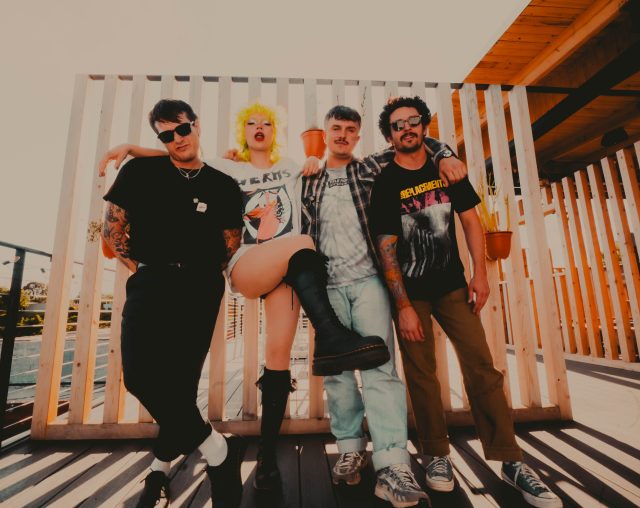
Just a few short years ago, Gabe Saporta was happy working on the industry side of things by leading the unique TAG Music label. After all, even while his projects like Midtown and Cobra Starship were in full swing, he still enjoyed managing bands and exploring other roles in the music industry.

But while TAG is still his day job, it’s far from the only focus for the East Coaster-turned-Angeleno these days. With both of his bands reuniting (Midtown in 2022 and Cobra Starship in 2024) for the occasional short tour, major festival stage or other one-off opportunity, Saporta’s already spending more time onstage in his 40s than he did during the entire decade prior.

Combine all of his musical endeavors with his recent efforts to revolutionize men’s skincare with his Brotege line, and Saporta can frequently be considered among the busiest guys in the business.

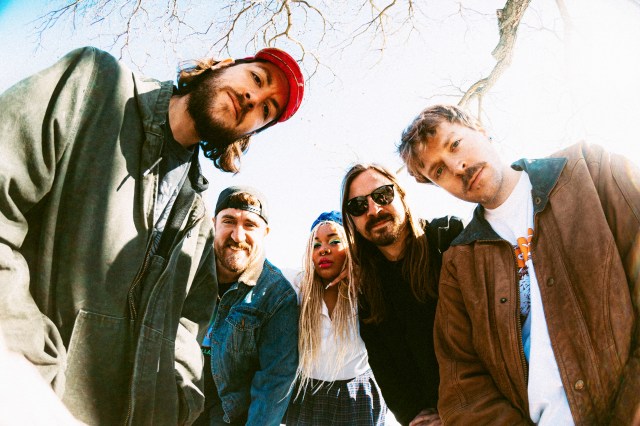
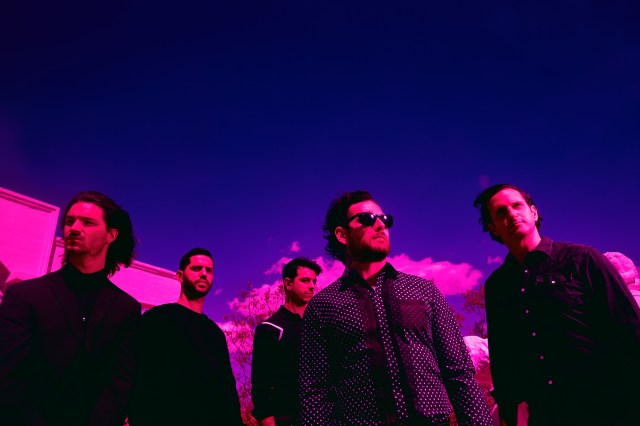
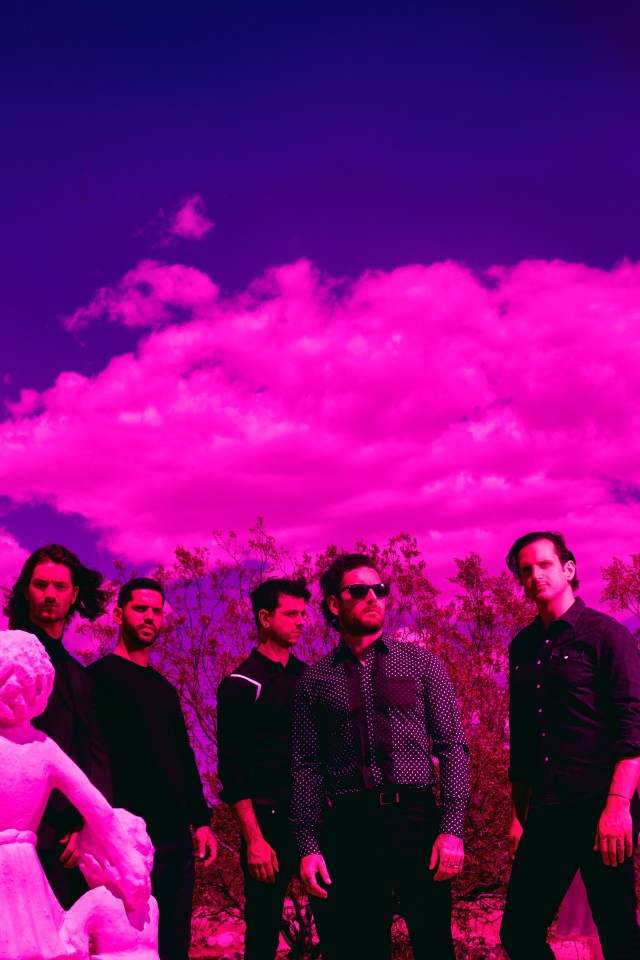
Hit Parader caught up with the towering frontman and mogul backstage to chat about the music, skincare, and everything in between.


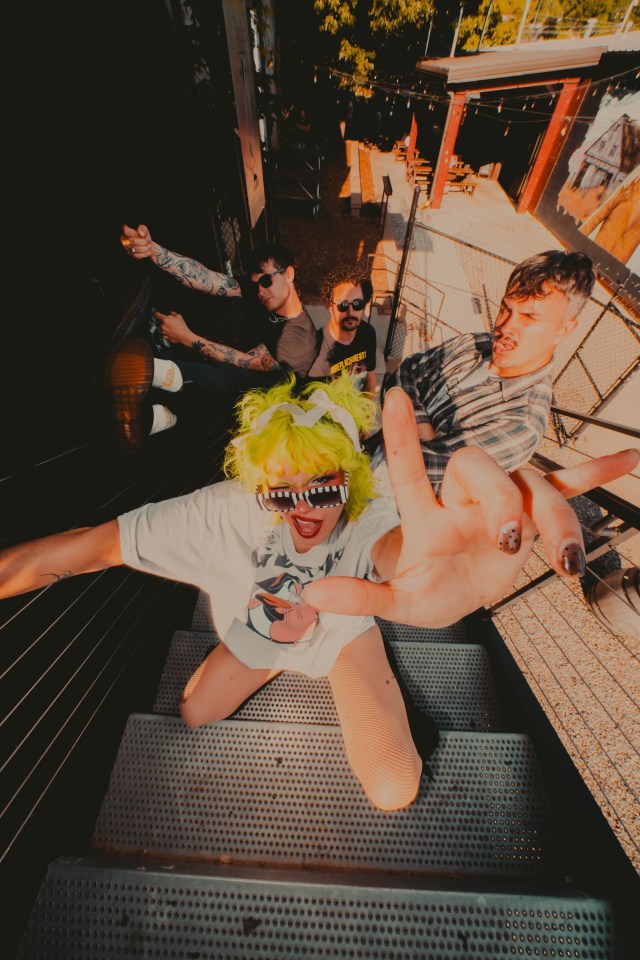
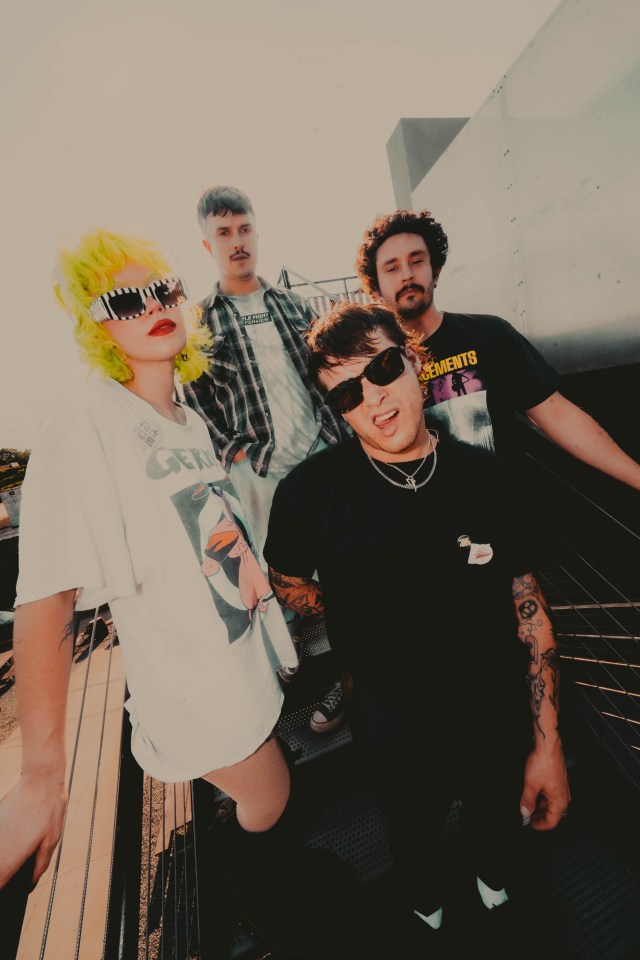
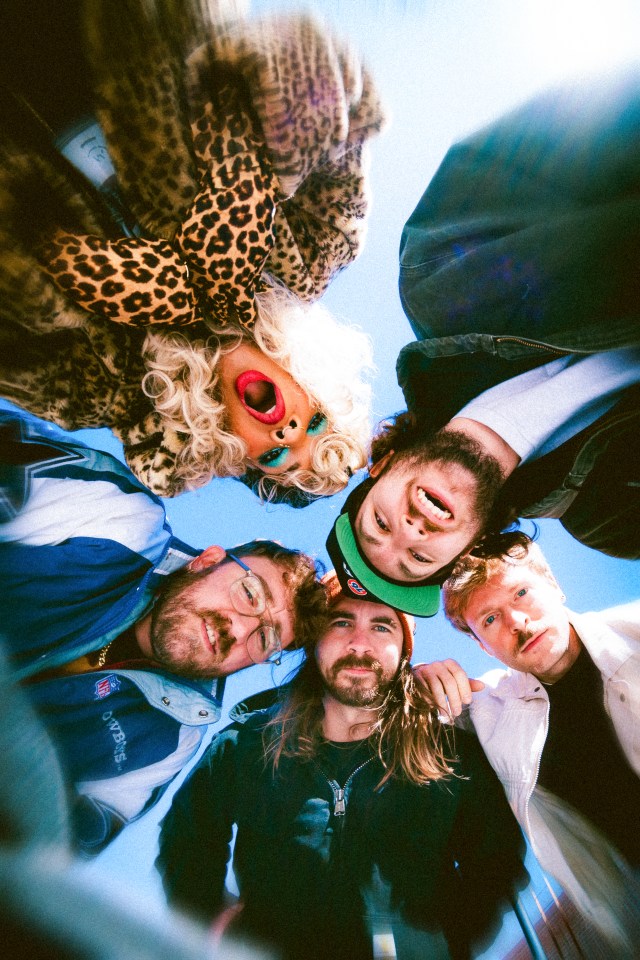
Photo: Press Provided

Hit Parader: After taking a decade off, what’s it been like to get back to performing with not one, but two bands?
Gabe Saporta: It’s been a lot — I’m not going to lie — especially because we’re not a fully operational thing. We’re not really touring. I’m not doing it full time. I’m still running my label. I just launched Brotege. So every time we do one of these shows, we’re revving the engine from zero. That can be a little bit daunting, but I’m also so grateful for the way we get to do it. One of the reasons why I stopped touring is because I wanted to have a family, and I don’t want to sacrifice my ability to do that for music. I did music for 15 years of my life, touring 10 months out of the year, almost every year. I didn’t want to have kids and then be away from them for that long, so I love the way that I get to do it now. I feel very grateful that we get to play these big festivals and get good slots. One of the things that touched me the most is how many young people I see out there. What gives a band longevity is having a new generation of kids coming in, and I see a lot of that with Cobra. I’m very excited about that and just thankful to everyone who’s listening.

HP: And with the bands being very different from each other — Midtown being more punk and Cobra being more pop…
GS: I was actually just talking about this before, but I just came across a Cobra fan — or maybe a Midtown fan, I don’t know — on TikTok, and she had a hot take about that. I don’t know if I agree with it, but she said that Cobra Starship is more punk rock than Midtown. Her thinking was that with Midtown, the lyrical content was very much part of the emo/post-hardcore emotional thing. It was always talking about relationships, the inner war, the struggles — everything on a very personal level. Whereas she said that Cobra Starship had a lot of societal critique in it, and that’s actually more of an attribute of punk rock than the personal lyrics Midtown had. (1:30) I don’t know if I agree with that, but I thought that was a hot take.

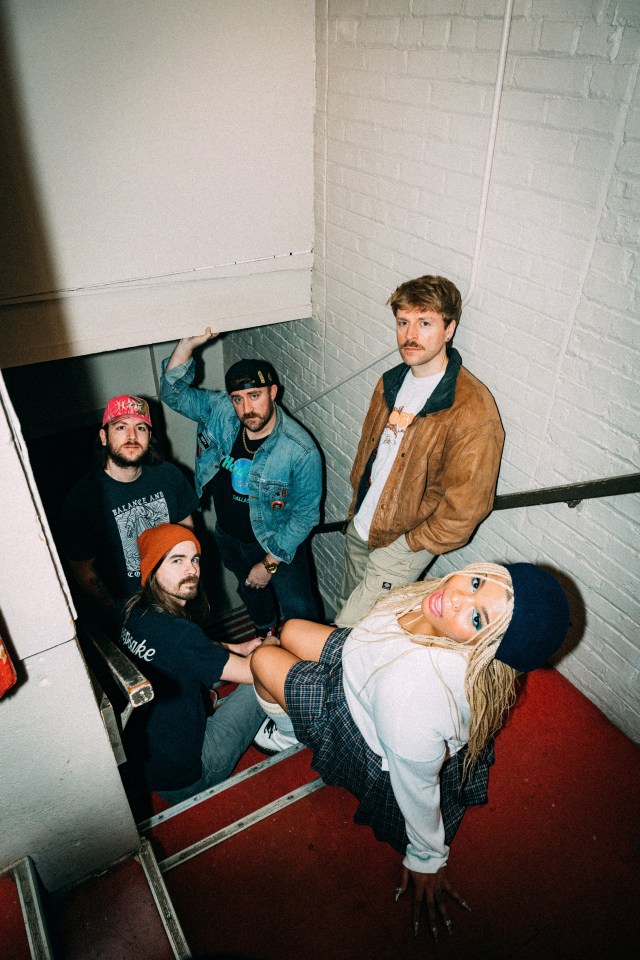
Photo: Bella Peterson

HP: …How are you going to balance the two going forward?
GS: I’m going to try to alternate years with them. We’re only doing Cobra this year, because there happens to be a lot of shows. I didn’t plan it this way, but we did Warped Tour, Riot Fest, and an Australia festival that unfortunately got in the way of a Midtown show I was planning to do. It’s really hard to schedule both, so if I can do one band one year, one the other year, that’s great. The goal for Midtown is to be able to at least do a great hometown show once a year. Cobra is obviously my bigger project, but Midtown was the project during my formative years as a high school kid, so it’s like your friends you make when you’re in high school. I don’t go to my high school reunion, I do Midtown shows to see all my friends again.

HP: How did it feel to come back — particularly with Cobra Starship — to bigger crowds than you played to the first time?
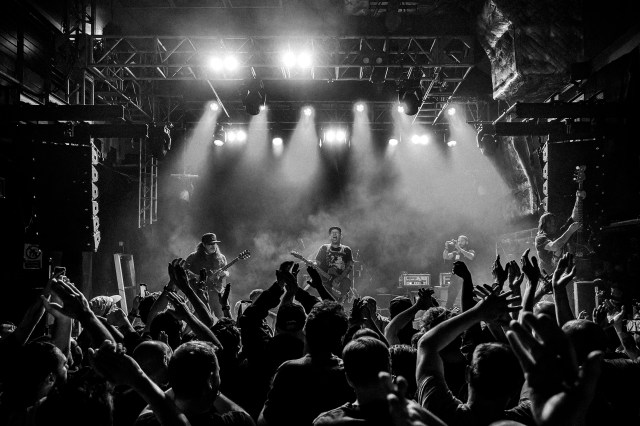
GS: Well, the last Cobra tour was opening for Justin Bieber in stadiums, so technically we played to 80,000 people in Chile, but there are more Cobra fans now. I think that’s the craziest part. Like at Warped Tour, they don’t tell you when you’re going to play or what stage you’re going to be on ahead of time, and we were literally the last band on Sunday. That could have been a death sentence for us. I was nervous about that, because I thought “Fuck, are people really going to stick around to see us? People are going to leave.” It was Ronnie Radke [with Falling in Reverse] and us as the last two bands when people are tired after a long weekend. But it was packed as far as the eye could see, and I was just so floored. It was just packed. (6:42) As far as the eye could see. I felt very lucky to have done that show and see all those people. Not only do people still give a shit about our music 10 years later, but it’s more people than ever. That’s probably the most rewarding thing any artist can hope for.

HP: Switching gears, what’s it been like to venture into skincare with Brotege?
GS: It’s been awesome, because it happened so organically. I had so many friends where once we got into our 30s, a lot of dudes start noticing that they’re getting older. There are tons of men’s products out there, but one is more confusing and expensive than the next, no one explains any of it, and it’s not really made in a way that’s talking to normal dudes. You have to be like a skincare sommelier to do it – even the word skincare makes me cringe. I felt like there was a real opportunity there, because people want to connect to brands that are coming from people like them. In the world we live in now, everything has become more democratized and niche-ified in a way, so you can really get something running pretty quickly. If you have that DIY ethos from the punk rock world, that’s also a quality you need to be an entrepreneur. And for me, it’s about more than the product. I want to build a community around Brotege to help dudes that don’t know what to do or where to start — and I want to do it in a fun way, so it doesn’t feel didactic and annoying.

Cobra Starship appears in our “What Does Punk Mean To You?”
article in Issue #1 of Hit Parader:

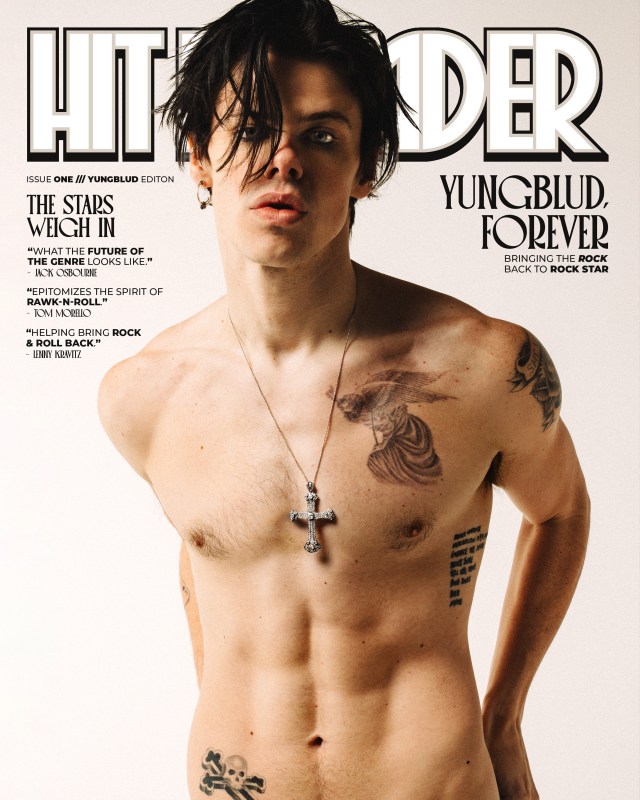
Hit Parader #1: Yungblud Edition

October 2025 — $12.99
YUNGBLUD is bringing the rock star back to rock. At just 27, the British firebrand stunned 45,000 fans and the world at Ozzy Osbourne’s farewell show with a jaw-dropping, emotional cover of “Changes.” Critics and legends alike are calling it one of the greatest live performances of the past 25 years. In a genre starved…

Generations of Dissent: A Conversation With Bad Religion

Bad Religion has been synonymous with punk rock for more than four decades now, yet the Los Angeles legends are still in pursuit of their perfect album.

With 17 albums across 37 years, most of the band’s supporters would say that at one point or another, the genre’s most thoughtful group hit perfection at least once or twice, but it’s the constant striving for greatness that has kept them together and relevant all these years later. 

Hit Parader caught up with founding bassist Jay Bentley and drummer Jamie Miller backstage to chat about the band’s legacy, logo, and goals for the future.


Photo: Jim Wright

Hit Parader: What is it about punk rock that makes it so multi-generational, where bands that you looked up to can play on the same shows as bands that look up to you?
Jay Bentley: Isn’t that how it’s supposed to be? That’s what a music scene should develop into. The most surprising part to me is the viability of this music as mainstream, which up until the ‘90s didn’t exist. Whether it was the advent of MTV or the success of Nirvana or the Vans Warped Tour, those things brought this culture out into the light and validated a lot of bands who had more to offer artistically than just a rock ‘n’ roll ethereal lifestyle with smoke and clouds and drugs. This is more attuned to folk music, and folk music hasn’t gone anywhere for hundreds of years. It’s just as valid as it’s ever been. Philosophically, the music isn’t just offering teen angst, but a direction for your teen angst that we could all sort of touch — which set everyone apart from the untouchable rock ‘n’ roll thing that other bands were offering.

Jamie Miller: Bands are like bugs. They’re not supposed to have a long lifespan. Generations before us, bands started that loved the Beatles, but they never got to play with or see the Beatles. Being a band that’s been around that long, maybe we were like the Beatles to one of these new bands, and now we get to see what we inspire and they get to see us.

Photo: Press Provided

HP: What do you think has kept Bad Religion not just together but relevant at the forefront of the scene for so long?
Bentley: Tenacity times naivety. We’re too stupid to quit. I refuse to quit, and you can’t make us stop. We’ll go when we damn well feel like it.

Miller: That, and there’s never a shortage of things to write about. The punk thing is sort of a generational lifestyle thing, too. You get your skateboard at 13, your Black Flag shirt, your Bad Religion patch, and you’re a punker now. It becomes a thing and it just keeps perpetuating, which is amazing.

Bentley: It’s the logo. The entire intention of the logo was to piss off our parents. We didn’t have an audience. We just had our parents going “Will you shut up?” Brett [Gurewitz] still says he drew it as a joke, and now we’re stuck with it forever. It worked out unintentionally.

HP: It feels like a lot of things for Bad Religion have just worked out unintentionally for decades now.
Bentley: Everything that’s worked out for us, has worked out unintentionally. When Jamie came into the band, he was the right tool for the job. When Brian [Baker] came into the band, he was the right tool for the job. You mesh with people in ways that are so much deeper than just musical, and those are the things that keep the band relevant. We’re moving forward by being like-minded. We don’t have irreconcilable differences. We had those in 1983 — and again in 1994 — but that difference was our immaturity in dealing with success. We just couldn’t deal with all of these things happening, so we went our separate ways, came back together and said
“We’re not doing that again.”

Photo: Press Provided

HP: Speaking of meshing with each other, what’s it like working and creating new music with the same people all these years later?
Bentley: It’s like playing poker with your friends on Wednesday night or going bowling with the guys in a league.

Miller: Bad Religion is really just our bowling league. That’s really all it is.

Bentley: The logo looks great on a bowling ball, by the way. But that cool hang is what keeps it fun, and we all want to pursue the next great thing. People ask us “What’s the best record you’ve ever made?” and hopefully, it’s the next one. Otherwise, what’s the point of making it? We all have that same philosophy. It doesn’t matter what we did in the past. If we make another record, it better be the best fucking record we’ve ever made. 

HP: With such a huge discography and so many classic songs across different albums, how do you go about putting together a set list?
Bentley: It’s intimidating and liberating at the same time, because having all of those choices is really just a freedom that most bands will never understand. I’ve got 400 songs to choose from, and it scares the hell out of these guys when I show up with a set list.

Miller: I think there’s only been one time where he wrote a set list and I was like “I don’t even know what that song is. We’ve never practiced this!” He goes “It’s this song, you’ll figure it out. Just play a punk beat and there’s a 50-50 chance it’ll be right.” 

Bentley: That’s pretty much it for every song. It’s 50-50 that we’re all going to start on the same note, but I guarantee you by the time we get to the chorus, we’re all playing the song.

HP: All these years later, is there anything left that you want to do with Bad Religion?
Miller: We want to win “Best New Artist” for the Grammys after 45 years. There’s still a chance. There’s no rule that says we can’t.

Bentley: That’s my goal. We should win “Best New Artist” and get a “Lifetime Achievement” award on the same night.

Miller: Then we put out an instrumental song and go for “Best Instrumental Band” to sweep the Grammys.

Bad Religion appears in our “What Does Punk Mean To You?”
article in Issue #1 of Hit Parader:

Hit Parader #1: Yungblud Edition

October 2025 — $12.99
YUNGBLUD is bringing the rock star back to rock. At just 27, the British firebrand stunned 45,000 fans and the world at Ozzy Osbourne’s farewell show with a jaw-dropping, emotional cover of “Changes.” Critics and legends alike are calling it one of the greatest live performances of the past 25 years. In a genre starved…

Nothing Left to Prove: A Conversation With the Bouncing Souls

Since forming in 1989, the Bouncing Souls have been unapologetically doing things their own way.

The Jersey punks — centered around vocalist Greg Attonito, guitarist Pete Steinkopf, and bassist Bryan Kienlen — have released a dozen albums (including a handful that frequently end up on “Best of” lists) and toured the world for the vast majority of the last 35 years. And even as the music industry has shifted, the veterans have found their diehard fanbase and DIY approach relatively unscathed by changes that have sunk many lesser bands.

Hit Parader spoke with the three founding members about their iconic albums and finding the right balance.


Photo: Alex Ilyadis

Hit Parader: As a band that does a lot of album plays of different albums, how do you go about learning basically every song you’ve ever done over again?
Pete Steinkopf: A while ago, we did a run where we did eight records in eight cities — two per night for four nights. By the end of that, you could just name a song and it would be like “Boom, done.” It was a good feeling, but to keep that up would be insane.

Bryan Kienlen: We got to the point where we could play any song, so right after that, we had a festival in our hometown where we bought a bingo machine with the little ping pong balls. We wrote song names on every ball, and we had a guy on the side of the stage get a ball and show it to us between every song. That was the whole show for three days. 

Greg Attonito: It was a band game show. He would pick it, write it on a dry erase board and show it to the crowd. We didn’t know what was coming. The song before it would end, he would show us, and we’d be like “1, 2, 3, 4.” It was super fun, but you can’t do that unless you know all your songs.

Kienlen: There are a lot of people who have favorite songs that never get played. I know I do from other bands, and it’s really special to see them play it, so we’ll probably keep doing it.

HP: How different is it playing shows and making music now compared to when you were just starting?
Attonito: Your perspective on the world and life is so different. As a kid, everything’s way too important. You’re driven in a different way. Now, we’re just really grateful for every day. I know what 55 years looks like, and I know the preciousness of life. You can’t know that when you’re 25. Being able to do this now, it’s so special. 

Kienlen: Grateful is the perfect word. We didn’t expect to be here at 55, but since we’re still here, I’m so glad that we have this band. It’s still my rock.

Attonito: We go around the world and see 40-somethings bringing their teenage kids out. The impact is just “Wow!” This is all the gold at the end of the rainbow.

Photo: Alex Ilyadis

HP: The Bouncing Souls never had a single big hit, but instead a bunch of beloved songs spread across multiple albums. How do you build a setlist from that?
Attonito: A lot of comedy, actually.

Kienlen: Sometimes it can take two hours, and then we end up writing the same set list.

Steinkopf: We’re like “Let’s do something totally different than we’ve ever done!” and then we spend hours going in circles. By the end of it, we’re like “That looks just like the set list we played last year…” That’s what happens, man. We do it to ourselves.

Kienlen: There are like 10 or 15 songs that we have to play. They’re staple songs. Then we try to fill in the blanks, and those end up being all the same songs. 

Steinkopf: And then it starts the conversation of “Are there staple songs we have to play?” You can argue about that all day long. 

HP: In addition to the staple songs, you’re still putting out new material. How different is it to put out an album at this point versus a decade or three ago?
Attonito: I used to think I knew a little something about the music industry, but now I know I have no fucking idea anymore. We’re just doing what we’re doing, and I’m grateful that people are interested in putting out our records and listening to our music.

Kienlen: We’ve stopped banging our heads against the wall, where we would sit in a room together like “We’ve got to write these songs!” Now we just let it happen, and we’ve been writing a lot more in the studio. We take our time, and there’s no rush. We have enough fucking songs already, so if we’re doing another one, it’s got to be good. So we just spend more time to make sure that every one of them is good.

Steinkopf: Everything just flows so much more now.

Attonito: Creatively, we’re free of having agendas with writing certain types of songs, and that’s what makes it super fun. When it’s done, we put it out into the world and move on to the next one. We barely think about it beyond that. The industry has changed a lot, but we just get back on the road and play what we like. Our audience is amazing, and we’re able to still get out there and do the same thing every night.

Steinkopf: It’s nice not giving a shit or trying to control any of it.

HP: How do you balance the band with everyone’s other adult responsibilities these days?
Kienlen: We figured out that we can tour in our own way. We never go away for more than 10 days. Sometimes on paper it looks like a lot, but it’s not really because it’s spread out. 

Attonito: We still do 40-50 shows a year, but compared to the past, we were doing 9 months a year for 10 years. Towards the end of that time, we started to really get burned out, so starting to do other things made me a better Bouncing Soul. We need to do other stuff and have a life, and then when we come back, we’re refreshed. It’s pretty simple math.

Bouncing Souls appears in our “What Does Punk Mean To You?”
article in Issue #1 of Hit Parader:

Hit Parader #1: Yungblud Edition

October 2025 — $12.99
YUNGBLUD is bringing the rock star back to rock. At just 27, the British firebrand stunned 45,000 fans and the world at Ozzy Osbourne’s farewell show with a jaw-dropping, emotional cover of “Changes.” Critics and legends alike are calling it one of the greatest live performances of the past 25 years. In a genre starved…

Still Swinging: A Conversation With The Wonder Years

While so many bands from the late 2000s and early 2010s have left their mark on the younger bands of today, few have been as directly influential as the Wonder Years.

Rather than just being a musical inspiration, vocalist Dan Campbell and the rest of the alternative band have established themselves as the veteran band supporting the youth movement. From helping emerging bands break through via opening slots on major tours to answering questions and offering advice about the industry for anyone who needs it, the Wonder Years have found themselves partially responsible for the success of more than a few emo, pop-punk, and other alternative bands today.

Of course, that’s not to say that the Pennsylvania natives are slowing on their own career at all, as many consider 2022’s The Hum Goes on Forever to be among their best work.

Hit Parader caught up with Campbell backstage to chat about the band’s impact on the next generation, unique fanbase, and more.


Photo: Kelly Mason

Hit Parader: The Wonder Years has really established itself as a band that supports the younger generation of artists. What made you take on that responsibility?
Dan Campbell: The way we look at our role in music right now is that we’re trying to put people on. The thing I’m proudest of for the Wonder Years is the fan base that we’ve curated and cultivated. The people that come to the shows are so kind and wonderful. They’re so thoughtful and forward-thinking, progressive and empathetic and fucking everything. So when bands come out to support us, they end up walking away with fans, because our fans want to listen and hear more art. We just try to make sure we’re putting people on. If we can give a leg up to a young band, we give them a chance. A lot of these kids call me “uncle,” which is funny, but also these kids — like Ryland [Heagy] from Origami Angel or Nathan [Hardy] from Microwave — hit me up like “Yo, how do we do taxes as a band?” I look at myself as a resource for younger bands, and I look at our role as trying to help shape the future of the genre through the people we help bring into it and give spotlight to.

HP: Speaking of genre, it feels like the Wonder Years appeals to everyone from the indie and emo kids to punk and hardcore fans. What do you think the key is to crossing those genre lines?
DC: I think the uniting thing behind our fan base isn’t genre, it’s ideology. It’s the way that people look at the world more than anything. All sorts of people come to the shows. I love the Mountain Goats so much and talk about it so much that we have a bunch of Mountain Goats fans that come to shows now. I was doing Aaron West [and the Roaring Twenties, Campbell’s other musical project] shows earlier this year, and the crowd was everyone from 17-year-old crustpunks in spiked jackets to double dates of couples in their late 50s or early 60s who came straight from work.

Photo: Kelly Mason

HP: How do you balance the nostalgia factor for playing classic Wonder Years songs with the urge to focus on newer material?
DC: It’s a fucking privilege to be a band so long that you can drop a new record and have your fans receive it as your best work to date, and then do a 10-year anniversary tour for a record that people say changed their lives. Having the option to flip back and do acoustic versions of songs and tour with a string section is a privilege.

HP: How different is it to put out a record these days as opposed to back in the 2000s?
DC: It’s exactly the same for me. The goal is to write songs that reshape the genre. I say this with the amount of humility you can say this with, and I know that’s not possible every time out, but I believe every band should put out a record that they think is the best record the genre has ever seen. You should be trying to raise the bar album over album. That’s my fucking goal. We always want to write a record that makes people think about the genre differently and expands what it can be. I want to write songs that people say, “That is my favorite song I’ve heard in my whole fucking life. That is a song I’m going to tattoo on my body forever.” That’s always been the goal, and nothing has ever changed about that.

HP: Are there any Wonder Years tattoos that stand out to you? 
DC: The ones that stand out the most are the people that have my face on them, because it just feels so fucking crazy to have a portrait of me on your body forever. That’s hard for me to comprehend, because that’s not the way that I look at myself. Most of the time, the lens through which I view myself is “Wyatt and Jack’s dad.” I’m at school drop-off. I’m coaching the baseball team. Then you go play a show, and someone’s like “Look, I have your face on my arm!” You’re like “What the fuck?! Did I just jump universes?”

HP: Do you have any goals left to accomplish with the Wonder Years?
DC: We have some bucket list venues. I’d love to do Red Rocks. I’d love to get a chance to play Madison Square Garden. I’d love to play anywhere in Africa, because it’s the only continent we haven’t played. I’d love to play Indonesia because it’s one of our highest listenerships, and we haven’t been able to make it there. And I want one song to go gold. A lot of bands recently have had viral moments that helped their songs go gold, and we aren’t really a band that does that on social media, but “Came Out Swinging” is not that far away. Everyone should listen to it 100 times while they sleep.

The Wonder Years appears in our “What Does Punk Mean To You?”
article in Issue #1 of Hit Parader:

Hit Parader #1: Yungblud Edition

October 2025 — $12.99
YUNGBLUD is bringing the rock star back to rock. At just 27, the British firebrand stunned 45,000 fans and the world at Ozzy Osbourne’s farewell show with a jaw-dropping, emotional cover of “Changes.” Critics and legends alike are calling it one of the greatest live performances of the past 25 years. In a genre starved…

From Gorillaz to Dorian Electra Here are our Top Songs of January 2026

January kicked the year into motion with a wave of strong releases. These are the tracks — big, bold, and unexpected — that rose above the rest, from a new Gorillaz collaboration where multiple features click seamlessly, to a Father John Misty song pulled from the vault, the return of Dorian Electra, and a punishing cut from Converge’s forthcoming record.


01:

Gorillaz – Damascus ft. Omar Souleyman & Yasiin Bey

Decades in, Damon continues to push the creative boundaries with Gorillaz. While admittedly, this feels more like an Omar Souleyman track than it does a Gorillaz track, it’s the creative trio of Damon, Omar, and Yasiin that just meshes together so well to make this one of the best tracks of all three artists. If you’re uninitiated to Omar, he’s a Syrian singer who first began singing at weddings and has come to fame with his modern form of traditional dabke. Take Yasiin Bey’s (formerly Mos Def) signature flow, with Souleyman’s dabke, and Damon’s production… yeah. This is sick.


02:

Viagra Boys – Therapy II

Hailing from the extended edition of one of 2025’s best records, this opening cut from disc two touches on therapy in a comedic way: “Was he drinking, or was he smoking on the PCP? Do they still make that? Yeah, man, they give it out in therapy.” The instrumental evokes DEVO and Talking Heads, while frontman Sebastian Murphy delivers his vocal run with that heavy rasp we love. Killer track continuing a generational run for the Boys.


03:

Father John Misty – The Old Law

Originally known as “God’s Trash” and played live previously as such, “The Old Law” evokes a cross between certain eras of The Beatles and Elliot Smith. Paired with two other singles from 2024’s ultra-solid Mahashmashana, “Josh Tillman and the Accidental Dose” and “I Guess Time Just Makes Fools of Us All”, the new(ish) single is a welcomed holdover for us fans while we sit patiently and wait for a new LP, EP, or just whatever Mr. Tillman wants to offer up.


04:

Dorian Electra – Fake Denim

Our lord has returned. Dorian Electra is back with this new sleazy track, evoking the best of Dorian and collaborator Boys Noize production and mixing it with The Strokes, Yeah Yeah Yeahs, and other indie acts. This cut was originally teased all the back on the Fanfare tour cycle in 2024, so we’re happy it’s finally released. Not to mention, we’re 100% here for this direction and hoping this means Electra 4 is on the horizon.


05:

Mandy, Indiana – Cursive

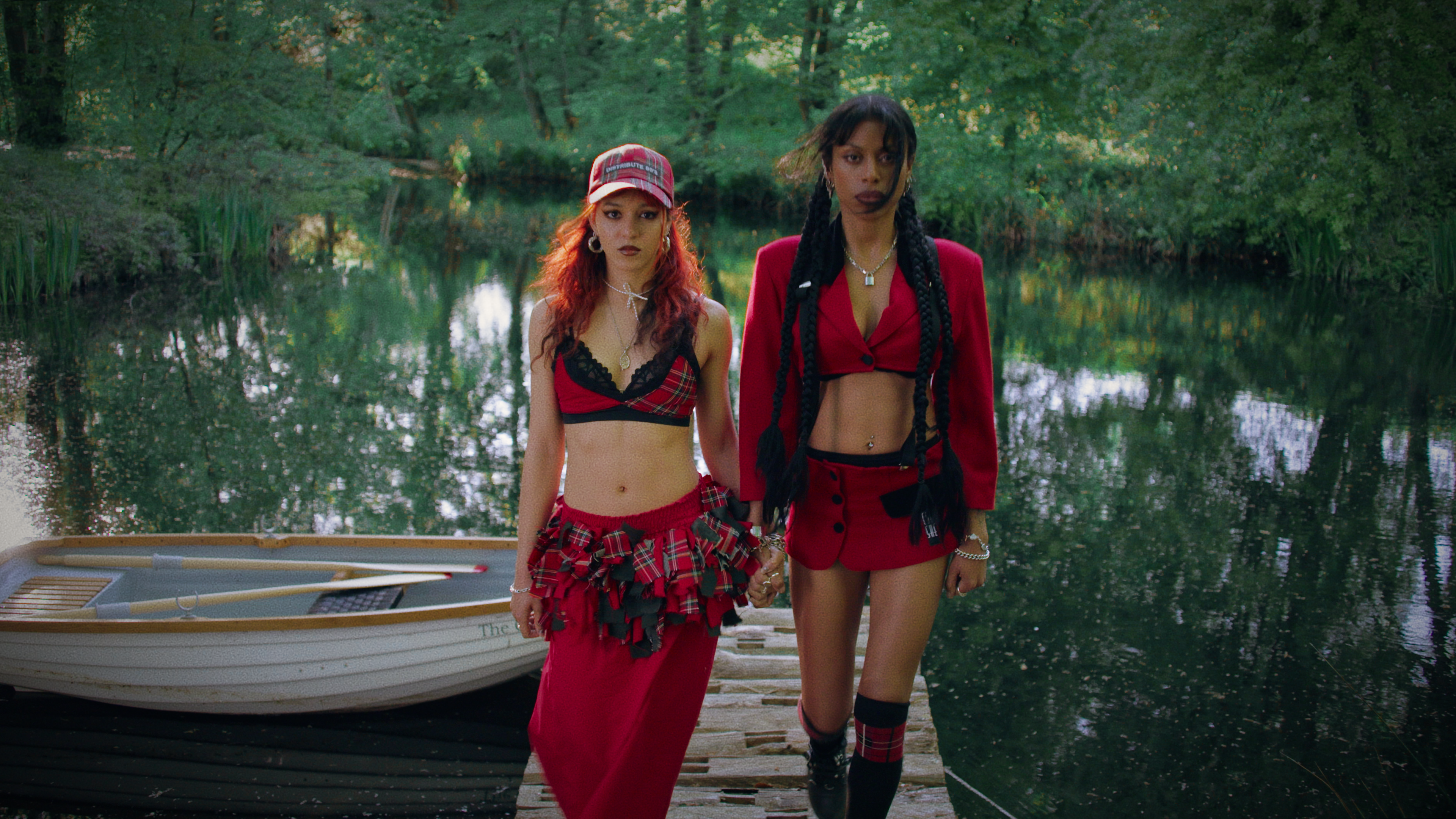
Really loving this one. Second single from their new album URGH (out on Wednesday), this one continues the dark industrial vibes they kill at, and throws in a jungle beat for good measure. While we might have no clue what vocalist Valentine Caulfield is saying (French), that’s the way we like it. Pairing the song with the below fisheye lens music video is a win-win. Don’t sleep on the new Mandy, Indiana album.


06:

Motionless In White – Afraid of the Dark

Now that’s a way to return. I’m not one of the people who will ever say a band needs to return to the sound of the first records that got them their base. I love it when bands experiment and push the boundaries of their sound. But Motionless had their fair share of “fans” who clamored for that old sound after the band produced the highly successful “Octane-core” albums Graveyard Shift, Disguise, and Scoring the End of the World. So cue the band returning with this fresh single that hits with blast beats right out of the gates alongside vocalist Chris Motionless’ signature yells. Combine the best of old and the best of the aforementioned trio of albums, and you get this track. I’m sure there will still be something for someone to complain about, but for what it’s worth, this track is solid.


07:

Fcukers – L.U.C.K.Y.

The third single from the duo’s upcoming record Ö (out March 27th on Ninja Tune), this one features production from two industry giants, Kenneth Blume (formerly Kenny Beats) and Dillon Brady. It continues the house vibes of single I Like It Like That and pairs it with a music video that quite possibly could be their most expensive to date. I say that while being certain it costs no more than a few grand to shoot. Their previous videos were probably shot on a Nintendo DS camera with either a green screen or on-site somewhere. Anyways, if it sounds like I’m being negative, I’m not. This is Fcukers, and they’re amazing. We’re L.U.C.K.Y. to have them.


08:

hemlocke springs – w-w-w-w-w

Prince, is that you? Geeze, hemlocke springs delivers again with this massive, funky cut. The third single from her new album, and spoiler alert, all three have been solid. The production, her vocal delivery, we could go on, but instead we’ll tell you that the apple tree under the sea, is available February 13th on AWAL.


09:

Converge – We Were Never The Same

The second single from the band’s new record Love Is Not Enough (due out February 13th on Epitaph), this one continues the ferocious riffs, pounding drums, and catchy melodies of the first single. The production in general is just incredible, the bass tone, Jacob’s vocals, I don’t know, man… Converge just hits the same in 2026 as it did in 2000. And that’s a damn good thing.


10:

underscores – Do It (Yves Remix)

Might be cheating a bit here since “Do It” was released late in 2025, but this new Yves remix from last week freshens up the track and gives it another much-deserved spotlight. While I’m a huge fan of everything underscores has released, especially 2023’s much-talked-about Wallsocket, I’m really loving this new synth-pop direction she’s been heading. Whether it’s the new direction or just another one-off track, the original “Do It” and this remix by Yves are definitely in our favorites.

Just the Five of Us: A Conversation with The Paper Kites

After 15 years together, The Paper Kites are still finding new ways to let their songs breathe. This past year took the Melbourne five-piece farther than ever before, from first-ever shows in India to festival stages across Europe and North America, all while quietly finishing a new album shaped by space, patience, and trust. Written largely on a friend’s farm in Victoria’s Yarra Valley and recorded with a renewed focus on just the core lineup, the new record feels less like a reinvention than a reaffirmation. In this conversation with Hit Parader, guitarist David Powys reflects on a year of movement, the power of restraint, and why, even now, there’s still something a little magical about just the five of them in a room together.

Read the full interview with The Paper Kites in issue #3 of Hit Parader below:

Hit Parader #3: Zedd Edition

February 2026 — $12.99

In this issue of Hit Parader, Grammy-winning producer Zedd reflects on Telos, his most introspective release to date, and his decision to step away from algorithm-driven expectations to create a record meant for deep listening rather than passive consumption. Made for himself first, Telos emerges as a statement of creative autonomy rooted in vulnerability, balance, and long-term intention, even…

Photo: Tim Harris

HP: Tell me about your year so far. 

David:  We’ve been touring a bunch. We had our first tour in a new part of Asia earlier in the year. Our first time in India, which is really exciting. We did a short tour in Asia. Thailand and the Philippines. Then we’ve done a few other tours. We toured with Stephen Sanchez in North America, and we also just came home a few weeks ago from a tour where we did some dates with The Teskey Brothers and did a few festivals like Bourbon and Beyond, and we also did a few headline shows through that run as well. But most importantly, we finished recording, mixing, and mastering for the new album. It’s going to be out in January. So it’s been a pretty mixed bag this year. Next year it will be back to regular programming with headline touring. It’s been nice to mix it up and do a whole bunch of different things. 

HP: It’s got to be cool to see your music connecting with so many people across the globe. Has there been a stop on any tours recently or in the past where the crowd reaction has really just shocked you in terms of how involved it is?

D: Yeah, I mean, being in India was pretty special, being somewhere we’ve never been before, working with promoters for the first time over there. Seeing the global reach of music from an Australian band, I mean, for anyone, is pretty interesting. I think it’s all thanks to, I guess, the globalization of the streaming industry and the accessibility to music and art. It’s given us at least a way to connect with fans all over the place. The other standout for us was the mid-year tour we did. It was just a short tour, a few festivals, and a few headlines, and that saw us in Canada, mostly doing some summer festivals and folk festivals. Then we also flew over to the UK and Europe for a couple of shows. So in our winter, their summer, we played at Somerset House in London. That was on the 16th of July and was a real standout for us. London is one of those cities that constantly surprises us with support. So playing at Somerset House was a huge court surrounded by these old buildings, and it’s an Outdoor Show. So to fill that space was really special, and that felt quite momentous for us.

Photo: Tim Harris

HP:  The majority of the record was written on your friend’s farm in the Yarra Valley. Did the space and isolation influence the tone, lyrics, or songs on the new record? 

D: I think so. We’ve released three songs from the album already. “When The Lavender Blooms” was first. Even that song/title paints the picture of the area of Victoria. The video for that was filmed at the farm as well. A lot of the visuals, aesthetics, and even some song titles/content lean pretty heavily on that area. The farm where we rehearse has a lot of open space outside the building. So we rehearse in an old shed. We’ve set up in the storage area of the big shed. It’s quite a big space. It’s pretty rustic and dusty. We’ve been rehearsing and writing there for some time now. It came through on Roadhouse. We wrote a lot of that music there as well. We didn’t go away or seclude ourselves from our families for this album. We were writing and recording this album in parallel with our daily lives. The album really feels like a part of us. I would say the farm definitely reflects how the songs were arranged and written. It does get pretty cold in the winter, but a lot of writing was done in the warmer months early in the year. It came together really, really naturally. It reflects a lot of us as people and as a band who’ve been playing together for 15 years.  

HP: All of this was with the roots of the five-piece band, which you guys stripped back and described as a coming home of sorts in a past interview. How did that shift the dynamic in songwriting or the studio sessions as a whole? 

D:  Off the back of At the Roadhouse, we had three extra players join the band, who became The Paper Kites and the Roadhouse band for almost two years.  Both rehearsals, recording, and subsequent touring for that record, we became an eight-piece band, which was really fun. We all learned to lean on and leave space for each other in that way. Coming back to playing as five felt really naked at first. We all felt really exposed. So we had to learn to fill the space a little bit more and bring more of ourselves into the songwriting space. It took a little bit of getting used to after two years of tour and an eight-piece. It felt a lot easier to take a breath. There’s more space to explore, and it was really to get back in touch with that part of ourselves as a five-piece. Being able to fill those spaces ourselves and believe again that we can do that as a five-piece. There was almost a feeling of like, “Well, are we going to be able to do this just the five of us again?” We enjoyed playing as an eight-piece so much. It got a little bit of it.  It took a little bit of getting used to. Once we started arranging the songs, a song like “Shake Off the Rain” was a really good example of that. It’s really quite bare-bones, and that comes down to songwriting. You can make a song sound good with barely anything if you have to. That’s probably my favorite song off of the record. It feels like a really clear reflection of just the five of us playing a good song together. Everyone adds a bit of their own secret sauce, and it came out really nice. 

HP:You stated in another interview, “When i listened to the album, it felt like an honest reflection of who we are as people and as musicians. Is there a track on this record that you think best encapsulates a specific time period for you guys? 

D: When I say it’s an honest reflection of who we are as a band right now, of course, that includes where we’ve been and the experiences we shared. What I like about this album is that it shows the light and shade of what we do as a band. Both in the sunnier tunes and the darker or moodier songs as well. There’s a really nice balance of light and shade on this album. There are a few things we tried for the first time, like “Deep (In the Plans We Made).” That is just Sam, Christina, and me with one guitar singing live around a microphone. That’s something we do a lot at our live shows. We’ve done it tons of times over the years, but we’ve never recorded a track for an album like that. It was kind of scary, but it felt like the only way to do that song correctly.  That track is a landmark moment for us. It shows all the imperfections of our voices and our timing, but also captures a specific moment in time where we all were in one room and sang together like that. We can never recreate that, even if we tried. I mean, we’ll give it our best shot at the live shows. There were a few moments on the album that felt like it’s just the five of us playing live in one room. That’s something we wouldn’t have done in the early days — way more overdubs. This is the first time we’ve tried a lot of things and really believed that, “Hey, let’s just do this; we can do this.” We’ve been doing it a long time and just backing ourselves to give it a go. A lot of the songs are not the 10th or 11th take. It’s a third or fourth take. We’ll do five, six, maybe seven takes, but we’ll always come back to the third or fourth, where the magic happened. That was really satisfying to be a part of that and be reminded that “Okay, just the five of us.” It feels like, after 15 years, there’s still a lot of magic that happens in the studio together. I think we are all satisfied with how that sounds in each of the songs. 

Photo: Tim Harris

HP: If a fan were to just discover your music with the new record, what song would you want them to hear first, and why? 

D: I want to say, “Shake Off the Rain.” It’s the third single. It’s my favorite, so I’m kind of biased, but I think that song had both light and shade within it. For me, it’s the melody. I think Sam’s melody is so beautiful in that song. In some ways, it’s a little bit of new ground for us, but it’s also the classic part, melody and harmony, that we’ve always done really well. I think the other one would probably be that people tend to like our sad songs. So, generally, if someone is being introduced to our band, it’s usually a sad song that they hear first. I think “Strongly in Your Arms” is a pretty good flag bearer for us as well. That’s got banjo in that as well and some folk arrangements. Some of those early acoustic and folk tunes are still doing well for our fans. 

Read the full interview with The Paper Kites in issue #3 of Hit Parader below:

Hit Parader #3: Zedd Edition

February 2026 — $12.99

In this issue of Hit Parader, Grammy-winning producer Zedd reflects on Telos, his most introspective release to date, and his decision to step away from algorithm-driven expectations to create a record meant for deep listening rather than passive consumption. Made for himself first, Telos emerges as a statement of creative autonomy rooted in vulnerability, balance, and long-term intention, even…

Bringing a Bit of West Texas to the World: A Conversation with Treaty Oak Revival

For Treaty Oak Revival, the road from West Texas has rarely been straightforward, but in hindsight, every detour and choice has led them to exactly where they belong, the spotlight. On first impression, one might peg them as just another country band, but TOR is known for one thing above all else — shattering labels and bending genres. Their sound — a fierce, energetic blend of punk, emo, country, and rock — has made waves, fueled by their reputation for raucous live performances that leave audiences buzzing.

It’s not every day you get the chance to sit down with one of the wildest independent rock bands of the 21st century. Treaty Oak Revival has carved their own path, stayed true to their roots, and never strayed from what their music means to them — a dedication that comes through in every note.

The band consists of Sam Canty (lead vocals/acoustic guitar), Jeremiah Vanley (lead guitar), Lance Vanley (rhythm guitar/background vocals), Dakota Hernandez (bassist), and Cody Holloway (drums). Writing music is a deeply collaborative process for them, something that’s on full display in their latest LP, West Texas Degenerate, released in November of last year.
Hit Parader had the privilege of sitting down with Sam, Jeremiah, and Lance to discuss everything from their past year to their upbringing, and of course, West Texas Degenerate.

Read the full interview with Treaty Oak Revival in issue #3 of Hit Parader below:

Hit Parader #3: Zedd Edition

February 2026 — $12.99

In this issue of Hit Parader, Grammy-winning producer Zedd reflects on Telos, his most introspective release to date, and his decision to step away from algorithm-driven expectations to create a record meant for deep listening rather than passive consumption. Made for himself first, Telos emerges as a statement of creative autonomy rooted in vulnerability, balance, and long-term intention, even… Read more →

Photo: Paige Williams

Hit Parader: How has this year felt for you so far, and were there any moments along the way that really stood out?

Sam Canty: I think we figured it out, we did the math; by the end of this year, we will have sold over 280,000 tickets. I think that’s right now, right? A bit closer to 400,000 by the end of the year, probably. We got seven gold records this year and one platinum record. I think our platinum is about to go double platinum. We’ve been playing arenas and amphitheaters all around the country, selling out places, doing fundraising events, and raising money for charity. This year, we raised a good bit for the Kerr County Flood Relief Foundation in Texas to help with all the floods going on there. We’ve got some Christmas shows coming up with toy drives, so we can give back to those kids. Yeah, and we play the Opry in a couple of weeks.

Jeremiah Vanley: It’s been a stellar year, a record year for growth for us, 100%.

SC: We just came out with our acoustic record, and we’re about to release the new record in a few weeks, so it’s coming up quick.

HP: We’ll get into the new record in a minute, but first — doing all of this independently and still finding ways to give back along the way has to feel pretty surreal. What’s that experience been like for you?

JV: It’s amazing to have the kind of team that we have. We all work so well together. We’re like a big family, everybody does what they’re supposed to be doing. We have the best people working for us, and that helps a lot as we grow independently, rather than going the whole record label route. 

SC: Yeah, we did have a run-in with a record label this year as well, but we’re back to doing it on our own now, and things are going really smoothly. We went and built ourselves a badass team, added some more people to the family. Everything’s been running smoothly. Everyone’s happy, things are going well. We’re stoked to be doing all this cool stuff on our own.

JV: Very blessed this year, for sure. We want to keep this growth going next year and beyond. As we release more records and songs, we just want to see our fan base grow like crazy.

Photo: Paige Williams

HP: Growing up in Odessa and West Texas more broadly, what parts of that upbringing — and that small-town environment — most shaped the way you see the world and what you bring into the band?

SC: A lot of it comes down to work ethic and treating this like a business. That’s how we’ve always done it; very business-oriented, working hard, achieving a lot in a short time without sacrificing quality. And being from West Texas, and being from a small town, we’ve always had that sense of community in our lives growing up. Most of us are from the same town, and that family vibe we’ve lived with all our lives is truly the heart of this band. Everyone who’s joined us [on tour] has said that it’s a big family, it’s chill and cool, and everyone’s nice. It allows everyone to be a part of it and to enjoy the experience. Most of the time, it doesn’t even feel like work. 

JV: It’s life-changing for a lot of people on our crew, especially those who’ve been in the industry 20 years. They come into our thing and say, “Wow, this is a complete 180 from how the whole industry works.”

HP: You’ve always encouraged fans to really cut loose at your shows and be part of the chaos. There was a moment a while back where things maybe tipped a little too far — so why is it still so important for you to create a space where people can fully let go and rage together?

SC: It’s the kind of environment we grew up in, going to concerts, at least for me when I was young. The first rock concert I ever went to was Papa Roach and Chevelle. I remember I was 15 years old, and thought I got a concussion because I didn’t know about crowd surfers until one got dropped on my fuckin’ head. After that, after getting knocked in the noggin, I learned to expect the chaos and to enjoy it. I was like, Alright, this is part of the fun. I just need to be more aware of my surroundings when I’m doing this. And so from then on, I would crowd surf, or I’d help other people crowd surf, and then, I’d go to country concerts where we come from. And in Lubbock, Odessa, Midland, the West Texas area, it was common practice back in the day. We used to have a festival called Crudefest where we grew up. It’s no longer a festival anymore, because I guess West Texas just isn’t meant to have a festival [laughs]. But it was always common practice to, you know, crack a beer, sling it over your head, throw it on the ground, and jump around and have fun and rage with your friends and have a good time. We wanted our shows to have that same kind of energy. You can hear the songs at home, but if you’re spending your hard-earned money, we want to give you a show  that you leave saying, “That was the craziest shit I’ve ever seen in my life.”

Lance Vanley: Same here. When I was 15 or 16, I went to a small venue in West Texas called the Pine Box; it was just pop-punk, hardcore, metal bands, all that. Being part of that scene meant being in the pit, getting thrown around; it was part of the experience. Yeah, I can go listen to this record at home, but you can’t mosh at home. 

SC: I mean, you can, but it’s weird [laughs].

LV: Yeah, but it doesn’t come out to the same effect of being in the pit and that energy just flowing. Like, you know, we have some songs, you know, like “Boomtown” where they’re moshing, but we just have other songs where you see people just grabbing onto their person next to them, and they’re just singing the song and screaming the words at each other. It’s the energy that flows through the crowd, the physical connection, the emotion, the chaos; it’s communal.

SC: As far as what happened to me recently, it wasn’t the first time something like that had happened, but it was the first time it got caught that well on camera. Stuff like that happens once in a blue moon, but not often. It’s when it starts happening every show that it’s like, ‘Okay, y’all don’t understand what we’re trying to go for here.’ That’s not really the goal, to just chuck shit at us, but the goal is to do stuff that’s spontaneous. And as far as beer showering or moshing or crowd surfing or forming a pit, yeah.

LV: Yeah, that came out of nowhere. 

JV: People in Connecticut can be wild too, you know [laughs].

SC: For sure. But the thing is, a lot of these are young kids coming into the scene at their first concert. They’ve only seen what’s online and don’t know concert etiquette yet. After a few shows, I feel like the more experience they get, they’re gonna come back and know that that’s not a cool thing to do, you know. We remind fans during “Boomtown” to look out for each other; if someone gets knocked down, pick them up. It’s typical hardcore show rules. Sometimes you’ve just got to remind the fans of that.

Photo: Paige Williams

HP: I grew up around hardcore shows, where there’s that unspoken rule: you go hard, but you look out for each other. If someone goes down, you pick them back up. That same sense of community feels present at your shows — does that parallel resonate with you?

SC: Yeah, man

HP: West Texas Degenerate just dropped — congrats. There’s a clear evolution in how you’re blending country roots with punk energy this time around. As that sound has developed, have your sources of inspiration stayed the same, or have they shifted alongside it?

SC: I think it’s a little bit of both. It kind of really depends on what we’re going for. With this record, one of the things we were looking at was growth, both in sound and the content of the music and the lyrics. I wanted to tell a story through the record of going from your youth through your 20s into your early 30s, which is kind of where we’re all at in life, aside from Jeremiah. But, I mean, hell, he’s lived through it, so he knows what it’s about. When writing that record, I was listening to a lot of bands that I listened to growing up, in high school and college, and throughout post-grad life. A lot of Lucero and Lynyrd Skynyrd and Drive-By Truckers, Turnpike Troubadours, Whiskey Myers, Reckless Kelly, those guys. Just a lot of Texas country bands, some Blink 182 and Sum 41, Simple Plan, and A Day to Remember, metalcore, just trying to get all those boxes; some southern rock, some pop punk, some metalcore, some Texas country, and try to fuse it into one, which is kind of what our music is anyway. I think we just really leaned into the style that we had on Have a Nice Day, but we also took the experimental aspect that we had on No Vacancy and applied it to this record as well. We were still playing our sound that we’ve really liked lately, but we were also trying different things with that sound and seeing how they came out. I think they turned out pretty well.

HP: One thing that really jumps out is how raw this record feels compared to the last few. Was that rougher, more immediate feeling something you were consciously chasing?

SC: That was one of the things we were really worried about. We’re always worried about our records, whether it’s overproduced, polished, or clean. We definitely like a little grunge and muddy aspect to it. 

Photo: Paige Williams

HP: Walk me through the recording process a bit — and along the way, were there any songs or themes that changed significantly from the demo stage to the finished versions?

SC: Well, what we first did was we were trying to complete Talco Tapes. We finished Talco Tapes early, so while we were there, we had a few extra days. We had a couple of songs from this record that we already had lined up and ready to go. Obviously, we already had “Bad State of Mind” and “Happy Face” in the can, already done. I think we did a couple more; We did “Blue Star”, “Withdrawals” and “Stay a While” those two days. It started out with just, me sending demos to them, just me singing with an acoustic guitar playing melody, and we all got in the studio, in the live room, and basically built the song up right there in the live room. That proved to be a longer process than we really wanted it to be. So we got done with those three songs, so at least we had those done. Then the next time we went into the studio, before we went, we rented out this place called the Platinum Music Complex, in North Richland Hills, in the DFW area of Texas. We took the rest of the songs and spent four days in that complex, just going over the songs and building them from the ground up and getting them how we wanted them, kind of like we had it now.

LV: Our preferred method of going into the studio to record is that we’ve already done the pre-production. We don’t want to go in there and spend five to six hours writing and finishing the song. Within those five or six hours, we might have been done recording it if we had just taken the time ahead and done that. Even to go back to answer your original question, I would say, “Sunflower” probably changed the most from the original demo. The second closest would be “Naders,” because the vocal element was completely different before we ended up going back. Maybe a week before we went back to the studio, Sam and I were talking, and it was like, it’s boring, they’re not very entertaining. We reworked the entire melody and harmony section so that we didn’t have to change any of the instrumentation. So it was like, boom, did that. Outside of that, everything else was pretty much from that pre-production stage, where we were able to rehearse, outside of dialing in what tones, specifically for those songs. A lot of it was basically in that pre-production.

HP: I’ve heard the story about the writer at Two Step Inn and how the album title came into focus, but I’d love to hear it directly from you. When did West Texas Degeneratelock in as the name, and what made it feel right?

SC: As far as the name being for the album, every time we talked about that song, everyone was like, that’s a really cool name. We had been trying to figure out the name of this record. I was, like, pulling lines from the songs and all sorts of stuff, and I just couldn’t really figure it out. The story behind “West Texas Degenerate” is I always wanted to write a follow-up to our “Boomtown” song, but kind of – not sure if it’s a prequel or a sequel or an offshoot – but kind of something in that same vein of telling another story about working life in Odessa, Texas, and the surrounding Ector County area. I had that one hook and hook line in the chorus, “West Texas Degenerate,” because I could hear people singing that back in the crowd. I said, ‘I don’t know how to finish this or how to get this started, and I need somebody to help me.’ I thought of the song “Ringling Road” by William Clark Green. He’s one of my favorite singer-songwriters out of Texas, in the Texas country music scene. We used to cover him back in the day when we were just playing small bar gigs. He’s always been an inspiration for me in songwriting and in Texas country. We had a relationship built with him through his festival, Cotton Fest in Lubbock, Texas. He had us headline it that year, so I hit him up on social media and said, ‘Hey man, would you ever consider writing a song with one of us?’ He said, ‘Oh, hell yeah, absolutely.’ I asked how he wanted to do this, he said, “Man, let’s just go to Billy Bob’s in Fort Worth”, the largest Honky Tonk in Texas. “I can rent the green room out in the back and just come meet me there, and we’ll see what we can do.” We met up there and wrote the song in about an hour and a half, and we were done, and we’re really happy with it. Will was like, “Man, that song is badass, dude. I can’t believe we wrote it so quickly, too. If you want to, you don’t have to, but I would like to be on it.” I said, “Oh, hell yeah, man, we have to get you on the song.” To be able to write a song with a guy I really look up to, have him on the track with me, was kind of a surreal moment. I’m happy that song’s on the record, I’m happy it’s the title. I think it paints a perfect picture of the life we live and where we come from.

Photo: Paige Williams

HP: “Withdraw” is such a heavy and important moment on the album, especially given the kinds of jobs and environments you came from — places where addiction is often a reality. How did your personal experiences shape that song, and what does it mean to tell that story from lived experience rather than observation?

SC: Yeah, I had a pretty bad relationship with alcohol, or a bad and good relationship with alcohol, for about 10 years. The last five years that I was drinking, it was pretty rough, and I would say I was a full-blown alcoholic at that point. Kept it on me at all times, drinking at all hours of the day. It finally got to the point where I decided to quit, and I decided to try to do it cold turkey. Well, if you’ve been drinking a handle every three days or a fifth every night of whiskey for a solid 10 years, you can’t just quit that cold turkey. After the first couple of days of withdrawal symptoms, shakes, nausea, and vomiting. On the third day, I started having what’s called delirium tremens, or DTs. I was seeing things as clear as you and me, and they weren’t there. It’s pretty terrifying shit.

JV: Yeah, I drove Sam around a few times, and he was literally out of it. He was seeing things. I was like, “Hey, let me call your mom and dad real fast. We’ll go over there and hang out for a little bit.”

SC: Yeah, there were times where some of the stuff I was seeing, and I was in fear for my life, but that was just my brain trying to shock my heart. I wound up getting admitted to the hospital, and they were like, “Yeah, if you hadn’t come in when you did, you probably would have gone into cardiac arrest.” So I dried out in the hospital, got out on Easter, and then two weeks later, I was drinking beer again and started going back down the cycle. I wound up meeting my wife and moving to Oklahoma, and still doing the band stuff. But it got to a point where even my wife, my girlfriend at the time, was like, “I’m out of here, this relationship’s over.” It was starting to look like the relationship was over for a lot more than just her. The relationship with my band wasn’t very good; I wasn’t doing well at shows; I was forgetting lyrics and just walking off stage, too drunk to perform. My relationship with my family was suffering from it. I decided that it was time to never do it again. As of last September, I’m three years sober off alcohol, and that song was just kind of a nod to that time of experiencing all that stuff and going through that. Hopefully, it helps put into perspective what that kind of stuff can do for other people, and maybe they don’t have to experience the same things.

HP: On the other end of the spectrum, tell me about “Sunflower.” How did that song come together, and what did it bring to the album that made it feel essential?

SC:I wrote that song as a wedding present to my wife because she always told me I never wrote any songs about her, like all the songs are always about different girls, and stuff like that. I was like, “Alright, you won,” so I wrote that two days before I got married or was about to get married to her. There was another song I’d written that was kind of a similar love song, but it just didn’t fit anymore. This one, I felt, was a really good song. I like the wordplay, everything about it. I always wanted Treaty Oak [Revival] to at least have one love song, one kind of wedding song. I originally didn’t want the song to be on the record because it was a gift to my wife, so it wasn’t really my song to give, but the guys seemed to really like it. Our producer really liked it. Everyone enjoyed the song. I talked to my wife about it, and she said, “Use it, but definitely make sure it sounds badass. If you’re going to do it, do it right.” It took us a while to dial it in, and I think it’s about as dialed in as it’s going to get on that record.

HP: Beautiful track, and I’m glad that it made it in.

SC: Me too, with a great low point in the record for everybody to kind of calm down.

HP: There’s a lot of weight on this record, so moments of contrast really stand out. On “Sweet With Misery,” the metaphor of a mercy killing to describe the end of a relationship is incredibly striking. What drew you to that idea as a way of expressing that feeling?

SC: I don’t know. I wrote it with a guy named Gary Stanton. He and I are both big hunters. When I wrote it, I was probably in a fight with my wife or something, but I always remember that feeling where she’s mad at you, could possibly break up with you, but she’s not doing it, or she’s not telling you, and it’s just about that miserable feeling of waiting for it to happen and it just never comes. I thought that would be a cool thing to write about, while also alluding to the hunting aspect of where we come from. I thought it was a fun song. Gary’s a great songwriter, Muscadine Bloodline is a great band, and we’re really fond of them. Those guys have always been really good to us. Gary’s such a good writer, he worked so well with me. I was happy we made that song, and very happy that we were able to get them on that song with us. It’s one of my favorite songs on the record. When you go into writing songs like that, you don’t go into it thinking it’s going to be this powerful message or anything. It’s just one of those ones we thought was a really fun song, fun to play. I thought the concept was kind of humorous, kind of fun. Well, it can be subjective. It can be whatever you want. To me, it was kind of a fun song.

HP: Zooming out for a second — if listeners walk away from West Texas Degenerate with one core feeling or takeaway, what do you hope that is?

LV: I would say, like, this is who we are. To me, this record sounds the most like us, out of any music we’ve put out. When I hear these songs, I’m like, “That’s us, that’s what I wanted it to sound like.”

SC: Yeah, I would say the main point of this record is: this is who we are, this is what we sound like, this is where we come from, we’re not ashamed of it, and we’re here to stay. We haven’t forgotten where we come from. In fact, where we come from makes us who we are as a band. The main point of the record is, maybe the place you’re from isn’t the greatest place on earth, but it’s still your hometown, and you still gotta have pride in where you’re from and the people who got you there, especially, because we have a lot of people to thank from where we come from. They’re the reason why we’re here. We like to bring a little bit of West Texas to the world. That’s what we’re trying to do.

HP: If you had to point to one song that best embodies that feeling — knowing it’s like picking a favorite kid — which track would it be, and why?

SC: I think just the title track itself really explains it the best. You could say the same for “Stay a While” or “Port A.” Those songs are about that environment as well. “Port A” was more of a South Texas song about where I went to college. I would say “West Texas Degenerate” probably is the best conveyor of that feeling.

HP: To close things out, is there anything else you’d like fans to know as they spend time with this record?

SC: I mean, this whole record, we make every record for our fans, with our fans in mind. Make sure to listen to the intro and outro. Those are some of our favorite parts of the record. 

JV: Hey, the outro is gonna go Gold. [laughs]

SC: Looking forward to upping the production and upping the ante next year. As far as touring goes, playing some bigger venues, a little bit more thought put into some stage production, maybe some props and stuff. Looking forward to playing these new songs out on the road next year and the rest of this year when the record comes out. We’re ready to see everybody.

Read the full interview with Treaty Oak Revival in issue #3 of Hit Parader below:

Hit Parader #3: Zedd Edition

February 2026 — $12.99

In this issue of Hit Parader, Grammy-winning producer Zedd reflects on Telos, his most introspective release to date, and his decision to step away from algorithm-driven expectations to create a record meant for deep listening rather than passive consumption. Made for himself first, Telos emerges as a statement of creative autonomy rooted in vulnerability, balance, and long-term intention, even…

Peter Hook Looks Back at 40 Years of Low-Life

Photo: Mark L Hill

Forty years after the release of New Order’s seminal album Low-Life, co-founder and bassist Peter Hook calls it “the only true New Order record” – the moment the band truly honed their sound. “We were forming it on Power, Corruption & Lies, we had it for Low-Life, and on Brotherhood it started coming apart,” Hook says over Zoom.

A stunning blend of electronica and rock, Low-Life wasn’t, according to Hook, an attempt to chase the success of New Order’s massive 1983 hit “Blue Monday.” It just felt like the right time to record the next batch of songs they’d written. Still, the album’s lead single, “The Perfect Kiss,” quickly became a hit – though the band wasn’t thinking in those terms. “We didn’t care, to be honest. Once a song was finished, it was gone,” Hook says. “Our manager used to say, ‘The best song is your next one.’”

Yet, he recalls the painstaking nine months it took to finish the song, followed by three exhausting days and nights at the mixing console. “I woke up and had the imprints of all the knobs on my forehead,” he says, laughing.

In the meantime, thanks to touring, “The Perfect Kiss” still feels fresh to Hook. It remains a staple in Peter Hook & The Light’s live shows, as does Low-Life‘s “Love Vigilantes.”

Revisiting the album to relearn the songs, however, evoked difficult feelings tied to his acrimonious 2007 split from the group. “As much as I hate to say this, I can’t fucking stand hearing Barney’s voice,” Hook says of Bernard Sumner, his former bandmate, and co-founder of both New Order and Joy Division. “Everything has been colored by that ending…the spit, bile and hate.” 

Photo: Julien Lachaussée

He likens his current relationship with the band to “a nasty divorce,” further complicated by the songs that bind them – “like children that tie us together forever.”

Yet performing the music brings joy amid their painful division. “When we were together, it didn’t make me happy, because the others were always changing things to get away from the sound of New Order,” Hook reflects. “But the wonderful thing about playing the songs now, exactly as they were written and recorded, is that it makes me happy.”

Read this story and more in issue #1 of Hit Parader below:

Hit Parader #1: Yungblud Edition

October 2025 — $12.99
YUNGBLUD is bringing the rock star back to rock. At just 27, the British firebrand stunned 45,000 fans and the world at Ozzy Osbourne’s farewell show with a jaw-dropping, emotional cover of “Changes.” Critics and legends alike are calling it one of the greatest live performances of the past 25 years. In a genre starved…

Our Favorite Music Discoveries of 2026

With more music coming out than ever before, talent is abundant out there. The issue both artists and listeners face is how to find each other.

We are more than happy to help. At the new Hit Parader, music discovery will be a huge part of what we do because, for me, discovering a new artist to follow throughout their career remains one of the greatest joys of being a music fanatic.

The 13 artists chosen here are our music discoveries we’re most excited about in 2026, spanning Spanish pop and soul, rock and hard rock, singer-songwriter, jazz, and more. In putting together this disparate list, I can promise you there was no thought given to the number of followers on social media or streaming spins. As a sports fanatic as well, numbers matter in sports, not music.

The only things that mattered in this list were talent, creativity, honesty, and most importantly, “it” factor. Every one of the 13 artists here had at least one song that stopped me in the middle of whatever I was doing and caused me to go, “Oh shit, who is that?” That’s what good music does — it draws you in and makes you listen. These 13 artists will make you listen and make you damn glad you did. — Steve Baltin


IZZY ESCOBAR

HP: What new music do you have coming in 2026?
IE: I’m really excited to be releasing an acoustic version of my EP on January 23rd, with an added bonus track called “Gangster’s Wife.” That song actually started as an improvised moment online, and it’s been so special getting to develop it fully in the studio. We were able to really lean into my love for jazz and strip everything back so the storytelling and emotion could shine.

HP: What is your biggest musical dream for next year?
IE: My biggest musical dream is to go on my first headline tour and also open for a major artist. I’m really looking forward to releasing my first full-length album this year and taking that body of work on the road. And honestly — it’s always been a dream of mine to play Coachella 😉

HP: Is there one song of yours you feel best sums up your sound and ethos as an artist? Why that song?
IE: “Sunny in London.” It captures my sound and my spirit — it’s soulful, cinematic, and emotionally honest without being bitter. It’s about finding light in unfamiliar places and learning how to stand on your own again. That balance of vulnerability and strength is really who I am as an artist.

HP: What one rock star, living or dead, would you most want to hang out with for a night and why?
IE: Stevie Nicks, without question. She embodies mysticism, femininity, and fearlessness in a way that feels timeless. I’ve always admired how she made softness powerful and vulnerability iconic, while still commanding a room like no one else. I’d love to talk with her about songwriting, intuition, and how she protects her inner world while living a public life. 

HP: What would be the biggest compliment you could hear someone say about you after hearing your music?
IE: The biggest compliment I’ve ever received actually came after someone watched me sing kirtan, a traditional form of Indian Sanskrit chanting, in Griffith Park. They told me that when I sang, I wore my heart on my sleeve. That’s always stayed with me. Singing is the one place where I feel completely myself and completely vulnerable. If my music can make someone feel less alone, help them find their voice, or feel empowered to keep moving forward in their own story, that would mean everything to me.

HP: What is the most rock-star thing you’ve ever done?
IE: Honestly, the life I’m living right now feels like the most rock-star thing I’ve ever done. But if you want a funny story — when I was in college, a close friend and I became completely obsessed with the Red Hot Chili Peppers. We heard on the radio that Amoeba Records in Hollywood was giving out free tickets to the first 60 people in line, so we went the night before and slept on the Hollywood Walk of Fame, even though we had classes the next day. We ended up getting in, and I’ll never forget that performance. Pretty rock-star, I’d say.


DREAH

HP: What new music do you have coming in 2026? 
D: In 2026, I feel like I’m stepping into my fully confident pop-driven era. I’ll be releasing music that’s not so much about heartbreak, but more about showcasing what I’m currently living through. It’ll be music that makes you want to look in the mirror and really feel yourself. 

HP: What is your biggest musical dream for next year?
D: My biggest musical dream for this next year would be to receive a nomination for the Latin Grammys! And if I can add another… to perform at a festival. 

HP: Is there one song of yours you best feel sums up your sound and ethos as an artist? Why that song?
D: I would have to say my latest song, “High,” sums up my sounds and vibe as an artist. It’s dark but sensual. To me, it’s my perfect version of dark femininity 

HP: What one rock star, living or dead, would you most want to hang out with for a night and why?
D: I’d love to hang out with Ozzy Osbourne for the night. His persona is so interesting to me, hahaha! I feel like I would be entertained throughout the whole night.

HP: What would be the biggest compliment you can hear someone say about you after hearing your music?
D: I would say the biggest compliment would be that my music made them feel confident. I remember how I used to feel as a little girl, listening to Britney Spears on the radio or Christina Aguilera in my room. It would bring out this overflowing confidence within me. That is the exact same energy I want to transmit to other people through my music. 

HP: What is the most rock star thing you have ever done?
D: I think back to the time I attended a motorcycle event in South Florida. I was riding my motorcycle in the middle of hundreds of other motorcyclists. Some were doing wheelies, some going as fast as they could, some doing tandems. And on top of all that craziness, I turned around to see a pack of police cars following behind trying to stop everyone! Biggest adrenaline rush for sure!!

HP: If you could live in and create music in any one book or movie, what would you choose and why?
D: If I had to choose any book or movie to create music or live in, I would have to say “Grease”. First of all, the movie is absolutely amazing! Sandy is someone who’s so sweet and soft, but also has that edginess towards the end of the movie. I feel like it’s the perfect representation of who I am as an artist. That combination of sweet and sour!


LOST IN VEGAS

HP: What new music do you have coming in 2026?
LIV: I have a lot of great music coming out in 2026. One in particular is called “On My Own,” which I did with my bandmate/ amazing producer John Fox, producer Michael Bono, who has worked with a lot of music greats like John Feldmann and Blink 182, and last but not least, Tosh The Drummer, who has been on a generational run drumming for Lady Gaga. I also might have an amazing feature on it, but I’m going to keep that a surprise. 

HP: What is your biggest musical dream for next year?
LIV: As an artist, I want to create real relationships with the people who support me. I went on three national tours with my friend/ artist/ mentor Mod Sun, and he showed me the importance of going on tour, doing shows, and meeting the fans in real life. The connection and bond you get to experience with them is unmatched, especially living in this crazy digital age. So, my goal is to do that. Also, I want to challenge myself to be more consistent and fearless when it comes to showing my art to the world. 

HP: Is there one song of yours you best feel sums up your sound and ethos as an artist? Why that song?
LIV: I would say our song “Dirty Little Freak” and the last song we just released called “Paranoia.” I love these songs because they sound like what a Vegas song would sound like. Very high energy, bass-driven, with crunchy loud guitar and INSANE guitar solo s at the end to really top it all off. I have the privilege to work alongside extremely talented musicians/ band-mates that bring these visions to life, so shout out to John Fox on the production, and Ian David on the guitar. 

HP: What one rock star, living or dead, would you most want to hang out with for a night and why?
LIV: Oooh, that’s a tough question. I would say Lenny Kravitz. Growing up, I listened to his music nonstop. Plus, his style and aura are through the roof to me; he is the definition of a rock star, and I take a lot of influence from him in the music we make. 

HP: What would be the biggest compliment you can hear someone say about you after hearing your music?
LIV: The biggest compliment somebody can say to me is how much our music has changed their life and helped them get through a hard time. I make music about my personal experiences, but at the end of the day, as an artist, we are here to serve, have an impact, and be the light for those who are in the dark. The beautiful thing about creating music is watching the evolution of an idea materialize into something that not only helps us with our own dealings, but also watching it take on a life of its own with the people that listen and see how it translates and helps them.  

HP: What is the most rock star thing you have ever done?
LIV: Hmm. I always forget living in L.A., we’re in our own little bubble, and I have the privilege of experiencing some pretty crazy shit. One experience that I always think about is when Mod Sun brought me out to do our song during his set at the Machine Gun Kelly Est Fest in Ohio. I was super nervous, and it was in front of like 3000 plus people. I also did my first-ever stage dive. I would also say just going on tour and riding a tour bus and getting to perform every night is the most insane high rock star shit I plan on experiencing again soon, one day. 


MYND READER

HP: What new music do you have coming in 2026?
MR: We are releasing our debut self-titled album MYND READER on January 30th. It’s taken a long life of living to properly write it. It’s a concept album about the human experience. With so much division in the world, we wanted to write about what connects us — love, joy, the promise of a new day. What it means to be fully human.

HP: What is your biggest musical dream for next year?
MR: Bringing people together in a live environment to experience our music in community, with a connected energy that will blow the roof off the place. To experience Rock and Roll redemption — a Rock and Roll Concert.

HP: Is there one song of yours that best sums up your sound and ethos as an artist? Why that song?
MR: The song “Home.” Musically, it’s incredibly honest, vulnerable, and explosive. The chorus of the song is, “More life, please! Because no matter how hard life can get … the prayer is for more!” Our ethos is always finding the light in the darkness. There is always a chance for redemption. We have a lyric in the song that says, “With the promise of a new day, shapes the diamond of the soul.”

HP: What one rock star, living or dead, would you most want to hang out with for a night and why?
MR: John Lennon. He changed the world with his music … having a couple of drinks with John Lennon … to experience him just being human … what was he like? What was his sense of humor … what brought him joy? I would just love to get to know him, even if it was for just one night.  

HP: What would be the biggest compliment you can hear someone say about you after hearing your music?
MR: I don’t feel so alone with my feelings. We had someone once comment that they were going through very serious health issues, and our music brought them hope and faith … It makes it all worth it!

HP: What is the most rock star thing you have ever done?
MR: I just went with Michael Brauer (seven-time Grammy-winning mixer who mixed our new album) to see David Byrne and got to hang out with him and meet him after the show. Such a great night of perfection. His performance was impeccable, and he is such a nice, approachable guy.


TAMZENE

HP: What new music do you have coming in 2026? 
T: I’ve been working on my debut album! I’ve always wanted to embark on a really in-depth body of work, so 2026 will certainly see some of that coming together. I’m incredibly excited to share it with you all! 

HP: What is your biggest musical dream for next year? 
T: I’d love to bring a show to the States. My last show was in NY in 2020, and I think it’s time I went back! I’ve ticked off so much already, opening for Stevie Wonder, Adele, etc, but every artist dreams about America. I’d also love to visit Nashville for some writing. I’ve always wanted to experience that creative scene. I’ve heard so much about it! 

HP: Is there one song of yours that best sums up your sound and ethos as an artist? Why that song? 
T: It would have to be ‘Something Right’ — which is a bit of a cheat because there are two versions, but it’s a true representation of all the things I love when making music. Lush backing vocals, warm piano, live drums, and heartfelt lyrics. The piano version is the purest form of who and what I am as an artist. If you come to a solo show, this is what you hear. I want to keep capturing and delivering this range and spectrum of music. 

HP: What one rock star, living or dead, would you most want to hang out with for a night and why? 
T: It would have to be Tina Turner. I took my mum recently to see the musical, and I was blown away! Her story really inspires me. She didn’t take no for an answer. I’d love to be in that energy, laugh with her, and learn from her, such a hero. 

HP: What would be the biggest compliment you can hear someone say about you after hearing your music? 
T: Well. It’s not that I enjoy making people cry or anything, but when someone says they’ve been moved to tears, I am always amazed by that. I feel so deeply when I sing, and I think my job is to make others feel deeply too. That level of resonance is the whole point to me. 

HP: What is the most rock star thing you have ever done? 
T: Haha, well I can’t say I’m the most rebellious of artists, but I did play my biggest ever headline show on two hours sleep … Is it still rockstar if the reason was a flat tire and not a crazy party?


STRANGERR

HP: What new music do you have coming in 2026? 
S: A lot of singles, for sure, and at least one or two EPs.

HP: What is your biggest musical dream for next year?
S: My biggest musical dream is to continue building a real community and core audience that connects with honest music and genuine art.

HP: Is there one song of yours that best sums up your sound and ethos as an artist? Why that song?
S: I don’t think one song can sum up my sound. If you dive into my catalog, you’ll hear different sounds and genres that all represent pieces of who I am. If one song could define me, my name probably wouldn’t be Strangerr.

HP: What one rock star, living or dead, would you most want to hang out with for a night and why?
S: For a night, I’d want to hang out with Jimi Hendrix. Seeing someone who looks like me reach that level of respect and influence means a lot. His legacy is unmatched. I’d want to observe his day-to-day life and learn how he navigated the world as a Black artist.

HP: What would be the biggest compliment you can hear someone say about you after hearing your music?
S: That they emotionally connected with it. I try to be as real, authentic, and personal as possible in my music. I believe true artists care about substance and relatability.

HP: What is the most rock star thing you have ever done?
S: I’ve never conformed to traditional jobs. Despite doubt from family, friends, and peers, I still managed to manifest a life as a full-time artist. That kind of rebellion feels rock-star in itself.


ERIN LECOUNT

HP: What new music do you have coming in 2026?
EL: The most personal stuff I’ve ever made. Songs that kind of make me grit my teeth a little when I play them for people. My New Year’s resolutions are to be braver in saying what I mean!

HP: What is your biggest musical dream for next year?
EL: I’m about to do a sold-out tour in the US, which is kind of a dream in itself. I’ve been getting whispers of some dream venues for the rest of the year, so it feels like some of them are already dreams half true. I suppose between shows, my big dream is to escape somewhere new for a while and make something really special that I’ve been planning and formulating in my head for a while. I want to make something not like I’ve ever made before, and that means I have to create a new process for myself. I would like to find a friend or trusted partner to collaborate with, too, like someone to help me bring that to life, a bit of a musical soulmate to do it with.

HP: Is there one song of yours that best sums up your sound and ethos as an artist? Why that song?
EL: A song of mine called “Marble Arch” was the proudest I’d ever felt of production and writing. It felt like the first time I’d been able to actualize something that I’d heard in my head exactly in the way I wanted to. I indulged in all my guilty pleasures – huge tom drums, metal snares, it’s like an anti-fairytale song, all these reverb birdsong melodies about how difficult you are to love, soundtracked to this industrial sword fight and warped harp orchestra in the background. “MACHINE GHOST” is a song I feel similarly about, except making that felt like being hit by lightning and having a song in my hands that summed up four years’ worth of feeling, even without lyrics, the instrumental just sounded like somebody breaking down – most of the instrumental is made of my voice and vocoder. I think both are good examples of what I try to do, which is to recreate an emotion or a moment or a thought and create this specific scene around it, like it’s the beginning or the end of the world.

HP: What one rock star, living or dead, would you most want to hang out with for a night and why?
EL: Kate Bush is the ultimate rock star to me, so I choose her every time. I don’t think there’s any other artist, alive or dead, that moves me like she does, or provides me as much escapism as she does. I feel so close to her, which sounds slightly silly, but I really don’t play about Kate Bush. I would just want to have dinner and a glass of wine and let her talk and ask questions, I have so many.

HP: What would be the biggest compliment you can hear someone say about you after hearing your music?
EL: I like specifics, when people pay attention to one lyric and want to know more about it, or when people pick up on something in the production, and ask what I did with this sound or why I chose it. I like attention to detail, and when that is noticed, that’s very gratifying. I get insecure about drums, so if someone says they like my drums, I feel a bit like a child who’s been given a gold star. The best compliment I can get from a live show, however, is about overall energy, compliments on the crowd, just atmosphere in the room, and how “in it” I was.

HP: What is the most rock star thing you have ever done?
EL: You’re asking the wrong girl. I don’t know. Getting my whole head of hair bleached in someone’s kitchen because I’d seen a psychic, argued with a cult member, and cried in a wig shop one night, and then felt like the universe was telling me I had to be blonde. 


RED EYE

HP: What new music do you have coming in 2026?
RE: We’re releasing our debut EP! It includes re-recorded versions of our first two releases, as well as some new songs that we’re really excited to share. We’ve been in the studio for the last couple of months, and we’re hoping to have everything ready by spring.

HP: What is your biggest musical dream for next year?
RE: We’d really like to crack the studio recording process. When we first started a couple of years back, I think we had the idea that writing good songs was the hard part of making music, and getting them recorded was more of an afterthought. But we’ve found out how untrue that is — recording is an art of its own, and there’s a ton of things that need to go right for a demo to be properly transformed into something polished. So, if we can figure this one out in 2026, we’ll be happy.

HP: Is there one song of yours that best sums up your sound and ethos as an artist? Why that song?
RE: The song that best represents us as a band is probably “How it Ends,” which we released as a demo over the summer. It has a lot of our favorite musical sensibilities: it’s nostalgic in the verses, euphoric and dance-y in the chorus, and combines indie rock attitude with lots of cool jazzy chords. It’s also one of the songs that we’re re-recording for next year’s EP.

HP: What one rock star, living or dead, would you most want to hang out with for a night and why?
RE: Elliott Smith. As a guitar music band, there really isn’t anyone we admire more when it comes to writing beautiful chord progressions and melodies — he’s a constant inspiration. He was also an incredible lyricist who mastered the art of conveying emotion through song. So, chatting about songwriting with him would be a dream, in addition to how cool it would be to hang out with one of our greatest musical idols.

HP: What would be the biggest compliment you can hear someone say about you after hearing your music?
RE: Our favorite kind of compliment is one that recognizes the parts of our songs that we personally feel the proudest of. There’s nothing better than someone saying, “Hey, that specific thing you do in that part of that song is so cool,” and being like, “Yeah, that’s our favorite part too!”

HP: What is the most rock star thing you have ever done?
RE: Probably dropping everything from my life in California and moving to New York to work as a waiter and make music. It was a scary thing to do, and it introduced a whole lot of uncertainty into my life. But choosing to pursue art in this city is such a time-honored tradition, and there’s something really romantic about following in the footsteps of the greats that came before us. And that feels pretty rock n’ roll.


GEO BADOO

HP: What new music do you have coming in 2026? 
GB: A lot! In March, I’m releasing a song that’s very close to my heart, and I can’t wait to tell this story in all the ways I have planned. It’s possibly a bit of an unconventional one coming from the UK right now, think country meets R&B. After that, I’ll be releasing music steadily, leading up to a very special project at the end of the year. 

HP: What is your biggest musical dream for next year?
GB: My musical dream for 2026 is to spend a lot more time on stage and connect with people face-to-face. It’s my favorite thing, and it needs to happen more! 

HP: Is there one song of yours that best sums up your sound and ethos as an artist? Why that song?
GB: That’s a hard question because I feel like I’m not really in a box, and I like to shape shift and try on different musical hats. It’s probably either “My Turn” or the song I’m releasing in March, “Save Me.” I feel like these songs have a tenderness and subtlety that just feels like me, with messages that really came from my core. 

HP: What one rock star, living or dead, would you most want to hang out with for a night and why? 
GB: It would have to be David Bowie. The man was just the coolest, smoothest, smartest person. I have the utmost respect and a lot of questions for him. 

HP: What would be the biggest compliment you can hear someone say about you after hearing your music? 
GB: The biggest compliment would be on my originality and distinctive qualities. Or that they felt calm and grounded while listening. 

HP: If you could live in and create music in any one book or movie, what would it be and why? 
GB: After Dark by Haruki Murakami. I really like the concept of witnessing multiple lives happening simultaneously over a single night. I imagine a diverse, sensitive, and observant soundtrack, with subtle threads that represent the connections between the people.


SALEM DARLING

HP: What new music do you have coming in 2026? 
SD: I’m super excited for this year! I’m releasing a new song every month. I write a lot of songs by myself, but I also love to collaborate with my friend Sam Nicholson. These new songs will capture what it’s like to be a teenage/young girl. Some are high-energy pop/rock, ballads, or heartbreak songs. 

HP: What is your biggest musical dream for next year? 
SD: I would love to be recognized for my songwriting and my music. I would love for my music to be heard by a lot more people, hoping to have some sort of break. I also would like to play live shows and open for more well-known musicians. 

HP: Is there one song of yours that best sums up your sound and ethos as an artist? Why that song? 
SD: Yes, “Send my Love.” This was the very first song I released back in August. It is a high-energy, fun, pop/rock song. It is about getting cheated on, but instead of being sad about it, I sort of make fun of the situation. As a side note, there are so many songs that I haven’t released yet that are my favorites. 

HP: What one rock star, living or dead, would you most want to hang out with for a night and why? 
SD: This is a difficult question; there are so many people that I’d love to hang out with. But I would say Billie Eilish because, although she’s different from me, she writes her own songs and collaborates with her brother, which is similar to what I’m trying to do, so I can relate to her. In addition, I would love to meet Taylor Swift because I think she’s a great lyricist and she’s a big inspiration. 

HP: What would be the biggest compliment you can hear someone say about you after hearing your music? 
SD: I love it when people say they can relate to my music. Or just seeing my little community grow and see the same group of people supporting me on everything I do, and welcoming new people as well. I also enjoy when people notice I write songs myself. In my comments, people often say I’m underrated, and that means so much to hear that. I’ve heard several times that people gatekeep and don’t tell their friends about me because they want to keep my songs to themselves, but on the other hand, they want to share my music because they want me to be successful; that always makes me smile. 

HP: What is the most rock star thing you have ever done? 
SD: There have been so many cool things I’ve done: being in bands, playing festivals, being recognized in songwriting competitions, doing promos for Gibson Guitar, and being acknowledged by some talented musicians like Gene Simmons, etc. Probably one of the most unexpected moments was when I played a show in a bar in Long Beach. After the show, my mom pulled me aside and told me that Fergie was in there filming me playing guitar. So, then I looked around, and there she was! I got to meet her, and she was such an amazing person to talk to and told me to never give up on my dream. She then wanted to talk to my mom, and so she grabbed my mom’s hand and was pulling her through the bar. My mom was all like, “Fergie is holding my hand, what is going on?” haha. In that moment, I was so grateful that someone like her recognized how hard I’ve worked to get where I am. 

HP: If you could live in and create music in any book or movie what would it be and why? 
SD: Bohemian Rhapsody. I feel like I can relate to Freddie Mercury because he was familiar with many musical genres like opera, rock, pop, etc., and I grew up learning classical music, then focused on rock, and now I’m writing my own pop songs. He was a songwriting genius, and I aspire to be like that as well. He was relatable, kind, and inspiring, and I would’ve loved to have met him, so that would be the perfect movie for me. 


SAINT HARRISON

HP: What new music do you have coming in 2026?
SH: Lots coming this year, you’re gonna see pretty much everything I’ve been working on since “Lost a Friend.”

HP: What is your biggest musical dream for this year?
SH: Honestly, just to perform as much as possible, I grew up performing and being on stage, so I’m really excited to be able to go out there and fuck some shit up :)))

HP: Is there one song of yours that best sums up your sound and ethos as an artist? Why that song?
SH: Yes. But it isn’t out yet — it’s a song coming this year that I really wanted for a long time. It came towards me towards the end of the writing process and is really just about giving grace to someone that has hurt you so much — I felt like this upcoming chapter really needed that perspective, and really sums me up as a person and artist (after I’ve gotten over my crash out lol).

HP: What one rock star, living or dead, would you most want to hang out with for a night and why?
SH: Oh my god, can I have a dinner party? Like Bowie, Prince, and Janis Joplin would be a wild time.

HP: What would be the biggest compliment you can hear someone say about you after hearing your music?
SH: When people shout at me and make stank faces, biggest compliments (shoutout Atlanta for being my favorite crowd ever).

HP: What is the most rock star thing you have ever done?
SH: Shopping in Supreme with Elton John was pretty rockstar.


GABRIELLE CAVASSA

HP: What new music do you have coming in 2026?
GC: My debut Blue Note record 🙂

HP: What is your biggest musical dream for 2026?
GC: Go deeper, abandon perfectionism, commit.

HP: Is there one song of yours that best sums up your sound and ethos as an artist? Why that song?
GC: Not really.

HP: What one rock star, living or dead, would you most want to hang out with for a night and why?
GC: Dinner with Jeff Buckley. Dinner and drinks. 

HP: What would be the biggest compliment you can hear someone say about you after hearing your music?
GC: Ever since I heard the pope blessed Rosalia’s album, I am aiming higher. That would be the biggest. But I also like small compliments. 

HP: What is the most rock star thing you have ever done?
GC: I’m afraid I can’t say.


LITTLE SON

HP: What new music do you have coming in 2026?
LITTLE: I’m working on an album right now that I’m wildly stoked about… It’s called Little Son! & the inconceivable, inexcusable (& quite frankly incomprehensible) plot to destroy the moon. Each track is inspired by one of my favorite films, and the album itself tells a story. “Scarecrow Dreams” and “The Ballad of Sir Bummer the Lame and The Princess of Fort Pillow” are the first two tracks on the album and introduce the world that the story is set in. It’s arguably the most challenging and rewarding series of tracks I’ve ever worked on, but I really feel like the end result is going to hit like a Mack truck and tell this strange story that I’ve had on my mind for a while. It’s also been a lot of fun (for me…) to go back and forth with the musicians and engineers I’m working with because we’ve been playing a lot with how to reach certain sounds with different approaches.

HP: What is your biggest musical dream for next year?
LITTLE: Oh man – biggest dream would be to create a visual album release alongside the album… I have a whole script written from start to finish already. I’ve always LOVED music as an audio/visual experience. It’s part of why I love live music… It’s awesome to connect with a song and love the music, but it’s a whole different transcendental experience when you’re watching the person who wrote it rip it out of their chest and leave it on a stage for you. For me, a lot of that comes in the form of super-stylized visual representations of the tracks I’ve worked on.

HP: Is there one song of yours that best sums up your sound and ethos as an artist? Why that song?
LITTLE: I’d have to give you two, which I know was not the question… “Scarecrow Dreams” and “Save the World, Get the Girl.” “Scarecrow Dreams” encompasses the sound I love. Big chunky guitars and drums, horns, chanting background vocals… I absolutely adore the symphony of it. Each part is working together to tell this whole cohesive story, and even though it’s fairly lyrically driven it’s still one that I want to mosh to when I hear it. On the flip side of that, “Save the World, Get the Girl” is one that reflects the emotions I try to bring out. Super raw, just a guy telling you a story with his guitar. When we recorded that, I had to go into a bathroom with a mic, sit in the shower, and play it with the door closed… I actually still have trouble playing it when I’m not alone because of how much it feels like people are watching me rip a thorn out of my chest.

HP: What one rock star, living or dead, would you most want to hang out with for a night and why?
LITTLE: Matt Maust, the bassist for Cold War Kids, is the one who immediately comes to mind. Not only do I love his work with the band, but his work as a visual artist is one that I find myself going crazy for. I would love to hang out with him for a night and just ask him eighty-seven thousand questions about how they capture their sound, his art, and life in general. I fan girl pretty hard about those artists who are insanely talented in multiple mediums… the Renaissance Man type artists, and I can just about guarantee you he would hate me by the end of the night for playing 20 questions for 6 hours straight.

HP: What would be the biggest compliment you can hear someone say about you after hearing your music?
LITTLE: I got an Instagram DM from a guy who thanked me and told me that my songs “feel like poetry about a part of [his] life that [he] feels nostalgic for but also like a part of the life [he] imagined for himself.” and it made me tear up (and by tear up I mean cry). The idea that something I had written had that much of an impact on him was insanely overwhelming and felt like I had finally hit something I didn’t even know I was going for. Super candidly, I’ve always written for myself and because I loved the art of storytelling rather than for it to be heard, and that was probably the first time I ever took a step back and thought to myself, “telling the story means as much, or more, to the crowd than it does to the storyteller.” I have the DM saved on my phone and go back and read it every once in a while, and that type of feedback pushes me to really go beyond what I would do for myself.

HP: What is the most rock star thing you have ever done?
LS: Let me tell you, man, you’re not ready for this one. Last night, I stayed up past 9:30. I’m not even talking, just like a few minutes past, I’m talking like a whole half hour. 

smush Shoegaze-ify Norah Jones’ “Don’t Know Why” & Announce EP

The Brooklyn shoegaze duo, smush, has revealed their reimagined cover of Norah Jones’ “Don’t Know Why” to announce their upcoming EP.

Members of smush sitting on the ground. Emily is lying, facing the camera, while Atley is sitting.
Photo: Henry Wilson

From Vancouver to Brooklyn

Vocalist/bassist Emily Borrowman originally met guitarist Atley King in Vancouver, BC, before relocating to Brooklyn, NY. There, after some visa hurdles were handled, the married couple fully immersed themselves in the New York underground shoegaze scene. In 2024, they released their debut album, if you were here i’d be home now, which amassed hundreds of thousands of streams and included fan favorites such as “goodnight moon” and “fivefivefive.”

For years, they have captivated listeners with their hazy, dreamy sound, transcendent live show, and lyrics that stay both grounded and elusive, blending rural, urban, and fantasy worlds. Now, they have unveiled their cover of Norah Jones’ acclaimed “Don’t Know Why.”

Don’t Know Why

smush’s rendition of “Don’t Know Why” is a soft, hazy, dreamscape that features electronic drums to set the pace. It showcases smush’s blend of sounds and gravitation toward a DIY sound in a time where polished products are constantly produced.

“’Don’t Know Why’ is a really special song for us because it always reminds us of New York City,” says smush. “When we first started working on our cover of this classic we hadn’t yet moved to NYC and it would always bring to mind thoughts of Norah Jones there at the start of her career. To us it seemed like she had found an indescribable magic in that place and it was very inspirational to us at the time. Since moving here, we have found something similarly special and this is our way of saying ‘thank you.’”

A high exposure photo of the lead singer sitting down wearing all black. "smush" is written in the upper left corner.
standards EP Cover Artwork

standards

The cover arrives as a taste of the duo’s upcoming EP, standards. It is set to release on February 20 and features six covers from their musical heroes. The duo states in an Instagram post about their “Lawyers In Love” cover that it was an “early taste of our new ep featuring songs that have helped shape us musically and as people.”

standards was completely self-produced and mixed by Sonny Diperri, known for his work with DIIV and Julie. He also worked as an in-house engineer for Trent Reznor, My Bloody Valentine, M83, David Longstreth, and more.

The EP also includes covers from Hotline TNT, Retail Drugs, Field Magic, Big Rig, and Owl City’s chart-topper, “Fireflies.” (View full tracklist below.) Their intentionally imperfect, surreal EP is available for pre-order here!

Memers of smush in front of a metal fence at night with the camera flash on. The singer is wearing a white dress and seen from the shoulders down while the guitarist is sitting in a black shirt.
Photo: Henry Wilson

standards EP Tracklist:

1. 41 (Retail Drugs)

2. lawyers in love (Hotline TNT)

3. don’t know why (Norah Jones)

4. bachelorette (Big Rig)

5. henna tattoo (Field Medic)

6. fireflies (Owl City)