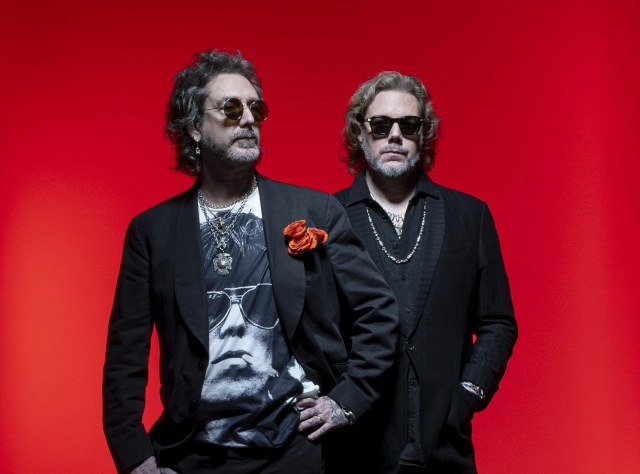
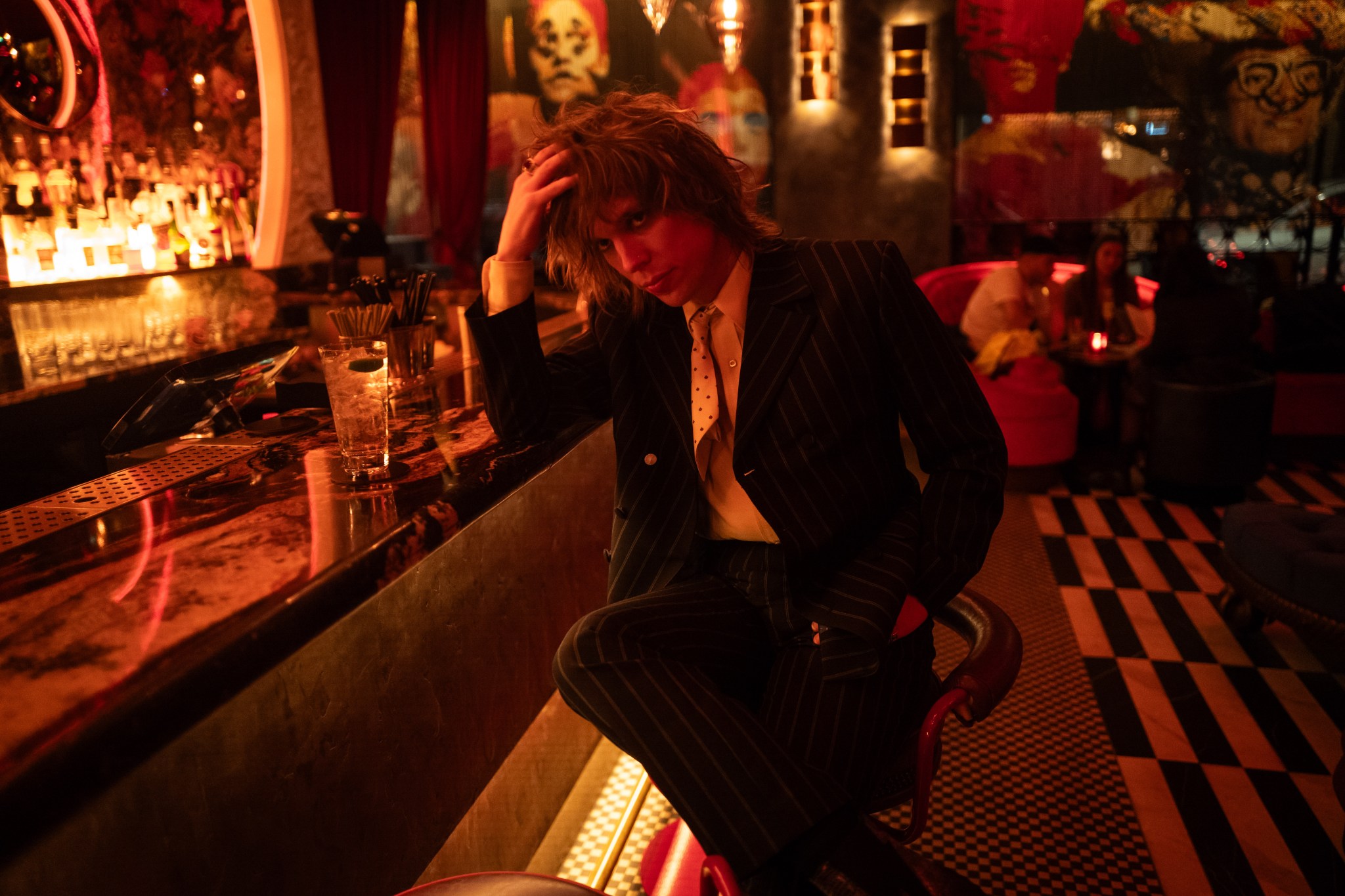
As the frontman for the popular UK rock band The Struts, Luke Spilller, is used to, well, strutting around on stage like a young Mick Jagger at times. A highly energetic, prancing showman with rock star energy, Spiller is known for that flair à la Jagger.
Of course, Jagger, who many consider the prototype of the rock frontman, is also credited as co-author on two of the most exquisite and tortured rock ballads of all time – the brilliant “Angie” and “Wild Horses.” So, why shouldn’t Spiller also be able to put away his dancing shoes from time to time?
He does exactly that on his recent solo single, “When I Die Will I Miss Living,” a profoundly tender ballad on mortality and appreciating life, he tells me, was at least partially inspired by the poetry of Billy Collins.
Don’t worry, though, Struts fans who crave the energetic and rocking Spiller. He says the new Struts album is nearly done, and he promises plenty more sex, drugs, and rock and roll. Right now, he is in his musical sweet spot, where he gets the best of both worlds – rock star frontman and introspective solo artist. And as he tells us, he is loving it.
Hit Parader: How much fun is it to do those David Bowie-inspired shows with Mike Garson? Mike is just one of those people who’s got a million stories, but more than that, he absolutely loves music. So, for you, how inspiring is that to someone who’s been doing it this long, who still is that excited by it?

Luke Spiller: Yeah, Mike’s story is not only really inspiring, but I think back to when I first started playing shows with him, probably about three to four years ago now. And I’ve just learned so much. I think by the time I did my first couple of shows with him, I saw myself as quite a well-rehearsed performer, to an extent, as a singer as well. It became quite apparent as soon as we started doing those first couple of shows that I still had a lot to learn. It was a very different type of performance, and Mike plays in a very specific way. It requires a completely different part of the brain from rock and roll music.
HP: It’s what allowed him to work so well with someone like Bowie, who could do everything. For you, what are your favorite Bowie songs to do?
Spiller: I love doing “Changes.” That’s one of my favorite Bowie songs of all time. And I love the way that Mike and I do it. “Moon Age Daydream” is always great. Super fun. It depends as well on how we’re doing them. I’ve done a few shows where it’s literally just Mike and me playing for two hours. And then we’ve done performances where we have a big band around us. So, interpreting the songs can also lead to different favorites. I love doing “Life on Mars” with him as well. And we also do a whole array of Bowie-connected covers. Like we do “Perfect Day” (Lou Reed) from Transformer, which was produced by Bowie, and then we’ll dip our toes into other people that Bowie loved as well.
HP: I was looking at your Instagram, and you said you were surprised by the response to “When I Die Will I Miss Living.” Why were you surprised?
Spiller: I was surprised because by the time I’d finished it, I’d been playing it on a little solo tour and, to be quite honest, I was kind of over it. I’d also heard some feedback, which I guess I’d kind of taken personally, regarding my solo stuff. It had come from a lot of immediate Struts fans, who were very much getting sick of me doing introspective slow ballads. And the solo record had already been alive and existing online and physically for about a year by the time “When I Die” came out. So, I was expecting people just to be like, “Fast forward, can you sing about some sex, drugs and rock and roll and make it fun and upbeat?” Yeah, I was really taken aback. I was given a lot of testimonies and stories that, to be quite frank, I’m not really even qualified to respond to, genuinely difficult moments in people’s lives that they wanted to share with me. Which again I found very touching, and which was attributed to hearing the song itself. So, I was quite surprised.
HP: I’ve always found from talking with writers, the simpler and more vulnerable a song is, the more people connect with it. So, when you think about it, does it become less surprising?
Spiller: After getting the initial feedback for the last three weeks, I do understand, after reading people’s messages and stories, how it resonates with people. Going back to my own personal experience, you hit the nail on the head where you said sometimes the more stripped back and personal a song is, the more universal it becomes. And I guess I was reflecting on the experience that I had with the 10 tracks from the solo album before this song. I had a couple of moments like this, and they weren’t received in the same way, maybe because they were album tracks. That probably also has something to do with it, they weren’t like focus songs. “When I Die” is a song unto itself, but I can see the appeal now after reading everything that I’ve read about the song.
HP: This feels like a song that came to you very quickly. Am I right?
Spiller: Yeah, totally. I have these phases where I either spend the mornings at the piano or on a guitar, and I’m just really fishing, so to speak, for the first couple of hours of my day. And then sometimes I go through these phases where I flip that, and I don’t even touch an instrument, and I just sit, and I really have a newfound appreciation for just carving out a great lyric. This was one of those moments when I was back for the Christmas holidays in the United Kingdom. And of course, coming back, I had terrible jet lag for the first three to four days. So, I was up at about six a.m. in wintertime in the UK, and there was no sunlight. And I would spend about two or three hours watching the sun come up, essentially, and I’d just sit there with coffee. I was in one of my lyric phases, and I was reading a lot of Billy Collins, the American Poet Laureate. I feel like if anyone’s familiar with his work, you’ll see how that really inspired the subject matter and the lyrics. He has this way of making the mundane and the everyday into something not quite heroic, but more, he can turn it into a beautiful philosophical thought and feeling. I remember thinking of that phrase, and I thought, “Oh, gosh, that’s so Billy Collins. I can imagine him signing off a poem in that way.” I just ran with the idea, and I think I wrote about five different stanzas with that line being the cadence. Then I started hearing this very basic melody in my head as I was writing it out. And that’s why it happened so quickly. I picked up a guitar, and I thought, “It’s going to go here, and this is where it goes.” It all fell into place perfectly. I lived with the bare bones of it for a few months, came back to LA, and then took it to my producer, John Levine, and my friend, Nick Perry. We just jammed it out a bit, and then it was done super quickly.
HP: For you, did the song stand out right away?
Spiller: With the solo record, I gave myself the constraints of writing an entire album that was based on my own experience of love, sex, and heartbreak. And I worked within those constraints for a very long period of time; that’s all I was writing about. And “When I Die” was the first moment when I broke away from that. It was leading me somewhere else, where I thought, “Oh, this is a bigger idea than your typical love song,” even though by the third verse, I managed to make it into a love song essentially.
HP: I’ve talked to so many artists who enjoy the balance of the bigger thing and the more intimate thing for you. Are you looking forward to going back to the sex, drugs, and rock and roll for a moment just to balance it all out?
Spiller: Yeah, I’ve literally just got back from Nashville a week or so ago, and we’ve completed The Struts’ fifth album. I’m actually in the process right now of typing out all the lyrics for the DSPs and of course the album booklets and stuff as it’s sort of like getting being it’s getting ready to be mixed properly and I can say for certain that none of those 10 tracks on the album go anywhere close in terms of asking the big questions that we tend to ask ourselves in more introspective moments. It’s a completely different hat that I put on when it comes to the band. I like that, I think it’s good. It helps me to apply these different skills I have in different ways. But yeah, The Struts stuff is more rock and roll poetry in the sense of my heroes, like Bon Scott, for instance. And the solo stuff is way more lyrically driven to a sense where I think you could sit and read the lyrics and they would read pretty well if you were to say them in a monologue.