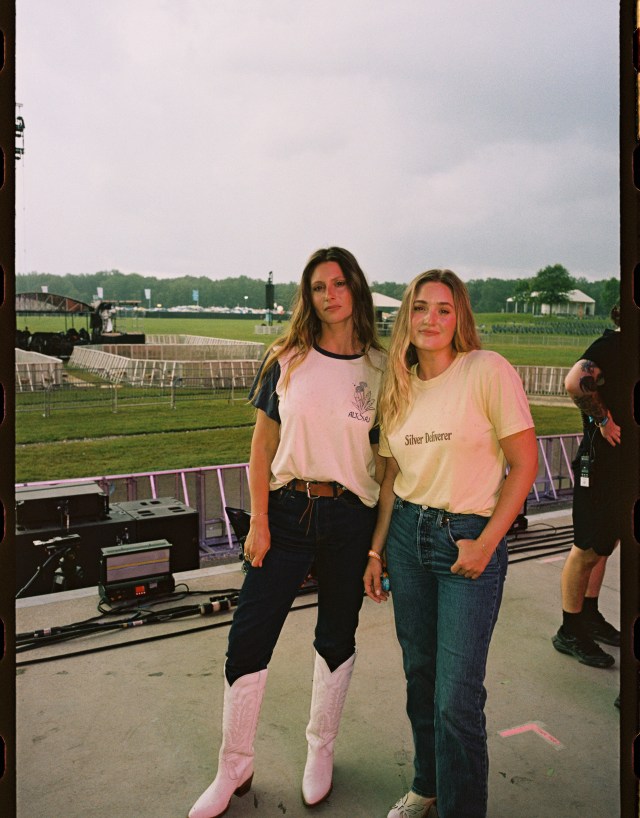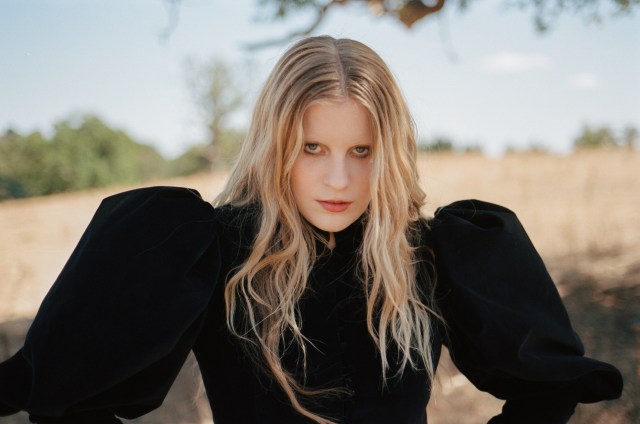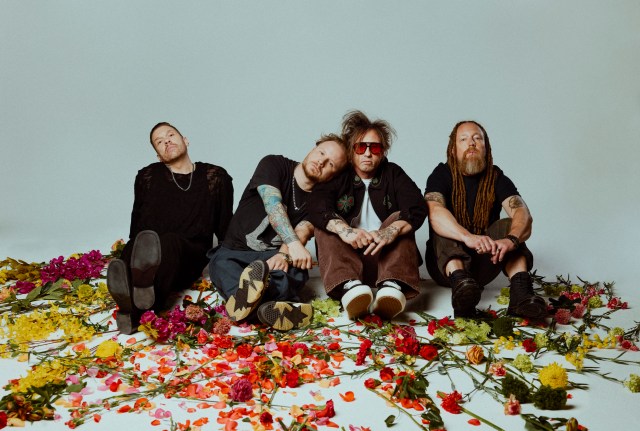

The Scranton Emo legends Tigers Jaw have always evolved and grown in parallel with their audience; quietly scaling and building what is Tigers Jaw while refusing to sand off the raw DIY edges that made their sound their own in the first place. On their seventh full-length album, Lost on You, Ben Walsh and Brianna Collins are most interested in proving how a small-town do-it-yourself ethos can take you when you let that mindset grow with you, and it shows clearly on the project. The record perfectly captures a fully dialed-in 5-piece band making art they want to create together, yet it remains grounded in that same hometown hunger that’s continuously carried them from MySpace show swaps to sold-out shows across the country. Hit Parader had the opportunity to sit down with Walsh and Collins to discuss the fantastic new record, the artistic vision behind it, and much more.
Hit Parader: To start, you guys have often been hailed as one of the best DIY bands from this third, fourth wave generation. What aspects of the origins, the DIY origins, are you most proud of and that you’ve kept as a core value of the band as you’ve grown, toured, and made seven records?
Ben Walsh: I think Bree, you should maybe start with the art piece here.
Brianna Collins: Sure, yeah. I think because the band started when everyone was so young, it also was sort of this tenacity of doing what you can with what you have, and with album art specifically, it’s sort of how I stepped into a larger role in the band where there was a need, and I was like, Oh, well, I make art. And from that point, whatever year that was, 2008 to now, it’s grown into this sort of art director role, where now I am able to have this outlet of Tiger’s Jaw as a call to make art and express myself in that way, along with the musical side of the band, and having to learn how to do all these different things, make ad mats, we still do so much ourselves.
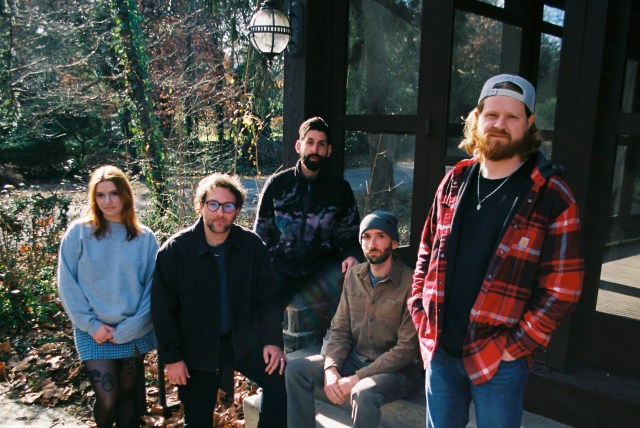
BW: Yeah, I mean, just the whole scene that we came out of was just a small town, everybody’s just bored and trying to make something that feels like theirs. And it was really inspiring to see people from all different types of music, all different interests and backgrounds, having a place to perform and having an audience to perform to. There would be really cool DIY shows happening all over the place on any given weekend. And so it was really cool to build out our own little corner of that scene. We started off just by playing anywhere locally that we could play, by throwing shows at places if you could rent out a place for the night, or there was a friend’s house, or wherever we could play, we would try to play a show. Once we started utilizing MySpace and email and stuff, we were able to start networking with people from right outside of our area, and we started doing show trades. We’d book a show in Scranton for a band, and then they would book us in their hometown, and we would trade off. So it was little by little, we would just propel ourselves into new places.
And eventually it started feeling pretty real, we would play. We played in Brooklyn for the first time, and people knew our music. And I was like, wow, this is really fantastic. I never imagined anybody outside of Scranton would care about our band. So it was these little, little, little victories that kind of came really organically. And so with that spirit, we’ve sort of approached everything that way. I have been our band manager ever since we started, and still am to this day. We’ve always been self-managed. And as we kind of spoke on before, Bree basically handles 90% of any merch item, or album cover, or anything that you see. She has curated such a strong set of imagery for this band, which is a huge part of who we are as a band, in addition to the music itself. So I think when we did start working with labels or a booking agent, it just came very organically, and it was like, Oh, we meet these people that are very like-minded and maybe sort of have a similar background or similar ethics as us. And it feels good working with them when the time is right. Our first handful of tours, we kind of scraped together ourselves via MySpace and things like that. And then we played plenty of shows to nobody for quite a while, and then eventually you start seeing more people coming out to the shows. And then eventually we’re like, okay, cool, it might make sense to work with a booking agent. So it was this natural progression of when to outsource something, or if it’s something we can handle on our own, we handle it ourselves.
HP: That’s super cool. And then congrats on the new record, Lost on You. That’s super exciting.
BW: Thank you!
HP: You’ve talked about waiting until you can kind of feel confident in the material and letting the album progress naturally. How did that philosophy show up in your choices during the time before and during the new record started to take shape?
BC: Not putting pressure on a timeline per se, especially because the last record we put out, I Won’t Care How You Remember Me, came out during the pandemic, and we couldn’t support the release of that record in the way that we typically would. It’s been a longer period of time from that release to now than there has been between other releases, but I think just allowing ourselves to organically come up with the ideas for the songs and not trying to rush into the studio and giving ourselves the time to collaborate and work together, to build the foundation with demos and then do pre-production, and not just be like, ‘we got to get to the studio, we haven’t released a record in this many years’.
BW: Yeah, I think with the luxury of time, we were able to chase ideas that we might have given up on in other circumstances. It allowed us to really explore every possible idea that we had and spend a lot of time refining those ideas and making sure that it was something that felt good and felt like part of the same batch of music. But I think because we approached it this way, this record definitely covers a lot more ground sonically than in the past, but it still feels like us, but just there’s maybe a few more risks, maybe a few more ideas that earlier on as a band we might not have gone after.
HP: And with this being your seventh full-length, and while songs like “BREEZER” and your first single “Head is Like a Sinking Stone” kind of nod towards the earlier work, the record definitely also feels firmly rooted in where you guys are now as a band. How would you describe the version of Tiger’s Jaw’s sound that exists on this album compared to past releases?
BW: Well, this is the first release we’ve been able to do in a long time as a fully functioning five-piece band. The five people who perform the songs on stage are the five people who are in the studio. Last, when we did the last record, it was before Mark was officially a member. He had played a few shows with us, or played one full tour with us, but we were already writing the record at that point, so he wasn’t a part of that one. So this record, and by virtue of spending a lot of time all together, demoing ideas out, these songs really capture the spirit of us playing together in the room. And the way that we approached things in the studio was we first and foremost tracked each song, all the instrumentals for each song live, and we ended up keeping live drum and bass takes, and those are the foundation of all of these songs. So it started in a place of all five of us in a room together playing these songs. So there’s this energy and rawness to the songs, and then on the flip side of the coin, there’s studio polish where that is needed. So it’s a really nice juxtaposition of the two, and a really nice blend of the two, where you still kind of get the raw energy, and you also get the production value.
BC: I was just going to say every record is a sort of time capsule of the moment in time, the people involved, and we’re so locked in with how we are performing live, and on this record, it felt like we were really able to translate how locked in we are and how connected we are as musicians and friends with this record as a whole. It just feels well-rounded in that sense.
HP: That’s awesome. And speaking of polishing in the studio, you recorded the record with Will Yip at Studio 4 in Philly, which is really cool. What aspects of keeping the producer consistent through records have allowed for more creative freedom/risks to be taken, and what aspects of the new record wouldn’t have really materialized the same way without his input being in the room?
BW: I don’t think it was intentionally trying to do this, but I think fewer variables can kind of be more freeing when you have a trusted voice in the conversation as the producer. We know Will very well on a personal level. And he knows our band really well. He’s familiar with our whole catalog, and he has a really good intuition of how to assimilate himself into our group as essentially an extra band member when he is contributing as a producer. So I think there’s this organic comfort. He’s a like-minded person, he’s a friend outside of the studio. So it just creates this level of comfort that, you know, I don’t feel tense when I’m in the studio, I feel relaxed and able to enter a creative headspace. So I think just in the overall approach, it’s really great to work with someone who makes you feel at ease and able to create without being judged, and to chase every idea that you feel is worth chasing.
BC: Yeah, I think my favorite part, too, about working with Will specifically and over the course of all this time, is that he might not necessarily be a part of the base of the writing process. Whereas all of us have heard the demos, I don’t know if you’ve ever heard of someone called demo-itis, but it’s where you get maybe locked into the idea of the demo rather than challenging yourself to think of it in other ways. And he comes in as this best friend, additional bandmate ear that, like Ben said, knows our band so well and knows us, and just thinks of ways, also with his producer intuition, of how to challenge us and maybe emphasize or switch around, just maybe help you critically think about it in a way that maybe you wouldn’t have if someone didn’t spark the idea. I just feel like he always helps me, so that if I have a vision, it comes forward better than I even thought it would with the band in general.
HP: And now that the record is done, what part of this era are you most excited to experience from the stage rather than the studio?
BC: I can’t wait to play a show on the day that the record comes out and actually be able to see people and talk to people. I feel like I’m working on getting over just the way that the last release was, and then allowing myself to be excited about all of the things that we’re able to do, even just being on tour together again, all together when the record comes out, and, yeah, I’m very excited for that.
BW: Yeah, for me, it’s just being able to play the songs in front of people. And I know how it feels to play them in a room with just us; we did it a million times over, and the songs are still exciting to me, so I feel really excited to share that energy with a group of people in a room. And it’ll be just really great, on our last record, we weren’t able to tour right after it came out. So just having a more normal rollout for this one, it just feels exciting. I don’t want to overuse that word, but when you write and record and put out a record, it’s not really until you start performing it live in front of people that you close that creative loop on things. And so when you’re not really able to close that loop, it just is an unsettling feeling. You’re like, the record’s out, it’s just in the air somewhere, I hope people find it. But being able to literally play a show the day it comes out and be on a tour for the weeks after it, you get that immediate feedback of just connecting with people. So I’m really looking forward to that.
HP: And then, just to wrap up, when you think of Lost on You as a whole, what aspect are you most proud of capturing on the record?
BC: I mean, I feel very proud of it, and, like I kind of talked about earlier, just how locked in we are as a band feels really good right now. It feels great to play together. It feels great to write together. It felt great to record. It’s definitely like, I love this record. I love listening to it, and I feel like that’s something you should want to do if you’re making this art. I want to enjoy it, and I can’t wait to share it, especially because we all did it together.
BW: I think sonically there’s some familiar elements on this record, but there’s a lot of new elements, a lot of new guitar tones and keyboard tones and just approaches to songs that we really haven’t explored much in the past. So I’m just excited that we’ve really spent a lot of time working on these songs and refining them and making them as good as they can be. So just really proud to have it out in the world, because we’ve been on quite a journey already making this record.
Lost on You is out now, via Hopeless Records
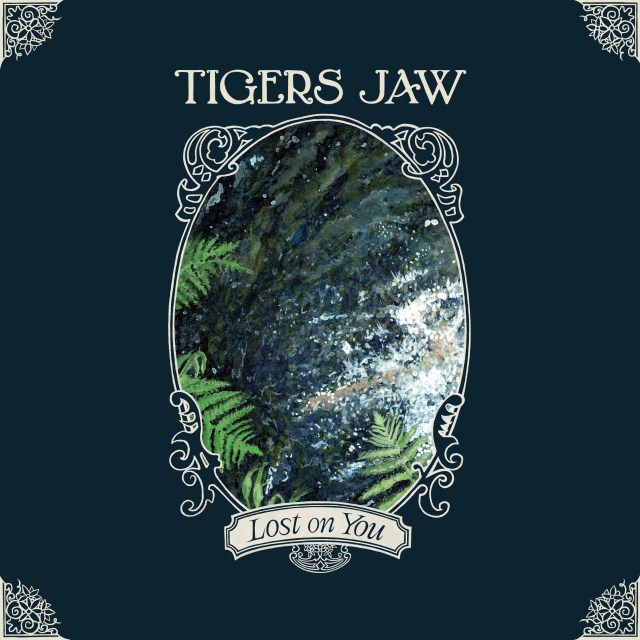
Read the article in print in Issue 5 of Hit Parader Magazine.
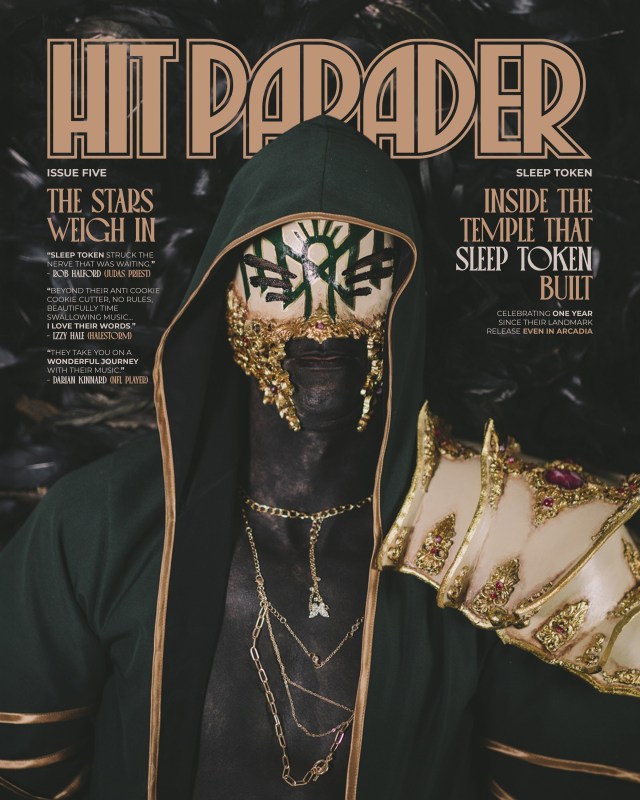
Hit Parader #5: Sleep Token
May 2026 — $12.99